Bal Shree

IMPHAL, July 22: Four students have been selected by social welfare department for participation at the Zonal Level Bal Shree Camp. The selected students are Waikhom Marilyun Devi of Tiny… Read more »

IMPHAL, July 22: Four students have been selected by social welfare department for participation at the Zonal Level Bal Shree Camp. The selected students are Waikhom Marilyun Devi of Tiny Tots` Unique School (creative writing), Minerva Laiphungbam of Little Flower School (creative performance), Chingakham Chanu Lamnganbi of Heritage Convent (creative scientific innovation) and Naoroibam Anand Singh of Eagle High School (creative art).

Read more / Original news source: http://feedproxy.google.com/~r/Kanglaonline/~3/Vn3Zz6F6Qug/

Found dead

var addthis_product=’wpp-252′;var addthis_options=”Google+1″IMPHAL, July 31: A man who went missing for the past nine days was found murdered near a rivulet at Rashidpur in Jiribam sub-division at…

[[ This is a content summary only. Visit my website…

var addthis_product=’wpp-252′;var addthis_options=”Google+1″IMPHAL, July 31: A man who went missing for the past nine days was found murdered near a rivulet at Rashidpur in Jiribam sub-division at…

[[ This is a content summary only. Visit my website for full links, other content, and more! ]]

Read more / Original news source: http://feedproxy.google.com/~r/Kanglaonline/~3/bHKRvAIHX-k/

Baruah hatching terror plot: Assam CM

GUWAHATI,July 22(NNN): Assam chief minister Tarun Gogoi said United Liberation Front of Assam (ULFA) military chief Paresh Baruah was bent upon subversion in the state despite the outlawed outfit’s declaration… Read more »

GUWAHATI,July 22(NNN): Assam chief minister Tarun Gogoi said United Liberation Front of Assam (ULFA) military chief Paresh Baruah was bent upon subversion in the state despite the outlawed outfit’s declaration of ceasefire.

Barua and some 150 hardliners have refused to talk to ‘colonial New Delhi’ and have broken off with the majority pro-talks ULFA headed by chairman Arabinda Rajkhowa.

“We’ve received intelligence inputs that Paresh Baruah is planning terror attacks in the state with help from Manipur-based People’s Liberation Army, the Maoists and some other extremist groups of the Northeast,” Gogoi said on Friday. “But we are alive to the situation and taking all precautionary measures to foil his designs.”

Gogoi criticized Baruah for continuing with the armed movement when most of his colleagues gave up arms in the interest of peace. “I urge him to see the writings on the wall and abjure the path of violence. People want peace and not violence,” he said.

The Assam government believes that Baruah is operating from safe hideouts along China-Myanmar border. “He is currently holed up in northern Myanmar but keeps moving around. A number of extremist groups of the Northeast have their bases in that region,” Gogoi said.

Earlier, the ULFA used to operate from Bhutanese territories until being flushed out during ‘Operation All Clear’ (an Indo-Bhutanese joint military offensive of December 2003). Later, the outfit set up bases in adjoing Bangladesh. But the return of Sheikh Hasina to power and a subsequent crackdown on Northeast Indian militants saw ULFA shift to the China-Myanmar border.

Gogoi said peace parleys with the pro-talks faction of ULFA were imminent. “We’ve got green signal from the central government. Peace talks between ULFA and the Central government will begin very soon,” he added.

According to the chief minister, the talks will be held directly between ULFA and central government. Earlier, peace talks between ULFA-appointed People’s Consultative Group and central government hit roadblocks ostensibly after the government had refused to discuss all core issues. The issue of Assam’s sovereignty is one of ULFA’s most contentious demands.

“In the first round of talks, ULFA would submit its charter of demands. Government will then see how far it could go to accommodate the demands. All decisions will be taken by the central government but we’ll be consulted,” he said. The chief minister added that efforts were being made to bring all other militant groups to the negotiating table.

Read more / Original news source: http://feedproxy.google.com/~r/Kanglaonline/~3/9v7Ob5CPv2I/

Mao gate anniversary

IMPHAL May 3 (NNN): The Naga people will observe the first death anniversary of the two students who were killed in the security force firing last year in the Manipur-Nagaland… Read more »

IMPHAL May 3 (NNN): The Naga people will observe the first death anniversary of the two students who were killed in the security force firing last year in the Manipur-Nagaland border at Mao Gate, according to the United Naga Council.

Neli Chakho and Dikho Loshou were killed in the security force firing on May 6 last year at Mao-Gate in the impasse of Muivah`™s proposed visit to his home village.

The United Naga Council called the two students as martyrs.

President of Naga Hoho, Keviletuo Kiewhuo will unveil the `martyrs` epitaph at Mao Gate, said the UNC.

Naga Hoho, Naga Student Federation (NSF), Naga Mothers`™ Association (NMA), Naga frontal organisations in Manipur, Naga tribes in Manipur, social leaders , dignitaries from all works of life will attend the anniversary, the UNC said.

The United Naga Council (UNC) instructs all the Naga villages to honour the “martyrs” by pronouncing ghena on May 6. Ghena means to abstain from all manual works.

Read more / Original news source: http://feedproxy.google.com/~r/Kanglaonline/~3/8E__vAEdme0/

FIFA, AIFF officials to visit state for installation of artificial turf

IMPHAL, May 4: Installation of artificial turf for football ground at Khuman Lampak is likely to begin soon. According to a release of the AMFA, one official each of world… Read more »

IMPHAL, May 4: Installation of artificial turf for football ground at Khuman Lampak is likely to begin soon.
According to a release of the AMFA, one official each of world football governing body FIFA and AIFF will be coming to the state to begin installation work.

The two officials will arrive on May 5, an AMFA release said.

The names of the officials who are to visit the state for installation of artificial football turf are Eric Gordon Harrison, FIFA official and BMR Mehta of AIFF.

Read more / Original news source: http://feedproxy.google.com/~r/Kanglaonline/~3/wRRRuMVSJMs/

Fire

IMPHAL, July 24: A pharmacy at Khangempalli Panthak in Imphal West district has been partially destroyed due to a fire broke out from inside at around 8 pm today. The… Read more »

IMPHAL, July 24: A pharmacy at Khangempalli Panthak in Imphal West district has been partially destroyed due to a fire broke out from inside at around 8 pm today.

The pharmacy “Life land” belongs to Konsam Kumar of Wangkhei Yonglan Leirak.

Read more / Original news source: http://feedproxy.google.com/~r/Kanglaonline/~3/wzKIy-mIioA/

Notification

var addthis_product=’wpp-252′;var addthis_options=”Google+1″IMPHAL August 2: According to a notification by the department of library and information science Manipur University, Canchipur, Imphal,…

[[ This is a content summary only. Visit my website…

var addthis_product=’wpp-252′;var addthis_options=”Google+1″IMPHAL August 2: According to a notification by the department of library and information science Manipur University, Canchipur, Imphal,…

[[ This is a content summary only. Visit my website for full links, other content, and more! ]]

Read more / Original news source: http://feedproxy.google.com/~r/Kanglaonline/~3/PvcfkCF32Bk/

Common entrance examination

IMPHAL, May 6: Common entrance examination to be held at foalpara (Assam) on May 29 for soldier gd, tech and clk/skt category. According to a PIB release medical fit candidates… Read more »

IMPHAL, May 6: Common entrance examination to be held at foalpara (Assam) on May 29 for soldier gd, tech and clk/skt category.
According to a PIB release medical fit candidates of Zakhama, Imphal, Zunheboto  Senapati rally of Soldier GD, Tech & Clk/SKT will attend the common entrance examination (CEE) to be held at DN Singha Sports Stadium, Goalpara (Assam) on 29 May 2011. Further details can be had from the PIB Office.

Read more / Original news source: http://feedproxy.google.com/~r/Kanglaonline/~3/XpZiHDWbn1Q/

Age of Partnerships

History cannot be the sole issue, neither can any belief inbrotherhood past or present. The ultimate deciding factor in the present political face off between Naga integrationists and Manipur integrity… Read more »

History cannot be the sole issue, neither can any belief inbrotherhood past or present. The ultimate deciding factor in the present political face off between Naga integrationists and Manipur integrity defenders will have to be rooted in the current reality. It will be good if the two can exist side by side without the need for each to obliterate the other. As we have been consistently arguing in these columns, we see no reason why this cannot happen given the will, imagination and most importantly, accommodative spirit. Why must the boundaries of identity, both cultural and political, be rigid and absolutely non permeable. They can work in non-antagonistic concentric circles, whereby someone can be a Meitei, but also Manpuri, an Indian, an Asian etc, and ultimately a human being at the outermost circle. What then is the current reality? Two perspectives are obvious: One, the aspiration of the Nagas to come under one political roof and two, the survival question of Manipur, whereby its two geographical constituents, the valley and its surrounding hills cannot but remain together under a single administrative control.

In a reversal of the popular portrayal of the scenario, we would even say that the Manipur integrity issue is not about emotions at all at its core, although on the surface it does appear to be so. Quite to the contrary, it is about hard-nosed political geography of survival deep down. As we have argued so many times before, a valley and its surrounding hills must complement each other and form one composite living space. The valley, any valley for that matter, will never let go of the hills that surround it, for it is a matter of its survival. Asking Manipur to give up its hills, would be like asking Israel to give up the Golan Heights. They will never agree, for it would amount to asking them to disintegrate voluntarily. The rightness or the wrongness of their refusal becomes only a matter of perspective and subjective judgement. But if Israel’s right to exist, or Manipur’s right to exist, are to be acknowledged, their right of control over territories extremely vital to their survival cannot but also be acknowledged. To not acknowledge this would amount to war. Leave aside the Israel parallel, but must this right necessarily have to limit the aspiration for Naga integration. The challenge must be to work out a political dispensation where Manipur integrity and Naga integration can happen simultaneously without crossing each other’s core interests. The manner in which even independent nations are melting down borders to evolve into common regional entities, gives hope that this can work.

If the engine that drives the Manipur integrity campaign is emotional only superficially, we would also argue, without attributing any value judgment, that it is the Naga integration movement which is emotional. Disparate tribes, discovering a fraternal bondage in a generic name may be a transcendental journey as Prof. BK Roy Burman puts it, but still it is nevertheless an emotional thread that is the binding force ultimately. It must however be acknowledged that this emotion is a powerful reality that must be factored into any lasting solution to the problem that is unsettling the region. The other reality is that this is the age of partnerships. We do not refer to only the Naga integration-Manipur integrity equation, but also to their relation with India. It does not have to be a binary antagonism always. As in all partnerships, conditions that suit each partner can always be worked out so that relations are cemented in mutual benefits and hopes. If a pride in the self and an all round prosperity can be guaranteed through these partnerships, what else is there to fight for. The ability to come to terms with these realities will be the key to the return of peace and normalcy. It will also be the definition of the true calibre in our situation.


Read more / Original news source: http://feedproxy.google.com/~r/Kanglaonline/~3/JJsoBhAcH5A/

Nagaland storms into Challenge Cup final

IMPHAL, May 7: Former champion Nagaland Veteran Football Association has entered final of the 13th Challenge Cup veteran football tournament being held at Mapal Kangjeibung.This is second year in succession… Read more »

IMPHAL, May 7: Former champion Nagaland Veteran Football Association has entered final of the 13th Challenge Cup veteran football tournament being held at Mapal Kangjeibung.This is second year in succession for the Nagaland team to enter final.In the first semi final played today at Mapal Kangjeibung Nagaland veteran team defeated IMVF, Heingang by 3-0. Lanusanen scored first goal for the Nagaland team to take the lead in the 13th minute.Ronthango increased the the lead for Nagaland as he netted in second goal for the team in the 44th minute.In the second half, Yambemo scored third goal for the team in the 55th minute thereby securing Nagaland team to the final. Despite their efforts to equalise the deficit goals, IMVFA failed to match their Nagaland counterpart.During the match, referee Shanta booked Ksh Sarat of IMVFA for commiting a dangererous faul to a Nagaland player.

Read more / Original news source: http://feedproxy.google.com/~r/Kanglaonline/~3/qViSf4QPRI8/

Condemn

IMPHAL, Aug 4: Apunba Manipur Kanba Ima Lup (AMKIL) and Yek Taret Loop have strongly condemned the bomb blast at Sangakpham Bazar which killed four persons and injured eight others.

IMPHAL, Aug 4: Apunba Manipur Kanba Ima Lup (AMKIL) and Yek Taret Loop have strongly condemned the bomb blast at Sangakpham Bazar which killed four persons and injured eight others.

Read more / Original news source: http://kanglaonline.com/2011/08/condemn/

Play premier show

IMPHAL August 5: Manipur Artist Touring Drama Party’s Bisharjan, a Manipuri adaptation of a play written by Rabindranath Tagore was premiered today at the Manipur Dramatic Union hall located at… Read more »

IMPHAL August 5: Manipur Artist Touring Drama Party’s Bisharjan, a Manipuri adaptation of a play written by Rabindranath Tagore was premiered today at the Manipur Dramatic Union hall located at Yaiskul in Imphal east.

A ceremonial function was held prior to the premier show this afternoon. Dr. K. Sobita Devi, director Art and Culture, government of Manipur, Ksh. Ibohal Singh, president MDU and G. Gourakishwor, director, Hueiyen Lanlong Thangta Association graced the function as the chief guest, guest of Honour and president of the function respectively. Bisharjan, a production of Manipur Artist Touring Drama Party was sponsored by the Ministry of Culture, government of India, New Delhi, under its Tagore commemoration grant scheme. The play   directed by E. Joykumar Singh, is revolved around social discrimination and victimization of common people by high and mighty in our society. The play is translated to Manipuri from its original text by Khomdram Dhanachandra.

Read more / Original news source: http://kanglaonline.com/2011/08/play-premier-show/

Warm Hands And Cold Cream,My mother Sanaibema Wangolsana and I: 1954-1965

by Laifungbam Debabrata Roy “Many sweet thoughts fill my heart today/Dear mother of mine.” *** Faded, easy words gazed back at me from an inscribed smudgy marble tablet set into… Read more »

by Laifungbam Debabrata Roy
“Many sweet thoughts fill my heart today/Dear mother of mine.”
***

Faded, easy words gazed back at me from an inscribed smudgy marble tablet set into the front wall of an old shop building on Imphal’s Mahatma Gandhi Avenue. The words mesmerized me. Ever since I got a request from Bimbabati, Saratchand Thiyam’s wife, to write an article about my reminiscences of living with my mother as a child, I had been pondering endlessly to myself. I imagined to myself so many ways to write the memories that sometimes trickled, sometimes swamped my mind. Days turned to weeks without me putting a single word down into my ancient laptop computer. I had even begun to despair, when she gently chided me a few days ago for not finishing the article. Then these words, staring at me, released me from my agony.
***

Honestly describing an association exposes the associates…otherwise, it is mere observation, filled with falsehood.
***

The festival of Kang will always evoke a thrill for me. Its arrival somehow causes the deeply buried child within me to awaken, every time. It was always special to my mother too. Perhaps that would be the reason for this unfounded emotion for I am not a deeply religious person. She had a particular fondness for the Hindu deity called Jaganatha, which she used to call Jagabondhu, like a fond friend. Her relationship with this god did not seem to be inspired by personal religious passion or related to any form of deep or mindless devotional act. The acts with which she showed this special friendship with Jagabondhu could only be described as play. She never tired to tell me, and others, how she played with her Laiphadibee as a child, growing up among her elder sisters carried along in the whirlwind world of the royal palace of Manipur…habouring a smoldering jealousy, awestruck by their beauty. She told me that she drooled over their beautiful things, their laces, books, and His Master’s Voice gramaphone records. When she became overwhelmed by self pity, she was moody, brooding alone by herself, retreating to her Laiphadibees, to whom she poured out her complaints of neglect and inadequacies in prolonged dramatized monologues about her sisters who enjoyed special treatment from her royal parents. Those mute hand-made dolls kept her sane. Those extended sessions of doll play, she told me, were cathartic…much akin to confiding and grumbling to her best friends, like going to her tolerant therapist. I believe that playfulness stayed with her throughout her life. To her, Jagabondhu was a lifelong dear friend with whom she played occasionally.
***

Our house had many small things she had picked up, bought or collected from wherever she had been. One could have made a long list of places and events my mother had been to just by examining this collection. Little pebbles of various hues from exotic mountain rivers, sea shells from the beaches of Puri, oddly shaped stones and roots from various picnics, tiny and painted statuettes, beads of various colour and pretty, clay pots, dried gourds (toomba) from the distant villages of the Manipur and Khasi Hills and the North East Frontier Agency (NEFA, known as Arunachal Pradesh today), miniature pictures, elegant but peculiarly shaped containers made of copper, souvenir sized replicas of deities from various tirthasthan lined our home’s window sills, hung from the walls in artistic disarray or sat dotingly next to the black telephone, on shelves and tables in the drawing room and bedroom. She would be quite possessive of these aimlessly assembled ménage, but never scolded me if I handled any of them. I began to collect some stones and other things too that caught my childish fancy, and brought them to her. She would examine what I had brought with great care; turn them over and around as she looked at the object before passing verdict. Our house was like a zoo of memorabilia and artistic artifacts.
***

One of my earliest memories was of a film that I saw. It was black and white, and it was screened at home by a friend of hers in our bedroom. I can’t remember who, I must have been about four years old. An old bed sheet did the job of a makeshift screen. I could not understand a single word of it, but the uncertainly lit dim images haunted me. Strangely, the story or what little I understood of it was a very ordinary seeming one to me. It was set in some village in rural India and the characters were all dressed in grimy looking plain clothing. The harried father that seemed always anxious. A girl that played, ran, skipped and wandered around saw everything through her clear inquisitive eyes. She, her little brother and their parents lived with an old aunt in a worse for wear house, which couldn’t have been much even in its heyday. The fat village shopkeeper, fawning and threatening in turns, who doubled as a teacher armed with a fearsome cane whilst selling rice, kerosene and other daily needs, was funny. The toothless old aunt, a cripple, was another loving character I remembered. In the background, with the noisy churning sound of the projector and alien garbled sound track, I watched the girl and her little brother live a very plain life enjoying simple joys of life in a village. What left an indelible impression in my mind’s eye about the film was the scene of the brother and sister running carefree amongst the white cloudlike blossoms of tall wild grass (kaash), running to catch up with a black, smoke-belching train. Later, much later, when I asked my mother, she told me the film was Pather Panchali made by the legendary Satyajit Ray. As I grew up, Pather Panchali, made in 1955, became a familiar household topic associated with many anecdotes and discussions amongst us about this classic film and the renowned Director and litterateur.
***

When one is a child, the earliest recollections are mostly dominated by those associated with smell, sound, touch and taste. Such memories are the lasting ones we take them with us when we die. The so-called lower senses and emotions they evoke somehow are so deeply impressed, that they even simulate themselves along with the memory as it is triggered. And so, an object or its particular shape, the timber of a voice or a song, a kind of food or dish, a certain shade of colour, such random things evoke old memories of childhood to us, and we like certain things or a stranger for no particular reason, our mouths water when we see or smell certain foods, make us impulsively buy an ordinary cheap thing, make our emotions swell up suddenly for no particular rhyme or reason. My earliest memories of my mother are, therefore, dominated by such kinds of sensually and emotionally linked ones. The delicate fragrance of Pond’s cold cream dabbed swiftly onto my face by her warm hands before I fell asleep will always be one of my personal symbols of motherhood.
***

“Nahak Churachandpurd? pokp?né.”
***

My mother always told me that I was born in Churachandpur. This, to her, happened when my father was posted there as a District Medical Officer. I found this most intriguing even in my earliest childhood days because she also narrated another parallel story about my birth! The second narrative, which had many witnesses who retold this story in their own versions, carried the story of a prolonged and exhausting labour and even the hint of a breach delivery. With many doctors in attendance, including my grandfather Dr Bhorot Roy, tragedy was only averted by the aggressive intervention of the midwife Sister “Iche” Taruni. It happened in Imphal, in Yaiskul inside the upaak-ka at her sister’s house. The tin-roofed house constructed in the traditional “Assam style” still stands today, just to the north of our present residential compound in Yaiskul. It is a story worth telling only because of its dramatic nature and the obvious relish of the telling to whoever was telling it. As a child, I heard many versions of this second narrative.

In the night of my parent’s wedding day in 1950, which happened with the usual fanfare of the marriage of the royalty at the temple of Sri Sri Sri Govindaji in the Sana Konung, a great earthquake shook Assam and Manipur. It was known as the Great Assam Earthquake of 1950, and it happened on August 15, which also happened to be India’s Independence Day. For four years, my mother was childless. She began to despair, and visited many shrines including the one of the ancestor god Ibudhou Oknarel at Ningthoukhong to make offerings. Ningthoukhong is on the road from Imphal to Churachandpur, where my father was posted at that time. According to legend, Oknarel was the son of Ibudhou Koubru, and a great polo player like Marjing, Khamlangba, Thangjing, Khoiriphaba and many others of our ancestors. I do not know how Oknarel Hanuba came to be associated with the childless woman, but my mother conceived soon after visiting the shrine and offering a polo stick. This perhaps explains the first narrative.
So, I grew up with two different stories of my birth, as told to me by my own mother.
***

There is yet another story about my birth; this she told me too. My mother’s favourite brother was my Mamo Yaima. He was the second son of Maharaj Churachand Singh of Manipur. He is known generally as PB, short for his real name Priyabrata; she used to call him Tamo when he was around but just PB whenever she had to refer to him. Mamo Yaima was a handsome confirmed bachelor with many talents and achievements, widely respected all over the State of Manipur irrespective of tribe, clan or community. PB and my mother shared a passion for art and aesthetics. He was the first person to make moving pictures in Manipur. And he was a painter and carpenter. He had served as an officer in the Assam Regiment during the British days, so a few who knew him as a military man also called him Captain PB. Soon after I was born, he made me a wooden cot with a sliding side. The very idea of a separate baby cot for an infant child would still be received with horror in Manipur today. The childless PB doted on me, the first born child of her favourite little sister, Tombi. The cot that PB made in 1954 is still with me; perhaps I shall keep it for my first grandchild.

While my mother was carrying me, there was much speculation as to the sex of the child…will Sana Wangol have a son or a daughter crossed everyone’s mind. My mother was the foremost among these speculators. She was a great admirer of the legendary Hollywood actress Elizabeth Taylor. Secretly, and constantly, my mother prayed for a daughter, a beautiful girl with magical eyes whom she would spoil and play with, like one of her childhood Laiphadibee. PB somehow discovered this secret wish. He was an intelligent man, and he put two and two together when he saw a new photograph of Taylor in my mother’s bedroom and observed that she stitched many baby clothes…all of them for a baby girl!

When the news got out that a son had arrived, PB dropped by and his first greeting to me was, “O, Elizabeth Taylor!”

Another passion they shared, the brother and the younger sister, was their love for Manipur. Mamo Yaima stammered. His stammer got worse when he became upset. As soon as he walked into our house, my mother would first bow to him in the traditional style and then ask him if he wanted an omelette. He loved omelettes. He was always served an omelette freshly made by my mother when he visited us. This was because such kind of food was prohibited in his orthodox household in the palace. Tombi was PB’s sounding block whenever he had a vexing problem, be it political or personal.

As a young girl, my mother hero-worshipped her brother PB. She used to tell me how handsome how he was as a young man, wearing a spotlessly white cotton sleeveless vest and sporting a “jum-jum taba” hairstyle. It was the hairstyle that Leonardo DiCaprio sported in the Hollywood blockbuster Titanic. It is popular even today, not even the “Korirang wave” has managed to kill it. The younger sister emulated her accomplished brother; he inspired her with his love for art, literature, beauty and Manipur.
***

The consciousness that my mother was a woman of beauty or high social standing, a princess of Manipur, an artist and later a writer came much later to me. To the child that I was, she was a familiar person, a shape who carried particular smells and fragrances at different times of the day and night, a sound or phanek’s swish that made me want to get up abruptly, abandon whatever I was doing and run towards it, a hand that I feared if I knew I had done something wrong or had told a lie, a kind of machine which had the expertise and repertoire to produce mouth watering delectable items to eat.
***

My mother’s dressing table was a piece of furniture in our home that always evoked endless curiosity for me during my earliest childhood. It was like a monument. It had a large well-lit mirror and a large rectangular stool with a curved seat made of walnut placed in front; and the table was always cluttered with objects and items that were obviously her secret arsenal of powerful weapons. There were drawers too, which held many more top secrets. Somehow, I knew instinctively that this was a no-no territory for me. My inborn sense of survival told me that my very life depended upon not being caught in the table’s vicinity. This instinctive “avoid it if you value your life” message from my guardian angel, however, did not prevent me from snooping into this prohibited military territory whenever opportunity presented. Such was the level of caution I exercised in my secret forays to this table that I was never caught. She spent a lot of her waking hours at this table, especially before she had to go off somewhere with my father.

Many kinds of bullet shaped lipsticks adorned this table, along with perfume bottles, Lakmé powder compacts, mascara, eyebrow and other liners, Pond’s cold cream and vanishing cream, combs and a brush, bottles of nail polish and removers, cotton balls, and bowls with a mind-boggling array of ear-studs and ear rings, necklaces, rings, brooches, bangles, clasps, hair clips and dark glassed goggles. I sensed that this formidable arsenal was of the essence for her; vital aids that helped her to conceal in order to reveal! Growing up with my mother was also growing up with this dressing table.
***

“I am the most misunderstood woman in Manipur.”
***

My life, with my younger brother, as children was full of stories. My mother loved stories and to tell us stories was one her favourite past times; and we devoured them. I think she loved telling stories because she loved to hear them again too. The realms of literature are in the world of stories. She told us countless stories, many of them from her own life, and others from books she had read or films she had seen. She loved to tell us ghost stories too. But my childhood associations with her will always be warmly wrapped by the books and their stories that we shared.

Some of the best stories I remember were from her days in Shantiniketan. The Shantiniketan days, I realized later, were some of the best of her life. The few life-long friends she had are all associated with Shantiniketan. Intermixed with her Shantiniketan stories were the stories of Tagore and Shankar. Shankar, known also as Sankar, is a Bengali novelist unfamiliar to the readers of Manipur. His real name is Mani Shankar Mukherjee. His father died while Sankar was still a teenager, as a result of which Sankar became a clerk to the last British barrister of the Kolkata High Court, Noel Frederick Barwell. Noel Barwell introduced Shankar to literature. Sankar’s ground breaking debut novel Kato Ajanare, published in 1955, inspired my mother. My favourite bed-time story telling memories with her are steeped with the world of the young protagonist of this novel, a lawyer’s clerk, and his barrister sahib. I would listen to these stories again and again.
Very little is known of how much Sankar’s first novel influenced her short stories and radio plays. This is because the association is unknown in Manipur, and Sankar is not only largely inaccessible to the readers here who are unable to read Bengali; most of his works remain to be translated. Jana Aranya (The Middleman), a film directed by Satyajit Ray and released in 1976, is based on the novel of the same name by Sankar. Another novel Chowringhee, was made into the classic cult film of the same name in 1968 by Pinaki Bhushan Mukherjee, starring Uttam Kumar and Supriya Devi.

Recently, in February, while passing through Kolkata airport and visiting my old favourite corner book store there, I purchased a copy of Penguin India’s “The Great Unknown”, an English translation of Kato Ajanare by Soma Das. Discovering this book was one of the highest watermarks of elation in my life after my mother died in January. It was as if she had sent me this book. Suddenly, as I began to read the book on a slick jet plane cruising 35,000 feet above peninsular India, I looked up and around from my seat, looking for a familiar or friendly face so that I could pour out my feelings, my memories, my tears.

Penguin India’s website said,
“The Great Unknown is the moving story of the many people Shankar meets… It offers a uniquely personal glimpse into their world of unfulfilled dreams and duplicity, of unexpected tragedy, as well as hope and exhilaration.”

Sankar’s almost autobiographical, very personal anecdotal style influenced my mother’s appraisal of her personal life as a young doctor’s wife. Buried somewhere in her collection of short stories Nung’gairakta Chandramukhi is an concealed tribute to this post-Tagore modern Bengali novelist whose stories my mother dearly loved.
***

Our house received many strange guests and visitors. Many of them, I discovered, were well known personalities. A few stayed with us, and others dropped by and left after meeting my mother. There was Mulk Raj Anand, one of the first English language writers of India; Salim Ali the renowned ornithologist, Petre the Romanian dancer, and Milada Ganguli the Czech-Indian anthropologist are among those I remember. One day, when I was about nine years old, a tall and gaunt “white lady” showed up in an above-ankle sari and no-nonsense leather sandals. Her bags suggested that she was to stay. My mother had been busy for some days preparing a bed in another room. The woman’s eyes were a faded inscrutable colour, and her maize-flower like hair was neatly done in a single plait. I spent hours staring at her long thin nose and quick nervous gestures. A few of our neighbours remember the peculiar lady who waded in knee deep into the Nambul River during the rainy season to take photographs of women catching fish with chinese nets.

Milada Ganguli married Mohanlal Gangopadhyay, a close relative of Rabindranath Tagore, after they met in London at some soiree. She came to India in 1939 as a young newly married bride. Some years later, she met my mother in Shantiniketan, who invited her to come to Manipur. But it was 1963 before she set foot on Manipur’s soil. It was a significant year for the Indian State of Nagaland had just been created. She became fascinated by the stories of Nagaland and its peoples. My mother managed an Inner Line Permit for her, and Milada first traveled to Nagaland from our house in an MST mail-bus, part of a convoy escorted by over a hundred Indian Army trucks. She visited Nagaland many more times. I believe eighteen times. She wrote several books on the Naga peoples in the style of the European traditional anthropological school. Her extraordinary and extensive unique collection of beautiful photographs and Naga art objects has been acquired by the Museum der Kulturen in Basel, Switzerland and the Indira Gandhi National Centre for the Arts. She died in the year 2000. But I will always remember her as the awesome and brave “Aunty Milada”.
***

I grew up as a sickly child. My mother told me that I learnt to walk with great difficulty and after much coaxing with numerous ruses when I was more than two years of age. Nurturing motherhood skills were a big blank with her. Growing up in a palace as a girl has its definite disadvantages too. She hadn’t a clue how to look after a newborn baby. She had been raised by wet-nurses and maids. However much you want to cuddle and spoil the infant, it’s still not a Laiphadibee! My father had left for bilaat soon after I was born to pursue higher studiers, to become bilaat trained surgeon. He was absent for almost two years. I became ill with severe malnutrition, rickets and all sorts of debilitating diseases common to the neglected infant. My mother was at her wit’s end, I was told; she had also just given birth to my brother. She begged her father-in-law, Dr. Bhorot, to recall his son, her husband. In the end, a telegram was sent to my father in Glasgow to return immediately because I had become too ill, it was doubtful that I would survive very much longer. He had been accepted as a Fellow of the Royal College of Surgeons in Edinburgh in record time; but he wanted to acquire second degree from the United Kingdom. It was the fashion in those days to have a double, even triple, FRCS degree behind your name.

He flew back immediately, in a British Overseas Airways Corporation (BOAC) owned Constellation passenger aircraft, via Rome, Italy. Upon his arrival, he also discovered that he had two challenging tasks before him, one professional and the other emotional. To cure the malnutrition of his first-born, and to make friends with a second son born in absentia.
***

Soon after Little Flower School as established at Imphal in 1958, I was enrolled there after pre-schooling a short spell at the Montessori School attached to Tamphasana Girls’ High School. It was quite close to our home and my mother took me there every day. It’s a pity that the school has long been discontinued. All my cousins also went there, so I thoroughly enjoyed the first experience of formal education outside the sheltered atmosphere of my mother’s house, surrounded by aunts, uncles and helpers.

The Montessori tradition, as it became known, was I believe started by an Italian doctor called Maria Montessori. She said that the greatest sign of a success for a teacher is to be able to say, “The children are now working as if I did not exist…

Read more / Original news source: http://kanglaonline.com/2011/08/warm-hands-and-cold-creammy-mother-sanaibema-wangolsana-and-i-19541965/

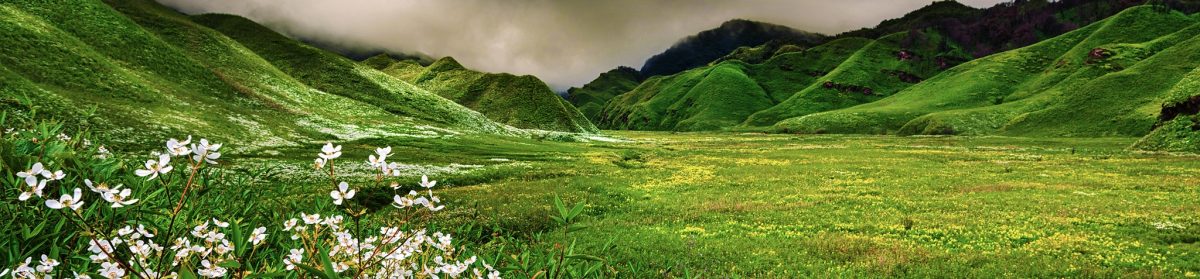
Dorjee Khandu cremated with full state honours

TAWANG  (Arunachal Pradesh), May 10 (ANI): Former Arunachal Pradesh Chief Minister Dorjee Khandu, who was killed in a chopper crash, was cremated with full state honours at Shepedung near his… Read more »

TAWANG  (Arunachal Pradesh), May 10 (ANI): Former Arunachal Pradesh Chief Minister Dorjee Khandu, who was killed in a chopper crash, was cremated with full state honours at Shepedung near his native village in Tawang District.Thousands of people turned up to attend the last rites of Khandu, who was cremated as per Buddhist traditions of the Monpa community.Khandu and four others – crew members Captain J S Babbar and Captain K S Malick, Khandu“s security officer Yeshi Choddak and Yeshi Lamu, sister of Tawang legislator Tsewang Dhondup were killed in the chopper crash on April 30.The bodies were retrieved from the crash site at Lobothang near the 13,700 feet Se La in Tawang district on May 5 after six days of intense search operations.

Read more / Original news source: http://feedproxy.google.com/~r/Kanglaonline/~3/NW9tyyjdIOE/

State armwrestling championship

IMPHAL, May 11: The 29th state armwrestling championship will be held at SVC Community Hall, Keibung, Heirangoithong on May 12 to be organised by the Manipur Arm Wrestling Association. The… Read more »

IMPHAL, May 11: The 29th state armwrestling championship will be held at SVC Community Hall, Keibung, Heirangoithong on May 12 to be organised by the Manipur Arm Wrestling Association.
The opening function of the championship will be graced by L Jayentakumar Singh, minister health and family welfare and cooperation.

Read more / Original news source: http://feedproxy.google.com/~r/Kanglaonline/~3/K0dktApDq_0/

Awareness campaign

IMPHAL, August 20: The Department of Life Sciences, Manipur University, The Biodiversity Ecology and Environment Network Manipur (Bee Net Manipur), and The Environment and Ecology Wing, Porompat, government of Manipur… Read more »

IMPHAL, August 20: The Department of Life Sciences, Manipur University, The Biodiversity Ecology and Environment Network Manipur (Bee Net Manipur), and The Environment and Ecology Wing, Porompat, government of Manipur have jointly organized a discourse on Biodiversity Conversation in connection with National Environment Awareness Campaign, under the sponsorship of MoEF and EEW, Manipur, at the department of Life Science Manipur University.

Read more / Original news source: http://kanglaonline.com/2011/08/awareness-campaign/

Govt to start land acquisition for road widening

IMPHAL, May 14: The state government will soon start the process of land acquisition along the North AOC to Minuthong road stretch as it has decided to widen the road… Read more »

IMPHAL, May 14: The state government will soon start the process of land acquisition along the North AOC to Minuthong road stretch as it has decided to widen the road stretch at the earliest possible.According to an official source, the process for land acquisition for widening of the road will be done as soon as the state revenue department will made the official notification, as the state government has already decided that the road stretch from North AOC to Minuthong will be widened by 15 metres on both side from the centre of the road median.It further stated that the road widening process will involve land acquisition and demolition of structures on the affected pattaland. However, the land acquisition process may take some more time even as works need to be taken up urgently as the monsoon season will soon set in.On the other hand, the state government has also decided to authorized the purchase of the required land for widening of the said road from the respective pattadars on payment of compensation of land as assessed by the Deputy Commissioner, Imphal east, and the compensation for the standing properties shall be made after due assessment by the PWD, the official source added.

Read more / Original news source: http://feedproxy.google.com/~r/Kanglaonline/~3/DCDZDchaP4A/

Appointment

IMPHAL,May 1: PA Sangama, National General Secretary, National Congress Party has expressed his pleasure on the appointment of Laishram Ibomcha Singh, ex-MLA, Keishamthong as the vice-president cum spokesperson of NCP,… Read more »

IMPHAL,May 1: PA Sangama, National General Secretary, National Congress Party has expressed his pleasure on the appointment of Laishram Ibomcha Singh, ex-MLA, Keishamthong as the vice-president cum spokesperson of NCP, Manipur.  Laishram Ibomcha will assume his charge immediately, a release said.

Read more / Original news source: http://feedproxy.google.com/~r/Kanglaonline/~3/RDFCq_hg_Ug/

Meecham Praja: The forgotten common men in Manipur

By Amar Yumnam The basic purpose of having an administration and a governance system anywhere needs to be recalled and analysed at this moment of history when we are celebrating… Read more »

By Amar Yumnam
The basic purpose of having an administration and a governance system anywhere needs to be recalled and analysed at this moment of history when we are celebrating six and a half decades of independence from foreign rule. This is because, despite the recent more or less impressive track record of good growth performance, the meecham praja (common people) seem to be at the receiving end of every mechanism of governance.

Manipur Scenario: The situation is worse in Manipur than elsewhere in the country. Whereas the rest of the country has reaped the benefits of modernisation, although the dispersal of the benefits has been an issue, the case is different in Manipur. We have not had the kind of economic expansion experienced elsewhere whereas we have had more than our share of the inflationary trends and growth disturbances. Further, while in the case of other States in the country there are people in the administration who are alive to the fundamental purpose of governance as facilitating the access to administration and livelihood efforts of the common people, we are pained to observe the complete reversal of this principle in the case of Manipur.

We can have multiples of daily life exemplars to drive home this subjugation of the common people. First look at the daily dose of alertness they have to have at their command in order just to be in the business areas of Imphal and cross the streets. They have to bear all the costs of insensitivity of the official vehicles and arrogance of the private ones as well. What I would love to see is the kind of scenario where my senior-citizen “mother” and my aged “father” would feel at home and cared for whenever they set foot in any area of the Imphal city; well, a very unlikely and unrealistic expectation.

I would consider myself as someone who is fairly conversant with own rights and responsibilities. I am also fairly conscious of how to resist encroachments into my personal space and rights arena. But pretending and behaving as if like any of the common men in the street in daily dealings and assert when violated has taught me how hard the daily lives of the commoners are in Manipur. Let me start with an example from an office of the Central government. In a personal post-paid mobile connection for which I have been religious in paying the due bills every month, there occurred recently an interesting development. Even after payment of the dues as reflected in the latest bill, there used to be reminders for payment of dues for at least three to four times a day for about ten days. In the beginning, I had the impression that it must be just machine problems or routine issues. But within a few days, I found all out-going calls barred besides the STD and ISD. When I had sent one of my office assistants to enquire into the status and reasons for the barring of all outgoing calls, two things of great interest emerged. First, the daily multiple reminders for payment of dues stopped immediately after the enquiry for reasons best known to the staff of the department only. Second, the concerned officials sent back my boy with explanations which any reasonable person can immediately establish as nothing more than a bluff. Dissatisfied and angered by this, I did call up a higher ranking officer of the department as a prelude to going for full scale grievance correction complaint. On his intervention, I got the barring removed. But that was not the end. The ISD and STD were still blocked. I had to go for another round of telephonic contacts to get the ISD and STD barring removed.  Now the question that arises here is what might be happening in the case of a commoner who is not so conversant on the various recourses to actions to get his due services delivered.

Further, once the barring has been removed, why does not there exist a system whereby the connection is restored to its full functionality instead of requiring further contacts? Still further, it needs to ponder why the indulgence in full blown bluffing when an innocent person was enquiring about the issue. Similar experiences are undergone daily by the common people while dealing with the offices of the State government as well. Now these suppressive features of governance are superimposed on the rising difficulty of the common people to eke out their living.  The rise in the prices of commodities of daily consumption in an atmosphere of shrinking livelihood opportunities is a reality everybody is living with.

Now the Resolve: Now in the celebration of the August 15, we need to be very sure of at least one resolve. There is no point in making many promises. The need of the hour is reminding ourselves the existence of a majority of the common people in circumstances un-conducive to their functionings. The administration would be doing a yeoman’s service if it at least resolves and ushers in a period where the facilitation of the survival of the common people is the yardstick of the success or otherwise of governance. We all should remember that not only do we all have a common beginning, but we also have a larger set of relatives among the commoners. Let us all try to facilitate each other’s existence, particularly of the commonest of the common people. Nobody would be a loser in this, and the society would be the gainer in terms of peace and stability.

Read more / Original news source: http://kanglaonline.com/2011/08/meecham-praja-the-forgotten-common-men-in-manipur/

L Sangita football

IMPHAL, Aug 22: PHYLO defeated NYC by 3-2 goals while YAC Yaiskul defeated YPHU by 1-0 in today matches of L Sangita Memorial Imphal West 1st Division Football League held… Read more »

IMPHAL, Aug 22: PHYLO defeated NYC by 3-2 goals while YAC Yaiskul defeated YPHU by 1-0 in today matches of L Sangita Memorial Imphal West 1st Division Football League held at Chajing Kangjeibung.

Read more / Original news source: http://kanglaonline.com/2011/08/l-sangita-football/