
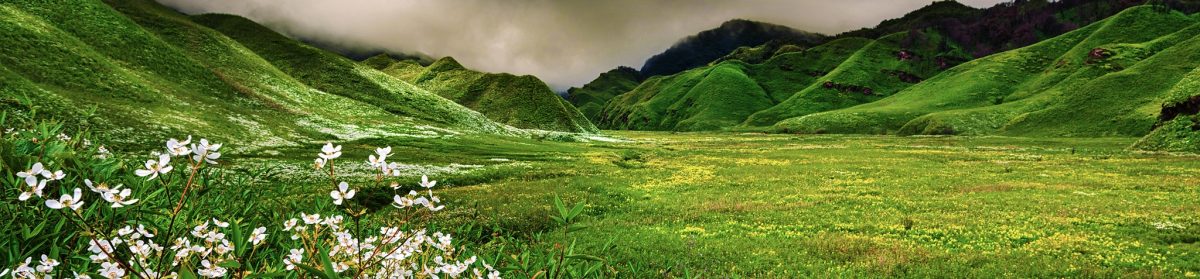
Alternative Poetry of the Northeast

Robin S Ngangom takes a closer look at some of the poetry written in English language            It would be pointless to ask the new generation of poets from the

Robin S Ngangom takes a closer look at some of the poetry written in English language           

It would be pointless to ask the new generation of poets from the Northeast who writes in English why they have chosen the colonizer’s language. The politics of language no longer concerns them; linguistic quarrels for them might well have been consigned to the archives of literary history. On the contrary, the new generation writes with a confidence which would be the envy of their older fellow poets.

In the English language poetry of the Northeast, one can discern an emerging tradition, an alternative to the poetry pioneered by the metropolitan poets of the 1960s and their present-day descendants. Schooled as they were in the Pound-Eliot academy, these metropolitan poets perfected a detached, formal, craft-driven poetry. It is a self-regarding, albeit passionless, ‘internationally minded’ pursuit, motivated by a fashionable philosophy of exile and alienation. The poetry of the Northeast, on the other hand, can be ‘statemental’ in comparison to the verbally-dazzling metropolitan artefact, rooted as against the alienated stance of modernist city poets, autobiographical as against the impersonal. The Northeast poets are also not particularly concerned with technique, form, and symmetry; they are not remarkable experimenters with metre or craft. Their verse often lacks the linguistic sophistication of the metropolitan poets, and read like ‘translations’, as someone pointed out. Further, instead of the expected radical break with the near past, Northeast poetry written in English suggests a continuity with the past.

What are the distinguishing traits of Northeast poetry written in English? It is the native world, most of all, which comes into view in the work of these poets. A predilection for images and motifs drawn from nature is proof that Northeast poetry in English is deeply rooted in the land. ‘Nature’ is not an impassive witness to the existential despair of men and women as in the contemporary wasteland of modernist poets, but a living presence for the Northeast poets, where hills and rivers are also deities (‘Everything has life – rocks, stones, trees, rivers, hills, and all life is sacred,’ says Mamang Dai) and the fates of natives are inevitably intertwined with them. Thus, in spite of the trappings of modernity, the life of most communities of the Northeast is defined by their folk origins. The mythic world still survives at the frontiers of the civilized world, and the ‘folk’ still continues to assume the ‘intensity of reality’ for many. Myths provide a key to the cultural behaviour of a people, but when communities seem to be losing their way in the midst of cultural colonization, mythopoeic poets, out of a deep-seated desire, step in and try to emulate the traditional storytellers and shamans by recalling the lore of the tribe. The chronicling of contemporary events, the fallout of violence above all, is another important aspect of Northeast poetry in English. This has led to the charge that some Northeast poets are unduly obsessed with the poetry of politics and brutality. However, to be a tenacious witness to the agonizing and recurrent political violence without sensationalizing it, is also a risk that the Northeast poet has to undertake often. This is not the poetry of unquestioning ‘nationalism’ in the face of a fear of loss of identity and encroachment of territory and cultural values, but a nervous internalization of the increasingly complex politics of the region.

Could there be regional varieties within English language poetry in India? Regionalism as a literary phenomenon seems to have arrived, the ‘regional’ often perceived in creative friction with the centre. If Mumbai and Delhi constitute the centre of English language poetry in India, Northeast poetry in English makes up the ‘regional’. The alternative tradition offered by Northeast poetry has perhaps created a body of verse that is more approachable. Northeast poetry in English has great variety, the region being the home of diverse communities, speaking different languages and embodying discrete cultures. The poets featured in the supplement represent this variety to an extent.

A Poem for Her

By Anurag Rudra

These days are long and dusty
Do not blame me if I turn to stone
Like a false god. I have seen many a
Sullen afternoon die a slow death
Baring themselves to the hungry night
Like unwilling women selling love
This day, beloved, will it be any different?
Today, like other days, you shall not rouse
As this indifferent commotion recedes
Into the lull of this sunlit funeral
Today, I shall roam these streets again, this
Ancient burden of being a man, weighing
On me, like an insipid, forgotten sin
And we shall remain mere tombstones
In these dusty graves. Will this winter
Promise another bout of hazy memory?
Only these lifeless lines shall banish us
To the hope of this brutal love, and us.
Strangers in this tepid, misty rain

Me

By Aruni Kashyap

Even I have words.
I can clay-mould them
I have languages, literatures
forest songs.
They crawl back centuries,
earthquakes generational.
Grandmas circulated them; with betel nuts
on courtyards under honeyed moons,
like rains, they drench minds, and more—
When first-drenched ones are time-parched,
to the new ones who are parched for stories.
With time, they have descended
Like seasons and mists, to rest with us.
I have tunes too, books
written on bark with earthworm`s blood;
they are different,
independent, like these rivers
in my chest, legends- laden
mournful, yet swelling with energy furious
Love-lost like singing spring birds
Anonymous, beyond the hills
Where rivers and rains are born
To flow down as legends, life-blood.
My history is different, defined
by grandmas, rivers, hills,
singing spring birds behind green trees
and seventeen victories.
My words: they have legends in them.
The way tea-leaves run in my veins
instead of blood.
Stories, of new-born speaking from backyard graves
About dogs transforming into man
Man to sheep, goats
And a girl, singing through lime trees,
gourds and lilies from backyards.
And I still wait, for a warm embrace
My throat peacock-parched, in longing
All the rivers from my land
legends, rains weary
Cannot quench my thirst, I need your love
Don`t you see,
I`m different?
Even I have words.
Languages, literatures
And stories to tell you
Are you eager to listen, at all?

In the Hills of Seven Huts

By Ibohal Kshetrimayum

In the hills of seven huts,
where WAR is either a place or surname,
and dreams are translated into numbers,
and a number became a gambler’s sad song,
I found God breathing through the pine trees.
Orchards in the hills shivered in winter’s palms,
golden oranges plucked for city bazaars,
a young leaf wanted to go along,
discontented orange tree held it back.
A fleeting rainbow across Noh-Kali-Kai,
a glimpse of her precious final steps,
before she became a waterfall.
Twangs of hammer on hot iron,
a dagger hissed in a bucket of water,
Mylliem’s blacksmiths keep their tradition throbbing.
Mylliem’s giant boulders,
memoirs of the great earthquake,
we were cast out recklessly-
says a mossy stone.
Sunday morning in the church,
a pair of long legs walked past a pew,
a clergyman sighed in agony.
Christmas in Shillong,
roast turkey on the table,
rush of stampeding shoppers,
merchants carol their way to the bank.
A dog swallowing the moon,
beating of empty tins, chasing the dog away,
I became a lunar-eclipse drummer in Shillong’s hills.
I went down on my knees,
and asked God for my Biblical rib,
and I found her snoring gently beside me,
in the hills of seven huts.

Cyril’s Award

By Nabanita Kanungo

Are you sure
what left your bow of habit
on the plains of the Surma,
was a pencil and not an arrow?
What then spirals up from below
to sink into our hearts
that poison-tipped story,
enough to curdle even your darling Europe’s blood?
Tell me whether it was a Hindu or a Muslim night
when you flicked my grandparents to nearby hills..
….and destined dispossession for all times?
They took only the names
of their homesteads and courtyards with them
because only names become of memories
and only memories can be fiddled around with
in a land of blasted palms.
Sun-baked feelings, the nose of dung’s sweet wiped floor,
the golden thatch of desh, nights of bari and bhite,
rustic Lalan* fakir songs are names.
But the sun was killed after the moon
they would have said if they lived to see our impotence.
For only cartography drips from our retro-roof
and we try to plumb the rift with a gooey tongue,
gazing stars of bygone sixty, seventy and ninety year-old faces.
History kills slowly but surely.
Cyril, who are you?
I am a twenty-seven-year-old refugee yesterday
stunted beneath blaming anyone else
and my cheeks are still bloody
with the costly pinch of your charity.

Note: desh refers to a sense one’s own country, bari means a home founded on one’s soil and bhite is the hearth therein.

* Lalan fakir was a popular, almost symbolic figure who sang Sylheti folk songs with a sufi touch.

North A.O.C.

By Poireinganba Thangjam

The toothless pimps smile at the passers-by
from the second floor of the three-storey building
like wooden puppets in the market.
Then a wayward wind wafts in with such license,
the income tax collector sulks in a corner.
It swept the wine tumblers down like an invisible broom.
Where its drops fell down the wooden floor
someone screamed just down below
“Blood, Blood”
and the homeland security drove in lazily with exhausted sirens
like an experienced gambler lurking in rummy shades.
Everybody ran under the sheltering sky
as the search for a murdered corpse began.
Sixty minute ticks of the weary clock and
they couldn’t find a dead body anywhere,
so fired two shots on the ground floor making up for lost time
where the carpenter and his wife Seema rented a place to sleep
upsetting the Bihari coolis as they slept with their iron hooks.
The sugar traders at the top floor with spring-board arses
pounded buttocks over the roof-tiles, jumping over the other buildings
while the over-fed prostitutes chattered in naked Burmese
as the policemen drove away in their olive green combat vehicles,
and I, in my rickshaw, swollen-eyed cycled back
believing they had just killed my lover and his man.

One Day, Ema!

By Shreema Ningombam

It will rain
And you will unbind your hair and wash it
In the slow dripping from the thatch
One day
The flowers will bloom
In your dark mystique bun
As if they were never plucked
One day
The wind will carry the scent
Of your fresh steamed rice
Through the corners of this ravaged street
One day
They will come
For whom you have waited for so long
In this life or in this death
One day
The rainbow will color
The ashen shawl around your bosom
With your darling shades
One day
Your children will fling open
The eternally closed gates
With the cries of “Ema! Ema!”
One day
The kites will fly
In your blue sky with tails of freedom
With no one to harness them
One day
I will garland your neck
With the wreath so painstakingly woven
As you walk past the triumphant crowd
One day…Ema.

‘Ema’:’ Manipuri word for mother.
(Robin S Ngangom teaches at NEHU)
 

Read more / Original news source: http://kanglaonline.com/2014/04/alternative-poetry-of-the-northeast/

Social Crises In Manipur: The contrast with international development experiences

By Amar Yumnam Korean television serials are very popular in a very robust way in Manipur. The strength and transformation of the South Korean economy were based on exports of

By Amar Yumnam

Korean television serials are very popular in a very robust way in Manipur. The strength and transformation of the South Korean economy were based on exports of manufactured goods. But now television serials as cultural goods are also a strong export item. This is what as should be in a context of expanding globalisation. The reduction in both space and time is the understandable impact of globalisation. This creates a convenient atmosphere for the trading of cultural goods like television serials. In other words, what we observe in the Korean case is absolute positive loop of globalisation processes. The country has experienced what Benedict Anderson calls the phenomenon of “long-distance nationalism” in which the identity of the people gets submerged with the global identity without in any way needing to forego the original local identity; the compression in space and time consequent upon the globalisation processes creates an opportunity to resolve the transitional identity crises in a much wider and inclusive way.

Compare this with the scenario prevailing in Manipur in so far as identity issues are concerned. We now experience rising inter-ethnic distances. The Indian approach to culture without any meaningful scope for compression of time and space in inter-ethnic interactions has only led to rising frequency of phenomena like unashamed indulgence in rape, the Kuki-Naga conflict, and the lock, stock and barrel political only articulations of inter-ethnic issues; the atmosphere for inter-ethnic relationships is just surcharged with negative voltages. Something like what Yuval-Davis describes as the price the price of multiculturalism has happened in its intense form in the North East and Manipur: “a basic problem with multiculturalism is the assumption that all members of a specific cultural collectivity are equally committed to that culture. It tends to construct the members of minority collectivities as basically homogeneous, speaking with a unified cultural voice. These cultural voices have to be as distinguishable as possible from the majority culture in order for them to be perceived as being “different”; thus the more traditional and distanced from the majority culture the voice of the “community representatives” is, the more “authentic” it will be seen to be within such a construction.” I must hasten here that I am not saying I despise multiculturalism as such. Multiculturalism, however, has to be followed only in accompaniment of social and economic policies for enhancing inter-ethnic interactions and facilitating evolution of cultures. In the absence of these social and economic policies, the capabilities of the individuals are neither created nor nurtured to flourish in a world of reducing time and space. In the Indian case, the approach to multiculturalism has been marked more by ridiculous appeasements for a few in a community and not by wide-based interventions. This has had the unwanted effect of compromising the capability of the community for the sake of a few closed to the powers that be; the powers that be are increasingly twin in Manipur and the North East as we move farther from the provincial capitals. This has further had two retarding effects. First, the state machineries have been conveniently allowed to be ineffectual. Second, the voices of the community and the individuals have been socially dampened and economically non-existent.

In a globalising world, the members of a developing society would also be increasingly globalised in space leading to its reduction. But they will not be necessarily going for compression of time in terms of culture. As evident from the Korean, the Japanese and the Chinese experiences during the last five decades or so, the original identity has also been experiencing spells of assertion from a globalised space and time. The original identity crisis of fear of losing it in a globalised context has now been transformed into a kind of strength in a world of reducing space and time. In the case of the other countries, this transformative experience has been more rather than less uniform across communities. This has not been the experience in the Indian case, and so also in the case of Manipur. The Indian policies since 1947 have been rather epitomes of exclusion and pretensions of cohesiveness. The same policies have been repeated at the provincial levels as well. This is how the issue of black money gets larger. This is also how the base of political support gets disunited among the Non Resident Indians. In the case of Manipur too, the Thabal Chongba being planned in Chicago by the Meeteis based in North America could also be allowed to transform into a cultural event for all the Manipuris.  

This is exactly where the critical crisis of Manipur lies. The South East and East Asian development experience has been one where the local history has transformed itself into a globalised history in which the transitional identity crises of communities are allowed to evolve with the changing times. In the case of Manipur, the policy approaches of both the provincial and the country-level governments have been marked by subversively and covertly enhancing segregation of identities rather than evolution. This has been most recently visible in connection with the policy-bluffs around the so-called Look East Policy. This is where we need to look for a new personality and new commitment in the forthcoming parliamentary elections as getting unfolded in Manipur.   

Read more / Original news source: http://kanglaonline.com/2014/04/social-crises-in-manipur-the-contrast-with-international-development-experiences/

Wake Up Call To All Voters Of Manipur

( Part-1) By Dr. Khomdon Lisam We, Manipuris tend to celebrate election as a festival without much thinking about the consequences. At the time of election campaign ,  anybody can

( Part-1)

By Dr. Khomdon Lisam

We, Manipuris tend to celebrate election as a festival without much thinking about the consequences. At the time of election campaign ,  anybody can go to the candidate and ask for money or chak chanaba or shumang Lila or  even for drinking wine or  Heroin  drugs (No-4)  and that too in the name of democracy. The politicians also distribute money through their agents to win the election. Rampant corruption and bribery starts from the time of election. At the time of election, we tend to forget  core issues of Manipur  like Corruption, AFSPA-1958, Inner Line Permit, unemployment, electricity , water supply, economic blockade, rape and human rights violations, dharnas,  bandhs, strikes, petrol queue, rising price of petrol, LPG and many other core issues. During economic blockade, we have experienced many suffering and hardships – Rice selling at Rs.150-200 a kilogram, a liquefied Petroleum Gas (LPG) refill at Rs.2,000, petrol at Rs.200 a litre, and diesel at Rs.150 a litre. At the time of election, we tend to forget  our long suffering and surrender  our right  to vote  to  Congress for a paltry sum of  Rs. 1000.

Our  right to vote has been sold at Rs. 1000 to a particular candidate for five years  or Rs. 0.54 per day. The result is that we end up electing contractors, drug traffickers , criminals and former militants as MLAs.  Ved Marwah, former governor of Manipur told TIME. “There is no democracy” in Manipur, he said “but rather the trappings of democracy and a combination of tribal society, various insurgent groups and total corruption.”

At the time of election, we tend to forget

(1) Irom Sharmila Chanu who  has been fasting since 2nd November, 2000 demanding for repeal of AFSPA-1958 .

(2) 5665 persons were killed in Manipur because of AFSPA during 1992-2010

(3) June 18, 2001 episode during BJP rule where the Manipur State Assembly building and many office buildings were burnt down and 18 people sacrificed their lives for protecting the territorial integrity of Manipur

(4) Heirangoithong massacre of 14 March 1984, at the Heirangoithong Volley ball Ground following indiscriminate firing by the CRPF personnel stationed nearby resulting in the death of 110  persons and injuring thirty-one  

(5) Malom Massacre of 2 November,  2000 – the arbitrary killing of eleven persons including women and one child, who had just received a national Bravery Award from the President of India.

(6) The massacre at Tabanglong in western Tamenglong District on 28 December 2000 resulted in the death of eight  villagers when they were attacked by soldiers belonging to the 15th Jat Regiment of the Indian army  

(7) Oinam Massacre (Operation Blue Bird) : July 10, 1987 where  Fourteen civilians were shot dead and several others died of hunger, starvation and torture in the concentration camps:

(8)  RMC – Massacre of  7 January, 1995 – execution of nine civilians by the CRPF in Imphal City  within the campus of the Regional Medical College (RMC) now renamed the Regional Institute of Medical Sciences (RIMS)

(9) Pebam Chittaranjan’s self immolation  on 16 August 2004 for removing AFSPA.

(10) Thangjam Manorama was raped  and then killed by the Assam Rifles on 11 July 2004

(11) Nude protest by 40 women in front of Assam Rifles on 15 July, 2004

(12) killing of Chungkham Sanjit and Thokchom Rabina in the open market at broad day light on 23 July, 2009.

(13) Fake encounter of Andro on November 1st 2009 where, 7 youths has been gunned down by 28th Assam Rifles troops in suspicion of militants (The Hueiyen New Service- 31st January 2011).

(14) Oinam Leikai Massacre on November 21, 1980,

(15) Tera Bazar Massacre: March 25, 1993: Five civilians were killed and many others received bullet injuries due to indiscriminate firing by CRPF. However, no enquiry has been instituted to date.

(16) Ukhrul Massacres on May 9, 1995,

(17) Bashikhong massacre on February 19, 1995,

(18) Churachandpur Massacres on July 21, 1999,

(19)Nungleiban Massacre on October 15, 1997,

(20) Tabokpikhong Massacres on August 12, 1997,

(21) Tonsen lamkhai Massacres on September 3, 2000 . Will  the sacrifices of our martyrs go in vain.  The Manipur Government has not made a  single judicial enquiry report public. That is why people have lost faith in such judicial  enquiry . Retired Sessions Judge C. Upendra said that he had headed twelve such enquiries himself, and found in all cases the  encounters were fake, though none of his reports was made public.

Every political party except Congress, BJP and CPI  is demanding repeal of AFSPA-1958 at this time of election. The national level election manifesto has not mentioned any word on AFSPA . The Congress, BJP and CPI have clearly indicated that they will not do it unless situation improves.  

Shall we ask a counter question to elicit response from the people -why should the AFSPA be removed from Manipur (1) Why should we vote for Congress, BJP and CPI if they are determined not to remove AFSPA from Manipur . (2) why should we continue worshipping our  Ministers and MLAs who are against the removal of AFSPA. (3) why should  we consider it  a status symbol to invite high ranking Military and police officers to our functions (4) when we are encouraging, welcoming and celebrating defection of opposition parties to the ruling party. Is it not  a shameless action to jump from one political party to another ?  They should apologise to the people who voted for them. (5) why don’t  we have the courage to boycott the Ministers and MLAs who are living under the shadow of ASPA. (6) why should we accept  small gifts  from Assam Rifles and Indian Army in the form of solar lamps or Water filters, generators etc.  (7) why can’t we be united and create a people’s mass movement against AFSPA . I heard Law and Order is in the State list but AFSPA is in the concurrent list –that means it can be revoked either by the State Government or by the Central Government. That is why our Chief Minister has revoked AFSPA from seven constituencies of Imphal. The Union Home Ministry, the defence Ministry are strongly against removal of AFSPA from Manipur. Therefore  Our Hon’ble Chief Minister may be thinking  that AFSPA can be removed only by the Central Government. The Hon’ble Chief Minister may ask the Prime Minister and the Union Home Minister why AFSPA is not imposed on Maoist affected states like West Bengal, Bihar , Orissa, Andhra Pradesh, Jharkand, Chattisgarh, Madhya Pradesh, Uttar Pradesh, Karnataka, Kerala, Uttaranchal, Tamil Nadu, Maharashtra. The Indian government has declared that “out of 630 districts in India,  220 districts are Maoist affected areas. The Naxalite Maoist insurgency gained media attention internationally after the 2013 Naxal attack in Darbha valley, which resulted in the deaths of around 24 Indian National Congress leaders, including the former state minister Mahendra Karma and the Chhattisgarh Congress Chief Nand Kumar Patel. This completely shook the political system of India. On October 31, the New York Times wrote, “India’s Maoist rebels are now present in 20 states and have evolved into a potent insurgency. In the last four years, the Maoists have killed more than 900 Indian security officers…violence erupts almost daily.”

The Ministry of Home Affairs has deployed around 110,000 military and para-military troops to eliminate the Maoist . The Ministry of Home Affairs say that the amount extorted by Maoists is around Rs.1400 Crore annually. Jharkhand has emerged as the largest supplier to the Naxal kitty by contributing around Rs.300 crores per year. : The Indian Prime Minister said “ India is losing the battle against Maoist rebels…violence is increasing” and “Maoists have growing appeal among a large section of Indian society including tribal communities, the rural poor and the intelligentsia.” Prime Minister Manmohan Singh recently described the Maoist movement as “the biggest internal security threat” confronting India. On Feb 2, 2010, Mr.  Chidambaram, the then Union Home Minister said the situation in Maoist-affected states continues to be “a cause of grave concern”.  Our Hon’ble Chief Minister may ask to the national political leaders  “ If that is so, why not the Government of India , imposed AFSPA in all the Maoist -affected states. Why this racial discrimination even in the case of AFSPA. Do the Government of India think  that the people of North East are expandable. If that is so , then  why not our respected Chief Minister sit in the Dharna demanding from the central government  with 10,000 followers : (1) lifting of AFSPA from all districts of Manipur, (2) Inner Line Permit System, (3) Special drive for employment f Manipuris, (4) establishment of an Upper House  State  Legislative Council) with a minimum of 40 members  with provision for 10 nominated members, (5)  increase of Lok Sabha Constituencies from 2 to 6 ( Anglo Indian Community with a population of  two lakhs was given two seats) , (6) increase of Rajya Sabha seats from 1 to 7 reflecting equal  representation of states as done in USA  and other countries, (7) amendment of  Article 371C of Indian Constitution, (8) protection of boundaries of Manipur etc. Arvind Kejriwal, Chief Minister of Delhi  was the only Chief Minister in India who sat in dharna during the last 64 years demanding justice from the Central Government. The example of Arvind Kejriwal has been followed by other Chief Ministers. The Indian Constitution which our politicians consider as Gita or Bible  or  Quran can be amended to look after the interest of Manipuris. We have never exercised this right  for the last 64 years because of lack of political maturity  and clear cut vision of our political masters.

Read more / Original news source: http://kanglaonline.com/2014/04/wake-up-call-to-all-voters-of-manipur/

Writing in her own terms

Swar Thounaojam, winner of many awards, who writes, performs and directs plays; IFP had a quick chat with the woman who seeks her own feminism as separate from the ‘mainland’

Swar Thounaojam, winner of many awards, who writes, performs and directs plays; IFP had a quick chat with the woman who seeks her own feminism as separate from the ‘mainland’ feminism. She works under the banner of Fewer Emergencies.

IFP: Do tell us about how you came to be in theatre and performance? What propelled you into this?

Swar: I was very interested in Shumang Lila when I grew up but you know how educated middle class in Imphal thinks about such art. I was not allowed to watch such performance, I use to go in secret or tag along with aunts. During my graduation when I was in Hindu College I was active in Street theatre. After my Masters I wanted to do MPhil but I didn’t, the teachers in the department were not inspiring enough. At that period I applied to Arundhati Nag’s Rangashankara theatre in Bangalore. I write to her stating that I wanted a hands-on training. She didn’t promise me anything but I just boarded the train and went to Bangalore. In the interview or rather the interaction we had she straightaway said “Why don’t you join today?” This was in the month of September 2004. This move proved lucky for me. I was a part of the one month festival and since this was a very prestigious project I got to know a lot of people in the theatre circuit. I was a part of Rangashankara for a year. We did everything from sweeping the floor to coordinating to everything. After I left Rangashankara, I free lanced for a while.

IFP: When did you begin writing plays?

Swar: My life as a playwright began with Writers Bloc a collaboration of Rage theatre and British Council, Royal Court theatre. I sent in a play. This was a turning point. I was selected; I went to Bombay and was in the Jindal farmhouse as a part of the residency. As a part of it I wrote a new play to be a part of the festival. What began in 2006 was performed in 2007. Sunil S directed the play. I was lucky because he is a well-known theatre director. Turel, was the play. I was 25 years old then. However, I was thought of as a cultural ambassador. “As an artist do I want to work within this confine?” was a question I began to ask myself. I wanted to be a playwright but had to figure out what kind of playwright I wanted to be. It is very important for me to write in my own terms.

In 2006, after my marriage I told my husband that I wanted to leave India for a while. We were in Munich for two years. This time was very important to me because in Munich I could be anonymous. During this time I read a lot of plays, looked up the work of various playwright. I was a part of an Experimental Theatre. I did a lot of learning by watching.

After I came back to Bangalore I got the Charles Wallace India Trust Scholarship and got a residency in London, Royal Court Theatre. My first directorial venture is Fake Palindrome. It consists of seven pieces. We rehearsed through 2010 and it was performed in 2011. As a playwright my worldview is affected by what is happening around me and also by the fact of being a woman and as a person of north east India residing in Bangalore. From 2011 -2014 I tried different collaborations to see what kind of directorial venture I could think of. I’ve also resumed performing and have been doing so for the past two years.

I am seeking my own feminism as separate from the “mainland” feminism. The perpetual question is –What is my narrative? I am also very interested in Ima Keithel. It is my first project here. After my work here in Ima keithel I went to London and saw the Paula Rego Retrospective exhibition. Her series called Dog Woman inspired me to look at Ima keithel anew.

Lucky Lobster, 2011 is a satire. Bogeyman, 2013 is based on the stories of Churanthaba, Tapta, Lai Khusangbi etc. but with the idea of policing being central to it. I am looking at policing through the lens of terrorism, space and the body. Bogeyman is an investigation into this.

IFP: Tell us about your Future Projects?

Great Game East grew from my experience of the incident of exodus especially from Bangalore. My dissatisfaction was also with the fact that one rarely gets to see on stage the North East body. Other than theatre groups coming from the states of North East India there is no performer from here in the so-called mainstream plays. I started thinking of the possible way to initiate and thought of photography as the medium to begin with. This project is as of now self-financed. We go to neighbourhoods in Bangalore. The subject necessarily a person from the north-east holds a mirror, others -sights and people of the city peeps into the mirror out of curiosity. I also take videos around it. This would entail three different medium – photography, video and performance.

Read more / Original news source: http://kanglaonline.com/2014/04/writing-in-her-own-terms/

Impressions of Guna Yala Panama

By Jiten Yumnam    On a cloudy mid afternoon of 20 March 2014, our small Air Panama plane flew over vast forest of Kuna Yala territory in Panama and lands

By Jiten Yumnam   

On a cloudy mid afternoon of 20 March 2014, our small Air Panama plane flew over vast forest of Kuna Yala territory in Panama and lands in a strangely small airport in Ustupo Island which is surrounded by the Caribbean Sea. The sea waves breaks on the edge and sides of the runway and the soft and moist winds from the sea swept over continuously. A short boat ride reaches us to the main Ustupu Island, inhabited by the Guna indigenous people of Panama.                                        

Guna elders and women in traditional attires received us as we visit the island for a four day international training workshop on climate change. Traditional Guna houses made from reeds and coconut leaves abound where children and women peek from windows and doorsteps wearing  curious looks on yet another ‘outsiders’ entering their territory. The children’s playful and happy laughter permeates the environ in the Ustupu village as they greets us with innocent and happy grin. Many children happily paddle their canoes past their village waters. The village air is filled with bountiful freshness of cool breezes from Caribbean Sea continuously sweeping around. One is simply mesmerized in the freshness of the air and purity of the land.     

As the Traditional Chief and villagers of Ustupo welcomed us in the Kuna Congress traditional hut and as the elders of the village shared on Kuna peoples’ history of struggles to defend their land from colonial expansionism, to preserve and promote their cultures, survival dependence over their land, forest, waters, one could feel the vision and maturity of the people of this land, a vision which can contribute in healing the wounds of our mother earth.    

As days ensured, Kuna Yala territory’s enchanting beauty unfolds as the blue sea waters turns silvery in evenings and as the trees sways in unisons in gushing wind. As we traversed its waters, surrounding islands and its deep green forest as part of our training, the life of the land, the synergy between the people and the land, the deep inseparable relationship is revealed further. The Guna people here are blessed with bountiful land and majestic green forest amidst the mighty blue waters. The land here is also blessed because of the people in it. The people and the land complement each other in securing their sustenance and life.      

The Guna People are well known all over for rejecting one of the most infamous market based solution to global climate crisis, christened as ‘REDD’ (Reducing Emissions from Deforestation and Forest Degradation) project, which envisage to target their enchanting forest for Carbon Trading project, which will allow rich developed countries to continue to pollute the earth. The Panama REDD programme is being implemented by the United Nations Development Programme, the United Nations Food and Agriculture Organisation and the United Nations Environment Programme, together with the Panama National Environment Authority. The proponents of the REDD program in embarking on false climate change solutions are rendered meaningless in this land, simply by the visionary thoughts and wise resolve of the Guna people, a decision evolved through a series of community oriented consultations, reflections through their traditional institutions.

The Guna people feared once the REDD is implemented, communities will be restricted from their free and unhindered access to their traditional forest with corporate controlling their land. And with the sea level rises, they will have nowhere to settle once their islands are submerged. The perception of forest as mere carbon stocks, rather than as source of ‘life’, the complexity of the mechanism, the potential for corruption and disruption of community fabric due to involvement of huge amount of money for compensation etc are some of the specific reasons of Guna peoples rejecting REDD projects in their territory and land. Land is life and much dearer to financial compensations.

Guna Yala is, indeed, the land where the ideas of technocrats, economist, corporate and scientists are put into test and where ultimately, the will and wishes of the people to be free with their mind and deeds prevails. The Guna peoples’ resolves also exposes the fallacies and nuances of false solutions to climate change. One wonders what guides the wisdom of the people to defend their inherent rights, when many of the world’s indigenous peoples are still grappling on how best to respond and as many are caught unaware and rendered helpless by the strong waves of imperialist globalization, development onslaught and brute and reckless militarism.  The Guna people consider their land as sacred, as their mother and giver of life, something which is just inseparable for their own survival and being. Without the land and the forest, the people simply cannot survive and they will lose everything, their cultures, their traditional knowledge and most importantly their future.   

The decision and resolve of Guna people against REDD is significant as the Government of India and the Government of Manipur through the National and Manipur State Action Plan on Climate Change envisaged aggressive push for REDD+ and creation of reservoirs over river systems of the region to mitigate climate change. However, such initiatives will only limit communities’ access to forest land, promote mono plantations and destroy forest and peoples livelihood. Development processes and pursuance of false climate change solutions will only led to more corporatisation and privatisation of the land, commodification and commercialization of indigenous peoples’ lives and future. Indigenous peoples of Manipur and India’s North East has tonnes to learn from Guna people.

The yearnings for self determination are strong and are unique to the people of this land. Democratic values and practices best prevails here at a time when democratic practices wanes and fast disappears in a fast changing world. This is the land where children plays freely, where the trees sway their branches freely, where waves breaks freely and where people think and act freely. Its people and women are heartious, welcoming and beautiful. This is the land where children dance and sing with their elders and learning their cultures and traditional knowledge in living practice. The land is where values and practices of political functioning best prevail. Determined are the people that they opt nothing less than full defence of their land by themselves. A land where the ever gushing wind drives the freshness of the ideas and new vision that runs deep and one could feel it strong. Guna Yala is where people best expressed their cultures and political belief successfully withstanding strong winds of changes. The people here strongly guarded their wish to decide for them and this is exactly what the people here did while rejecting false climate crisis solutions.

The wise words, caring thoughts of Kuna elders’ runs heavy, with endless and limitless space accorded to youths of generations to freshen their mind, to sharpen their thoughts and vision and to develop and strengthen their leadership and wisdom, to nurture their land and future.  There’s increasing influence of the world, such as its seas accumulates trash. However, guided by the wisdom and care of the elders, Guna’s children are learning and practicing to keep the ocean clean, its land pure to keep their future safe.  

The Guna people by rejecting REDD had already set a global example. The present day climate crisis is only an outcome of continued pursuance of insatiable greed by profit mongering corporations and imperialist countries and their insistence on over consumption and over production, which led to usurping of indigenous peoples land and resources. The real solution to climate crisis lies in promoting the right to self determination of all indigenous peoples, ending capitalist growth and development model, promoting multicultural models of development as well as sustainable ways of life as practiced by indigenous peoples worldwide. Other Indigenous peoples of Panama such as the Ngobe people also rejected Barro Blanco Dam, which is projected as clean and renewable source of energy under the Clean Development Mechanism of UNFCCC. Such project actually sees ‘red’ blood flowing from victims of communities killed by Government troopers for protesting the dam.   

One hopes the children of Guna Yala continues to play merrily and freely for coming generations and the birds chirp melodiously without fear, and the spirit of the Guna people to defend their land and to determine their future grows stronger as the days descends into future. The political thoughts and beliefs of the Guna today transcends beyond borders and now a guiding light for many reeling in endless uncertainties and darkness. The resolve of Guna Yala had already inspired peoples worldwide and Manipur and the rest of the region can never be an exception.

Read more / Original news source: http://kanglaonline.com/2014/04/impressions-of-guna-yala-panama/

Critiquing Development Discourses: It`s time to go beyond Sustainable

By  Yumlembam Khogen Singh In accordance with the prevailing narrowly defined and often ineffectually articulated definitions of development, ‘development’ signifies ends like increased income, reduced poverty, and transition to modernity

By  Yumlembam Khogen Singh

In accordance with the prevailing narrowly defined and often ineffectually articulated definitions of development, ‘development’ signifies ends like increased income, reduced poverty, and transition to modernity palpably reflected as better roads and architecture, improved means of communication and transportation, etc. which are achievable through narrowly defined means like ‘science and technology’. Against the claims of achieved development, hard facts suggest that irrespective of developed, developing or underdeveloped countries, present world is facing development induced displacement and environmental crisis. On the prevailing development discourses, some theorists put forward that there are three main perspectives on development namely – Mainstream Perspective on Development (MPD), Alternative Perspective on Development (APD) and Post-Development Perspective (PDP). MPD originated from colonialism and its civilizing missions, it pursues development through modernization and westernization. It assumes development as a homogenous process thereby underestimating diversity and complexities. Rebuffling the singular notion of modernization, APD emerged as an alternative model and strive for development through participatory and self-reliant strategies, i.e. it advocates people-oriented development. And thereafter, under the influence of post-structuralism, PDP questions the very notion of modernity and development; and it comprehends development as treatment for the maladies invented by modernity. These development discourses seems complementing as well as critiquing one another for a better model of development, but the hunt is still unfinished. It can also be argued that whether it is socialist, capitalist or mixed model of development there are always cognitive blackouts in displacement, disparity, distress and discrimination in the prevailing dominant discourses on development. Thus, the leading development discourses can be criticized for their omissions and cost, and there is need for a broader perceptions, methodologies and strategies to deal with the issues concerning development. There is still need for a better model of development. Here, what we can do is to re-question the desirability of the existing conceptions of development. Imperative questions are- whether we are having development or mal-development, and whose development we are concerned about?

When the writer attended the 14th North West Indian Sociological Association Conference on ‘Challenges of Social Development in North-West India’ at MDU, Rohtak on 3rd March 2011; in his inaugural address, world renown sociologist and Padma Bhushan awardee Prof. T. K. Oommen theorized some unanticipated consequences of the prevailing ‘homocentric’ model of development and explained four unanticipated Ds of development: disparity, displacement, discriminations and distress. Sagacious people can also see how disparity exists despite of the so-called development, e.g. male-female, rural-urban disparities, etc. and how development becomes axiomatic with displacement, say displacement of tribal by big development projects. The prevailing divides like gender discrimination, caste discriminations, etc. against the slogan of ‘equality for all’ are unacceptable and the odd distress like increasing rate of suicides despite development in the developed countries insinuate towards flaws in the existing development models. Escalating ‘Genocides’, ‘Culturocides’, and ‘Ecocides’ further substantiated the above mentioned unanticipated consequences of development. Unfortunately the United Nations’ definition of genocide given in 1994 excluded some forms of genocides like killing of an ideological group by the State and killing of people by displacement resulting from huge development projects. If W.H.O. termed such killings as silent genocides; for human rights activists and cultural revivalists, the acts of destroying the characteristics of a group, prohibition of the use of their language and destruction of their cultural heritage should also come under the category of genocide. Prof. Oommen (1986) called such systematic destruction of people’s life in general and the systemic liquidation of cultural identities of minorities in particular as ‘Culturocide’. For a social environmentalist, the deliberate destruction of the ecology of a group of people or the ecological degradation in general is ‘Ecocides’. Thus the ongoing development projects guided by homocentric view on development can be accused of causing such consequences like ‘Genocides’, ‘Culturocides’, and ‘Ecocides’.

As replacement for development, ‘sustainable development’ as a long-term proposal grew out of the ‘Limits to Growth’ debate of early 1970s and it became fully established in late 1980s. As a broad concept it was first widely publicized by the World Conservation Strategy and the term itself was coined in October 1987 when the Brundtland Commission released a document titled ‘Our Common Future’ or ‘Brundtland Report’, and the report defined ‘sustainable development’ as “development that meets the needs of the present without compromising the ability of future generations to meet their own needs”. Nevertheless, it can be argued that the present model of development being adopted in the present world is still ‘Homocentric’ in view, guided by excessive individualism and rigidity with prime focus on human generations, thereby neglecting other living beings and non-livings like culture, identity, etc. Till the early 1990s, almost all approaches to sustainable growth or sustainable development seem endorsing the same core ethic of intergenerational equity that future generations are entitled. However, human distress as an unanticipated consequence of development can only be reduced if we reduce such excessive individualism and excessive rigidity.

The critique of anthropocentric value system started a few decades ago. In 1980s, American philosopher J. Baird Callicot with his profound knowledge of religious studies made an impact in the development of environmental ethics. Callicot’s (1984) main argument was – “An anthropocentric value theory, by common consensus, confers intrinsic value on human beings and regards all other things, including other forms of life, as being only instrumentally valuable, i.e., value only to the extent that they are means or instruments which may serve human beings. A non-anthropocentric value theory on other hand would confer intrinsic value on some non-human beings”. Amartya Sen (1998) also emphasized matters of life and death, well-being and illness, happiness and misery, freedom and vulnerability in the conceptual debates of development. As Giri and Ufford (2003) also says that notions of ‘can do’ (management) rather than ‘must do’ (responsibility) are increasingly dominant in the problems of definition of development.
As an improvement, twenty-first century’s recent development in the concept of ‘sustainable development’ aims to include ‘cultural sustainability’/ ‘institutional sustainability (say good governance)’ as the fourth domain into the previously existing three constituent parts of environmental, economic and socio-political sustainability. Even though we have an evolved concept of ‘sustainable development’ to mitigate the ill consequences of mal-development, the problem with the present conception of ‘sustainable development’ is that even if we achieve sustainability in our development, still we are having homocentric view of development. Men’s generation, men’s future, men’s needs, etc. That is, the philosophical basis or thought behind the conception of ‘sustainable development’ is inadequate. Hence, for harmonious existence of ‘nature’ and ‘human’, it is high time to craft a holistic vision that bestow due importance to nature and confer intrinsic value on non-human beings. Therefore, the need of the time is to have a model of development which considers all forms of life, culture, and non-living things as equal beneficiaries of development.

(The writer teaches at the Department of Sociology, Manipur University )

Read more / Original news source: http://kanglaonline.com/2014/04/critiquing-development-discourses-its-time-to-go-beyond-sustainable/

Should my child be sincerely super-rich or -poor?

Should my child be sincerely super-rich or -poor? True competitiveness and excellence are the mantras, Bill Gates as an example Gunadhor S Okram Wednesday, April 09, 2014 These words what

Should my child be sincerely super-rich or -poor?
True competitiveness and excellence are the mantras, Bill Gates as an example

Gunadhor S Okram
Wednesday, April 09, 2014

These words what we are reading here is now-a-days normally typed through a personal computer (called also PC, in short). Many of us know that it is quite often in a Microsoft windows’ ‘word’ software. The software ‘word’ is a part of several components of the main software called ‘Microsoft windows’, which have several versions and are developed as per the need of the society. This can be known as a part of the so-called information technology (IT). These versions are gradually developed like a human being is born as a baby. Then, it becomes slowly a child, a boy/ girl, an adult, man/woman and finally old man/woman.

As a baby turns older and older to become finally an old man/ woman, people believe that s/he becomes more and more wise. However, harder the person in her/ his studies, wiser normally s/he is. The same rule holds there also in Microsoft windows as the version increases more and more, its applicability becomes more and more versatile as per our societal need in information technology. In other words, the software becomes smarter and smarter as its version increases as its aging goes on and on. This makes us more versatile as the time passes by. If it is so, shall we raise a question: Who discovered this idea and who manages to upgrade this in this way what everybody likes?

This was discovered and founded by none other than Mr. Bill Gates (with Paul Allen) who is an entrepreneur and subsequently became one of the richest men in the world today! One may also translate this modern miraculous item (Microsoft) as souls of computers and many more of modern gadgets. Means, without this, a computer is just a sophisticated-looking box of no use! That is, a computer without (Microsoft) software is a box like death body (corpse) of an animal/ a human without soul.  This translates into the fact that this looking-like invisible software similar to our soul rules our academia or modern humans and hence into the fact that to rule somebody’s mind and its body requires innovative knowledge (idea). This is above the normal way of thinking, a first class innovation!

This is what Bill Gates (and his friend Paul Allen) demonstrated to the modern world. Born on October 28, 1955, in Seattle, Washington, USA, he (Bill) began to show an interest in computer programming at the age of 13 at the Lakeside School. He pursued his passion through college. Striking out on his own with his friend and business partner Paul Allen, Gates discovered himself at the right place at the right time. Through technological innovation, keen business strategy and aggressive business tactics, he built the world’s largest software business, Microsoft, to make himself Bill gates of today.

Bill Gates grew up in an upper middle-class family with elder sister (Kristianne) and younger sister (Libby). William H. Gates Sr., their promising father who was a law student, met his future wife, Mary Maxwell. She was fond of athletics, outgoing, loves student affairs and leadership. They created a warm atmosphere in their home. All three children were encouraged to be competitive and strive for excellence. Bill showed early signs of competitiveness and teamwork. He coordinated family athletic games at their summer house on Puget Sound and was also excelled at Monopoly; risk was his favorite. Mary, a brief career as a teacher, also served on several corporate boards, including those of the First Interstate Bank in Seattle (founded by her grandfather), the United Way and International Business Machines (IBM) takes care of Bill well. She often accompanies Bill along as volunteer in schools and at community organizations.

He was an avid reader as a child, spending many hours over reference books such as the encyclopedia. Around the age of 12, his parents were worried about his behavior. When Bill turned 13, they enrolled him at Seattle’s Lakeside School, an exclusive preparatory school. He shined in nearly all his subjects, excelled in math and science, very well performed also in drama and English. The most dramatic outcome was his entrancement with what a computer could do and spent much of his free time working on a terminal, which was offered by a Seattle computer company for the students through the Mother’s Club. He wrote a tic-tac-toe program in BASIC computer programming language that enabled users to play against the computer. This was his onset of the journey ….

Today, an owner of US$ 76 billion (Rs 4.5 lakh crore), http://www.forbes.com/sites/abrambrown/ 2014/03/03/forbes-billionaires-full-list-of-the-worlds-500-richest-people/, Bill is the richest man on earth by just his own talent, an organizational and extraordinary talent and its products something invisible like our souls, not with Boeing who possesses just US$40 billion (Rs 2.4 lakh crore) makes aircrafts in one of which passengers of six buses can seat! In other words, money creating power is not just the size of the product but the capability it possesses. Is it the reason that over a billion people use products of Bill while heftily sized Boeing aircrafts are used by a few million people? Similarly, most of the top richest people are from (tele) communications. It seems Facebook is to earn about Rs 500 crore in this general Indian election. They earn money sort of in GODLY manner, not by ghastly means.

This is where we can learn from: we should encourage our children hard work, sincerity, innovativeness, valued life, love for knowledge (philosophy), love for the environment (nature) and others, dutifulness, patriotism, punctuality, respect for elders and others, regards for others; not instant solution to get good marks in their exams by unfair means, insincerity, hate for others, laziness, dereliction of duty, unpunctuality, disregard of, and disrespect for, others.

The former (talent) constructs and develop the society systematically (like normal cells in our body) while the latter (materialism/greediness) destructs it systematically (like cancerous cells in our body) to ruins. If we choose the latter, our society may one day become just like man-like (monkeys) who (may perhaps) carry sophisticated smart mobiles and swanky cars with majestic houses with no moral values or knowledge as to how these gadgets work like those in Gulf countries, who import skilled people, not like those of America, Japan or European countries who export their products derived from their knowledge. A man without (using) knowledge may be no different from monkey or corpse. Which one should we choose from?

What (civilized) society appreciates are industrialized nations, not the wealthy nations. The former is synonymous with industrious people while the latter with lazy ones with lots of natural resources. If we do not have either, who should we be/ become? Our future wealth would then lie in nurturing our children for hard-work, sincerity, innovative knowledge, genuine competition, creativity, value-added life, strong desire for new knowledge, affection for environment (nature), dutifulness, obedience, patriotism, punctuality, respect and strive for excellence with kind regards to others. This will wholly lie with the concerted efforts of co-ordination of our parents, planners, administrators, employees and all who should create such an enviable environment synergically.

Read more / Original news source: http://kanglaonline.com/2014/04/should-my-child-be-sincerely-super-rich-or-poor/

She Stoops But Fails to Conquer

By B.G. Verghese MadhuKishwar’s impassioned eulogy of the man in “Modi, Muslims and Media”,just released,portrays a man greatly sinned against. His values and vision are extolled to portray a secularist

By B.G. Verghese

MadhuKishwar’s impassioned eulogy of the man in “Modi, Muslims and Media”,just released,portrays a man greatly sinned against. His values and vision are extolled to portray a secularist most grievously arraigned for his alleged anti-Muslim bias and role in theGodhra-Gujarat holocaust of 2002. Inexperience in governance is repeatedly cited in extenuation of lacking a firm grip over the administration and the policeboth as chief minister and home minister.

Written after an extended six-month Modi-oriented tour of Gujarat,capped by 15 hours of taped interviews with him, the treatise is an authorised defence of Modi’srecord as he bids to become prime minister. MadhuKishwar argues that his initial success as CM lay in winning Muslim approbation in a hitherto communally-polarised state through his equal-opportunity approach towards all irrespective of creed. He converted the Bhujearthquake tragedy (January 2001) that had crippled Muslim businesses and livelihoods in Kutch into anessay in reconstruction and hope, heralding the vision of a new Gujarat for all. In consequence he received considerable Muslim backing in winning the Rajkot by-election towards the end of February 2002.

The loss of its Muslim vote bankhad alarmed the Congress which planned to stop Modi in his tracks. Hence a “pre-planned conspiracy” to discredit him amid post-9/11 fears of a Pakistan-backed terror offensive against India during the Operation Parakaram military stand-off between the two countries.Alongside, the Parivar felt that it had lost political ground, especially in U.P, by slackening its drive to build a Ram Janmabhoomi temple on the site of the Babri Masjid that it had brought down in 1992, under NDA’s coalitional compulsions. Hence a campaign to commence construction of the mandir in Ayodhya on March 15, to which end thousands of Ram sevaks had travelled to Ayodhya from January 2002 onwards from all parts of the country to take the pledge. It was the return of some 2000 Gujarati Ram sevaks from Faizabad that triggered the destruction of coaches S-6 and S-7 of the Sabarmati Express at Godhra station on the morning of February 27.

What Justice Bannerjee, the Railway Inquiry Commissioner later concluded was an “accident” was however immediately termed by the BJP as a diabolicalplotto set Gujarat communally aflame in conjunction with Pakistani-trained jihadis, a verdict confirmed in 2008 by Justice Nanavati.  

The Bannerjee report was dubbed “illegal” and suppressed as this commission was appointed even as the Nanavati Commission was already seized of the matter from March 2002. But why Nanavati should have taken six years to deliver his preliminary report and has yet to submit his final report after 21 extensions merits examination.  In any event, the main Godhraaccused were ultimately released and the Hyderabad Forensic Science Institute’s report proving why carriage S-6/7 could not have been set afire from outside, was junked without explanation.

MadhuKishwar cites Muslims and others like ZafarSareshwala, an Ahmedabad-based businessman, who found Modi’s conduct obnoxious in 2002 but saw in him a changed man who dealt even-handedly with all in 2008 and thereafter. One need not doubt ZafarSareshwala’s motives but Modi’s good conduct later clearly cannot obviate earlier wrong conduct about which he was in no doubt. Having fought in vain for justice with Modi for years, Sareshwala decided to see if he could come to terms with the man, tactically born-again after having accomplished his design.

And what was that design?In a broadcast over Doordarshan, Ahmedabad, on February 28, the CM said “I want to assure the people, that Gujarat shall not tolerate any such incident (Godhra).The culprits will get full punishment for their sins. Not only this. We will set an example that nobody, not even his dreams thinks of committing a heinous crime like this”. No hint whatsoever of due process here but the menacing threat of setting a hideous example. Due process was wilfully obstructed and delayed – with a stubborn intent to delay or deny the filing of FIRs in many cases – while a terrifying example was set of barbaric mob fury.

In a subsequent news item broadcast by DD thereafter, Modi observed “If raising issues of justice or injustice adds fuel to the fire, we will have to observe restraint and invoke peace”. (See Editor’s Guild Report, May 3, 2002). What an absolutely chilling statement, never contradicted. So justice is a provocation. Abjure it- or else! And that has been the story of Gujarat post-2002: seeking an elusive justice, which alone can bring closure and reconciliation. The Centre was supine though Vajpayee temporarily agonised and called on Modi to observe Raj Dharma and quit. Advani and other hard-core elements saved him.

Modi not only prevented justice, but expressed no remorse for the many innocents slaughtered or burned alive. MadhuKishwar repeatedly glosses over the brutal vivisection of EhsanJafri, a good and respected figure and former M.P. His residence, Gulberg Society, had drawn hundreds of terrified Muslims seeking a safe haven. It was besieged by howling mobs for hours while Jafri repeatedly appealed for help by phone and word of mouth. Nothing availed. The mob set on him as he came out to make a last appeal for calm and was butchered because he allegedly opened “private fire”, an unproven charge. But is self-defence against a murderous mob a grave provocation?

Maya Kodani, later a BJP MLA and Minister, and BabuBajrangi of the Bajrang Dal, sentenced for life for leading roles in the NarodaPatiya massacre, find no mention in the book. There is no reference to the massive looting and destruction of Muslim shops and establishments, economic boycott of Muslims, the attack on the Waqf Board and the Minorities Finance and Development Corporation located in the Old Secretariat in Gandhinagar, the fact that Muslim judges had to flee their homes after being threatened by rampaging mobs and much else. The residence of Prof J.SBandukwala, a respected pillar of communal harmony, was ravaged. The calculated destruction and desecration of Muslimdargahs and shrines with impunity went unpunished. Modi astonishingly pleaded lack of knowledge about the fate ofWaliGujarati. This historic monument structure was demolished, the rubble cleared and a paved road built over it overnight. MadhuKishwarclaims that the Mayor of Ahmedabad was a Congressman and so this must have been a Congress plot and not something for Modi to answer!

Modijustified the presence of two ministers in the police control rooms in Ahmedabad and Gandhinagar as this was the best place from which to interact with the public! Neither minister was concerned with law and order. The CM pleaded shortage of officers. Yet five good and true police officials who held their ground against marauding mobs were transferred on promotion soon thereafter! No relief camps were set up by the State. Private relief camps were given delayed “recognition” which deprived them of essential rations, kerosene and other supplies. “Borders” and “frontiers”, beyond which lay “Pakistan”, were shamefully marked out, walls and fencing erected. Muslims were ghettoised. These illegalities went unpunished.

The official press notes of the Information Department showed distinct anti-Muslim bias with stories eulogisingModi (“chhoteSardar”) and Advani and solicitude for rehabilitating Hindu businesses .The riots attracted little notice. The Kishwar apologia does not wash away the stains of the Gujarat pogrom, 2002.

www.bgverghese.com

Read more / Original news source: http://kanglaonline.com/2014/04/she-stoops-but-fails-to-conquer/

Holes in the Poll

By Deben Bachaspatimayum Theoretical and practical problems of ‘free and fair election’ and connotations of ‘informed and ethical voting’ with reference to Manipur Election Commission of India is a self-regulating

By Deben Bachaspatimayum

Theoretical and practical problems of ‘free and fair election’ and connotations of ‘informed and ethical voting’ with reference to Manipur

Election Commission of India is a self-regulating constitutional body entrusted with holding elections for the president, members of parliament and state assemblies at regular intervals to ensure democracy in the country. ECI is committed to ensure free and fair, and informed and ethical voting to advance democracy in the country. However, ECI’s roles remains limited to conducting of routine election exercise without any control on or influence to legislative processes and politically contested situations that affect or negate the very principles of free, fair, informed and ethical voting of the people. Since informed and ethical voting is critical to promotion of substantial democracy ensuring an enabling judicial, political and economic environment may be more critical site of intervention to develop a sense of freedom from fear and apprehensions in exercising fairness in choosing the right representatives. ECI may have to do more than just conducting periodic elections to ensure legislations are also directed towards advancing democracy at grassroots level.

Since 1990s ECI has evolved innovative systems and mechanisms to ensure free and fair election in the country known as the largest democracy in the world. Issuing voter’s ID, use of EVM and simplifying access and process to electoral rolls, checking non-adherence to rule of law by political parties, voters’ education campaigns, etc. However, during the same time some of the legislations and policy changes relating to security, economy and politics in the country seem to seriously challenging advancement of democracy and socialism in the country while on the other side promotion and advancement of emergence of an elite political class and private companies observed. To mention few, the persistent use of military under the Armed Forces Special Power Act since 1958 (AFSPA) in aid to civil administration directly compromising the fundamental rights including right to life of the people, the denial of existence of internal armed conflicts in the state, the fundamental shift from socialist economy to capitalist economy from 1990, corporate funding of political parties and the use of unaccounted money during election to promote mutual interests of corporate/private companies as the engines for advancing neoliberal economy. Moreover, the existing electoral practices based on multiparty system promoting rule by a minority powerful elite political class elected by a minority of population party loyalists and favoured/paid voters. All of these seriously compromise ‘free and fair election’.

The multiparty electoral system in India has seriously undermined advancement of democracy in the society by allowing unscrupulous people to get away with people’s mandates for their personal/party gains. Data available from the 1ast Lok Sabha election 2009 speaks this loudly. There were 7 candidates in the Inner and 9 in the Outer Manipur contesting the election. Ideally, one candidate would have an average of 11,8,077 of votes in the Inner and 1,01,037 (based on Census 2001) in the Outer constituency representing a marginal population of electors; 14% and 11%, respectively. According to ECI only 70.51% of Inner and 83.41% of Outer constituencies voted in the last election out of the total electors’ populations. The total population of electors (Census 2001) were 8,26,755 in the Inner and 9,09,496 in the Outer. This further reduces the representativeness of elected MPs. The 2 MPs were elected by only 39.5% and 45.4% of the total who voted in their respective constituencies representing only 27.9% of the total electors’ population in the Inner and 37.8% in the Outer constituencies. A study by ADR in 5 states where assembly elections were held in 2008 showed the maximum people’s representativeness was 33% of the total electors in those states.

Statistics show that becoming a law maker and running the State where maximum power and resources are concentrated for use requires only mandate from only a minority voting population. This fact may not seriously bother any elected representative to be concerned about satisfying the majority voters who voted against him and remained divided along several political parties contesting the election. Representing the interests of only a minority also allows opportunities for accumulation of personal wealth, royalties to the party, meeting the needs of his/her loyal voters/cronies to sustain in power running terms to terms. Only the rich and powerful fight election. The situation seriously compromises the democratic principles of equal opportunities and form of government: Government by the people, of the people and for the people. It is also revealing a fundamental flaw in the concept of Decision by Majority in the Parliament/Governance when the MPs are elected by only a minority of section of the population in their respective constituencies. It is now increasing becoming clearer in whose interests and favours the elected Government both at the Centre and State function.

RTI filed by Delhi based CSO, Association of Democratic Reforms (ADR)/National Election Watch (NEW) during the last few years has proved beyond doubts that political parties are heavily funded by Multinational Companies by violating the rules of the laws. Use of huge amount of accounted money much above the ceiling allowed by ECI is an open fact today. The shifts in India’s economic policies in line with global trends has made the State distance itself from its bounden duties of social welfare services while allowing the corporate companies take over those services as profit making activities. Private companies are already lead providers of health, road and communication, education services and also providing maximum contractual employments. The relation between the political parties and private companies are increasingly strengthened serving mutual interests of sustaining in power for the former and increasing profits of the latter to support the former in their favours. This nexus between political parties and private companies supported by minority voters shows the hollowness of the principles of Indian democracy and governance. While this is a common problem for people in India there is also a serious national lie that a state like Manipur has been subjected to in this democratic country.  

AFSPA was passed by the parliament as temporary security measures in 1958 to suppress the Naga hostiles but it not only continued to be imposed upon the people who have been consistently voting to elect popular state governments for over the last 50-60 years it also expanded its coverage areas in the entire North-eastern region following the military doctrine of population domination. According to a reliable source, in Manipur alone, there are already 1,00,000 security personnel deployed over a population of 27,00,000 in the state over the years while during the same time the state Govt is also run by a strength of all time record mandate of 42/60 elected representatives from a national political party! The irony of Indian state is not the distrusts of the elected government but also the lies committed by the highest court of justice. In the Supreme Court judgment in 1997 on AFSPA 1958 in response to a case filed by NPMHR the existence of a political issue between India and Manipur and internal armed conflict, thereof, was not only denied but justified the constitutionality of the Act. Despite huge public protests over the years, several recommendations by Govt instituted review committees and the longest and continuing hunger strike by Iron Sharmila the Act continue to be in place in the state. Since the Act, as a stand-alone law in the hands of the Governor /Central Govt consistently continue to be enforced in the state the entire territory under section 2 & 3 declared as ‘disturbed condition’ allowing use of force to the extent of killing on suspicion how can this be normal situation where election be held. How can there ever be ‘free and fair’ election in the state. What would ‘informed and ethical voting’ option for sensible people in the state mean?

Future hopes

Future seems to highly challenging and also hopeful for change at the same time. The growing population of educated and sensible Indian citizenry will not allow demolition of Indian democracy and socialist ideology in the hands of vested interests political class and corporate companies. As results of active advocacy campaigns and litigation activities by ADR/NEW the ECI has finally accepted to provide NOTA option this election to electors following a Supreme judgment. But given the context of Manipur where justice has been consistently denied, violence and corruptions institutionalized in practice as national security strategies NOTA is definitely an opportunity for the people to seek a change in the system. Though it is difficult to say how the electors in Manipur who are used to ‘vote for money/relatives/my lord/personal interest’ would at all use NOTA votes and if at all they do, how would that mean differently from the NOTA voters in the rest of India? While this is still a matter of conjectures, number of votes on NOTA in the context of Manipur, for all the above reasons, could have several meanings, including;

1.      All the candidates not being trust worthy

2.      Protest against the denial of political issue and existence of internal (non-international) armed conflict in state

3.      Protest against consistent use of AFSPA 1958

4.      Distrust in the state Government run by contractors under High Commands and for their corruptions

5.      Distrust on Indian democracy

6.      Protest against neoliberal economic policy and practices of the Govt of India

7.      Distrust in the existing multiparty electoral system, etc.

How could any sensible and responsible youth in Manipur feel proud about their becoming a voter on attaining the age of 18 years without addressing underling issues of the problems that affect their day to day lives and thought processes? How many more years the Govt of India will continue to deny justice to the people of Manipur and restore to them their dignity as equally respectable right bearing human persons or citizens? Holding election routine election at the end of 5 years terms in a militarized condition shaped by AFSPA 1958 without even temporarily removing it does not make any sense for democracy and internal security of the country and the people. Multiparty electoral system with neoliberal policy promotes only elite political and wealthy class at the cost of the social welfare for majority population. Hence, it does not promote grassroots democracy. For all these reasons, if India has to prove as truly democratic country in the world’ ECI along with other Constitutional autonomous bodies like AIR/DDK must do more than routine election exercises and singing praises of the ruling Govt in terms of educating and empowering the mass for promotion of grass root democracy, changing the electoral system and monitoring the performance of elected representatives and Govt in terms of delivery of justice. ECI must also, based on its principle of promoting ‘informed and ethical voting’ and ‘free and fair election’ must also intervene internal armed conflict situations where AFSPA has been enforced in the country.

(People’s Campaign for Resurgent Manipur)

Read more / Original news source: http://kanglaonline.com/2014/04/holes-in-the-poll/

Mountain Biodiversity of Manipur

By Dr. R.K. Ranjan Singh Mountains have been described as islands of biodiversity surrounded by an ocean of monocultures and human-altered landscapes. Indeed, varieties of flora and fauna species found

By Dr. R.K. Ranjan Singh

Mountains have been described as islands of biodiversity surrounded by an ocean of monocultures and human-altered landscapes. Indeed, varieties of flora and fauna species found in mountain habitat have disappeared from plains and lowland regions, crowd out by human activities. Today, mountain covers only about 25% of the Earth’s surface and are home to about 12% of the human population. They host a significant component of the world’s biodiversity and many of the food staples on which humans depend originated in mountain ecosystem. Slope and ruggedness of the terrain, together with absolute altitude, determine many of the fundamental characteristics of mountain environments. Position on the Earth’s surface imposes further diversity on these basic features, primarily through the effects of latitude and continentally on climate and local weather patterns, so that some mountains are almost permanently wet, other dry and other highly seasonal. Geological substrate adds a further dimension on diversity by influencing the soil type and the potential erosion.

About 10% of the world’s population depends directly on the use of mountain resources for their livelihoods and well-being, and an estimated 40% depends indirectly on them for water, hydroelectricity, timber, mineral resources, recreation and flood control. Mountains are the earth’s unique freshwater reservoirs. They store immense amounts of water and hold them to gradually release to support the lives downstream. Despite their critical importance for the well-being of humanity, mountains receive little attention in the international development agenda.

The mountain landscapes of Manipur have fashioned an equally fascinating array of human cultures, sensitively interplay with the intrinsic rhythms of nature: the inexorable pulsations of the earth below, tempered by the elements above. The mountain ranges of Manipur occupy 80% of the total surface area of the state and are home of the 29 sub-tribes of the Tibeto-Mongoloid group. In a sense, the state of Manipur may be described as a mountainous state. These mountains have significant ecological, aesthetic and socioeconomic importance not only for those highlanders but also for the people living beyond. Till today the mountains of Manipur are the home to indigenous highlanders with varied culture, values, dialects and indigenous knowledge systems. This remarkable socioeconomic and cultural diversity is matched by a high degree of environmental diversity with huge variations in climate, soil, vegetation and wildlife within the region. Isolation a relatively inaccessible in the recent past has helped in protecting and preserving the endemic species in the mountain ranges of Manipur. There are more than hundreds of rice cultivars, medicinal plants and herbs are still productively cultivated and use by the highlanders. These precious reserves of genetic diversity are our insurance for the future, particularly as the global economy continues to turn lowland habitats into fields of high-yielding food crops – monocultures that feed the ever-increasing demands of the growing population of the state but are vulnerable to evolving pest and pathogens.

Because of their shape and size, the mountains of Manipur support a wide range of micro-climate zones. Climbing just 50 m up on the mountain slope of Manipur will be able to experience of as much as climatic variety as traveling of 50 km across flat terrain. The micro-climate zones of the Manipur mountains are like narrow bands, each stacked on top of the other. Every rise in altitude generates different conditions, supporting unique and often isolated ecosystems with some of the world’s greatest variety of plant and animal life. Much of the North East’s remaining native biological diversity especially of species and ecosystems is in the mountains of Manipur. Great diversity of endemism is largely due to the extreme heterogeneity of environment (micro-climate and soils) because of the rapid altitudinal changes (altitudinal vegetation belts) and abundant micro-habitats.

The mountains of Manipur are located in the heaviest rainfall region of the world and belong to the catchment areas of two major drainage systems of Asia’s nine giant river systems, i.e. the Brahmaputra-Barak and the Irrawaddy-Chindwin. These catchment areas provide the natural flow to the rivers and the gravity helps them to flow into the valley of Manipur forming the cradle of diversified cultural heritage. They supply water for domestic consumption , hydropower, forming lakes and wetlands allowing agricultural practices and also regulate the hydrological regime of the state. During the rain mountain and its forest cover allow to be absorbed the rain water and percolate down to the aquifer layers for enriching the ground water table. In a sense, the mountains of Manipur are outflow areas, where not only physical mountains products, soil, fuel wood, timber, minerals, agricultural products, non-wood forest products move down slope to the valley, even young an educated people were migrated downwards to the valley as a flow out.

The earth’s climate has been changing after being warm through much of history over the last 130 million years. Increasing carbon emissions in the atmosphere generated by human activities since the Industrial Revolution, and particularly since 1960s has thus led to increase in the earth’s mean global temperature. The present phenomenon of global climate change, the conditions within each of these narrow bands of micro-climatic zones are also changing. Already scientists have witnessed examples of species moving uphill in search of more suitable habitat. Further, climatologists also believe that a predicted rise in global temperatures of three half degree centigrade would be equivalent to an ecological shift upwards of about 500m in altitude. Those confined to the tops of mountains or below impassable barriers may face extinction as their habitat grows smaller. These similar kinds of syndromes are visible at the peaks of Mt. Koubru, Mt. Esso, Mt. Khongho, Mt. Godai and Mt. Sirui, etc. the rarest species are most at risk of extinction.  Among those species, high-altitude butterflies may be mentioned herewith.

Healthy mountain forests are crucial to the ecological health of the state of Manipur. they protected watersheds and supply fresh water to all over the state and more particularly to the valley of Manipur. They also harbor untold number of wildlife, provide food and fodder for the inhabitants. In the past decade, mountain forests have been disappearing at an astounding rate. Deforestation, while a complex phenomenon is generally driven by population growth, unstable urbanization and its unplanned extension of infrastructural development. After centuries of population growth and intensive land use, mountain forests have been reduced to small patch of green. Ongoing agricultural practices are unsuitable, contribute to deforestation, and accelerate hillside erosion, threatening mountain biodiversity and impairing the natural processes of forest ecosystems.

Human activities like endless abuse and misuse of mountain slopes and forests clubbed with the current trend of global climate change are profoundly degrading the mountain biodiversity of Manipur. As the slopes of the mountains were endlessly and recklessly deforested by different anthropogenic activities causing mass soil wash on the slopes of the mountains while the river beds and wetlands in the valley were silted with the debris brought down from the mountain. At the same time mountains of Manipur will become more dangerous as the surface runoff accelerate soil erosion as well as mudflows in places like Gopibung, landslides along the national Highways and frequent flash floods in the valley. As a result, the state of Manipur will be affected, first by frequent flash floods and then by drought making harder and harder economic activities both in the mountain regions and the valley of Manipur. Natural resources, accompanying environmental, and ecosystem services and increasingly degraded. The natural processes of change always mercifully slow enough in the recent past to enable a creative reordering of human activities have, over the past decades of radically new techno-economic structures, acquired a speed that threatens to destabilize many critical subsystems of biodiversity in the state mountain. The most serious result is an almost irreversible erosion of the regenerate capacity of vital ecological niches crucial for the sustenance of the mountain areas accessible and profitable for logging, fuel-wood, charcoal and mining. These activities may bring large benefits to the mountain communities, but it can also be devastating to fragile mountain ecosystems, mountain cultures and environments.

Secondly, mountain-dwellers cultivate thousands of varieties of crops and plants, many of which thrive only at specific elevations and micro-climatic zones. However, with the pressure of market economy and urbanization processes, they encourage cross-fertilization between wild and cultivated varieties. Varieties of vegetables, fruits, other HYV crops and flowers were introduced and cultivated popularly in Senapati and Ukhrul districts. Sometimes mountain ecosystems have no naturally evolved defenses against invading species. Often, these alien invaders are introduced by human visitors or as a consequence of planting non-native crops or ornamental plants. Under such circumstances varieties of native flora and fauna were completely extinct and some are on the verge of extinction from the mountains of Manipur. To save the situation, mountain friendly policies and laws are vital to protect mountain ecosystem and support mountain people.

Lastly, mountains of Manipur are the barometer of climate change in the region. these fragile ecosystems are highly sensitive to changes in temperature and variation on precipitations. Indeed, many climatologists believe mountains provide an early glimpse of what may come to pass in lowland or valley environment. For this region, it is vital that the biological and physical components of the mountains of Manipur are strictly monitored and studied and also to establish a department of Mountain Science in the University to study and for monitoring the biodiversity and the physical component of the mountains of Manipur.

Read more / Original news source: http://kanglaonline.com/2014/04/mountain-biodiversity-of-manipur-2/

Missing in Manipur: Altruism, competitive spirit, commitment to excel

By Amar Yumnam A few things have become matters for constant deliberation and deeply disturbing to the minds among some close professional colleagues where I earn my bread. One is

By Amar Yumnam

A few things have become matters for constant deliberation and deeply disturbing to the minds among some close professional colleagues where I earn my bread. One is the absolute decline in the quality, capability, preparedness and commitment to learn the higher things and allow ideas to flourish among the new crop of students entering the designated space for higher learning in Manipur. Second, we observe in every direction we move that poverty does not seem to be declining whether in the region or in India as a whole; this is happening in an environment where inequality, absolute as well as relative, is on the rise. Third, the creative society which we all should aspire does not show signs of emergence in this part of the world, which supposedly should be the most dynamic zone as the space for South East, East and South Asia meeting each other.

On the face of it, we may see all these three issues as unrelated, but I feel these are symptoms of a single disease. The South East and East Asian countries are now the focus of international attention and are the ones responsible for the onset of the Asian Century. One of the factors responsible for this has been the emergence of “reverse innovation” wherein instead of the technology flowing from the advanced countries to the less developed countries it becomes the other way round. Unless a capability to innovate is evolved no society can become responsible and responsive one. This is what EarlDonald means when he writes in hisOn the Absence of the Railway Enginethus: “When in teasing mood I sometimes suggest to my students that the beginning of the endof the Ancient World is to be found not in Alaric`s capture of old Rome in AD 410, not inthe Turkish sack of new Rome in 1453 nor, indeed, at any of the much canvassed datesin between, but in an event which occurred in England in the early eighteenth century,
they tend to look blank, baffled or bored according to temperament. Yet the case can beargued that the division between Ancient and Modem was marked in 1709 when atCoalbrookdale in Shropshire, Abraham Darby first successfully smelted iron with coke,for it was this development which launched mankind, slowly at first, but withprogressively increasing rapidity, into the totally new world of an expanding andinnovatory technology and introduced into the human consciousness the wholly novelconcept of self-sustaining growth, both technical and financial.”  It is this realisation which the President of the European Union, Jose Manuel Barroso, emphasises in the State of the Union Address in September 2013 thus: “We must encourage…innovative dynamism at a European scale. This is why we must also invest more in innovation, in technology and the role of science. I have great faith in science, in the capacity of the human mind and a creative society to solve its problems. The world is changing dramatically and I believe
many of the solutions are going to come, in Europe and outside Europe…I would like Europe to be leading that effort globally.”  I am intentionally referring to this European effort as it relates to the determination of an advanced region to recapture the earlier global dominance. Contrast this with the contextual realities we had mentioned in the beginning and the absence of any effort to join the global race for advancement in this part of the world.

We know that we are good in sports and absolutely good at that. We are also good and absolutely at that when it comes to joining the world of knowledge. Here is a catch though. The commitment and effort to excel in the world of acquiring knowledge and creating knowledge are found among the youths who have left the place for institutes outside the region and outside the country. This quality of excellence charges our youths around the globe. But the very few youths who come back to the homeland are not as charged as the non-returnees, but instead possess orientations for cheating, bluff and join the social bandwagon of pushing ahead through means foul rather than otherwise. This unequal determination and capability has been rising at a very fast pace that the remaining youths do not even reach their counterparts a decade or so earlier by a big margin. The returning youths do not fire the imagination of the remaining youths here in so far as the knowledge world is concerned.

But we cannot leave it just like that. We need to collectively apply our mind as to why such a passé has come in the case of Manipur. Quite often it is said that the landlockedness of the place has been the destiny, and this constraint has stunted the people down. But how do explain the global experience of many countries and regions similar to ours having experienced wonderful development outcomes. A recent study points out that good governance, trade relationships and coordinated infrastructures development with the neighbours have been critical. These are exactly where Manipur is found absolutely wanting. To put it in a different way, absence of political will and absolute lack of managerial skill have been the undoing for Manipur.

Here it would be rewarding to reread Jeremy Bentham who said in 1830: “the proper end of governmentis the greatest happiness of all, or, in case ofcompetition, the greatest happiness of the greatestnumber, it seems to me that I have made a declarationof peace and good-will to all men.On the other hand, were I to say, the proper end ofgovernment is the greatest happiness of some one,naming him, or of some few, naming them, it seems tome that I should be making a declaration of waragainst all men, with the exception of that one, or ofthose few.Be the subject what it may, unless it be allowed tome to say, what, in relation to that subject, are myjudgment, my feelings, or my desires, I cannot sayanything in relation to it; and as to my judgment oneach occasion, giving it, as I do, for no more than it isworth, it seems to me that it is on my part nounreasonable desire to be allowed—free from everyimputation conveyed, or endeavoured to be conveyed,by the word dogmatism—to be allowed to give it…….This being the basis on which all legislation and allmorality rests, these few words written in hopes ofclearing away all obscurity and ambiguity, all doubtsand difficulties, will not, I hope, be regarded asmisapplied, or applied in waste………….in so far as between the happiness ofthe greatest number, and the happiness of any lessernumber, any incompatibility or successful competitionis allowed to have place, it may be styled a sinister end ofgovernment, or say, object of pursuit.”

The term to be marked is sinister. This is exactly what has happened in the governance in the land here where both political and bureaucratic corruptions are systemic.This prevalence has disconnected governance from performance. This has created a societal-wide relationship between informality and corruption. It is exactly this force which has dampened the commitment and capability levels of the youths. A bad scenario indeed!

Read more / Original news source: http://kanglaonline.com/2014/04/missing-in-manipur-altruism-competitive-spirit-commitment-to-excel-2/

Missing in Manipur: Altruism, competitive spirit, commitment to excel

By Amar Yumnam A few things have become matters for constant deliberation and deeply disturbing to the minds among some close professional colleagues where I earn my bread. One is

By Amar Yumnam

A few things have become matters for constant deliberation and deeply disturbing to the minds among some close professional colleagues where I earn my bread. One is the absolute decline in the quality, capability, preparedness and commitment to learn the higher things and allow ideas to flourish among the new crop of students entering the designated space for higher learning in Manipur. Second, we observe in every direction we move that poverty does not seem to be declining whether in the region or in India as a whole; this is happening in an environment where inequality, absolute as well as relative, is on the rise. Third, the creative society which we all should aspire does not show signs of emergence in this part of the world, which supposedly should be the most dynamic zone as the space for South East, East and South Asia meeting each other.

On the face of it, we may see all these three issues as unrelated, but I feel these are symptoms of a single disease. The South East and East Asian countries are now the focus of international attention and are the ones responsible for the onset of the Asian Century. One of the factors responsible for this has been the emergence of “reverse innovation” wherein instead of the technology flowing from the advanced countries to the less developed countries it becomes the other way round. Unless a capability to innovate is evolved no society can become responsible and responsive one. This is what EarlDonald means when he writes in hisOn the Absence of the Railway Enginethus: “When in teasing mood I sometimes suggest to my students that the beginning of the endof the Ancient World is to be found not in Alaric`s capture of old Rome in AD 410, not inthe Turkish sack of new Rome in 1453 nor, indeed, at any of the much canvassed datesin between, but in an event which occurred in England in the early eighteenth century,
they tend to look blank, baffled or bored according to temperament. Yet the case can beargued that the division between Ancient and Modem was marked in 1709 when atCoalbrookdale in Shropshire, Abraham Darby first successfully smelted iron with coke,for it was this development which launched mankind, slowly at first, but withprogressively increasing rapidity, into the totally new world of an expanding andinnovatory technology and introduced into the human consciousness the wholly novelconcept of self-sustaining growth, both technical and financial.”  It is this realisation which the President of the European Union, Jose Manuel Barroso, emphasises in the State of the Union Address in September 2013 thus: “We must encourage…innovative dynamism at a European scale. This is why we must also invest more in innovation, in technology and the role of science. I have great faith in science, in the capacity of the human mind and a creative society to solve its problems. The world is changing dramatically and I believe
many of the solutions are going to come, in Europe and outside Europe…I would like Europe to be leading that effort globally.”  I am intentionally referring to this European effort as it relates to the determination of an advanced region to recapture the earlier global dominance. Contrast this with the contextual realities we had mentioned in the beginning and the absence of any effort to join the global race for advancement in this part of the world.

We know that we are good in sports and absolutely good at that. We are also good and absolutely at that when it comes to joining the world of knowledge. Here is a catch though. The commitment and effort to excel in the world of acquiring knowledge and creating knowledge are found among the youths who have left the place for institutes outside the region and outside the country. This quality of excellence charges our youths around the globe. But the very few youths who come back to the homeland are not as charged as the non-returnees, but instead possess orientations for cheating, bluff and join the social bandwagon of pushing ahead through means foul rather than otherwise. This unequal determination and capability has been rising at a very fast pace that the remaining youths do not even reach their counterparts a decade or so earlier by a big margin. The returning youths do not fire the imagination of the remaining youths here in so far as the knowledge world is concerned.

But we cannot leave it just like that. We need to collectively apply our mind as to why such a passé has come in the case of Manipur. Quite often it is said that the landlockedness of the place has been the destiny, and this constraint has stunted the people down. But how do explain the global experience of many countries and regions similar to ours having experienced wonderful development outcomes. A recent study points out that good governance, trade relationships and coordinated infrastructures development with the neighbours have been critical. These are exactly where Manipur is found absolutely wanting. To put it in a different way, absence of political will and absolute lack of managerial skill have been the undoing for Manipur.

Here it would be rewarding to reread Jeremy Bentham who said in 1830: “the proper end of governmentis the greatest happiness of all, or, in case ofcompetition, the greatest happiness of the greatestnumber, it seems to me that I have made a declarationof peace and good-will to all men.On the other hand, were I to say, the proper end ofgovernment is the greatest happiness of some one,naming him, or of some few, naming them, it seems tome that I should be making a declaration of waragainst all men, with the exception of that one, or ofthose few.Be the subject what it may, unless it be allowed tome to say, what, in relation to that subject, are myjudgment, my feelings, or my desires, I cannot sayanything in relation to it; and as to my judgment oneach occasion, giving it, as I do, for no more than it isworth, it seems to me that it is on my part nounreasonable desire to be allowed—free from everyimputation conveyed, or endeavoured to be conveyed,by the word dogmatism—to be allowed to give it…….This being the basis on which all legislation and allmorality rests, these few words written in hopes ofclearing away all obscurity and ambiguity, all doubtsand difficulties, will not, I hope, be regarded asmisapplied, or applied in waste………….in so far as between the happiness ofthe greatest number, and the happiness of any lessernumber, any incompatibility or successful competitionis allowed to have place, it may be styled a sinister end ofgovernment, or say, object of pursuit.”

The term to be marked is sinister. This is exactly what has happened in the governance in the land here where both political and bureaucratic corruptions are systemic.This prevalence has disconnected governance from performance. This has created a societal-wide relationship between informality and corruption. It is exactly this force which has dampened the commitment and capability levels of the youths. A bad scenario indeed!

Read more / Original news source: http://kanglaonline.com/2014/04/missing-in-manipur-altruism-competitive-spirit-commitment-to-excel/

Book Extract / The Great Game and its impact on the NE

By Pradip Phanjoubam This is an extract from another chapter of the book I am currently writing as a fellow of the Indian Institute of Advanced Study, IIAS, Shimla, and

By Pradip Phanjoubam

This is an extract from another chapter of the book I am currently writing as a fellow of the Indian Institute of Advanced Study, IIAS, Shimla, and on the verge of completion. As earlier, the footnotes and references have been removed, and paragraphs broken up into smaller ones to suit newspaper publishing.

Indeed, the conceptualisation of nation as a cultural container becomes extremely problematic when dealing with peripheral provinces such as the Northeast, an approximate 98 per cent of which physical boundary is international. There therefore can be no other way of studying the place, its histories and peoples without doing so in consonance with the territories beyond these international borders.

In any case, these boundaries are mid twentieth century phenomena, and stories earlier than the period will not have them at all. In many ways, whatever their biases catering to their own views of the world, colonial historian who worked on maps bigger than the confines of national boundaries provide a clearer pictures of the pasts of these peripheral regions. Chroniclers of imperial history such as Alexander Mackenzie, Edward Gait and Robert Reid therefore remain indispensable in any serious study of the Northeast region.

In the earlier chapters we have seen how the history of the Northeast cannot be dissociated from the history of Burma or Bangladesh. In this chapter, we shall see how this is equally true of Tibet and beyond. It should be interesting therefore, to explore and discover for instance how Imperial Russia’s interest in Mongolia would have had an impact on the evolution of the idea of the Northeast. How Britain’s zealous and over protective outlook towards its empire’s frontiers in Afghanistan and Persia too would have had similar influences in the shaping of the Northeast. How the clash of interest between Russia and Britain in Tibet and their decision to agree to a treaty-bound mutual exclusion of each other from the region would ultimately leave the field clear for China’s entry thereby again profoundly impacting the security environment as well as the certainty of boundary of the Northeast.

How in summary, the Great Game, the name given to the undeclared territorial rivalry towards the end of the 19th Century and the beginning of the 20th Century between Britain and Russia, two great powers of the era, was a big factor in the making of the physical map as well as the psychological makeup of the Northeast. We shall then see how the McMahon Line, with all its flaws and blemishes, is very much a product of this Great Game.

Not many have tried to explore these connections. But of these few, at least one has gone even beyond to suggest the Great Game has a sequel and is still continuing to impact the Northeast in a profound way. In Bertil Lintner’s 2012 book “Great Game East”, the author argues that after the Great Game in Central Asia concluded in the early 20th century with the changes in power alliances in Europe post WWI, another one began unfolding in the South and South East Asia. This time the rivalry was for the control of Asia’s most volatile frontier – the Indo-Burma region. This Great Game East is an extension of the Cold War between the Western and Eastern Blocs in the post WWII period, and is informed by the Western Bloc’s mission of combating the spread of Communism in the world.

The chief protagonist here understandably is the US which through its undercover agency, the CIA, allegedly ran operations supporting Tibetan resistance fighters after the Chinese occupation of Tibet in 1950 to undermine Communist China’s control of the region. Prior to the 1962 India-China war, when hostilities between India and China was still not open, this was done without the knowledge of India, and with the assistance of Sikkimese and Nepali sleuths. The operation headquarters were in East Pakistan and Nepal. After the 1962 war, India too became party to this game.

In reciprocation, China too in the 1970s and 80s, openly extended help to Northeast insurgents, beginning with the Nagas. But here too, the power alignments would shift in the years after the 1962 war. China would fall out with the USSR, the archrival of the US, even as India finds itself drifting closer to the USSR. Consequently, the US would warm up to China.

Apart from these realignment of power equations, it is also said the controversial 1970 book by British Australian journalist reporting for a British newspaper from India during the 1960s, Neville Maxwell, “India’s China War”, which the then American Secretary of State Henry Kissinger openly praised, was also a catalyst in this thaw in relation between the US and China. It is significant that Kissinger in 1970 and the then US President, Richard Nixon in 1971, made their historic visits to China flagging off a new era of power alliance, paving the way for China opening up to the Capitalist world.

Maxwell’s book, based almost solely on Indian sources, in particular the still classified Henderson Brooks-Bhagat report 1963 on India’s disastrous 1962 war with China which apparently was leaked to him, is generally considered as brilliantly written and researched book. Reviewers however have noted that he is too enthusiastic to agree with the Chinese views and equally enthusiastic to disagree with the Indian views. The book damns India as the aggressor and portrays China as the aggrieved in the 1962 war.

There were also other seemingly remote developments and turns of events in the diplomacy of the British Imperial Government, sometimes a consequence of the Great Game, and at other times related to other political pressures of the time, which too had a telling effect on the Northeast.

The most important of these is what I call a clash of maps of concerns between the British Empire and its various colonies. In this case, the difference in security perception scenarios as seen from London and Simla and as we shall see, the interest of the Empire almost always prevailed over that of British India. However, quite tragically, when the Empire ultimately dissolves, as it must, burdens of the sacrifices the colonies were made to make in the name of the Empire remains to be borne only by the liberated former colonies. The McMahon Line is one such legacies India is left to bear long after the British Empire has ceased to exist.

This conflict of the large and small maps of concerns in the case of India had very definite dramatis personae. The pitch of this conflict also changed with regime changes in London. As it turned out, in the heat of the Big Game, the Liberals generally were the most hurtful to British India’s interest. There also emerged a broad pattern. Regardless of coming from a Liberal or Conservative background, executives who were posted in India turned to a stance closer to the vantage of the Conservatives on India’s security while those who functioned from London tended to take a more detached and academic assessments of these same security scenarios, much to the frustration of those on the ground.

At one end of this spectrum of political outlooks was Lord John Morley, ‘Secretary of State for India between 1905 and 1910 and again in 1911 and Lord President of the Council between 1910 and 1914. Morley was a distinguished political commentator, and biographer of his hero, William Gladstone. He is best known for his writings and for his “reputation as the last of the great nineteenth-century Liberals”. He opposed imperialism and the Boer War, and his opposition to British entry into the First World War led him to leave government in 1914.’ At the other end was the hardnosed ‘George Nathaniel Curzon, 1st Marquess Curzon of Kedleston, KG, GCSI, GCIE, PC (11 January 1859 – 20 March 1925), known as The Lord Curzon of Kedleston between 1898 and 1911 and as The Earl Curzon of Kedleston between 1911 and 1921’, a British Conservative statesman who was Viceroy of India and Foreign Secretary. Morley remained in office long after Curzon retired and the tussle between these two vantages expectedly became unequal.

Relevant to this discussion are the circumstances that ultimately shaped British India’s policy to towards Tibet. Curzon, who was deeply suspicious of Russian interest in Tibet was certain Tibet either had to be under Indian control or else be made a Protectorate State like Bhutan and Sikkim for India’s future security. Towards the close of the 19th Century, the British India administration from the time of Viceroy Lord Dufferin had come to be of the opinion that the Chinese control of Tibet was a fiction.

This growing opinion was catalysed further by the abject inability of the Chinese  government to have the Tibetans honour two treaties the British signed in 1890 and 1893 with China, the first fixing the boundary of the British protectorate State of Sikkim and Tibet, and the second on regulating trade between Tibet and India. After Curzon took charge as Viceroy, the urgency to deal with the Tibetans became even more urgent, as Curzon believed the 13th Dalai Lama incarnate, the spiritual and temporal leader of the Tibetans, was leaning towards Russia. Curzon then decided Tibetan affairs had to be dealt directly with the Tibetan and not through Chinese mediation.

The Younghusband Mission of 1904, or invasion of Tibet to force the 1904 Lhasa Convention by which Tibet became virtually a Protectorate State of the British, is the first major outcome of this aggressive policy he adopted. If this atrocious invasion can be described as landmark, the drama that followed revealed even more the innards of the British administration, and the various contrary pulls within it. In the years ahead, the India Office in London, with Morley at the helm as Secretary of State, would undo all of what the Lhasa Convention 1904 is supposed to have achieved in securing India’s northern boundary. All this on the plea that foreign policy interests of the Empire are not the same as those of the colonies and that the former is primary.

The logic always is, the concession India seeks in Tibet would encourage other rival European Powers to seek similar concessions in other areas of interest of the British Empire, such as in Persia, Afghanistan, Mongolia, China, Indo-China etc. Continuing the duel after Curzon had departed, Morley wrote to Curzon’s successor, Lord Minto in October 1906 that these ‘frontier men’, forget ‘the complex intrigues, rival interests and, if you like, diabolical machinations which make up international politics for a vast sprawling Empire like ours, exposing more vulnerable surface than any Empire the world ever saw.’ Ironically, Minto once in India would also begin to see India’s security from similar lens as Curzon saw it.

Read more / Original news source: http://kanglaonline.com/2014/04/book-extract-the-great-game-and-its-impact-on-the-ne/

Parking `“ A question of luck?

By M.C. Linthoingambee The valuation of good parking space is considered a major component of development in various countries including India, especially when car production figures have touched 15 million

By M.C. Linthoingambee

The valuation of good parking space is considered a major component of development in various countries including India, especially when car production figures have touched 15 million in 2010 with more increase happening in the corresponding coming years.  However the ever increasing demand for automobiles is not correlated by a corresponding increase in road infrastructure. This has the effect of increased strain on roads leading to traffic jams and accidents. There is also the matter of the vehicles need a space to park somewhere. Who will give this space? Urbanization has led to a greater part of open spaces going under construction with little area left plant even a single green plant.

As per Indian Road Congress (IRC) Standards, a vehicle takes 25 sq. m of space on an average. Whether it’s going for shopping or for any other purpose or for just going home or in his office, a car owner needs a parking space to make room for his luxury ride. All this amounts to the use of heavy volume of land just for parking. There are also various plans tackling this issue with more and more buildings and basement lot used for the drive of this purpose to make living space bigger than parking areas. Parking is a major concern when it is not able to accommodate the ever increasing traffic volume, keeping in mind that parking space are public spaces. The State being the custodian of public spaces is faced with the challenging task of providing facilities to people, while making sure the same is not wasted away.

In matters of policy, India does not have a comprehensive law relating to parking other than a nation-wide general policy. Generally, laws related to parking address parking regulation and enforcement. Considering the need to regulate and transform the event of hindrance in parking space, the National Urban Transport Policy of India devised by the Ministry of Urban Development in 2006 sets the tone for parking in India thereby mentioning that land is a valuable commodity and that parking fees shall reflect the market value of the land utilized for parking. Now, do we know the reason why we have to keep on paying someone or an agency for a parking space? At the same time, it directs the State governments to make suitable amendments to building rules to provide adequate parking spaces. Determination of parking space is a state subject and divested to urban local bodies through the process of decentralization.  The Jawaharlal Nehru National Urban Renewal Mission, the flagship scheme for city development envisages formulation of parking policies for every city. The Ministry vide its Notification dated 28th March, 2007 directed all states to incorporate specific provisions on parking in various cities and towns in tune with local conditions.

The common issue of transportation is becoming a heavily guarded question. If you have a car, then you have an easier mode of travelling but even if you do, where is the parking space? If you are lucky, then you would have beaten the several others vehicle to a parking spot, otherwise you have to find an empty spot elsewhere, drive around until you find one or simply return home. The rule is to park in the right way and right place so not to cause hindrance to the general public. We know about the rush hours on the office clock, school clock and as such many others that ascertain a certain attention to curve out the issue of using of public transport and walking to a place of destination. And weekends are always a speed breaker with the number of cars travelling on Saturdays and Sundays for a leisure day increasing manifold.

The Municipal Corporation or the concerned City Development Authorities is given the mandate to govern both on-street and off-street parking. The Municipal law of a state addresses the manner in which parking lots shall be determined and assigned. Nothing works without a guide. In this context, laws relating to parking are loosely set based on guidelines and conviction of the local bodies. This assumes significance as states have given less importance to parking while devising plans for urban or local development. All across the world, countries have realized the need to have a strict parking regime ie.   parking policies which are aimed at better utilization of public space and restricting ownership and ridership of vehicles to curtail traffic and pollution.   Enforcement of parking rules is the mandate given to Traffic Police who has the power to fine, lock and even tow a vehicle found violating the traffic rules.  Section 177 of the Motor Vehicles Act, 1988 empowers the traffic police to levy a fine of Rs 100 for a single offence and Rs 200 for repeated offence relating to parking. The laws and rules relating to traffic needs to incorporate provisions relating to parking which helps in better utilization of parking space and monitoring of parking. The persons managing the parking need to be empowered and given the right to penalize for parking violations. This shall include fining, locking and towing.

It is a common factum that in our country and in our states, the idea of parking is still a unconquered mountain hill with many terrains and winds to block out the surface but it could be said that we have try and are keen on trying further to make safe parking space. The parking space in Manipur is still not drafted or constructed still which is why we need effective implementation.

Read more / Original news source: http://kanglaonline.com/2014/04/parking-a-question-of-luck/

Impact of social media while our elections & politics groping in the dark

By Oken Jeet Sandham Literally, every person on the street has Facebook Account. In other countries and even in major Indian cities, whether cobbler or rickshaw puller or barber or

By Oken Jeet Sandham
Literally, every person on the street has Facebook Account. In other countries and even in major Indian cities, whether cobbler or rickshaw puller or barber or vegetable vender, they mostly have social media accounts, particularly Facebook. Almost every restaurant – whether small or big – has free Internet facilities through Wi-Fi. Everyone coming to the restaurants is normally seen enjoying free Internet facilities through the Wi-Fi services, while enjoying various cuisines. The whole world is virtually at their fingertips.
Over 80% of the world leaders now have their own social media accounts, particularly Facebook. Starting from mere local politicians to Prime Ministers and Presidents, they all have owned their own social media sites. Many Queens and Kings also have joined social media. Most of them used Facebook extensively to promote their missions and charitable works, while those politicians would do their best to propagate their political and social agendas. Millions of Facebook users will also systematically use the social media sites (Facebook) to promote their commercial ventures. Various professionals will use Facebook to promote their professional programs. To a great extent, their purposes are served.
Since the advent of Facebook, the communities of the world are more connected than ever before. The boundaries have virtually disappeared and the world communities become one family. The people don’t wait any important information of any candidates these days; they can easily get it through their Facebook sites. Besides this, the general publics can directly put their questions in their social media sites and even join debates in it.
We have seen how the last American Presidential elections were fought through various social media sites. Barack Obama and his Republican rivals Senator John McCain and later with Mitt Romney virtually had their presidential campaigns organized in the Facebook and it had largely worked to capture the mood of the voters who were also users of Facebook and other social media sites.
The last American Presidential elections had shown to the world that no one could any longer fight without Facebook and other Social media machines. After the American elections were over, numbers of Facebook and other social media users were seen a quantum jump and it still keeps surging.
Every Prime Minister or President of the world would have their Facebook with millions following them. They virtually pitted against each other for their political and electoral battles. They could systematically advance to many areas. Every activity of any Prime Minister or the main Opposition Leader will be instantly uploaded in their Facebook before it goes to any other online publications, forget about Print Media that will come next day only.
In India, we have now witnessed unprecedented use of Facebook and Twitter, etc. during this time’s upcoming 16th Indian Lok Sabha elections by contending candidates and their political parties. They have been constantly uploading news of election campaigns in their respective social media sites. According to report, the social media, particularly Facebook will play a major role in 2014 elections. It said out of 534 constituencies, 160 were identified as High impact zones, 67 were identified as Medium impact zones while the rest were classified as Low impact zones.
It further disclosed that they were categorized on the basis of internet and Facebook users in that particular constituency. On basis of data collected from past year and equating it with current stats, it concluded that the High impact zones will be the major game changer in 2014 elections.
Nadrendra Modi, the BJP’s Prime Ministerial candidate has millions of Facebook and Twitter followers. His electioneering news is constantly uploaded in his and his BJP’s Facebook and Twitter sites. Congress Star Campaigner Rahul Gandhi also equally uses the services of the Facebook and Twitter for propagating his electioneering campaigns, while Prime Minister Dr Manmohan Singh too can’t help but depending on social media like Facebook to put his political agendas and developments, etc.
Though he projected himself very simple, Arvind Kejriwal, former Delhi Chief Minister and leader of AAP, couldn’t progress without depending on social media. He had to convey his thought, ideas and election campaigns through social media in many cases. In fact, the social media plays integral, both to the candidates and the public.
In India, every political party has their social media sites today. They too have used benefits of the sites to the fullest possible manner to advance their political agendas. Massive political propaganda has been created through Facebook and Twitter by every political party and their leader to project that they are the savior of the country. If closely monitored, it appears that they are unlikely to play politics without the services of Facebook and Twitter. What a revolution indeed.
Even in the Region, State Units of various National Political Parties like the BJP, Congress, etc. have opened their own social media sites and played their own games to only strengthen their propaganda machine.
Every media house does have their own various social media sites, so do all the media persons. In fact, some of the national media houses constantly upload every new development in their news portals as well as their Facebook and Twitter. These have happened, over and above their print editions. Even the electronic media like TV Channels, in spite of their live telecast of each and every development, do constantly upload their news in their Facebook and Twitter.
In Nagaland too, number of social media users are seen increasing leaps and bound. There are heated debates taking place on various issues facing them in their social media sites. Facebook has given space for each and every person to share their thoughts, ideas and plights, etc.
Hundreds of users throw their questions in the Facebook daily or hourly with regard to the current Lok Sabha elections as well as Naga political issue. It is interesting to note that while AICC Vice President Rahul Gandhi was addressing a mammoth election rally at Kohima Local Ground on March 27, news of his address was being uploaded in Facebook and Twitter simultaneously. How advance the Social Media of today is? In fact, immediate political debates generated when he raised the controversial points with regard to Naga political issue where he said, “I will not give any promise as your Chief Minister who said he would bring solution to the Naga issue within three months if he was voted to power.”
Before NPF formally lodged its complaint, the actual debates were over within few hours as soon as it was uploaded in the Facebook and Twitter. It went viral.
It is regretted that NPF and NPCC have just opened their Facebook accounts with hardly any following them. Hardly election campaign news is seen uploading in their sites. They should engage their media personnel to work for their social media sites. Nagaland BJP Unit has, however, been maintaining their Facebook site well.
NPF candidate Neiphiu Rio, who is also DAN consensus candidate, has nearly 500 followers, while Congress Candidate KV Pusa’s seemed to have just been opened recently with less than 100 followers. Some of their party functionaries, of course, have their social media accounts opened. This development clearly shows that they are yet to know the value of social media.
Looking at the present scenario, Nagaland political activities are yet to catch up the social media importance. They are still in the dark while others are busy uploading their activities, yet they do not know what is happening in Facebook with their stories. Here is a wakeup call for our political leaders to join the Facebook or else they will be left out.

Read more / Original news source: http://kanglaonline.com/2014/04/impact-of-social-media-while-our-elections-politics-groping-in-the-dark/

What Substances Are Known As `A Balanced Diet`?

By Pr. Kungsong Wanbe A balanced diet include both dietic and physical control living. Many people are sick because they have not learned how to care for their bodies properly

By Pr. Kungsong Wanbe

A balanced diet include both dietic and physical control living. Many people are sick because they have not learned how to care for their bodies properly and what should they eat. Some have learned how to live healthfully but they have neglected to do anything about it, so they suffer as the result of their negligence. To take balanced diet for healthy and to live longer it is best to start early in life teaching children how to be strong and healthy. For building healthy people there are seven foundation stones. They are as follow:

1. Exercise, 2. Rest, 3. Fresh air, 4. Good diet, 5. Water, 6. Sunshine, 7. Good and calm thinking. These factors should be in proper balance.

That, the so called balanced diet is not hard to maintain. Once we understand the basic principles of nutrition we must follow the under given seven groups of dietic. They are as follow:

1. Protein, 2. Fat, 3. Carbohydrates, 4. Vitamins, 5. Minerals, 6. Bulk-quantities, 7. Water. These seven constituents can be broken down into three groups. They are as follow:

1. Growth and repair foods: Foods that produce growth and repair are the protein foods such as dairy products, legumes, some grains, nuts and even some green leafy vegetables which should constitute about ten percent of our daily diet.

2. Heat and Energy food: Foods that produce heat and energy are the carbohydrates such as cereals, bread, legumes, sugar, vegetables, fruits and also fats are olives, vegetable oils, margarine, dairy products, avocados, and nuts. They should constitute about ninety percent of our daily food intake.

3. Body Regulators: Water, Minerals, vitamins and cellulose such as vegetables, fruits, grains and nuts. These keep the body running smoothly. Water especially is a good regulator. It helps every organ of the body toward efficient operation. It helps to unclog the machinery.

In planning a daily menu, take care to see that the following are included:

1. Two to four glasses of milk or substitute, including what is used in cooking.

2. One green and one yellow vegetable in one raw.

3. Two servings of fresh fruit.

4. Citrus fruit or tomato.

5. Two servings of legumes, nuts or soya products.

6. Four servings of whole grain cereals or bread.

7. Two tablespoonfuls of wholesome fats, oil, olives, avocado.

Lastly but not the least, here is a group of seven hints to help us improve our family`s nutrition. They are as follow:

1. Eat a wide variety of foods such as fruits, vegetable, grains and nuts although not at one meal. Eat vegetables and fruit at separate meal. Eat unrefined foods, those that have not been altered in manufacture and those to which chemicals and additives have not been introduced.

2. Eat foods that contain mostly unsaturated fats liquid or soft rather than saturated hard fats. Vegetable and grain oils are preferable. Animal products rank high in saturated fat.

3. Eat at regular hours two or three meals a day and nothing between or late at night. Allow five hours between meals to avoid overcooking our digestive organs.

4. Eat a hearty breakfast rich in protein.

5. Do not overeat. Eat the quantity of food that will keep your weight at the desirable range for your height and build.

6. Drink plenty of water but not during meals. Chew your food thoroughly and do not wash it down. Drink water on awakening and between meals.

7. Relax and enjoy your food. Do not rush but think about pleasant things. If your eating habits have not been good, start now to remedy the situation. Be healthy and happy.

Read more / Original news source: http://kanglaonline.com/2014/04/what-substances-are-known-as-a-balanced-diet/

Only Shrill Abuse Now

By B.G. Verghese WHO’s certification of India as “polio free” last week is truly something to cheer. The country’s health workers and Rotary International that helped fund the campaign deserve

By B.G. Verghese

WHO’s certification of India as “polio free” last week is truly something to cheer. The country’s health workers and Rotary International that helped fund the campaign deserve grateful thanks. But we have not merely to remain polio-free but fight and overcome many other killer and debilitating diseases, malnutrition and insanitation. The Supreme Court has once again “ordered” that manual scavenging be abolished under the 2013 law and scavengers be swiftly and satisfactorily rehabilitated.  But who cares? Gross failure must be recorded across parties whose priorities are very different, pieties apart. Which party has made eradication of manual scavenging a poll priority in what is turning out to be an increasingly dirty, slanderous and indecorous general election being largely fought by casteists, communalists, criminals, footloose party-hoppers and self-serving “leaders”.As well said by the poet, “if every man got his deserts, then who should escape whipping!

The other major accompaniment to electoral dirt is mounting violence: Maoist, cross-border inspired, and slander. Manifestoes have been put out but these are for the most part pro forma essays for the record, devoid of true purpose.

Another positive development has been the Supreme Court’s order, following a report by a panel headed by Justice MukulMudgal on alleged spot-fixing and betting scandals in the BCCI-sponsored Indian Cricket Premier League. The man in the eye of the storm is N. Srinivasan, President of BCCI and Chairman of India Cements Ltd which sponsors the Chennai Super Kings (CSK) and several of its players, including the Indian captain, M.S.Dhoni who is one of its vice-presidents. Srinivasan had stubbornly refused to recuse himself until such time as the charges against the BCCI and his son-in-law, GurunathMeiyappan of India Cements have been independently investigated and cleared. The Court has now ordered that Srinivasan shall relinquish charge of BCCI and Mieyappanbe precluded from any association with CSK until further notice. It has transferred charge of the BCCI to Sunil Gavaskar under whose guidance the 2014 IPL tournament will be played from April 16 onwards.

The Mudgal Committee has also disbelieved Dhoni’s testimony that Meiyappan was only a “cricket enthusiast” and not a team official who indulged in betting. The Court has not questioned Dhoni’s captaincy on this account nor disqualified CSK and the Rajasthan Royals for the corruption charges levelled against them. These matters will be decided after due deliberation.  These are wise decisions intended to maintain the integrity of Indian cricket, cut out the sleaze and restore the sport to Indian cricket fans from corrupt elements.India finances a large part of international cricket, such being the size of its market. It must therefore play straight bat. Unfortunately there has been a tendency to convert cricket, like much else, to commerce. IPL has come to be controlled by a cabal of politicians, moneybags and other influentials who have used sport to sell their own privatepolitical or business agendas. The Supreme Court’s bold intervention will hopefully surgically excise the cancer.

For the rest, the news remains grim. That Maoists are out to disrupt the poll is no surprise. What continues to surprise is continuing policy ham-handedness.  Naxalism is more than a law and order problem. The legal, administrative, developmental and human rights framework in which it must be tackled is decrepit and confused. Few have the time or the inclination to do what is needed. Strong presidential intervention could help give momentum to the reforms that are necessary. Political illiteracy on the subject is gross as is seen by the banal electoral rhetoric on the subject if it is mentioned at all.

Perhaps more worrying is the stepped-up cross-border intervention from Pakistan not only in the form of jihadi attacks in J&K as in more dangerous efforts by ISI-sponsored sleeper cells operating through the Indian Muhajideen to stage terrorist  attacks in sensitive areas, stoke communal polarisation and communal violence, disrupt orderly elections and the polity more generally. The IM’s local leadership is now fully in the net after its current operational head, Waqas orTehseenAkhtar alias Monu was recently arrested at Naxalbari.

Unfortunately, the communal undertones of the poll campaign by the major parties are singularly perverse. The RSS Parivarhas called for a consolidation of the “Hindu” vote. Western UP, especially the area surrounding is yet emotionally-smouldering as is Muzaffarnagarand various temple towns. If the BJP nominated a communal thug like PramodMuthalik of the Ram Sene and then expelled him under pressure, it did the same with Sabir Ali, just expelled from the JD(U), who BJP vice-president, Mukhtar Abbas Naqvi termed an associate of the IM terrorist, YasinBhatkaland then asked if Dawood Ibrahim would be admitted next? The Party quickly expelled Sabir Ali. But who admitted him in the first place and why?

Modi also crudely derided India’s three “AKs”, namely, AK-47’s,AK Anthony and AK-49 or ArvindKejriwal (referring to his tenure of 49 days as a chief minister)for providing “unique strength to Pakistan”. Not to be outdone, the Congress nominated Imran Masood as its candidate from Saharanpur but expelled him a day later after he commented that in Gujarat there were only four per cent Muslims. But were he to stage a riot in Saharanpur, the 42 per cent Muslim population here would “chop him into tiny pieces”

Elsewhere Jaswant Singh has been expelled from the BJP for insisting on fighting the Barmer seat against the official party candidate, while in Amritsar, NavjotSidhu, who formerly contested from there, has refused to campaign for the new party incumbent, ArunJailtey.

Further afield, India wisely abstained in the UNHRC vote on Lanka as it found the rather wide-ranging UN probe recommended by the US too intrusive. The vote was 23 in favour, with 12 against and 12 abstaining. While human rights are vital, they cannot be made an instrument of western coercive diplomacy.

In this grim scenario, SharadPawar’s jokes are improving by the day. Some time back he boasted of spending far in excess of the CES’s poll ceiling. He has now advised mathadi workers (head loaders) to avail of the differingpolling dates at their place of residence and pace of work (Navi Mumbai) to vote twice by erasing the indelible ink mark on their left index finger in the intervening period. Asked to explain this ardent advocacy of bogus voting, the NCP President and Agriculture Minister cheerfully described his remark as a joke. India’s population must be full of dullards who did not catch his brilliant humour unaided. The CEC would be advised to bar this senior leader from holding any elective or public office for six years. Harsh? No. The electorate will surely applaud the superior joke!  Ashok Chavan is also showing a rising humour graph. Modi, of course, remains in a class by himself.

www. bgverghese. com

Read more / Original news source: http://kanglaonline.com/2014/03/only-shrill-abuse-now/

Development and Democratic Process: The choice and the compulsions

By Amar Yumnam In a recent tribute to one of the best souls in contemporary India, Khuswant Singh, Vikram Seth has written: “At 7 o’clock this evening, though thinking of

By Amar Yumnam

In a recent tribute to one of the best souls in contemporary India, Khuswant Singh, Vikram Seth has written: “At 7 o’clock this evening, though thinking of Khushwant’s death, feeling sad, and sitting in a library writing this, what came to my face was a smile — and I almost reached out for a scotch and soda. This was the hour when one rang his doorbell and was welcomed in — for an hour precisely — before being ‘welcomed out’ again.” I read this piece of Seth while I was pondering on a recent lost of contact with a best friend of mine. The best friend may be in contact or out of contact with us, but he/she would never be and can never be out of our mind.

Policy making in a big and highly heterogeneous, both in demography and geography, country like India should also be characterised by this kind of continuous feeling for the others like us. This should be more so a character for the larger and dominant groups, and for the federal government while generating policies and programmes for the units in the federation. This is paramount in a country where the state formation is still incomplete after seven decades of freedom from the colonial rule. The recent evanescent approach to opening of a Passport Office in Imphal made me more painfully ponder on this issue.

In Imphal we recently had a Passport Mela instead of a Passport Office. A few months back there was a piece in the New York Times, which I read everyday, about a fair in Chicago 183 years ago. It reads; “Museums are monumental; fairs are evanescent. Museums are substantial; fairs are amusements.” Thanks Goodness, Manipuris have not been made items in museums but only attractions in fairs in Passport Mela. But the fact is that the Chicago fair of 183 years ago is now a permanent museum. Hope there is no plan for such. Having nearly exhausted all the pages in my own Passport, I need to approach the Passport Office for additional pages, but I did not visit the recent Passport Mela in Imphal for I consider myself not to be an amusement item.

It is at such a moment of questioning and introspection induced by what happens around the country and within the province that the forthcoming elections to the Indian Parliament have arrived. Except in two instances, I have never had the opportunity to fully participate in the electioneering process in India as they manifest on the soil of Manipur. In most instances, I was always far away from the home soil. In fact, the forthcoming elections for the Indian parliament happens to be the one I am present continuously for the longest period on the eve of it. So I take it as an opportunity to meticulously observe the Indian attitude to Manipur and her people. The recent approach to treating the Manipuris as an amusement item, as exemplified by the two days Passport Mela in the campus of the oldest paramilitary force with historical roots to the reign of the Britishers, is a latest testimony of the Indian government’s approach to the land and people of the region. The forthcoming elections to the Indian Parliament are an opportunity to record the disapproval to such an outlook of the Indian government towards the people and land of Manipur. For Manipur, the earlier elections had been more like a case of having no alternatives but fundamentally toe the traditional line of just follow what the power that be at the provincial level at that point of tie happens to be. But this time the consciousness of the people is definitely more robust than ever, and the widespread awareness of the regional issues and the recognition of the overriding significance of the country-level legislature are higher.

The treatment of the people and land of Manipur as amusement items has been a path dependent phenomenon of the governance of the country. As we all know, one political party has been in power both in the centre and the province except very short interruptions. It has been the ingrained attitude of this political party that the land and people of Manipur are nothing more than amusement items. We need to teach a lesson to this party for various reasons. First, if we allow this principle and the accompanying outlook to continue for long, the continuance of the country as a unified one would not be for long. Second, India needs to nurture the nation-building process sooner than later. Third, there is the compulsion to foster the unique strengths of the country. Manipuris should now exercise the power of democracy to tell the world that the prevailing approach to dealing with the land and people is just not acceptable; the people are looking for an alternative approach to trust building has to be made known. This would be good for both the province and the country.

Happy Cheiraoba to all. Let us start our New Year with a new music and new tone. We have both the rare opportunity and the instrument to be used. Rare things should not be wasted.

Read more / Original news source: http://kanglaonline.com/2014/03/development-and-democratic-process-the-choice-and-the-compulsions/

Pena Maestro Guru Mangi

A profile by Jimmy Leivon Octogenarian Khangembam Mangi Singh, popularly known as Guru Pena Mangi is a living legend of Manipur, an exponent of the Pena. As an artist, the

A profile by Jimmy Leivon

Octogenarian Khangembam Mangi Singh, popularly known as Guru Pena Mangi is a living legend of Manipur, an exponent of the Pena. As an artist, the guru has survived the toughest of times, through the ups and downs of life. Born in Lambal, Lamsang in Imphal West district, he started learning Pena from his father, late Khangembam Tomei, who was also a traditional Pena performer. Since the age of 11, Pena remains Mangi`s vital survival tool both for him and his family.

Born and brought up in a poor family, Guru Mangi never had the privilege to go to school. His struggle for survival began the moment his father left the family for another woman.

He grew up spending much of his childhood and teen years helping his mother to keep the kitchen fire burning and following his elders (Pena performers), on various occasions watching them perform. He mastered Pena at a very young age. His professional career as a Pena performer took a sudden turn when he accidentally had the opportunity to perform at the courtyard of the then King Budhachandra, the erstwhile King of Manipur.

“The king summoned ten Pena artists to perform at the royal courtyard, but at that very moment only nine elders could be assembled. Left with no other choice, the elders had to ready me to perform with them”, recalled Guru Mangi nostalgically.  

He noted that Pena performance in those days was a prerequisite item for any important occasion ranging from birth, death, marriage and other rituals. But today Pena`s role seems to be restricted to religious rituals only, Guru Mangi noted.

While elaborating the era of Pena and its compositions that he journeyed through, Guru Mangi revealed that, “Moirang Sai” Traditional folklore of “Khamba Thoibi” was one of the most popular performances but it was banned by King Budhachandra owing to cracks appearing on Thangjing Hills (considered to be a sacred hill in the folklore and as part of the Manipur Tradition). Then came the era of Umanglai, Sanamahi and Laiharaoba, he said.

After his marriage to Yengkhom Mema, Guru Mangi had to manage bullock cart carriages apart from his artistic pursuance of Pena to support his family. He remembers that 12 rupees was the maximum he would earn from bullock cart transportation and 3 rupees through Pena recitations. He had to support his 8 siblings too.

Khangembam Mangi Singh received a sigh of relief on his duty to support his family and also to his dream of keeping Pena culture alive when he joined the Dance College (presently known as JNMDA) Imphal as a Pena performer in 1975. He retired from the same institute as a Guru of Lai-haraoba in 1996.

He was one of the founder members of Laihui, established on 1985. He has toured and performed Pena in many venues around the world, including Mexico, Washington, London, Berlin, France and other places in Asia. He had also acted in Manipuri traditional plays of Moirang Parba and Sumang Leela during 1950 to1970.

Apart from his father, Khangembam Mangi learned Pena from Moirangthem Modu of Lairenkabi, Phamdom Sanajao of Tera Urak, Thangjam Toyai of Lamshang, Tokpam Papu of Sangaiprou, Khumukcham Kanhai of Iroisemba, Yumnam Kanhai of Thoubal, Thokchom Tolomu of Khurai and a few others whom the guru`s ageing mind was unable to recall.

He has presented papers and demonstrations of Pena and Lai-haraoba on various seminars and workshops. He had directed innovative forms of Pena performances of Laihui, namely “Ukai Kappa” (2002) and “Lamjel” (2003).

Many of Guru Khangembam Mangi`s students have achieved many prestigious awards and recognition like National Scholarship and Fellowship given by Ministry of Culture, and Ustad Bismillah Khan Yuva Puraskar given by Sangeet Natak Akademy. Many of his students are performing in many Lai-haraoba functions.

Guru Khangembam Mangi`s dedication and devotion in reviving and keeping alive Pena was given due recognition when the Pena Legend was selected for the Padmashree award 2011 by the Government of India.

The Guru’s other recognition includes the Manipuri Sahitya Parishad Shanman 2010, LEIKOL`s Basanta Bimala Award 2008, Sangeet Natak Akademy Award 2006, Manipur State Kala Akademy Award 2005, Manipuri Sahitya Parishad`s Sangeet Bhushan 2004, Sana Leikham Pena Shanglakpa 2002 of Manipur Pandit Loishang.

Khangembam Mangi Singh`s greatest desire is to establish a school of Pena. He wishes to draw the attention of the state towards this in an effort to revive and retain the Pena Tradition.

Despite his retirement he is holding the post of Sana Leikham Pena Shanglakpa of Manipur Pandit Loishang, Guru of Laihui and altogether 80 students are currently taking Pena lesson under him.

Presently Guru Khangembam Mangi Singh is living with his wife and two of his children at Thangmeiband Lourung Purel Leikai, Imphal West.

Read more / Original news source: http://kanglaonline.com/2014/03/pena-maestro-guru-mangi/

Politicization of Media

By Akshay Arambam The whole scenario of news in the present world is completely different from what it used to be. Any incident or news comes with a political motive.

By Akshay Arambam

The whole scenario of news in the present world is completely different from what it used to be. Any incident or news comes with a political motive. Important news are politicized to a great level for mere political gain and to score brownie points against each other. The blame game of the political parties becomes  the main highlight and the real essence of the news takes the backseat. Today, no one knows the real story. The consumers are fed what the media wants them to know. We get different versions or opinions. Indian media is highly politicized. Taking sides, supporting the political agenda and not giving the real news have been the main aspects of Indian media in the present day.

We get different versions of a particular news depending upon which newspaper we subscribe to or which channels we watch. For instance, a pro-congress newspaper always highlights the positives of the party in front pages where the negatives are being hidden in the inside pages. One newspaper will go all the way to praise Congress with hidden motive and the other will fire all the cylinders against Congress to put forward BJP`s achievement. In the process, we fail to get the real news. Accordingly, our opinions are formed. More or less, we get highly influenced by media in every way in our decision making process. It is slightly off the topic but while talking about how the media influences the mass, the incident of “Panic Broadcast” comes into my mind. On the eve of Halloween in 1938, there was a broadcast of the radio edition of H.G. Wells` “War of the Worlds.” Radio programming was interrupted with a “news bulletin” for the first time. What the audience heard was that Martians had begun an invasion of Earth in a place called Grover`s Mill, New Jersey. About one million people in US actually believed it and there was a mass hysteria. This shows how much effect media has on people.

These days, turning on the news channels and watching the prime time programmes is no less than watching some drunkards shouting and howling at each other trying to take each other down. Each news channel already set its agenda and propagate the issue. There is never a fair discussion. You can always sense the favoritism towards one side. No one is given the chance to express their views or clarify their stand on certain issues. One who can outshout the other wins. No matter how baseless he or she can be. Even the anchor who is the moderator has his own views and projects them. This is actually not fair given the responsibilities of the media in this biggest democracy. The Aam Aadmi Party sensation which took the nation with storm caught the media radar quite early with its inception. It was all praise at the beginning. Then suddenly came the backlash after the media doubted Arvind Kejriwal`s governance. It was more when he stepped down as the CM of Delhi. I am not advertising my support for AAP here but the way media dealt with it was quite sad. Media indeed has the power to make one a hero and eventually create the downfall for him.

Indian media has become extremely politicized and it shows their irresponsibility. Media is considered the fourth estate. It should be neutral rather than taking sides. Media should not abuse its freedom and power by being biased. There should be a fair and free press. it is the biggest requirement in any democracy. Let us all pledge for a free, transparent and just media.

(Akshay Arambam is studying Mass Communication at Bangalore)

Read more / Original news source: http://kanglaonline.com/2014/03/politicization-of-media/