A Free Zone for Education – An Imperative for Right to Education in the Hill … – KanglaOnline

A Free Zone for Education – An Imperative for Right to Education in the Hill …KanglaOnlineThis statistical status is also vividly endorsed by the latest “Economic Survey of Manipur” (2009-10). However, on a deeper analysis, it is noted that the…

A Free Zone for Education – An Imperative for Right to Education in the Hill
KanglaOnline
This statistical status is also vividly endorsed by the latest “Economic Survey of Manipur” (2009-10). However, on a deeper analysis, it is noted that there is a critical data which reveals the persisting problem of poverty among STs,

Read more / Original news source: http://news.google.com/news/url?sa=t&fd=R&usg=AFQjCNHXpcMRRAjlxqupi_aZLL6jGFUB9w&url=http://kanglaonline.com/2011/11/a-free-zone-for-education-an-imperative-for-right-to-education-in-the-hill-areas-manipur/

COLOMBUS DID NOT DISCOVER AMERICA

By: Dr Irengbam Mohendra Singh  First, I would like to thank SALAM CANBRUCE SINGH who… more »

By: Dr Irengbam Mohendra Singh

 First, I would like to thank SALAM CANBRUCE SINGH who wrote: “Dear Sir, Thanks for writing such wonderful articles about Manipur and its people. I have been trying to understand the origin of the Meitei. While doing so I came across your website with an article by Geeta Sapam which was enlightening. From your articles I am getting a lot of opportunity to learn many new things about Manipur. Thanks for making it public.”


I write not only of Manipur but about a variety of subjects. They are aimed at the younger generations with whom I want to share my knowledge. I take pains to describe words and phrases for them. For example: in this article, I explain the meaning of the Spanish word “Trinidad”, which knowledgeable adults might construe as displaying a patronising attitude or a waste of space. This is not my intention. They will know all about my articles anyway.


The bronze and gold autumn leaves were falling inLondonwhen I went to see the Grand Canyons inArizona, in their gorgeous colours. There was a broad rusty zigzag belt spreading halfway up theSan Francisco Peaksas if a blazing fire was everywhere.


The enchanting sight mad me think of Christopher Columbus who was thrilled to bits when he first sighted the most enchanting island.


Columbusdid not discoverAmerica. He got confused and died confused thinking that he found a new rout toIndiaafter discovering an island by fluke, in what is now known as theWest Indies.


Christopher Columbus, an Italian was born in Genoa in 1451. He knew the world was round. He got the money from the king and Queen of Spain for the expedition.


Columbus was not looking for America. He was looking for a shorter route to the Far East (East Indies) for silk and spices. He set sail fromPalos,Spainwith three ships in 1492.  He believed that by sailing west, instead of the current route east, he would reach the Far East sooner.


Columbuslanded on a small Island in what is now known as theBahamasnearBarbados– a group of islands southeast ofFlorida(America) on October 12 1492. He named itSan Salvador(Holy Saviour) in honour of Christ. He thought he had landed on the Spice Islands near India and called the islands “Indios” (Spanish for India).


Columbus’ mistaken ‘India’ was stuck for centuries. When the first white men arrived in America from the “Old world” (Europe) in the 16th century they encountered highly ‘sun-tanned’ natives. They called them “Red Indians” because they wore red war paint when they went out.


Columbus made four voyages in 1492-1504. He reached South America in 1498 and Central America in the fourth voyage. On July 31 1498 he discovered an island, which he calledTrinidad(Spanish for Trinity – God, Jesus and the Holy Ghost).


About the time of Columbus’ discovery of Trinidad – part of groups of islands, which the British, during their occupation, called the British West Indies, there were 10-30 million native people living in America ie the present day Mexico, United States and Canada for tens of thousands of years during the Ice Age.

Columbusdied in 1506 still believing that he had found a new route toIndia.

Unknown toColumbusanother Italian was correctly planning to sail to whereColumbusjust has been. He suspected that there was land to be discovered. He was Amerigo Vespucci.


AmericaorlandofAmerigowas named after Amerigo Vespucci who was born inFlorenceinItalyin 1454. He was very rich. He owned a business inSeville,Spain, furnishing supplies for ships and preparing them for mercantile expeditions.


Seventeen years after Columbus’ first voyage, Vespucci accompanied an expedition consisting of four ships. Amerigo was cleverer than Columbus. That’s how America was named after him.


Amerigo educated himself as a young man and collected books and maps, and studied them intensely. He began working for local bankers and was sent to Spain in 1492 (the year Columbus sailed), to look after his employers’ business interests.


While inSpainhe taught himself navigation. When Columbus returned from his first voyage to the New World (North & South America to the Europeans) he helped Columbus get ships ready for his second and third voyages to the New World. He was also learning from Columbus.


He went on his first expedition as a very skilled navigator in 1499. The expedition easily reached the mouth of the Amazon River and explored the coast of South America. He was able to calculate how far west he had travelled by observing the conjunction of Mars and Moon


Amerigo sailed again from Lisbon, this time under the Portuguese flag in 1501. It took only 64 days to cross the Atlantic Ocean because of favourable wind. His ships followed the South American coast within 400 miles of the southern tip –Tierra del Fuego.


Amerigo was a very keen observer. He studied and kept a travelogue. He described the culture of the indigenous people, their diet, religion, sexual, marriage and child birth practices.


On return, he wrote two letters to a friend in Europe describing his travels and claiming that he was the first to find the New World. These letters were very popular and published in many languages all over Europe. He was becoming quite famous.


Proud Amerigo announced: “I was more skilful than all the shipmates of the whole world”. He was named Pilot Major of Spain in 1508. In 1512 he made his third and the last voyage to the New World before he died of Malaria in 1512 at the age of 58.


After his exploration in 1501-1502, he was one of the first few explorers to come up with the idea that the places he visited were not part of Asia (as Columbus thought). It was a “New World”.


In Europe, a German clergyman and scholar Martin Wald Seemuller was working on a contemporary map, based on Greek Ptolemy’s geography. He had read of Vespucci’s travels and knew that the New World was indeed two continents.


H e wanted to honour Vespucci’s discovery. So he printed a wood block map called “Carta Mariana” (Spanish for Chart of Navy.) with the nameAmericaspread across the southern continent of theNew World. He sold a thousand copies of the map across Europe.

In 1507, a pamphlet was published called “The Four Voyages of Amerigo”. In it the author suggested that the new land that Amerigo discovered be named in his name.


Geradus Mercator’s world map of 1538 was the first to include North America and South America. Thus the continents named for an Italian navigator would for ever live as Americas.


After his explorations Amerigo returned toSevilleinSpainand became its Master Navigator. He stayed in his job until he died.


For those who have not been toSeville, it is a beautiful city inSouth Spain. It has regular bull fights. It became famous after theHollywoodfilm, The Loves of Carman. I watched it in Imphal. It’s a classic.

It is based on the true story of Carmen de Triana – a Romani gypsy girl from Triana, who used to work in a cigarette factory in Sevillein the early 19th century.  Any tourist to Seville will be shown this huge old cigarette factory where Carmen worked.


The Technicolor film starred Rita Hayworth as Carmen – a seductive and beautiful woman, and Glenn Ford as the doomed lover Don José.


Rita Haworth’s married Prince Ali Khan (Aga Khan III) in1948 and divorced in 1953. She died with Alzheimer’s disease that started in her 40s.


“Aga Khan” is the title of the spiritual head (Imam) of a small sect of Muslims known as Ismaelis or Khojas. Originally fromPersia, there are 20 million of them, mostly in Mumbai andKarachi. Their mosque is called Jammat Khana.


When I was in college in Bombayin 1952, my best friend was Mohamed Patel. He was a Gujarati Khoja. Mohammad Ali Jinnah (Father of Pakistan) was also a Gujarati Khoja – lived at ‘Jinnah House’ in the Malabar Hill.


These Muslims are very liberal as the followers of Sufis or Pirs – evangelist preachers of Islam, such as Khwaja Nizam Uddin whose Daraga (burial place) is inDelhi. Both Muslims and Hindus go to pray at his Daraga. They tried to bridge the gap between Islam and Hindu Bhakti movements.


Young men and women drink alcohol if they like, which is taboo for Muslims. Not that all Muslims do not drink. Urdu poets drink a lot. That gives them inspiration.


All the Mughal emperors drank a lot of wine except Jahangir who smoked a lot of opium inKashmir, often relaxing in the black marble pavilion in the Shalimar (Sanskrit= abode of love) Gardens.


Bombayfilm Urdu songs such as “zahid (Arabic- pious), sharab peene de masjid main baithkar, ya woh jaga batade jahan par khuda na ho… In English: (oh) pious, let me drink wine sitting comfortably in the mosque or, tell me a place where there is no God (Mirza Ghalib), tells that drinking alcohol is anti-Islam.

Columbuswas preceded by the Norse expedition led by Leif Ericson, but his voyages led to European expeditions and colonisation ofAmerica.


The writer is based in the UK

Email: imsingh@onetel.com

Website: www.drimsingh.co.uk


Enhanced by Zemanta

Read more / Original news source: http://kanglaonline.com/2011/11/colombus-did-not-discoveramerica/

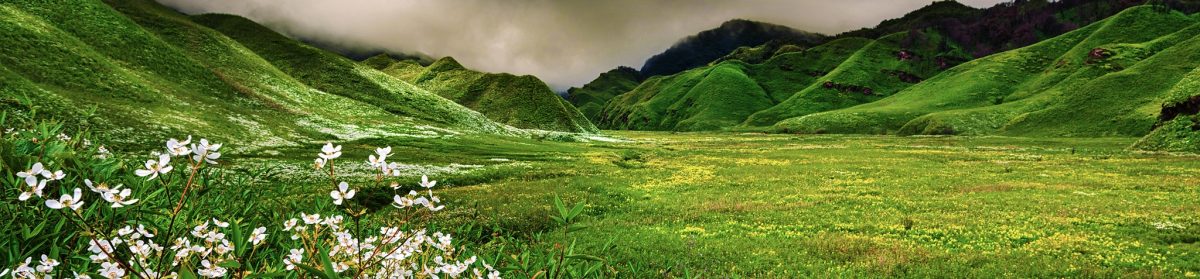
A Free Zone for Education – An Imperative for Right to Education in the Hill Areas, Manipur

By: Alex Akhup Ms. Kimnei Salviana Leivon, Research Scholar, Tata Institute of Social Sciences, Mumbai 400088…. more »

By: Alex Akhup

Ms. Kimnei Salviana Leivon, Research Scholar, Tata Institute of Social Sciences, Mumbai 400088. Currently engaged in northeast studies, education, governance and tribes.

 Reading through the “Human Development Report 2011; Towards Social Inclusion”, I was drawn upon my recent experience of the reality of village people in the state during my  fieldwork engagement trip. What came uppermost in the mind as a researcher and a fellow villager during my fieldwork and holiday is the persisting reality of poverty as lived by people in the villages especially in the hill districts of the state. The common phrase ‘awabada awaba piju, nongaibada nungaiba piju’ (translate as ‘rich will grow richer and the poor will grow poorer’) is still sung loud and clear among the villages. It is evident that such areas are still far away from the reach of the state devepment processes. As for instance, the focus of the government in the 11th five year plan was inclusive growth and development. In fact, the human development report 2011 has rightly indicated improvement along such a planned development objectives. As for instance, it is reported that there is convergence of literacy rate across the ST, SC, Minorites and the national literacy rate. In fact most of the states in the northeast region show  literacy rate above the national average and much higher when compared to other tribal areas in the region. This statistical status is also vividly endorsed by the latest “Economic Survey of Manipur” (2009-10). However, on a deeper analysis, it is noted that there is a critical data which reveals the persisting problem of poverty among STs, SCs and minorities confronting inclusive planned development process in the country. As seen in the report,  malnutrition is still a matter of grave concern for the country when it comes to the context of poor people; SCs, STs and even minority. This situation is further endorsed in the data on infant mortality rate, low body mass (BMI less than 18.5), total fertility rate and unemployment (p. 6-15). It is a serious development and governance issue still persisting even after six decades of planned development activities in the country. Such a state of condition directly affects the most vulnerable and important sections of soceity; children and mothers among across SCs and STs. The data also  directly highlights the outcome of the national schemes such as  Integrated Child and Development (ICDS) and midday meal which are supposedly launched to support health and education for children and women (mothers).

Setting my foot upon the village habitations of the hill areas, I encountered a total absence of  the planned development system; or rather a prominent presence of a non-state system of power and corruption.  The people are held hostaged to such system and poverty is thus an inherent outcome, and it would only widen year by year. I was inclined to asked whether the emerging leaders both state and non-state really understand priorities of development. However, it seems everything in the region goes in the name of politics; nation-state, nationalism and ethnonationalism. They provide a theoretical explanation for the situation together with a strategy for a solution. In fact the state leaders boldly declare that ethnicity is a hindrance to development while taking advantage of such situation for party and individual power and prestige. It is observed that the situation has gone to such a level that today civility and  citizenship are not known to the people. The rich, powerful and dominant have taken over state system. In fact, it seems that no state activity takes place without the CDOs (Manipur state commandos). Besides, there are numerous non-state organizations/individuals who claimed to be civil societies or national workers in perfect union with the system of rich and dominant. Such a system survives on the development funds for the people. It is a commonly known fact among people that ‘government contract work’ (mainly for the insfrastructure development including schemes for school buildings) is the main source of income for the non-state systems and individuals. This system is the emerging overarching state structure that define people and development. In short, local system is at the mercy of the larger system indicating a total absence of state system, democracy and governance. Thus inclusive growth and development as professed in the planned economy of the country suffers from lack of governance system in such a context. In a sense, welfare state system is absent in lived experience of the villagers that I visited in the hill districts. Such a situation confronts the theory that hill districts have tribal councils and village authorities as strong local bodies that would bring in good governance in the hill areas. In fact the Hill districts councils have just dawn their mantle upon the hill region since 2010; a system revived after a gap of twenty years and more but still very much conditioned by the larger structures above.


The absence of democracy and governance sytem in the state is expressed in persisting poverty, illiteracy, illhealth, backwardness rampant in the villages. As a researcher with a grounding on social theory and strategy for empowerment and development for people, the neglected situation of the villages is a matter that has confronted me beyond my understanding. Every year I go home or go for fieldwork, I see the same old huts of the village, thatched roof and mud floor. No electricity, no water, no road connectivity, no school building, no PHCs, the list is  endless. Some of the worse situations are expressed in people  going to fetch waters to the far away ponds and streams which often gets dried once the moonson rains had made their exit from the land. Road connection is the same as ever. Infact it has become worse as few tarred sprinkled stones have been dropped occassionally in the name of state insfrastructure development especially in the villages within the range of 20-30 kms from the main city. However, such roads in fact have become health hazards of the people due to the huge amount of dust generated along the roads. It is a common sight that people travelling along the roads are covered with dust allover. Health system is still absent and the government schools are still non functioing.


Reaching upon the village premises one comes to observed the golden rice fields in the foothills and also on the slopes of the mountains. These fields constitute the main occupation of the people. If one goes deeper in the processes of the occupation, it is seen that the manner of occupation has changed. Today, there is a trace of technology coming especially in the paddy fields of the plain area. One can observe the Kokoda, tractor and even few tractors with harvesting accessories. Such situation reveals that people with alteast two to four acres of cultivable land are moving towards modern methods of rice cultivation. This has generated fair amount of labour for landless. However, I observed that such emerging changes has become heavy financial burden to the people. In fact for cultivation of one pare (2 and ½ acres), one has to spent approximately about forty to fifty thousand rupees. This would be spent in buying manure and hiring tractor or labour for ploughing and harvesting. This implies that land owners are caught in increasing financial burden which is expressed in the number of children and students dropping from school and colleges. Those who are able to afford had to earn for education from other sources of income. Such earning comes mainly from selling vegetables, fruits and jungle products. Some individuals of the families who are employed are quite comfortable. They are in fact able to the have house amenities such as two wheelers, TVs and even mobile phone (new thing in the village). However, in general, poverty is slowly but firmly taking a grip of the villages.


In all of these, what becomes most worrying is children’s growth and development and education. It is observed that education, primary education (elementary education) is the most important activity of every family, village, state and country. There is a realization that education is the only means to become rich and raise the family income status even among remote villages. But it is observed that in general the primary education system has been the domain of private schools implying financial burden. Such a situation also indicates a faulty strategy of the state plan. In fact, it can be inferred that the minimal focus of the government plan on the primary elementary education especially before the 1990s has deeply affected the mentality of the people. It is observed that today inspite of the new policy focus given on the elementary education since the 2001, common people still don’t have faith on the state system, the government schools. Such condition befits a critical analysis against the present economic survey data (p.157-165). As matter of fact, lately Manipur was conferred “Best Improved State in Governance Among Small States of India” during Chief Minister Conclave held on November 4th in  New Delhi, 2011  (http://theshillongtimes.com/2011/11/19development-in-manipur%E2%80%99). This is rightly so as seen in the well established information system of the state particularly managed by the state national information centre. As for instance, the web portals of Rastriya Madhyamik Siksha Abhiyan (RMSA) and Sarva Shiksha Abhiyan (SSA) Manipur indicate good governance structure with accountability and transperancy of the implimentation of the schemes.


However, as experienced in the lived reality of villages in the hill areas of the state, one cannot rely everything on the e governance system of the government to a certain level. In reality it is observed that the system of education, as positioned in the Right to Education (RTE) is still vacant indicating that RTE cannot be implimented in the hill areas. Supposedly, Manipur state is one of the states which has taken proactive stance towards RTE and Right to Information (RTI). The SSA data Manipur section indicates that the state has made tremendous improvment on the elementary education front. However, in reality there is an existence of a complex structure and network of the bureaucratic structure, the local powerful chiefs, local leaders, the rich and the under ground organizations. In such a context the recent policy brought in Manipur and the recruitement of the graduate teachers will have little effect. As for instance, the local bodies in article no. 9 of the Right to Education Act (RTE) and the commission for the child right although laid down in the rules to RTE still is not able to function at the local level. When it comes to infrastructure development of schools, School Management and Development Committee (SMDC), a committee of fourteen members, as policy has been formed. However, at the ground reality, SMDC is functioning without a proper system support. What is most worrying to this system is the position of the Chairman and Secretary of the committee in whose names the school bank account is to be opened. In practice, Chairman is in fact the local disbursement officer at the school level. As a rule the school headmistress/headmaster is the chairman. He/she becomes directly accountable to the financial transactions, accountability and transparency under RTI. The secretary is to be appointed by the committee representing the parents. These office positions have come under criticism from the tribal chiefs in many villages as they would like to be a defacto local disbursement officers at the village level. Over and above all these, the chairman and secretary are responsible to the local leaders and the undergrounds who also demand a share of the fund coming for the infrastructure development of village schools. In fact of-the-record, it has been observed that atleast 50% of the fund goes to the bureaucratic offices of the education system, local leaders and underground groups. As observed, in the scheme for one room school building construction under SSA, one headmaster/headmistress of a village returned the money to the ZEO due to the pressure of demand coming from outside orgaizations. Many schools are being constructed with low quality. As such, the school committee especially the chairman and secretary have become victim of the larger system. Suspension of headmaster/headmistress of schools is likely to come if monitoring system comes into practice.


Besides, there is a grave system problem in education at the level of the primary and elementary education system in the hill region. As a policy, elementary education (class I-VIII) is the focus of the state. However, this becomes critical when one is looking at the local bodies for the implimentation of the schemes in the hill districts. As for instance, the district council, now in function has the primary role of primary education in the hill districts. The people usually know it as ‘council schools’. The ZEO in the hill districts looks after the the education system above class five. But in the recent times, a focus has been made on RTE covering elementary education; free and compulsory education between the age of 6-14 (class- 1-VIII). The SSA schemes is basically handled by the ZEO and runs across all villages and schools in the hill region. Therefore, ZEO has become more active in the RTE process in the hill areas covering the council schools. Such an emerging system creates a confrontation of systems within in the hill areas; between council system and the zonal system. The system interface (between state system and local system) has not been spelt out in policy as well as in practice at present.


It has become obvious that if the system of education has to be laid effectively, it is imperative that education has to be declared a ‘free zone’ (free from politics, corruption and financial demands by undergrounds); allow the system to work. Education for children is one of the most fundamental right which the state is still not in a position to give to the children even with the policy laid. This can be inferred from the number of children enrolled in governement schools. Many schools are non functioning due to non enrolment of children inspite of incentives (supply of free text books,school uniforms and midday meal) coming from the government, development of infrastructure and appointment of graduate teachers to the elementary schools especially of the hill districts. Parents opt mainly for private schools. Good schooling is considered to be enrolment in the private schools. This implies a heavy cost for the children education at the family level. Some parents who are able to afford send their children to private schools in the main city. It implies that the child has to rent an accommodation or stay in a private hostel. As a matter of fact, most of the income of the parents go in school education for their children. In such a condition, it is further observed that the parents through hard labour are able to support the child to go to private schools but slowly declined to financial problem. As year go by their ability to earn and support the children also decline. At the same time, the cost of education increases persistently. In such a situation the child definitely has a glim chance to go for higher studies. Most of the time the child drops out after the elementary education. Back to squire one. Based on the above observation, it can be inferred that only parents with some constant income source are able to support their child upto the completion of the higher studies. In fact, for those who are able, outside colleges are preferred due to the political situation that effects the education process along with the push-pull factor of employment. Therefore, socio-political and economic situations are an intrinsic part of the society triggering a divide between the rich and the poor, middle class and the poor.


As a logical conclusion to this article, I recommend that education sector due to its critical component be declared a ‘free zone’ by all government, civil societies, organizations, villages and people in the hill areas. Considering the situation at present, it is presumed that only an environment of politics free, corruption free and ‘non demand’ policy (inclusive of non-demand by all groups such as so called underground, political leaders and bureaucates) on financial investment coming to ‘right to education’ will allow implimentation of right to education in the hill areas. This would bring in an environment for change; of faith and hope on the government schools at the elementary level; proper running of the  governent schools in the hill area.  If elementary education, ‘free and compulsory’ (Constitution articles no. 21(A) and Right to Education Act, 2001) is implimented financial burden on the education for children at the elementary education would decline. This would definitely unleased financial capacities of families and villages towards progress and development. However, the task at hand would go unheed without the cooperation of the people; the bureaucrats, teachers, parents, students, contractors and undergrounds. It is opined that this article would provide an idea for the young generations, people, institutions, local bodies and organizations such as student organizations so that people of all sections or ethnic groups of the state would reap the fruits of democracy and good governance, and create space for progressive politics of development, growth and prosperity.


Enhanced by Zemanta

Read more / Original news source: http://kanglaonline.com/2011/11/a-free-zone-for-education-an-imperative-for-right-to-education-in-the-hill-areas-manipur/

Indian experts echo same eco concerns – Daily Star Online

Daily Star OnlineIndian experts echo same eco concernsDaily Star OnlineExperts and environmentalists in India have expressed concern over the possible impact of the Tipaimukh dam on the ecology of Bangladesh and of the Indian state of Manipur. Their co…


Daily Star Online

Indian experts echo same eco concerns
Daily Star Online
Experts and environmentalists in India have expressed concern over the possible impact of the Tipaimukh dam on the ecology of Bangladesh and of the Indian state of Manipur. Their concerns find an echo in the fears expressed by Bangladeshi experts and
Tipaimukh: Bagladesh may move international courtZee News
'Bangla may move intl courts if ignored by India on Tipaimukh'IBNLive.com
Tipaimukh: PM Responds to Khaleda's LetterOutlook
OilPrice.com –gulfnews.com –Bangladesh News 24 hours
all 35 news articles »

Read more / Original news source: http://news.google.com/news/url?sa=t&fd=R&usg=AFQjCNHXpfErPNOMCpgrr3vat1rAt6ftsg&url=http://www.thedailystar.net/newDesign/news-details.php?nid=211816

Policeman kills wife in Manipur – Nagaland Post

Policeman kills wife in ManipurNagaland PostPolice in Thoubal district of Manipur Saturday fired several rounds of tear gas and smoke bombs to disperse a mob ransacking a house of a policeman who allegedly killed his wife on Friday night. Ningombam Nir…

Policeman kills wife in Manipur
Nagaland Post
Police in Thoubal district of Manipur Saturday fired several rounds of tear gas and smoke bombs to disperse a mob ransacking a house of a policeman who allegedly killed his wife on Friday night. Ningombam Niranjan (28), a police constable presently
pregnant wife killed by husbandMorungExpress

all 8 news articles »

Read more / Original news source: http://news.google.com/news/url?sa=t&fd=R&usg=AFQjCNEN8T734YCsqb7WoOlyHeWRAMTVQQ&url=http://www.nagalandpost.com/ChannelNews/Regional/RegionalNews.aspx?news=TkVXUzEwMDAwOTYyNg%253D%253D-eAf%252FC6M4hi0%253D

Open sale of petrol resumes in Manipur – Assam Tribune

Open sale of petrol resumes in ManipurAssam TribuneIMPHAL, Nov 26 – Open sale of petrol products was resumed across Manipur since Thursday with the stock position of fuel said to have improved, first time in a State which has been through over hundre…

Open sale of petrol resumes in Manipur
Assam Tribune
IMPHAL, Nov 26 – Open sale of petrol products was resumed across Manipur since Thursday with the stock position of fuel said to have improved, first time in a State which has been through over hundred days of economic blockade on the National Highways.
PM to visit Imphal, assures ease of economic blockadeTimes of India

all 2 news articles »

Read more / Original news source: http://news.google.com/news/url?sa=t&fd=R&usg=AFQjCNEMgsDfau02wVSDLP16elBE43VHnQ&url=http://www.assamtribune.com/scripts/detailsnew.asp?id=nov2711/oth06

KCP-M bandh paralyze Manipur – MorungExpress

KCP-M bandh paralyze ManipurMorungExpressImphal| November 26: Life in the state of Manipur was seriously affected today by a 24-hour bandh called given by banned militant group Kangleipak Communist Party-Maoist (KCP-M) strongly protesting against the S…

KCP-M bandh paralyze Manipur
MorungExpress
Imphal| November 26: Life in the state of Manipur was seriously affected today by a 24-hour bandh called given by banned militant group Kangleipak Communist Party-Maoist (KCP-M) strongly protesting against the State government for not taking up

Read more / Original news source: http://news.google.com/news/url?sa=t&fd=R&usg=AFQjCNGAyTABg1bQf1f8q6qSzxOxh9eEog&url=http://www.morungexpress.com/regional/73545.html

Tipaimukh: Bagladesh may move international court – Zee News

Daily Star OnlineTipaimukh: Bagladesh may move international courtZee NewsDhaka: Bangladesh on Saturday said it expects India not to proceed with the cross-border hydro-electric Tipaimukh dam project in Manipur without consulting it, warning that it ma…


Daily Star Online

Tipaimukh: Bagladesh may move international court
Zee News
Dhaka: Bangladesh on Saturday said it expects India not to proceed with the cross-border hydro-electric Tipaimukh dam project in Manipur without consulting it, warning that it may approach international courts if it is "ignored" by New Delhi.
'Bangla may move intl courts if ignored by India on Tipaimukh'IBNLive.com
Manmohan writes back to KhaledaBangladesh News 24 hours
India and Bangladesh Spar Over Tipaimukh DamOilPrice.com
gulfnews.com
all 20 news articles »

Read more / Original news source: http://news.google.com/news/url?sa=t&fd=R&usg=AFQjCNFvo0cDpVkRRwE3BG-bguHrqksC2g&url=http://zeenews.india.com/news/south-asia/tipaimukh-bagladesh-may-move-international-court_744008.html

Tipaimukh: Bagladesh may move international court – Zee News

Daily Star OnlineTipaimukh: Bagladesh may move international courtZee NewsDhaka: Bangladesh on Saturday said it expects India not to proceed with the cross-border hydro-electric Tipaimukh dam project in Manipur without consulting it, warning that it ma…


Daily Star Online

Tipaimukh: Bagladesh may move international court
Zee News
Dhaka: Bangladesh on Saturday said it expects India not to proceed with the cross-border hydro-electric Tipaimukh dam project in Manipur without consulting it, warning that it may approach international courts if it is "ignored" by New Delhi.
'Bangla may move intl courts if ignored by India on Tipaimukh'IBNLive.com
Manmohan writes back to KhaledaBangladesh News 24 hours
India and Bangladesh Spar Over Tipaimukh DamOilPrice.com
gulfnews.com
all 20 news articles »

Read more / Original news source: http://news.google.com/news/url?sa=t&fd=R&usg=AFQjCNFvo0cDpVkRRwE3BG-bguHrqksC2g&url=http://zeenews.india.com/news/south-asia/tipaimukh-bagladesh-may-move-international-court_744008.html

Weightlifting Championships: AP, Manipur emerge champions – All India Radio

Zee NewsWeightlifting Championships: AP, Manipur emerge championsAll India RadioIn Arunachal Pradesh, Manipur emerged champions in both Youth Boys and Girls category at the 7th National Youth Weightlifting Championships which concluded yesterday evenin…


Zee News

Weightlifting Championships: AP, Manipur emerge champions
All India Radio
In Arunachal Pradesh, Manipur emerged champions in both Youth Boys and Girls category at the 7th National Youth Weightlifting Championships which concluded yesterday evening in capital Itanagar. Arunachal Pradesh and Orissa were runners up in Boys and
Arunachal bag 16 medals in National Youth WeightliftingTimes of India

all 6 news articles »

Read more / Original news source: http://news.google.com/news/url?sa=t&fd=R&usg=AFQjCNFHtT-Z7OrqVANZ2K5ognJ6gJy0pw&url=http://newsonair.nic.in/news.asp?cat=Sports&id=SN1899

PFI organizes seminar on AFSPA at Imphal – TwoCircles.net

PFI organizes seminar on AFSPA at ImphalTwoCircles.netP. Koya; Former member Human Rights Commission Manipur, Ng Nongyai; Lecturer of Lilong Haoreibi College, Dr. Syed Ahmed; Editor of the local daily Hueiyen Lanpao (Meitei Mayek), M. Shiva Dutta Luwan…

PFI organizes seminar on AFSPA at Imphal
TwoCircles.net
P. Koya; Former member Human Rights Commission Manipur, Ng Nongyai; Lecturer of Lilong Haoreibi College, Dr. Syed Ahmed; Editor of the local daily Hueiyen Lanpao (Meitei Mayek), M. Shiva Dutta Luwang; Convenor of Sharmila Kanba Lup, Ema Janaki Leima

Read more / Original news source: http://news.google.com/news/url?sa=t&fd=R&usg=AFQjCNG3S5PCLsTQ96A9aRbgo_TSgJbCow&url=http://twocircles.net/2011nov26/pfi_organizes_seminar_afspa_imphal.html

Follow guidelines students’ body

While taking the nature of students’ union election in the colleges of the state seriously, the Monitoring Cell of the College Students’ Union Election 2011 12 AMSU, MSF, DESAM, KSA, SUK, SWAK appealed to the college students of the state to abide by…

While taking the nature of students’ union election in the colleges of the state seriously, the Monitoring Cell of the College Students’ Union Election 2011 12 AMSU, MSF, DESAM, KSA, SUK, SWAK appealed to the college students of the state to abide by the guidelines of the monitoring cell Source Hueiyen News Service

Read more / Original news source: http://e-pao.net/ge.asp?heading=30&src=261111

New traffic rules put in force at Thangal Keithel

To ease congestion and ensure smooth flow of traffic within Thangal Keithel, Traffic Police have started implementing new traffic rules more vigorously Source The Sangai Express

To ease congestion and ensure smooth flow of traffic within Thangal Keithel, Traffic Police have started implementing new traffic rules more vigorously Source The Sangai Express

Read more / Original news source: http://e-pao.net/ge.asp?heading=15&src=261111

Dust plays spoilsport at Sangai Festival

Presence of dust particles everywhere has taken away the pleasure of visiting the Manipur Sangai Festival, 2011 being organized by the Manipur Tourism Department at Hafta Kangjeibung since November 21, many visitors have complained Source Hueiyen Ne…

Presence of dust particles everywhere has taken away the pleasure of visiting the Manipur Sangai Festival, 2011 being organized by the Manipur Tourism Department at Hafta Kangjeibung since November 21, many visitors have complained Source Hueiyen News Service

Read more / Original news source: http://e-pao.net/ge.asp?heading=28&src=261111

Nando accuses Kim Gangte

Dr Nando who has been preparing to contest the forthcoming Manipur Legislative Assembly elections in Uripok Assembly Constituency under Trinamool Congress ticket has accused Manipur Pradesh Trinamool Congress Kim Gangte of not only running the party on…

Dr Nando who has been preparing to contest the forthcoming Manipur Legislative Assembly elections in Uripok Assembly Constituency under Trinamool Congress ticket has accused Manipur Pradesh Trinamool Congress Kim Gangte of not only running the party on her own whim but also trying to lead the party on ethnic lines Source The Sangai Express

Read more / Original news source: http://e-pao.net/ge.asp?heading=14&src=261111

TAMOA condemns

The Teachers’ and Medical Officers’ Association TAMOA has strongly condemned the robbing of Dr Manihar, Professor of Surgery which occurred in the Dept of Surgery of RIMS hospitals on Nov 24 Source Hueiyen News Service

The Teachers’ and Medical Officers’ Association TAMOA has strongly condemned the robbing of Dr Manihar, Professor of Surgery which occurred in the Dept of Surgery of RIMS hospitals on Nov 24 Source Hueiyen News Service

Read more / Original news source: http://e-pao.net/ge.asp?heading=26&src=261111

Fortnight observance on violence against women kick starts

Women Action for Development WAD has kick started the International fortnight observance on violence against women with an inaugural function held at the banquet hall of 1st Battalion Manipur Rifles today Source The Sangai Express

Women Action for Development WAD has kick started the International fortnight observance on violence against women with an inaugural function held at the banquet hall of 1st Battalion Manipur Rifles today Source The Sangai Express

Read more / Original news source: http://e-pao.net/ge.asp?heading=13&src=261111

Development photos charm Leimakhong residents

In what could be termed as an initiative to disseminate information at the grassroots level, a five day Photo Exhibition of the theme ‘Development Initiatives in the North East’ kick off today at Leimakhong Community Hall, Sadar Hills, Manipur Source…

In what could be termed as an initiative to disseminate information at the grassroots level, a five day Photo Exhibition of the theme ‘Development Initiatives in the North East’ kick off today at Leimakhong Community Hall, Sadar Hills, Manipur Source Hueiyen News Service

Read more / Original news source: http://e-pao.net/ge.asp?heading=24&src=261111