

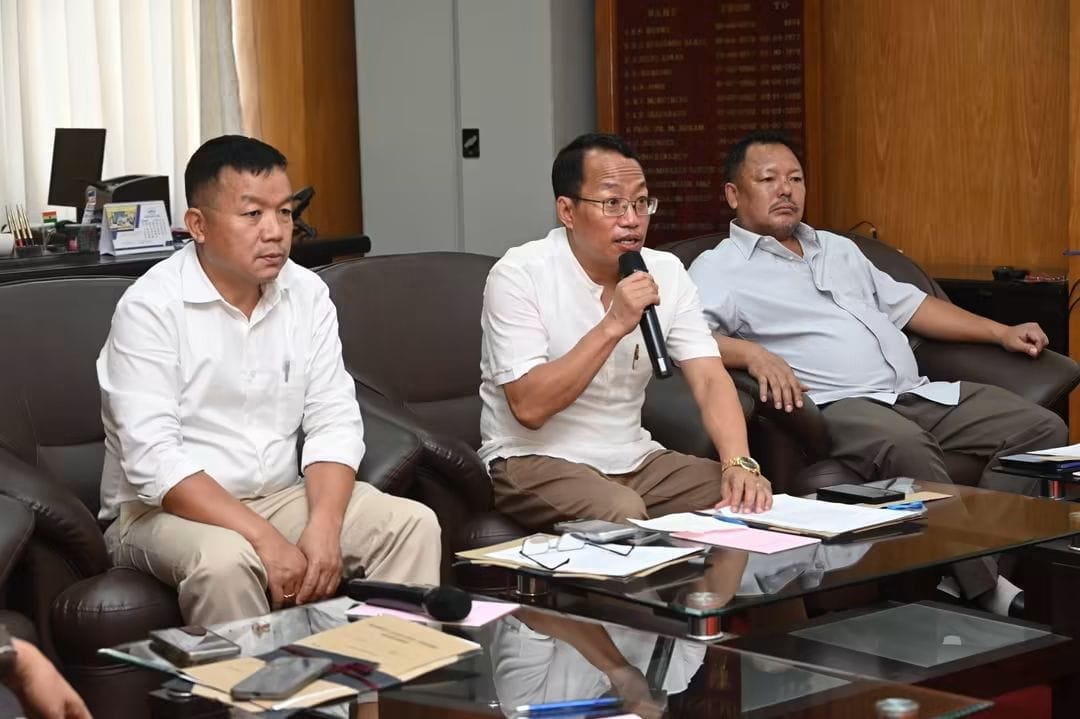
Deepening Crisis or Mitigating Woes: Manipur Hill Areas Committee met to discuss issues

For a divided Manipur, analysing the September 18, 2026 sitting of the Hill Areas Committee of the Manipur Legislative Assembly is one key indicator of matters likely to take the state to a deepening crisis instead of mitigating woes. By Dhiren A. Sadokpam The Hill Areas Committee of the Manipur Legislative Assembly convened on September […]

The post Deepening Crisis or Mitigating Woes: Manipur Hill Areas Committee met to discuss issues first appeared on The Frontier Manipur.

For a divided Manipur, analysing the September 18, 2026 sitting of the Hill Areas Committee of the Manipur Legislative Assembly is one key indicator of matters likely to take the state to a deepening crisis instead of mitigating woes.
By Dhiren A. Sadokpam

The Hill Areas Committee of the Manipur Legislative Assembly convened on September 18 following what the Chairman, MLA Dinganglung Gangmei (Noney A/C), called “a long gap”. Gangmei took to social media to express his feelings and said that “It is a welcome moment to bring the Hill Areas Committee together on a common platform once again. It is a moment of constructive dialogue, mutual understanding and a shared commitment to the interests of the hill areas”.

Gangmei’s message was significant because the Hill Areas Committee exists in an environment that has been characterised by ethnic polarisation that has rendered almost all institutions suspect. Fourteen MLAs, including Deputy Chief Minister Losii Dikho and the Naga legislators from Ukhrul, Tamenglong, Chingai, Kamjong, Karong and Saitu and the Kuki-Zo legislators from Tipaimukh, Singhat, Henglep, Tengnoupal, Churachandpur and Saikot, participated in the meeting, either physically or virtually. The very fact that the meeting took place is a cause for reflection, although the meeting may be questioned on its constitutional propriety.

This article analyses the September 18 meeting of the HAC in the light of Article 371C of the Constitution and the Manipur Legislative Assembly (Hill Areas Committee) Order, 1972 and the Manipur (Hill Areas) District Councils Act, 1971, in order to understand what the HAC can and cannot achieve in the present context.

The constitutional architecture: Article 371C and the 1972 Order

The Hill Areas Committee is not a voluntary body. It owes its existence to Article 371C of the Constitution. This provision was inserted by the Constitution (Twenty-Seventh Amendment) Act, 1971, which provides that the President may, by order, make provisions for the following:

(a) the constitution and functions of a committee of the Legislative Assembly of the State consisting of members of that Assembly elected from the Hill Areas;

and

(b) the modification of the rules of business of the government and of the Legislative Assembly and the rules of procedure of the Legislative Assembly and any special responsibility of the Governor in order to secure the proper functioning of such committee.

The Manipur Legislative Assembly (Hill Areas Committee) Order, 1972, issued by President V.V. Giri on 20 June, 1972, provides the operational details of the Hill Areas Committee. Paragraph 3(1) of the Order provides that the Hill Areas Committee shall consist of “all members of the Assembly who, for the time being represent the Assembly constituencies situated wholly or partly in the Hill Areas of the State” and that the Chief Minister and Speaker shall not be members of the Committee. Paragraph 3(2) provides that every Minister shall have the right to speak and to take part in the proceedings of the Committee but shall not have the right to vote, unless he is a member of the Assembly.

Paragraph 4 of the Order lays down the functions of the Committee. All “Scheduled matters” (see Second Schedule) shall be within the exclusive cognizance of the Committee. Paragraph 4(2) provides that every Bill except for a Money Bill relating to the Hill Areas and containing mainly provisions dealing with any of the matters listed in the Second Schedule “shall, after introduction in the Assembly, be referred to the Hill Areas Committee for consideration and report to the Assembly”. The proviso to this paragraph provides that matters relating to the Hill Areas shall be referred to the Committee “if the Governor determines that any such Bill shall be referred to the Hill Areas Committee”.

Paragraph 4(3) provides that the Committee shall have the right to “consider and pass resolutions recommending to the Government of the State any legislation or executive action affecting the Hill Areas with respect to any Scheduled matter”. Paragraph 4(4) provides that the Committee shall have the right to discuss the Annual Financial Statement “in so far as it relates to the Hill Areas” and that the Statement “shall, as far as may be practicable, show separately the estimates of receipts and expenditure pertaining to the Hill Areas”.

Paragraph 4(5) of the Order lays down that the Committee shall “safeguard the interest of the people of the Hill Areas, particularly through accelerated development” and “promote unity between the people of the Hill Areas and other areas of the State by aiming at an integrated and evenly based economic growth”.

Paragraph 6 of the Order provides that before the Five Year Plans and Annual Plans of the State are finalised, the Government shall place before the Committee, “proposals showing separately the Plan Schemes proposed to be taken up in the Hill Areas and the rest of the State” and the Government shall lay before the Committee quarterly reports on the implementation of plan schemes.

Paragraph 9 of the Order provides that the Governor shall have “special responsibility for securing the proper functioning of the Hill Areas Committee” and that the Governor shall “act in his direction” in relation to this responsibility.

The Third Schedule to the Order lays down modifications of the Rules of Business of the Government of Manipur, 1972. Rule 12A provides that the Council of Ministers “shall normally give effect to the recommendation of the Hill Areas Committee” but if the Council of Ministers is of the opinion that it would not be expedient to do so, “the matter shall be referred to the Governor whose decision thereon shall be final and binding”.

The District Councils Act, 1971: The implementing framework

The Manipur (Hill Areas) District Councils Act, 1971, provides for the implementation of the recommendations of the HAC. Section 3(1) of the Act originally provided that the Administrator (now the Governor) shall divide all Hill Areas into “not more than six autonomous districts”. The Manipur (Hill Areas) District Councils (Sixth Amendment) Act, 2022, substituted the word “six” with “ten”.

Section 29 of the District Councils Act lays down the functions of the District Councils, including maintenance of property, construction of roads and bridges, establishment of primary schools and dispensaries, management of markets and fairs, water supply, soil preservation, public health and sanitation, land allotment for agriculture and grazing, management of unreserved forests, and regulation of jhum cultivation. Section 29(2) provides that the District Councils shall have the right to recommend legislation to the Government on matters relating to Scheduled Tribes, including appointment and succession of chiefs, inheritance of property, marriage and divorce, and social customs.

Section 47 of the District Councils Act provides that the Administrator may supersede a District Council for reasons of incompetence, abuse of power, financial mismanagement, or inability to carry on administration. The second proviso to Section 47(1) provides that the Administrator shall consult the HAC for an extension of supersession beyond one year. Section 48 of the Act provides that the requirement of consultation with the HAC in Section 3(3) and Section 29(xvii) shall be omitted during the period when the HAC is not functioning (following the dissolution of the Legislative Assembly), and the second proviso to Section 47(1) shall have effect as if the words “in consultation with the Hill Areas Committee” had been omitted.

The statutory framework indicates that the HAC is both a statutory committee with powers of recommendation and scrutiny and a consultative body whose recommendations are mandatory for certain acts of the executive, depending on the efficacy on which District Councils exist for implementing such recommendations.

The September 18 Meeting: Attendance and Agenda

Fourteen MLAs attended the September 18 meeting with Deputy Chief Minister Losii Dikho present, among the Naga legislators were Khashim Vashum (Chingai), Leishiyo Keishing (Kamjong), Kumo Sha (Karong), Janghemlung Panmei (Tamenglong) and Ram Muivah (Ukhrul), while the Kuki-Zo contingent included Haokholet Kipgen (Saitu), Ngasanglur Sanate (Tipaimukh), Chinlunthang (Singhat), Letzamang Haokip (Henglep), Letpao Haokip (Tengnoupal), LM Khuate (Churachandpur) and Paolienlal Haokip (Saikot).

The hybrid meeting, with Saitu MLA Haokholet Kipgen reportedly having attended in person while the rest of the Kuki-Zo legislators have joined online, was supposedly necessitated by the prevailing security situation with physical separations between communities.

According to sources, the main agenda of the meeting was speculated to be an effort on reviving six (6) of the Autonomous District Councils by means of an ordinance. The HAC had resolved on 11th May 2022 that elections to the six (6) ADCs should not be held until its recommendations for amendment of the Act to grant more powers to the councils and delimitation of the ten (10) ADCs have been accepted. Thus, according to sources, some MLAs reportedly opposed the proposal to revive six (6) ADCs, maintaining that any proposal of revival should be of the ten (10).

The objection by the MLAs indicates apprehensions of the hill communities that selective measures will be taken, and that hill areas will not have equal bargaining power as the valley.

The Sixth Amendment Act of 2022 substituted “ten” for “six”, indicating that the amended Act covers all the hill areas of Manipur in the eleven ADCs, and therefore a proposal to revive six of the ten ADCs would appear to be contrary to the amended statutory framework.

The Procedural and Substantive Constraints

The September 18 meeting is to be placed in the context of the constitutional and statutory framework that governs the functioning of the HAC and its recommendations. First, with regard to the jurisdiction of the HAC, the Second Schedule provides that the matters for which the recommendations of the Committee are to be solicited by the Council of Ministers and accepted by the Legislative Assembly are the “Scheduled matters”, which include development and economic planning, the organisation and functioning of District Councils, land use, forests, social customs, etc. However, paragraph 4(2) makes it explicit that the Money Bills are “excluded”. Paragraph 4(3) provides that the recommendation by the HAC should relate to “any law or any action in conformity with the overall financial provisions for the Hill Areas made in the Annual Budget” (emphasis added).

This indicates that the powers of the HAC with regard to the hill areas are consultative, and that the financial authority for appropriation and taxation, expenditure and borrowing, etc. continues to rest with the full Legislative Assembly.

It has been pointed out that Article 371C, which provides for the special administration for the hill areas, cannot be interpreted to allow bifurcation of the State Budget, and that therefore the annual appropriation of funds and revenues, as provided for in Article 202 and the Consolidated Fund specified in Article 266, constitutes a single budget and consolidated fund for the state, and the HAC is not empowered to deal with matters of a financial nature. Article 371C(2) which provides that “the Governor shall take steps in his direction for securing the proper functioning of the Hill Areas Committee” should not be construed to mean that the powers of the HAC extend beyond consultative and deliberative functions.

Second, it should be borne in mind that under Paragraph 4(3) of the 1972 Order, the recommendation of the HAC, if accepted by the Council of Ministers, should “normally” be given effect to, but “if the Council of Ministers considers it otherwise expedient to act in any matter” the matter should be “referred to the Governor whose decision thereon shall be final and binding”

Had the 1972 Order used the word “approval” in place of “referred”, the HAC would have been invested with the powers of a second chamber for enacting hill-specific legislation. By using the word “referred”, the framers provided for a mandatory consultative mechanism which, by virtue of its wording, cannot be interpreted to override the final authority of the full Legislative Assembly in matters of the hill areas.

Third, it may be noted that under Paragraph 9, a special responsibility is imposed on the Governor for securing the proper functioning of the HAC. In accordance with this special responsibility under 371C(2), the Governor “shall take steps in his direction for securing the proper functioning of the Hill Areas Committee”.

This provision implies that the Governor should not merely operate as a constitutional head but should also exercise a personal responsibility for the proper functioning of the HAC. If the executive fails to refer Bills to the HAC, if documents are not furnished, if quarterly reports are not filed, the Governor has the responsibility to step in.

Fourth, the HAC is dependent on the existence of functional District Councils to implement its recommendations. The 1971 Act which set up the eleven ADCs provides that the ADCs shall function as the implementing agencies for enacting laws and implementing policies in relation to the hill areas. Section 29 of the 1971 Act, which enumerates the functions of the ADCs and the powers of the District Councils, includes the power to impose taxes and duties through section 33, and the establishment of a Council Fund under section 43. Unless and until elected District Councils are in place, the recommendations of the HAC in the form of Acts and Rules of Procedure cannot have any practical effect. In fact, the proposal to revive six ADCs through an ordinance should be viewed in this context of fulfilling the requirements for the functioning of the HAC.

Constitution and the Unfinished Promise

The September 18 meeting of the HAC took place against the background of demands that greater autonomy be granted to the hill areas of Manipur. It is well known that the HAC has repeatedly moved resolutions that the Sixth Schedule of the Constitution should be extended to the hill areas of Manipur, but so far such demands have not received any attention from the state government.

The Sixth Schedule provides for the establishment of District Councils in the states of Assam, Meghalaya, Mizoram, and Tripura. Under the sixth schedule, the ADCs in Meghalaya and Mizoram have been conferred powers of legislation in specified fields, and the hill areas have exercised their own laws with regard to land and forest, water resources, village administration and health, and so on.

The distinction between the HAC which operates under article 371C and the Sixth Schedule of the Constitution is important. While the sixth schedule establishes ADCs with independent legislative powers, the Hill Areas Committee set up under article 371C can make recommendations only in consultation with the Council of Ministers and subject to the final approval of the Legislative Assembly. Kuki-Zo organisations have repeatedly alleged that various administrative functions of the hill areas have been transferred to the valley authorities, in violation of the constitutional safeguards. They have also demanded the restoration of the constitutional position of the Hill Areas Committee.

It seems that the September 18 HAC did not address this constitutional issue directly. The focus of the meeting seems to have been on immediate and practical measures, including revival of the ADCs, and restoration of a functional consultative mechanism. However, the very fact of the meeting raises the moot question whether the mechanism set up by article 371C is appropriate for protecting the hill areas in the context of Manipur where ethnic polarisation has rendered most institutions suspect.

The Limits of Consultation without Enforcement

The very structure of the HAC’s powers indicates that it is a consultative and deliberative body, whose recommendations are subject to the will of the Governor and Council of Ministers. Article 371C, paragraphs 4(2) and 6 provide for the mandatory referral of Bills and the submission of plan proposals and quarterly reports by the HAC. The Rules of Business, Rule 12A, provide for a procedure to resolve disputes between HAC and Council of Ministers. However, these provisions presuppose the cooperation of the Council of Ministers.

Under the current political conditions in Manipur, where the Meitei-Kuki-Zo and Naga-Kuki-Zo conflicts have resulted in massive ethnic violence since May 2023 and an entire population of hundreds of thousands is displaced and in danger, it is difficult to place reliance on the willingness of the executive to cooperate with the HAC. In fact, the September 18 meeting seems to have been necessitated by the fact that the HAC was not able to meet regularly. The Chairman described the September 18 meeting as a “product and successful sitting that reaffirmed the importance of collective deliberation and cooperation”. However, in the context of Manipur, the very fact of the meeting indicates that the HAC was unable to function regularly, and therefore the meeting which took place “after a long gap” seems to be an indication of irregular functioning of the HAC.

Moreover, paragraph 6 of the 1972 Order provides that “the Committee may discuss the Annual Financial Statement in so far as it relates to the Hill Areas…and may require separate showing of estimates…for the hill areas”, it does not empower the HAC to approve or reject the Annual Budget. The HAC can make recommendations but not decide on matters of appropriation and expenditure.

This limitation is not surprising, as the entire constitutional design of Article 371C is geared towards consultation without bifurcation, participation without parallelism. The HAC is a bridge, and not a fiscal authority on its own. However, when the bridges are not maintained, when meetings are not held regularly, when documents are not furnished, and when recommendations are ignored, the constitutional design becomes an impediment to addressing the needs of the hill areas.

The role of the Governor in ensuring that the procedures for consultation with the HAC are followed will be discussed later.

The Governor’s Role: Dormant or Active?

The Governor has a “special responsibility” under paragraph 9 of the 1972 Order “for securing the proper functioning of the Hill Areas Committee”. In particular, the Governor “shall take steps in his direction” for this end. The Governor’s “special responsibility” is elaborated on in article 371C(2) which provides that the Governor shall have special responsibility for the proper functioning of the HAC. The Governor is not bound by the advice of the Council of Ministers in matters relating to the Hill Areas Committee.

The Governor’s special responsibility under article 371C is a significant exception to the general rule that the Governor of a state is bound by the advice of his Council of Ministers. The importance of this provision indicates the concern of the framers of the Constitution for the rights of the hill areas of Manipur. In practice, however, it appears that the special responsibility of the Governor has rarely, if ever, been invoked. The repeated HAC resolutions on the need to extend the Sixth Schedule of the Constitution to Manipur and adopt the system of ADCs have not been acted upon. The irregular functioning of the HAC and its meetings have not resulted in action by the Governor under paragraph 9. It remains to be seen whether the September 18 meeting will be regarded as sufficient for fulfilling the Governor’s special responsibility under paragraph 9.

The Road Ahead: Consultation to Implementation

While the September 18 meeting of the HAC was undoubtedly an improvement over the previous meetings, it was also clear that the functioning of the committee depends critically on the will of the state executive. The very fact of the meeting being described as “productive and successful” because it “reaffirmed the importance of collective deliberation and cooperation” indicates that such meetings are rare.

The meeting itself does not appear to have adopted any specific resolutions or decisions, and was apparently focused on deliberations within the committee. The broader constitutional issue continues to remain outstanding, namely whether the mechanism provided by Article 371C is sufficient for protecting the hill areas of Manipur in a state where ethnic polarisation has rendered most institutions suspect.

The HAC is not a legislative authority, and it is not in a position to take decisions or enact laws. Its powers are limited to making recommendations, and the effectiveness of these recommendations depends on the attitude of the state executive. The HAC was set up to be an advisory body in matters relating to the hill areas, to promote integrated development, and to serve as a channel for the expression of hill opinion. In practice, however, it appears to have been hampered by the lack of functional institutions such as the District Councils for implementing its recommendations. The September 18 meeting appears to have signalled a turn around towards restoration of its functioning, but it remains to be seen what concrete steps will be taken to regularise its meetings and implement its recommendations.

(Dhiren A. Sadokpam is Editor-in-Chief, The Frontier Manipur)

The post Deepening Crisis or Mitigating Woes: Manipur Hill Areas Committee met to discuss issues first appeared on The Frontier Manipur.

Read more / Original news source: https://thefrontiermanipur.com/deepening-crisis-or-mitigating-woes-manipur-hill-areas-committee-met-to-discuss-issues/
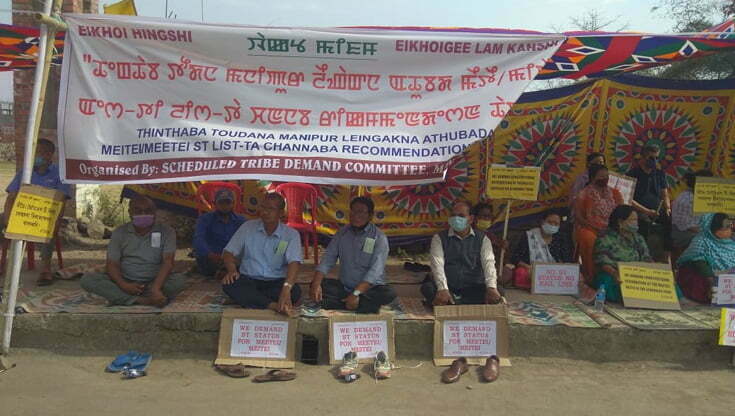
ST Demand Issue: Positive discrimination, affirmative action and the cracks within

India’s reservation policy has spawned forms of conflicting categories of the ‘exploiter’ and the ‘exploited’, the ‘dominant’ and the ‘subservient’ as if these binaries exist in a permanent cycle sans the dynamics of wresting political power at play. By Dhiren A. Sadokpam In recent times, the political elites of three primary ethnic groups in Manipur […]

The post ST Demand Issue: Positive discrimination, affirmative action and the cracks within first appeared on The Frontier Manipur.

India’s reservation policy has spawned forms of conflicting categories of the ‘exploiter’ and the ‘exploited’, the ‘dominant’ and the ‘subservient’ as if these binaries exist in a permanent cycle sans the dynamics of wresting political power at play.

By Dhiren A. Sadokpam

In recent times, the political elites of three primary ethnic groups in Manipur are caught in a whirlpool of anxiety propelled by palpable dissonance in political objectives. This anxiety is not necessarily triggered by the differences in speculative autonomy-demands or even demands based on administrative separatism.

The main anxiety has been caused by the way how the communities have effectively understood the political ideas behind positive discrimination, affirmative action or what in the Indian subcontinent is being referred to as the reservation policy of communities that have apparently lagged behind in holistic development. The most recent play-out that has triggered the spells of anxiety and tension has been the demand of a community considered advanced in comparison to its neighbours, to be included in the Scheduled List of Tribes in India.

While the proponents of the demand and those opposing the same have resorted to socio-political and historical reasoning, both the parties seem to have skipped re-looking at either redefining or refining the concepts they would love to toy with. One is not sure if both the conflicting parties have understood that India’s reservation policy presupposes a social fact – centuries of oppression of one group by another. This presupposition assumes a determinate but constant ‘unchanging oppressor and oppressed’ and ‘advanced’ and ‘backward’ communities. The ‘constant’ is supposedly created by a social order that determined identities of each castes, communities and tribes. This has spawned forms of conflicting categories of the ‘exploiter’ and the ‘exploited’, the ‘dominant’ and the ‘subservient’ as if these binaries exist in a permanent cycle in all societies sans the dynamics of wresting political power at play.

For the mainland India, these terms are defined in relation to the hereditary caste order whereas for Northeast India, the same has been defined by amorphous understandings of communities guided by colonial agenda of the British whose administrators first chose to categorize people from the mixed-prism of the caste order or an anthropological understanding of a system which they considered was durable.

It is against this backdrop that United Naga Council, Manipur (UNC) and the Kuki Inpi Manipur (KIM) have raised objections to the Manipur High Court’s directive to the Government of Manipur to send its recommendation for the inclusion of Meetei Community in the list of Scheduled list of Tribes to the Government of India. The directive of the high court was passed on March 27.

Strident Voices and Social Tension

The UNC stated that “the Meitei/Meetei community of Manipur is an advanced community of India” with their language, Manipuri (Meiteilon) listed in the Eight Schedule to the constitution of India.

“They are already protected under Constitution of India and categorized as (i) General (ii) Other Backward Classes (OBC) and (iii) Schedule Caste (SC),” said the UNC.

UNC termed it irrational that the High Court of Manipur directed the Government of Manipur to recommend for inclusion of Meitei/Meetei community in the Scheduled Tribe (ST) list of India, “negating the sole objective of scheduling group of people for protective discrimination as ST in the Constitution of India”. The Naga body has strongly condemned and called the high court order “inane” for making “such imbecilic recommendation despite strong opposition from Scheduled tribes of the state”.

The common refrain and rationale behind the objections raised by both UNC and KIM has been rubbished by the proponents of those demanding a Scheduled Tribe status for the Meetei community. One strident voice has been that of the Kangleipak Kanba Lup (KKL). KKL has critiqued the objections in their own characteristic way stating that the demand for the inclusion of Meetei in the Scheduled list of Tribes in the Constitution of India is not aimed at grabbing “jobs” either from the Naga or Kuki communities of Manipur. It has asserted that the demand is based on safeguarding their “little bit of land” now confined to less than 2000 square kilometers out of the 20,000 square kilometers of the entire state of Manipur.

The KKL has made it clear that the Naga and the Kuki communities need not fear about grabbing “their job reservation quotas currently enforced in Manipur which will remain status quo”. The organization also unequivocally asserted that the UNC and KIM have “no birth right” to deny any other scheduled tribes of India that job opportunity.

The KKL had a message for the UNC too. It reiterated that the Manipuri Language being classified as scheduled languages of India under the Eight Schedule has nothing to do with the classification of the Meetei as a scheduled tribe of India. “Anyway Manipuri language is not confined to the Meeteis only but serves as a Lingua Franca amongst all the tribal communities of Manipur be it between the Nagas and the Kukis but amongst their various sub-tribes also”, it pointed out.

Moreover, the UNC has also been reminded that it was Th Muivah, the top National Socialist Council of Nagalim (NSCN-IM) leader who had stated that “only the Nagas and the Meeteis are the indigenous peoples” of Manipur. KKL asked, “So what is the idea of joining hands with the Kukis to block the way for the survival of the Meeteis under the Indian Constitution”. To the question of Meeteis being more advanced than the other tribes of Manipur, KKL asserted that it has nothing to do with genealogy but “mode of production” experienced by the communities.

The Meetei community began to practice settled agriculture and had more time to concentrate on arts, culture and literature while the hill tribes hitherto used to follow a different form of agriculture “before switching to poppy plantation” in recent times that had made them “all become rich”, said KKL.

The organization winded up their statement on a harsher note stating that it would be wrong on the part of both the Naga and the Kuki communities to consider the Meetei community as their “common enemy or else will be constrained to  oppose every move or demand made by any tribal group either Naga or Kuki”.

The exchange of statements may not lead towards a reconciliation on the sensitive topic. As the articulation of the issue by those supporting the demand for inclusion of Meetei in Scheduled Tribe list up the ante on their movement, the objections by Naga and Kuki tribal bodies may get shriller by the day.

Empowerment and Social Justice

In all these voices, what has been missed is a dispassionate inter-community/ethnic group deliberation on what would be the best option for all communities to progress and under what protective or empowering mechanism. While the fact of discrimination cannot be denied in one’s everyday experience, ethnicization or communalization of the issue would only create unbridgeable distance between communities. Under such circumstances, one will not be able to project the fact that there are no permanent oppressor and permanent oppressed or instil the fact that the idea of permanent and constant binaries will lead to over-generalization of a theoretical framework to achieve quick practical results.

What is of utmost importance now is truly and honestly grasping the fact that emancipating the socially underprivileged and the marginalized irrespective of community or tribal affiliation or within the same community is a move towards social justice. While doing so, one should not forget that the idea of empowerment of the individual has a far greater value and virtue than a protective mechanism that tends to perpetuate redundant binaries or historical contradictions.

Here, it should also be noted that India’s reservation policy emerged out of a deep flaw in understanding the complex relationship between the conceptions of the ‘cultural/social’ and the ‘economic’. Having said this, elsewhere, this writer had also argued that the stereotyping of the Meetei as a Hindu society both within Manipur and outside, in the image of mainland Hindu ethos and practices has manufactured the idea of the ‘constant exploiter’ and the ‘constant exploited’ in Manipur.

While Hinduised Meeteis have been identified with the former, all other non-Hindu communities are shown as ‘exploited’. Such is the handiwork of those who harp on the ‘politics of divide’ and benefit from it; and endorsed by the ‘ignorant other’ who is happy to own up anything that comes closer to the intolerant and imagined pan-Indian vision.

(Dhiren A. Sadokpam is Editor-in-Chief, The Frontier Manipur. This article was first published by EastMojo under the title ‘ST demand for Meetei: First, acknowledge the cracks within’)


The post ST Demand Issue: Positive discrimination, affirmative action and the cracks within first appeared on The Frontier Manipur.

Read more / Original news source: https://thefrontiermanipur.com/st-demand-issue-positive-discrimination-affirmative-action-and-the-cracks-within/

The mental equation

Times are a changing- as everything ought to. Stuffs that were not even dreamt about are becoming devices and gadgets for everyday use. The pace of development and inventions is increasing at a dizzying pace and in an unbelievably complex manner. Every…

Times are a changing- as everything ought to. Stuffs that were not even dreamt about are becoming devices and gadgets for everyday use. The pace of development and inventions is increasing at a dizzying pace and in an unbelievably complex manner. Every single gene in the human body can be identified, isolated and manipulated. Electricity […]

Read more / Original news source: http://kanglaonline.com/2018/06/the-mental-equation/

Timber banned but no ban on firewood and planks movement : Is it justified ?

In December 1996, the Supreme Court of India made a landmark ruling after hearing a civil writ petition (TN Godavarman vs. the Union of India and others) with regard to tree felling, the SC verdict on the case included an interim order prohibiting logg…

In December 1996, the Supreme Court of India made a landmark ruling after hearing a civil writ petition (TN Godavarman vs. the Union of India and others) with regard to tree felling, the SC verdict on the case included an interim order prohibiting logging without government permission. The ban on the transportation of timber is […]

Read more / Original news source: http://kanglaonline.com/2018/05/timber-banned-but-no-ban-on-firewood-and-planks-movement-is-it-justified/

Awaiting – a light at the end of the tunnel

Man, having the ability to judge and to arrange for alternatives, have taken the shortest road to development and progress. The unique gift of mental superiority over every living creature on the planet is what enables him to dominate and distinguish h…

Man, having the ability to judge and to arrange for alternatives, have taken the shortest road to development and progress. The unique gift of mental superiority over every living creature on the planet is what enables him to dominate and distinguish himself from every other creature inspite of the frailties and physical shortcomings. We take […]

Read more / Original news source: http://kanglaonline.com/2018/05/awaiting-a-light-at-the-end-of-the-tunnel/

Back to violence

Violence it seems is back in Manipur in all its different shades. The blast yesterday at Koirengei not far from the gate of the BSF base on the tarmac of the old abandoned Koirengei WWII airport, announced this in the most terrifying way. Two BJP troop…

Violence it seems is back in Manipur in all its different shades. The blast yesterday at Koirengei not far from the gate of the BSF base on the tarmac of the old abandoned Koirengei WWII airport, announced this in the most terrifying way. Two BJP troopers and three civilians were injured in the IED attack, […]

Read more / Original news source: http://kanglaonline.com/2018/05/back-to-violence/

RIP Tamo Khelen: You will be always in our heart

It is natural – if you are born you will have to die one day. Thousands are born every day and thousands died each days. Among the people die everyday – few are remembered for the kind of service they provided for the people and humanity. Their n…

It is natural – if you are born you will have to die one day. Thousands are born every day and thousands died each days. Among the people die everyday – few are remembered for the kind of service they provided for the people and humanity. Their names are engraved to the heart of every […]

Read more / Original news source: http://kanglaonline.com/2018/04/rip-tamo-khelen-you-will-be-always-in-our-heart/

Issues of women’s rights should be a priority

The world today celebrates International Women’s day under the theme ‘PressForProgress’. The day is being celebrated across the world to show respect to the women community and also to uplift them from the crunch of the male dominated society. It is al…

The world today celebrates International Women’s day under the theme ‘PressForProgress’. The day is being celebrated across the world to show respect to the women community and also to uplift them from the crunch of the male dominated society. It is also celebrated to acknowledge the social, economic, cultural and political achievements of women across […]

Read more / Original news source: http://kanglaonline.com/2018/03/issues-of-womens-rights-should-be-a-priority/

Terribly wrong outburst from SC Time for SIT to pull up socks

Strong words indeed and take note, these words came not from any quarter but from the Supreme Court of India. Undoubtedly the Special Investigation Team (SIT) of the CBI must have squirmed in its seat when the Supreme Court came out with the tongue lashing for not properly investigating the alleged extra-judicial killings by the […]

Strong words indeed and take note, these words came not from any quarter but from the Supreme Court of India. Undoubtedly the Special Investigation Team (SIT) of the CBI must have squirmed in its seat when the Supreme Court came out with the tongue lashing for not properly investigating the alleged extra-judicial killings by the […]

Read more / Original news source: http://kanglaonline.com/2018/02/terribly-wrong-outburst-from-sc-time-for-sit-to-pull-up-socks/

Truth and reconciliation

It is more than clear now that a timely and satisfactory resolution of the case of 1528 fake encounter killings in Manipur in counterinsurgency operations by the Army, Police and Central Paramilitary Forces, is not going to be easy. Inspite of two stiff directives from the Supreme Court to lodge First Information Reports, FIRs, on […]

It is more than clear now that a timely and satisfactory resolution of the case of 1528 fake encounter killings in Manipur in counterinsurgency operations by the Army, Police and Central Paramilitary Forces, is not going to be easy. Inspite of two stiff directives from the Supreme Court to lodge First Information Reports, FIRs, on […]

Read more / Original news source: http://kanglaonline.com/2018/02/truth-and-reconciliation/

Are our women safe?

Breaking the gloomy and dark atmosphere of increasing crimes against women hovering over our society, a bright silver lining has appeared with the concerns shown by every stakeholders committed for the rights of the women. Even new legislations passed in the last few years definitely deter the perpetrators and make life safer for women. However, […]

Breaking the gloomy and dark atmosphere of increasing crimes against women hovering over our society, a bright silver lining has appeared with the concerns shown by every stakeholders committed for the rights of the women. Even new legislations passed in the last few years definitely deter the perpetrators and make life safer for women. However, […]

Read more / Original news source: http://kanglaonline.com/2018/02/are-our-women-safe/

Be a leader of the people, as you were chosen by them

The way the Members of the Legislative Assembly utilize the Local Area Development Fund in their respective assembly constituency is somewhat skeptical to the people. Not only this time but from time to time LAPDF has always been utilized for political benefits by almost all MLAs. Few handed over the LADF to a committee so […]

The way the Members of the Legislative Assembly utilize the Local Area Development Fund in their respective assembly constituency is somewhat skeptical to the people. Not only this time but from time to time LAPDF has always been utilized for political benefits by almost all MLAs. Few handed over the LADF to a committee so […]

Read more / Original news source: http://kanglaonline.com/2018/02/be-a-leader-of-the-people-as-you-were-chosen-by-them/

The media draws the line : You can’t fool the people all the time

The question we need to ask the government is how committed is the new government and its council of ministers ? How different will the BJP –led coalition government be than the last one ? For example, let us take the forest minister Th Shyamkumar trying to curb timber smuggling. Shyamkumar usually takes a media […]

The question we need to ask the government is how committed is the new government and its council of ministers ? How different will the BJP –led coalition government be than the last one ? For example, let us take the forest minister Th Shyamkumar trying to curb timber smuggling. Shyamkumar usually takes a media […]

Read more / Original news source: http://kanglaonline.com/2018/02/the-media-draws-the-line-you-cant-fool-the-people-all-the-time/

Rejecting boycott/bandh call Delivering a point

The stage is set. Nagaland will go to polls on February 27, as scheduled by the Election Commission of India. In other words the boycott call rung out by the Core Committee of Nagaland Tribal Hohos and Civil Organisations (CCNTHCO) has failed to cut ice with the people, best exemplified by the rejection of the […]

The stage is set. Nagaland will go to polls on February 27, as scheduled by the Election Commission of India. In other words the boycott call rung out by the Core Committee of Nagaland Tribal Hohos and Civil Organisations (CCNTHCO) has failed to cut ice with the people, best exemplified by the rejection of the […]

Read more / Original news source: http://kanglaonline.com/2018/02/rejecting-boycott-bandh-call-delivering-a-point/

Nagaland BJP in a fix Catch-22 situation

Nobody would want to be in the shoes of the Nagaland unit of the BJP right now. And not something unexpected. With the Central unit of the BJP saying yes to the upcoming Assembly polls in Nagaland, the State unit of the same party is in a fix, refraining from issuing the party ticket to […]

Nobody would want to be in the shoes of the Nagaland unit of the BJP right now. And not something unexpected. With the Central unit of the BJP saying yes to the upcoming Assembly polls in Nagaland, the State unit of the same party is in a fix, refraining from issuing the party ticket to […]

Read more / Original news source: http://kanglaonline.com/2018/02/nagaland-bjp-in-a-fix-catch-22-situation/

Educating the educators

In a move that promises to alleviate the quality of education in the State, the training program of untrained elementary teachers was formally launched with the Chief Minister lighting the auspicious lamp to commemorate the occasion. Various initiatives and incentives taken up by the ministry of education such as the Sarva Shiksha Abhiyan (SSA) and […]

In a move that promises to alleviate the quality of education in the State, the training program of untrained elementary teachers was formally launched with the Chief Minister lighting the auspicious lamp to commemorate the occasion. Various initiatives and incentives taken up by the ministry of education such as the Sarva Shiksha Abhiyan (SSA) and […]

Read more / Original news source: http://kanglaonline.com/2018/02/educating-the-educators/

Heading for a 1998 repeat ? Call from CSOs, pol parties

No political party will file nominations in accordance with the wishes of the people. This was the Core Committee of Nagaland Tribal Hohos and Civil Organisations (CCNTHCO). Solution is about future of the Nagas whereas election is about the Indian Constitution. This was Rh Raising senior NSCN (IM) leader and convenor of the Steering Committee, […]

No political party will file nominations in accordance with the wishes of the people. This was the Core Committee of Nagaland Tribal Hohos and Civil Organisations (CCNTHCO). Solution is about future of the Nagas whereas election is about the Indian Constitution. This was Rh Raising senior NSCN (IM) leader and convenor of the Steering Committee, […]

Read more / Original news source: http://kanglaonline.com/2018/01/heading-for-a-1998-repeat-call-from-csos-pol-parties/

Manipur state now 46

Only the test of fire makes fine steel. Manipur is undergoing such a test at the moment. If it withstands this test we have no doubt a greater Manipur will be the result. The need of the hour however is to negotiate the fire we are in the midst of, for as much as it […]

Only the test of fire makes fine steel. Manipur is undergoing such a test at the moment. If it withstands this test we have no doubt a greater Manipur will be the result. The need of the hour however is to negotiate the fire we are in the midst of, for as much as it […]

Read more / Original news source: http://kanglaonline.com/2018/01/manipur-state-now-46/

Is the Health Directorate not happy with CMHT?

In his maiden speech, on occasion of the 46th Statehood Day celebrated at 1st MR Ground, Chief Minister N. Biren Singh had categorically stated that there seems to be some element who does not want to see the good image of his government which is completing one year in March 15 this year. N. Biren Singh was […]

In his maiden speech, on occasion of the 46th Statehood Day celebrated at 1st MR Ground, Chief Minister N. Biren Singh had categorically stated that there seems to be some element who does not want to see the good image of his government which is completing one year in March 15 this year. N. Biren Singh was […]

Read more / Original news source: http://kanglaonline.com/2018/01/is-the-health-directorate-not-happy-with-cmht/