ILP Must Protect Naga Identity, Not Isolate Nagaland, Says Rio

  By Paudi Renta With growing concerns over the protection of indigenous identity, land, culture and customary rights, the Inner Line Permit (ILP) system under the Bengal Eastern Frontier Regulation (BEFR), 1873, continues to remain relevant in the Northeast even more than 150 years after its introduction. The need for a balanced implementation of the […]

The post ILP Must Protect Naga Identity, Not Isolate Nagaland, Says Rio first appeared on The Frontier Manipur.


By Paudi Renta

With growing concerns over the protection of indigenous identity, land, culture and customary rights, the Inner Line Permit (ILP) system under the Bengal Eastern Frontier Regulation (BEFR), 1873, continues to remain relevant in the Northeast even more than 150 years after its introduction.

The need for a balanced implementation of the BEFR and ILP system—one that protects indigenous interests without unnecessarily restricting economic activity, tourism, investment and development—emerged as a central theme at a two-day national seminar on the BEFR 1873 organised by the Inner Line Regulation Commission of the Naga Students’ Federation (ILRC-NSF) at Town Hall, Dimapur, on August 28 and 29.

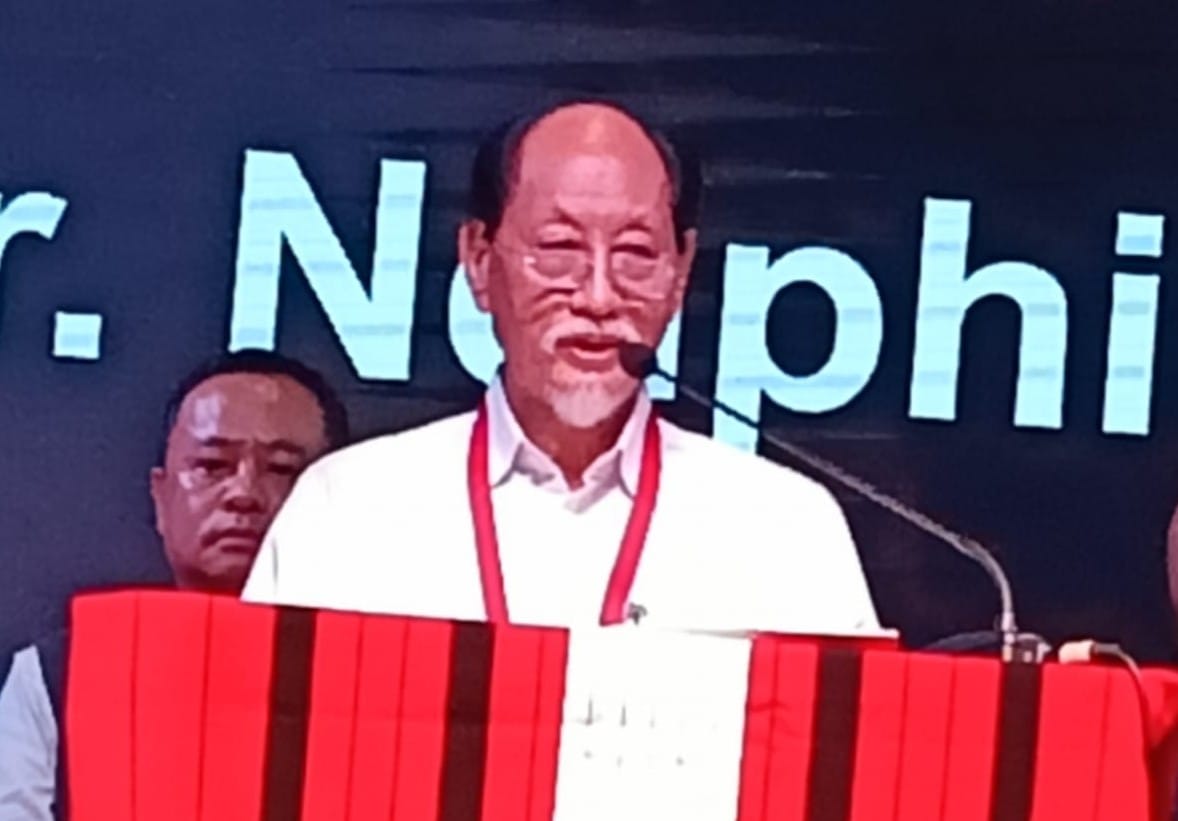
Speaking on the concluding day of the seminar, Nagaland Chief Minister Neiphiu Rio called for the balanced, effective and humane implementation of the ILP system, asserting that the BEFR must serve as a safeguard for Naga identity, land, culture and indigenous rights.

Rio said the BEFR provides a measure of protection by regulating entry into protected areas and shielding indigenous communities from unregulated external economic and demographic pressures.

At the same time, he stressed that Nagaland could not isolate itself from the rest of the country.

“Economic integration, urbanisation and migration are realities,” Rio said, emphasising the need to welcome legitimate investors, workers and businesses while ensuring that the interests of indigenous communities are protected.

He maintained that the BEFR remains necessary in Nagaland but cautioned that its implementation must be properly regulated to prevent harassment of other Indian citizens.

“Tribals, which comprise minority, need some protection,” he said.

Referring to the protective provisions of the BEFR, Rio said outsiders could not purchase immovable property such as land and buildings, while artefacts, antiques and other valuable items associated with traditional culture were also protected. He said violations could attract a fine of Rs 1,000 and imprisonment of up to one year.

While calling for judicious use of the BEFR, Rio warned that its misuse or abuse could ultimately undermine the very interests it was intended to protect. He also pointed out that the continuation of the BEFR was retained by the signatories to the 16-Point Agreement.

Dimapur and the changing ILP landscape

Rio said the ILP was introduced in Nagaland in 1963, while the Dimapur area was initially excluded as a non-tribal belt. Dimapur was subsequently declared a tribal belt in 1979 through a government notification.

His remarks come in the wake of the June 16, 2026 judgment of the Gauhati High Court, which upheld the extension of the ILP regime to Dimapur, Chümoukedima and Niuland. The court held that the BEFR, 1873, continues to have the force of law under Article 372 of the Constitution and rejected challenges based on Articles 14 and 19.

Rio described the judgment as a “victory” for Nagaland.

“We have given a cut-off year of 1963 but for Dimapur area up to Chumoukedima we may have to consider up to 1979,” he said.

He also said the state government was attempting to identify the different categories of Indian citizens who had settled in Nagaland. Employers, he said, would have to register non-Nagas coming to the state for work for the purpose of obtaining ILPs.

Rio acknowledged that mistakes made over the years had complicated the government’s efforts to regulate the system.

“We should not impose ILP on ILP holders. We are given protection and we should not think of isolating ourselves but complement one another and how to bring out the best practices,” he said.

Maintaining that Nagaland was rich in natural resources but continued to remain economically poor, Rio said it was time for Nagas to come together to resolve outstanding issues and make better use of the state’s resources.

He called for a forward-looking approach to development, connectivity and migration, stressing that urbanisation could not be avoided. The student community, tribal leaders and other responsible sections of society, he said, must collectively work towards overcoming the challenges.

Concluding his remarks, Rio said the ILP should not remain merely a regulatory mechanism but should become an effective instrument for protecting identity while enabling Nagas to move towards progress and prosperity.

Rights, identity and the Constitution

Speaking on “Fundamental Rights and the BEFR 1873: A Constitutional Correlation,” senior Supreme Court advocate Prashant Bhushan said Nagaland’s rich tribal cultures, languages, cuisine and traditions should be preserved and celebrated.

However, he cautioned that cultural preservation should not result in isolation from other communities.

A community with a strong cultural identity, he argued, should have little to fear from interaction with other cultures and could instead influence and enrich them. Cultural identities, he said, were not necessarily threatened by the mere presence of outsiders, but could come under pressure when outsiders acquired political power and used it to suppress indigenous cultural or religious practices.

Bhushan also pointed out that complete isolation was impossible in an era of rapid communication, mobility and economic interdependence.

On the constitutional dimension, he referred to Article 29, which protects the right of communities to conserve their language, script and culture, and Article 19, which guarantees citizens, subject to constitutional restrictions, the right to move freely throughout India and practise a profession.

He consequently questioned how the ILP system, which restricts entry into Nagaland and other states where the regime operates, should be reconciled with these fundamental rights.

On the question of indigenous land ownership, Bhushan suggested that restrictions on land purchase by outsiders could be retained while allowing greater social interaction and economic participation.

NSF seeks autonomous regulatory commission

Earlier, the Naga Students’ Federation submitted a representation to the Chief Minister seeking the constitution of an autonomous Inner Line Regulation Commission for Nagaland.

The NSF proposed that the commission be vested with adequate powers to formulate rules and regulations for the stringent and effective enforcement of the BEFR, 1873.

The representation further called for an autonomous institutional mechanism capable of taking decisions and introducing measures necessary for a robust, smooth and balanced implementation of the Inner Line Regulation.

The NSF assured the government of its fullest cooperation in implementing such a mechanism.

BEFR across the Northeast

During the technical sessions, Prof. Nani Bath of Rajiv Gandhi University, Arunachal Pradesh, spoke on “Enforcement of the BEFR 1873 in Arunachal Pradesh.”

Prof. Ch. Priyoranjan Singh of Manipur University spoke on “Enforcement of the BEFR 1873 in the State of Manipur,” while ILRC-NSF chairman Senchumo NSN Lotha spoke on “Enforcement of the BEFR 1873 in Nagaland.”

A presentation on “Enforcement of the BEFR 1873 in Mizoram: A Success Story” by Prof. Lallianchhunga of Mizoram University was read out at the seminar.

Senior Supreme Court advocate Shamona Khanna spoke on “The BEFR 1873: Protection and Safeguarding the Rights of the Hill Tribes.”

The seminar concluded with an epilogue on “The BEFR 1873: A Mainland Indian Perspective vis-à-vis the Constitutional Safeguards of Indigenous Peoples with Special Reference to Nagaland,” led by Prof. Shantanu Chakravarty of Cotton University, Assam.

The seminar sought to examine how a regulatory framework originating in the nineteenth century continues to operate within the constitutional, social, political and economic realities of contemporary India.

It also examined the continuing enforcement of the BEFR from legal and institutional perspectives and explored practical, legally sound and institutionally workable measures for strengthening the regulatory framework.

What is the Inner Line Permit?

The Inner Line Permit (ILP) is a special travel document required by Indian citizens from outside a state to enter and, depending on the applicable rules, stay in areas covered by the ILP regime. It is not a visa and does not apply to foreign nationals; the entry of foreigners is governed by separate laws and regulations. The ILP derives its legal basis from the Bengal Eastern Frontier Regulation, 1873, a colonial-era regulation that created the concept of an “Inner Line.”

The original regulation empowered the government to prescribe an Inner Line and prohibit certain persons from crossing it without a pass. The system emerged in the nineteenth century as part of the British administration of the eastern frontier, where the colonial government sought to regulate movement, settlement and commercial activity in areas inhabited by hill communities. The Inner Line consequently became both an administrative boundary and an instrument for controlling interaction between the plains and the frontier hills.

After Independence, the regulation was retained and adapted rather than abolished. Over time, its rationale evolved from a colonial frontier-management mechanism into an instrument associated with the protection of indigenous land, customary practices, culture and demographic interests.

The Union government has stated that the ILP system originated with the BEFR in 1873 and is subject to periodic review. It is currently in operation in Arunachal Pradesh, Manipur, Mizoram and Nagaland.

Manipur became the fourth state covered by the BEFR framework in December 2019, when the Union government extended the Regulation to the state. The Manipur government subsequently issued its ILP Guidelines, 2019, under Sections 2 and 4 of the BEFR.

The ILP therefore represents an unusual constitutional and administrative arrangement: it places a restriction on the movement of Indian citizens while operating within a broader framework of constitutional rights, state-specific protections and the historical circumstances of the Northeast.

Its contemporary relevance lies in the difficult balance between two legitimate but sometimes competing objectives—protecting indigenous identity, land and customary rights on the one hand, and ensuring mobility, economic integration, employment, investment and interaction among citizens on the other.

The recent debate in Nagaland, particularly following the extension of the ILP to Dimapur, Chümoukedima and Niuland and the Gauhati High Court’s June 2026 judgment upholding that extension, has brought this century-and-a-half-old regulatory framework back into sharp focus.

The larger question, therefore, is no longer simply whether the ILP should exist, but how a nineteenth-century frontier regulation can be implemented in the twenty-first century without turning protection into isolation or integration into dispossession.

(Paudi Renta is a Dimapur based senior journalist and Chief Contributor for TFM, Nagaland.)

The post ILP Must Protect Naga Identity, Not Isolate Nagaland, Says Rio first appeared on The Frontier Manipur.

Read more / Original news source: https://thefrontiermanipur.com/ilp-must-protect-naga-identity-not-isolate-nagaland-says-rio/

NRC Issue Comes Alive Again In Northeast India

The pro-NRC movement, led by the Campaign for Just and Fair Delimitation (JFD) and supported by civil-society organizations, women and student- youth bodies of Manipur has spread beyond the Imphal valley, which is dominated by the Meiteis, as the Naga groups also extended support, unlike the Kuki-Zo people. By Nava Thakuria Something interesting is happening […]

The post NRC Issue Comes Alive Again In Northeast India first appeared on The Frontier Manipur.

The pro-NRC movement, led by the Campaign for Just and Fair Delimitation (JFD) and supported by civil-society organizations, women and student- youth bodies of Manipur has spread beyond the Imphal valley, which is dominated by the Meiteis, as the Naga groups also extended support, unlike the Kuki-Zo people.

By Nava Thakuria

Something interesting is happening in north-eastern region as Manipur starts agitating for updating the National Register of Citizens (NRC, 1951), the Supreme Court of India admitted a petition for reviewing the NRC (updated in Assam, but not yet endorsed by the Registrar General of India/ RGI) and the Directorate of Enforcement (widely known as ED) reportedly registered a case against the financial mismanagement that took place during the Assam NRC updating (May 2014 to October 2019) process. With more to it, Union home minister Amit Shah on 26 August 2026 reiterated the central government’s commitment to deal with the illegal migrants with strong hands. Addressing a conference in New Delhi, where attendees included senior officials from security agencies, central armed police forces, State and Union Territory police chiefs, etc, Shah declared that the illegal entrants would be dealt with by the concerned law. In fact, a nationwide screening to identify the unauthorized people across India is speculated to be undertaken by the government in recent days.
Meanwhile Manipur, which is burning time and again since May 2023, has witnessed a series of massive public demonstrations to insist on updating the NRC ahead of Census-2027. Over 250 people were killed and thousands displaced following the ongoing clashes between the Meitei and Kuki-Zo communities. The house-to-house digital survey in Manipur, beginning on 1 September next, but a large section of Manipuri residents launched the agitation to update the NRC prior to it. They argue that with the help of census data, many illegal migrants (read Myanmarese) would enroll their names in the citizenship list.
The pro-NRC movement, led by the Campaign for Just and Fair Delimitation (JFD) and supported by civil-society organizations, women and student- youth bodies of Manipur has spread beyond the Imphal valley, which is dominated by the Meiteis, as the Naga groups also extended support, unlike the Kuki-Zo people. Manipur chief minister Yumnam Khemchand Singh also backed the NRC, whereas the State legislative assembly passed a unanimous resolution in 2022 favouring an NRC before Census. Khemchand’s predecessor and another Bharatiya Janata Party leader Biren Singh had recently briefed HM Shah in the national capital about the importance of NRC in Manipur prior to the census activities.
But the NRC updating process in Assam embraced unnecessary chaos and confusion, while a responsible senior Assamese official approached the apex court for its complete reverification. Former NRC Assam coordinator Hitesh Devsarma now seeks a comprehensive and time-bound verification of the draft and supplementary NRC, which was seemingly prepared under the supervision of the SC. Devsarma in his personal capacity (as well as on behalf of a large section of indigenous people in Assam) approached the highest court, which subsequently issued notices to the central government, Assam government, NRC State coordinator and the RGI. He alleged that the process was full of errors and irregularities and it would create serious security implications in the country.
It may be mentioned that a draft NRC (for Assam) was published on 30 July 2018 and later a supplementary list was released on 31 August 2019. The list left over 19 lakh applicants, who either did not apply or submitted unauthentic documents. Amazingly the then NRC Assam coordinator Prateek Hajela publicized it as the final one even though it was beyond his capacity. Now Devsarma raises concern that many illegal migrants (read Bangladeshi Muslims) were incorporated in the NRC list through manipulated software and personal corruption by some employees including his predecessor Hajela (who is now enjoying VRS facility from Assam administration). He put personal experience on the front stating that many individuals were termed as originally inhabitant (OI, meaning they are natural citizens of India and don’t need submission of any document) in Kamrup district, whereas they all were immigrants from Bangladesh.
Devsarma also raised concern that many individuals could not pass the ‘family tree matching’ criteria, but their names were included in the last NRC list. Apprehending that foreign money (from Islamic countries) was pumped in Assam NRC updation to incorporate the names of illegal Bangladeshi nationals. So Devsarma also demanded a National Investigation Agency probe to unearth the scam that would finally threaten the national security of India. Highlighting that the credibility of the process (after many serious omissions and commissions) was affected and hence he sought an urgent judicial intervention. Amazingly, another petition in the apex court has appealed for issuing citizenship certificates to those, whose names were included in the NRC list, probably interpreting it (by the petitioners Jamiat Ulama-i-Hind and All Assam Minority Students’ Union) as a final official document. Now both the cases are expected to be heard in the court by the end of September.
Engagement of ED made the NRC updating process more messy as no less than Rs 260 crore were mismanaged (as stated by the Comptroller and Auditor General of India). The CAG report on social, economic and general sectors for the year ending on 31 March 2020 detected the irregularities that took place during the NRC updation, for which the Centre spent Rs 1600 crore. It also recommended penal actions against Hajela and the system integrator (Wipro Limited). The people of Assam may remember a book on NRC, which was penned by an Assam-based television journalist lavishly praising Hajela for his ‘excellent work’ in the exercise. The talk show host, who was named and shamed on social media as one of the NRC scam beneficiaries some months back, regularly parroted the Hajela version that it was the final NRC and the people of Assam should (must) accept it without any further verification. It’s not known what motivated the outspoken scribe to speak that language, but surely it would harm the interest of indigenous population of Assam including other parts of eastern India.
(The writer is a Guwahati-based journalist and media columnist)

The post NRC Issue Comes Alive Again In Northeast India first appeared on The Frontier Manipur.

Read more / Original news source: https://thefrontiermanipur.com/nrc-issue-comes-alive-again-in-northeast-india/

Decoding Geopolitics Behind The China – Myanmar Economic Corridor (CMEC)

By Lt Col Ujjual Abhishek Jha, Retd The announcement by Chinese Foreign Ministry spokesperson Mao Ning on 18 January 2025, regarding ceasefire between the Myanmar Army and MNDAA appeared to be a diplomatic mediation for promotion of peace, which gained lot of traction. However, what missed the headlines is, what prompted the superpower (already exporting […]

The post Decoding Geopolitics Behind The China – Myanmar Economic Corridor (CMEC) first appeared on The Frontier Manipur.

By Lt Col Ujjual Abhishek Jha, Retd

The announcement by Chinese Foreign Ministry spokesperson Mao Ning on 18 January 2025, regarding ceasefire between the Myanmar Army and MNDAA appeared to be a diplomatic mediation for promotion of peace, which gained lot of traction. However, what missed the headlines is, what prompted the superpower (already exporting high calibre and advance weapon systems to Myanmar Army) to broker a peace deal with anti-junta group.  What sounded like diplomacy, had lot behind the curtains. The real motivation is hidden behind a 1700 km infrastructure corridor with financial tune of more than $15 billion, rare earth mines and a strategic vulnerability that China is apprehensive for more than two decades, the China-Myanmar Economic Corridor (CMEC).

CMEC is one of the most geopolitically consequential bilateral infrastructure initiative in mainland Southeast Asia. The CMEC extends from Yunnan Province of Chian, across Myanmar to the Bay of Bengal, in an inverted Y-shape, providing China land bridge to the Indian Ocean, evading vulnerable Strait of Malacca. For Myanmar junta, CMEC is both financial sustenance and a diplomatic tool.

CMEC was established in September 2018 through a 15-point Memorandum of Understanding and is the Myanmar-specific iteration of Belt and Road Initiative (BRI) of China. However, it is not a new creation but consolidation and rebranding of a set of Chinese infrastructure in Myanmar, though, running years behind schedule.

Key Projects Along CMEC (https://iems.ust.hk/)

Background of CMEC

The conceptual lineage of CMEC lies in the Bangladesh-China-India-Myanmar (BCIM) Economic Corridor, proposed in 2013 at a meeting in Kunming, proposing a multi-nation corridor linking Kunming to Kolkata via Mandalay and Dhaka, thereby fostering regional trade. However, the implementation could not see light of the day issues due to border standoffs between India and China, ending the four-nation framework. The consolidation and rebranding of CMEC was done in different phases.


Precursors (2009–2015) – The foundations of the corridor were laid under previous junta regime through Memorandum of Understanding (MoU), signed with CITIC Group of China. The phase culminated in completion of $2.5 billion crude oil and natural gas pipelines, establishing a direct energy connection from Kyaukphyu, Rakhine State to Kunming, China.

Rebranding in November 2017 – Wang Yi, Chinese Foreign Minister, proposed the formal CMEC framework with National League for Democracy (NLD) led government with an aim to consolidate and revive multiple infrastructure initiatives, previously stalled.

MoU and Institutionalisation of CMEC in September 2018 – The bilateral partnership reached a structural milestone with the signing of an official 15-point MoU, broadening the scope of cooperation beyond energy to incorporate manufacturing, transport and agricultural sector.

Rationalising Project in November 2018 – There was a concern over potential debt distress in Myanmar leading to reduction of the Kyaukphyu Deep-Sea Port from $7.2 billion (initial cost for Phase I) to $1.3 billion.

Overarching Roadmap in January 2020 – The Myanmar visit of Xi Jinping, Chinese President, resulted in signing of 33 bilateral agreements, strengthening Chinese intent of long-term access to the Indian Ocean.

Revitalising: Post-Military Transfer of Power Coup Re-authorization in May 2021 – The military transfer of power on 01 Feb 2021, the junta-led Myanmar Investment Commission (MIC) attempted to fast-track economic projects. MIC approved 15 major investment proposals, including the $2.5 billion Mee Lin Gyaing Liquefied Natural Gas (LNG) Power Project.

Conflict and Enhanced Security Agreement in December 2023 – The intensification of internal conflict in Myanmar caused State Administration Council (SAC) signing an additional concession agreement with CITIC Group for the Kyaukphyu Deep-Sea Port to incorporate enhanced security provisions for protection of Chinese infrastructure investments.

Impetus to Bilateral Agreements in June 2026 – The visit of Min Aung Hlaing, Myanmar President to China witnessed signing of 18 new bilateral agreements and revival of Muse-Mandalay Railway project, which is already delayed.

Phases of CMEC: A Comparative Outlook

The development of the CMEC is anatomically divided into two distinct phases, demarcated by the 01 February 2021 military transfer of power and resultant expanding internal conflict.

Phase I (2017-2021) – The Phase I engagement were formal in nature and directly negotiated with civilian NLG government. The period focused on long-term institutional inter-governmental planning by feasibility studies and social and environmental compliance. Although, the project had a cumulative value of approximately $15 billion, the on-ground implementation showed slow movement. The NLD government, to avoid severe debts, initiatives multiple projects. In spite of these interruptions, Phase I laid the physical and administrative base for strategic footprint of China, particularly through the operation of oil and natural gas pipelines alongside completed viability reports for key economic zones.

Phase II (2021- Present) – The military transfer of power in February 2021, restructured the Chinese landscape in Myanmar with a shift from government level to realistic and conflict-driven risk management. To protect its investments amidst ongoing internal conflict in Myanmar, China directly engaged with Ethnic Armed Groups (EAGs) who were controlling border trade zones. EAGs have emerged as the “New Stakeholders”, prominently, Arakan Army (AA) (which controls most of the Rakhine State including encircling Kyaukphyu town implying need for separate engagement track with the AA), Myanmar National Democratic Alliance Army (MNDAA) (controlling the Kokang region in Shan State and signed the Haigeng ceasefire in Jan 2024 under Chinese pressure and handed Lashio back to junta) and Ta’ang National Liberation Army (TNLA) (controls parts of Shan State through which the pipeline and planned railway pass). The EAGs engagement illustrates leverage and the transactional nature of EAO-China engagement. The Chinese priorities moved from regulatory agreement towards survival, securing transit rights, establishing border security pacts.

CMEC Projects: Summarised Tabulated Data

Project Investment Location Stakeholders Status as of July 2026 Highlight
Kyaukphyu Deep Sea Port  $1.3 Bn (scaled down from $7.2 Bn)  Kyaukphyu, Rakhine CITIC Group & Myanmar Govt Ongoing, limited progress Flagship project to give China direct Indian Ocean access and reduce Malacca dependence. Original MoU 2009, tender 2015 for $7.3 Bn, NLD renegotiated to $1.3 Bn in 2018 for debt concerns. Faces security disruption due to Arakan Army control.
Kyaukphyu Special Economic Zone (KPSEZ)  $1.5 Bn Kyaukphyu, Rakhine  CITIC Environmental Impact Assessment (EIA) & survey ongoing March 2025 talks held to expedite implementation.
 Muse-Mandalay Railway  $8.9 Bn  431 km Muse-Mandalay  China Railway Eryuan Engineering Group (CREEC) Feasibility done 2019, preparatory stage Core connectivity, still in planning/ negotiation phase.
 Mandalay-Kyaukphyu Railway  Not Known Mandalay to Kyaukphyu  CREEC Survey conducted Extension of Muse-Mandalay to port.
Mandalay-Tigyaing-Muse Expressway  $820 Mn  Shan Not Known  Stalled Part of structural network for corridor.
Kyaukphyu-Naypyidaw Highway  $2.15 Mn  Rakhine to Naypyidaw  Not Known  Planning, stalled  Not Known
 China-Myanmar Oil & Gas Pipelines Not Known Kyaukphyu to Kunming  CNPC Operational  Existing asset under CMEC
Kyaukphyu Power Plant  $180 Mn Kyaukphyu  VPower Group + CNTIC JV $140 Mn Completed 2023, suspended and now dismantled Suspended late 2023 due to junta failure to supply gas and pay in USD, dismantling enhanced in early 2026
Mee Lin Gyaing LNG Terminal  $2.5 Bn Ayeyarwady Region Not Known Early design stage Revived post-2021
New Yangon City Project  $1.5 Bn  Yangon Not Known Planning stage Yet to complete layout of corridor
Chinshwehaw CBECZ Not Known  North Shan State Not Known  Stalled  China-Myanmar Border Economic Cooperation Zone (CMBECZ)
 Kanpiketi CBECZ  $22.4 Mn  North Kachin Special Region Not Known  MoU to be signed
 Muse-Ruili CBECZ Not Known  Muse-Ruili border Not Known  Planning
Mandalay Myotha Industrial Park  $500 Mn Mandalay Not Known  Completed

At present, CMEC remains largely stalled and only functioning aspect is the oil and gas pipelines. Even though these are functional but transports resources much below designed capacity and amidst frequent security threats from local resistance groups and EAGs. Construction on the Kyaukphyu deep-sea port and SEZ has to be halted due to increased control by AA. On the similar lines, the $8.9 billion Muse-Mandalay railway remains stuck in the preparatory stage and is further complicated by the distressing earthquake of March 2025. This on-ground stalling is in contrast with intense diplomatic activity in 2024-26, featured by frequent meetings, the establishment of BRI implementation committee by junta, and Chinese endorsement of multi-phase elections in Myanmar.

Decoding Chinese Interest: Geopolitical, Strategic & Economic

 Resolving the Malacca Dilemma – The most important strategic vulnerability for China is energy and approximately 80% of China’s crude oil imports pass through the Strait of Malacca, a narrow chokepoint susceptible to disruptions in a conflict scenario. In 2003, this vulnerability was pronounced by Hu Jintao, then President as the “Malacca Dilemma”. The CMEC oil pipeline directly addresses this by providing an alternative route, wherein, oil from the Middle East and Africa can unload at Kyaukphyu and further pumped to Kunming. In addition, this route is almost 3000 kms shorter than Malacca route implying shortening of transit time. The gas pipeline reduces China’s dependency on imported LNG, which is also routed through Malacca.

Transforming Economic Geography of Yunnan – Yunnan Province in China is a landlocked, mountainous and peripheral to coastal-driven economic model of China. The Bay of Bengal direct access (and further to the Indian Ocean, Middle East, Africa and Europe without the 3,000 km detour through Malacca) through Kyaukphyu connectivity to renovates economic geography of Yunnan by reducing freight costs, opens export markets and places Kunming as a logistics and refining hub. This strategy helps China to integrate hinterland provinces into the global economy.

Node for ‘String of Pearls’ – Kyaukphyu is one of the node for, what analysts have described as Chinese ‘String of Pearls’, which is a network of port and infrastructure investments across the Indian Ocean littoral, that cumulatively expands logistic, economic, and potentially naval reach of China, across the Indian Ocean. The People’s Liberation Army Navy of China’s ‘Blue Water Navy’ strategy, aiming for full ocean capability by 2030, creates a structural interest in Indian Ocean access nodes.

Diplomatic and Political Leverage – CMEC gives China considerable leverage over junta in Myanmar. Post military transfer of power, junta government in Myanmar has been diplomatically isolated, financially constrained by sanctions and militarily besieged. The role of China as the primary external economic partner, infrastructure financier, and diplomatic shield makes Myanmar structurally dependent on China. This leverage is used to gain concessions (pipeline security guarantees, support for CMEC implementation, suppression of anti-China protests), to impact internal peace process in Myanmar (Haigeng Agreement, Lashio transfer) and shaping the political landscape.

Access to Extract Resource – The rich resources of Myanmar in terms of timber, jade, rare earths, nickel and agricultural commodities, are being accessed by China to extract for its own usage. CMEC linked infrastructure reduces the cost of resource extraction and export to China. The Tagaung Taung nickel project, the Letpadaung copper mine and extensive jade extraction in Kachin State, are all embedded in the CMEC aided economic connection.

Security Impact of CMEC

CMEC offers a double-edged dynamic for Myanmar, burdening with unsustainable financial commitments amidst intensifying local conflict. With Phase 1 of the Kyaukphyu port alone required a $2.2 billion risking Myanmar with heavy debt trap with China. In addition to economics, protection of pipeline routes involves battalions occupying contested zones, widespread displacement, land confiscation and local hostility. Combining this with China’s acting as an indispensable yet distrusted broker by playing both sides is yet another major security concern.

Takeaways for India

The expansion of CMEC can be viewed as major security challenge for India, specifically with respect to Chinese ‘String of Pearls’ and increasing presence in the Bay of Bengal. This maritime vulnerability is compounded by increasing instability along 1,643 km Indo-Myanmar thereby triggering large influx of Myanmar nationals and attempted resurgence of insurgent networks. On the economic and diplomatic front, CMEC directly contests “Act East Policy” of India and impends its regional influence. Delay in the projects like the Kaladan Multimodal Transit system and the India-Myanmar-Thailand Tri-nation Highway, can jeopardise India’s connectivity dominance to South East Asia, while CMEC rail and trade networks can become the dominant conduits.

To counter this structural hindrance, India needs to accelerate its own infrastructure projects by parallel negotiation with local and relevant EAG, expand its naval footprint in the Bay of Bengal alongside Quad allies, and leverage multilateral frameworks like BIMSTEC to offer a viable alternative to Chinese dominance.

Conclusion

Despite active conflict and delays, China envisages CMEC as a multi-decade strategic initiative, much more than a purely infrastructure project. It highlights the geo-political and strategic intentions of China to become ocean power. An operational CMEC would provide China direct land-bridge access to the Bay of Bengal, reduce Malacca vulnerability, extend Chinese economic and potentially military influence into India’s maritime deck, and structurally impinge upon Act East Policy of India. And most importantly, the China is not exporting peace in form of brokering peace deals in Myanmar rather building a framework to control the internal conflict in Myanmar. Deciphering this aspect, which is behind the curtains, is key to understand the future headway of Southeast Asia.

The post Decoding Geopolitics Behind The China – Myanmar Economic Corridor (CMEC) first appeared on The Frontier Manipur.

Read more / Original news source: https://thefrontiermanipur.com/decoding-geopolitics-behind-the-china-myanmar-economic-corridor-cmec/

The Manipur Crisis and Pathways to Sustainable Security and Peace PART 4

By Brojen Thangjam CLICK HERE FOR PART 3 Part IV Toward Sustainable Security and Peace The preceding analysis suggests that the objective in Manipur cannot simply be a return to the condition that existed before May 2023. That order represented a form of managed instability in which violence was contained but underlying political contradictions and […]

The post The Manipur Crisis and Pathways to Sustainable Security and Peace PART 4 first appeared on The Frontier Manipur.

By Brojen Thangjam

CLICK HERE FOR PART 3

Part IV

Toward Sustainable Security and Peace

The preceding analysis suggests that the objective in Manipur cannot simply be a return to the condition that existed before May 2023. That order represented a form of managed instability in which violence was contained but underlying political contradictions and competing security structures remained unresolved. The task, therefore, is not to restore the past but to build a different political and security order. As John Paul Lederach’s work suggests, this requires moving beyond the immediate cessation of violence towards the constructive transformation of the relationships, institutions and social structures through which conflict is reproduced.

The United Nations’ conception of “sustaining peace” similarly goes beyond the absence of armed conflict. The framework adopted by member states in 2016 encompasses preventing the recurrence of conflict, addressing its root causes, strengthening institutions and the rule of law, promoting inclusive dialogue and mediation, and advancing justice, accountable governance and reconciliation. It is therefore concerned not simply with managing crises, but with creating conditions capable of sustaining peace over time.

For Manipur, however, this normative conception must be translated into a realistic political end-state. The objective cannot be the elimination of political differences, nor should it depend on the disappearance of competing identities, territorial aspirations or historical memories, which are likely to remain part of the political landscape. The challenge is instead to build a political and security order in which such differences can be expressed and contested without becoming sources of recurrent violence; in which security is provided principally through legitimate public institutions rather than competing systems of armed protection; and in which political disagreements can be managed within a functioning shared political community.

The five transitions that follow identify the principal changes required to move in that direction. They draw selectively on lessons from other conflict and post-conflict settings while recognising that their application to Manipur must remain grounded in its distinctive political, social and frontier context.

  1. From Security Management to Political Settlement

The immediate function of security management in a conflict is to prevent further violence, protect populations, restore public order and create conditions in which essential services and political engagement can function. These remain necessary functions of the State. But security management has a fundamental limitation: it can contain violence and create space for politics, but it cannot substitute for a political settlement. In Manipur, this distinction has become increasingly important as the conflict has come to involve questions of territorial security, political representation, institutional safeguards, displacement and return, and competing political aspirations that cannot ultimately be resolved through security measures alone.

Northern Ireland

Northern Ireland illustrates this transition. The Troubles, which lasted from the late 1960s until the Belfast (Good Friday) Agreement of 1998, involved prolonged political and communal violence between republican and loyalist armed groups, alongside the involvement of the British state and its security forces. More than 3,500 people were killed during the conflict. For a considerable period, British policy relied heavily on security measures to contain violence while the underlying political conflict remained unresolved. The movement towards the 1998 Agreement marked a shift towards a political process involving the principal political parties, the British and Irish governments and external facilitation, including an important role for US Senator George Mitchell. The talks eventually produced a broad settlement involving power-sharing, North-South and East-West institutions, rights and constitutional arrangements, as well as commitments concerning policing, security and paramilitary decommissioning (British-Irish Agreement, 1998; Northern Ireland Office, 1998).

The significance of this transition was not that security ceased to matter, but that it was no longer treated as the principal means of managing the political problem. The emphasis shifted towards institutions and processes through which competing claims could be negotiated. The settlement did not require the principal communities to abandon their identities or resolve their constitutional differences before entering political life together. Instead, it created political arrangements through which those differences could be managed without returning to violence (Northern Ireland Office, 1998).

The process was therefore broader than a single negotiation. Sustained facilitation, inclusive dialogue and engagement across different levels of society helped connect formal political negotiations with the wider relationships and perceptions that sustained division. Senehi’s analysis of constructive, transcultural storytelling is particularly useful here because it shows how community-level processes can begin to alter perceptions and relationships that formal political negotiations alone may not reach. The emergence of political space beyond the principal protagonists and the work of grassroots organisations therefore formed part of the wider process of transforming relationships and sustaining peace (Senehi, 2009).

The relevance of this experience lies not in a transferable model but in several institutional mechanisms. First, inclusive political dialogue is essential. A process confined to the State and organisations possessing the greatest coercive capacity would risk reproducing the logic of the conflict. A durable process would need to include the principal communities and political constituencies while creating space for civil society, traditional institutions, women, youth and displaced populations. Where armed organisations remain relevant to ending violence, their transition into a political process would also need to be addressed, without allowing coercive capacity to become the sole basis of political representation.

Second, credible facilitation can help where trust is severely weakened. An accepted facilitator or jointly agreed mediation mechanism can sustain communication and help manage political deadlock. The significance of George Mitchell lies less in the particular institutional arrangement than in the function of sustained facilitation, which created political space for actors who did not trust one another to remain engaged.

Third, thematic and multi-level engagement can allow a complex conflict to be addressed through connected negotiating processes rather than a single comprehensive bargain. Political representation, security guarantees, land and territorial concerns, displacement and return, institutional safeguards, economic recovery and inter-community relations can be addressed through related processes. The purpose would be to disaggregate a complex conflict for purposes of negotiation without fragmenting the political settlement itself.

Fourth, political possibilities need to be tested against institutional realities and followed through in implementation. Political aspirations need to be recognised and discussed openly while being examined against constitutional authority, democratic legitimacy, territorial implications, institutional feasibility and the interests of other communities. Demands need not simply be accepted or rejected; they can be translated into propositions that can be negotiated and accommodated. Any resulting agreement would also require mechanisms for implementation, monitoring and managing disputes over time. The Northern Ireland experience demonstrates that ending large-scale violence does not automatically produce reconciliation or eliminate political and social distance (Northern Ireland Office, 1998).

For Manipur, the relevance of Northern Ireland therefore lies in the architecture of political engagement, not in the substance of the settlement. The two conflicts are historically, constitutionally and politically different, and the Good Friday Agreement cannot simply be transplanted to Manipur. What is potentially transferable is the principle that a security framework, however effective in containing violence, needs to be accompanied by a political architecture capable of accommodating competing claims. This suggests moving beyond the search for a single grand bargain towards a structured and inclusive political process in which competing aspirations can be progressively negotiated, with dialogue, facilitation, thematic engagement, testing of political possibilities and implementation forming part of a connected political architecture.

The objective would not be to eliminate disagreement. In a deeply divided society, that may neither be possible nor desirable. The more important objective is to create institutions through which disagreement can be managed without returning to violence. The transition is therefore not a short-term withdrawal from security management but a gradual change in its function, with security creating the political space in which political architecture can develop.

  1. From Counterinsurgency to Frontier Governance

The second transition concerns the security architecture itself. For decades, security in Manipur was organised primarily around counterinsurgency, with institutions, operational practices and legal arrangements shaped by the need to contain armed challenges to the State. That framework remains relevant where armed threats persist, but it is no longer sufficient to define the security environment. The frontier now brings together counterinsurgency, border management, migration, organised crime, narcotics, intelligence, connectivity, trade and wider regional developments. The challenge is therefore not simply to replace counterinsurgency with another doctrine, but to rebalance the security architecture around a broader conception of frontier governance.

This means bringing the different functions of security and governance into a more coherent relationship. Border management, intelligence, policing, civil administration, diplomacy and engagement with frontier communities cannot operate as largely separate functions; they require closer coordination, clearly defined responsibilities and resources commensurate with the strategic task. The objective is not simply to control a porous frontier, but to distinguish legitimate movement and social and economic interaction from activities that threaten security, while preventing the movement of weapons, narcotics and other illicit networks across it. Connectivity and economic integration must therefore develop alongside effective border and internal security. The transition is thus not from security to governance, but towards a security architecture whose ways and means are adequate to the complexity of the frontier.

Macedonia: When Frontier Insecurity Becomes Internal Insecurity

The experience of Macedonia in the Balkans provides a useful comparative perspective. Macedonia’s borders connected it to Kosovo, Albania and other states, while its Albanian population maintained close geographical, cultural and familial links across these boundaries. The Kosovo crisis of 1999 brought a large refugee influx into Macedonia, while regional instability interacted with longstanding tensions between Macedonians and Albanians over political representation, rights and the role of the State. These pressures contributed to armed conflict in 2001.

The Macedonian experience is relevant because external and internal insecurity became closely intertwined. Cross-border ethnic connections and developments in Kosovo were viewed by many Macedonians through concerns about sovereignty and territorial integrity, while many Albanians experienced the same environment through perceptions of discrimination, political exclusion and insecurity. The conflict could therefore not be addressed simply by securing the physical border. The Ohrid Framework Agreement combined cessation of hostilities and disarmament with reforms in political representation, decentralisation, language rights and participation in public institutions. The response consequently moved beyond the management of armed violence towards changing the relationship between the State and the communities within the affected areas (Petroska-Beska & Kenig, 2009; Framework Agreement, 2001).

The significance of Macedonia lies not in the specific arrangements of the Ohrid Agreement but in the broader principle that frontier security and internal political governance can become inseparable. Securing territory without addressing the political conditions within it may contain immediate threats while leaving the sources of insecurity intact. The experience also cautions against assuming that institutional reform automatically eliminates mistrust or deeper political differences. Its relevance lies instead in demonstrating the need to connect security measures with political inclusion, institutional reform and governance within the affected frontier space.

Several elements of this experience are relevant to the reorganisation of Manipur’s security architecture. First, border security needs to be integrated with internal security and governance. Physical control of the frontier remains necessary in the face of arms trafficking, narcotics, irregular movement and organised criminal networks, but border management is only one part of frontier security. Intelligence, policing, regulated movement, effective local administration and cooperation with communities are equally important. The objective is not simply to make the boundary more difficult to cross, but to make the frontier more governable.

Second, security institutions need clearer roles and closer coordination. Manipur’s existing arrangements evolved around institutions that combined counterinsurgency, border management and internal security responsibilities. The Assam Rifles is a particularly clear example of this overlapping architecture. The issue is therefore not simply whether existing institutions should continue to provide security, but whether their roles, responsibilities and coordination are sufficiently adapted to an environment in which counterinsurgency is only one part of the challenge. The police, civil administration, intelligence agencies, central security forces and military institutions need to operate within a more coherent division of functions while sharing information and coordinating their responses.

Third, legal and doctrinal arrangements need to evolve with the changing character of the threat. India’s counterinsurgency approach itself evolved towards recognising that security operations should create conditions in which political institutions and civil administration can function rather than attempt to resolve insurgencies through force alone. The transition now required is broader: security arrangements and counterinsurgency practices need to be calibrated to an environment in which policing, border management, intelligence, civilian governance and political engagement carry greater weight. This does not imply that coercive capacity becomes unnecessary; rather, its place and purpose within the wider security architecture need to change.

Fourth, connectivity and economic engagement need to be treated as part of frontier governance rather than as separate from security. The Northeast’s strategic importance increasingly derives not only from its vulnerability but from its role in India’s connectivity with Myanmar and Southeast Asia. Lawful trade, infrastructure, regulated movement and economic opportunity can strengthen the relationship between frontier communities and public institutions, while weak governance and exclusion can create space for illicit networks and external influence. Security and connectivity are therefore not competing objectives. Effective security is one of the conditions that makes connectivity possible, while well-governed connectivity can strengthen security.

Sanjib Baruah’s discussion of the aspiration for “walled sovereignty” provides a useful caution here. Greater physical control over a boundary may strengthen territorial authority without necessarily addressing the social and political networks that cross it. For Manipur, therefore, the objective should not simply be to make the frontier harder to cross, but to make it more governable, combining border control with intelligence, policing, diplomacy, local administration and community engagement while distinguishing legitimate movement from illicit activity (Baruah, 2020).

The transition from counterinsurgency to frontier governance is consequently not a withdrawal from security. Counterinsurgency remains one instrument where armed threats persist, but it can no longer provide the organising logic for the entire frontier. The deeper transition is towards a security architecture in which security institutions work alongside political and civilian institutions to manage movement, protect communities, disrupt illicit networks, support lawful connectivity and respond to changing regional conditions. In this sense, the shift is from securing the frontier primarily as a boundary to governing it as a political, social and strategic space.

  1. From Community Militarisation to Public Security

The third transition concerns the growing militarisation of security at the community level. When communities experience prolonged insecurity and lose confidence in public protection, they naturally begin to organise their own security. In Manipur, this has gone beyond temporary community defence. Armed mobilisation, local defence structures and the circulation of weapons have increasingly become part of the social landscape of the conflict. The longer such structures persist, the greater the risk that militarisation becomes embedded in community identities, informal networks and everyday social life.

This creates a longer-term security problem. A generation of young people has acquired experience in surveillance, checkpoint duties, bunker and trench construction, firearms, tactical movement and organised community defence. Many may have entered these roles from a genuine desire to protect their communities, but prolonged participation can make armed mobilisation part of their formative social and political experience. Over time, this can shape how political differences are understood, making threat, deterrence and collective defence more familiar responses than negotiation and compromise. The challenge, therefore, is not simply to remove weapons, but to prevent community protection from becoming a durable system of armed authority and to rebuild public security as the primary source of legitimate protection.

Rwanda: Rebuilding Public Security after Ethnic Violence

Post-genocide Rwanda provides an instructive, although very different, comparison. The 1994 genocide and civil war had devastated the country’s political and security institutions, while large numbers of soldiers and militia members had fled into neighbouring countries. Rebuilding security therefore required more than restoring order. It required reconstructing institutions capable of exercising authority across a society emerging from extreme communal violence. Rwanda subsequently pursued security-sector reform, including the restructuring and integration of military forces, the development of a professional police service, and the rebuilding of justice and administrative institutions.

The first lesson is that demilitarisation of society and strengthening of the State’s legitimate security capacity have to proceed together. Rwanda did not attempt to create security simply by reducing the role of armed institutions. Following the genocide, members of the former government army were integrated into a new national defence structure alongside the forces of the Rwandan Patriotic Front, contributing to the creation of what became the Rwanda Defence Force. The process was part of a wider effort to establish a coherent national security architecture in place of divided and competing armed structures.

This distinction is important for Manipur. The objective of demilitarisation cannot be to weaken the State’s capacity to protect citizens. It is to move legitimate coercive capacity away from fragmented community structures and into professional, accountable public institutions. Rwanda’s subsequent development of professional security institutions and its growing contribution to UN peacekeeping illustrate how military capability can be retained while its institutional purpose and national role are transformed.

The second lesson is that disarmament has to be accompanied by demobilisation and reintegration. Rwanda established a Demobilization and Reintegration Commission in 1997, and subsequent programmes supported the demobilisation and reintegration of more than 70,000 former combatants. These programmes combined the removal of combatants from armed structures with medical support, education, vocational training, livelihoods and other assistance intended to enable them to rebuild civilian lives (United Nations, 2014).

This has particular relevance to Manipur because the present concern is not simply the existence of weapons. It is the possibility that young people who have acquired military experience during the conflict may carry the habits, networks and identities of armed mobilisation into the post-conflict period. Disarmament that removes weapons without creating alternative livelihoods, social roles, civic identities and legitimate avenues for participation may leave the underlying problem unresolved. Contemporary UN DDR guidance accordingly treats reintegration as a long-term process involving economic, social, psychosocial, political and security dimensions rather than as a short-term post-disarmament programme.

The third lesson is that the transition has to create alternative forms of agency for young people. A young person who has spent years protecting a village, manning a checkpoint or carrying a weapon does not simply become a civilian when the weapon is removed. The transition requires opportunities to acquire education and skills, find meaningful livelihoods, participate in community life and develop new forms of civic and political identity. UN guidance on youth, peace and security similarly emphasises youth participation, community engagement and pathways that prevent renewed recruitment into armed groups.

This suggests that a future process in Manipur should not treat young members of community defence structures simply as a weapons-management problem. It should ask what happens to them after demobilisation. Some may have legitimate claims to recognition for protecting their communities; others may require education, vocational training, psychosocial support or livelihood assistance. Some may be suitable for integration into legitimate security institutions subject to appropriate screening, training and professional standards. Others will need pathways into civilian employment, public service, community development or political participation. The objective should be to convert military experience into civilian capability and civic participation rather than allowing it to become a permanent source of status and authority.

The fourth lesson is that community participation should be retained, but its form must change. Communities cannot simply be excluded from the security process after relying upon their own structures for protection. Local knowledge, community networks and participation can be valuable to public security, but they need to operate within accountable institutions and under a clear legal framework. The transition should therefore be from community defence to community participation in public security, rather than from community involvement to state control alone.

This is also where justice becomes relevant. Rwanda’s post-genocide justice response operated at several levels, including international and national mechanisms and the community-based Gacaca courts. Gacaca was created to address the enormous backlog of genocide-related cases and incorporated community participation, accountability, truth-telling and reconciliation. It contained restorative elements, although its actual operation also involved significant retributive dimensions and has generated substantial debate over due process and impartiality. Its relevance here is not as a model to be transplanted, but as an illustration of how communities can participate in addressing past violence while remaining connected to a wider system of public authority.

The Rwanda experience therefore suggests that demilitarisation is not a single event but a process of institutional and social transformation. Weapons have to be removed from unauthorised hands, armed structures have to be dismantled or brought within legitimate institutions, former combatants and militarised youth need viable civilian futures, and communities need confidence that public institutions can provide protection and justice. Security-sector reform, DDR, justice, youth engagement and community participation are consequently not separate programmes. They are different parts of the same transition from fragmented armed protection towards public security (Wielenga & Harris, 2011).

  1. From Ceasefire Management to Political Transformation

The fourth transition concerns the transformation of ceasefire arrangements from mechanisms that manage armed conflict into processes that lead towards political settlement. A ceasefire can reduce violence and create space for dialogue, but it does not by itself alter the political authority of armed organisations. Where armed groups retain weapons, territorial influence or parallel systems of governance while negotiations remain open-ended, a temporary security arrangement can gradually become a stable political equilibrium. The challenge is therefore to ensure that ceasefires remain transitional mechanisms through which armed authority is progressively transformed into legitimate political authority.

The experience of the Northeast provides an important caution. Ceasefires and Suspension of Operations arrangements can reduce violence and create space for political dialogue, but they can also allow armed organisations to retain political, social and economic influence when the political process does not advance. Research on the Indo-Naga ceasefire has shown how prolonged ceasefire arrangements can coexist with parallel military structures and civilian governance institutions, creating a political equilibrium that may reduce open conflict without producing a permanent political settlement (Baruah, 2003). Sanjib Baruah’s discussion of the Naga peace process similarly raises the danger of a “no war, no peace” condition in which arrangements intended to be transitional become part of the political order they were meant to transform (Baruah, 2003).

The lesson is not that ceasefires are inherently problematic. Their value lies precisely in creating the security and political space in which a settlement can be pursued. The difficulty arises when the management of armed conflict becomes detached from the transformation of armed authority. When an armed organisation continues to exercise coercive, political or administrative influence while negotiations remain inconclusive, the ceasefire can become an equilibrium in its own right rather than a bridge towards a different political order.

Colombia: From Armed Authority to Political Participation

Colombia provides a useful contrasting experience. The 2016 peace agreement with the FARC-EP did not treat the ceasefire as the endpoint of the process. The agreement linked the cessation of hostilities to the laying down of arms, demobilisation and reintegration, political participation, security guarantees and transitional justice. The United Nations was given a formal verification role, including verification of the laying down of arms.

The significance of the Colombian experience lies in the fact that the armed organisation was required to change its relationship with the State. The FARC did not simply cease fighting while retaining its armed structure as a parallel political authority. Its members laid down their weapons, entered a reintegration process and the organisation transitioned into legal political participation. By September 2017, the UN reported the completion of the FARC’s weapons handover and its transformation into a political party (United Nations Verification Mission in Colombia, 2017).

This was not a simple or complete success. Reintegration, security guarantees, land access and implementation of other parts of the agreement have remained difficult, and dissident armed groups continue to pose security challenges. Nevertheless, the Colombian experience demonstrates an important principle: a ceasefire becomes a pathway towards political transformation when armed authority is progressively exchanged for political participation and public security.

The implication for Manipur is not that every ceasefire arrangement should immediately require disarmament regardless of circumstances. Security guarantees and political confidence may need to precede or accompany the reduction of armed capacity. But a peace process cannot indefinitely separate political dialogue from the question of armed authority. If an armed organisation retains weapons, territorial influence and parallel authority while negotiations continue without a credible pathway towards political transformation, the ceasefire risks becoming an end-state rather than a transition.

The objective should therefore be to establish a clear sequence in which reductions in armed authority are matched by credible political and security guarantees. Monitoring and confidence-building can create the initial space; political dialogue can address the underlying claims; security guarantees can reduce the perceived need for armed protection; and disarmament, demobilisation and reintegration can progressively transfer authority from armed organisations to legitimate political and public institutions.

A ceasefire can stop the fighting, but it cannot by itself transform the political relationship that produced the fighting. A ceasefire becomes a pathway to peace when it begins to make its own continuation unnecessary by progressively replacing armed authority with political legitimacy, institutional guarantees and public securi.

  1. From Separation and Displacement to a Shared Political Community

The fifth and final transition concerns the movement from separation and displacement towards a shared political community. Physical separation can sometimes be necessary to stop immediate violence. Where communities no longer feel safe living alongside one another, separation can provide the security needed to contain conflict. The difficulty arises when an arrangement intended to manage violence becomes a permanent condition in which communities remain physically and socially disconnected. Stability can prevent renewed violence, but without reconnection it can also freeze the divisions that produced the conflict.

Cyprus: From Separation to Reconnection

The experience of Cyprus provides a useful, if cautionary, illustration. Following intercommunal violence in the 1960s and the division of the island in 1974, the United Nations buffer zone contributed to prolonged physical stability but did not produce a comprehensive political settlement. The experience demonstrates both the value and limitation of separation: it can prevent renewed large-scale violence without necessarily rebuilding the relationships required for a shared political future.

Subsequent efforts in Cyprus have therefore gone beyond maintaining the ceasefire line. The opening of crossing points, bicommunal projects, technical cooperation and confidence-building measures have created opportunities for interaction around practical concerns such as the environment, cultural heritage, water and economic activity. UN-supported technical committees have specifically been used to develop confidence-building measures and enable the two communities to cooperate on issues of common concern (United Nations Security Council, 2018). These initiatives have not resolved the larger political dispute. Their significance lies in demonstrating that practical interests can sometimes be shared even where political trust remains limited.

For Manipur, this suggests that immediate reconciliation should not be treated as a prerequisite for every form of interaction. Communities that have experienced displacement and violence cannot simply be expected to trust one another again. A more realistic starting point is to create conditions in which contact becomes safe, voluntary and useful. Education, health, transport, markets, water, environmental protection, cultural activities and local economic exchange can provide limited spaces for interaction without requiring communities first to resolve their deepest political differences.

The longer-term purpose is not to erase difference or manufacture reconciliation. It is to create conditions in which difference no longer has to be experienced as a source of insecurity. Communities can retain distinct identities, histories and political aspirations while developing sufficient social, economic and institutional interdependence to recognise that their security and prosperity are not necessarily opposed to one another.

Return and Reintegration: From Displacement to Belonging

The experience of displaced populations adds another dimension to this transition. A lasting peace cannot be established while large sections of the population remain unable to return or rebuild secure lives. Displacement affects property, livelihoods, education, public services, demographic patterns and relations between communities. At the same time, premature return can reproduce insecurity where questions of safety, land, property, livelihood and justice remain unresolved. While return is a physical event, reintegration is a political and institutional process.

Bosnia and Herzegovina illustrates the importance of institutions in making return meaningful. Following the 1992–95 war, the Property Law Implementation Plan (PLIP) helped enforce property restitution and resolve claims by displaced persons whose homes had been occupied or otherwise lost. By the end of December 2003, the implementation ratio had reached 92.5 per cent, with 201,902 of 218,310 registered property claims finalised (Office of the High Representative [OHR], 2004). Its significance extended beyond property restitution: it demonstrated that a right to return has limited meaning without institutions capable of enforcing it against local political obstruction and enabling access to documentation, justice, public services and protection.

The Bosnian experience therefore suggests that return cannot depend on political assurances alone. It requires a dedicated institutional mechanism, clear procedures for resolving competing claims, effective monitoring and the capacity to enforce decisions. The model cannot simply be transplanted to Manipur, but its emphasis on institutional coordination, enforceable property rights and sustained implementation offers useful lessons for addressing the complex questions of return, recovery and reintegration.

Sinjar in Iraq provides a contrasting caution. Despite efforts to facilitate the return of Yazidis after the defeat of ISIL, insecurity, damaged infrastructure, property problems, weak livelihoods, governance difficulties and continuing trauma made durable return difficult. UNDP’s experience in Sinjar highlights the importance of restoring infrastructure, services and livelihoods alongside security and trust in creating conditions for dignified and sustainable return (Thangjam, 2025).

For Manipur, return and rehabilitation are therefore part of the wider task of rebuilding a shared political space. People can return only when they feel secure, and that requires confidence in public institutions. Return also raises questions of land and property, which require credible administrative and judicial mechanisms, while rebuilding livelihoods requires economic recovery. This may require a dedicated mechanism for return and property claims that can receive claims, verify documents, resolve competing claims and ensure that decisions are actually implemented.

There is also a deeper institutional dimension to this transition. Inter-community peace will remain fragile if the institutions through which communities govern themselves are unable to adapt to social and economic change. Durable coexistence requires institutions that are representative and accountable and that can respond to women, youth and other voices that may not always be reflected in established structures of authority. Such reform is most likely to be legitimate when it is community-led and inclusive, bringing customary authorities, elders, women, youth and other representatives into the process of institutional adaptation. Practical interdependence can reinforce this process through cross-community education and youth programmes, shared economic activities, cooperation in environmental and water management, cultural and sporting exchanges, and local markets and transport links. Their value lies less in their immediate scale than in creating repeated opportunities for cooperation and gradually changing expectations about what is possible.

Cyprus therefore offers the useful lesson that separation can create the stability necessary to stop violence, while Bosnia demonstrates that return requires institutions capable of restoring rights and enabling reintegration. Sinjar, on the other hand, cautions that physical return without security, livelihoods and functioning institutions may not lead to durable reintegration. For Manipur, the longer-term objective should therefore not be a return to an imagined pre-conflict social order, nor should it require communities to surrender their distinct identities. It should be to develop forms of social, economic and institutional interdependence that make coexistence increasingly sustainable, while allowing different communities to retain their identities and participate in institutions and relationships that make a shared political future possible.

Beyond Elite Bargaining: The Need for Internal Democratisation

The five transitions are not self-executing. Their success depends not only on the state’s capacity to provide security, build institutions and facilitate political engagement, but also on the willingness of political and community actors to transform existing forms of authority. This raises an important question about the design of a political settlement: who speaks for a community, how is that authority obtained, and to whom is it accountable?

This question is particularly relevant to proposals for a consociational settlement in Manipur including those advanced by some scholars (Kipgen and Ganie (2025). Consociationalism is a form of power-sharing designed for deeply divided societies in which ordinary majoritarian politics may leave important communities permanently insecure or excluded. In its classical formulation, it combines a broad coalition among the principal communities with proportional representation, some degree of autonomy for those communities, and mechanisms such as minority vetoes on matters considered vital to their interests (Horowitz, 2014). Its attraction in Manipur is evident: where political aspirations and security concerns are strongly organised around community identities, institutionalising power-sharing and minority protection may provide important safeguards against domination.

But consociationalism has also attracted a substantial body of criticism. One concern is that power sharing can place considerable political authority in the hands of community elites. Because the model depends on elites who can negotiate across communal boundaries, it may produce arrangements in which citizens participate mainly through representatives of their respective communities, rather than as individuals in a wider democratic system. Research on the quality of democracy under power-sharing has therefore identified possible weaknesses in electoral competition, popular participation, transparency and accountability. Another concern is that strong group vetoes can produce political immobilism, particularly when disagreement between community representatives becomes difficult to overcome. Critics have also argued that institutionalising political representation around fixed communal identities can reinforce the very divisions that the settlement is intended to manage.

These criticisms do not make consociationalism irrelevant to Manipur. They point instead to the question that any power-sharing arrangement would have to address: how can collective protection be combined with democratic accountability within each community? Power-sharing establishes arrangements between communities; internal democratisation seeks to ensure that authority within communities becomes more representative, accountable and responsive. Power-sharing without the latter can reproduce elite domination, while internal democratisation without the former cannot by itself resolve the larger conflict.

The distinction is important because consociational settlements necessarily depend to some extent on political and community elites. Indeed, elite accommodation is central to the model. The question is therefore not whether elites should participate in negotiating a settlement—they inevitably will—but whether the institutions they negotiate can subsequently develop forms of representation and accountability that extend beyond established elites. A negotiated settlement may begin with elite accommodation, but its legitimacy cannot end there.

This issue is particularly important where customary institutions exercise substantial authority. Customary institutions have an important role in preserving identity, social cohesion and community rights, particularly in the hill areas. Their customary character does not make them illegitimate. But neither does tradition by itself provide an enduring basis for political authority. The relevant question is whether institutions rooted in customary practice can adapt to changing social and economic conditions while becoming more transparent, representative and accountable.

Land and hereditary authorities illustrate this challenge. Population growth, market integration, migration, infrastructure development and changing economic aspirations are placing new pressures on customary systems of landholding and authority. Where land tenure is uncertain or decision-making is concentrated without adequate accountability, questions of economic opportunity and access to resources can acquire wider political and ethnic significance. Similarly, the evolution of hereditary chieftainship raises questions about how customary legitimacy can coexist with principles of representation and democratic participation. The objective need not be to replace customary institutions with a uniform external system, but to examine how they can protect collective interests while becoming more responsive to contemporary needs.

Internal democratisation also has to include constituencies whose influence within established structures may be limited. Women have played highly visible roles in social mobilisation, community protection and relief, but this does not necessarily translate into comparable participation in political negotiations, land governance or formal decision-making. Younger generations present a different but equally important challenge. Prolonged conflict can create forms of authority around armed mobilisation and community defence, while limited opportunities for education, employment and political participation can perpetuate dependence on such structures. Bringing these constituencies more fully into political and institutional life is therefore part of reducing the social reproduction of conflict.

This has direct implications for the five transitions. Political settlement requires representatives with genuine legitimacy within their communities. Frontier governance requires local institutions capable of participating in the management of a complex strategic space. Public security requires citizens to experience institutions as serving them as individuals as well as members of communities. Demilitarisation requires credible civilian, political and economic alternatives. And movement from separation towards a shared political community requires institutions through which people can participate beyond the boundaries of ethnic protection.

Internal democratisation is therefore not an additional reform agenda placed alongside peacebuilding. It is one of the conditions that makes the five transitions sustainable. A settlement that protects communities externally but leaves authority internally unaccountable may stabilise relations between elites without sufficiently changing the political conditions within communities. Conversely, a settlement that opens greater participation within communities but fails to address their collective security concerns will struggle to gain acceptance.

The broader implication is that consent to a political settlement has to operate at more than one level. Communities need arrangements that protect their legitimate collective interests, but those arrangements must also create space for accountability, participation and institutional adaptation within them. The difficult conversation is consequently not only between communities. It also has to take place within communities. The peace settlement, in this sense, has two dimensions: it has to be negotiated between communities, but its democratic foundations have to be built within them.

Conclusion: From Managed Instability to Sustainable Peace

The five transitions discussed in this essay are ultimately part of a single movement from managing conflict to transforming the conditions that reproduce it. They are not sequential steps but mutually reinforcing changes in the political and security order. Political settlement requires credible public security; public security requires political legitimacy; security arrangements need to create pathways towards political transformation rather than become permanent mechanisms of managed instability; and physical separation and displacement need, over time, to give way to safe return, reintegration and practical interdependence. Taken together, these transitions seek to move security away from competing forms of community protection towards a shared public good, and political authority away from armed structures towards legitimate public institutions.

The pathways proposed here draw on the broader peacebuilding literature, including the World Bank–United Nations emphasis on prevention, inclusive political processes, institutions, security and economic recovery, but localise and contextualise these ideas to Manipur’s particular political, social and frontier conditions. This does not require the elimination of political disagreement or the erasure of distinct identities. Questions of territory, autonomy and constitutional arrangements will remain contested. What must change is the means through which differences are pursued, together with the institutional and social conditions that reproduce insecurity, exclusion and mistrust. This includes credible mechanisms for political accommodation, public security, return and reintegration, as well as economic recovery. The erosion of livelihoods, disruption of trade and connectivity, loss of productive assets and prolonged dependence on relief can deepen insecurity and make recovery more difficult.

The implications extend beyond Manipur itself. The Northeast is simultaneously a politically diverse region and a strategically important frontier, and the manner in which India responds to the crisis will shape both dimensions. Sustainable peace in Manipur is therefore also in India’s larger strategic interest. It would strengthen the security and governability of the India–Myanmar frontier, reduce the space for armed and illicit networks, facilitate the restoration of trade and connectivity, and create more favourable conditions for India’s engagement with Myanmar and Southeast Asia. India’s Act East Policy explicitly links its eastern engagement with economic cooperation, connectivity and people-to-people relations, while the Government has recognised the relationship between peace and stability along the Myanmar border and the development of the Northeast.

A security framework that treats the region primarily as a zone of instability risks reproducing the tendency to address political problems principally through security institutions. Conversely, frontier governance that combines political accommodation, legitimate public authority, effective security, economic opportunity, connectivity and social trust can strengthen both sustainable peace within Manipur and India’s wider strategic objectives. Allowing the present crisis to harden into another form of managed instability would risk deepening displacement, militarisation, communal separation and institutional mistrust, making eventual political accommodation progressively more difficult.

The central implication is therefore not a return to the pre-May 2023 equilibrium, but the development of a political and security order capable of managing persistent differences without allowing them to become recurrent sources of organised violence. Sustainable peace should not be understood as a final settlement in which all differences have been resolved. It is better understood as a condition in which communities increasingly have credible political, institutional and economic means of pursuing their interests without relying on armed protection or permanent separation. If that condition can gradually be established, the reduction of violence can generate a wider peace dividend, releasing social, political and economic energies absorbed by insecurity, displacement and militarisation and redirecting them towards livelihoods, reconstruction, public services, connectivity and participation in a shared political future. The trajectory is not predetermined; it depends on the choices made by the State, political actors, communities and institutions, and on their willingness to move from managing the consequences of conflict towards changing the conditions that sustain it. That, ultimately, is the transition from managed instability to sustainable security and peace.


Reference:

Part I (Alphabetical Order)

Baruah, S. (2020). In the name of the nation: India and its Northeast. Stanford University Press.

Buzan, B., & Wæver, O. (2003). Regions and powers: The structure of international security. Cambridge University Press. Human Rights Watch. (2025, March 27). India: Ethnic clashes restart in Manipur.

Lintner, B. (2016). The Indo-Myanmar border and India’s security problems in the east. In K. S. Farrell & S. Ganguly (Eds.), Heading East: Security, trade, and environment between India and Southeast Asia (pp. 90–107). Oxford University Press.

Lykke, A. F., Jr. (1989). Defining military strategy. Military Review, 69(5), 2–8. Ministry of External Affairs. (2015, December 23). Act East Policy. Government of India.

Ministry of External Affairs. (2023, July 28). Question No. 1456: India’s Act-East Policy. Government of India. Ministry of Home Affairs. (2015). Annual report 2014–15. Government of India.

Ministry of Home Affairs. (2019). Annual report 2018–19. Government of India.

Ministry of Home Affairs. (2023). Border Management-I Division. Government of India.

Ministry of Home Affairs. (2026). North East Division. Government of India.

Saisin, A., Somboonboorana, S., Chaisingkananont, S., & Laishram, R. S. (2025). Reconfiguring security: India’s Act East Policy and its impact on Manipur. Social Sciences & Humanities Open, 12, 101880. https://doi.org/10.1016/j.ssaho.2025.101880 (doi.org in Bing)

Part II (Alphabetical Order)

Baruah, S. (2020). In the name of the nation: India and its Northeast. Stanford University Press.

Brass, P. R. (2003). The production of Hindu-Muslim violence in contemporary India. University of Washington Press.

Chopra, S. (2019). Judging the troops: Exceptional security measures and judicial impact in India. Law & Social Inquiry, 44(3), 622–652. https://doi.org/10.1111/lsi.12394

De, R., & Shani, O. (2025). Assembling India’s constitution: A new democratic history. Cambridge University Press.

Fisk, K., & Cherney, A. (2017). Pathways to institutional legitimacy in postconflict societies: Perceptions of process and performance in Nepal. Governance, 30(2), 263–281. https://doi.org/10.1111/gove.12208

Government of India. (1948). White paper on Indian states. Government of India Press.

Hassan, M. S. (2008). Building legitimacy: Exploring state–society relations in Northeast India. Oxford University Press.

Kipgen, K. T., & Ganie, M. T. (2025). Implications of ethnic conflict in Manipur for India’s national security. South Asia Research, 45(3), 340–361. https://doi.org/10.1177/02627280261419959

Nepram, B. (2004). South Asia’s fractured frontier: Armed conflict, narcotics and small arms proliferation in India’s Northeast. Mittal Publications.

Sadokpam, D. A. (2026, May 16). Hostage logic, killing fields: How horizontal ethnic conflicts eclipse Northeast vertical struggles. The Federal. https://thefederal.com/category/opinion/hostage-logic-killing-fields-how-horizontal-ethnic-conflicts-eclipse-northeast-vertical-struggles-243343 (thefederal.com in Bing)

Sukma, R. (2005). Ethnic conflict in Indonesia: Causes and the quest for solution. In K. Snitwongse & W. S. Thompson (Eds.), Ethnic conflicts in Southeast Asia (pp. 1–41). ISEAS Publishing.

Sahni, A. (2023). Internal security. In N. N. Vohra (Ed.), India’s national security challenges (pp. 47–58). India International Centre.

Thangjam, H., & Laishram, C. (2026). Coercion, proxy wars, and fragmented sovereignty: The crisis of democratic legitimacy in Manipur. Small Wars & Insurgencies, 37(4), 864–887. https://doi.org/10.1080/09592318.2026.2618756

Tyler, T. R. (2003). Procedural justice, legitimacy, and the effective rule of law. Crime and Justice, 30, 283–357. https://doi.org/10.1086/652233

Part III (Alphabetical Order)

Galtung, J. (1969). Violence, peace, and peace research. Journal of Peace Research, 6(3), 167–191.

Lederach, J. P. (2003). The little book of conflict transformation. Good Books.

United Nations. (2008). Securing peace and development: The role of the United Nations in supporting security sector reform (A/62/659–S/2008/39).

United Nations. (2017). Guidance on sustaining peace: What does “sustaining peace” mean?

United Nations Peacebuilding Support Office. United Nations. (2020). Final evaluation of the inclusive security sector governance project in Liberia.

United Nations & World Bank. (2018). Pathways for Peace: Inclusive approaches to preventing violent conflict. World Bank.

United Nations General Assembly. (2016). Resolution A/RES/70/262: Review of the United Nations Peacebuilding Architecture.

United Nations Mission in Liberia & Government of Liberia. (2017). Liberia Peacebuilding Plan: Sustaining peace and securing development. United Nations Peacekeeping. (2018).

UNMIL Facts: United Nations Mission in Liberia. United Nations Security Council. (2016). Resolution S/RES/2282: Post-conflict peacebuilding.


Part IV (Alphabetical Order)

Baruah, S. (2003). Confronting constructionism: Ending India’s Naga war. Journal of Peace Research, 40(3), 321–338. https://doi.org/10.1177/0022343303040003005 (doi.org in Bing)

British-Irish Agreement. (1998, April 10). Agreement between the Government of the United Kingdom of Great Britain and Northern Ireland and the Government of Ireland. Northern Ireland Office.

Horowitz, D. L. (2014). Ethnic power sharing: Three big problems. Journal of Democracy, 25(2), 5–20.

Lederach, J. P. (2003). The little book of conflict transformation. Good Books.

Northern Ireland Office. (1998, April 10). The Belfast Agreement. GOV.UK.

Office of the High Representative. (2000). Property Law Implementation Plan: Inter-agency framework document. OHR.

Organization for Security and Co-operation in Europe. (2004, February 11). Property law implementation in Bosnia and Herzegovina nears completion. OSCE Mission to Bosnia and Herzegovina.

Petroska-Beska, V., & Kenig, N. (2009). The ethnic conflict in Macedonia from Macedonians’ perspective: Being victims in their own country. In J. Carter, G. Irani, & V. D. Volkan (Eds.), Regional and ethnic conflicts: Perspectives from the front lines (pp. 6–18). Routledge.

Senehi, J. (2009). The role of constructive, transcultural storytelling in ethnopolitical conflict transformation in Northern Ireland. In J. Carter, G. Irani, & V. Volkan (Eds.), Regional and ethnic conflicts: Perspectives from the front lines (pp. 227–237). Pearson Education.

Thakur, S., & Venugopal, R. (2019). Parallel governance and political order in contested territory: Evidence from the Indo-Naga ceasefire. Asian Security, 15(3), 285–303. https://doi.org/10.1080/14799855.2018.1455185 (doi.org in Bing)

Thangjam, B. (2025, December 29). Iraq: Power, faith, and the burdens ordinary people carry. The Frontier Manipur. https://thefrontiermanipur.com/iraq-power-faith-and-the-burdens-ordinary-people-carry/ (thefrontiermanipur.com in Bing)

United Nations. (2014). Statement by the representative of Rwanda to the Security Council, 2014.

United Nations Department of Peacekeeping Operations. (2010). Second generation disarmament, demobilization and reintegration (DDR) practices in peace operations.

United Nations Development Programme. (2012). Complementarity and transitional justice: Issue analysis. UNDP. United Nations Development Programme. (2019, April 28).

United Nations Security Council. (1992). Resolution 789 (1992).

United Nations Security Council. (2016). Resolution 2307 (2016).

United Nations Security Council. (2017). Resolution 2381 (2017).

United Nations Security Council. (2018). Resolution 2430 (2018).

United Nations Verification Mission in Colombia. (2017).

Wielenga, C., & Harris, G. (2011). Building peace and security after genocide: The contribution of the gacaca courts of Rwanda. African Security Review, 20(1), 15–25. https://doi.org/10.1080/10246029.2011.561008 (doi.org in Bing)

(Brojen Thangjam recently retired from service with the United Nations. He can be reached at brojen2303@gmail.com)

The post The Manipur Crisis and Pathways to Sustainable Security and Peace PART 4 first appeared on The Frontier Manipur.

Read more / Original news source: https://thefrontiermanipur.com/strategic-challenges-in-indias-northeast-the-manipur-crisis-and-pathways-to-sustainable-security-and-peace-part-4/


The Manipur Crisis and Pathways to Sustainable Security and Peace PART 3

By Brojen Thangjam CLICK HERE FOR PART 2 Part III Definitional and Conceptual Anchor: Sustainable Security and Peace The challenge of moving from violence to sustainable peace is not unique to Manipur. Contemporary internal conflicts are increasingly fought not only between states and insurgent groups but also between nonstate actors themselves, making horizontal and intercommunal violence […]

The post The Manipur Crisis and Pathways to Sustainable Security and Peace PART 3 first appeared on The Frontier Manipur.

By Brojen Thangjam

CLICK HERE FOR PART 2

Part III

Definitional and Conceptual Anchor: Sustainable Security and Peace

The challenge of moving from violence to sustainable peace is not unique to Manipur. Contemporary internal conflicts are increasingly fought not only between states and insurgent groups but also between nonstate actors themselves, making horizontal and intercommunal violence an important feature of the global conflict landscape. The World Bank–United Nations study Pathways for Peace, drawing on global conflict data and 19 country case studies, notes that conflict between nonstate armed groups has risen substantially and that subnational conflict affects nearly every part of the world. Between 2000 and 2015, subnational conflicts affected 24 countries and caused more than 100,000 battle-related deaths. Even more striking is their persistence: Figure 1.6 in the study shows average conflict duration fluctuating from roughly five years to as much as 35 years between 1970 and 2015, with an overall upward trend. The significance of this evidence is not simply that internal conflicts can be prolonged, but that prolonged violence can fundamentally alter the conditions for bringing the conflict to an end. As conflict persists, grievances deepen, institutions and social relationships are altered, incentives become tied to continued violence, and societies can become caught in what the study describes as a “conflict trap.” The question, therefore, is not merely how to stop violence, but how to alter the pathway that has made violence increasingly embedded in political and social life (United Nations & World Bank, 2018).

The preceding discussion has suggested that the problem in Manipur is not simply the presence of violence, but the erosion of the political and institutional conditions through which violence can be contained and political differences managed. If that is the nature of the crisis, then sustainable peace and security cannot be defined simply as the restoration of order. They require thinking more carefully about what peace should mean after a prolonged conflict.

There is a natural tendency, after a crisis, to think of peace as a return to the point at which the violence began. In the case of Manipur, this could mean, consciously or otherwise, treating 3 May 2023 as the reference point and peace as a return to the political and social conditions that existed before the rupture. Yet the fact that the crisis occurred suggests that the pre-crisis order contained unresolved tensions, insecurities and limitations that could not simply be wished away. Prolonged conflict changes the circumstances in which people live and the relationships between them, altering perceptions, creating new fears and grievances, hardening political positions and reshaping the institutions through which communities relate to the state and to one another. The past may therefore provide an important reference point for understanding what has been lost, but it cannot simply become the destination.

This is where the idea of conflict transformation offers a useful way of thinking about the problem. According to Lederach (2003), the objective is therefore not simply to end what is destructive, but to transform the conditions in which the conflict is embedded and to create the possibility of a different and more sustainable future. In this sense, every serious effort to address the present crisis in Manipur is necessarily both immediate and future-oriented: it must deal with violence and insecurity in the present, while also addressing the relationships, institutions and political arrangements that will shape the future.

Conflict itself is not an abnormal feature of political or social life. Differences in interests, identities, aspirations and perceptions are inevitable in any plural society. The concern here is with the point at which such differences become violent conflict and generate persistent insecurity. Peace and security, therefore, cannot mean the elimination of difference or the absence of political contestation. They must instead concern the political and institutional conditions through which differences can be expressed, negotiated and managed without resorting to organised violence. The distinction between negative and positive peace provides a useful starting point (Galtung, 1969)

The absence or reduction of direct violence is an essential condition of peace, but it does not by itself constitute a durable peace. Positive peace requires attention to the wider structural conditions that reproduce insecurity, exclusion and injustice. Galtung’s broader conception of violence is useful here because violence can be embedded not only in direct physical force, but also in structures that reproduce exclusion or insecurity and in cultural narratives and social attitudes that legitimise hostility towards others. The relevance of this distinction to Manipur is not to equate every form of social division with physical violence, but to recognise that sustainable peace must address the conditions through which insecurity and conflict can continue to be reproduced. Peace, in this sense, is not simply a condition in which violence has stopped; it is a condition in which the relationships and structures that enable its recurrence are progressively addressed.

For Manipur, this distinction is particularly important. The crisis has been accompanied by deep fears and apprehensions about physical security and demographic change, land and territory, political representation and control, autonomy and protection, and the possibility of domination by another community. Many of these concerns have been addressed in the preceding discussion in relation to the structural and institutional dimensions of the crisis. But the conflict also operates at a more everyday and social level. Political narratives, stereotypes, mistrust and representations of the other community can reinforce fear and hostility, while seemingly minor acts of exclusion, disparagement and other forms of micro-aggression can reproduce these attitudes in everyday life. In a conflict that has already deeply affected inter-community relationships, such forms of cultural violence can become both a residue of the original conflict and a means through which it is sustained. A meaningful conception of peace must therefore address not only the cessation of physical violence and the repair of institutions, but also the social attitudes and everyday relationships through which insecurity and hostility continue to be reproduced.

Conflict is not sustained by structures alone but also by the choices, actions and inactions of those who participate in it. This brings agency and responsibility into the discussion because different actors have different capacities to sustain conflict or help bring it to an end. The State, political actors, armed organisations, communities, civil society and individuals do not have the same roles or responsibilities, but all can influence the conditions in which conflict continues or begins to give way to peace. Sustainable peace therefore requires not only appropriate institutions and political arrangements but also a willingness among those who have the capacity to shape events to act differently, with political leaders prepared to make difficult choices, parties to the conflict willing to move away from violence, communities prepared to rebuild relationships, and civil society and individuals willing to resist the everyday reproduction of fear and hostility.

The United Nations’ contemporary concept of “sustaining peace” provides a further anchor for this understanding of sustainable peace. The concept was articulated in the twin General Assembly and Security Council resolutions adopted in April 2016. (United Nations General Assembly, 2016; United Nations Security Council, 2016). The twin resolution placed sustaining peace at the centre of a broader approach to preventing conflict and building peaceful societies. The resolutions describe sustaining peace as a “goal and a process to build a common vision of a society”, taking into account the needs of all segments of the population. They encompass efforts to prevent the outbreak, escalation, continuation and recurrence of conflict, address its root causes, support the ending of hostilities and reconciliation, and advance recovery, reconstruction and development. The significance of this formulation is that it moves the idea of peace beyond the cessation of violence. Subsequent UN guidance on sustaining peace has further emphasised that it is “inherently a political process”, since addressing root causes and ending hostilities ultimately requires political solutions. It therefore calls for an integrated approach that combines political processes and inclusive dialogue with safety and security, rule of law and human rights, reconciliation and justice, effective institutions, and social and economic recovery. Sustaining peace is thus not a phase that begins after conflict has ended, but a continuing process through which the political, institutional and social conditions that make peace possible are built and maintained.

The resolutions also emphasise that sustaining peace is a shared responsibility, involving national authorities and institutions as well as communities, civil society and other actors. This reinforces the need to look beyond crisis management and the immediate cessation of violence towards the longer-term political, institutional and social conditions that make renewed conflict less likely. An important feature of this conception is therefore the primacy of the political. Security and peacekeeping can create space for a political process and help prevent a return to violence, but they cannot by themselves resolve the political differences that lie at the heart of many conflicts. Sustaining peace requires political processes capable of managing those differences, institutions that can command legitimacy and public confidence, and social and economic conditions that reduce the incentives and grievances through which conflict can recur. In this sense, the UN framework complements Lederach’s emphasis on transformation and Galtung’s distinction between negative and positive peace: the objective is not simply to contain violence, but to create the conditions in which political differences can be managed without a return to violence.

The practical meaning of this approach can be seen in Liberia. The country experienced two devastating civil wars, the first beginning in 1989 with an armed rebellion against the government of Samuel Doe and the second following renewed fighting in 1999, with the conflict eventually ending in 2003 (United Nations, 2020). The wars were marked by intense fighting among government forces and competing armed factions, widespread atrocities, the displacement of large parts of the population and the collapse of state institutions and basic services. The 2003 Comprehensive Peace Agreement in Accra, following Charles Taylor’s departure, created the basis for a transitional political order, disarmament and demobilisation, and the restoration of constitutional government. The United Nations Mission in Liberia (UNMIL), established later that year, supported the peace process, helped protect civilians, rebuild the security sector and assist the country towards democratic elections.

The significance of Liberia for the present discussion lies in what happened after the immediate conflict had ended. Peace was not treated as synonymous with the absence of renewed fighting or with the withdrawal of international forces. UNMIL remained for almost fifteen years, supporting the rebuilding of national security institutions, disarming former combatants, strengthening the rule of law and assisting successive democratic elections before transferring full security responsibility to Liberian authorities in 2016 and completing its mandate in 2018. A national Peacebuilding Plan was developed to consolidate this transition by strengthening durable national capacities, promoting a peaceful, just and inclusive society, and linking longer-term peacebuilding priorities with national development.

Liberia also illustrates an important qualification: sustaining peace does not mean that the underlying sources of tension simply disappear. Land disputes, weak institutions, uneven access to services, corruption and unresolved social and political grievances continued to pose risks even after large-scale violence had subsided. The objective was therefore not to eliminate conflict, which is neither possible nor necessary in a plural society, but to build the political, institutional and social capacity to manage conflict without allowing it to return to violence. This is perhaps the most useful practical meaning of sustaining peace for the discussion that follows.

Sustainable Peace requires Sustainable Security

Peace, however, cannot be sustained without security. Security in this context is more than the absence of immediate violence. The United Nations’ approach to security-sector reform defines its purpose as enhancing “effective and accountable security for the State and its peoples without discrimination and with full respect for human rights and the rule of law.” (United Nations, 2017). This places the citizen, rather than the security apparatus alone, at the centre of the security relationship.

For the purposes of this essay, sustainable security can therefore be understood as the capacity of a political system to provide credible and non-discriminatory protection over time, while strengthening the institutions and relationships through which insecurity and violence can be prevented and managed. Security is thus not measured simply by the resources available to the State or its capacity to use force, but also by the quality, legitimacy and public confidence of the security relationship between citizens and public institutions.

Taken together, these ideas point towards a broader understanding of what sustainable security would need to mean in Manipur. It would have four interrelated dimensions: physical, institutional, political and social. Rather than introducing a separate framework, these four dimensions bring together the preceding discussion and the UN’s emphasis on people-centred security, accountable institutions, political inclusion, the rule of law and social cohesion. The first is physical security, which concerns credible protection from violence and the fear of violence. Institutional security rests on public institutions that are effective, accountable and capable of protecting citizens without discrimination. Political security requires legitimate avenues through which competing claims and grievances can be expressed, negotiated and accommodated. Social security concerns the ability of communities to live, move and interact without organising themselves permanently around fear, separation and self-protection. These dimensions are closely interdependent: physical security cannot be sustained where institutions lack legitimacy or public confidence, institutional legitimacy is difficult to build where political grievances remain unaddressed, and political arrangements cannot become durable where communities continue to believe that their physical survival depends upon their own coercive capacity.

The objective, therefore, is a gradual movement from security organised primarily around community protection towards security experienced as a shared public good. This does not require the disappearance of political differences or community identities. Rather, the essential change lies in the relationship between difference and violence. Communities must be able to remain distinct without regarding difference as a threat to their survival, pursue political aspirations without resorting to arms, and increasingly rely on public institutions rather than communal coercive capacity for their security. That is the direction in which sustainable security and sustainable peace become mutually reinforcing.

The practical significance of this understanding is reinforced by the comparative evidence assembled in Pathways for Peace. The study does not treat peace as the product of a single settlement or intervention. Societies move along different and often non-linear pathways, and durable progress usually emerges through multiple “transition moments” in which political leadership, institutional reform, confidence-building and coalition-building can alter the direction of a conflict. Its central lesson is that prevention must be sustained, inclusive and targeted: sustained enough to address immediate insecurity while investing in longer-term institutional and structural change; inclusive enough to engage the grievances, perceptions and agency of affected communities rather than relying only on elite bargains; and targeted enough to address exclusion and institutional weaknesses in the arenas where political and social contestation occur. The study therefore calls for political, security and development efforts to work together, for risks to be identified before violence escalates, and for societies themselves, not only the state, to develop greater capacity to manage disputes peacefully.

This reinforces the central argument of this section that sustainable peace cannot be produced by security measures alone, nor by a political settlement in isolation. It requires a sustained process of changing the incentives, institutions, relationships and arenas of contestation through which conflict is reproduced, while building a security order in which communities increasingly experience the state and its institutions as a shared source of protection rather than as instruments of competing communal security.

PART 4 CLICK HERE

(Brojen Thangjam recently retired from service with the United Nations. He can be reached at brojen2303@gmail.com)

The post The Manipur Crisis and Pathways to Sustainable Security and Peace PART 3 first appeared on The Frontier Manipur.

Read more / Original news source: https://thefrontiermanipur.com/strategic-challenges-in-indias-northeast-the-manipur-crisis-and-pathways-to-sustainable-security-and-peace-part-3/

Strategic Challenges in India’s Northeast: The Manipur Crisis and Pathways to Sustainable Security and Peace PART 2

By Brojen Thangjam Part II   Manipur: From Complex History to Violent Political Fragmentation Manipur’s present crisis has to be understood against a much longer history of political incorporation, social differentiation and frontier governance. Since its incorporation into the Indian Union in 1949, the state has had to negotiate the coexistence of a distinctive historical and […]

The post Strategic Challenges in India’s Northeast: The Manipur Crisis and Pathways to Sustainable Security and Peace PART 2 first appeared on The Frontier Manipur.

By Brojen Thangjam

Part II


Manipur: From Complex History to Violent Political Fragmentation

Manipur’s present crisis has to be understood against a much longer history of political incorporation, social differentiation and frontier governance. Since its incorporation into the Indian Union in 1949, the state has had to negotiate the coexistence of a distinctive historical and political identity with the institutions and imperatives of the Indian state. Its geography adds another layer of complexity. Located on India’s international frontier with Myanmar, Manipur has long been exposed to cross-border movement, ethnic and familial linkages, demographic pressures and transnational economic and illicit networks. Within the state itself, different communities have developed distinct political aspirations, social institutions and relationships with land, customary authority and the state. These differences have interacted with inherited administrative arrangements, changing forms of political accommodation and a security architecture shaped by the region’s frontier character and successive phases of armed conflict. The result is a political-security environment in which questions of identity, territory, authority, security and political representation have become closely intertwined.

From Political Incorporation to Insurgency

One enduring source of political contestation in Manipur concerns the circumstances and political meaning of its incorporation into the Indian Union. The Merger Agreement was signed on 21 September 1949, and administration was transferred to the Government of India on 15 October 1949. The Government of India’s White Paper on Indian States had described Manipur as a border state of “great strategic importance”, whose security arrangements required special attention. The Agreement transferred “full and exclusive authority, jurisdiction and powers” over the governance of the State to the Dominion Government. These developments marked a decisive change in Manipur’s constitutional and political status, but they did not bring the political questions surrounding that transition to a simple conclusion. (Government of India, 1948)

The significance of this history is also illuminated by the constitutional trajectory that preceded the merger. Manipur adopted its own Constitution in 1947 and held elections on the basis of universal adult franchise in June 1948, establishing a functioning Legislative Assembly. In studies of constitutionalism in the princely states of the Indian subcontinent, Manipur stands out as an important case that complicates the conventional narrative of integration. (De & Shani, 2025, pp. 150–161). They note that the Manipur State Constitution Act, 1947, has remained a site of political contestation, while the subsequent dissolution of the elected institutions following the transfer of administration has become part of a longer political memory concerning constitutional authority, political representation, and the terms of Manipur’s incorporation.

This history should not, however, be treated as a sufficient explanation of the conflicts that followed. Its significance for the present argument lies in the fact that the circumstances of incorporation provided one strand of the political narrative through which questions of sovereignty, political autonomy and historical legitimacy were subsequently articulated. From the 1960s, armed organisations emerged challenging the authority of the Indian state and, in different forms, seeking independence or the restoration of what was regarded as Manipur’s sovereign political status. The question of incorporation thus became one element in the historical and political justification of insurgency, contributing to a prolonged vertical conflict between insurgent organisations and the state.

The Convergence of Vertical and Horizontal Conflict

The present crisis, however, cannot be understood simply as a continuation of the earlier insurgency. The political and security environment has changed substantially. For much of the post-independence period, the dominant conflict was essentially vertical: the principal confrontation was between insurgent organisations and the Indian state. The present crisis has added a powerful horizontal dimension, in which conflict increasingly takes place between communities themselves, with armed organisations, political actors, state institutions and community-based security structures operating within and around these competing relationships. The distinction between vertical and horizontal conflict is useful here because it draws attention not merely to a change in the identity of the actors, but to a change in the social and political location of armed confrontation (Sadokpam, 2026). Sadokpam draws this understanding from Rizal Sukma’s formulation of vertical and horizontal conflict in ethnically volatile Indonesia. (Sukma, 2005) that helped to illuminate this transformation.

This shift was gradual rather than a sudden conversion in 2023. It emerged as political aspirations that had previously been expressed largely through ethnic organisations, constitutional demands and electoral politics became increasingly intertwined with armed organisations and coercive forms of mobilisation. The reconfiguration of insurgent politics in the late 1980s was particularly significant. The formation of the NSCN (IM) in 1988 and the emergence of Kuki armed organisations such as the KNA and KNF in the same year created new organisational vehicles through which claims relating to identity, territory and political authority could be articulated and pursued. The Kuki–Naga conflict of 1992–97 marked a critical stage in this transformation. It demonstrated that armed mobilisation could be directed not only against the state but also towards competing territorial and political claims between communities, producing displacement, deepening mistrust and consolidating armed authority within particular areas. The conflict was therefore no longer simply a contest between the state and insurgents, as territorial and political competition itself became increasingly militarised.

The subsequent peace processes further altered this landscape, although in a paradoxical way. The 1997 ceasefire between the Government of India and the NSCN (IM) substantially reduced direct confrontation between the state and the organisation, while its designated camps, command structure and organisational networks continued to operate within Manipur. The later suspension of operations arrangements with Kuki-Zo armed groups, informally from 2005 and formally from 2008, similarly sought to contain a fragmented armed landscape rather than immediately dismantle it. These arrangements reduced insurgent violence and created channels for political engagement, but they also allowed armed organisations to retain organisational cohesion, territorial influence and political relevance. Over time, armed authority therefore became embedded within parts of the social and political order rather than disappearing from it. The result was a gradual multiplication of centres of authority and a blurring of the boundary between armed mobilisation, community politics and territorial control.

As armed organisations became embedded in particular communities and territories, control over physical and economic space also acquired greater political significance. Territory was no longer simply the ground on which the state sought to deny insurgents freedom of movement; it increasingly became an object of competition in its own right. Control over land, strategic locations, movement corridors, border access, trade and economic networks acquired political and security value. Moreh illustrates this changing environment particularly well. Its location on the Myanmar frontier, its importance for cross-border trade and connectivity, and the presence of competing political and armed interests made it a space where territorial claims, economic interests, community security and challenges to state authority converged. The cumulative effect was a conflict environment in which the older state–insurgent contest increasingly overlapped with struggles over territory, resources, political representation and community security (Nepram, 2004).

This transformation does not mean that the earlier vertical conflict has disappeared. It has not. Rather, the two dimensions now coexist and interact. Armed organisations that once primarily challenged state authority have become embedded, to varying degrees, in community, territorial and political networks, while communities themselves have increasingly come to perceive security through competing claims over territory, identity and political future. By the time the 2023 crisis emerged, armed groups had become enduring political actors with organisational capacity, coercive capability, territorial influence and claims to political representation. The state was therefore no longer dealing only with armed organisations challenging its authority; it was also confronted with communities whose perceptions of security, territory, identity and political future had themselves become mutually contested.

The distinction matters because a state–insurgent conflict and an inter-community conflict pose different political and security problems. In the former, the principal challenge is to restore state authority in relation to an armed organisation. In the latter, the state must simultaneously protect communities from one another, maintain public authority, and create political conditions under which competing communities can continue to inhabit a common political space. This is one of the central reasons why a security architecture developed primarily around counterinsurgency could prove considerably less effective when violence emerged from within the political and social order that decades of conflict management had helped to shape.

The Differentiated Political Geography of Manipur

The transformation described above has unfolded within a political geography that is itself deeply differentiated. Manipur is not simply divided between a valley and the hills. Different communities have developed distinct relationships with land, political authority, customary institutions and the state, shaped by terrain, settlement patterns, historical administrative arrangements and political representation. The valley’s demographic concentration, agricultural and urban economy and political centrality developed alongside hill areas characterised by different land regimes, customary institutions and forms of administration. Geography therefore acquired political meaning: it shaped how communities understood land, representation, authority and security.

The hill–valley distinction is consequently more than a geographical divide. It has acquired political and institutional dimensions, particularly around land, customary authority, representation and autonomy, as well as the relationship between state institutions and community institutions. These differences have also been interpreted and mobilised by political leaders and elites, giving geographical and institutional distinctions a political life of their own. At the same time, the binary should not be overstated. Both the hills and the valley contain multiple communities, interests and political positions. Historical and geographical differences do not inevitably produce conflict; their significance lies in the different political contexts within which grievances, fears and aspirations are understood and mobilised.

An important consequence has been that the state itself is not experienced in the same way across these political spaces. In some communities, state institutions have been perceived as majoritarian, partial or insufficiently protective; in others, they have been viewed as instruments of unequal political accommodation. In parts of the hills, the uneven reach of state institutions has also allowed customary, community and, at times, armed structures to retain significant influence. The result is not the absence of state authority, but its coexistence with other sources of authority and legitimacy. Political order is therefore experienced through multiple institutional relationships rather than through a single, uniformly accepted framework of public authority.

This helps explain why long-standing political differences have proved difficult to contain within conventional political institutions. Questions of identity, land, representation, autonomy and political authority have generated competing aspirations for decades, but the critical issue is not simply the existence of these differences. It is whether institutions are sufficiently legitimate and capable of providing credible means through which such differences can be negotiated. Where political institutions are unable to command confidence across communities, political claims are more readily interpreted through the language of collective security. A dispute over representation can become a question of political survival; a dispute over land can become a question of territorial security; and uncertainty about political arrangements can become a fear about the community’s future.

Hassan (2008) compares experiences of Manipur and Mizoram. In his, Building Legitimacy: Exploring State–Society Relations in Northeast India, Hassan places state-making, institutional legitimacy and state capability at the centre of his analysis of the contrasting trajectories of the two states. His argument is not that conflict disappears when a state becomes more capable, but that the consolidation of legitimate state institutions creates a stronger political framework for managing group contestation. In Mizoram, the process of state-making helped strengthen the legitimacy and authority of state institutions and their capacity to manage competing interests. In Manipur, by contrast, traditional and community-based centres of authority, including tribal and ethnic associations, retained considerable influence, contributing to a more fragmented field of social and political authority.

Hassan’s comparison therefore helps shift the question from why communities have competing claims to why political institutions are unable to mediate those claims effectively. Grievances, competing identities, historical memories and struggles over land and resources may generate political mobilisation. Whether such mobilisation develops into sustained conflict, however, depends also on the capacity and legitimacy of institutions to regulate competition, provide credible avenues for political participation and maintain a political order that communities regard as sufficiently fair. In Manipur, the difficulty has been not simply the presence of competing political aspirations, but the weakness of institutions in providing a sufficiently trusted arena in which those aspirations can be negotiated.

The significance of the present crisis therefore lies in the interaction between a differentiated political geography and uneven political authority. Where communities do not experience the state as equally legitimate or capable, and where alternative sources of authority retain substantial influence, political differences can more readily become security concerns. The crisis is consequently not reducible to the failure to suppress violence. It points to a deeper difficulty in sustaining a political order in which competing communities can pursue their interests, contest one another politically, and still regard the state as a credible common arena for negotiation.

Security Architecture and Managed Instability

This weakness of political mediation has existed alongside a distinctive security architecture that has governed the region for decades. Manipur’s prolonged insurgency produced an extensive security response, including exceptional legislation, counter-insurgency institutions and doctrines, truce-management frameworks and successive peace processes. As Sanjib Baruah argues, however, this was not simply a collection of security measures but part of a wider security order in which a military understanding of political conflict acquired considerable primacy. The persistence of this security orientation shaped how the state understood and responded to political unrest, often privileging the management and containment of violence over the resolution of its underlying political causes (Baruah, 2020).

These measures had significant effects. Over time, levels of insurgent violence declined in important parts of the state, even though the organisations, constituencies and political questions that had sustained armed mobilisation did not disappear. The reduction in violence was therefore real, but it did not necessarily represent the resolution of the conflict’s underlying political drivers. As Ajai Sahni’s analysis of internal security in the Northeast illustrates, declining levels of violence need to be assessed alongside the continuing organisational, political and social conditions that sustain insurgent mobilisation (Sahni, 2023). At the same time, the prolonged security architecture created a difficult legitimacy problem. Where communities experienced security institutions primarily through exceptional laws, military deployment and counter-insurgency operations, trust in the security forces and in the institutions they represented could be weakened. The state could therefore reduce violence while struggling to build the broader legitimacy and confidence necessary for security to become a shared public good.

The distinction is important because containment of violence did not necessarily translate into consolidation of state authority or legitimacy. Ceasefires and negotiated arrangements could reduce armed confrontation while allowing insurgent organisations to preserve their organisational structures, social constituencies and, in some circumstances, economic influence. Political accommodation could therefore coexist with the persistence of alternative centres of authority. The security architecture also remained embedded in a wider political environment in which the state’s coercive capacity was often more visible than its capacity to mediate competing political claims.

This is particularly significant in Manipur because security arrangements developed alongside, rather than fully replacing, other forms of political and social authority. Community organisations, customary institutions and armed organisations continued to exercise influence in different parts of the state, while the state’s capacity to regulate political and security relations remained uneven. The result was a security environment in which violence could be reduced without producing a corresponding consolidation of a common political authority. Moreover, where security forces themselves were viewed with distrust by sections of the population because of the history and operation of the security architecture, the state’s ability to claim legitimacy as an impartial provider of public security was further weakened.

This does not diminish the importance of ceasefires or peace processes. They can be necessary instruments of conflict management and can create conditions for political engagement. The difficulty arises when arrangements intended to create space for political settlement become enduring mechanisms through which armed authority is accommodated without being progressively transformed into accountable political authority. In such circumstances, the reduction of violence may coexist with the persistence of fragmented authority and unresolved political competition.

This produced what may be described as managed instability: violence was sufficiently contained to prevent wider escalation, but the political contradictions, alternative centres of authority and deficits of institutional trust that sustained insecurity remained unresolved. The concept is used here analytically to describe a condition in which conflict is managed sufficiently to maintain a degree of order without producing a sufficiently legitimate and integrated political settlement.

The significance of this distinction becomes clearer after 2023. The question is not simply whether earlier security arrangements reduced violence. It is whether they also created the political and institutional conditions necessary to sustain a common system of public authority and security when the conflict changed form.

Fragmented Authority and Community Security

The events since May 2023 exposed this problem with unusual clarity. The emergence of community-based armed formations, territorial separation, parallel security arrangements and competing claims over political authority made visible a condition in which the state was no longer the sole or universally accepted provider of security.

This can be understood through the idea of fragmented authority. Rather than authority residing exclusively within public institutions, political and security functions become dispersed among state institutions, armed organisations, community-based authorities and other actors. An analysis of the Manipur crisis similarly describes a condition of fragmented sovereignty, in which political authority is dispersed across overlapping institutions, with contested sovereignty and coercive power operating alongside formal state institutions (Thangjam & Laishram, 2026). The important question, therefore, is not simply who controls territory, but who provides protection, who exercises authority and who is perceived as capable of determining political outcomes.

The growth of community-based security is understandable in conditions of fear and uncertainty. When communities believe that public institutions cannot adequately protect them, organising for their own protection becomes a rational response to insecurity. But what may begin as a response to insecurity can itself alter the political order. Where communities increasingly depend upon their own organisations for protection, security becomes a communal rather than a public good. Armed organisations can become embedded within community structures; political representatives can become dependent upon coercive actors; and the state can find itself negotiating not only with political actors but also with actors who possess coercive capacity and claim to speak on behalf of communities.

The events of May 2023 must be distinguished from these longer-term structural conditions. The precise causes and sequence of the initial violence remain subject to competing political and legal interpretations. What is less difficult to observe, however, is the speed and scale with which violence spread across geographically separated locations, the rapid emergence of armed community formations and the subsequent establishment of territorial frontlines. The pattern suggests that the violence did not develop solely through spontaneous local mobilisation; it unfolded in an environment in which pre-existing organisational, political and armed capacities could be rapidly activated.

The concept of an institutionalised riot system provides a useful analytical lens for thinking about this process. Brass cautions against treating large-scale communal violence as simply spontaneous eruptions of accumulated anger. His framework draws attention to the political actors, organisational networks, symbols, narratives and local mechanisms through which violence can be prepared, activated and sustained (Brass, 2003). Applied cautiously to Manipur, the value of the framework is not to establish that the May 2023 violence was a centrally planned riot. Rather, it helps us ask how pre-existing political mobilisation, organisational networks and accumulated insecurity can enable violence to move rapidly from local confrontation to wider communal conflict.

The political crisis and the security crisis therefore began to reinforce one another. Weak political mediation encouraged communities to seek their own security; expanding community security reduced confidence in common public institutions; and fragmented authority made political mediation more difficult. Once security itself becomes organised increasingly along community lines, restoring a common political order becomes considerably harder.

The significance of the post-2023 crisis therefore lies not only in the scale of violence but in what it revealed about the underlying structure of authority in Manipur. The crisis brought into the open a condition in which state institutions, armed organisations and community-based structures could exercise different forms of authority over the same political space. What had previously existed in more dispersed and often less visible forms became an overt feature of the conflict.

Displacement, Trust Deficit and Militarisation

The crisis of political order is also visible in the ways prolonged violence has altered the social and territorial conditions within which that order operates. Displacement, changing patterns of settlement, declining institutional trust and deepening reliance on security structures have become part of the political landscape created by the conflict. These are not simply consequences of violence; they increasingly shape the conditions under which security, political authority and eventual peace will have to be rebuilt.

The scale and duration of displacement illustrate this transformation most clearly. By March 2025, government data submitted to the Supreme Court recorded approximately 57,000 people living in 361 relief camps, from an estimated total displacement of around 60,000 since the outbreak of violence (Human Rights Watch, 2025). These figures do not capture all those living with relatives, in temporary accommodation or outside the state. The significance of displacement therefore lies not only in its humanitarian scale but in the way it has altered the social and territorial geography of the conflict.

Large numbers of people have remained separated from their homes, livelihoods and former neighbourhoods; many homes have been destroyed or occupied; and the physical conditions necessary for return have become inseparable from questions of security and territorial control. Displacement has consequently contributed to a more durable separation of communities and made the restoration of the pre-May 2023 social geography increasingly difficult. Questions of return, property restitution and accountability therefore become part of the larger question of whether public institutions can provide a credible framework for restoring ordinary political life.

The consequences extend to institutional trust. Trust is not simply confidence that an institution can perform a task. It involves an expectation that an authority will act with competence, fairness and a degree of good faith when exercising power. Legitimacy is related but distinct: it concerns whether that authority is regarded as rightful and deserving of acceptance. Research on procedural justice suggests that perceptions of fairness, respectful treatment and voice are central to the willingness of citizens to accept and cooperate with public authority (Tyler, 2003; Fisk & Cherney, 2017). In conflict-affected settings, therefore, the experience of how security is provided can matter as much as the fact of security itself.

This distinction is important in Manipur. Trust in public institutions can be weakened when communities experience the state as absent, partial, discriminatory or unable to protect them. Prolonged exposure to exceptional security measures can add another layer to this problem when security institutions themselves become associated with coercion rather than impartial public protection. Research on military policing in Manipur has documented how prolonged exceptional security measures have affected state–society relations and generated concerns about abuse and accountability (Chopra, 2019). The result can be a trust deficit in which the state retains substantial coercive capacity but struggles to command confidence that its institutions will provide security fairly and consistently. Where confidence is weak, communities are more likely to rely on their own organisations and networks for protection.

These experiences can also become embedded in communal memory. Fear, loss, displacement and perceptions of unequal protection are transmitted through families, community organisations and social networks. Distrust can therefore become self-reinforcing, both within communities and in perceptions of other communities and public institutions. What appears at one level as a problem of inter-community mistrust is consequently also a problem of accumulated institutional experience.

This helps explain the changing significance of militarisation. Manipur has lived for decades with a substantial security presence, exceptional security legislation and institutions shaped by counterinsurgency. In this historical sense, militarisation refers not simply to the presence of armed forces but to the growing influence of security institutions and security logics in political and social life. The post-2023 crisis has added a different dimension: communities have increasingly organised their own forms of protection, including armed community defence, in response to perceptions of vulnerability and the inability of common security arrangements to provide sufficient reassurance.

The two forms should not be equated, but they interact. The historical security architecture established an environment in which security institutions had an unusually prominent role in public life; the post-2023 crisis has extended the logic of security mobilisation into the social organisation of communities themselves. When communities organise for their own protection, this may initially be a rational response to insecurity. But where armed protection becomes embedded in community organisation, security can increasingly become a communal rather than a common public good. Armed organisations may acquire greater social and political influence, while the state faces greater difficulty in restoring a common security framework. Recent analysis of the conflict similarly identifies the emergence of parallel security systems among the principal communities as a consequence of the erosion of common protection. (Kipgen & Ganie, 2025)

A self-reinforcing dynamic can then emerge. Insecurity encourages communities to strengthen their own protection; stronger community-based protection reinforces perceptions of continuing insecurity; and prolonged reliance on separate systems of protection makes the restoration of common public security more difficult. Militarisation therefore becomes not only a consequence of insecurity but also a mechanism through which insecurity can be reproduced.

The immediate eruption of violence in May 2023 must nevertheless be distinguished from these longer-term structural conditions. The precise causes and sequence of the initial violence remain subject to competing political and legal interpretations. What is less difficult to observe is the speed and scale with which violence spread, the emergence of armed community formations and the subsequent establishment of territorial frontlines. The crisis therefore brought together several processes that had developed over time: displacement and territorial separation, weakened confidence in common institutions, and the increasing capacity of communities to organise security for themselves.

These developments also provide a useful way of understanding the official framing of the crisis. Government statements have repeatedly emphasised declining violence, the restoration of normalcy, the resumption of administrative and economic activity, and dialogue with stakeholders as principal indicators and instruments of progress. The Prime Minister has described the conflict as deeply rooted in Manipur’s history and referred to earlier episodes of social conflict, while the Union Home Minister has explicitly characterised the violence as ethnic and emphasised the restoration of peace and normalcy. The latter framing is particularly clear in the Home Minister’s parliamentary statements, where he distinguished the violence from terrorism and other forms of armed conflict and described it as ethnic violence between communities.

This framing is understandable as an immediate approach to stabilisation, but it also has a less visible implication. When a crisis is primarily presented as an historically recurrent or essentially ethnic conflict between communities, the political and institutional dimensions of the crisis can recede from view. The state risks being positioned principally as a manager of violence rather than as an actor responsible for rebuilding a common political order. The emphasis on declining violence and normalisation therefore places immediate weight on preventing renewed escalation and restoring administrative functioning, while the emphasis on dialogue points towards engagement with multiple stakeholders. Yet neither necessarily answers the deeper question of whether the institutions through which security and political authority are exercised have regained sufficient legitimacy and trust.

Framing the immediate objective as “normalisation” therefore leaves a deeper question less visible: what exactly is being normalised? A return to reduced levels of violence and functioning administration is necessary, but it does not by itself restore trust, enable displaced populations to return safely, reverse community militarisation or reconstruct common public authority. If the underlying political and institutional relationships remain substantially unchanged, normalisation may restore order without necessarily producing a sustainable political settlement.

The crisis can consequently be understood as a crisis of political order expressed and reinforced through a crisis of security. Political order depends upon institutions capable of mediating competing claims, while security depends upon the capacity of the state to provide credible, common and legitimate protection. The two are therefore inseparable: where political confidence weakens, communities turn increasingly towards separate forms of protection; where public security becomes fragmented, the space for political mediation contracts. The challenge is therefore not simply to suppress violence, but to reconstruct the political and security relationships through which a common public order can be sustained.

(Brojen Thangjam recently retired from service with the United Nations. He can be reached at brojen2303@gmail.com)

The post Strategic Challenges in India’s Northeast: The Manipur Crisis and Pathways to Sustainable Security and Peace PART 2 first appeared on The Frontier Manipur.

Read more / Original news source: https://thefrontiermanipur.com/strategic-challenges-in-indias-northeast-the-manipur-crisis-and-pathways-to-sustainable-security-and-peace-part-2/

Strategic Challenges in India’s Northeast: The Manipur Crisis and Pathways to Sustainable Security and Peace PART 1

By Brojen Thangjam The continuing crisis in Manipur illustrates how the strategic challenges confronting India’s Northeast are changing in character. The region is simultaneously an international frontier, a conflict-affected political space and an increasingly important gateway for India’s connectivity and engagement with Southeast Asia. The violence that began in May 2023 exposed not only the […]

The post Strategic Challenges in India’s Northeast: The Manipur Crisis and Pathways to Sustainable Security and Peace PART 1 first appeared on The Frontier Manipur.

By Brojen Thangjam

The continuing crisis in Manipur illustrates how the strategic challenges confronting India’s Northeast are changing in character. The region is simultaneously an international frontier, a conflict-affected political space and an increasingly important gateway for India’s connectivity and engagement with Southeast Asia. The violence that began in May 2023 exposed not only the persistence of armed insecurity but also a deeper crisis of political authority, institutional trust and inter-community relations.

The Changing Strategic Challenge

More than three years after the outbreak of violence in May 2023, Manipur remains deeply fractured. Although the intensity of direct violence has fluctuated, the conditions created by the conflict remain unresolved. Large-scale displacement, armed community defence, the circulation of weapons, territorial separation, a vulnerable international frontier and a severe loss of trust in state institutions and between communities have altered the security and political environment.

The significance of Manipur extends beyond the immediate crisis. The state lies at the intersection of India’s internal political order and its strategic engagement with Southeast Asia. It is simultaneously a conflict-affected society, an international frontier, and a critical link in India’s wider connectivity ambitions. The challenge, therefore, is not only how to restore security within Manipur, but how to govern a strategically important frontier while addressing the political and social conditions that have made security itself increasingly contested.

The central argument of this essay is that the strategic challenges in the region are continually evolving as conditions change. The established security framework, in which insurgency and counterinsurgency have been important elements, remains relevant where armed threats persist, but it is no longer sufficient on its own to explain an environment in which ethnic conflict, community-based security, frontier instability, transnational networks and competing political claims increasingly intersect. The conflict has now acquired a powerful horizontal dimension, with communities themselves becoming principal actors in both violence and security. As confidence in common institutions has weakened, communities have increasingly turned towards their own systems of protection, producing a fragmentation of security even while the State retains substantial coercive capacity.

This transformation requires a corresponding change in how sustainable security and peace are understood. The objective cannot simply be the suppression of violence or a return to the conditions that existed before May 2023. It requires restoring legitimate and effective public authority, rebuilding institutional trust, and creating political space for competing aspirations to be pursued without recourse to violence. At the same time, it requires recognising that sustainable peace cannot be secured through state action alone. Political actors and communities must also reconsider the pursuit of maximalist demands through coercion, armed mobilisation and exclusion, while peace processes must find ways of addressing deeply rooted differences without reproducing the conditions for renewed conflict. These are complex political questions that cannot be resolved within the scope of this essay. Its concern is more limited: to examine how these unresolved political and social contradictions have found violent expression, and what this means for the pursuit of sustainable security and peace. In this sense, sustainable security is best understood as a condition in which physical protection, legitimate institutions, political accommodation and relationships between communities reinforce rather than undermine one another.

The essay develops this argument in four parts. Part I locates Manipur within the changing strategic geography of India’s Northeast, examining the region’s transformation from a security-sensitive frontier into a strategic space shaped by security, connectivity, migration, trade and India’s engagement with Southeast Asia. Part II turns to the Manipur crisis itself and examines the transformation from a predominantly vertical conflict between the State and insurgent organisations towards a deeply horizontal conflict between communities and the resulting crisis of political mediation and public authority. Part III asks what sustainable security and peace should mean in these circumstances, drawing on the concepts of conflict transformation, positive peace, sustaining peace and comparative evidence on the prevention and resolution of internal conflict.

Part IV then moves from diagnosis towards pathways for change. It examines five interconnected transitions: from security management towards political settlement; from counterinsurgency towards frontier governance; from community-based protection towards public security; from armed and ceasefire arrangements towards political transformation; and from separation and coexistence towards a shared political community. The final discussion considers a further condition underlying these transitions, namely the need to combine accommodation between communities with greater accountability and participation within them.

The essay concludes by returning to the larger question of what kind of political and security order might allow Manipur’s different communities to share a future without requiring the erasure of their distinct identities. The purpose is not to offer a single formula for resolving the crisis, but to examine the changes in institutions, relationships and forms of authority that would be necessary to move from managed instability towards sustainable peace and shared security.

Part I

Locating the Northeast: From Frontier to Strategic Space

India’s Northeast occupies a paradoxical position. It is at once a frontier to be secured and a gateway to be opened; a region of internal security concern and an important avenue for India’s engagement with Southeast Asia. The same geography that has historically made the Northeast appear distant, vulnerable, and difficult to govern has also made it increasingly important to India’s strategic future. To understand this paradox, it is necessary first to locate the Northeast not simply on the map, but within India’s political and strategic imagination.

The Northeast is often spoken of as though it were a self-evident geographical and political entity. Yet, as Sanjib Baruah demonstrates in In the Name of the Nation: India and Its Northeast, the contemporary idea of “Northeast India” is itself historically constructed (Baruah, 2020). The region, as it is known today, emerged through a series of postcolonial efforts to reorganise and govern a fragmented frontier as part of the national space, shaped by administrative restructuring, political accommodation and security concerns.

The colonial administration had already distinguished the northeastern frontier through special administrative arrangements. After independence, these arrangements evolved alongside the reorganisation of the region and the expansion of state and security institutions. The 1962 war with China reinforced the strategic and security significance of the frontier, while the creation of Nagaland in 1963 marked an early effort to combine political accommodation with the management of insurgency. Manipur and Tripura followed a different trajectory as former princely states that merged with the Indian Union in 1949, retained their distinct administrative identities through the early post-independence period, and became full-fledged states in 1972. Subsequent reorganisations transformed much of the former colonial frontier of Assam into a group of states and Union Territories within the Indian Union.

An enduring tension emerged from this history. The Northeast was being politically integrated through statehood, autonomy and constitutional arrangements, while simultaneously being governed through a security framework that treated the region as an exceptional space. Political accommodation and security governance therefore developed alongside one another rather than one replacing the other. The result was not a transition from a security-centred approach to political integration, but the coexistence of both, often producing tensions between the imperatives of national security and those of democratic accommodation.

This history also cautions against viewing the Northeast simply as a naturally unstable periphery, where geography, ethnicity, underdevelopment and international borders automatically produce conflict. Such a view risks making instability appear intrinsic to the region, rather than directing attention to the political arrangements, institutional choices and forms of governance through which conflict is produced and managed. Yet the security character of the Northeast has not disappeared. Its international borders, ethnic and social linkages across them, history of insurgency, patterns of migration and proximity to an increasingly unstable neighbourhood continue to make it strategically sensitive. At the same time, its strategic significance has expanded beyond the traditional concerns of internal security. The Northeast is increasingly viewed not only as a frontier requiring security and political management, but also as a space through which India seeks connectivity, trade and engagement with its eastern neighbourhood.

The evolution from the Look East to the Act East Policy reflects this changing conception of the Northeast. Connectivity initiatives such as the India–Myanmar–Thailand Trilateral Highway and the Kaladan Multimodal Transit Transport Project illustrate this shift. The same geographical characteristics that once contributed to perceptions of the Northeast as distant and vulnerable, especially its location, international borders and cross-border social linkages now also give it strategic value as a gateway to Southeast Asia. The Northeast is therefore no longer viewed only as a frontier to be secured, but increasingly as a strategic space through which India can pursue connectivity, trade and engagement with its eastern neighbourhood (Saisin, Somboonboorana, Chaisingkananont, & Laishram, 2025).

These objectives, however, do not always sit comfortably together. The borders have to be secured even as legitimate movement, trade and people-to-people interaction are encouraged. Cross-border social and ethnic linkages have to be managed even as the state seeks to consolidate territorial and political authority. Connectivity has to be expanded while also managing the vulnerabilities that greater connectivity can create, including the movement of illicit networks, trafficking, arms and other forms of transnational insecurity. The strategic challenge, therefore, is not simply to connect the Northeast more closely to India and its eastern neighbourhood, but to do so in ways that strengthen security, economic opportunity and political stability rather than creating new vulnerabilities.

The idea of the Northeast as a strategic space, however, should not be mistaken for the idea of a homogeneous region. The eight states differ markedly in their histories, political institutions, ethnic composition, cultures and relationships with the Indian state. Yet national security and development policy increasingly engages the Northeast through common regional institutions and frameworks. The Ministry of Home Affairs has a dedicated North East Division dealing with security, insurgency, political negotiations and border-related issues, while the deployment of the Assam Rifles under its dual-control system, together with the legal and institutional arrangements governing it, gives the region a distinctive security character. Alongside this security architecture, the Ministry of Development of North Eastern Region (DoNER) and the North Eastern Council (NEC) provide an institutional framework through which the Northeast is also conceived and administered as a distinct, interconnected governance space for development, coordination and regional planning. The result is a strategic space that is administratively and strategically connected, but politically and culturally far from uniform.

The Northeast should therefore be understood as more than a conventional border region. It is a historically constructed and differentiated strategic space in which geography, territorial security, political authority, ethnic and social identities, migration, connectivity, trade and transnational activity intersect. Its significance lies not in being a single or homogeneous political space, but in the way these different dimensions are brought together through the ways the Indian state and the wider national imagination have sought to govern, secure, integrate and connect the region. The Northeast is thus simultaneously a frontier to be secured, a political space to be governed, a region of diverse communities and competing aspirations, and a gateway through which India seeks greater connectivity and engagement with its eastern neighbourhood. It is in this broader sense that the term “strategic” is used in this essay.

From Strategic Space to Strategic Challenge

A strategic challenge is not necessarily a military threat. It arises when developments within a particular space affect the state’s ability to pursue important political objectives, when the ways available to pursue those objectives prove inadequate or contested, or when the means available to the state are insufficient or poorly aligned with its ends. A strategic challenge can therefore emerge not only from threats to particular objectives, but also from tensions between ends, ways and means that make those objectives difficult to reconcile or achieve.

Strategy, in its broader sense, concerns the relationship between ends, ways and means. Lykke (1989) provided a useful formulation: ends are the objectives to be achieved; ways are the courses of action through which they are pursued; and means are the resources and capabilities available to pursue them. A strategic challenge can therefore arise when objectives are difficult to reconcile, available courses of action are constrained or produce unintended consequences, or the resources and capabilities available are inadequate to achieve the desired ends. In complex situations, these difficulties can interact, creating tensions or gaps between what the state seeks to achieve, how it seeks to achieve it, and what it has available to do so.

The Northeast illustrates why these relationships matter. India’s objectives in the region extend across several domains: maintaining territorial integrity and internal security, securing its international borders, accommodating political and ethnic diversity, strengthening connectivity and trade, and advancing engagement with its eastern neighbourhood. These objectives are reflected across the Government’s security, border-management and Act East frameworks. The Ministry of Home Affairs, for example, combines security and political management of the Northeast with border-related responsibilities, while the Act East framework places connectivity and engagement with Southeast Asia at the centre of India’s eastern strategy (Ministry of Home Affairs, 2026; Ministry of External Affairs, 2015).

These objectives are not necessarily contradictory, but they do not always point to the same courses of action. Stronger border control may affect established patterns of cross-border movement and social and economic linkages. Connectivity can create economic and strategic opportunities while also creating new vulnerabilities. Political accommodation may reduce conflict in one context while generating new political expectations in another. Security measures may contain immediate violence but, if prolonged or applied unevenly, may also affect perceptions of legitimacy. The strategic challenge, therefore, is not simply that the Northeast contains many problems. It is that the state must pursue several important objectives simultaneously, often through ways and means that advance one objective while constraining or complicating another.

This is why insurgency, ethnic conflict, migration, narcotics trafficking, border insecurity or economic underdevelopment cannot be viewed entirely in isolation. Their significance becomes strategic when they interact with one another and with India’s wider political and security objectives. The implications of any one development may therefore extend beyond the immediate problem or locality in which it occurs, affecting the state’s ability to pursue other objectives or limiting the policy choices available to it.

A conflict that appears local may therefore have implications for border security; instability along the frontier may affect connectivity and relations with neighbouring countries; and developments within the region may constrain India’s strategic choices or influence wider national objectives. It is this interaction among ends, ways, means, actors and levels that can turn developments within a strategic space into strategic challenges. The ends–ways–means relationship provides the organising strategic framework here, while actors and levels help explain how challenges emerge and propagate across the region.

Three Overlapping Strategic Dimensions

For the Northeast, this interaction can be understood through three overlapping strategic dimensions.

The first is the national-strategic dimension. At this level, the Northeast is connected to India’s larger objectives of national security, border management, connectivity, Act East and relations with neighbouring states. Its location places it within the wider strategic environment in which India manages its relations and competition with China, while instability in Myanmar adds uncertainty along the eastern frontier. At the same time, the region is expected to support India’s engagement with Southeast Asia through connectivity, trade and people-to-people links. India’s Act East Policy places ASEAN at its core and treats connectivity in its broadest sense – physical, economic, political and people-to-people – as a central objective (Ministry of External Affairs, 2023). The challenge at this level is therefore one of frontier governance, especially securing the border while allowing legitimate movement, interaction and connectivity to continue. Bertil Lintner’s analysis of the India–Myanmar frontier illustrates how these interests intersect. He identifies India’s eastward engagement, the need to deny insurgent groups cross-border sanctuaries, access to energy resources and the management of China’s influence in Myanmar as interconnected Indian interests (Lintner, 2016). The Northeast is therefore both a security frontier and part of the wider strategic field through which India seeks to protect its interests and expand its engagement eastward.

The second is the frontier-regional dimension. Here, the international boundary is not simply a line to be guarded, but a space where security, migration, ethnic linkages, trade, connectivity and transnational activity intersect. The India–Myanmar frontier illustrates this complexity particularly well. Instability in Myanmar can affect population movements, insurgent networks and cross-border flows of arms, narcotics and other illicit activity, while disrupting established social and economic linkages. At the same time, legitimate movement, trade and connectivity create economic and strategic opportunities but can also introduce new vulnerabilities. India’s border-management arrangements reflect this dual requirement: cooperation with Myanmar includes measures relating to arms smuggling, drug trafficking, transnational crime and immigration, alongside broader efforts to maintain peace and security in border areas (Ministry of Home Affairs, 2015, 2019). The challenge at this level is therefore one of frontier governance especially securing the border while allowing legitimate movement, interaction and connectivity to continue.

The third is the sub-state political-security dimension. This is where national and frontier pressures meet the political realities of individual states and communities. The challenge is not simply whether the state possesses sufficient coercive capacity, but whether it can maintain legitimate political authority and provide credible security in societies whose identities, interests and political aspirations may differ sharply. Internal conflict can acquire wider strategic significance when it weakens state capacity, disrupts connectivity, complicates border management, or creates space for external actors and transnational networks. The experience of the Northeast demonstrates how conflict within individual states can therefore extend beyond the immediate security problem to affect wider internal-security and frontier objectives. India’s own approach reflects this interconnection, combining security measures with political negotiations, autonomy arrangements, rehabilitation and efforts to address the demands of ethnic groups (Ministry of Home Affairs, 2026).

These dimensions are not hierarchical compartments. They overlap and influence one another: a local conflict can acquire frontier implications; frontier instability can acquire national-strategic significance; and national strategic priorities can shape the way the state responds to local political conflict. The strategic challenge lies precisely in managing these interactions rather than addressing each dimension in isolation. This way of looking at the Northeast is consistent with the broader insight of Barry Buzan and Ole Wæver’s Regional Security Complex Theory (RSCT), which draws attention to the interconnectedness of security dynamics within and across regional spaces (Buzan & Wæver, 2003). For the purposes of this essay, however, RSCT is not applied as a formal theoretical framework. Its relevance here is simply as a conceptual reference for recognising that security developments at one level can affect, and be affected by, dynamics at other levels. The three dimensions developed above are therefore used as an analytical lens for locating Manipur within the larger strategic environment of the Northeast.

Manipur at the Strategic Intersection

It is against this background that the particular significance of Manipur becomes clearer. Its location on the India–Myanmar frontier, with Moreh as a major land gateway into Myanmar, gives it a distinctive place in India’s eastern strategy and in the India–Myanmar–Thailand Trilateral Highway linking the Northeast with mainland Southeast Asia. The earlier Look East Policy and subsequently the Act East Policy gave this geography a new strategic meaning, positioning Manipur not only as a security frontier but also as a potential gateway for trade, connectivity and wider engagement with Southeast Asia. At the same time, the same frontier generates significant vulnerabilities: cross-border ethnic and familial linkages, insurgent networks, illicit flows and the effects of instability in Myanmar can complicate border management and expose Manipur to transnational security risks. Recent research on Manipur’s border security similarly highlights the simultaneous expansion of connectivity and persistence of insurgency, irregular migration and transnational crime (Saisin et al., 2025).

These external and regional pressures intersect with Manipur’s internal political and security environment. Conflict and weakened political authority within the state can disrupt connectivity, complicate management of the frontier and diminish confidence in the institutions responsible for security and governance, thereby affecting interests that extend beyond Manipur itself. The significance of Manipur therefore lies in the convergence of the three dimensions identified above: developments within the state can affect the management of the frontier, which in turn can have consequences for India’s wider security, connectivity and strategic engagement with its eastern neighbourhood. It is this convergence that makes Manipur a particularly revealing case through which to examine the changing strategic challenge in the Northeast.

To understand how these vulnerabilities have taken shape, it is necessary to examine the security architecture within which Manipur evolved—how the frontier was governed, how security institutions acquired their role, and how political accommodation and security management developed alongside one another.

(Brojen Thangjam recently retired from service with the United Nations. He can be reached at brojen2303@gmail.com)

The post Strategic Challenges in India’s Northeast: The Manipur Crisis and Pathways to Sustainable Security and Peace PART 1 first appeared on The Frontier Manipur.

Read more / Original news source: https://thefrontiermanipur.com/strategic-challenges-in-indias-northeast-the-manipur-crisis-and-pathways-to-sustainable-security-and-peace-part-1/

A Question of Trust: Time to Redefine the Role of the Gun in Manipur’s Peace Process

By Deben Bachaspatimayum The author as a native peace activist reflects on a landmark Army-University initiative to address Manipur’s “trust deficit,” questioning if the security forces can truly evolve from being part of the problem to becoming facilitators of a multi-layered solution. While celebrating the intent, this article highlights the critical absence of a dedicated […]

The post A Question of Trust: Time to Redefine the Role of the Gun in Manipur’s Peace Process first appeared on The Frontier Manipur.

By Deben Bachaspatimayum

The author as a native peace activist reflects on a landmark Army-University initiative to address Manipur’s “trust deficit,” questioning if the security forces can truly evolve from being part of the problem to becoming facilitators of a multi-layered solution. While celebrating the intent, this article highlights the critical absence of a dedicated peace budget and the dangerous proximity of state and national elections, which risk undermining the very foundations of this fragile process.

Time out before asking what next?

I waited for my turn with my hand raised to ask two simple questions in the Q&A session of A Special Lecture on Manipur Situation: Prevailing Trust Deficit and The Path Towards Trust Building, delivered to celebrate an MoU signed between Manipur University and Army authorities at the MSFDS, Palace Compound, Imphal, on 28th September 2026. However, the last few minutes were given over to an AR Officer to present his views and concerns on the people’s narrative-making, which has negatively affected the images of the forces on the ground. After listening to the concerns for forces on the ground, I also returned happily with clarity on the role of the SF in a straight and blunt answer from Lt. Gen (Retd) Konsam Himalayas, who moderated the panel discussion: The Army should never get into this area outside the mandated duties! I hope this opinion finds resonance with that of the Home Ministry also, but at the same time, I am also against foreclosing the option of playing a facilitating or participant-observer’s role, as was strongly suggested by the panellists, in creating a safe space for multi-stakeholder involvement in the process of addressing the ‘Trust-Deficit’ in all its entirety. I say this because there are demonstrated models of the armed forces facilitating successful conflict transformation processes in the Philippines and elsewhere in other countries experiencing asymmetric intrastate vertical and horizontal armed conflicts.

Trust-deficit to trust-building is a post-war foundation for the conflict resolution process to move on. It is a continuous process of creating reliable relationships by actively involving all parties who have a stake in the conflict. This requires an inclusive and collaborative approach, leaving behind old antagonistic and hostile perceptions about each other with clear communication, consistent actions, setting up a feedback mechanism, and ensuring the accountability of all stakeholders in the process. What is most important in initiating such a path-breaking step is LISTENING with an OPEN HEART and MIND as responsible citizens. And the conflict resolution process in the case of Manipur has to be a multi-stakeholder and multi-layered engagement to arrive at a comprehensive solution acceptable to all parties in the conflict.

I felt honoured to be invited as a native ‘Peace Activist’ to the special lecture, which came up as part of a recently signed MoU between the AR-Army and Manipur University – a new chapter towards a larger conflict resolution programme. This is something I have longed for and made efforts towards for many years with Col (Retd & Late) Jassal and a Rotarian in-charge of the Peacebuilding Fellowship programme while he was alive. The event for me was a very well-thought-out strategic initiative on the part of the Union Government through its Army for a social transformation process in Manipur. I trust that the Government is determined and well-intended, as Yumnam Khemchand, the Hon’ble Chief Minister, who is also currently making peace-making efforts across divides and opening important roads, graced the opening function, promising the Government’s full support and encouragement for the initiative. As a keen observer of the lived-in conflict situation, the context within which the programme is set and a few critical factors that must be considered openly for the public must also be highlighted.

The present context of the programme

The security forces on the ground have been losing their neutrality in the eyes of both the Meetei and Naga communities on one side and the Kuki armed groups under the SoO with the AR-Indian Army. Three communities are locked up in contesting claims and counter-claims over territories and autonomy. The BJP Government is facing an election anytime in 2027. The party has been in recovery mode regarding the lost image and trust of the people. The news about Amit Shah, the Hon’ble Home Minister, visiting the state in the first week of August has been in the air to do something great after three years of the outbreak of violence in the light of the forthcoming election. The ‘Naga community’ is frustrated to the extreme, while the series of uncontrolled and repeatedly targeted brutal killings of 10 Liangmei tribesmen, a minority tribe (6 men on 13 May and 4 on 27 September 2026) by armed Kuki outfits in the immediate neighbourhoods, has created a deep sense of insecurity and trauma in the community without any relief from the security forces on the ground. Liangmei villagers say that they are being targeted to displace them from their ancestral villages, which has become a major hurdle on the ‘tiger road’ – passing through Liangmei territory as the only alternative road connecting Kuki-zo dominated areas; Churachandpur, Tengnoupal, and Chandel districts. While the mutilated bodies of the first six men killed remain unclaimed, demanding justice, another targeted killing of four more Liangmei tribesmen on 27 August has made the situation extremely tense, with Naga bodies calling for a total shutdown. And in the valley and hills, the Naga and Meetei communities are on an intensive campaign: “NRC before CENSUS” against the interests of the Kuki political groups.

The right persons on board

The special lecture: *Prevailing Trust Deficit and The Path Towards Trust Building* was delivered by one of the finest concerned citizens, writers and researchers, Sudeep Chakravarty, a Professor of Practice, Chair and Communication Programme, and the Stepwell Centre for Asian Future, at the University of Ahmedabad, Gujarat, presenting an ‘outsider-insider’, well-studied humane, historical and cultural view. And to complement the outsider-insider view for a comprehensive understanding of the situation in charting out multi-stakeholder and multilayered pathways towards trust-building, the organisers had three of the finest native conscience-keepers of Manipur for their well-informed insiders’ views on the situation: Dr. RK Nimai (Retd IAS), who had a lived-in history of the state and served the state Government in his best capacities; Pradip Phanjoubam, widely read and consulted for his ethical journalism and alternative perspectives on the Manipur situation; and Th. Brojen (Retd IPS), who served in the heart of the security sector and retired as the Chief Security Advisor to the UN Iraq Mission at the UN HQs. The combined views of these three insiders on critical areas of concern – demographic anxiety, socio-economic relations between hills and valley, and security concerns in the state – successfully created a comprehensive cross-sectional picture of the current situation. And Lt Gen (Retd) Konsam Himalaya, the highest-ranking retired army officer from the state who served in some of the most disturbed conditions in India, was the perfect choice to moderate the panel discussion after the special lecture was delivered.

Historical connect to the present initiative and scope

For me, having Professor Sudeep Chakravarty from the University of Ahmedabad, Gujarat, in Manipur at the Palace compound – approximately 3,000 kms away from the west of India – served two purposes: 1) it refreshed the memory of the then highly respected and most powerful Home Minister, Sardar Patel from the same state, ordering the ‘take-over’ of Manipur as the root cause of the original ‘trust-deficit’ and the consequential violence in Manipur in the extreme east; 2) Prof Sudeep, representing a prestigious University in Gujarat, having personally studied Manipur minutely from an outsider-insider perspective, explored path-breaking ideas of addressing the ‘trust-deficit’ in partnership with Manipur University. This is definitely a new chapter in the west and east relation within India after 76 years of human suffering through the deep militarisation of the state. Although the present effort is to address the trust-deficit between ethnic communities, I do hope that in future, the scope of the partnership should also cover the root cause of the Manipur problem. Now, I would make some observations and suggest a few in support of this rare initiative after a lifetime for regional peace, security and development.

Observations

It must be acknowledged that the Assam Rifles-Indian Army, deployed under AFSPA 1958 for counter-insurgency operations, has been a key stakeholder in Manipur’s problem from day one. Therefore, it is also the right institution to be part of the solution for a better democratic nation and state. Whether perceived or actual, the two major communities, Meetei and Nagas, think the security forces have their own stake and perspective on the situation and are hence playing a partisan role with the SoO Kuki armed groups in the ethnic violence in Manipur. Manipur seeks a holistic solution for a critical role in the region’s peace, security and development, based on its rooted history. The security forces can certainly take a new role, as was suggested by Th. Brojen, as a facilitator of resolving the ethnic conflicts while also preparing the ground for resolving Manipur’s political issue. No more denial or narrative-making, especially when an MoU has been signed with Manipur University to chart out a new course, will help.

Lt. Gen. Vikas Lakhera struck the right chord for new things to unfold in his opening speech by stating that although the AR-Indian Army has grown through the worst situation as part and parcel of it, they alone are not capable enough to address the ‘trust deficit’. He expressed the necessity for multi-stakeholder involvement and the Army’s preparedness to shift its role to facilitate a process of peace and reconciliation across the divides. The Special Lecture from Prof Sudeep presented a comprehensive view of Manipur’s problems by focusing on the horizontal conflicts – the local ‘ethnic problems’ of Manipur. The lecture touched upon several nuances and sensitive areas of its composite cultural traditions and heritage – the east-west connection – in his best efforts to give a lived experience and aspirations of Manipur. He raised questions like, would you like to have both Nongpok thong and Nongchup thong opened for Manipur, which is the historical and cultural connection with the native states of the two neighbouring regions; South Asia in the west and Southeast Asia in the east, to reap the fruits of development under the Look East Policy (1993)/ Act East Policy (2024)? This was clearly a forward-looking invitation to leave behind the past and move forward to explore better opportunities. He also suggested important institutional mechanisms like a Manipur Peace Council and reviving the State Human Rights Commission to facilitate a process of trust-building.

Manipur is afflicted with systemic vertical conflict – a divide between royal families contesting the seat of power of the native state – and so this divide continues to inform present electoral politics. The ‘take-over’ or the merger of Manipur in 1949 by the Dominion of India was possible only when the then Indian National Congress colluded with the Manipur State Congress Committee in total rejection of the successful people’s movement that had transformed the erstwhile monarchy into a constitutional monarchy with an elected legislative assembly representing both the Hills and Valley. The resentment and national humiliation experienced by the first elected legislative assembly of Manipur was soon transferred to the politically active generations of educated youth who began demanding the restoration of the internal sovereignty of Manipur from the 1960s. The leaders of the movement, frustrated by the Government, picked up arms like Bhagat Singh by the 1980-90s, when AFSPA 1958 was extended to the entire valley also on request from the then Congress Government headed by a faction of the Royal Class. These internal armed struggles, known as ‘Counter-Insurgency Operations’, have destroyed Manipur badly – giving more reasons for the people to keep up the struggles through generations. Addressing the root cause of the ‘trust deficit’ as part of the original vertical conflict must be included within the scope of the partnership programme.

Before I come to the suggestions, one most critical issue is the total absence of a peacebuilding fund/budget for civil society engagements, except for the SRE budget the Assam Rifles-Indian Army was provided with to spend on maintaining cordial relations with villages and communities. This budget is not accessible to CSOs. Peace is not budgeted, and so there is no fund to implement even some of the most valuable suggestions, such as people-to-people dialogue, setting up a Manipur Peace Council, and a Truth and Justice Commission, etc. Although the Home Ministry and CM have been encouraging dialogue and reconciliation across the conflicting communities, they have not come up with any dedicated budget accessible to civil society groups and religious bodies. All the peace meetings are limited to Government and Army initiatives. This raises serious questions: How serious is the Government for peace among the people? Why are the Army and Government only trusted for addressing the issue of trust-deficit? It also highlights the limitations of a top-down approach to peace without any committed budget to support bottom-up people’s peace and reconciliation processes.

Suggestions

The Army can certainly undertake a path-breaking “Facilitator’s Role” as suggested by Prof Sudeep and Th. Brojen, the security expert and panellist. There are demonstrated models in the Philippines and elsewhere. This requires the Army and Paramilitary forces, who have grown with conflict as part of the problem, to take a paradigm shift to become part of the solution without compromising their mandated duties. This requires training of army officers in conflict analysis so they may shift their targets from ‘anti-nationals’ or ‘insurgents’ to the problems that produced them. I humbly suggest top officers of the 57 Mt Division take an exposure learning trip to the Philippines.

The root cause of this vertical conflict, the original ‘trust-deficit’, is directly connected to the horizontal conflicts in Manipur by default or design. This is much internal to Manipur and also subject to external interference from the Union Government. The original trust-deficit, which is racially and culturally coloured, has actually entrenched over the years. This must be addressed by following appropriate reconciliation processes between the state and the people and among the ethnic communities.

Let me end this article with the two unasked questions: 1) What next? And 2) How prepared, and for how long, are the Assam Rifles-Indian Army (SF) HQs, in charge of the long-drawn counter-insurgency operation, to shift their role in taking forward these path-breaking initiatives to address the critical issue of the ‘trust-deficit’? And has the Union Government committed a special fund for addressing the root causes of the inter-ethnic trust-deficits?

(Deben Bachaspatimayum is Imphal based expert in peace and conflict resolution)

The post A Question of Trust: Time to Redefine the Role of the Gun in Manipur’s Peace Process first appeared on The Frontier Manipur.

Read more / Original news source: https://thefrontiermanipur.com/a-question-of-trust-time-to-redefine-the-role-of-the-gun-in-manipurs-peace-process/

Niketu Iralu, the finest minds of our generation: Arambam Somorendra Memorial Trust, Manipur mourns demise of the peacebuilder

The news of his passing has left me truly saddened. Niketu Iralu was more than just a leader; he was a beacon of hope, a reconciler, and a tireless advocate for peace in a region that has often been scarred by conflict.

The post Niketu Iralu, the finest minds of our generation: Arambam Somorendra Memorial Trust, Manipur mourns demise of the peacebuilder first appeared on The Frontier Manipur.

Before laying Niketu Iralu to rest, a heartfelt wreath-laying ceremony was held at Spicer Hall, Shalom Bible Seminary in Sechü Zubza, near Kohima on Thursday, August 20. The veteran peace activist and champion of reconciliation was remembered by an assembly of grieving family, community figures, and friends, all of whom came to salute his lifelong dedication to peace and reconciliation in Nagaland and the Northeast.

HOMAGE TO NIKETU IRALU

The finest minds of our generation in the Northeast: Arambam Somorendra Memorial Trust, Manipur

“It is with profound sadness and a deep sense of personal loss that we learnt about the passing of Niketu Iralu, a towering figure of peace, reconciliation, and statesmanship from Nagaland. He passed away on August 18, 2026, at the age of 91, leaving behind a legacy that will resonate across the Northeastern region of India and beyond.

My name is Arambam Lokendra, and as the President of the Arambam Somorendra Memorial Trust, I had the privilege of knowing Niketu as a brother and a friend. I, alongside the members of my organisation, deeply mourn the departure of this great soul. He was, without a doubt, one of the finest minds of our generation in the Northeast.

My most cherished memories of Niketu take me back to the 1950s, when we were both students at Madras Christian College. Though he was two years my senior, his warmth and wisdom made him an instant friend. It was during this time that I witnessed his early commitment to service as he joined the Moral Re-Armament (MRA) movement, which later evolved into the globally recognised Initiatives of Change (IofC)—a wonderful institution dedicated to peacebuilding.

The bonds of friendship were deepened by a remarkable coincidence. Niketu shared the same birthday and year with my elder brother, the late Arambam Somorendra, a revered poet, literary figure, and cultural activist in Manipur. This synchronicity drew us closer and led to a memorable occasion in 2009. I had the honour of inviting Niketu and his associates to Manipur, where he delivered the memorial lecture in honour of my late brother on June 10, 2009. It was a moment of great pride and profound connection for my family, the Trust and the people of Manipur.

The news of his passing has left me truly saddened. Niketu Iralu was more than just a leader; he was a beacon of hope, a reconciler, and a tireless advocate for peace in a region that has often been scarred by conflict. His gentle yet firm spirit, his moral clarity, and his unwavering commitment to dialogue and understanding have left an indelible mark on all who had the fortune to know him.

As we bid farewell, we take solace in our faith. We pray to God, trusting that the Lord Jesus will kindly welcome him and further guide him in heaven. Niketu’s journey on earth is complete, but his spirit and his life’s work will forever inspire us.

On behalf of the Arambam Somorendra Memorial Trust, I offer my deepest condolences to his bereaved family, especially to sister Christine, and to all the good friends and colleagues who mourn his loss. May we honour his memory by continuing the work of peace and reconciliation he so dearly championed.

Rest in peace, dear friend.”

Arambam Lokendra

President, Arambam Somorendra Memorial Trust, Imphal.

(An ailing Arambam Lokendra (Historian, Cultural Activist, Theatre Director and Public Intellectual spoke to The Frontier Manipur on August 20, 2026 at his residence after a brief condolence meeting  with a few friends)


The post Niketu Iralu, the finest minds of our generation: Arambam Somorendra Memorial Trust, Manipur mourns demise of the peacebuilder first appeared on The Frontier Manipur.

Read more / Original news source: https://thefrontiermanipur.com/niketu-iralu-the-finest-minds-of-our-generation-arambam-somorendra-memorial-trust-manipur-mourns-demise-of-the-peacebuilder/

Recalling the Stories of My Grandmother 

Honouring Indigenous Midwives: Safeguarding Life and Well-being – UN Theme for World Indigenous Peoples’ Day, observed on August 9, 2026, with the official United Nations virtual commemoration held on August 10, 2026. By Yaiphaba Khumanthem Sometime around the first week of August when I first learned about the theme for World Indigenous Peoples’ Day— “Honoring […]

The post Recalling the Stories of My Grandmother  first appeared on The Frontier Manipur.

Honouring Indigenous Midwives: Safeguarding Life and Well-being – UN Theme for World Indigenous Peoples’ Day, observed on August 9, 2026, with the official United Nations virtual commemoration held on August 10, 2026.

By Yaiphaba Khumanthem

Sometime around the first week of August when I first learned about the theme for World Indigenous Peoples’ Day— “Honoring Indigenous Midwives: Safeguarding Life and Well-being” —my thoughts immediately turned to my grandmother and the many stories she shared with me about her childhood. As I listened to her memories, I realized they were not merely family anecdotes, but also windows into a way of life that has all but vanished.

My grandmother was the eldest daughter in her family. During her mother’s pregnancies, much of the household responsibility fell upon her young shoulders. She looked after her younger siblings, cooked, cleaned, fetched water, and managed daily chores while her mother prepared for childbirth.

Her father was a member of the  Pala Loisang, the institution responsible for performing the sacred  seva  of Shri Shri Govindaji. His duties in the service of the deity often kept him away from home, leaving my grandmother to shoulder even greater responsibilities. She would often say,  “There were very few doctors in those days. Almost every child in our family was delivered by a traditional midwife. Your great-grandmother gave birth to all her children at home. We spread dry straw on the floor, covered it with a bedsheet, and that became the delivery bed.”

One story that has stayed with me is about the birth of her younger brother during the Second World War—a period remembered in Manipur as the  Japan Lan . Imphal was under continuous aerial bombardment by Japanese forces, forcing many families to flee their homes. As a member of the  Pala Loisang , my great-grandfather accompanied Shri Shri Govindaji when the deity was moved to a safer location. My grandmother’s family also had to leave their home and seek refuge. Amid the chaos of war and emergencies, the traditional midwife remained by the side of expectant mothers, ensuring that childbirth continued with care, courage, and compassion—despite the absence of modern medical facilities.

In Manipur, these traditional midwives were known as  Mayok Maibi ,  Chabok Maibi , and  Chabokpi . They were much more than birth attendants. They guided women through pregnancy, childbirth, and the postnatal period. They prepared herbal medicines, gave massages, advised women on diet and rest, and offered comfort and reassurance. For many women, they were healers, counsellors, and trusted companions.

Their knowledge was passed down through generations via observation and experience. They understood the medicinal value of local herbs and knew how to care for mothers and newborns using traditional healing practices. Their work reflected a holistic understanding of health, recognizing the physical, emotional, and spiritual needs of women and their families.

Today, much of this knowledge is slowly disappearing. As hospitals and modern healthcare have become more accessible, the role of traditional midwives has gradually diminished. While modern medicine has brought significant improvements in maternal healthcare, it has also contributed to the decline of many Indigenous practices that once sustained communities.

Ironically, many rituals and ceremonial aspects associated with the  Maibi  tradition have been carefully documented and preserved. Yet the equally significant role of the  Mayok Maibi ,  Chabok Maibi , and  Chabokpi —as midwives, healers, and trusted advisers to women—has received far less attention. Their contribution to maternal healthcare, traditional healing, and community well-being deserves proper recognition and documentation.

If we do not record their stories now, we risk losing an invaluable part of our heritage. Their knowledge of childbirth, herbal medicine, and women’s healthcare is a living tradition that deserves to be preserved for future generations.

As we observed World Indigenous Peoples’ Day under the theme  “Honoring Indigenous Midwives: Safeguarding Life and Well-being,”  I remember my grandmother’s stories with deep gratitude. Through her memories, I came to appreciate the quiet strength of the women who welcomed generations of children into the world—often during times of hardship and uncertainty. Their names may never appear in history books, but their wisdom, compassion, and dedication helped sustain families and communities. Their legacy deserves to be remembered, respected, and passed on.

Even today, midwives continue to play an important role in rural and hilly areas where modern healthcare services are not readily available.

 (Yaiphaba Khumanthem is a Research Scholar at DMU, Manipur.) 

The post Recalling the Stories of My Grandmother  first appeared on The Frontier Manipur.

Read more / Original news source: https://thefrontiermanipur.com/recalling-the-stories-of-my-grandmother/

Revisiting The Godfather: Family, Power, Culture, and Social Order

The Hollywood Classic film ‘The Godfather’ (1972) demonstrates that society is governed not only through formal laws and institutions but also through family, culture, social networks, informal obligations, and power relations.   By RK Gunikanta Released in 1972, The Godfather, directed by Francis Ford Coppola and based on the novel by Mario Puzo, is widely […]

The post Revisiting The Godfather: Family, Power, Culture, and Social Order first appeared on The Frontier Manipur.

The Hollywood Classic film ‘The Godfather’ (1972) demonstrates that society is governed not only through formal laws and institutions but also through family, culture, social networks, informal obligations, and power relations.


By RK Gunikanta

Released in 1972, The Godfather, directed by Francis Ford Coppola and based on the novel by Mario Puzo, is widely regarded as one of the most influential films in American cinema. The film stars Marlon Brando as Don Vito Corleone, Al Pacino as Michael Corleone, James Caan as Sonny Corleone, Robert Duvall as Tom Hagen, Diane Keaton as Kay Adams, Talia Shire as Connie Corleone, and John Cazale as Fredo Corleone.

Although commonly understood as a crime drama, The Godfather can be read as a sociological text examining family, culture, power, authority, socialisation, gender, social capital, deviance, and social order. The Corleone family functions not only as a kinship group but also as an economic organisation, political network, and informal system of governance.

Family and Socialisation

Family is the central institution in The Godfather. The Corleone family provides emotional support, economic resources, protection, identity, and social control. Family loyalty is placed above individual interests and, at times, above formal law. Michael Corleone’s transformation demonstrates the importance of socialisation. Initially, Michael rejects his family’s criminal activities and seeks an identity separate from the Corleone organisation. However, family expectations, violence, revenge, and organisational responsibilities gradually reshape his identity. His transformation illustrates that individual behaviour is influenced by social structures and relationships. The closing of the office door on Kay symbolises Michael’s complete incorporation into the institutional identity of the Corleone family.

 Culture, Tradition, and Identity

Culture plays an important role in maintaining the Corleone family’s social order. Sicilian traditions concerning family honour, respect for elders, loyalty, marriage, and reciprocity remain influential despite the family’s life in the United States.

The wedding sequence illustrates how cultural traditions can simultaneously create social solidarity and reinforce political and economic networks.

The film also reflects processes of migration and generational change. Vito remains strongly connected to Sicilian traditions, whereas Michael initially identifies more closely with mainstream American institutions. Their differences reflect tensions between traditional kinship-based values and modern individualism.

Power and Authority

Max Weber’s concepts of traditional, charismatic, and legal-rational authority provide a useful framework for understanding Don Vito’s power. Don Vito’s authority is based largely on tradition, personal reputation, loyalty, and recognition from others. His influence does not come from formal political office but from his ability to provide protection, resolve disputes, and maintain social relationships. Michael gradually transforms this personalised authority into a more centralised and rationalised organisational structure. The transition from Vito to Michael therefore represents a transformation in the nature of authority and organisational power.

Social Capital and Patron-Client Relations

 Pierre Bourdieu’s concept of social capital is particularly relevant to the Corleone organisation. Don Vito’s greatest resource is not simply money but his network of relationships with politicians, businessmen, lawyers, police officers, and other influential actors. These relationships operate through reciprocity. A favour creates an obligation, while assistance generates loyalty. The Corleone organisation therefore demonstrates how social networks can be converted into political and economic influence. This also reflects a patron-client system, in which Don Vito acts as a patron providing protection and resources while clients provide loyalty and support.

Deviance and Social Control

 The film offers an important sociological perspective on deviance. From the state’s perspective, the Corleone organisation is criminal. Within the organisation, however, many of its practices are normalised and treated as legitimate. The family uses informal mechanisms of social control, including loyalty, reputation, fear, obligation, and punishment. This demonstrates that social control operates through both formal institutions, such as law and police, and informal institutions, such as family and community. The film therefore illustrates the distinction between legality and legitimacy. An organisation may be illegal while still possessing legitimacy among particular social groups.

Gender and Patriarchy

 A feminist sociological perspective reveals the patriarchal structure of the Corleone family. Men control political and economic resources, make strategic decisions, and exercise violence, while women are largely associated with marriage, motherhood, and domestic responsibilities.

Characters such as Kay Adams and Connie Corleone reveal the limited participation of women in formal organisational decision-making. The film also associates masculinity with authority, protection, economic provision, and control. Thus, the Corleone organisation reproduces both family hierarchy and gender hierarchy.

Political Economy and Organised Crime

 The Mafia is not presented as completely separate from legitimate society. The Corleone organisation interacts with politicians, businessmen, law enforcement, and economic institutions. This demonstrates the relationship between legal and illegal economies. Organised crime can become embedded within broader political and economic structures through networks of exchange and mutual interest. A conflict-theoretical perspective therefore draws attention to unequal access to resources and the ways powerful groups seek to protect and expand their interests.

 Contemporary Relevance

The sociological lessons of The Godfather remain relevant because individuals today are also influenced by family, peer groups, institutions, culture, economic conditions, social networks, and political environments. The film encourages us to avoid explaining behaviour solely through individual morality. Instead, we should ask:

What kind of family environment shaped the individual?

What values were learned through socialisation?

What social pressures influenced their decisions?

What opportunities or limitations existed?

How did relationships affect their choices?

How did power and status change their behaviour?

What institutions rewarded or punished particular actions?

These questions allow us to move from simply judging a person’s character to understanding how that character was socially produced.

From a sociological perspective, The Godfather is more than a film about organised crime. It is an examination of how family, culture, socialisation, authority, social capital, gender, deviance, and economic power shape social life.

The Corleone family represents a system in which kinship, reciprocity, hierarchy, and coercion combine to produce an alternative form of social order. Michael’s transformation demonstrates how individuals are shaped by their social environment while still retaining the capacity to make choices.

The broader lesson is that character is neither entirely inherited nor entirely individual. It develops through the continuous interaction between social structure and personal agency. Family teaches values, culture provides meanings, institutions create expectations, relationships create obligations, circumstances create pressures, and individual choices determine how a person responds to them.

Thus, The Godfather provides an important sociological lesson: to understand a person’s character, we must understand the society, relationships, institutions, and circumstances that have shaped that person. At the same time, we must recognise that individuals remain responsible for the choices they make within those social conditions.

Ultimately, the film demonstrates that society is governed not only through formal laws and institutions but also through family, culture, social networks, informal obligations, and power relations. Its enduring sociological significance lies in showing how character and power are socially produced, continuously negotiated, and reproduced through everyday social life.

(RK Gunikanta is a research scholar, activist based in Imphal, Manipur)


The post Revisiting The Godfather: Family, Power, Culture, and Social Order first appeared on The Frontier Manipur.

Read more / Original news source: https://thefrontiermanipur.com/revisiting-the-godfather-family-power-culture-and-social-order/

Revisiting The Godfather: Family, Power, Culture, and Social Order

The Hollywood Classic film ‘The Godfather’ (1972) demonstrates that society is governed not only through formal laws and institutions but also through family, culture, social networks, informal obligations, and power relations.   By RK Gunikanta Released in 1972, The Godfather, directed by Francis Ford Coppola and based on the novel by Mario Puzo, is widely […]

The post Revisiting The Godfather: Family, Power, Culture, and Social Order first appeared on The Frontier Manipur.

The Hollywood Classic film ‘The Godfather’ (1972) demonstrates that society is governed not only through formal laws and institutions but also through family, culture, social networks, informal obligations, and power relations.


By RK Gunikanta

Released in 1972, The Godfather, directed by Francis Ford Coppola and based on the novel by Mario Puzo, is widely regarded as one of the most influential films in American cinema. The film stars Marlon Brando as Don Vito Corleone, Al Pacino as Michael Corleone, James Caan as Sonny Corleone, Robert Duvall as Tom Hagen, Diane Keaton as Kay Adams, Talia Shire as Connie Corleone, and John Cazale as Fredo Corleone.

Although commonly understood as a crime drama, The Godfather can be read as a sociological text examining family, culture, power, authority, socialisation, gender, social capital, deviance, and social order. The Corleone family functions not only as a kinship group but also as an economic organisation, political network, and informal system of governance.

Family and Socialisation

Family is the central institution in The Godfather. The Corleone family provides emotional support, economic resources, protection, identity, and social control. Family loyalty is placed above individual interests and, at times, above formal law. Michael Corleone’s transformation demonstrates the importance of socialisation. Initially, Michael rejects his family’s criminal activities and seeks an identity separate from the Corleone organisation. However, family expectations, violence, revenge, and organisational responsibilities gradually reshape his identity. His transformation illustrates that individual behaviour is influenced by social structures and relationships. The closing of the office door on Kay symbolises Michael’s complete incorporation into the institutional identity of the Corleone family.

 Culture, Tradition, and Identity

Culture plays an important role in maintaining the Corleone family’s social order. Sicilian traditions concerning family honour, respect for elders, loyalty, marriage, and reciprocity remain influential despite the family’s life in the United States.

The wedding sequence illustrates how cultural traditions can simultaneously create social solidarity and reinforce political and economic networks.

The film also reflects processes of migration and generational change. Vito remains strongly connected to Sicilian traditions, whereas Michael initially identifies more closely with mainstream American institutions. Their differences reflect tensions between traditional kinship-based values and modern individualism.

Power and Authority

Max Weber’s concepts of traditional, charismatic, and legal-rational authority provide a useful framework for understanding Don Vito’s power. Don Vito’s authority is based largely on tradition, personal reputation, loyalty, and recognition from others. His influence does not come from formal political office but from his ability to provide protection, resolve disputes, and maintain social relationships. Michael gradually transforms this personalised authority into a more centralised and rationalised organisational structure. The transition from Vito to Michael therefore represents a transformation in the nature of authority and organisational power.

Social Capital and Patron-Client Relations

 Pierre Bourdieu’s concept of social capital is particularly relevant to the Corleone organisation. Don Vito’s greatest resource is not simply money but his network of relationships with politicians, businessmen, lawyers, police officers, and other influential actors. These relationships operate through reciprocity. A favour creates an obligation, while assistance generates loyalty. The Corleone organisation therefore demonstrates how social networks can be converted into political and economic influence. This also reflects a patron-client system, in which Don Vito acts as a patron providing protection and resources while clients provide loyalty and support.

Deviance and Social Control

 The film offers an important sociological perspective on deviance. From the state’s perspective, the Corleone organisation is criminal. Within the organisation, however, many of its practices are normalised and treated as legitimate. The family uses informal mechanisms of social control, including loyalty, reputation, fear, obligation, and punishment. This demonstrates that social control operates through both formal institutions, such as law and police, and informal institutions, such as family and community. The film therefore illustrates the distinction between legality and legitimacy. An organisation may be illegal while still possessing legitimacy among particular social groups.

Gender and Patriarchy

 A feminist sociological perspective reveals the patriarchal structure of the Corleone family. Men control political and economic resources, make strategic decisions, and exercise violence, while women are largely associated with marriage, motherhood, and domestic responsibilities.

Characters such as Kay Adams and Connie Corleone reveal the limited participation of women in formal organisational decision-making. The film also associates masculinity with authority, protection, economic provision, and control. Thus, the Corleone organisation reproduces both family hierarchy and gender hierarchy.

Political Economy and Organised Crime

 The Mafia is not presented as completely separate from legitimate society. The Corleone organisation interacts with politicians, businessmen, law enforcement, and economic institutions. This demonstrates the relationship between legal and illegal economies. Organised crime can become embedded within broader political and economic structures through networks of exchange and mutual interest. A conflict-theoretical perspective therefore draws attention to unequal access to resources and the ways powerful groups seek to protect and expand their interests.

 Contemporary Relevance

The sociological lessons of The Godfather remain relevant because individuals today are also influenced by family, peer groups, institutions, culture, economic conditions, social networks, and political environments. The film encourages us to avoid explaining behaviour solely through individual morality. Instead, we should ask:

What kind of family environment shaped the individual?

What values were learned through socialisation?

What social pressures influenced their decisions?

What opportunities or limitations existed?

How did relationships affect their choices?

How did power and status change their behaviour?

What institutions rewarded or punished particular actions?

These questions allow us to move from simply judging a person’s character to understanding how that character was socially produced.

From a sociological perspective, The Godfather is more than a film about organised crime. It is an examination of how family, culture, socialisation, authority, social capital, gender, deviance, and economic power shape social life.

The Corleone family represents a system in which kinship, reciprocity, hierarchy, and coercion combine to produce an alternative form of social order. Michael’s transformation demonstrates how individuals are shaped by their social environment while still retaining the capacity to make choices.

The broader lesson is that character is neither entirely inherited nor entirely individual. It develops through the continuous interaction between social structure and personal agency. Family teaches values, culture provides meanings, institutions create expectations, relationships create obligations, circumstances create pressures, and individual choices determine how a person responds to them.

Thus, The Godfather provides an important sociological lesson: to understand a person’s character, we must understand the society, relationships, institutions, and circumstances that have shaped that person. At the same time, we must recognise that individuals remain responsible for the choices they make within those social conditions.

Ultimately, the film demonstrates that society is governed not only through formal laws and institutions but also through family, culture, social networks, informal obligations, and power relations. Its enduring sociological significance lies in showing how character and power are socially produced, continuously negotiated, and reproduced through everyday social life.

(RK Gunikanta is a research scholar, activist based in Imphal, Manipur)


The post Revisiting The Godfather: Family, Power, Culture, and Social Order first appeared on The Frontier Manipur.

Read more / Original news source: https://thefrontiermanipur.com/revisiting-the-godfather-family-power-culture-and-social-order/

Beyond the Table: NSCN (I-M) Feels A Shift from Dialogue to Dominance in Peace Process

Th. Muivah accused the Government of India (GoI) of “betraying the letter and spirit of the August 3, 2015 Framework Agreement” and “consciously reverting to a military solution.” By Paudi Renta Eleven years after the signing of the Framework Agreement on August 3, 2015, the Indo-Naga political dialogue seems to have remained stalled—not for lack […]

The post Beyond the Table: NSCN (I-M) Feels A Shift from Dialogue to Dominance in Peace Process first appeared on The Frontier Manipur.

Th. Muivah accused the Government of India (GoI) of “betraying the letter and spirit of the August 3, 2015 Framework Agreement” and “consciously reverting to a military solution.”

By Paudi Renta

Eleven years after the signing of the Framework Agreement on August 3, 2015, the Indo-Naga political dialogue seems to have remained stalled—not for lack of talk, but for lack of trust. And in that vacuum, the contours of Govermnent of India’s strategy appear to be shifting. According to the NSCN (I-M), New Delhi has quietly abandoned the negotiating table in favour of a return to coercive statecraft.

In a sharp address marking the 80th anniversary of the declaration of Naga Independence Day on Augiust 14, NSCN (I-M) General Secretary Th. Muivah accused the Government of India (GoI) of “betraying the letter and spirit of the August 3, 2015 Framework Agreement” and “consciously reverting to a military solution.” The message, read out at the group’s General Headquarters in Hebron, did more than register disappointment—it framed India’s posture as a deliberate strategic pivot.

Muivah’s assertion is not merely rhetorical. It reflects a deeper analytical reading of New Delhi’s actions over the past half-decade: the incremental reinforcement of security forces in Naga-inhabited areas, the lack of substantive movement on the core political demands, and the growing impatience within the Indian establishment toward any framework that acknowledges Naga sovereignty—even symbolically. “We all desire an early, acceptable and honourable political solution,” Muivah said, but cautioned that “the NSCN will not compromise the national sovereignty, flag and constitution on the grounds of political expediency to please India.”

At the heart of the impasse lies a fundamental interpretive clash. For the NSCN (I-M), the 2015 Framework Agreement was never a ceasefire extension—it was a foundational pact between two sovereign entities. Muivah reiterated that the “new relationship” of sharing sovereign power, as envisioned under the July 11, 2002 Amsterdam Joint Communique and the 2015 Framework Agreement, “is between two sovereign entities.” He added: “The final political agreement to be concluded from the ongoing negotiation shall be in accordance with the letter and spirit of the August 3, 2015 Framework Agreement.”

From New Delhi’s perspective, however, the agreement was always a roadmap for greater autonomy within the Indian Union—not a recognition of separate sovereignty. That dissonance has now hardened into mutual disillusionment. Muivah made it clear that the NSCN will not accept an imposed settlement: “We stand for a negotiated political settlement that recognises Nagalim’s sovereignty, national flag and constitution.” He warned that “any political agreement that does not uphold those national principles” would be unacceptable, and that the NSCN would “defend and protect Nagalim’s unique history, sovereignty, territory, flag, and constitution to the last.”

Analysts tracking the conflict note that India’s alleged return to militarised pressure is less about battlefield tactics and more about strategic signalling—a way to force the NSCN into accepting a diluted outcome by making the cost of continued resistance visible. Muivah directly addressed this, stating: “Nagas took up armed struggle in self-defence against the occupational forces of India and Myanmar.” He accused GoI of breaching the peace process “consciously,” suggesting that Delhi has calculated that a “military approach” may yield quicker, if bloodier, results than an elusive political deal.

Yet Muivah also took aim at internal Naga divisions, warning that “factions born of rebellion, mutiny and vested interests have been created and nurtured by adversaries to destroy the Nagas from within.” This reflects a growing anxiety within the NSCN (I-M) that India may be leveraging rival Naga groups and other breakaway factions—to fragment the nationalist movement and weaken its bargaining position. “These anti-nationals and reactionaries cannot claim the moral right to represent the Naga people,” he asserted.

The address also carried a theological and emotional weight, as Muivah paid tribute to former Naga leaders. He also paid tributes to former chairman Late Isak Chishu Swu, former vice chairman Late Khadao Yanthan, Late Brig. Thungbo Pangmi and former vice chairman Late “Gen. (retired)” Kholi Konyak and also acknowledged NNC leaders including AZ Phizo, Imkong Meren, T Sakhrie and others who have consolidated Naga movement. Muivah thanked civil society, churches, and international supporters. But the political message was unmistakable: the NSCN (I-M) seems to be getting close to a renewed prolonged confrontation, whether diplomatic or otherwise. “We will not accept an imposed solution or remain silent to a military solution,” Muivah affirmed. “An acceptable and honourable political agreement shall be according to Nagalim’s unique history, respecting the letter and spirit of the August 3, 2015 Framework Agreement.”

What remains unclear is whether New Delhi views the current stalemate as a failure of negotiation or as the necessary prelude to a different kind of resolution. For now, the rhetoric from Hebron suggests that the NSCN (IM) sees India’s hand not as a negotiator’s, but as a disciplinarian’s. And in that reading, the peace process is no longer about reconciling two histories—it is about which side can outlast the other.

(Paudi Renta is a Dimapur based senior journalist and Chief Contributor for TFM, Nagaland.)

The post Beyond the Table: NSCN (I-M) Feels A Shift from Dialogue to Dominance in Peace Process first appeared on The Frontier Manipur.

Read more / Original news source: https://thefrontiermanipur.com/beyond-the-table-nscn-feels-a-shift-from-dialogue-to-dominance-in-peace-process/

Myanmar National Drug Kingpin Arrested in Manipur

Narcotics Control Bureau (NCB) stated that the arrested individual is a ‘drug kingpin’ and a resident of Haichin, Chin State, Myanmar and a Myanmar-based transnational drug trafficking syndicate. TFM Report In a significant development against transnational drug trafficking across India-Myanmar border, a joint team of Manipur police and Narcotics Control Bureau (NCB) arrested drug kingpin […]

The post Myanmar National Drug Kingpin Arrested in Manipur first appeared on The Frontier Manipur.

Narcotics Control Bureau (NCB) stated that the arrested individual is a ‘drug kingpin’ and a resident of Haichin, Chin State, Myanmar and a Myanmar-based transnational drug trafficking syndicate.
TFM Report
In a significant development against transnational drug trafficking across India-Myanmar border, a joint team of Manipur police and Narcotics Control Bureau (NCB) arrested drug kingpin allegedly to be a major drug supplier and a wanted in multiple NDPS cases on Wednesday (July 22) from Manipur’s Churachandpur district.
The individual has been identified as one Nengjatuan alias Tuanpi and was arrested from hotel Venus in Churachandpur district of Manipur during a raid conducted by the joint team.
Manipur police in a statement stated that, “the arrested individual is alleged to be a major drug supplier and is wanted in multiple NDPS cases registered with NCB, DRI and Manipur Police.”
A separate statement issued by Narcotics Control Bureau (NCB) stated that the arrested individual is a ‘drug kingpin’ and a resident of Haichin, Chin State, Myanmar and a Myanmar-based transnational drug trafficking syndicate.
The statement further stated that “The arrest follows months of intelligence development, technical surveillance, coordinated interstate operations and sustained investigations, underscoring NCB’s strategy of targeting the leadership of transnational drug trafficking networks rather than merely intercepting individual consignments.”
Investigation has established that he was one of the principal international suppliers operating from Chin State, controlling a trafficking network that routed Methamphetamine and Heroin through Manipur, Mizoram, Assam and Tripura for distribution across different parts of India and Bangladesh, the statement added.
The accused is wanted in multiple NDPS cases registered by NCB and other Drug Law Enforcement Agencies. He is the principal accused in three NCB cases involving seizures of approximately 28.22 kg of Methamphetamine tablets and 1.278 kg of Heroin, valued at over ?25 crore. He is also linked to seven other NDPS cases registered by Churachandpur Police, Singngat Police and the Directorate of Revenue Intelligence (DRI).
The investigation has established that the syndicate operated through a well-organised network of international suppliers, cross-border couriers, transport coordinators, local facilitators, receivers and financial handlers. The syndicate has so far been linked to seizures of Methamphetamine, Heroin and proceeds of crime collectively valued at over ?53 crore.
Financial investigations are continuing to identify additional proceeds of crime, assets and other members of the network. Over the past several months, NCB has systematically dismantled the syndicate through a series of intelligence-led operations resulting in the arrest of several key members, including carriers, receivers, transport coordinators and local facilitators operating across Manipur and Assam.
Among those arrested are Abdullah Ahmed of Silchar, Assam, who functioned as the principal receiver and coordinator of consignments entering Assam; Lalthlamuong Pulamte of Churachandpur, Manipur; Nengultinkhum Hrangngul of Pherzawl, Manipur; and Paominlen Munlo of Churachandpur, Manipur, the suspected receiver in a major Methamphetamine seizure, besides several other associates involved in transportation, storage and distribution of narcotic consignments.
Their interrogation, corroborated by technical surveillance, digital evidence and financial investigation, enabled NCB to identify and apprehend Nengzatuan @ Tuanpi as the principal Myanmar-based supplier directing the syndicate from across the international border.
The arrest of Nengzatuan @ Tuanpi follows the earlier arrests of Lalhmingsanga in March 2026 and Thancintuang @ Chintuang @ Tluanga in May 2026. These successive operations reflect NCB’s sustained network-centric enforcement strategy of dismantling entire transnational drug trafficking syndicates by targeting their international suppliers, financiers, coordinators, logistics providers and other key members of the criminal network.
The arrest marks another significant milestone in NCB’s sustained offensive against organised drug trafficking networks operating along the India–Myanmar border. NCB remains committed to disrupting and dismantling transnational drug trafficking syndicates through intelligence-driven investigations and close coordination with national and international law enforcement agencies.
Members of the public are encouraged to share information relating to narcotic drugs, psychotropic substances and illicit trafficking through the MANAS (Madak Padarth Nishedh Asuchna Kendra) National Narcotics Helpline – 1933 or the MANAS portal. Every credible input strengthens enforcement efforts and contributes to protecting society from the menace of illicit drugs.

The post Myanmar National Drug Kingpin Arrested in Manipur first appeared on The Frontier Manipur.

Read more / Original news source: https://thefrontiermanipur.com/myanmar-national-drug-kingpin-arrested-in-manipur/

Spotting Red Flags in Digital Haystack: The Hybrid Future Of Illicit Finance

The landscape of terrorist financing (TF) has transformed from cash smuggling and basic bank transfers to blending with emerging technologies, thereby, creating a complex network challenging global security. In order to secure the financial system, institutions need to understand divergences between Money Laundering (ML) and TF, spotting red flags and move toward a dynamic, outcomes-based […]

The post Spotting Red Flags in Digital Haystack: The Hybrid Future Of Illicit Finance first appeared on The Frontier Manipur.

The landscape of terrorist financing (TF) has transformed from cash smuggling and basic bank transfers to blending with emerging technologies, thereby, creating a complex network challenging global security. In order to secure the financial system, institutions need to understand divergences between Money Laundering (ML) and TF, spotting red flags and move toward a dynamic, outcomes-based risk framework.

By Lt Col Ujjual Abhishek Jha, Retd


Divergences between Money Laundering (ML) and Terrorist Financing (TF)

The TF have evolved from bank transfers & cash smuggling into hybrid system of emerging financial technologies with traditional framework.  Designing effective security systems requires distinguishing the mechanisms of TF and ML. Money laundering operates linearly with an aim to conceal the criminal origin of the wealth whereas, TF is circular or end-focused. Before moving ahead in trends and compliance of TF, the detailed conceptual and operational distinctions between these two financial flows are tabulated below:


Aspects Money Laundering Terrorist Financing
Source Always illicit (criminal proceeds). Can be legal or illicit.
Objective Hide illicit origin of funds. Hide destination and intended use of funds.
Scale of Transaction Large to blend into legitimate business. Micro-transactions, below reporting threshold.
Financial Flow Circular, returns as clean assets. Linear, only outward flow.
Regulatory Aspect Anti-ML transaction monitoring and verification. Counter-TF tracking, & geographic profiling.
Regulatory Emphasis Past activity. Future activity.


The Financial Action Task Force (FATF) has developed a standardized four-stage framework to map this financial lifecycle, Collection (gathering assets from various sources), Storing (assets consolidation), Moving (asset transfer) and Using (assets to fund operations).

Evolving Modus Operandi and Geographic Typologies

Modern terrorist financing networks use a variety of financial channels to bypass traditional compliance controls. These networks combine informal value transfer systems, digital assets and corporate vehicles to move funds across borders. The key features and challenges are shown as figure below: –

Red Flag Indicators

This section provides a detailed set of red flag indicators divided into transactional, behavioural and technological categories.

 Transactional Red Flag Indicators

Transactional indicators focus on identifying anomalies in the flow, structuring and end point of finances. These red flags help to detect the attempts to move assets through front companies or bypass reporting thresholds. Few of the transactional red flags can be, Multiple small transactions consolidated into a master account and transferred abroad, Wire transfers received on behalf of a foreign client with no clear business rationale, Newly incorporated entities (with little to no online presence) transmitting large payments, High-value transfers to free-zone by general trading companies without clear commercial purposes, where Payments not matching  the company’s stated line of commercial activity, Financial transactions with no economic link between the parties, Recurring cash deposits into personal accounts followed by transfers to crowdfunding campaign platforms, Frequent deposits of high-value cheques with immediate cash withdrawals or transfers.

Behavioural Red Flag Indicators

Behavioural indicators help identify anomalies in customer interactions, profile discrepancies and unusual patterns of activity. These indicators regularly point to the use of nominees, fronts or coordinated network operations. Few of the behavioural red flags can be, Evasive or secretive customers (about their beneficial ownership, business operations or source of funds), Inconsistency in said occupation or business profile with the volume/ value of account transactions, Sharing of same identity details, Third party transactions, Exclusively request of donations in virtual assets or privacy coins by crowdfunding campaign promoters, Swift closure of an online crowdfunding campaign immediately after meeting its fundraising goals, Hawala transactions where the hawaladar uses different recording methods for specific accounts and Cash transactions at irregular locations.

Technological and Cyber Red Flag Indicators

Technological and cyber indicators leverage digital metadata, blockchain analytics, and system configurations to detect sanctions evasion and network coordination. These flags are key for monitoring virtual asset transactions and digital platform usage.

Aspect Red Flag Parameters
Account authentication logs Originating from suspected IP addresses/ sharing device IDs with previously identified actors
Device parameters (time-zone, system language, browser settings) Indicating a particular country/ location, even after using VPN
Account registration Email services or phone numbers (with specific country code)
Multiple unrelated payment accounts Accessing systems from identical IP addresses or device IDs
Digital asset wallet addresses Associated with known extremist platforms, forums or online propaganda campaigns.


Rapid issue of stablecoins Foreign entities as overseas trust companies,
Digital asset transactions Routed through privacy-enhancing technologies as privacy coins like Monero


Transactions involving digital assets Blockchain analysis shows direct or indirect links to suspected Digital Asset Service Providers (DASPs)


Compliance to Evolving Terror Financing Methods

Transitioning to an Outcomes-Based Compliance Program – The dynamic geopolitical landscape and evolving financing methods necessitates the compliance and security teams to adopt the outcomes-based risk management framework. This requires financial institutions to align their compliance with actual risk rather than sole focus on technical checklist. The threshold needs recalibration to detect the smaller, structured transactions (often for terrorist financing) than over-reliance on high-value money laundering patterns.

Integrating of Forensic Data – Compliance programs should link transactional flows to include IP address locations, device fingerprints and VPN detection. This is important with increased integration of traditional trade and procurement networks with digital network. This is further useful in profiling for detecting sanctions evasion and trade-based financing networks, where transactions may appear legitimate but are linked to designated entities or jurisdictions.

Humanitarian Checkpoints – Financial institutions should have layered due diligence for non-profit organizations operating (NPO) in high-risk areas. This includes auditing the NPO’s local delivery mechanisms, verifying the beneficial ownership and reviewing their internal risk-mitigation measures. This approach allows institutions to support legitimate humanitarian aid.

Response/ Reporting Protocols – The speed of modern financial transactions limits the effectiveness of post-event detection and every indicator of potential terrorist financing should be reviewed on priority.

Conclusion

Countering present day TF requires to overcome legacy based compliance mindset and static rules. Integration of cyber forensics, dynamic detection thresholds for micro-transactions and priority response can help financial institutions to transit from reactive monitoring to proactive safeguarding.


ALSO READ:

Linear Path of Terror: Architecture of Modern Terrorist Financing – The Frontier Manipur


The post Spotting Red Flags in Digital Haystack: The Hybrid Future Of Illicit Finance first appeared on The Frontier Manipur.

Read more / Original news source: https://thefrontiermanipur.com/spotting-red-flags-in-digital-haystack-the-hybrid-future-of-illicit-finance/

46 KCP-PWG Cadres Return to ‘Mainstream’ in Manipur

AN official statement said that the “surrender” was facilitated through the coordinated efforts of the District Police, CRPF, BSF, ITBP, Assam Rifles and the Army, and that security forces will continue their efforts to encourage more militants to return to the mainstream. TFM Report In a significant development in Manipur’s ongoing peace process, 46 cadres […]

The post 46 KCP-PWG Cadres Return to ‘Mainstream’ in Manipur first appeared on The Frontier Manipur.

AN official statement said that the “surrender” was facilitated through the coordinated efforts of the District Police, CRPF, BSF, ITBP, Assam Rifles and the Army, and that security forces will continue their efforts to encourage more militants to return to the mainstream.

TFM Report

In a significant development in Manipur’s ongoing peace process, 46 cadres of the banned Kangleipak Communist Party–People’s War Group (KCP-PWG) “surrendered” before the state government on Tuesday, laying down 28 firearms along with explosives and ammunition under the Centre’s rehabilitation programme for former militants.

The surrender, as per PIB Defence Wing, took place during a “Homecoming Ceremony” organised by the Manipur Home Department at the Headquarters of the Inspector General Assam Rifles (South) in Mantripukhri, Imphal.

The cadres “surrendered” before Chief Minister Yumnam Khemchand Singh as part of the Revised Scheme for Surrender-cum-Rehabilitation of Militants in the North Eastern States, 2018.

According PIB Defence Wing, the “surrendered” weapons included three AK-series rifles, four AK-56 rifles, one INSAS Ex-Calibur rifle, one Self-Loading Rifle (SLR), one 9 mm carbine, three .303 rifles, one RPG launcher, two 9 mm pistols, one 7.65 mm pistol, two double-barrel guns and nine single-barrel guns.

The cache also included 16 magazines, nine RPG shells, 23 hand grenades, 40 electric detonators, six No. 27 detonators, 300 blasting caps, seven improvised explosive devices (IEDs) weighing around 15 kg, seven communication devices and 342 rounds of ammunition.

Under the rehabilitation scheme, each surrendered cadre will receive a one-time financial assistance of Rs 4 lakh, which will be kept as a fixed deposit for three years. They will also receive a monthly stipend of Rs 6,000 during the rehabilitation period, along with incentives for surrendered weapons. The cadres will stay at a rehabilitation camp for three years and undergo vocational training to facilitate their reintegration into society.

The state government said the surrender was facilitated through coordinated efforts by the Manipur Police, Assam Rifles, Army, CRPF, BSF and ITBP, adding that security forces would continue encouraging more insurgents to return to the mainstream.

Addressing the ceremony, Chief Minister Yumnam Khemchand Singh described the “surrender” as a positive step towards restoring peace in the state and welcomed the cadres’ decision to renounce violence.

He said Manipur had witnessed peaceful coexistence among different communities before the ethnic violence that erupted on May 3, 2023, and noted that the conflict had led to the looting of around 1,200 weapons, worsening the law-and-order situation.

“Gun culture can never build a good society. Violence cannot provide lasting solutions to any problem. Peace, dialogue, mutual trust and cooperation are the only ways to secure a better future for our state,” the Chief Minister said.

He reiterated the government’s commitment to supporting the rehabilitation and reintegration of those returning to the mainstream and commended the efforts of the Manipur Police and central security forces for protecting civilians and displaced persons during the prolonged conflict.

Director General of Police Mukesh Singh said lasting peace in Manipur could not be achieved through security measures alone and stressed the need for public participation, socio-economic development and effective implementation of government initiatives.

The DGP said the rehabilitation policy had been strengthened to encourage more insurgents to surrender and revealed that 851 militants have joined the rehabilitation initiative since its inception, with many already completing the rehabilitation process and returning to normal life.

The surrendered cadres will stay at a rehabilitation camp for three years, where they will undergo vocational training in trades of their choice to help them earn a sustainable livelihood after completing the programme.

The official statement added that the surrender was facilitated through the coordinated efforts of the District Police, CRPF, BSF, ITBP, Assam Rifles and the Army, and that security forces will continue their efforts to encourage more militants to return to the mainstream.

Home Minister Konthoujam Govindas, Chief Secretary Puneet Kumar Goel, Security Advisor Kuldiep Singh, senior police officials, MLAs and officers of the security forces attended the ceremony.

The post 46 KCP-PWG Cadres Return to ‘Mainstream’ in Manipur first appeared on The Frontier Manipur.

Read more / Original news source: https://thefrontiermanipur.com/46-kcp-pwg-cadres-return-to-mainstream-in-manipur/

Manipur’s ‘Phantom Hemp Law’: How a 2020 Amendment Could Shield Illegal Hemp Trade

Assigned Gazette No. 317 and dated December 30, 2020, the rules were never formally made available to the public. TFM Report For five years, a legal framework that could regulate Manipur’s burgeoning hemp industry sat buried on government servers, hidden from the very public it was meant to govern. The excuse, there was an IT-based […]

The post Manipur’s ‘Phantom Hemp Law’: How a 2020 Amendment Could Shield Illegal Hemp Trade first appeared on The Frontier Manipur.

Assigned Gazette No. 317 and dated December 30, 2020, the rules were never formally made available to the public.

TFM Report

For five years, a legal framework that could regulate Manipur’s burgeoning hemp industry sat buried on government servers, hidden from the very public it was meant to govern. The excuse, there was an IT-based technical glitch! Now, as the state prepares to bring the Manipur Narcotic Drugs (Amendment) Rules, 2020 online, an unforeseen controversy of “retrospective legalisation” is threatening to undermine the rule of law.
Internal documents and official admissions reveal that the State government drafted rules in December 2020 to regulate the cultivation of industrial and medicinal hemp. Assigned Gazette No. 317 and dated December 30, 2020, the rules were never formally made available to the public. According to a dossier obtained by a vigilant citizen, the administration has admitted the files remained “internal,” existing solely within the printing department’s archives, inaccessible to citizens.
“The mere existence of a rule within internal government servers does not constitute ‘publication,’” the dossier states, citing established Supreme Court jurisprudence.
The ‘Back-Dating’ Concern
The core of the current controversy involves the Directorate of Printing and Stationery’s efforts to “reconstruct” missing gazette records. Sources suggest the government is preparing to publish the 2020 amendment with its original timestamp, a move critics describe as an attempt to create a retrospective legal shield for hemp licenses issued between 2020 and 2026.
The legal peril is significant. Under Indian law, specifically the doctrine established in Harla v. State of Rajasthan (1951), delegated legislation only acquires the force of law upon publication in the Official Gazette. A law must be made known to the public to be binding. A secret document cannot impose burdens on citizens or provide a legal basis for administrative actions.
“The law, to bind, must first exist. And to exist, it must be made known in the manner ordained by the legislature,” the Supreme Court reaffirmed in Viraj Impex Pvt. Ltd. v. Union of India, a case cited in the dossier. In the Viraj Impex case, the court explicitly ruled that a notification becomes enforceable only upon its publication in the Official Gazette, rejecting attempts to apply rules retrospectively.
A ‘Back-Dated’ Fiction
By publishing the unmodified 2020 rules in 2026 with a 2020 timestamp, authorities risk creating a legal fiction that the rules were always accessible. This would provide a “retrospective legal shield” for licenses issued during years the rules were non-existent in the public domain.
Legal experts argue that any hemp cultivation licenses issued between 2020 and 2026 were, from the start (“ab initio”), lacking a valid legal basis. Any attempt to use a 2020 timestamp to “legalize” these past licenses must be challenged as an attempt to retrospectively shield irregular administrative actions.

The Path Forward: Transparency vs. Cover-Up
The dossier calls for mandatory transparency measures to prevent what it terms a “fraudulent back-dating.” It urges the Directorate to include a clear disclaimer: “This amendment was enacted in 2020 but is being made publicly available for the first time in July 2026.”
Additionally, the Department of Information Technology (DIT), which controls server metadata, faces a formal request to ensure the publication metadata aligns with the actual activation date in the public domain.
Critical Vigilance Points:
– Metadata Verification: Immediate checks are required to ensure digital timestamps are not falsified to 2020.
– Challenge to Licensing: Any attempt to use the 2020 date to validate past hemp licenses must be legally challenged as procedurally irregular.
The administration faces a choice: acknowledge the oversight and publish the rules with a current date, or proceed with a retrospective publication that could invite legal challenges and erode public trust. As one source close to the matter put it, “Vigilance regarding the actual date of online publication is the only way to ensure the administration remains accountable and that the rule of law is upheld over retrospective justification.”

Also Read: https://thefrontiermanipur.com/unlocking-manipurs-hemp-policy-the-case-of-the-missing-gazette/

The post Manipur’s ‘Phantom Hemp Law’: How a 2020 Amendment Could Shield Illegal Hemp Trade first appeared on The Frontier Manipur.

Read more / Original news source: https://thefrontiermanipur.com/manipurs-phantom-hemp-law-how-a-2020-amendment-could-shield-illegal-cannabis-trade/

Assam Rifles Ambushed in Manipur: Two Soldiers Killed in IED and Gun Attack; Massive Manhunt Launched

Unidentified armed men had allegedly planted three improvised explosive devices (IEDs) on both sides of a bridge along the route. Two of the IEDs exploded as the convoy crossed the area, triggering a coordinated attack involving heavy gunfire from multiple directions. TFM Report Two personnel of the 40 Assam Rifles were killed after armed men […]

The post Assam Rifles Ambushed in Manipur: Two Soldiers Killed in IED and Gun Attack; Massive Manhunt Launched first appeared on The Frontier Manipur.

Unidentified armed men had allegedly planted three improvised explosive devices (IEDs) on both sides of a bridge along the route. Two of the IEDs exploded as the convoy crossed the area, triggering a coordinated attack involving heavy gunfire from multiple directions.

TFM Report

Two personnel of the 40 Assam Rifles were killed after armed men ambushed a security convoy in Manipur’s Ukhrul district on Monday, officials said.

The deceased have been identified as Warrant Officer Balwant Singh and Rifleman CM Singh, who was driving one of the convoy vehicles. Both hailed from Uttarakhand and succumbed to injuries sustained in the attack. While some officials initially reported the personnel died on the spot, others stated they were administered first aid at the Assam Rifles camp in Shangshak before being evacuated for advanced medical treatment, but later succumbed to their injuries.

According to security officials, the ambush took place around 1:30 PM near Nungshang Kong village, approximately 16-17 km from the district headquarters on National Highway 202, when a convoy of the 40 Assam Rifles was returning to its battalion headquarters at Shangshak from Ukhrul town .

Suspected armed men had allegedly planted three improvised explosive devices (IEDs) on both sides of a bridge along the route. Two of the IEDs exploded as the convoy crossed the area, triggering a coordinated attack involving heavy gunfire from multiple directions.

Security personnel immediately retaliated, resulting in an exchange of fire that reportedly lasted for nearly two hours. Residents of nearby villages reported hearing heavy gunfire and multiple explosions that sent panic through the area.

During a subsequent search operation, security forces recovered one unexploded IED from the site. Additional security personnel have been deployed in the area, and the incident spot has been cordoned off. A forensic team has been dispatched from Imphal to conduct an inspection.

Security forces have launched an extensive search and area-domination operation in the surrounding area to track down those responsible for the attack. According to local villagers, several farmers working in nearby paddy fields at the time of the firing were detained by security forces for interrogation.

Authorities are yet to officially identify the group behind the ambush. However, the National Socialist Council of Nagalim (NSCN-IM), a prominent militant outfit from the Northeast engaged in peace talks with the Centre, issued a statement denying any involvement. The outfit said it “has no connection whatsoever” with those involved and “remains firmly committed to the ceasefire agreement with the Government of India”.

The ambush marks the second major strike on Assam Rifles personnel since the outbreak of the Manipur ethnic conflict in May 2023, following the September 2025 assault in Nambol in Bishnupur district that killed two and injured five other personnel.

Meanwhile, Manipur Governor A.K. Bhalla condemned the incident, stating such attacks “have no place in our society and cannot weaken our collective resolve to uphold peace and security”. Chief Minister Yumnam Khemchand Singh strongly condemned the “heinous and cowardly militant ambush,” asserting the government “will not tolerate such brutal violence and will not remain a mute spectator to these atrocities,” and that those “responsible for the murder will be arrested and punished as per the law of the land”.

State Home Minister Govindas Konthoujam also condemned the attack on security forces, saying, “I am deeply saddened by the unfortunate ambush on the convoy of the 40 Assam Rifles at Nungshang Kong in Ukhrul. Such incidents only disrupt the peace and harmony that we all aspire to uphold. My thoughts and prayers are with the injured personnel, and I wish them a speedy and complete recovery”.

He also expressed confidence that the security forces will take all necessary measures to ensure that those responsible are dealt with strictly in accordance with the law.

The situation in the area remains tense. The ethnic clashes in Manipur first began between the Meitei and Kuki communities in May 2023, leaving at least 260 people dead and displacing 60,000 . Security forces have been conducting search operations and area domination in fringe and vulnerable localities across Manipur since the violence erupted.

The post Assam Rifles Ambushed in Manipur: Two Soldiers Killed in IED and Gun Attack; Massive Manhunt Launched first appeared on The Frontier Manipur.

Read more / Original news source: https://thefrontiermanipur.com/assam-rifles-ambushed-in-manipur-two-soldiers-killed-in-ied-and-gun-attack-massive-manhunt-launched/

Assam Rifles Ambushed in Manipur: Two Soldiers Killed in IED and Gun Attack; Massive Manhunt Launched

Unidentified armed men had allegedly planted three improvised explosive devices (IEDs) on both sides of a bridge along the route. Two of the IEDs exploded as the convoy crossed the area, triggering a coordinated attack involving heavy gunfire from multiple directions. TFM Report Two personnel of the 40 Assam Rifles were killed after armed men […]

The post Assam Rifles Ambushed in Manipur: Two Soldiers Killed in IED and Gun Attack; Massive Manhunt Launched first appeared on The Frontier Manipur.

Unidentified armed men had allegedly planted three improvised explosive devices (IEDs) on both sides of a bridge along the route. Two of the IEDs exploded as the convoy crossed the area, triggering a coordinated attack involving heavy gunfire from multiple directions.

TFM Report

Two personnel of the 40 Assam Rifles were killed after armed men ambushed a security convoy in Manipur’s Ukhrul district on Monday, officials said.

The deceased have been identified as Warrant Officer Balwant Singh and Rifleman CM Singh, who was driving one of the convoy vehicles. Both hailed from Uttarakhand and succumbed to injuries sustained in the attack. While some officials initially reported the personnel died on the spot, others stated they were administered first aid at the Assam Rifles camp in Shangshak before being evacuated for advanced medical treatment, but later succumbed to their injuries.

According to security officials, the ambush took place around 1:30 PM near Nungshang Kong village, approximately 16-17 km from the district headquarters on National Highway 202, when a convoy of the 40 Assam Rifles was returning to its battalion headquarters at Shangshak from Ukhrul town .

Suspected armed men had allegedly planted three improvised explosive devices (IEDs) on both sides of a bridge along the route. Two of the IEDs exploded as the convoy crossed the area, triggering a coordinated attack involving heavy gunfire from multiple directions.

Security personnel immediately retaliated, resulting in an exchange of fire that reportedly lasted for nearly two hours. Residents of nearby villages reported hearing heavy gunfire and multiple explosions that sent panic through the area.

During a subsequent search operation, security forces recovered one unexploded IED from the site. Additional security personnel have been deployed in the area, and the incident spot has been cordoned off. A forensic team has been dispatched from Imphal to conduct an inspection.

Security forces have launched an extensive search and area-domination operation in the surrounding area to track down those responsible for the attack. According to local villagers, several farmers working in nearby paddy fields at the time of the firing were detained by security forces for interrogation.

Authorities are yet to officially identify the group behind the ambush. However, the National Socialist Council of Nagalim (NSCN-IM), a prominent militant outfit from the Northeast engaged in peace talks with the Centre, issued a statement denying any involvement. The outfit said it “has no connection whatsoever” with those involved and “remains firmly committed to the ceasefire agreement with the Government of India”.

The ambush marks the second major strike on Assam Rifles personnel since the outbreak of the Manipur ethnic conflict in May 2023, following the September 2025 assault in Nambol in Bishnupur district that killed two and injured five other personnel.

Meanwhile, Manipur Governor A.K. Bhalla condemned the incident, stating such attacks “have no place in our society and cannot weaken our collective resolve to uphold peace and security”. Chief Minister Yumnam Khemchand Singh strongly condemned the “heinous and cowardly militant ambush,” asserting the government “will not tolerate such brutal violence and will not remain a mute spectator to these atrocities,” and that those “responsible for the murder will be arrested and punished as per the law of the land”.

State Home Minister Govindas Konthoujam also condemned the attack on security forces, saying, “I am deeply saddened by the unfortunate ambush on the convoy of the 40 Assam Rifles at Nungshang Kong in Ukhrul. Such incidents only disrupt the peace and harmony that we all aspire to uphold. My thoughts and prayers are with the injured personnel, and I wish them a speedy and complete recovery”.

He also expressed confidence that the security forces will take all necessary measures to ensure that those responsible are dealt with strictly in accordance with the law.

The situation in the area remains tense. The ethnic clashes in Manipur first began between the Meitei and Kuki communities in May 2023, leaving at least 260 people dead and displacing 60,000 . Security forces have been conducting search operations and area domination in fringe and vulnerable localities across Manipur since the violence erupted.

The post Assam Rifles Ambushed in Manipur: Two Soldiers Killed in IED and Gun Attack; Massive Manhunt Launched first appeared on The Frontier Manipur.

Read more / Original news source: https://thefrontiermanipur.com/assam-rifles-ambushed-in-manipur-two-soldiers-killed-in-ied-and-gun-attack-massive-manhunt-launched/

Unlocking Manipur’s Hemp Policy: The Case of the Missing Gazette

“For years, Manipur has held the blueprint for a regulated hemp industry, which is a policy designed to foster innovation while ensuring safety. Yet, this framework remains frozen in administrative limbo. With the government’s current efforts to reconcile and authenticate its official gazette records, there has never been a more opportune moment to bring the […]

The post Unlocking Manipur’s Hemp Policy: The Case of the Missing Gazette first appeared on The Frontier Manipur.

“For years, Manipur has held the blueprint for a regulated hemp industry, which is a policy designed to foster innovation while ensuring safety. Yet, this framework remains frozen in administrative limbo. With the government’s current efforts to reconcile and authenticate its official gazette records, there has never been a more opportune moment to bring the Manipur Narcotic Drugs (Amendment) Rules, 2020 out of the shadows. It is time to finalize the notification of Gazette No. 317 and turn a long-awaited policy into a transparent, enforceable law.”

TFM Analysis

Manipur has officially envisioned a sustainable and regulated framework for the medicinal, scientific, and industrial use of hemp. The objective was to create a balanced environment that supports legitimate economic growth and research while maintaining the strict oversight required by law. Yet, despite the Manipur Narcotic Drugs (Amendment) Rules, 2020 (see pic) being drafted and prepared, this framework remains effectively dormant, leaving potential stakeholders in a state of regulatory uncertainty edging on to mystery. The Rules had also escaped public scrutiny.

The Missing Notification

In December 2020, the Government of Manipur prepared a comprehensive set of rules to govern hemp cultivation and manufacturing (Notification No. 35/1(5)/19-H(NDPS)Pt). As evidenced by Gazette No. 317, the document is thorough, outlining clear licensing forms, security protocols for vault storage, and standard operating procedures for handling botanical materials.

However, there is a critical disconnect between policy and practice. The amendment explicitly states that these rules “shall come into force on the date of their publication in the Official Gazette”. To date, this final administrative step, which is a formal notification, has not been fully enacted for public use since 2020. While the state has empowered Excise officials to enforce the NDPS Act, 1985, the legal mechanism to allow the public to apply for regulated cultivation licenses remains inaccessible.

A Path Towards Transparency

The Directorate of Printing & Stationery, Government of Manipur, recently issued a circular regarding the “Reconstruction of Missing Gazettes” (ID-DPS-203/10/2025-DPS-DP&S). In this public notice, the Directorate, led by Director Ng. Roben Singh, invited stakeholders to submit claims, comments, or suggestions to help bridge gaps in government records, emphasizing a commitment to completeness and procedural integrity.

Reliable information indicates that a copy of the 2020 amendment is currently held within the records of the Directorate under Ng. Roben Singh. This presents a unique and timely opportunity for the state to resolve the current impasse. There is a need to urge the Directorate of Printing & Stationery and the Home Department to “do the needful” by ensuring that the Manipur Narcotic Drugs (Amendment) Rules, 2020 (Gazette No. 317) are formally validated, notified, and made accessible to the public.

Legal Clarity and Subsequent Action

By finalizing the notification of these rules, the government can move from a draft framework to a transparent, regulated system. This step would provide the legal clarity that entrepreneurs, researchers, and the public require. The blueprint for a regulated hemp policy is ready. It is high time the authorities finalize this administrative process, thereby allowing Manipur to foster legal industry while upholding the high standard of oversight the law requires.

(Disclaimer: This article is intended for informational purposes and advocates for administrative transparency regarding existing government policy frameworks).


The post Unlocking Manipur’s Hemp Policy: The Case of the Missing Gazette first appeared on The Frontier Manipur.

Read more / Original news source: https://thefrontiermanipur.com/unlocking-manipurs-hemp-policy-the-case-of-the-missing-gazette/