

Why Northeast India Has a Stake in the October FATF Decision on Myanmar

By James Shwe When the Financial Action Task Force (FATF) meets in Paris this October, its members will decide whether to escalate action against Myanmar from “enhanced due diligence” to full countermeasures — the strictest financial designation FATF applies, and one currently active against Iran and North Korea (Monetary Authority of Singapore — October 2025 […]

The post Why Northeast India Has a Stake in the October FATF Decision on Myanmar first appeared on The Frontier Manipur.

By James Shwe

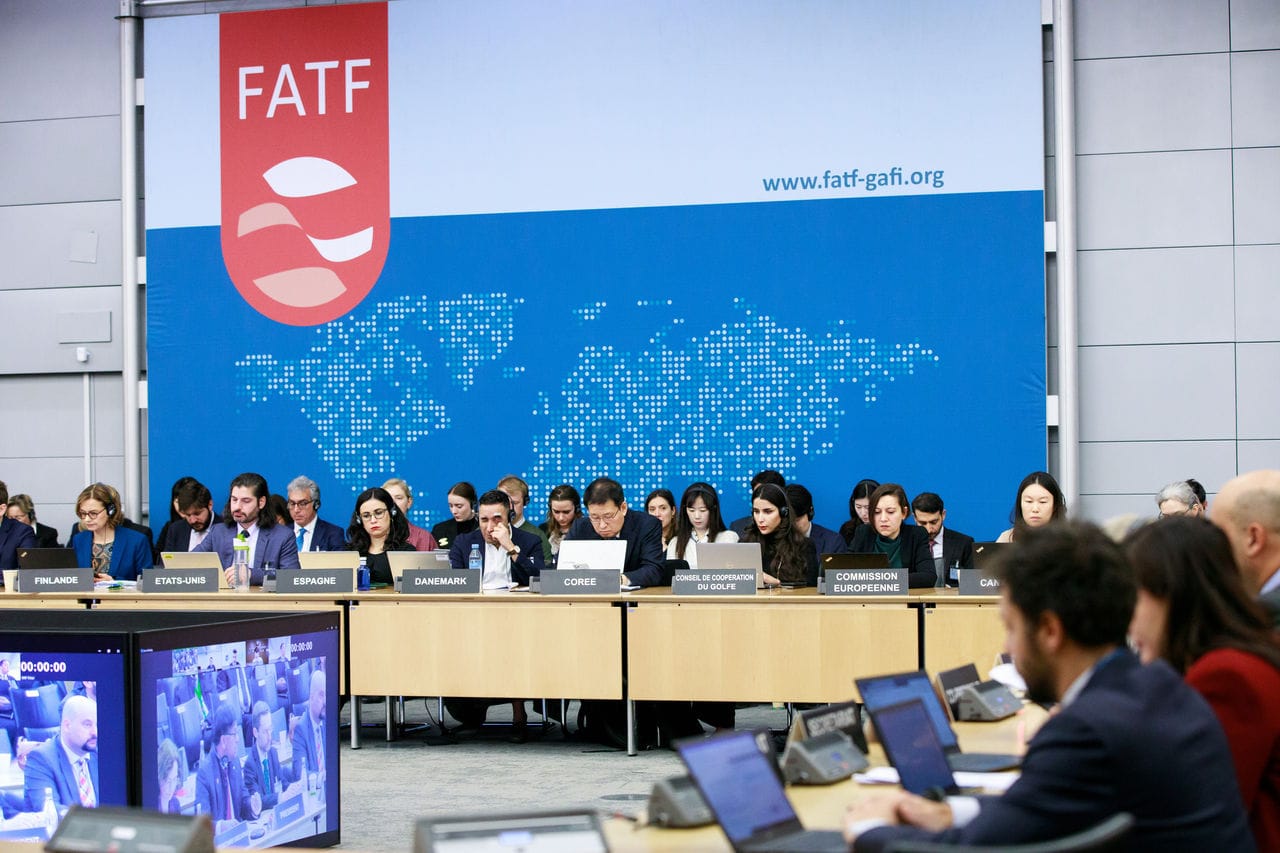
When the Financial Action Task Force (FATF) meets in Paris this October, its members will decide whether to escalate action against Myanmar from “enhanced due diligence” to full countermeasures — the strictest financial designation FATF applies, and one currently active against Iran and North Korea (Monetary Authority of Singapore — October 2025 FATF Statement; FIAU Malta — FATF Public Statements, 24 October 2025). This is not a distant technical matter for the Northeast. It is the single most consequential decision affecting cross-border illicit finance from Myanmar into India in years, and India — now FATF Vice President for 2026–2027 in the person of Vivek Aggarwal — will help write the outcome (Press Information Bureau, Government of India).

The Northeast has both a national security stake and a regional voice worth using.

What the numbers already show

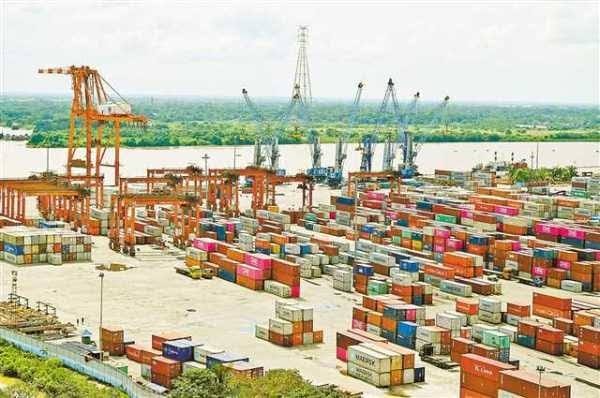
The Ministry of Home Affairs told Parliament this July that the Moreh–Tamu border in Manipur remains the major transit point for heroin and methamphetamine originating in Myanmar, moving onward to distribution hubs across the country (ANI, 29 July 2026). The scale of the crossing is now impossible to describe as marginal. According to a March 2026 Lok Sabha reply, Manipur’s drug seizures rose from 284 kilograms in 2024 to 2,556 kilograms in 2025 — a nearly ninefold increase in a single year (Outlook India). Mizoram, Assam, and Tripura reported comparable or larger seizures. The Narcotics Control Bureau’s annual report, released in June 2026 by Home Minister Amit Shah, was blunt: with the Taliban’s 2022 opium ban in Afghanistan, Myanmar has replaced Afghanistan as the world’s leading opium source, and the northeastern states of Manipur, Mizoram, and Nagaland are bearing the sharpest frontline exposure (The Hindu).

 

File picture of Tamu in Indo-Myanmar Border


The July 2026 NCB arrest of Nengzatuan, a Chin State–based trafficker apprehended in Churachandpur and running heroin and methamphetamine through Manipur, Mizoram, Assam, and Tripura into India and Bangladesh, illustrates the pattern (The Tribune). These are not lone smugglers. They are cross-border criminal enterprises whose survival depends on financial infrastructure — hundi networks, mobile-money accounts, front companies, correspondent banking relationships — that Myanmar’s post-coup banking system now protects rather than polices.

Behind the narcotics story sits a second one. Myanmar Witness has identified more than 137 suspected scam compounds in the region, primarily along the Myanmar–Thailand border, with more than 5,300 trafficked workers still held in Karen State compounds as of mid-2026 despite last year’s multinational crackdown (Myanmar Witness scam-compounds investigation; Al Jazeera, 23 June 2026). The proceeds of these industrial-scale cyber-fraud operations — targeting victims in India, Bangladesh, and across Asia — pass through the same regional financial channels that carry drug money. Indian investigators have documented precursor chemicals flowing westward from India into Myanmar and finished narcotics returning eastward. What FATF will consider in October is precisely whether Myanmar’s banking system has become a laundry for these flows.

What FATF countermeasures would and would not do

It helps to be clear about what FATF is and is not. It is not a sanctions body. It cannot impose arms embargoes, freeze foreign reserves, or ban trade. What it can do is direct the financial institutions of its 40 member jurisdictions to apply progressively stricter scrutiny — and, at the countermeasures level, to refuse correspondent relationships, close subsidiaries, and limit business relationships with the designated country on a risk basis.

For Myanmar, this would translate into three concrete effects. First, the junta’s remaining international banking channels — already narrowed since the 2022 listing — would tighten further. Second, foreign banks would face heavy compliance liability for any Myanmar-linked transaction they cannot verify. Third, and most importantly for the Northeast, cross-border criminal finance that currently moves through Myanmar’s private mobile-payment platforms (KBZPay, Wave Money, AYA Pay, CB Pay) and correspondent banks would face far greater friction reaching international financial systems.

The scale of what is at stake is now unmistakable. Non-public data reported by Bloomberg in May 2026 show worker remittances into Myanmar reached US$5.6 billion in 2025 — up from just $670 million in 2022 — after the junta’s 2024 rules forced migrant workers to remit 25 percent of their income through official banking channels or lose passport renewals and the right to work overseas (Bloomberg, 14 May 2026; The Straits Times). Remittances now account for roughly 38 percent of Myanmar’s foreign inflows, a figure independently reflected in the World Bank’s most recent country monitor (World Bank — Myanmar Economic Monitor). This is the financial system FATF will be assessing in October: one that has become dependent on the coerced earnings of migrant workers, including many working in India.

This last point is where India’s interest is sharpest — and where the framing of the countermeasures matters most.

The risk of getting it wrong

There is a version of FATF countermeasures that would harm the Northeast rather than help it. If foreign banks respond to a countermeasures listing by closing every Myanmar-related account regardless of context — what FATF itself calls indiscriminate “de-risking” and formally opposes — legitimate remittances from Myanmar migrant workers in India to their families, cross-border humanitarian aid to Chin and Sagaing displacement camps, and payments supporting Rohingya relief in Bangladesh would all be pushed into informal channels. Those channels are precisely the hundi and cryptocurrency networks that Indian law enforcement already struggles to monitor (Fulcrum — ISEAS analysis).

The junta itself is now accelerating this outcome. On August 28, 2026, the junta-controlled Central Bank ordered Myanmar’s private banks to block overseas access to domestic mobile-payment applications through IP-based, location-based, and geo-blocking restrictions (Moemaka English). The stated purpose is anti-money-laundering compliance. The practical effect is to force diaspora remittances — including those from workers in India — either into the junta’s controlled foreign-exchange system or into unregulated informal networks. Either outcome is bad for Indian regulators.

FATF’s own recent statements anticipate this problem. They require that enhanced measures on Myanmar “must not disrupt or discourage humanitarian assistance, legitimate nonprofit activity, or remittances” (MAS — October 2025 FATF Statement). The question in October is whether member states will insist that this language has operational force.

What India can do

India’s position at FATF is stronger than at any point since it joined in 2010. Vivek Aggarwal takes up the Vice Presidency in July 2026 (Press Information Bureau; ThePrint). India sits on the Steering Group and co-chairs the working group on Risks, Trends and Methodologies. Its June 2024 Mutual Evaluation Report placed it among the highest-performing FATF members.

This standing gives India three practical opportunities in October.

First, India can push for targeted countermeasures that focus scrutiny on junta-linked banks, military conglomerates, scam-center proceeds, and beneficial owners rather than on all Myanmar-related transactions. This is a specifically Indian interest: undifferentiated de-risking would close the licit channels through which Indian regulators can see cross-border flows, while doing little to disrupt the criminal networks that already operate outside those channels.

Second, India can insist on operational humanitarian and remittance carve-outs — verified nonprofit partners, low-value survival transfer thresholds, and licensed remittance corridors — that keep the Northeast’s own cross-border communities from being caught in blanket restrictions. Manipur, Mizoram, and Nagaland have long-standing cross-border kinship, trade, and religious ties. Sustainable enforcement must accommodate them.

Third, India can bring Northeast-specific evidence to the FATF table. The Moreh–Tamu corridor data, the NCB’s Chin State casework, precursor-chemical seizures moving westward, and the scam-compound victim testimony already being collected by Indian and Thai authorities constitute one of the most complete open-source pictures of Myanmar’s illicit-finance ecosystem. India’s June 2026 bilateral drug-control meeting with Myanmar authorities also underscores that India already engages on these questions — and bilateral engagement will benefit from being paired with multilateral leverage at FATF.

The choice

The junta’s argument, echoed by some in the region, is that FATF pressure hurts ordinary Myanmar people and destabilizes neighbours. The evidence points the other way. The status quo — five years of “enhanced due diligence” without countermeasures — has coincided with a ninefold rise in Manipur drug seizures, the emergence of Myanmar as the world’s opium leader, and the industrialization of scam compounds now defrauding victims across the Indian subcontinent. It is inaction, not action, that has produced the current damage to the Northeast.

Well-designed FATF countermeasures — precisely targeted, with real humanitarian and remittance protection — would restrict the junta’s criminal economy while protecting the legitimate flows that Indian regulators need to see. Poorly designed countermeasures, or continued deferral, would leave the Northeast absorbing the costs of a regional criminal system that Myanmar’s authorities cannot or will not police.

India has both the standing and the direct interest to shape which of these outcomes emerges in October. The Northeast has every reason to want its voice in that conversation.

(James Shwe is a semi-retired professional engineer and independent policy commentator based in Los Angeles, California. He writes on Myanmar’s political and financial transitions, with a focus on international sanctions, anti-money-laundering regimes, and regional security in South and Southeast Asia. A long-time advocate for democratic transition in Myanmar, he engages regularly with policymakers, civil society, and diaspora networks across the region.)

Author’s Note: The article is offered exclusively to The Frontier Manipur and has not been submitted or published elsewhere. It is timed to the FATF October 2026 plenary in Paris, where the decision on whether to escalate Myanmar from enhanced due diligence to full countermeasures will be taken. India’s incoming Vice-Presidency (Vivek Aggarwal, July 2026 – June 2027) makes this a moment of particular relevance for readers in the Northeast. The article is fully sourced (fifteen inline citations, listed at the end).

Sources/Reference:

FATF and India at FATF

  1. Monetary Authority of Singapore, “October 2025 FATF Statement.” https://www.mas.gov.sg/publications/fatf-statement/2025/october-2025-fatf-statement
  2. FIAU Malta, “FATF Public Statements – 24th October 2025.” https://fiaumalta.org/news/fatf-public-statements-24th-october-2025/
  3. Press Information Bureau, Government of India, “India to assume Vice-Presidency of the Financial Action Task Force,” 19 June 2026. https://www.pib.gov.in/PressReleasePage.aspx?PRID=2275528&reg=48&lang=2
  4. ThePrint, “India gets global anti-money laundering body FATF’s vice presidency,” 19 June 2026. https://theprint.in/india/india-gets-global-anti-money-laundering-body-fatfs-vice-presidency/2965089/

Northeast India drug seizures and Moreh–Tamu transit

  1. ANI, “Cross-border drug trafficking poses significant challenge; Manipur’s Moreh–Tamu border continues as major transit point from Myanmar (MHA),” 29 July 2026. https://www.aninews.in/news/national/general-news/cross-border-drug-trafficking-pose-significant-challenge-manipurs-moreh-tamu-border-continues-major-transit-point-from-myanmar-mha20260729195058
  2. Outlook India, “Drugs and the Golden Triangle: Renewed Concerns for Northeast India.” https://www.outlookindia.com/national/drugs-and-the-golden-triangle-renewed-concerns-for-northeast-india
  3. The Hindu, “Myanmar replaces Afghanistan as key opium source; impact seen on India’s eastern border: NCB.” https://www.thehindu.com/news/national/myanmar-replaces-afghanistan-as-key-opium-source-impact-seen-on-indias-eastern-border-ncb/article71151299.ece
  4. The Tribune, “NCB arrests Myanmar-based drug kingpin, dismantles transnational trafficking syndicate.” https://www.tribuneindia.com/news/india/ncb-arrests-myanmar-based-drug-kingpin-dismantles-transnational-trafficking-syndicate

Scam compounds and trafficked workers

  1. Myanmar Witness, “Scam Compounds in Myanmar” (report). https://www.info-res.org/app/uploads/2026/05/FINAL-Scam-Centres-Report-1-.pdf
  2. Al Jazeera, “More than 5,300 people still held in Myanmar scam centres, rights group says,” 23 June 2026. https://www.aljazeera.com/news/2026/6/23/more-than-5300-people-still-held-in-myanmar-scam-centres-rights-group

Coerced remittances and Myanmar’s foreign-inflow dependence

  1. Bloomberg, “Myanmar Junta’s Forced Remittance Rules Pull in $5.6 Billion,” 14 May 2026. https://www.bloomberg.com/news/articles/2026-05-14/myanmar-junta-s-forced-remittance-rules-pull-in-5-6-billion
  2. The Straits Times, “Myanmar junta’s forced remittance rules pull in $5.6b.” https://www.straitstimes.com/asia/se-asia/myanmar-juntas-forced-remittance-rules-pull-in-5-6-billion
  3. World Bank, Myanmar Economic Monitor (recent development section, 2026). https://documents1.worldbank.org/curated/en/099061526075033335/pdf/P507203-a497789a-01dd-4d79-bb47-faaf34d61123.pdf

Central Bank geo-blocking directive and de-risking risk

  1. Moemaka English, “Central Bank instructs banks to prevent Myanmar banking apps from being used abroad,” 28 August 2026. https://moemaka.net/eng/2026/08/central-bank-instructs-banks-to-prevent-myanmar-banking-apps-from-being-used-abroad/
  2. Fulcrum (ISEAS – Yusof Ishak Institute), “Rules or Ruse? Myanmar’s Anti-Money Laundering Efforts Coerce Compliance with a Rigged Financial System,” 31 July 2026. https://fulcrum.sg/rules-or-ruse-myanmars-anti-money-laundering-efforts-coerce-compliance-with-a-rigged-financial-system/

The post Why Northeast India Has a Stake in the October FATF Decision on Myanmar first appeared on The Frontier Manipur.

Read more / Original news source: https://thefrontiermanipur.com/why-northeast-india-has-a-stake-in-the-october-fatf-decision-on-myanmar/

Why Northeast India Has a Stake in the October FATF Decision on Myanmar

By James Shwe When the Financial Action Task Force (FATF) meets in Paris this October, its members will decide whether to escalate action against Myanmar from “enhanced due diligence” to full countermeasures — the strictest financial designation FATF applies, and one currently active against Iran and North Korea (Monetary Authority of Singapore — October 2025 […]

The post Why Northeast India Has a Stake in the October FATF Decision on Myanmar first appeared on The Frontier Manipur.

By James Shwe

When the Financial Action Task Force (FATF) meets in Paris this October, its members will decide whether to escalate action against Myanmar from “enhanced due diligence” to full countermeasures — the strictest financial designation FATF applies, and one currently active against Iran and North Korea (Monetary Authority of Singapore — October 2025 FATF Statement; FIAU Malta — FATF Public Statements, 24 October 2025). This is not a distant technical matter for the Northeast. It is the single most consequential decision affecting cross-border illicit finance from Myanmar into India in years, and India — now FATF Vice President for 2026–2027 in the person of Vivek Aggarwal — will help write the outcome (Press Information Bureau, Government of India).

The Northeast has both a national security stake and a regional voice worth using.

What the numbers already show

The Ministry of Home Affairs told Parliament this July that the Moreh–Tamu border in Manipur remains the major transit point for heroin and methamphetamine originating in Myanmar, moving onward to distribution hubs across the country (ANI, 29 July 2026). The scale of the crossing is now impossible to describe as marginal. According to a March 2026 Lok Sabha reply, Manipur’s drug seizures rose from 284 kilograms in 2024 to 2,556 kilograms in 2025 — a nearly ninefold increase in a single year (Outlook India). Mizoram, Assam, and Tripura reported comparable or larger seizures. The Narcotics Control Bureau’s annual report, released in June 2026 by Home Minister Amit Shah, was blunt: with the Taliban’s 2022 opium ban in Afghanistan, Myanmar has replaced Afghanistan as the world’s leading opium source, and the northeastern states of Manipur, Mizoram, and Nagaland are bearing the sharpest frontline exposure (The Hindu).


File picture of Tamu in Indo-Myanmar Border


The July 2026 NCB arrest of Nengzatuan, a Chin State–based trafficker apprehended in Churachandpur and running heroin and methamphetamine through Manipur, Mizoram, Assam, and Tripura into India and Bangladesh, illustrates the pattern (The Tribune). These are not lone smugglers. They are cross-border criminal enterprises whose survival depends on financial infrastructure — hundi networks, mobile-money accounts, front companies, correspondent banking relationships — that Myanmar’s post-coup banking system now protects rather than polices.

Behind the narcotics story sits a second one. Myanmar Witness has identified more than 137 suspected scam compounds in the region, primarily along the Myanmar–Thailand border, with more than 5,300 trafficked workers still held in Karen State compounds as of mid-2026 despite last year’s multinational crackdown (Myanmar Witness scam-compounds investigation; Al Jazeera, 23 June 2026). The proceeds of these industrial-scale cyber-fraud operations — targeting victims in India, Bangladesh, and across Asia — pass through the same regional financial channels that carry drug money. Indian investigators have documented precursor chemicals flowing westward from India into Myanmar and finished narcotics returning eastward. What FATF will consider in October is precisely whether Myanmar’s banking system has become a laundry for these flows.

What FATF countermeasures would and would not do

It helps to be clear about what FATF is and is not. It is not a sanctions body. It cannot impose arms embargoes, freeze foreign reserves, or ban trade. What it can do is direct the financial institutions of its 40 member jurisdictions to apply progressively stricter scrutiny — and, at the countermeasures level, to refuse correspondent relationships, close subsidiaries, and limit business relationships with the designated country on a risk basis.

For Myanmar, this would translate into three concrete effects. First, the junta’s remaining international banking channels — already narrowed since the 2022 listing — would tighten further. Second, foreign banks would face heavy compliance liability for any Myanmar-linked transaction they cannot verify. Third, and most importantly for the Northeast, cross-border criminal finance that currently moves through Myanmar’s private mobile-payment platforms (KBZPay, Wave Money, AYA Pay, CB Pay) and correspondent banks would face far greater friction reaching international financial systems.

The scale of what is at stake is now unmistakable. Non-public data reported by Bloomberg in May 2026 show worker remittances into Myanmar reached US$5.6 billion in 2025 — up from just $670 million in 2022 — after the junta’s 2024 rules forced migrant workers to remit 25 percent of their income through official banking channels or lose passport renewals and the right to work overseas (Bloomberg, 14 May 2026; The Straits Times). Remittances now account for roughly 38 percent of Myanmar’s foreign inflows, a figure independently reflected in the World Bank’s most recent country monitor (World Bank — Myanmar Economic Monitor). This is the financial system FATF will be assessing in October: one that has become dependent on the coerced earnings of migrant workers, including many working in India.

This last point is where India’s interest is sharpest — and where the framing of the countermeasures matters most.

The risk of getting it wrong

There is a version of FATF countermeasures that would harm the Northeast rather than help it. If foreign banks respond to a countermeasures listing by closing every Myanmar-related account regardless of context — what FATF itself calls indiscriminate “de-risking” and formally opposes — legitimate remittances from Myanmar migrant workers in India to their families, cross-border humanitarian aid to Chin and Sagaing displacement camps, and payments supporting Rohingya relief in Bangladesh would all be pushed into informal channels. Those channels are precisely the hundi and cryptocurrency networks that Indian law enforcement already struggles to monitor (Fulcrum — ISEAS analysis).

The junta itself is now accelerating this outcome. On August 28, 2026, the junta-controlled Central Bank ordered Myanmar’s private banks to block overseas access to domestic mobile-payment applications through IP-based, location-based, and geo-blocking restrictions (Moemaka English). The stated purpose is anti-money-laundering compliance. The practical effect is to force diaspora remittances — including those from workers in India — either into the junta’s controlled foreign-exchange system or into unregulated informal networks. Either outcome is bad for Indian regulators.

FATF’s own recent statements anticipate this problem. They require that enhanced measures on Myanmar “must not disrupt or discourage humanitarian assistance, legitimate nonprofit activity, or remittances” (MAS — October 2025 FATF Statement). The question in October is whether member states will insist that this language has operational force.

What India can do

India’s position at FATF is stronger than at any point since it joined in 2010. Vivek Aggarwal takes up the Vice Presidency in July 2026 (Press Information Bureau; ThePrint). India sits on the Steering Group and co-chairs the working group on Risks, Trends and Methodologies. Its June 2024 Mutual Evaluation Report placed it among the highest-performing FATF members.

This standing gives India three practical opportunities in October.

First, India can push for targeted countermeasures that focus scrutiny on junta-linked banks, military conglomerates, scam-center proceeds, and beneficial owners rather than on all Myanmar-related transactions. This is a specifically Indian interest: undifferentiated de-risking would close the licit channels through which Indian regulators can see cross-border flows, while doing little to disrupt the criminal networks that already operate outside those channels.

Second, India can insist on operational humanitarian and remittance carve-outs — verified nonprofit partners, low-value survival transfer thresholds, and licensed remittance corridors — that keep the Northeast’s own cross-border communities from being caught in blanket restrictions. Manipur, Mizoram, and Nagaland have long-standing cross-border kinship, trade, and religious ties. Sustainable enforcement must accommodate them.

Third, India can bring Northeast-specific evidence to the FATF table. The Moreh–Tamu corridor data, the NCB’s Chin State casework, precursor-chemical seizures moving westward, and the scam-compound victim testimony already being collected by Indian and Thai authorities constitute one of the most complete open-source pictures of Myanmar’s illicit-finance ecosystem. India’s June 2026 bilateral drug-control meeting with Myanmar authorities also underscores that India already engages on these questions — and bilateral engagement will benefit from being paired with multilateral leverage at FATF.

The choice

The junta’s argument, echoed by some in the region, is that FATF pressure hurts ordinary Myanmar people and destabilizes neighbours. The evidence points the other way. The status quo — five years of “enhanced due diligence” without countermeasures — has coincided with a ninefold rise in Manipur drug seizures, the emergence of Myanmar as the world’s opium leader, and the industrialization of scam compounds now defrauding victims across the Indian subcontinent. It is inaction, not action, that has produced the current damage to the Northeast.

Well-designed FATF countermeasures — precisely targeted, with real humanitarian and remittance protection — would restrict the junta’s criminal economy while protecting the legitimate flows that Indian regulators need to see. Poorly designed countermeasures, or continued deferral, would leave the Northeast absorbing the costs of a regional criminal system that Myanmar’s authorities cannot or will not police.

India has both the standing and the direct interest to shape which of these outcomes emerges in October. The Northeast has every reason to want its voice in that conversation.

(James Shwe is a semi-retired professional engineer and independent policy commentator based in Los Angeles, California. He writes on Myanmar’s political and financial transitions, with a focus on international sanctions, anti-money-laundering regimes, and regional security in South and Southeast Asia. A long-time advocate for democratic transition in Myanmar, he engages regularly with policymakers, civil society, and diaspora networks across the region.)

Author’s Note: The article is offered exclusively to The Frontier Manipur and has not been submitted or published elsewhere. It is timed to the FATF October 2026 plenary in Paris, where the decision on whether to escalate Myanmar from enhanced due diligence to full countermeasures will be taken. India’s incoming Vice-Presidency (Vivek Aggarwal, July 2026 – June 2027) makes this a moment of particular relevance for readers in the Northeast. The article is fully sourced (fifteen inline citations, listed at the end).

Sources/Reference:

FATF and India at FATF

  1. Monetary Authority of Singapore, “October 2025 FATF Statement.” https://www.mas.gov.sg/publications/fatf-statement/2025/october-2025-fatf-statement
  2. FIAU Malta, “FATF Public Statements – 24th October 2025.” https://fiaumalta.org/news/fatf-public-statements-24th-october-2025/
  3. Press Information Bureau, Government of India, “India to assume Vice-Presidency of the Financial Action Task Force,” 19 June 2026. https://www.pib.gov.in/PressReleasePage.aspx?PRID=2275528&reg=48&lang=2
  4. ThePrint, “India gets global anti-money laundering body FATF’s vice presidency,” 19 June 2026. https://theprint.in/india/india-gets-global-anti-money-laundering-body-fatfs-vice-presidency/2965089/

Northeast India drug seizures and Moreh–Tamu transit

  1. ANI, “Cross-border drug trafficking poses significant challenge; Manipur’s Moreh–Tamu border continues as major transit point from Myanmar (MHA),” 29 July 2026. https://www.aninews.in/news/national/general-news/cross-border-drug-trafficking-pose-significant-challenge-manipurs-moreh-tamu-border-continues-major-transit-point-from-myanmar-mha20260729195058
  2. Outlook India, “Drugs and the Golden Triangle: Renewed Concerns for Northeast India.” https://www.outlookindia.com/national/drugs-and-the-golden-triangle-renewed-concerns-for-northeast-india
  3. The Hindu, “Myanmar replaces Afghanistan as key opium source; impact seen on India’s eastern border: NCB.” https://www.thehindu.com/news/national/myanmar-replaces-afghanistan-as-key-opium-source-impact-seen-on-indias-eastern-border-ncb/article71151299.ece
  4. The Tribune, “NCB arrests Myanmar-based drug kingpin, dismantles transnational trafficking syndicate.” https://www.tribuneindia.com/news/india/ncb-arrests-myanmar-based-drug-kingpin-dismantles-transnational-trafficking-syndicate

Scam compounds and trafficked workers

  1. Myanmar Witness, “Scam Compounds in Myanmar” (report). https://www.info-res.org/app/uploads/2026/05/FINAL-Scam-Centres-Report-1-.pdf
  2. Al Jazeera, “More than 5,300 people still held in Myanmar scam centres, rights group says,” 23 June 2026. https://www.aljazeera.com/news/2026/6/23/more-than-5300-people-still-held-in-myanmar-scam-centres-rights-group

Coerced remittances and Myanmar’s foreign-inflow dependence

  1. Bloomberg, “Myanmar Junta’s Forced Remittance Rules Pull in $5.6 Billion,” 14 May 2026. https://www.bloomberg.com/news/articles/2026-05-14/myanmar-junta-s-forced-remittance-rules-pull-in-5-6-billion
  2. The Straits Times, “Myanmar junta’s forced remittance rules pull in $5.6b.” https://www.straitstimes.com/asia/se-asia/myanmar-juntas-forced-remittance-rules-pull-in-5-6-billion
  3. World Bank, Myanmar Economic Monitor (recent development section, 2026). https://documents1.worldbank.org/curated/en/099061526075033335/pdf/P507203-a497789a-01dd-4d79-bb47-faaf34d61123.pdf

Central Bank geo-blocking directive and de-risking risk

  1. Moemaka English, “Central Bank instructs banks to prevent Myanmar banking apps from being used abroad,” 28 August 2026. https://moemaka.net/eng/2026/08/central-bank-instructs-banks-to-prevent-myanmar-banking-apps-from-being-used-abroad/
  2. Fulcrum (ISEAS – Yusof Ishak Institute), “Rules or Ruse? Myanmar’s Anti-Money Laundering Efforts Coerce Compliance with a Rigged Financial System,” 31 July 2026. https://fulcrum.sg/rules-or-ruse-myanmars-anti-money-laundering-efforts-coerce-compliance-with-a-rigged-financial-system/

The post Why Northeast India Has a Stake in the October FATF Decision on Myanmar first appeared on The Frontier Manipur.

Read more / Original news source: https://thefrontiermanipur.com/why-northeast-india-has-a-stake-in-the-october-fatf-decision-on-myanmar/
Decoding Geopolitics Behind The China – Myanmar Economic Corridor (CMEC)

By Lt Col Ujjual Abhishek Jha, Retd The announcement by Chinese Foreign Ministry spokesperson Mao Ning on 18 January 2025, regarding ceasefire between the Myanmar Army and MNDAA appeared to be a diplomatic mediation for promotion of peace, which gained lot of traction. However, what missed the headlines is, what prompted the superpower (already exporting […]

The post Decoding Geopolitics Behind The China – Myanmar Economic Corridor (CMEC) first appeared on The Frontier Manipur.

By Lt Col Ujjual Abhishek Jha, Retd

The announcement by Chinese Foreign Ministry spokesperson Mao Ning on 18 January 2025, regarding ceasefire between the Myanmar Army and MNDAA appeared to be a diplomatic mediation for promotion of peace, which gained lot of traction. However, what missed the headlines is, what prompted the superpower (already exporting high calibre and advance weapon systems to Myanmar Army) to broker a peace deal with anti-junta group.  What sounded like diplomacy, had lot behind the curtains. The real motivation is hidden behind a 1700 km infrastructure corridor with financial tune of more than $15 billion, rare earth mines and a strategic vulnerability that China is apprehensive for more than two decades, the China-Myanmar Economic Corridor (CMEC).

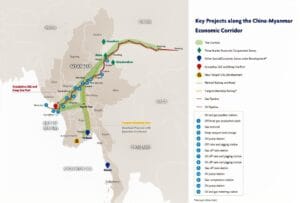
CMEC is one of the most geopolitically consequential bilateral infrastructure initiative in mainland Southeast Asia. The CMEC extends from Yunnan Province of Chian, across Myanmar to the Bay of Bengal, in an inverted Y-shape, providing China land bridge to the Indian Ocean, evading vulnerable Strait of Malacca. For Myanmar junta, CMEC is both financial sustenance and a diplomatic tool.

CMEC was established in September 2018 through a 15-point Memorandum of Understanding and is the Myanmar-specific iteration of Belt and Road Initiative (BRI) of China. However, it is not a new creation but consolidation and rebranding of a set of Chinese infrastructure in Myanmar, though, running years behind schedule.

Key Projects Along CMEC (https://iems.ust.hk/)

Background of CMEC

The conceptual lineage of CMEC lies in the Bangladesh-China-India-Myanmar (BCIM) Economic Corridor, proposed in 2013 at a meeting in Kunming, proposing a multi-nation corridor linking Kunming to Kolkata via Mandalay and Dhaka, thereby fostering regional trade. However, the implementation could not see light of the day issues due to border standoffs between India and China, ending the four-nation framework. The consolidation and rebranding of CMEC was done in different phases.


Precursors (2009–2015) – The foundations of the corridor were laid under previous junta regime through Memorandum of Understanding (MoU), signed with CITIC Group of China. The phase culminated in completion of $2.5 billion crude oil and natural gas pipelines, establishing a direct energy connection from Kyaukphyu, Rakhine State to Kunming, China.

Rebranding in November 2017 – Wang Yi, Chinese Foreign Minister, proposed the formal CMEC framework with National League for Democracy (NLD) led government with an aim to consolidate and revive multiple infrastructure initiatives, previously stalled.

MoU and Institutionalisation of CMEC in September 2018 – The bilateral partnership reached a structural milestone with the signing of an official 15-point MoU, broadening the scope of cooperation beyond energy to incorporate manufacturing, transport and agricultural sector.

Rationalising Project in November 2018 – There was a concern over potential debt distress in Myanmar leading to reduction of the Kyaukphyu Deep-Sea Port from $7.2 billion (initial cost for Phase I) to $1.3 billion.

Overarching Roadmap in January 2020 – The Myanmar visit of Xi Jinping, Chinese President, resulted in signing of 33 bilateral agreements, strengthening Chinese intent of long-term access to the Indian Ocean.

Revitalising: Post-Military Transfer of Power Coup Re-authorization in May 2021 – The military transfer of power on 01 Feb 2021, the junta-led Myanmar Investment Commission (MIC) attempted to fast-track economic projects. MIC approved 15 major investment proposals, including the $2.5 billion Mee Lin Gyaing Liquefied Natural Gas (LNG) Power Project.

Conflict and Enhanced Security Agreement in December 2023 – The intensification of internal conflict in Myanmar caused State Administration Council (SAC) signing an additional concession agreement with CITIC Group for the Kyaukphyu Deep-Sea Port to incorporate enhanced security provisions for protection of Chinese infrastructure investments.

Impetus to Bilateral Agreements in June 2026 – The visit of Min Aung Hlaing, Myanmar President to China witnessed signing of 18 new bilateral agreements and revival of Muse-Mandalay Railway project, which is already delayed.

Phases of CMEC: A Comparative Outlook

The development of the CMEC is anatomically divided into two distinct phases, demarcated by the 01 February 2021 military transfer of power and resultant expanding internal conflict.

Phase I (2017-2021) – The Phase I engagement were formal in nature and directly negotiated with civilian NLG government. The period focused on long-term institutional inter-governmental planning by feasibility studies and social and environmental compliance. Although, the project had a cumulative value of approximately $15 billion, the on-ground implementation showed slow movement. The NLD government, to avoid severe debts, initiatives multiple projects. In spite of these interruptions, Phase I laid the physical and administrative base for strategic footprint of China, particularly through the operation of oil and natural gas pipelines alongside completed viability reports for key economic zones.

Phase II (2021- Present) – The military transfer of power in February 2021, restructured the Chinese landscape in Myanmar with a shift from government level to realistic and conflict-driven risk management. To protect its investments amidst ongoing internal conflict in Myanmar, China directly engaged with Ethnic Armed Groups (EAGs) who were controlling border trade zones. EAGs have emerged as the “New Stakeholders”, prominently, Arakan Army (AA) (which controls most of the Rakhine State including encircling Kyaukphyu town implying need for separate engagement track with the AA), Myanmar National Democratic Alliance Army (MNDAA) (controlling the Kokang region in Shan State and signed the Haigeng ceasefire in Jan 2024 under Chinese pressure and handed Lashio back to junta) and Ta’ang National Liberation Army (TNLA) (controls parts of Shan State through which the pipeline and planned railway pass). The EAGs engagement illustrates leverage and the transactional nature of EAO-China engagement. The Chinese priorities moved from regulatory agreement towards survival, securing transit rights, establishing border security pacts.

CMEC Projects: Summarised Tabulated Data

Project Investment Location Stakeholders Status as of July 2026 Highlight
Kyaukphyu Deep Sea Port  $1.3 Bn (scaled down from $7.2 Bn)  Kyaukphyu, Rakhine CITIC Group & Myanmar Govt Ongoing, limited progress Flagship project to give China direct Indian Ocean access and reduce Malacca dependence. Original MoU 2009, tender 2015 for $7.3 Bn, NLD renegotiated to $1.3 Bn in 2018 for debt concerns. Faces security disruption due to Arakan Army control.
Kyaukphyu Special Economic Zone (KPSEZ)  $1.5 Bn Kyaukphyu, Rakhine  CITIC Environmental Impact Assessment (EIA) & survey ongoing March 2025 talks held to expedite implementation.
 Muse-Mandalay Railway  $8.9 Bn  431 km Muse-Mandalay  China Railway Eryuan Engineering Group (CREEC) Feasibility done 2019, preparatory stage Core connectivity, still in planning/ negotiation phase.
 Mandalay-Kyaukphyu Railway  Not Known Mandalay to Kyaukphyu  CREEC Survey conducted Extension of Muse-Mandalay to port.
Mandalay-Tigyaing-Muse Expressway  $820 Mn  Shan Not Known  Stalled Part of structural network for corridor.
Kyaukphyu-Naypyidaw Highway  $2.15 Mn  Rakhine to Naypyidaw  Not Known  Planning, stalled  Not Known
 China-Myanmar Oil & Gas Pipelines Not Known Kyaukphyu to Kunming  CNPC Operational  Existing asset under CMEC
Kyaukphyu Power Plant  $180 Mn Kyaukphyu  VPower Group + CNTIC JV $140 Mn Completed 2023, suspended and now dismantled Suspended late 2023 due to junta failure to supply gas and pay in USD, dismantling enhanced in early 2026
Mee Lin Gyaing LNG Terminal  $2.5 Bn Ayeyarwady Region Not Known Early design stage Revived post-2021
New Yangon City Project  $1.5 Bn  Yangon Not Known Planning stage Yet to complete layout of corridor
Chinshwehaw CBECZ Not Known  North Shan State Not Known  Stalled  China-Myanmar Border Economic Cooperation Zone (CMBECZ)
 Kanpiketi CBECZ  $22.4 Mn  North Kachin Special Region Not Known  MoU to be signed
 Muse-Ruili CBECZ Not Known  Muse-Ruili border Not Known  Planning
Mandalay Myotha Industrial Park  $500 Mn Mandalay Not Known  Completed

At present, CMEC remains largely stalled and only functioning aspect is the oil and gas pipelines. Even though these are functional but transports resources much below designed capacity and amidst frequent security threats from local resistance groups and EAGs. Construction on the Kyaukphyu deep-sea port and SEZ has to be halted due to increased control by AA. On the similar lines, the $8.9 billion Muse-Mandalay railway remains stuck in the preparatory stage and is further complicated by the distressing earthquake of March 2025. This on-ground stalling is in contrast with intense diplomatic activity in 2024-26, featured by frequent meetings, the establishment of BRI implementation committee by junta, and Chinese endorsement of multi-phase elections in Myanmar.

Decoding Chinese Interest: Geopolitical, Strategic & Economic

 Resolving the Malacca Dilemma – The most important strategic vulnerability for China is energy and approximately 80% of China’s crude oil imports pass through the Strait of Malacca, a narrow chokepoint susceptible to disruptions in a conflict scenario. In 2003, this vulnerability was pronounced by Hu Jintao, then President as the “Malacca Dilemma”. The CMEC oil pipeline directly addresses this by providing an alternative route, wherein, oil from the Middle East and Africa can unload at Kyaukphyu and further pumped to Kunming. In addition, this route is almost 3000 kms shorter than Malacca route implying shortening of transit time. The gas pipeline reduces China’s dependency on imported LNG, which is also routed through Malacca.

Transforming Economic Geography of Yunnan – Yunnan Province in China is a landlocked, mountainous and peripheral to coastal-driven economic model of China. The Bay of Bengal direct access (and further to the Indian Ocean, Middle East, Africa and Europe without the 3,000 km detour through Malacca) through Kyaukphyu connectivity to renovates economic geography of Yunnan by reducing freight costs, opens export markets and places Kunming as a logistics and refining hub. This strategy helps China to integrate hinterland provinces into the global economy.

Node for ‘String of Pearls’ – Kyaukphyu is one of the node for, what analysts have described as Chinese ‘String of Pearls’, which is a network of port and infrastructure investments across the Indian Ocean littoral, that cumulatively expands logistic, economic, and potentially naval reach of China, across the Indian Ocean. The People’s Liberation Army Navy of China’s ‘Blue Water Navy’ strategy, aiming for full ocean capability by 2030, creates a structural interest in Indian Ocean access nodes.

Diplomatic and Political Leverage – CMEC gives China considerable leverage over junta in Myanmar. Post military transfer of power, junta government in Myanmar has been diplomatically isolated, financially constrained by sanctions and militarily besieged. The role of China as the primary external economic partner, infrastructure financier, and diplomatic shield makes Myanmar structurally dependent on China. This leverage is used to gain concessions (pipeline security guarantees, support for CMEC implementation, suppression of anti-China protests), to impact internal peace process in Myanmar (Haigeng Agreement, Lashio transfer) and shaping the political landscape.

Access to Extract Resource – The rich resources of Myanmar in terms of timber, jade, rare earths, nickel and agricultural commodities, are being accessed by China to extract for its own usage. CMEC linked infrastructure reduces the cost of resource extraction and export to China. The Tagaung Taung nickel project, the Letpadaung copper mine and extensive jade extraction in Kachin State, are all embedded in the CMEC aided economic connection.

Security Impact of CMEC

CMEC offers a double-edged dynamic for Myanmar, burdening with unsustainable financial commitments amidst intensifying local conflict. With Phase 1 of the Kyaukphyu port alone required a $2.2 billion risking Myanmar with heavy debt trap with China. In addition to economics, protection of pipeline routes involves battalions occupying contested zones, widespread displacement, land confiscation and local hostility. Combining this with China’s acting as an indispensable yet distrusted broker by playing both sides is yet another major security concern.

Takeaways for India

The expansion of CMEC can be viewed as major security challenge for India, specifically with respect to Chinese ‘String of Pearls’ and increasing presence in the Bay of Bengal. This maritime vulnerability is compounded by increasing instability along 1,643 km Indo-Myanmar thereby triggering large influx of Myanmar nationals and attempted resurgence of insurgent networks. On the economic and diplomatic front, CMEC directly contests “Act East Policy” of India and impends its regional influence. Delay in the projects like the Kaladan Multimodal Transit system and the India-Myanmar-Thailand Tri-nation Highway, can jeopardise India’s connectivity dominance to South East Asia, while CMEC rail and trade networks can become the dominant conduits.

To counter this structural hindrance, India needs to accelerate its own infrastructure projects by parallel negotiation with local and relevant EAG, expand its naval footprint in the Bay of Bengal alongside Quad allies, and leverage multilateral frameworks like BIMSTEC to offer a viable alternative to Chinese dominance.

Conclusion

Despite active conflict and delays, China envisages CMEC as a multi-decade strategic initiative, much more than a purely infrastructure project. It highlights the geo-political and strategic intentions of China to become ocean power. An operational CMEC would provide China direct land-bridge access to the Bay of Bengal, reduce Malacca vulnerability, extend Chinese economic and potentially military influence into India’s maritime deck, and structurally impinge upon Act East Policy of India. And most importantly, the China is not exporting peace in form of brokering peace deals in Myanmar rather building a framework to control the internal conflict in Myanmar. Deciphering this aspect, which is behind the curtains, is key to understand the future headway of Southeast Asia.

The post Decoding Geopolitics Behind The China – Myanmar Economic Corridor (CMEC) first appeared on The Frontier Manipur.

Read more / Original news source: https://thefrontiermanipur.com/decoding-geopolitics-behind-the-china-myanmar-economic-corridor-cmec/

Digital Personal Data Protection Act (DPDPA) 2023 Series: Part II — From Principles to Practice: The DPDP Rules 2025, Global Paradigms & India’s Middle Path

The DPDP Rules serve as the procedural manual for the Act, detailing the mechanisms through which the law will function. They provide granularity on board composition, grievance workflows, classification criteria, and the technical and organisational measures required for compliance. By Lt Col Ujjual Abhishek Jha, Retd The enactment of the Digital Personal Data Protection Act, […]

The post Digital Personal Data Protection Act (DPDPA) 2023 Series: Part II — From Principles to Practice: The DPDP Rules 2025, Global Paradigms & India’s Middle Path first appeared on The Frontier Manipur.

The DPDP Rules serve as the procedural manual for the Act, detailing the mechanisms through which the law will function. They provide granularity on board composition, grievance workflows, classification criteria, and the technical and organisational measures required for compliance.

By Lt Col Ujjual Abhishek Jha, Retd

The enactment of the Digital Personal Data Protection Act, 2023 (DPDPA) established the foundational architecture for India’s data privacy regime. However, the operationalisation of any legislation lies in its rules. The notification of the DPDP Rules, 2025, marks the transition from statutory intent to enforceable reality. This second installment in the series unpacks these rules, contextualises India’s framework within the global privacy landscape, and analyses the unique “Third Way” that India has carved out for itself.

The DPDP Rules 2025: Operationalising the Act

The DPDP Rules serve as the procedural manual for the Act, detailing the mechanisms through which the law will function. They provide granularity on board composition, grievance workflows, classification criteria, and the technical and organisational measures required for compliance. Crucially, they establish a phased enforcement timeline, allowing regulated entities a structured runway to achieve compliance.

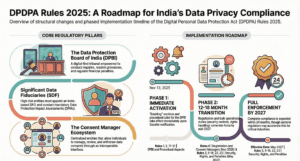
The Regulatory Arbitrator: Data Protection Board of India (DPBI)

The Rules formally empower the Data Protection Board of India (DPBI) as a specialised, digital-first adjudicatory body. Unlike traditional regulators, the DPBI is designed to function as a tribunal, conducting inquiries into data breaches, presiding over formal hearings, and levying financial penalties. Its primary mandate is to ensure that Data Fiduciaries—entities that determine the purpose and means of data processing—remain accountable to the law.

Tiered Accountability: Significant Data Fiduciaries (SDFs)

Recognising that not all data processing carries equal risk, the framework introduces the concept of Significant Data Fiduciaries (SDFs). The Central Government will designate entities as SDFs based on criteria such as the volume and sensitivity of data processed, the potential risk to the rights of Data Principals (individuals to whom the data pertains), and implications for national security or public order.

Entities classified as SDFs must adhere to enhanced obligations:

– Mandatory appointment of a Data Protection Officer (DPO) based in India.

– Engagement of independent auditors to validate compliance.

– Conduct of Data Protection Impact Assessments (DPIAs) to proactively evaluate privacy risks associated with new technologies or processes.

The Consent Ecosystem: A Novel Introduction

In a significant innovation over global models, the DPDPA introduces the role of Consent Managers. These entities act as a bridge between the individual and the Data Fiduciary, providing a seamless, interoperable interface. Through a Consent Manager, individuals can grant, manage, review, and withdraw their consents in a centralised, real-time manner, transforming consent from a one-time checkbox into an ongoing, auditable process.

Cross-Border Data Transfers: The Negative List Strategy

One of the most pragmatic features of the framework is its approach to cross-border data flows. Departing from earlier drafts that mandated strict data localisation, the DPDPA operates on a Negative List principle. Under this model, cross-border data transfers are generally permitted to all countries and sectors except those specifically notified by the government as restricted. This approach ensures the smooth functioning of international trade and cloud-based services while retaining the state’s sovereign power to block data flows to hostile or high-risk jurisdictions.

Transparency, Grievance Redressal, and Compensation

The efficacy of the law rests on the clarity of its notice and grievance workflows. The Act specifies the modalities through which a Data Fiduciary must communicate with users—whether through electronic notifications, app-based prompts, or assisted means for those with limited digital literacy. Furthermore, it establishes strict timelines and tracking obligations for responding to user requests, ensuring that the Right to Correction and Right to Erasure are actionable through standard, time-bound processes.

Enforcement and Implementation Timeline

The rules establish a staggered implementation schedule to facilitate a smooth transition:

– Immediate Effect (from date of Gazette notification, 13 November 2025): Certain “enabling” sections of the Act, along with Rules 1, 2, and 17-21 (covering preliminary aspects, DPBI constitution, and procedural matters), are effective immediately.

– One Year (by late 2026): Rule 4, which pertains to registration and specific compliance obligations, comes into force one year after publication.

– Eighteen Months (by mid-2027): The bulk of operational duties—including rights handling, security controls, classification of SDFs, and penalty procedures (Rules 3, 5-16, 22, and 23)—become effective eighteen months after publication. This implies full compliance obligations will be in force by 2027, although sectoral regulators may compress timelines for critical industries.

The Global Privacy Landscape: A Comparative Overview

India’s privacy framework does not exist in a vacuum. It is shaped by, and must interoperate with, the leading data protection regimes from around the world. The most influential of these remains the European Union’s General Data Protection Regulation (GDPR), which has set a benchmark for modern privacy laws globally.

– European Union: General Data Protection Regulation (GDPR)

The GDPR applies to any entity offering goods or services to EU residents, regardless of its location. It introduced seminal concepts such as the “Right to be Forgotten” and “Data Portability.” It mandates one of six legal bases for processing and is renowned for its stringent penalties, which can reach up to €20 million or 4% of global annual turnover.

– United States: California Consumer Privacy Act (CCPA/CPRA)

In the absence of a federal privacy law, the CCPA serves as the de facto standard in the US. It focuses on consumer rights, particularly the right to opt out of the “sale” or “sharing” of personal data. It is enforced by the California Privacy Protection Agency (CPPA).

– China: Personal Information Protection Law (PIPL)

Often referred to as the “GDPR of China,” the PIPL is characterised by a strong state-centric approach. It imposes stringent restrictions on cross-border data transfers, requiring security assessments by state authorities. Its definition of “sensitive data” is notably broad.

– Brazil: Lei Geral de Proteção de Dados (LGPD)

The LGPD is largely based on the GDPR framework but adapted to the Brazilian market. It applies to any data processing activity within Brazil, irrespective of where the processing entity is located.

A comparative analysis of these frameworks against India’s DPDPA reveals the distinct contours of India’s approach:


Feature GDPR (EU) CCPA (USA-CA) PIPL (China) DPDPA (India)
Model Rights-based Consumer-based State-centric Consent-based
Applicability Digital & non-digital Digital Digital & non-digital Digital only
Data Localization No (Adequacy based) No Strict Limited (Negative List)
Sensitive Data Explicit Categories Explicit Categories Explicit Categories No Separate Category
Penalties Up to 4% of Global Revenue Per Violation ($) % of Revenue / Fixed Fixed (up to ?250 Cr)


Contextualising DPDPA: India’s “Third Way”


The operationalisation of the DPDPA through the 2025 Rules signals India’s deliberate entry into the global ecosystem of regulated data sovereignty. India’s position can best be understood by examining three dominant global data governance models:

  1. The European Model: “Rights-Based” Approach

Key Legislation: GDPR.

– Viewpoint: Privacy is a fundamental human right. This model focuses on comprehensive protection, granular user control, and heavy penalties.

– Impact on DPDPA: The GDPR served as the primary architect for the DPDPA. Concepts such as Data Fiduciary (controller), Data Principal (subject), and the requirement for valid Consent are directly derived from it. However, the DPDPA is notably more concise and business-friendly, aiming for a lower compliance burden than its European counterpart.

  1. The US Model: “Market-Driven” Mosaic

Key Legislation: No single federal law; relies on state laws like the CCPA and sectoral laws (HIPAA, GLBA).

– Viewpoint: Privacy is a consumer protection issue, focusing on preventing specific harms through targeted regulation.

– Contrast with DPDPA: Unlike the fragmented US approach, India has opted for a singular, comprehensive federal framework applicable across all sectors.

  1. The Authoritarian/Sovereign Model: “Security-First” Approach

– Key Legislation: China’s PIPL, Russia’s Data Laws. 

– Viewpoint: Data is a national asset. The focus is on data localisation—keeping data within national borders for state access and national security.

– India’s Shift: Early drafts of the Indian law (2018/2019) leaned toward this model, mandating strict localisation. However, the final DPDPA pivoted to a more pragmatic “trusted geography” approach, permitting cross-border flows unless a jurisdiction is specifically restricted.

India’s Position: A Deliberate Balance

The DPDPA represents a calculated effort to forge a middle path. It avoids the immense compliance complexity of the GDPR and the fragmentation of the US model, while strategically stepping back from the rigid data localisation of the Chinese framework. This “Third Way” is characterised by:

– Simplicity: Unlike the 99 articles of the GDPR, the DPDPA is a concise, principle-based statute.

– Digital-First Approach: It is one of the few laws to explicitly acknowledge the digital nature of modern data, excluding offline records to reduce administrative burden.

– Global Interoperability: By shifting from a “whitelist” (only allowed countries) to a “blacklist” (all allowed except those restricted) for cross-border data transfers, India signals its intent to integrate with the global digital economy while retaining the sovereign power to restrict data flows for geopolitical reasons.

A Dual-Lens Framework

The DPDPA, as operationalised by the 2025 Rules, is designed to be viewed through a dual lens. First, it serves as a mechanism to give effect to the fundamental right to privacy, as affirmed by the Supreme Court in K.S. Puttaswamy v. Union of India (2017). Second, it is structured to be technology-friendly, positioning India as a trusted and attractive destination for the digital economy. By striking a balance between individual rights and national interests, India’s data protection framework aspires to be more than a compliance checklist—it aims to become a cornerstone of its digital future.

[For Part I — The Foundations of Privacy: Evolution of Indian Laws & A Roadmap to DPDPA, click here]

(Lt Col Ujjual Abhishek Jha, Retd is a Certified Data Privacy Professional and Strategic & Geopolitical Advisor with over two decades of experience in intelligence, insider threat management, financial crime investigations, and geopolitical risk analysis, advising on complex security and strategic risks.)

*(This is the second installment in a series. The next part will explore the sectoral impact of the DPDPA, focusing on the obligations for specific industries such as healthcare, fintech, and e-commerce.)*

The post Digital Personal Data Protection Act (DPDPA) 2023 Series: Part II — From Principles to Practice: The DPDP Rules 2025, Global Paradigms & India’s Middle Path first appeared on The Frontier Manipur.

Read more / Original news source: https://thefrontiermanipur.com/digital-personal-data-protection-act-dpdpa-2023-series-part-ii-from-principles-to-practice-the-dpdp-rules-2025-global-paradigms-indias-middle-path/

Digital Personal Data Protection Act (DPDPA) 2023 Series: Part I — The Foundations of Privacy: Evolution of Indian Laws & A Roadmap to DPDPA

This article, the first in a series, traces the evolution of privacy in India from a fragmented common law concept to the fundamental right enshrined in the 2017 Puttaswamy judgment. It then provides a comprehensive overview of the Digital Personal Data Protection Act, 2023, highlighting its key definitions, salient features, and how it establishes a […]

The post Digital Personal Data Protection Act (DPDPA) 2023 Series: Part I — The Foundations of Privacy: Evolution of Indian Laws & A Roadmap to DPDPA first appeared on The Frontier Manipur.

This article, the first in a series, traces the evolution of privacy in India from a fragmented common law concept to the fundamental right enshrined in the 2017 Puttaswamy judgment. It then provides a comprehensive overview of the Digital Personal Data Protection Act, 2023, highlighting its key definitions, salient features, and how it establishes a unified, consent-centric framework to replace the outdated sectoral regulations of the IT Act.

Lt Col Ujjual Abhishek Jha, Retd

Introduction

The enactment of the Digital Personal Data Protection Act, 2023 (DPDPA) marks a transformative milestone in India’s journey toward a robust and accountable digital economy. The Act is designed to operationalize the Right to Privacy, affirmed as a fundamental right by the Supreme Court in the landmark K.S. Puttaswamy Judgment (2017). By establishing a comprehensive, consent-centric framework for processing digital personal data, the DPDPA empowers individuals with meaningful rights over their information, thereby aligning India’s data governance with global privacy standards.

The Concept of Privacy in India: A Pre-DPDPA Perspective

Prior to the DPDPA, the concept of privacy in India was not anchored in a single, overarching statute but was instead shaped through fragmented judicial interpretations and sector-specific regulations. This patchwork approach left the judiciary grappling with the dual challenge of defining the scope of privacy rights while balancing them against national imperatives like economic growth and digital inclusion.

The watershed moment for this evolution was the large-scale digitization of public services—most notably the Aadhaar program—which catalyzed a paradigm shift. The understanding of privacy expanded from a notion of physical autonomy to a broader right of control over one’s own data. In the contemporary context, Indian jurisprudence now views privacy through a dual lens:

  •  As a Fundamental Value: Recognizing privacy as an intrinsic and inalienable human right.
  • As an Active Value: Acknowledging privacy as a critical prerequisite for fostering innovation, building trust in the digital ecosystem, and safeguarding other fundamental freedoms.

Cornerstones of Privacy: Milestones & Governing Laws
Before the DPDPA, India’s privacy landscape was a mosaic of constitutional principles and sectoral rules. The key pillars were:

The Constitutional Keystone: K.S. Puttaswamy V. Union Of India (2017). This unanimous verdict by a nine-judge Constitution Bench of the Supreme Court serves as the bedrock of modern Indian privacy law.

– The Landmark Ruling: The Court unanimously held that the Right to Privacy is an intrinsic facet of the Right to Life and Personal Liberty guaranteed under Article 21 of the Constitution.
– The Enduring Impact: The judgment established a rigorous, three-fold test to validate any state-imposed intrusion into privacy, mandating that such action must satisfy:
– Legality: The presence of a validly enacted law.
– Necessity: A legitimate state interest or aim.
– Proportionality: A rational and proportionate link between the means employed and the object sought to be achieved.

The Pre-Existing Legal Framework Governing Privacy

The Information Technology Act, 2000 (IT Act). For years, the IT Act served as the primary statutory mechanism for data protection in India, functioning largely through Section 43A.

– The SPDI Rules (2011): Framed under the IT Act, the Sensitive Personal Data or Information Rules mandated that corporate entities implement and maintain reasonable security practices and procedures.
– Inherent Limitations: The Rules were confined to corporate bodies and applied only to a narrow category of “sensitive” data, leaving a vast expanse of “personal” data—and the public sector—outside any regulatory ambit.

Sector-Specific Regulations. Pending a central law, sectoral regulators filled the void by imposing privacy and confidentiality mandates within their domains:

– Financial Sector: The Reserve Bank of India (RBI) enforced stringent data localization norms and confidentiality requirements for payments ecosystem data.
– Telecom Sector: The Unified License agreement imposed binding confidentiality clauses on telecom service providers concerning subscriber details.
– Healthcare Sector: Patient confidentiality was primarily governed by professional ethics regulations, such as the Indian Medical Council Regulations, 2002, alongside draft legislation like the Digital Information Security in Healthcare Act (DISHA), which remained in a nascent stage.


Concept and Existing Privacy Laws in India


The Imperative for a Comprehensive Framework – The inadequacies of the IT Act’s Section 43A—particularly the absence of an independent regulatory authority and weak enforcement mechanisms—underscored the urgent need for a dedicated, omnibus data protection law. This legislative journey commenced with the Justice B.N. Srikrishna Committee (2017), which produced the first draft of the Personal Data Protection Bill. Subsequent iterations in 2018, 2019, and 2022 were deliberated, debated, and ultimately withdrawn, paving the way for the passage of the DPDPA in August 2023. The subsequent notification of the DPDP Rules, 2025 translated the Act’s mandate into actionable procedures, detailing governance structures, compliance thresholds, and implementation timelines.

Overview of the DPDPA 2023 – The DPDPA 2023 establishes a comprehensive regime for the processing of digital personal data within India, including data originally collected in non-digital form and later digitized. It possesses extraterritorial applicability, binding entities outside India that process data in connection with offering goods or services to Data Principals within India. The Act applies uniformly to public and private entities, with specific exemptions for notified state functions, research, and certain low-risk processing activities.

Key Definitions:

– Data Principal: The individual to whom the personal data pertains, with special provisions for children and persons with disabilities.
– Data Fiduciary: The entity that determines the purpose and means of processing. A subclass, Significant Data Fiduciaries (SDFs), are subject to heightened compliance obligations due to the scale and sensitivity of their operations.
– Other Key Entities: The framework also defines the roles of Data Processors, Consent Managers, and establishes the Data Protection Board of India (DPBI) as the primary adjudicatory and enforcement authority.

Salient Features of the DPDPA 2023

– Consent and Legitimate Uses: Consent must be free, specific, informed, unconditional, and unambiguous, with a clear affirmative action. Notices must be provided in plain and simple language, including translations in any language specified in the Eighth Schedule of the Constitution. The Act also identifies certain “legitimate uses” that permit data processing without explicit consent (e.g., for specified state functions, medical emergencies, employment purposes, and legal compliance).

– Empowering Data Principals: The Act enshrines foundational rights for individuals, including the rights to access information, seek correction and completion of data, demand erasure, and have access to effective grievance redressal mechanisms. A novel provision allows a Data Principal to nominate another individual to exercise these rights in the event of their death or incapacity.

– Safeguarding Children’s Data: The Act imposes strict prohibitions on tracking, behavioural monitoring, or targeted advertising** directed at children. Processing of children’s data is conditional upon obtaining verifiable parental consent, with provisions for future relaxations to be specified through rules.

– Enshrining Duties of Data Principals: In a significant move, the Act imposes specific duties on individuals, prohibiting them from filing frivolous or false complaints, furnishing false particulars, or impersonating others.

– Penalties for Non-Compliance: The Act introduces a stringent financial penalty regime, with monetary fines reaching up to ?250 Crore Per Contravention. Higher penalty slabs are prescribed for particularly egregious violations, such as data security breaches and non-compliance with provisions relating to children’s data.

Architecture of the DPDPA 2023


India’s erstwhile privacy framework, anchored in the Information Technology Act, 2000 (amended in 2008), proved fragmented and ill-suited for the digital age. Provisions like Sections 43A and 72A offered limited recourse, primarily focusing on compensation for negligence and penalties for unauthorized disclosure, but fell short of establishing a holistic framework of data rights. The Digital Personal Data Protection Act, 2023, therefore, represents a pivotal and long-overdue shift. As India’s first comprehensive data privacy law, it regulates the entire lifecycle of digital personal data, embedding principles of user consent, data minimization, and purpose limitation, while granting citizens enforceable rights and establishing the Data Protection Board as a robust oversight mechanism.

(Lt Col Ujjual Abhishek Jha, Retd, is a Certified Data Privacy Professional and Strategic & GeoPolitical Advisor. In addition, his specialised fields includes Intelligence, Insider Threat Management, Financial Crime Investigation and Geopolitical Risk Analysis with experience of two decades in the field.)

The post Digital Personal Data Protection Act (DPDPA) 2023 Series: Part I — The Foundations of Privacy: Evolution of Indian Laws & A Roadmap to DPDPA first appeared on The Frontier Manipur.

Read more / Original news source: https://thefrontiermanipur.com/digital-personal-data-protection-act-dpdpa-2023-series-part-i-the-foundations-of-privacy-evolution-of-indian-laws-a-roadmap-to-dpdpa/