Govt explains assistance schemes to Manipur weavers – Fibre2fashion.com

Fibre2fashion.com In order to acquaint the weavers of Imphal, Manipur, regarding various Central and state… more »

Fibre2fashion.com

In order to acquaint the weavers of Imphal, Manipur, regarding various Central and state government schemes for their assistance, the Office of the District Handlooms and Textiles, Imphal West, organized an awareness campaign on ‘assistance to handloom..

Click for full details

Read more / Original news source: http://kanglaonline.com/2012/05/govt-explains-assistance-schemes-to-manipur-weavers-fibre2fashion-com/

Govt explains assistance schemes to Manipur weavers – Fibre2fashion.com

Fibre2fashion.com In order to acquaint the weavers of Imphal, Manipur, regarding various Central and state… more »

Fibre2fashion.com

In order to acquaint the weavers of Imphal, Manipur, regarding various Central and state government schemes for their assistance, the Office of the District Handlooms and Textiles, Imphal West, organized an awareness campaign on ‘assistance to handloom..

Click for full details

Read more / Original news source: http://kanglaonline.com/2012/05/govt-explains-assistance-schemes-to-manipur-weavers-fibre2fashion-com/

KNF to release book

IMPHAL, May 16: SoO signatory Kuki National Front, KNF will release a book titled Kukiland… more »

IMPHAL, May 16: SoO signatory Kuki National Front, KNF will release a book titled Kukiland (The Land of Kukis) during its silver jubilee celebration on May 18 at Cmap Ebenezer, Sadar Hills.

According to a release of the militant outfit, the book published by the Department of Information and Publicity, KNF is about the historical trajectory of the Kukis and their contribution in India’s Independence movement and the beginning of the Kuki armed movement by KNF founder (L) Nehlun Kuki in the late 1980s with the sole objective for the formation of a separate administrative unit proposed to be called Kukiland within the Indian Union.

Read more / Original news source: http://kanglaonline.com/2012/05/knf-to-release-book/

Manipur village demands end to fake encounters – Newstrack India

Newstrack India Tamukhong (Manipur), May 13(ANI): A youth social organization club in Tamukhong, Manipur, has… more »

Newstrack India
Tamukhong (Manipur), May 13(ANI): A youth social organization club in Tamukhong, Manipur, has condemned the trend of fake encounters conducted by security personnel, and demanded prompt action against the guilty. Speaking at a recent public meeting in …
Click for full details

Read more / Original news source: http://kanglaonline.com/2012/05/manipur-village-demands-end-to-fake-encounters-newstrack-india/

AIR Imphal News -11th May 2012 7.30AM IST

  * Please wait for a while for the player to buffer, it depends on… more »


Audio MP3

* Please wait for a while for the player to buffer, it depends on your network speed
Source:- AIR Imphal, Manipur ; Recorded by:- KO in public interest.

Read more / Original news source: http://kanglaonline.com/2012/05/air-imphal-news-11th-may-2012-7-30am-ist/

AIR Imphal News–10th May 2012 7.30PM IST

  * Please wait for a while for the player to buffer, it depends on… more »


Audio MP3

* Please wait for a while for the player to buffer, it depends on your network speed
Source:- AIR Imphal, Manipur ; Recorded by:- KO in public interest.

Read more / Original news source: http://kanglaonline.com/2012/05/air-imphal-news%E2%80%9310th-may-2012-7-30pm-ist/

AIR Imphal News–10th May 2012 7.30PM IST

  * Please wait for a while for the player to buffer, it depends on… more »


Audio MP3

* Please wait for a while for the player to buffer, it depends on your network speed
Source:- AIR Imphal, Manipur ; Recorded by:- KO in public interest.

Read more / Original news source: http://kanglaonline.com/2012/05/air-imphal-news%E2%80%9310th-may-2012-7-30pm-ist/

Manipuri lad to bring Hollywood-style effects in movies back home

TNN Apr 27, 2012, 05.32AM IST | Times of India A resident of Khwai Brahmapur… more »

TNN Apr 27, 2012, 05.32AM IST | Times of India
A resident of Khwai Brahmapur Nagamapal in Imphal, Manipur Vicky (24), along with his colleagues, worked on the visual effects for these films at Prime focus, a Mumbai-based studio which does work for many Hollywood-based companies among others. He holds a diploma in visual effects from Frameboxx, a Delhi-based institute.

Read more / Original news source: http://kanglaonline.com/2012/05/manipuri-lad-to-bring-hollywood-style-effects-in-movies-back-home/

Manipuri lad to bring Hollywood-style effects in movies back home

TNN Apr 27, 2012, 05.32AM IST | Times of India A resident of Khwai Brahmapur… more »

TNN Apr 27, 2012, 05.32AM IST | Times of India
A resident of Khwai Brahmapur Nagamapal in Imphal, Manipur Vicky (24), along with his colleagues, worked on the visual effects for these films at Prime focus, a Mumbai-based studio which does work for many Hollywood-based companies among others. He holds a diploma in visual effects from Frameboxx, a Delhi-based institute.

Read more / Original news source: http://kanglaonline.com/2012/05/manipuri-lad-to-bring-hollywood-style-effects-in-movies-back-home/

Imphal International Short Film Festival Begins

The 1st Imphal International Short Film Festival (IISFF) organized jointly by Legend Studio and Action for Social Advancement with Hueiyen Lanpao daily as the official media partner started off at…

More @ manipurhub.com


The 1st Imphal International Short Film Festival (IISFF) organized jointly by Legend Studio and Action for Social Advancement with Hueiyen Lanpao daily as the official media partner started off at…

More @ manipurhub.com

Read more / Original news source: http://manipurhub.com/imphal-international-short-film-festival-begins/

Firehouse Band In Imphal And Dimapur

Internationally acclaimed American hard rock band ‘FireHouse’ will rock Imphal on April 10,2012 for the first time and Nagaland’s commercial capital Dimapur on April 7, 2012. The live…

Read the full article and articles like this at m…


Internationally acclaimed American hard rock band ‘FireHouse’ will rock Imphal on April 10,2012 for the first time and Nagaland’s commercial capital Dimapur on April 7, 2012. The live…

Read the full article and articles like this at manipurhub.com

Read more / Original news source: http://manipurhub.com/firehouse-band-in-imphal-and-dimapur/

Imphal West DC Checks Prices of Goods on Sale

IMPHAL, Sep 22: An official team led by Deputy Commissioner of Imphal West district K Radhakumar today conducted surprise visits in shops of Khwairamband Bazar area to find out whether the prices of…

Read the full article and articles like this at …


IMPHAL, Sep 22: An official team led by Deputy Commissioner of Imphal West district K Radhakumar today conducted surprise visits in shops of Khwairamband Bazar area to find out whether the prices of…

Read the full article and articles like this at manipurhub.com

Read more / Original news source: http://manipurhub.com/news-manipur/imphal-west-dc-checks-prices-of-goods-on-sale/

Explaining the Siege: The Unending Blockades in Manipur


By Bibhu Prasad Routray 21 September 2011 : The ongoing blockades in Manipur entered 52… more »


By Bibhu Prasad Routray

21 September 2011 : The ongoing blockades in Manipur entered 52 days on 21 September. Even by the prevailing norms in the state where blockades are imposed with religious regularity by almost anybody- militant formations, civil society organisations, student outfits, tribal bodies – this time around the siege has gone wee bit too far, with no end in sight.

As people in the state struggle to meet their ends with scarce commodities, this is an attempt to explain the issue at hand and examine the options for the governments in Imphal and New Delhi to put an end the current logjam.

Issue at hand:

Upgradation of the Sadar Hills sub-division of the Senapati district to a full-fledged district.

The issue is at least two decades old. Incidentally, the Manipur State Legislative Assembly has twice passed resolutions supporting the creation of the Sadar Hills district. Creation of this new district is not an easy proposition for the area under the Sadar Hills, and largely dominated by the Kuki tribe, is seen by the Nagas as part of their traditional homeland. Both Nagas and Kukis have fought bitter internecine clashes through out the 1990s resulting in deaths of hundreds.

The biggest stumbling block before the issue, thus, has been “one posed by ethnic contestations over territory informed by archaic notions of ethnic homelands”. The issue also highlights the division between the Hill and the Valley areas of the state. Geographically, 90 per cent of the State area is hilly and contains 41 per cent of the population. The rest 59 per cent of the state’s total population, are located in the Valley, housing the state’s capital.

The Key Players:

1. Sadar Hills District Demand Committee (SHDDC): Consisting of Kuki tribals, the SHDDC since 31 July 2011 has blocked NH 39, which connects Imphal with Dimapur (in Nagaland). It also has blocked NH 53 that connects Imphal with Assam.

2. United Naga Council (UNC): In anticipation that the SHDDC agitators may have their way, this apex political organization of the Naga tribes within Manipur on 21 August imposed its own blockade along all the other highways (NH 39& NH 150) leading out of the state, thus effectively cutting off the state from the rest of the country. UNC opposes the creation of the district on the fear that the creation of the district would split the Naga population and would further put their ultimate goal of being a part of a unified Nagalim that brings together all the Naga inhabited areas of Nagaland, Manipur, Assam and Arunachal Pradesh under one administrative unit in jeopardy. The UNC further insinuates that the demand for Sadar Hills district is part of a sinister divide and rule policy by the Government of Manipur, indirectly hinting at a machination by the valley based Meitei communities who they feel are against the Nagas.

3. Manipur Government: Chief Minister Okram Ibobi Singh has promised the SHDDC that a final decision on creation of the Sadar Hills district would be made after the Committee on Reorganization of Administrative and Police Boundaries (CRAPB) submits its report in three months. The first meeting of the state chief secretary-headed Committee on Reorganization of Administrative and Police Boundaries (CRAPB) was convened on 15 September to seek people’s comments and opinion on remapping of district boundaries. Meanwhile, several civil bodies have appealed to the government not to rearrange the boundaries on the basis of religion, language or communities.

4. New Delhi: It has resisted intervening as the issue remains an internal political problem in Manipur and has remained free from ethnic violence. Any intervention would be seen as a bias in favour of or against particular tribes. Thus, it believes that this situation is better handled by the State government. In any event, Manipur police is 20,000 strong, and has 10,000 police commandos at its disposal. In any event, the convoys of trucks are being provided security by the Manipur Rifles personnel and Indian Reserve Battalions (IRB) battalions along with central forces, the BSF, CRPF and Assam Rifles, although full safety of the vehicles has not been ensured. Six trucks including two carrying medicines were burnt down by the UNC protesters at Nungkao area under district along NH 39 on 16 September.

Options before the State Government:

1. Force open the Highways: This would appear to be the easiest of solutions. However, all the Highways passing through the state obviously can’t be kept open by security force presence all round the year. The state would require at least 20 dedicated battalions of security forces for the purpose. Neither the state nor New Delhi can afford this. The other option is to concentrate only on Highway 53 that connects Manipur with Assam and is less troublesome to keep operational. However, this Highway is simply unusable in its vast stretches. The Border Roads Organisation (BRO), which is the repairing agency, has set a deadline of 2013 to complete its work.

2. Create Sadar Hills district: It will placate the Kukis, who would then lift the blockade on NH 39 and 53. However, the decision would annoy the Nagas who would continue the blockade on rest of the highways. The decision will certainly have a spillover effect in Nagaland, where the Nagas would eventually impose fresh blockades on NH 39, which passes through Nagaland. It has happened so many times in future and will recur. The Manipur state government, which now can still get its supplies through convoys of trucks under police and security force protection into the valley areas, will be completely at the mercy of the Nagaland government. New Delhi can intervene in that inter-state conflict scenario, but the danger is that the conflict may also take dangerous turn towards vicious inter-tribal violence between the Nagas and Kukis in Manipur, a worst case scenario New Delhi would try to avoid.

3. Do nothing till the storm passes over: This is a policy the Ibobi Singh government has been frequently accused of. Blockades demanding creation of the Sadar Hills district is almost an annual ritual, for past several years. On previous occasions, protesters have gone home after deliberations and assurances by the state government. Only this time, this has gone on for so long. Since there have been multiple resolutions in the Assembly favouring the creation of the district, the government can’t now reject it. But an Ostrich like policy will keep the issue alive, allowing it to return in possibly worse forms.

4. Get the Nagas and Kukis to talk to each other: On paper, it may sound fine, but is a highly improbable scenario, given the acrimony both communities bear towards each other and also, the hostility they have towards the state government.

5. Create the district, but under different names: As a respected editor friend of mine Pradip Phanjoubam suggests: “The state government could experiment with things like naming the proposed Sadar Hills district as Senapati (South) and the old Senapati as Senapati (North). The point is to send out the message to those demanding as well as opposing the formation of this new district that the new district has no other intent than administrative convenience.”

6. Do nothing till a humanitarian crisis forces the New Delhi to impose President’s rule: Presuming nothing improves, the closing act of the state government may be a transition to the President’s Rule to avoid a humanitarian crisis. As Pradip Phanjoubam opined, “This is not so much about punishing the government for allowing the situation to go out of hand leaving the state with the distinct possibility of completely descending into total chaos, but instead of finding a way out of the present dangerous problem.” This unfortunately looks to be the only way out of the present impasse

This article was sent to Kanglaonline by Bibhu Prasad Routray
Enhanced by Zemanta

Read more / Original news source: http://kanglaonline.com/2011/09/explaining-the-siege-the-unending-blockades-in-manipur/

Call For Commission And Ommission For A Better Manipur


  by Neken Singh Seram   Communal hatred and human right violations are the dual… more »


If housed under the same roof, even the cats and dogs become intimate friends. When the peoples of hills and valley live together, share their problems, grief, prospects and gaiety; there will be emotional integration among the varied and numerous ethnic groups of Manipur. The Manipur Land Revenue & Land Reform Act, 1960 (MLR & LR Act, 1960) enacted by Parliament to consolidate and amend the law relating to land revenue in the State of Manipur and to provide certain measures of land reform has affected the peaceful co-existence, since the act is excluding the hill areas of the State. Moreover, the antagonism of the people residing at far-off hill areas towards the mainland dwellers has become more and more widened due to lack of road connectivity and physical progress. Even though huge amounts have been pumped in to improve connectivity and infrastructure at the remote hill areas of the state through schemes like Prime Minister’s Gram Sadak Yojana, real development hardly reaches the targeted locations and intended beneficiaries as a few well-to-do people ranging from high profile contractors to politicians remain reaping the fruits. Thus, people at the edge feel excluded from the mainland. At this juncture, it is highly necessary to allow the valley people to settle in hill areas to bring about emotional integration.


by Neken Singh Seram

 
Communal hatred and human right violations are the dual tribulations bothering the smooth sail of Manipur society today. In the name of insurgency as well as counter insurgency operations, innumerable numbers of innocent human beings have been killed, rendered disabled for life or made to disappear. Armed Forces Special Powers Act 1958 has been manifesting itself as a notorious challenge to secured existence of natives of this land. The Act which is completely in contradiction to democratic values has been in force in Manipur. Side by side, there has been a strong wedge among communities created by the non-extension of Manipur Land Revenue and land Reforms Act. in the hill areas. It is now questionable why the AFSPA is still not removed from this state, even if it is claimed by the Congress regime that law and order situation of the state has considerably been improved. It is also worthy of discussion why the valley residents of the state are not allowed to settle in the hill areas in spite of the tall verbatim for emotional, cultural and social integration between the hills and the valley. Removal of AFSPA and extension of MLR&LR Act in hills are the issues needing urgent attention so as to bring about security of life and peaceful co-existence among the varied groups of people in the long run.


“When a dog bites a man, that is not news. But if a man bites a dog, that is news.” This great saying by the legendary journalist John B. Bogart serves as the most convincing definition of news to journalism students. However, news reporters and publishers shall always remember their responsibilities of involving in socio-human issues concerning the people in democracies. The national newspaper The Telegraph recently published a news report regarding Sharmila’s personal love story which even led the Manipuri civil society to boycott the newspaper for irresponsibility. It is now questionable – which is more newsy between Sharmila fasting for 11 years for love of humanity and the same lady speaking out her personal moments in romance ? The Telegraph dwelled only on the awkward part of Sharmila’s decade-old movement and seemed to forget the endurance and toil during the whole process. It was also at a time when ‘Save Sharmila Campaigns’ to enliven her protest movement were being planned from across the nation. It is highly skeptical whether the media organisation was intentional towards sabotaging the Sharmila’s non-violent movement or some hidden-elements have maneuvered tactics for that end.


Universally, the Armed Forces Special Powers Act 1958 is inhumane and openly violates human rights. It is even more irrelevant in the context of Indian democracy, where fundamental right to life occupies the main aspect of its constitution. Certain provisions of the Act have allowed the security forces to kill innocent human beings out of suspicion. To enforce such an act in Manipur is highly irrational. It is high time the union government paid urgent attention towards the strongest ever protest by the non-violent striker Irom Chanu Sharmila and created a healthy platform for talks with the iron lady in the interest of humanity.


In the name of counter insurgency, innumerable numbers of youths of the state were killed after arrests, forced to disappear after pick-up by the security or to become psychologically and physically disturbed for life. We had seen widespread agitations in the state when a 15-year-old innocent student Yumlembam Sanamacha from Yairipok Angtha was forced to disappear after arrest by the security years back. In similar case, Laishram Bijoykumar Singh, a student leader also never returned home from the hands of security personnel.  We may also recall the cases of Chandam Chaoba of Pukhao Terapur, Lokendro and Loken of Khongman and Pebiya Pandit Leikai who were forced to disappear in custody. The RIMS massacre, Heirangoithong incident, Malom and Oinam incidents etc. were epoch-making happenings where security forces put to end innocent civilians. None will never forget the Thangjam Manorama murder episode in July 2004 which even led to the infamous nude protest by Manipuri women in front of the sacred Kangla and to the self-immolation of student activist Chitaranjan. There were also extrajudicial executions after arrests and tragic stories told by those escaped from security camps regarding the destructive motive of security forces.


Besides upholding human rights and dignity of the people, Manipur needs an enabling environment where innumerable number of varied ethnic communities may live together in peace and co-operation. The Manipur Land Revenue & Land Reform Act, 1960 (MLR & LR Act, 1960) enacted by Parliament to bring about uniformity in distribution of land throughout the State is excluding the hill areas of the State. There is a special protective provision of the Act on the transfer of land belonging to a tribal to non-tribal. Section 158 says, “No transfer of land by a person who is a member of Scheduled tribes shall be valid, unless the transfer is to another member of Schedule tribes or is by way of mortgage to a co-operative society.”


Moreover, the antagonism of the people residing at far-off hill areas towards the mainland dwellers has become more and more widened due to lack of road connectivity and physical progress. Even though huge amounts have been pumped in to improve connectivity and infrastructure at the remote hill areas of the state, real development hardly reaches the targeted locations and intended beneficiaries as a few well-to-do people ranging from high profile contractors to politicians remain reaping the fruits. Thus, people at the edge feel excluded from the mainland. So it is highly necessary at this juncture to allow the valley people to settle in hill areas to bring about emotional integration. If the people of the valley areas are allowed to settle in the hill areas, then there would be inter-mingling of populations among ethnic groups. Their problems and prospects would well be shared among them. Emotional integration would not be a far cry in such a situation. So why not the land revenue and land reforms act is extended to the hills ?
(The writer is a free lance Journalist)

Read more / Original news source: http://kanglaonline.com/2011/09/call-for-commission-and-ommission-for-a-better-manipur/

One Day Mini Trade Fair – Bosco Mangaal, Imphal


Bosco Mangaal, Imphal is orgnaising a One Day Mini Trade Fair for the JLGs formed… more »


Bosco Mangaal, Imphal is orgnaising a One Day Mini Trade Fair for the JLGs formed under LIFEAID Project- Care & Support programme for the PLHIV at Savio Hall, Don Bosco Chingmeirong, Old Building Campus , Imphal on Saturday, the 17th September 2011 from 10:30 t0 4 :00 P.M

Sd-

Fr. PX Francis

Director, Bosco Mangaal, Imphal

The annoucement was sent to Kanglaonline.com by Niram Thongbam niranthongbam[at]gmail.com

Enhanced by Zemanta

Read more / Original news source: http://kanglaonline.com/2011/09/one-day-mini-trade-fair-bosco-mangaal-imphal/

MEITEI SHOULD BE READY TO WEATHER THE TRIBAL TEMPEST FOREVER


By: Dr Irengbam Mohendra Singh Below is an email letter from one Mr Haokip (22nd… more »


By: Dr Irengbam Mohendra Singh

Below is an email letter from one Mr Haokip (22nd August 2011). It explains all.

SIR,
Thanks for replying. i would also like highlight that we kukis has history of fightin against the Britishers to saveguards its land. I have also came across a history book by one British historian talking about geographical expansion of kuki inhabitat areas expanding from west bengal till myanmar. though it has become a past and political overturn has made kukis as one of major population of Manipur. Now as KUKI ,i wanting to coexist with people of all communities residing in Manipur is not surprising though bt since i am aware that divisions in the same state will lead us to no whre .but one problem that we do face as hills men is that concentration of the infrastructure in imphal city ,the state govt eversince has shown ignorance towards the hill area.. a stepmotherly treatment given to them . at this 21st century they still long for basic amenities. a hungry man is bound to revolt. The prolonge undue attention not given to hill areas n its people is one of the root cause behind the existing division, according to me. My hope for better MANIPUR is overall growth.

Sir do correct me if im wrong somewhere, i want to do something for the state n im in learning process. HOPE , u will guide me.


Thanks.
L Haokip

With the NH 39 blockade entering into the 5th week the Meitei should now be ready to bear the wrath of the tribal hill people forever.

Iboby Government’s development priority is beyond the pale. It hasn’t learned from the crippling blockade of highways for 52 days by the ANSAM in 2005. Six years on the NH-37, previously known as NH 53 or Imphal to Cachar Road is still a dirt road. Ibobi should be concentrating more on the means of survival than on luxury like the establishment of IT College or another Medical College.

The fury of the Christian hill people is like that of the biblical Christian God who declared: “And thou shall love thy God with all thy heart, and with all thy soul, and with all thy might” (Deuteronomy 6:5), and struck those who did not obey him with thunder and lightning.

God had a reason and so have the hill people. Therefore, the Ark of the Covenant is to explore why they are unhappy.

Many years ago, in the late 1950s while I was a medical student, my friend, late Moirangthem Gojendra and I, drove a German and an American woman who came to see Manipur, to Churachandpur. We drove uphill where there was a church.

A Kuki man came out to meet us. He was pleased to see those two white women. He shook hands with them. Then instead of shaking hands with us he threw a bolt from the blue, entirely unconnected with the visit. He said: “You’ve got all the meat and we have got the bones.”

This is just to demonstrate that there is a loathing – better termed prejudice, deeply rooted in the psyche of the hill people against the Meitei. And it is not without justifications.

The Meitei cannot condemn these hill people who hate the Meitei because condemnation condemns the person who condemns as well as those people whom
the condemning person has chosen to condemn.

That will only accentuate the mutual prejudice. “There are more ways than one to skin a cat.”

The hill people do not want lip service such as the Tangkhul are the elder brother of the Meitei or “Meitei-Hao-ichin–inao” ie Meitei and hill people are brothers. They regard it as hypocritical respect. They want funds to improve their lot.

Meitei, Tangkhul, Kuki, Kabui and other hill peoples were never more brothers than they are now. But it had dividends.

It is said that brothers and sisters are the accidents of birth while friends will stick to each other to the end. It is the friendship I am hoping for, not the brotherhood.

The ethnic minority hill people have now gained a strong enough position to challenge the Meitei. They have a thumb on the Meitei jugular, which they can press at will and with surprising ease.

It will take only 15-20 members of the ATUSM backed by a few Naga gunmen to block a small stretch of the highway by heaping stones on the road to block the goods-laden lorries and then intimidating the drivers with a few showers of stones from the top of the hill.

In my search for the root causes of this loathing I have come up with three major ones.

(1) Historical roots: the events of the past history of the Meitei and other hill people though ephemeral have not only characterised ethnic prejudice and hatred but have also fuelled their growth. The prejudice was a tool whereby each ethnic group built its identity as a group for social benefits.

(2) Sociological causes: an inheritance from the past prejudice that accrued from competition for resources due to scarcity or greed that initially made ethnic people hate each other for positive social benefits associated with hatred.

(3) Economic causes: This is the most important cause. I am now referring specifically to the anger and frustration described by Mr Haokip above, which are true but with some reservations. They arise from need on the part of the hill people or alleged greed on the part of the Meitei.

In the historiography of Manipur before the British dominion all the ethnic groups were living in Manipur. It was then in the nature of humans as social creatures to band together to act in groups to advance the prosperity of their group and to then share in that prosperity.

During British Rule, the Meitei did not have any hand in depriving the Hill people of their due share of Manipur’s economy. They were directly administered by the British administration.

Since Independence on August 15 1947 Manipur has been ruled by Delhi with an annual largesse which has been very small in the First Five year Plan. Following the
insurgencies in Manipur and the better growth of the national GDP, the Delhi
Government has been increasing its annual allocation of money to Manipur, culminating in Rs. 300 crores for the year 2011.

It is also partly because mayang Indians in the Delhi Government, who clubbed together all the Northeast Indians as a single entity in the same way the colonial anthropologist did, have now come to understand that the five Sister States have different problems of their own.

In Manipur, the main problem that has been causing turmoil among the hill people concerns the “disparity” in the distribution of this money from Delhi. Manipur has no substantial productivity in any form or kind.

Imphal seems to be having more and more “bright lights” while the hill people continue to survive with only the bare necessities of life. Is this a fact? I don’t know exactly.

Who can answer this question? The incumbent government especially the minister with a portfolio for finance can. Every year during the budget session of the Assembly there should be declarations about the allocated sums of money for each district.

What I do know is that Meitei living in the far flung villages in Manipur are slightly better- off than the Hill counterparts only because of easer accessibility to Imphal to buy essential commodities of daily living.

“There is a demand for a new deal in the management of the affairs” of the hill people. I have borrowed this phrase from President Franklin D Roosevelt (1930), who borrowed it from the British campaign of David Lloyd George, who ran for prime minister in 1919 with the slogan “A New Deal for Everyone.”

Any incumbent government of Manipur will need a collection of political and economic policies, and programmes to deal with the economic miseries of the hill people.

As I suggested in my article – Causes of ethnic conflict in Manipur…July 3 2011, the Manipur political system could be based on the Swiss model by improving the current autonomous district councils. Each council should be allotted a well-proportioned
budget that they can juggle at will.

There should now be two districts for the Meitei in the Imphal valley, leaving a certain square miles of Imphal city that belongs to the Meitei, Pangal and every tribe in the plains or in the hills.

It should be named as Imphal City, Imphal ADC East and Imphal ADC West, in line with Washington and Washington DC (District of Columbia) governed by the same Municipality Council.

The current bright lights of Imphal city must be distinguished from the lights of Imphal valleys which the Meitei mostly inhabit.

Imphal is the capital of Manipur and now a city. It needs “bright lights” as does any capital such as Kolkata, Delhi, Mumbai or Chennai. This means it should have a better infrastructure.

This is because a city or a town is a relatively large and permanent settlement. It has complex systems of sanitation, utilities, land usage, housing and transportation. It
has government institutions, colleges and universities, prisons, hospitals and the police headquarters.

The concentration of development facilitates the interaction of all the people living in different districts and rural areas. It must have modern hotels for people to come and do business in Manipur or for tourists who would bring in a lot of money for everybody.

Imphal has colonies of Kukis such as New Lambulane and for Tangkhuls, Dewlaland and so on. There are many Kabui villages such as Sahib Manai, Major khun. The Langol Hill areas are entirely occupied by the hill people.

The Hill people who live in Imphal city enjoy the same privileges as the Meitei.

We need to study what is going on in India outside of Manipur. Once we have learned the differences between a city and a village we can open our hearts and free ourselves from the chain of intolerance which we have learned from our native cultures by default.

So, now we know what the hill people want – equity.

The writer is based in the UK
Email: imsingh@onetel.com
Website: www.drimsingh.co.uk

Enhanced by Zemanta

Read more / Original news source: http://kanglaonline.com/2011/09/meitei-should-be-ready-to-weather-the-tribal-tempest-forever/

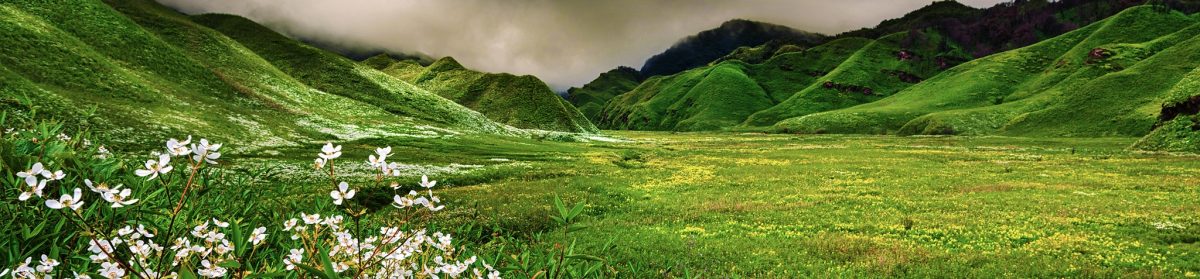
Manipur as a travel/tourist destination

By Chitra Ahanthem That Manipur has many things to offer to travelers and tourists alike in terms of places to see or as destination points is no secret. So when… Read more »

By Chitra Ahanthem

The list goes on…but for now let’s hope the tourism department is reading this piece

That Manipur has many things to offer to travelers and tourists alike in terms of places to see or as destination points is no secret. So when a team from the state taking part in a tourism mart came back with the tag of the state being an upcoming tourism destination, it was not a surprise. But one sincerely hopes that tourists and travelers when they do come to this “exciting destination” are not left unpleasantly surprised by how unprepared we are. Since it is the season of media censures and newspaper bans (not to forget the vitriol that will spawn on internet web pages in the form of comments and debates), let me hasten to add that one is not disputing the tag of a great destination. However I will vehemently dispute the nature of the destination(s) in Manipur.

Here are some reasonings behind my take:

– Social networking sites are often choc a bloc with positive comments and inquires following photo album updates of sights, scenes and locations of the state. The more adventurous even want to sample local cuisines (we will look into this too, but later) but anyone has any idea why none of the decent hotels in Manipur have the local cuisine in their spread? Check in any hotel and you will see their menus with the usual Chinese, Tandoori and Continental segments. Yes, local cuisine gets served at conferences and seminars but we are not talking of that.

– Accommodation issues are a sore point once those projecting Manipur as a tourism destination are thinking of taking them tourists to places beyond Imphal. The Government has to really spruce up the Government rest houses in the district headquarters at least. The tourist lodge at Sendra comes to mind mainly because of the buzz over the Loktak lake. Unfortunately, it stinks of urine and one is not clear whether it is open to hosting tourists. There used to be a private hotel (very small, and one that comes with no star rating) in Moirang but it soon became a dingy place. I recently saw the outer structure getting a new coat of paint (some rather hideous colour). One sincerely hopes that they have done something about the inside rooms as well: I distinctly remember a one night stay with a camera team that came in from Mumbai to video shoot the Moirang Lai Harouba. The bathroom had no water in the taps! Unlike tourists, travelers do not look at luxury but there is something called comfort. A clean bed and toilet-bathroom and home-made meals are often what takes it to make a great travel spot.

– Combine the first two points written above and one can see how unprepared we are! As far as the beauty of places go or the excitement factor goes, there really is no lack of places. Think Moirang and apart from Loktak lake, there is a huge scope for making the area the favorite destination for wildlife enthusiasts by introducing activities like camping at the Keibul Lamjao National park for one; angling around Sendra (that would mean taking away the Army psst..psst!). These and more can be done only after there is a proper accommodation set up at Moirang. But the same applies everywhere else once one moves away from Imphal. Think Ukhrul and one thinks immediately of the Siroi peak and the Siroi lily. But again, it is the same accommodation issue here too. Yet, if this factor gets taken care of, other areas in Ukhrul apart from the Siroi peak can be put on the tourist map. Think Nungbi, think of Khangkhui Cave, think Kachouphung Lake. Let’s now imagine a situation where accommodation gets taken care of (and for this, we are not talking necessarily only of big hotels but home stays or community efforts) and then we have the immense potential of bringing local community people as trekking guides (for Siroi peak), pottery tutors (for tourists who want to have a try at making pottery) besides of course boosting the traditional handloom and handicraft industry. The story repeats itself for every other district: think the Thanlon caves, think of river rafting on the Barak but….

– Before the tourists or travelers comes in from outside the state, ever wondered why the tourism department has not looked at home tourists? Most states have week-end getaways with accommodation logistics being developed precisely to generate income from within the state. There is definitely a huge market for this in Manipur as well.
End-point:

This is going to be a bit longer than the usual end-point. Keeping in mind the topic, let me stick to a point format on what can be done or thought about:
– Adopt a heritage walk program for the Kangla. A light and sound show is a must and can bring in locals too, thereby generating money also for the concerned department. But a guided tour (in English) inside the fort is needed for tourists, which is also good news for the educated but unemployed section. Much like heritage walks, there can be a cultural emphasis too. There are various harvesting festivals in the state and there would be immense interest in them.

– Do something about the transportation segment. We do not have a pre paid vehicle system at the airport, which is supposedly being considered for an “International” tag. The distance from the airport to the hotels in town are very short as compared to the distances that gets commuted in other cities but the charge that the van/tata safari/auto syndicate charge on a mutually agreed upon rate (and hence, harder to negotiate and bargain with) is much steeper. There is an imperative need to have vehicle services registered and following a Government standard rate. Once this gets done, they must also get petrol from the government depot so they do not hike up the vehicle hiring rates when highway blockades comes calling!).

– There is a strong need to change the concept of the Sangai Tourism festival. Till date, it is a carbon copy of any other “Mela” in town: one sees the same stalls, the same agencies. All you see are glittering blouses and sandals and cheap plastic toys for children being sold at hiked rates. Yes, there is talk of bringing in “international stalls” but pray, how does that help tourist foot-fall? Instead, bring in new blood and new ideas. Think out if the box initiatives like perhaps a photo walk: call in paid registrations from within and outside the state. For those coming in from outside, give them subsidized stays so they can spread the word for the next festival.

– Ah well! The list goes on…but for now let’s hope the tourism department is reading this piece!

Read more / Original news source: http://kanglaonline.com/2011/09/manipur-as-a-traveltourist-destination/

What killed the Python?

  By: Deben Sharma A rare species of Python 12 ft long, gracefully beautiful, came in the fire line of a hunter’s gun somewhere 33 kms from Ukhrul town in… Read more »


By: Deben Sharma

No law or Act on protection of wild life, in place, saved the reptile, neither any environmentally aware local initiative worked in difference to the cultural tradition of targeting the Python as priced catch to celebrate and rejoice

A rare species of Python 12 ft long, gracefully beautiful, came in the fire line of a hunter’s gun somewhere 33 kms from Ukhrul town in Manipur. I just wished Python did not appear at all or disappeared suddenly. Alash! that was not to be! It is gone for ever for our children never to see again. It was shocking but a joyous event in that remote community to share the kill, so valued, to the taste of the cultural tradition.
What missed the point? No law or Act on protection of wild life, in place, saved the reptile, neither any environmentally aware local initiative worked in difference to the cultural tradition of targeting the Python as priced catch to celebrate and rejoice.

Yet, neither a python waited for a hunter or a hunter chance upon a python every now and then but for the belief in the medicinal value. And, perhaps for the new found commercial tag the rare animal carried on its head and hide for the elites that got the whole of the length: head and tale intact all the way to Ukhrul town for a display in the market but not in a formalin jar.

It seems to have simply disappeared in digestion channels without a trace to discover as though it never existed but to tell the story – the Python walked into the traditional cooking pot for the belief in better health!
Do the Pythons walk into every cooking pot?  Nay, no wild animal are banned to walk into the traditional pot in the neighboring Angamis Village, Khonoma – the birth place of Legendary figure AZ Phizo. Few years ago, the Village Council of Khonoma resolved to ban hunting within the village territory and notified to all citizens of the village. The law was enforced with vigilance and fines. Youth society of the village felt the Village law was in contravention to their youthful hunting adventures, the technologies, skills and practices handed over to them from their elders – the traditional ways of life.

When the village council realized the displeasures of the youth, they immediately acted upon. Series of meetings were held with the youth in the village to reason out why there was a need to change the tradition and tame their hunting instincts. Youth finally agreed and became part of village the prohibitory law enforcement agency to give wild animals a chance to live their lives free from fears and to prevent them walking into the cooking pot in their ignorance. The Village Chief in his recent visit to Imphal shared their new found joy in the village with number of wild species returning to house in the reserve forests of the community in their increasing population in the village territory.

Children in the village wake up the calls and musical nodes of different birds and animals early in the morning, everyday to set out to schools. Still earlier, Nagaland state Government was more proactive to put a state-wide ban on hunting wild animals in close cooperation with Village councils. How far the law has been followed is different question.

In the meantime, prosperity comes to Khonoma village. The conscious  decisions of the village elders to preserve their traditional cultural heritage, which cradled historic events and personalities, have brought dividend to the village by the inflow of tourists. But what has raised the curiosities of people from outside, even more, is their stories of befriending with the wild animals, managing the ecology rather than becoming a problem to it, and living in the cozy comforts of their natural environment. The days are much nearer, when every sound in the forest will sleep in silence in our hills, not even the pitter-patter of the rain drops to hear, then, we will go to Khonoma village, on educational tours with our children, to chat with the monkeys, to sing with the birds, and to play horse ridding on or wrestle with big fat Python friends in lap of natural environment.

On our return journey we will answer what killed the Python.

Enhanced by Zemanta

Read more / Original news source: http://kanglaonline.com/2011/09/what-killed-the-python/

BOOK RELEASE FUNCTION – Tattooed with Taboos

INVITATION BOOK RELEASE FUNCTION We cordially request for your kind presence at the book release function on 9th September 2011 (Friday) at the conference hall Manipur press club, Major khul,… Read more »

INVITATION

BOOK RELEASE FUNCTION

We cordially request for your kind presence at the book release function on 9th September 2011 (Friday) at the conference hall Manipur press club, Major khul, Imphal at 1 pm

Name of the book

Tattooed with Taboos, An Anthology of poetry by three women from North-East India


Lokendro Arambam

Retd. Prof MU

Mr Soyam Lokendra

HOD Philosophy, MU

And

Sharatchand Thiyam

Sahitya Academy Awardee

Will grace the function as the Chief Guest, the President and the guest of honour respectively

Your solemn presence is highly solicited

Yours sincerely

Chaoba Phuritshabam

Shreema Ningombam

Soibam Haripriya


PROGRAMME:

12. 30 pm: Arrival of the dignitaries and invitees

1 pm: dignitaries take chair

Formal presentations to the dignitaries

Welcome address

Release of the book by the chief guest

Speech by the poets

Speech by the guest of honour

Speech by the chief guest

Speech by the president

Vote of thanks


The above inivitation was sent to Kanglaonline.com by Chaoba Phuritshabam

Enhanced by Zemanta

Read more / Original news source: http://kanglaonline.com/2011/09/book-release-function-tattooed-with-taboos/

DOEACC Imphal Staff And Students Stage Sit In Protest

IMPHAL, Sep 6: Staff and students of DOEACC, Imphal today staged a sit-in-protest at its Akampat complex today decrying monetary demand of various UG groups. It is said that over the last couple of…

Read the full article and articles like this at m…


IMPHAL, Sep 6: Staff and students of DOEACC, Imphal today staged a sit-in-protest at its Akampat complex today decrying monetary demand of various UG groups. It is said that over the last couple of…

Read the full article and articles like this at manipurhub.com

Read more / Original news source: http://manipurhub.com/news-manipur/doeacc-imphal-staff-and-students-stage-sit-in-protest/