


As Manipur approaches another electoral cycle, the search for competent political representatives risks diverting attention from the historical, institutional and material structures of power that continue to reproduce the state’s political crisis.
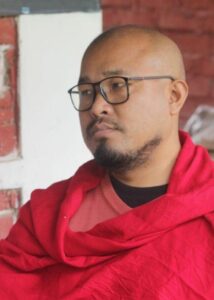
By Damudor Arambam
As Manipur approaches another electoral cycle, with February 2027 emerging as the anticipated horizon of political mobilisation, the public imagination appears to be undergoing a familiar transformation. A society continuing to experience one of its deepest political and humanitarian crises is increasingly occupied by the language of elections. Political conversations, media discussions and public engagements are being organised around candidates, national parties, regional politics and the possibility of electing the ‘rightful’ representatives. The Congress, BJP and regional political formations are competing to establish their respective narratives, while civil society organisations, former activists and influential individuals are positioning themselves within the emerging electoral landscape.
What is particularly striking is not the return of electoral politics itself, but the manner in which elections are increasingly being presented as the principal solution to a crisis whose origins extend far beyond the limitations of electoral governance.
The armed movement for self-determination gained momentum in the late 1970s, more than two decades after Manipur’s merger with the Indian Union, often described by a section of the population as an unwilling or contested incorporation. This delayed emergence, despite the merger being part of the broader formation of the Indian state in the subcontinent, raises questions about the historical trajectory of armed resistance. The ensuing conflict between state and non-state actors continued for decades, marked by violence and allegations of extrajudicial killings, particularly during the 2000s.
More troubling is the subsequent transformation of these movements. Their anti-colonial rhetoric and proclamations of self-determination continue to be reproduced, even as their political activities increasingly assume reformist orientations, operating through intermediaries, political brokerage and accommodation with the established governmental order. The contradiction between revolutionary rhetoric and institutional accommodation raises questions about whether resistance has gradually become a politics of negotiation and survival within the very structures it claims to oppose. The communal conflict between Meiteis and Kukis that erupted in May 2023 has further complicated this landscape, with sections of Naga political constituencies also becoming drawn into confrontations with the Kukis, deepening fragmentation and shifting political alignments.
The historical and structural questions that once occupied political discourse are gradually being displaced by a much narrower question: who should govern Manipur?
This displacement is not politically innocent. It reveals how electoral politics can become a mechanism for managing a crisis without necessarily transforming the conditions that reproduce it.
The structural crisis and the invention of the incompetent leader
One of the most frequently repeated arguments today is that Manipur’s problems are fundamentally the consequences of incompetent political leadership. Corruption, communal divisions, administrative failures, political instability and the continuing conflict are attributed to the inability of successive governments to govern responsibly. Consequently, the proposed solution is equally straightforward: elect better representatives.
There is an element of truth in this argument. Political leadership must be held accountable for its decisions, omissions and failures. However, the problem begins when the incompetence of individual leaders becomes the principal explanation for a crisis produced through a much longer historical process.
We must distinguish between the immediate administration of a crisis and the structural conditions that make the crisis possible.
The political theorist Nicos Poulantzas offers an important way of understanding this distinction. The state is not simply an instrument operated by whichever political party occupies government. It is a material condensation of social power relations. Its institutions, administrative arrangements and mechanisms of authority carry historical interests and institutional constraints that cannot be transformed merely through electoral replacement.
In this sense, changing the government does not necessarily change the state. Political representatives may change, but the institutional arrangements within which they exercise authority can remain substantially intact.
This is where the familiar argument that Manipur’s problems originate primarily from within becomes politically convenient. By locating the crisis predominantly in the failures of local political leadership, the larger historical responsibilities of the Indian state, the circumstances of political incorporation and the institutional arrangements governing the Northeast are pushed into the background.
The problem is consequently presented as one of administrative correction rather than structural transformation.
Elections and the reproduction of political hegemony
Antonio Gramsci’s understanding of hegemony helps explain why this reduction becomes so powerful. Political dominance is sustained not exclusively through coercion or institutional authority, but also through the organisation of consent, whereby particular interpretations of social reality gradually become accepted as common sense.
The present electoral discourse in Manipur demonstrates this process. The public is repeatedly encouraged to believe that the fundamental problem is the absence of competent political representatives. The solution, therefore, is to identify individuals with integrity, administrative experience and the capacity to negotiate with Delhi. The electoral success of Dr. Bimol Akoijam, who was elected to Parliament with a historic margin, and his subsequent decision to contest the forthcoming Assembly elections, illustrates this fixation on electoral representation and the search for political competence.
Yet, this raises a fundamental question: what, ultimately, is the value of competence when the structural conditions within which political representatives operate remain largely unchanged? The repeated search for the most competent individual risks reducing a profound political crisis to a competition over personalities, credentials and electoral mandates—thereby encouraging the public to believe that a change in representation alone can resolve historically entrenched problems.
The more fundamental questions are rarely asked. Why do successive governments remain constrained by the same institutional arrangements? Why do competing political aspirations repeatedly return to unresolved questions of autonomy, territory and recognition? Why does the replacement of political representatives so rarely transform the underlying conditions of political insecurity?
When these questions disappear, electoral politics begins to establish its own boundaries of acceptable political discussion. The public is permitted to debate who should govern, but the question of how power itself is organised becomes increasingly marginal.
This is perhaps the most consequential achievement of electoral hegemony: it transforms a historical and structural crisis into a problem of electoral choice, while reproducing the belief that the right representative, rather than a transformation of the underlying political conditions, is the solution.
Civil society and the manufacturing of political consent
This phenomenon is not confined to Manipur. Across the Northeast, particularly in insurgency-affected regions, the emergence of regional political parties has frequently been intertwined with the political trajectories and networks of insurgent movements. Regional political formations have often emerged not simply from electoral dissatisfaction but from political projects that previously operated outside constitutional and electoral institutions. The entry of prominent individuals associated with insurgent organisations, particularly those operating outside the region, into electoral politics and mainstream political positions further illustrates this process.
Electoral participation may thus become a mechanism through which insurgent-linked individuals and networks are brought into the mainstream, offered institutional recognition and made increasingly negotiable within the existing political order. Though this does not necessarily signify the abandonment of earlier political objectives; rather, it may represent their reconfiguration into forms compatible with institutional negotiation, political accommodation and state management.
The contradiction is particularly significant. Regional political formations often emerge from dissatisfaction with established national political arrangements, yet their political survival frequently depends on negotiating with the very institutions they claim to challenge. This does not mean that regional parties are inherently incapable of advancing meaningful alternatives. It raises the question of whether regional political assertion is transforming the structures of power or merely negotiating a more favourable position within them.
Bob Jessop’s strategic-relational understanding of the state is useful here. Political institutions do not offer equal opportunities to every political project. Their structures and established relationships tend to privilege certain actors, strategies and forms of organisation. Consequently, political movements entering established institutions may find themselves adapting their demands to the possibilities and constraints those institutions permit.
The danger is that political alternatives, whether emerging from civil society, regional political formations or insurgent networks, become progressively accommodated within the existing order, transforming the politics of resistance into the politics of negotiation, brokerage and institutional survival.
The political class and the circulation of intermediaries
The return of retired bureaucrats, former Indian armed personnel, intellectuals and individuals with established institutional connections to electoral politics directly or sympathetically reflects the continued influence of privileged social classes whose authority and status are historically rooted in the remnants of Manipur’s feudal and monarchical order. Even when they do not directly occupy positions of political leadership, their institutional networks, social influence and accumulated resources often enable them to operate behind the scenes, shaping political choices, influencing public discourse and determining the direction of political developments—thereby exercising an indirect but consequential role in deciding the future of the state.
Their administrative experience, intellectual credentials and proximity to centres of power on both sides are increasingly projected as political assets. They claim to possess the networks and leverage necessary to negotiate with Delhi, engage with non-state actors within the state, and restore administrative stability. Yet, the question remains whether these networks serve the wider public or reproduce the influence of historically privileged groups.
The issue is not simply their entry into electoral politics, but the power they exercise beyond it. Through institutional connections, patronage networks, civil society platforms and informal negotiations, influential individuals can shape political decisions and the future of the state without necessarily holding elected office. Their power often remains less visible, yet no less consequential.
The circulation of political personnel should therefore not be mistaken for the transformation of political power. A former bureaucrat replacing an established politician, or an intellectual joining a national party, does not necessarily alter the social relations through which authority is exercised. Political renewal may simply allow established elites to reposition themselves while preserving the structures of privilege and influence.
Even the language of resistance, reconciliation and change can become a means of legitimising this process. Public dissatisfaction is converted into fresh claims of representation, while those with historical and institutional advantages present themselves as intermediaries capable of negotiating with centres of power.
The electorate is repeatedly invited to trust individuals who promise a better arrangement with Delhi and other power centres. But the fundamental question remains: does this politics challenge the existing distribution of power and privilege in Manipur, or merely enable historically entrenched elites to secure a more influential position within the structures they claim to reform?
The political economy beneath ethnic and territorial contradictions
The continuing conflict in Manipur cannot be understood exclusively through ethnic hostility, communal polarisation or administrative incompetence. Competing claims of indigeneity, territorial rights, land, political autonomy and constitutional recognition must also be examined in relation to material interests and the distribution of institutional power.
David Harvey’s concept of accumulation by dispossession offers a useful analytical framework for understanding how control over land, resources, institutions and political authority becomes central to the reproduction of economic and political power. In Manipur, questions of land, territorial administration, resource access and hill-valley institutional relations cannot be separated from the broader political economy of the region.
Ethnic identities are historically produced, politically articulated and socially consequential, but their mobilisation also operates within unequal structures of power. The competing claims of different communities must therefore be examined not merely as expressions of identity, but also in relation to the material and institutional arrangements through which those claims acquire political significance.
When political parties instrumentalise these anxieties primarily for electoral advantage, political divisions become resources for mobilisation, while the unresolved conflict itself becomes a terrain for constructing political legitimacy. The danger is that political actors become increasingly invested in managing and reproducing these divisions rather than transforming the material and institutional conditions that sustain them.
The morality of voting and the limits of formal democracy
Media and civil society campaigns promoting ‘rightful candidates’, rejecting money distribution and encouraging responsible voting also require critical examination. While electoral integrity and political accountability are important, framing political transformation primarily as a question of electoral morality risks depoliticising the deeper structural contradictions. Formal political equality does not translate into substantive equality of power, as citizens possess unequal access to financial resources, institutional networks, political influence and the means of shaping public discourse.
A candidate may be personally honest and administratively competent while remaining committed to preserving unequal institutional arrangements. The problem, therefore, is not merely whether voters accept money in exchange for votes, but why electoral participation remains so dependent on patronage, financial resources and established networks. The language of ethical voting can thus become a convenient substitute for examining the unequal material conditions within which electoral democracy operates.
Beyond the electoral trap
The greatest danger of the coming election is not that people will choose the wrong candidate, but that society may gradually lose the capacity to ask the right political questions. Who determines the constitutional and institutional conditions under which Manipur is governed? What are the historical limits of the existing federal arrangement?
How can competing claims of indigeneity, territorial rights, autonomy and self-determination be addressed without reproducing exclusion? What material interests sustain existing political arrangements, and why do successive electoral cycles appear incapable of resolving these contradictions?
These questions cannot be answered through campaign promises, party manifestos or candidates’ personal credentials alone. The challenge is to recover a historical and material understanding of the crisis by examining how power is organised, how institutional arrangements reproduce inequalities, how consent is manufactured and how electoral competition absorbs dissent without addressing its underlying causes.
This is not an argument against elections or democratic participation, but against mistaking electoral democracy for political emancipation. Elections remain an important mechanism of accountability, yet they cannot substitute for confronting the historical, institutional and material contradictions that structure political life.
Manipur does not merely need a change of representatives; it needs a political imagination capable of questioning the structures that repeatedly produce instability, exclusion and conflict. Otherwise, February 2027 may become another moment when people vote for change only to reproduce the very arrangements from which they seek an escape. A society cannot vote its way out of contradictions it has not collectively understood. The real challenge is to question why the structures of power continue to reproduce the same crisis, irrespective of who governs.
(Damudor Arambam is an ICSSR Post-Doctoral Fellow affiliated with JNU, New Delhi. His work focuses on constitutionality, governance, indigeneity, nationalism, and political transformations in Northeast India, particularly Manipur.)
The post Voting for Change, Reproducing the Crisis: The Electoral Trap in Manipur first appeared on The Frontier Manipur.
Read more / Original news source: https://thefrontiermanipur.com/voting-for-change-reproducing-the-crisis-the-electoral-trap-in-manipur/