
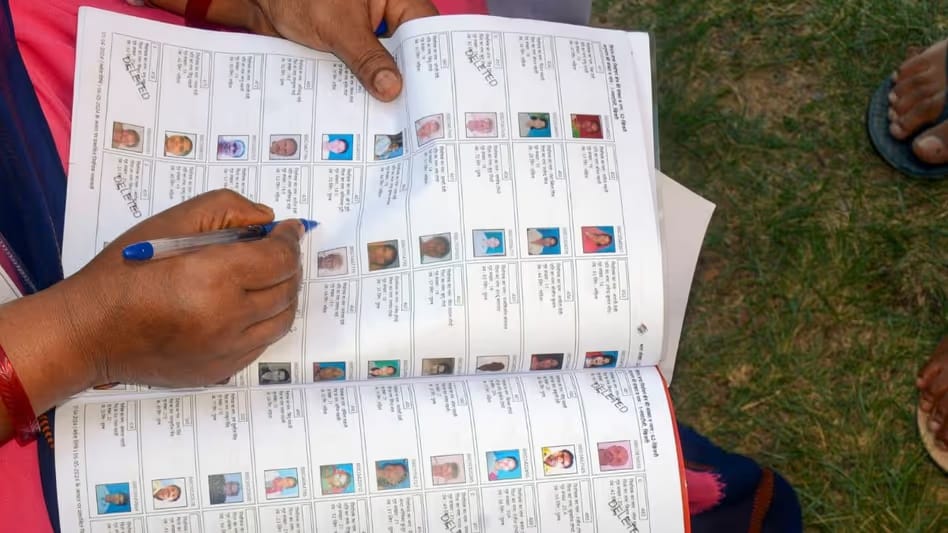
SIR and the Indigenous Question in Manipur

The Special Intensive Revision revives debate over citizenship, infiltration, and the ambiguity surrounding the ‘Any Kuki Tribes’ entry in Manipur’s Scheduled Tribes list. With no clear historical or demographic basis for the 2003 insertion, defining indigeneity under the new nomenclature may prove contentious. By Salam Rajesh India is currently in the process of executing a […]

The post SIR and the Indigenous Question in Manipur first appeared on The Frontier Manipur.

The Special Intensive Revision revives debate over citizenship, infiltration, and the ambiguity surrounding the ‘Any Kuki Tribes’ entry in Manipur’s Scheduled Tribes list. With no clear historical or demographic basis for the 2003 insertion, defining indigeneity under the new nomenclature may prove contentious.
By Salam Rajesh

India is currently in the process of executing a major task on the identification of its native citizens through a revision in the electoral roll across the country, an exercise that is projected to have hiccups and significant demographic impacts.

The countrywide SIR (Special Intensive Revision) seeks in weeding out the unwanted elements – the unauthorized, illegal entrants to the country via dubious means – infiltration through porous international borders, refugees from ethnic conflicts and wars, illegal immigration, migrant labor, and asylum seekers – all rolled into one.

For a starter, the southern State of Kerala removed a massive 897,211 individuals from its electoral roll, in obviously the process of weeding out unidentified individuals living in the State without authorization.

The Election Commission of India published the final electoral roll for Kerala after the SIR exercise, minus the near nine lakh ‘non-native’ individuals, leaving the actual number of eligible voters in that State at 2,69,53,644 voters, as compared to 2,78,50,855 before the Special Intensive Revision began in October 2025.

In the revised list, male voters numbered 1,31,26,048, while female voters accounted for 1,38,27,319, and transgender voters at 277. The number of overseas voters in the updated roll is 2,23,558, while service voters stand at 54,110.

So, keeping in mind this huge exercise in deleting a chunk of ‘non-native’ electorates from the state’s electoral list, it then comes to the basic question on how Manipur State will fare in this Special Intensive Revision exercise.

For one thing, there are repeated allegations of the unauthorized entry of elements from two neighboring countries – Myanmar and Bangladesh – in all of these years, yet so far failing to do a similar exercise to weed out the undesired elements.

The porous international border with neighboring Myanmar has always been the cited reason for the clandestine entry of illegal immigrants, smugglers, drug runners, armed militants, and so forth. Besides that, the lack of a foolproof mechanism to check entries at Jiribam, Mao Gate and Moreh has also been a factor for the unchecked entry of ‘foreign’ elements into Manipur.

Civil society organizations based in the State have given the call for conducting the NRC (National Register of Citizenship) before proceeding with the SIR exercise in view of the allegations over unaccounted number of ‘non-native’ individuals living in the State without valid documents.

Some time back, too, there was uproar over unreasonable increase in electorates within the Paomata circle in the northern uplands by almost over one hundred thousand individuals, beyond reasons unfathomable.

In the midst of these developments, Union home minister Amit Shah had announced in Guwahati the other day that all undesired elements from the North East region would be identified and kicked out.

This, of course, is better said than done. The northeastern states are well known for the controversies over large number of ‘infiltrators’ living and working in these states without valid reasons.

Assam and Arunachal Pradesh had issues with the Chakma refugees from Bangladesh. Manipur and Mizoram are infested with war refugees from neighboring Myanmar, plus the Rohingya refugees after genocide in that country, and added with the perpetual problem of the infiltration of drug runners and their henchmen.

The Centre had initiated process to fence the entire stretch of the international border shared by Myanmar with the Indian states of Arunachal Pradesh, Assam, Nagaland, Manipur, Mizoram and Tripura, but that again is facing hiccups following objections from the States on the controversial issue of the free movement regime (FMR).

For Manipur, the SIR exercise could be an issue based on the demographic imbalance created by large infiltration particularly from Myanmar, with equal concern on allegations of infiltration from Bangladesh.

The effectiveness of the Inner Line Permit (ILP) system had long been in doubt over reports that the modus operandi of ‘officials’ at the entry points, particularly for the land routes, was turning the operation into a money-minting process by issuing ILPs with fake Aadhar cards.

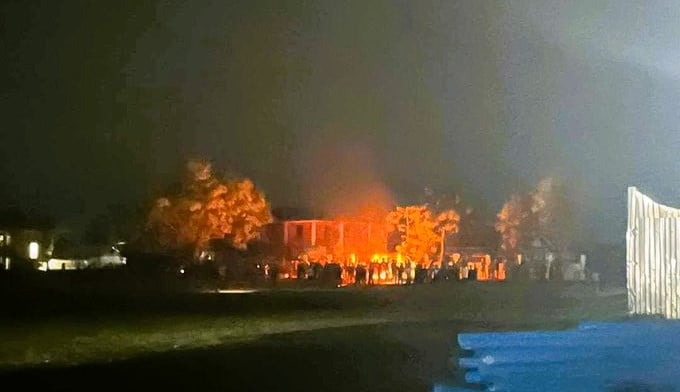
All said and done, given the reason of the recent ethnic conflicts in the State vis-à-vis the dominance of armed militants ruling the roost, it is probable that the SIR exercise is going to face a rough-shod experience with most likely ‘disturbances’ from the armed non-state actors with dubious objectives, as fairly demonstrated at Sinakeithel village on Monday earlier this week.

Kuki groups had said that they will have nothing doing with the Manipur Government unless their demand for ‘separate administration’ is fulfilled. Yet, with the Central Government flatly denying this, it is perhaps going to be a hurdle for the SIR exercise in the ‘Kuki-inhabited’ pockets within Churachandpur and Kangpokpi districts.

The issue is further complicated by the inclusion of the terminology ‘Any Kuki Tribes’ as was published in the Gazette of India Extraordinary on 8th January, 2003 (in serial No.33 after Poumai in serial 30, Tarao in serial 31 and Kharam in serial 32) recognizing scheduled tribes for the State, where the contention from various angles was that the terminology was vague and does not specify any known tribe(s) in the State as such.

Incidentally, no other Indian State had such vague naming of tribe or terminology in the Amendment to the Act of 2002, thereby creating room for doubt on manipulation to certain degree with none opposing the inclusion at that time.

This particular terminology was (re)inserted in the country’s The Scheduled Castes and Scheduled Tribes Orders (Amendment) Act, 2002 (Gazette of India No.10 of 2003) at a time when the Union Government amended the Act to accord official recognition to few more tribes as Scheduled Tribes of Manipur under the Indian Constitution, and further at a time when a prominent Kuki leader was a minister at the Centre.

The coincidence is reflective of manipulation where the terminology ‘Any Kuki Tribes’ did not feature in the earlier schedule. So, unless this terminology is erased from the scheduled tribes list for Manipur, it is going to make matters complicated at the time of the SIR exercise.

Who would be the ‘Any Kuki Tribes’, and on what basis with reference to the demography and known history of the State, and the population counts all through these years. It will be difficult to name any specific tribe as ‘Indigenous’ under this new nomenclature other than the known tribes already in the scheduled tribes list for the State prior to 2003.

Statistically, Manipur’s total population is seen as rising in every census count. Whereas, this increase is neither re-assessed for validation nor re-confirmed on ground, that is, ground truthing vis-à-vis the allegations of infiltration and establishment of unidentified new villages (some allegedly within Protected Areas such as Reserved Forests and Wildlife Sanctuaries).

In all, the call for NRC exercise prior to SIR exercise sounds reasonable to avoid complicacy in assessing the actual count of heads eligible to cast votes in the State, albeit proxy citizenship and possible forged documents to identify themselves as ‘Indigenous’.

The post SIR and the Indigenous Question in Manipur first appeared on The Frontier Manipur.

Read more / Original news source: https://thefrontiermanipur.com/sir-and-the-indigenous-question-in-manipur/
Loktak Fishers Strive to achieve GBF Targets

Champu Khangpok fishers turn global biodiversity goals into grassroots action at Loktak Lake. The fishing community makes it a point to organize important annual events highlighting environmental and ecological concerns, sensitizing locals on the objectives of the GBF targets with prioritization on the long-term conservation of the freshwater Loktak Lake and its biological diversity. By Salam […]

The post Loktak Fishers Strive to achieve GBF Targets first appeared on The Frontier Manipur.

Champu Khangpok fishers turn global biodiversity goals into grassroots action at Loktak Lake. The fishing community makes it a point to organize important annual events highlighting environmental and ecological concerns, sensitizing locals on the objectives of the GBF targets with prioritization on the long-term conservation of the freshwater Loktak Lake and its biological diversity.

By Salam Rajesh

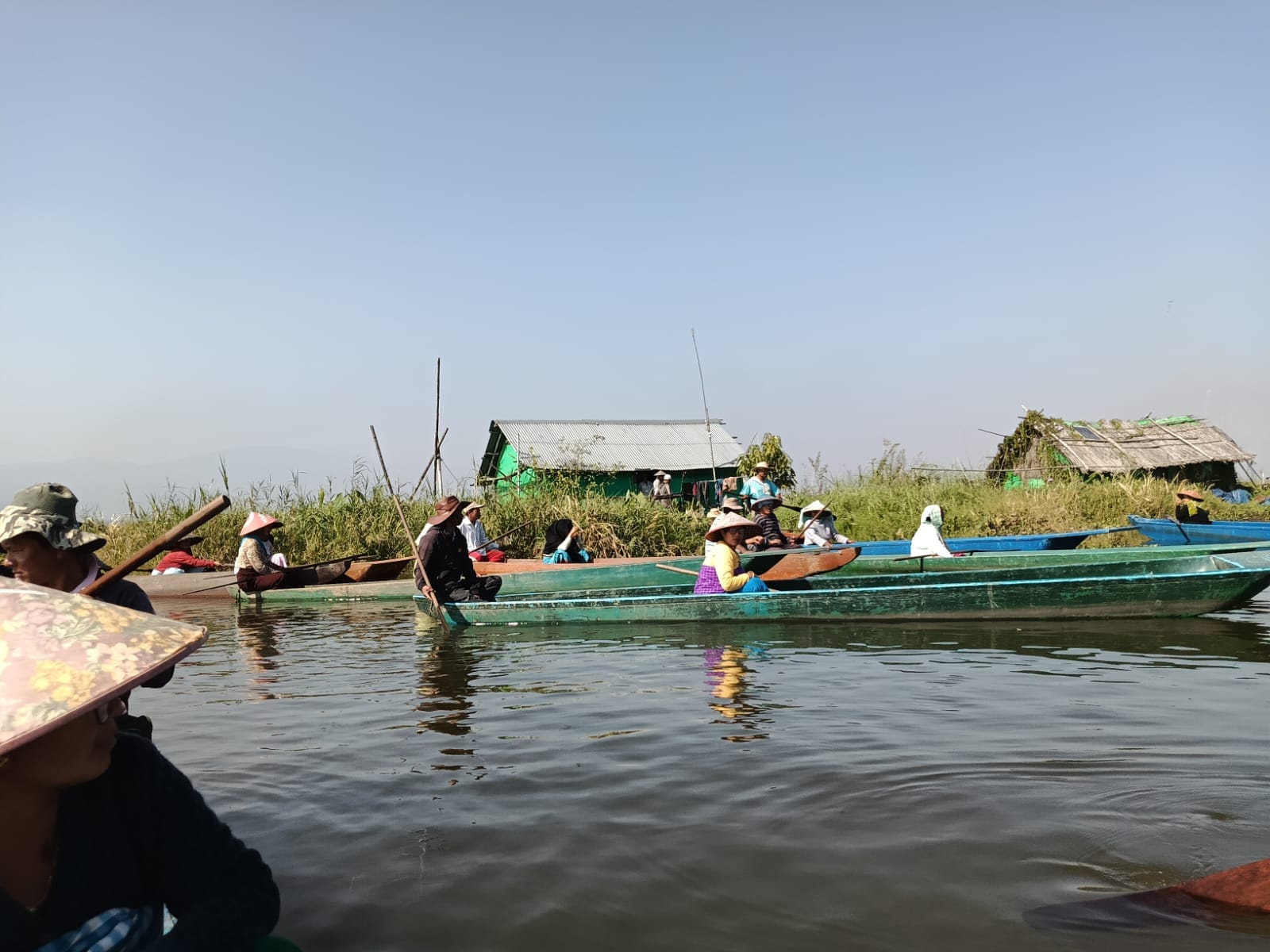
In these past several recent years, the fishing community thriving upon the floating island village of Champu Khangpok within Loktak Ramsar site in India’s far flung northeastern State of Manipur had continuously been contributing their mite in achieving locally some of the goals outlined in the targets set under the Global Biodiversity Framework of the Convention on Biological Diversity (CBD).

The Global Biodiversity Framework (GBF) that came into force at the CBD Kunming-Montreal convention during 2022 end came up with several goals that primarily aimed at achieving targets addressing biodiversity loss and species decline worldwide.

Much of the CBD’s GBF Targets – 23 targets in all – predominantly focuses on incorporating the active participation of Indigenous Peoples and Local Communities (IPLCs) in achieving the set goals in both short and long terms.

Fishers staging awareness drive in Loktak Lake.

Keeping this background in perspective, the fishing community of Champu Khangpok floating island village had since set themselves to task in contributing meaningfully towards achieving some of the aspects outlined in the CBD GBF targets in their own humble way, howsoever small their efforts might seem to be.

Champu Khangpok marked the observation of World Wetlands Day 2026 earlier this year with a cleanup drive within the lake and along the waterway of Yangoi Achouba (albeit Nambul River), prioritizing the fact that the lake had since become a dumping ground of urban wastes carried by the river along its flow through Imphal city, a fairly populated urbanized zone.

Champu Khangpok villagers also take upon themselves the task of regulating capture fishery to prevent species population decline within the lake and to restrict random capture of fingerlings during the spawning season, and in preventing unethical fishing methods using LED blubs at nighttime and electrocuting fish using batteries.

The fishing community makes it a point to organize important annual events highlighting environmental and ecological concerns, sensitizing locals on the objectives of the GBF targets with prioritization on the long term conservation of the freshwater Loktak Lake and its biological diversity.

Target 3 of the CBD’s GBF focuses on the conservation of 30 percent of the land, waters and the seas globally to protect life on land and in water. Within this target is an important element to recognize the Indigenous and traditional territories.

The Convention recognizes that ‘Indigenous peoples and local communities often own, occupy and manage areas with unique and significant biodiversity. The appropriate recognition of these areas, therefore, could make important contributions in achieving this target’.

This consideration comes with the perspective that the rights of the Indigenous peoples and local communities must be respected fully, including obtaining their free, prior and informed consent in all matters.

The Convention is convinced that the well-governed, effectively managed and representative protected areas, and other effective area-based conservation measures (OECMs), are a proven method for safeguarding both habitats and populations of species and for delivering important ecosystem services and multiple benefits to people.

The CBD has made it a valid point that ‘local people managed protected areas is a central element of biodiversity conservation strategies at the local, national and global levels’.

This consideration of IPLCs’ contribution in safeguarding biodiversity adds strength in achieving the GBF’s Target 4 which focuses on halting species extinction, protecting genetic diversity, and in managing human-wildlife conflicts.

Target 4 specifically ensures urgent management actions ‘to halt human induced extinction of known threatened species and for the recovery and conservation of species, in particular threatened species, and to significantly reduce extinction risk’.

The goal further is ‘to maintain and restore the genetic diversity within and between populations of native, wild and domesticated species to maintain their adaptive potential, including through in-situ and ex-situ conservation and sustainable management practices’.

In the same breadth, Target 6 of the GBF looks at addressing the menace of Invasive Alien Species (IAS) of plants and animals, seeking the reduction of the introduction of IAS by 50 percent globally within a time frame, and, thereto, minimize their impact on the localized biodiversity.

The objective of Target 6 is broadly outlined as: ‘Eliminate, minimize, reduce and or mitigate the impacts of invasive alien species on biodiversity and ecosystem services by identifying and managing pathways of the introduction of alien species, preventing the introduction and establishment of priority IAS, reducing the rates of introduction and establishment of other known or potential IAS by at least 50 percent, by 2030, eradicating or controlling IAS especially in priority sites, such as islands’.

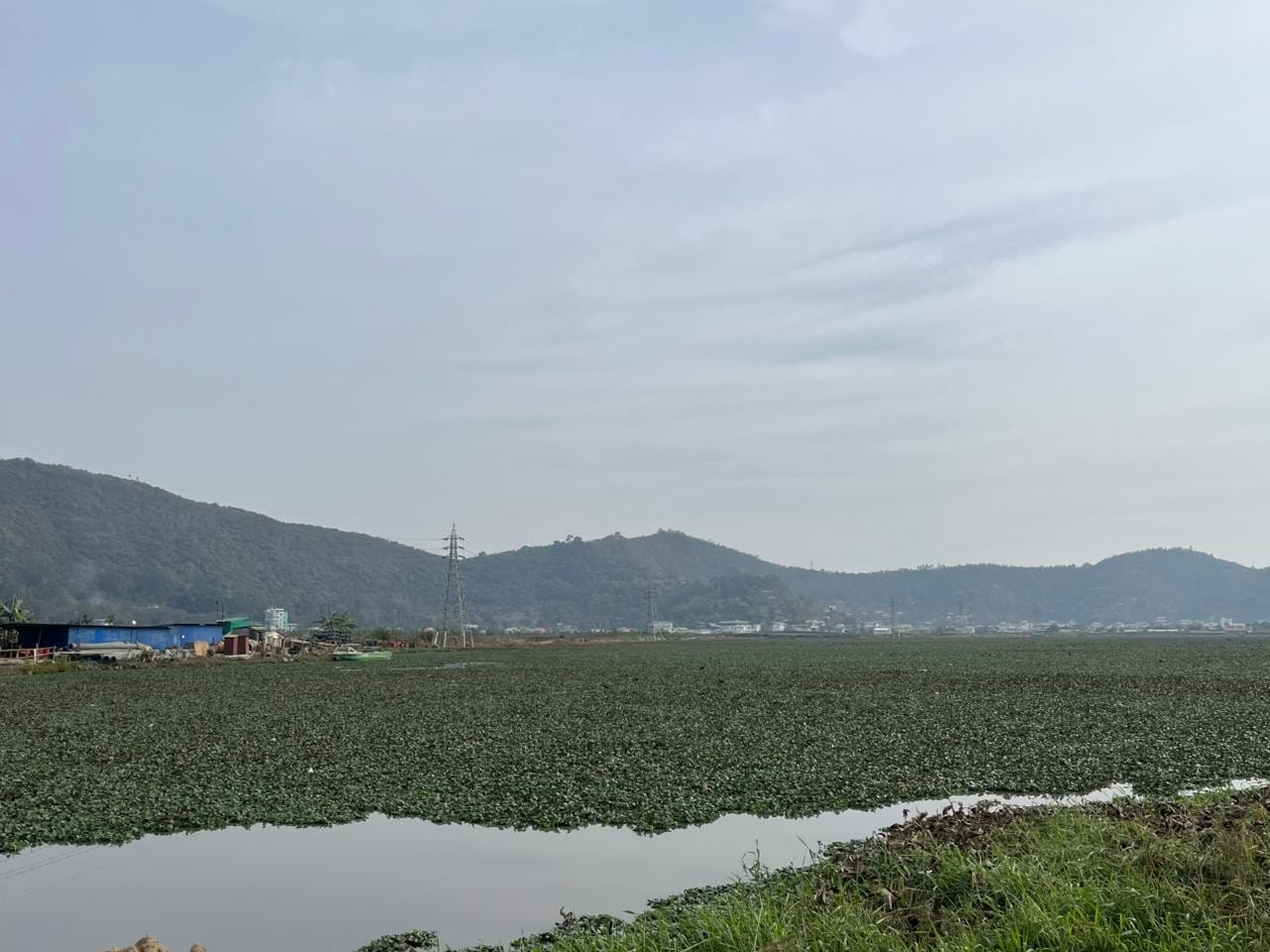
This is one of the priority areas that the Loktak fishers have specifically focused upon in all of these years, highlighting time and again on the menace of aquatic plants, and fish, that are alien to the freshwater Loktak Lake and which are proving as nuisance plants, and fish, within the lake.

Another of the issues faced by the Loktak fishers is the level of pollution within the lake, accentuated by the pollutant loads and sewerage discharge from the urban areas. The Nambul River carries maximum pollutant loads from the urbanized Imphal city areas, a factor for high pollution level in the lake.

This issue is reflected in the GBF’s Target 7 which specifically focuses on reducing pollution to levels that are not harmful to biodiversity.

Target 7 specifies on ‘reducing pollution risks and the negative impact of pollution from all sources, by 2030, to levels that are not harmful to biodiversity and ecosystem functions and services, considering its cumulative effects’.

It further seeks in ‘reducing excess nutrients lost to the environment by at least half including through more efficient nutrient cycling and use; reducing the overall risk from pesticides and highly hazardous chemicals by at least half including through integrated pest management, based on science, taking into account food security and livelihoods; and also preventing, reducing, and working towards eliminating plastic’.

In a nutshell, achieving these targets might be a herculean task for the marginalized fishing community of Loktak Lake, whereas, the zeal to contribute their mite in the smallest possible ways is there for all to see, visible through their continuous activities in their own humble way.

This is where the state and central authorities can step in to aid the Loktak fishers in their march forward – a tiny step taken yet meaningful in saving, protecting and conserving one of India’s most significant inland freshwater lakes – and, that too, a Ramsar site of international importance.


The post Loktak Fishers Strive to achieve GBF Targets first appeared on The Frontier Manipur.

Read more / Original news source: https://thefrontiermanipur.com/loktak-fishers-strive-to-achieve-gbf-targets/

From Participation to Leadership: Structural Challenges for Women in Science

An assessment of representation, retention and policy frameworks in Northeast India in the context of the International Day of Women and Girls in Science. By Dr. Rameshori Yumnam On 11 February 2026, the world observes the International Day of Women and Girls in Science, a global initiative led by UNESCO and UN Women to promote […]

The post From Participation to Leadership: Structural Challenges for Women in Science first appeared on The Frontier Manipur.

An assessment of representation, retention and policy frameworks in Northeast India in the context of the International Day of Women and Girls in Science.

By Dr. Rameshori Yumnam

On 11 February 2026, the world observes the International Day of Women and Girls in Science, a global initiative led by UNESCO and UN Women to promote full and equal participation of women in science and technology. This day is not merely symbolic, it is a reminder that inclusion in science must extend beyond classrooms into leadership, recognition and sustained opportunity. In Northeast India, enrollment of girls in education is often higher than that of boys. Many young women actively choose science streams, pursue postgraduate studies and complete doctoral research in significant numbers. The region does not lack talent or academic excellence. What it often lacks is continuity, visibility, structural support and proportional recognition.

A telling example appears in Lilavati’s Daughters: The Women Scientists of India, a landmark collection highlighting Indian women scientists. From the entire Northeast region, only one scientist, Prof. Joyanti Chutia of Assam, a distinguished theoretical physicist, is prominently represented. While her achievements are deeply inspiring, the limited representation from a region rich in intellectual potential reflects a broader challenge: visibility and recognition remain uneven.

Gender inequality in science is not new. Even in the early twentieth century, women pursuing scientific careers faced significant barriers. Mileva Mari?, Albert Einstein’s first wife, was a trained physicist and mathematician who studied alongside Einstein at the Swiss Federal Polytechnic in Zurich. She was the only woman in her cohort and studied in the same physics–mathematics program as Einstein. Their surviving letters show that they discussed physics problems together during their student years. However, historians remain divided on the extent of her contribution to Einstein’s early work. There is no definitive documentary evidence proving that she co-authored or formally contributed to the 1905 papers (including the theory of relativity). Most scholars agree that while she was intellectually capable and deeply engaged in physics discussions, the published work was solely credited to Einstein, whose scientific aspirations were curtailed by personal circumstances and societal expectations. Her story reflects a broader historical pattern in which women’s scientific identities were often overshadowed or under-recognized.

Yet history also offers powerful examples of women who broke barriers. Marie Curie remains one of the most inspiring figures in science. She was the first woman to win a Nobel Prize and remains the only person to have won Nobel Prizes in two different scientific fields: Physics and Chemistry. Her legacy extended beyond her own achievements: her daughter, Irène Joliot-Curie, also went on to win a Nobel Prize. In a scientific world dominated by men, Marie Curie’s perseverance, brilliance and dedication earned her global recognition, often described as “Scientist of the Millenium”. Her story demonstrates that when given opportunity and support, women not only contribute to science, they redefine it. The contrast between invisibility and recognition underscores an important truth: talent exists everywhere, but acknowledgment does not.

In Northeast India, many women pursue advanced research, yet after doctoral studies, they often face social expectations surrounding marriage, family responsibilities, relocation challenges, limited infrastructure and fewer leadership pathways. Entry into science has improved dramatically, but retention, incentives and representation at high-level decision-making platforms remains a concern. Scientific advisory boards, funding committees, research councils, university leadership positions and policy-making bodies must reflect both gender and regional diversity. Women must not only participate in science, they must shape its direction.

There is a pressing need for region-oriented policies that respond to the unique realities of the Northeast. Such policies must focus on strengthening advanced research infrastructure within the region so that talented scholars do not have to migrate elsewhere to pursue quality scientific work. Targeted fellowships, research grants and financial incentives specifically designed for women scientists are essential to sustain their careers and encourage long-term engagement in research. Equally important is promoting greater visibility through awards, leadership opportunities and meaningful media recognition that highlights regional scientific achievements. Establishing strong mentorship networks and regional innovation platforms can provide guidance, collaboration and professional continuity. Above all, ensuring women’s representation in high-level scientific decision-making bodies is crucial so that policy directions, funding priorities and institutional strategies reflect inclusive and regionally relevant perspectives.

On the International Day of Women and Girls in Science 2026 observed yesterday, the conversation needed to move beyond mere enrollment statistics. The Northeast already has capable, qualified and deeply committed women scientists. What was, and continues to be, essential is the creation of an enabling ecosystem one that actively supports, recognizes, and elevates them into meaningful leadership roles. Science thrives on diversity of thought. But diversity must also be visible, valued and empowered. Recognition fuels aspiration, incentives sustain commitment, and representation transforms systems, these are not optional ideals but essential requirements for building an equitable and progressive scientific community.

When we create more Joyanti Chutias, when we support more Mileva Mari?s to complete their journeys and when we encourage the next generation of Marie Curies from every region, we do more than promote equality, we strengthen the very foundation of scientific progress.

(The author is an Assistant Professor in the Department of Zoology, Manipur University. She can be reached at rameshori.yumnam@gmail.com.)

The post From Participation to Leadership: Structural Challenges for Women in Science first appeared on The Frontier Manipur.

Read more / Original news source: https://thefrontiermanipur.com/from-participation-to-leadership-structural-challenges-for-women-in-science/

Keibul Lamjao National Park to Remain Closed from Feb 20–27 for Sangai Census

A notice issued by issued by the Office of the Principal Chief Conservator of Forests (Wildlife) & Chief Wildlife Warden stated that the park will remain closed to visitors throughout the census exercise to ensure smooth and undisturbed operations. FM Report The Government of Manipur has announced the temporary closure of the Keibul Lamjao National […]

The post Keibul Lamjao National Park to Remain Closed from Feb 20–27 for Sangai Census first appeared on The Frontier Manipur.

A notice issued by issued by the Office of the Principal Chief Conservator of Forests (Wildlife) & Chief Wildlife Warden stated that the park will remain closed to visitors throughout the census exercise to ensure smooth and undisturbed operations.

FM Report

The Government of Manipur has announced the temporary closure of the Keibul Lamjao National Park from February 20 to February 27, 2026, to facilitate the annual census of the endangered Sangai and other associated wildlife species.

According to a public notice issued by the Office of the Principal Chief Conservator of Forests (Wildlife) & Chief Wildlife Warden, the National Park Management will undertake census operations during the eight-day period to estimate the mean population of the Sangai, also known as the Manipur Brow-Antlered Deer, along with other species inhabiting the park.

The notice stated that the park will remain closed to visitors throughout the census exercise to ensure smooth and undisturbed operations.

The order has been issued under Sections 28(a) and 33(d) of the Wildlife (Protection) Act, 1972.

The public notice was issued by Anurag Bajpai, Principal Chief Conservator of Forests & Head of Forest Force (HoFF) & Chief Wildlife Warden, Government of Manipur.

The post Keibul Lamjao National Park to Remain Closed from Feb 20–27 for Sangai Census first appeared on The Frontier Manipur.

Read more / Original news source: https://thefrontiermanipur.com/keibul-lamjao-national-park-to-remain-closed-from-feb-20-27-for-sangai-census/

United Sangtam Likhum Pumji Bans Pangolin Hunting in Nagaland

Decision marks a major milestone under the Pangolin Project led by the Wildlife Trust of India (WTI), supported by the Wildlife Conservation Network’s Pangolin Crisis Fund, in collaboration with the forest departments of Manipur and Nagaland TFM report In a significant boost to wildlife conservation efforts in Northeast India, the United Sangtam Likhum Pumji (USLP), […]

The post United Sangtam Likhum Pumji Bans Pangolin Hunting in Nagaland first appeared on The Frontier Manipur.

Decision marks a major milestone under the Pangolin Project led by the Wildlife Trust of India (WTI), supported by the Wildlife Conservation Network’s Pangolin Crisis Fund, in collaboration with the forest departments of Manipur and Nagaland

TFM report

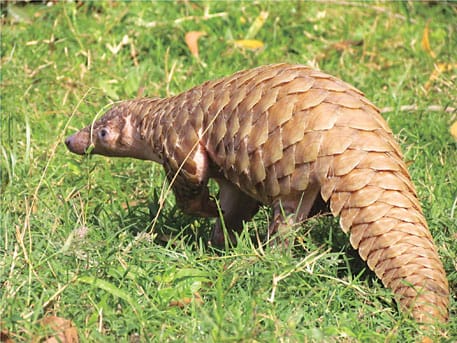
In a significant boost to wildlife conservation efforts in Northeast India, the United Sangtam Likhum Pumji (USLP), the apex tribal body of the Sangtam Naga community, has passed a resolution imposing a complete ban on the hunting of pangolins within its jurisdiction in Nagaland.

The decision marks a major milestone under the Pangolin Project led by the Wildlife Trust of India (WTI), supported by the Wildlife Conservation Network’s Pangolin Crisis Fund, in collaboration with the forest departments of Manipur and Nagaland.

Launched in 2023 in Manipur and later expanded to Nagaland, the project focuses on combating the illegal wildlife trade (IWT) of the Indian Pangolin (Manis crassicaudata) and the Chinese Pangolin (Manis pentadactyla). The Indo-Myanmar border region has been identified as a key trafficking corridor for both species.

The Sangtam Naga community, primarily residing in Kiphire and Tuensang districts, inhabits ecologically rich forest landscapes that form part of the Indo-Myanmar biodiversity hotspot. With a strong traditional governance system led by village councils and apex tribal bodies, community resolutions play a critical role in regulating natural resource use and social practices.

Following sustained dialogue and sensitisation initiatives by WTI, the USLP formally adopted the resolution in the presence of Mr. A. Island Peace Yangthsaba and Mr. L. Kipitong Sangtam.

Mr. Chingrisoror, Field Officer, WTI, stated, “The Sangtam community has shown remarkable leadership in recognising the urgency of pangolin conservation. Their support is crucial because when communities take ownership, conservation becomes sustainable.”

The resolution builds upon a similar conservation measure earlier passed by the Tangkhul Naga Awunga Long (TNAL) in Manipur, reflecting growing momentum for community-led wildlife protection across state boundaries in the region.

Mr. L. Kipitong Sangtam, Pumji Chidong, emphasised the importance of traditional institutions in conservation efforts. “Community institutions are the backbone of conservation in Nagaland. With community support, the Pangolin Project is helping build trust and local leadership, ensuring that pangolins are protected through collective commitment,” he said.

With increasing backing from indigenous tribal bodies, conservation efforts to safeguard pangolins in the Northeast continue to gain strength, reinforcing the role of community governance in addressing wildlife crime.

The post United Sangtam Likhum Pumji Bans Pangolin Hunting in Nagaland first appeared on The Frontier Manipur.

Read more / Original news source: https://thefrontiermanipur.com/united-sangtam-likhum-pumji-bans-pangolin-hunting-in-nagaland/

The Plague of Introduced Species

How cane toads, paragrass, carp and hyacinth became ecological disruptors in Australia and Manipur. By Salam Rajesh Earlier this month, Jennifer Geer writing for A-Z Animal.com, provided a descriptive narrative of how an imported and introduced toad species from Hawaii by the Australian Government ultimately became the proverbial Frankenstein in the making. In 1935, Queensland […]

The post The Plague of Introduced Species first appeared on The Frontier Manipur.

How cane toads, paragrass, carp and hyacinth became ecological disruptors in Australia and Manipur.

By Salam Rajesh

Earlier this month, Jennifer Geer writing for A-Z Animal.com, provided a descriptive narrative of how an imported and introduced toad species from Hawaii by the Australian Government ultimately became the proverbial Frankenstein in the making.

In 1935, Queensland in Australia faced a major crisis in its sugar cane crop production after a native beetle species, Greyback Cane Beetle (Dermolepida albohirtum), commenced wreaking havoc on the sugarcane plants.

The beetle larvae lived in the soil and chewed on sugarcane roots, stunting growth or killing the plants. This incurred major economic losses for the sugarcane farmers. There was a need to find a solution fast enough to prevent further losses.

Seeking a natural solution to kill the grubs, the Australian government imported Cane Toads (Rhinella marina) from Hawaii, with the hope that the toads would eat the grubs and save the sugarcane.

Unfortunately enough, as history proved, the worst-case scenario occurred. The toads did not keep the beetle populations in check. Instead, they became one of Australia’s most destructive (alien) invasive species and an ecological disaster, writes Geer. Today, the toads are considered invasive species in Australia, the Caribbean Islands, Hawaii, and Florida.

Cane Toad.

In August 1935, the BSES (Queensland Bureau of Sugar Experiment Stations) released 2400 cane toads into sugarcane plantations in Gordonvale, North Queensland. By 1950, the Australian government declared the cane toad an invasive predator.

Dangers from the toads included poisoning animals that prey on them, outcompeting native species for resources, and their voracious appetites. Geer writes that 75 species of Australian crocodiles, lizards, and freshwater turtles were threatened by the toads.

Some of the animals that are in danger of dying after they eat a cane toad include the Australian monitor lizards, quolls, tiger snakes, and freshwater crocodiles. Many of these animals are designated as threatened species in the country.

This story fairly well finds reflection in India, too, with stories of introduced species ultimately becoming monsters in disguise. Like most States in the country, Manipur too is not an exception to such stories of disasters.

In the mid 1970s, the State’s veterinary department reportedly introduced Paragrass (Brachiaria mutica) as fodder for milch cows that, too, were imported from Haryana. It was reported that the cows were housed in a mechanized cattle farm in the Iroishemba area in Imphal West District.

The remains of the feed, that is, the undigested or the uneaten parts of the paragrass soon found their way to the riverbank of Nambul River via its feeder rivulets, either as cow excreta or intentionally dumped as waste. Today, paragrass is one of the major nuisance semi-aquatic plants in most water bodies within the Manipur River basin.

Paragrass (Napi tujombi in the vernacular) is a major headache for Loktak Lake (a Ramsar site) managers as this fast spreading grass had virtually spread its tentacles across the peripheral shoreline, crowded over the floating biomass Phumdi, and literally had become the major reason for depletion of native plants, in particular the edible aquatic, semi-aquatic and semi-terrestrial species of food and medicinal values.

Paragrass in Loktak wetland.

The story of the notorious cane toads of Australia indeed finds a parallel with the notorious paragrass in Manipur, well defined amongst the floating biomass of Loktak Lake. The one is a story of an animal (an amphibian) and the other is of a plant (a grass). Amazing comparison at the best!

It may be recalled here that Target 6 of the Global Biodiversity Framework (GBF) of the Convention on Biological Diversity (CBD) re-emphasizes the elimination, minimization, reduction or the mitigation of impacts of Invasive Alien Species (IAS) of plants and animals on the biodiversity and ecosystems across the seven continents.

The GBF’s Target 6 specifically seeks the prevention of the introduction and establishment of priority invasive alien species, reducing the rates of introduction and establishment of other known, or potential, IAS plants and animals by at least 50 percent by the target year 2030.

For the Asia and the Pacific CBD Regional Group, 37 member countries including India have set at least one national target to be achieved by year 2030.

On this end, the National Biodiversity Authority of India (NBA) in 2022 had framed lists of invasive alien species of plants and animals under its Inland Invasive Alien Species of Fishes of India that are of priority for control, reduction and elimination throughout the country by year 2030.

Top on the list of the Inland Invasive Alien Species of Fishes of India according to the NBA is one of the commonest cultured fishes in the country, and in Manipur too, and that is, the Common Carp (Eurasian or European carp, Cyprinus carpio; Puklaobi in the vernacular).

The Common Carp was introduced in Manipur way back in 1964 according to fish expert Professor Waikhom Vishwanath. Interestingly, in India the fish was first introduced in Cuttack in 1939, and in Bangkok in 1957. The fish’s native range covers rivers in Europe and in Asia.

The fish Mozambique tilapia (Oreochromis mossambicus; Tunghanbi in the vernacular) a species originating from East Africa and introduced in India in 1952, finds itself second in the priority list of invasive alien species of fishes to be either controlled or eradicated entirely in India by the target year 2030.

Two very commonly seen aquatic plants in Manipur, namely, Pontederia crassipes (Eichhornia crassipes/Water hyacinth; Kabo-kang) and Alligator weed (Alternanthera philoxeroides; Kabo-napi) find themselves listed on the top of the priority IAS plants to be either controlled or eradicated completely by 2030.

The proliferation of Pontederia crassipes in large number across the water body of a wetland endangers it as excessive growth of the plant ‘inhibits the growth of fish and other aquatic organisms due to cut down of light and lack of oxygen’ according to experts.

In fact, at one point of time the plant was known as the ‘Terror of Bengal’ because of its rapid growth and domination across most water bodies in that State, rapidly affecting the fisheries and impacting rural economy drastically.

The Dehradun-based Wildlife Institute of India (WII) at one point of time had noted that ‘the gregarious growth of weeds like Brachiaria mutica and Alternanthera philoxeroides unless controlled, may pose a great threat to the biodiversity of the Keibul Lamjao National Park – habitat of the highly threatened Manipur Brow-antlered Deer’.

Defining Invasive Alien Species, Costello et al. (2022) says, “Alien species are organisms which are introduced to regions in which they would not be found naturally, as a result of unintentional or deliberate human action”.

“In the majority of cases, alien species are unable to survive in their new environment without human support. However, a small proportion will manage to adapt to their new surroundings and establish populations in the wild. Some of these alien species have negative impacts on the environment, for example predation or competition for resources with native animals or plants”.


The post The Plague of Introduced Species first appeared on The Frontier Manipur.

Read more / Original news source: https://thefrontiermanipur.com/the-plague-of-introduced-species/

Can Khemchand withstand the anger of Churachandpur?

Churachandpur has long been home to multiple identity groups—Kuki, Zo, Paite, Hmar—often spoken of as a single political bloc. During the peak of ethnic strife in Manipur, these groups projected a united front, speaking in one voice across platforms and asserting that they were inseparable, two sides of the same coin. That narrative, however, is […]

The post Can Khemchand withstand the anger of Churachandpur? first appeared on The Frontier Manipur.

Churachandpur has long been home to multiple identity groups—Kuki, Zo, Paite, Hmar—often spoken of as a single political bloc. During the peak of ethnic strife in Manipur, these groups projected a united front, speaking in one voice across platforms and asserting that they were inseparable, two sides of the same coin. That narrative, however, is now visibly unraveling.

By Leichombam Kullajit

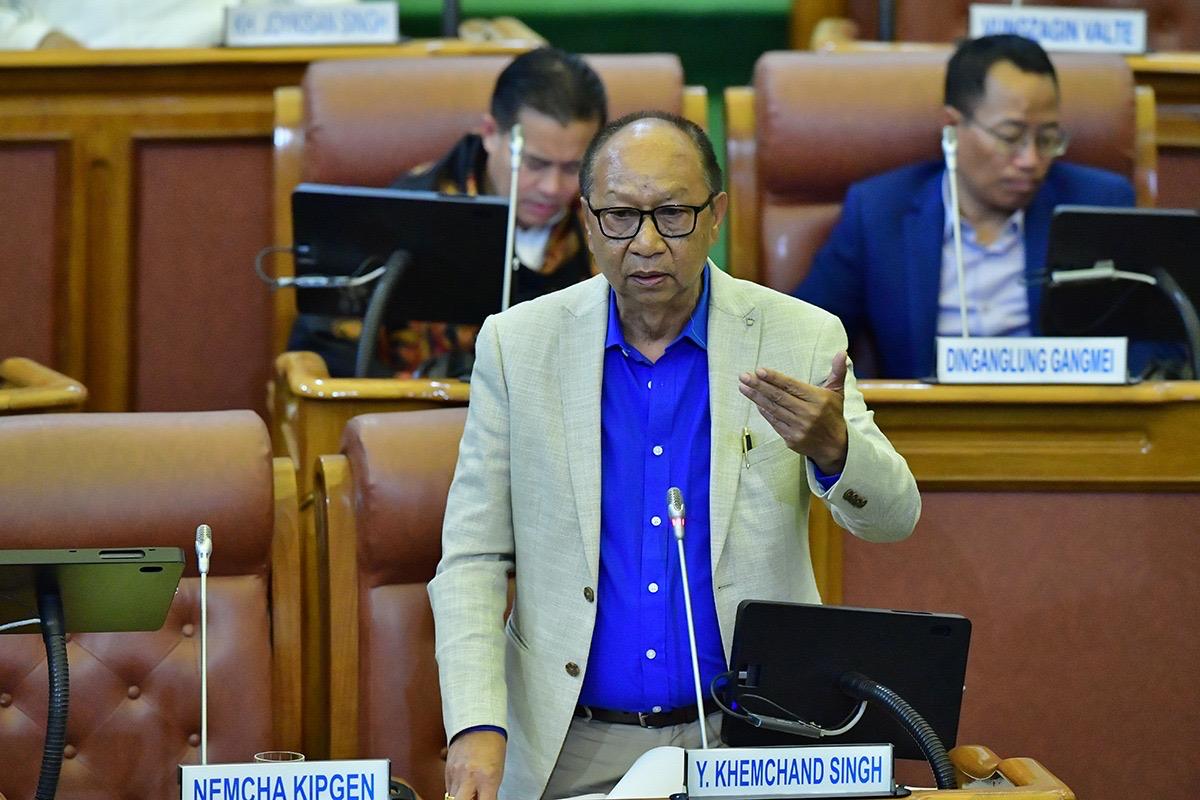
Who, in reality, controls Churachandpur today? The question may sound awkward, even misplaced, considering that Manipur now has a newly sworn-in government led by Chief Minister Yumnam Khemchand Singh. Constitutionally and administratively, the answer should be obvious. Yet, the political atmosphere on the ground suggests a far more complicated reality.
Almost immediately after the swearing-in ceremony—alongside four cabinet colleagues, including former minister Nemcha Kipgen, now elevated to Deputy Chief Minister—waves of resentment began surfacing from sections of Churachandpur district and the wider Kangpokpi region. The anger, largely articulated by groups identifying themselves as Kuki-Zo, is rooted in their outright rejection of the new government. Their position is uncompromising: Kuki-Zo legislators, they insist, should not participate in governance unless the Centre grants their long-standing demand for a “separate administration” or a Union Territory with legislative powers.
If viewed in isolation, such demands could be framed as an attempt—however controversial—to find a political solution to the violence that erupted between the Meiteis and Kukis nearly three years ago. But a closer reading of statements and press releases issued by various organisations in Churachandpur reveals a deeper, more unsettling truth. The conflict, it appears, is no longer merely between communities; it is increasingly internal.
Churachandpur has long been home to multiple identity groups—Kuki, Zo, Paite, Hmar—often spoken of as a single political bloc. During the peak of ethnic strife in Manipur, these groups projected a united front, speaking in one voice across platforms and asserting that they were inseparable, two sides of the same coin. That narrative, however, is now visibly unraveling.
Today, these same groups stand openly opposed to one another, exposing fractures that had long existed beneath the surface. The question of “who controls what” has become central, and with it, the realization that these identities—once portrayed as indivisible—are fundamentally distinct, with competing interests that may never fully converge, regardless of power or circumstance.
This brings the focus squarely back to Chief Minister Yumnam Khemchand Singh. A senior BJP leader with years of political experience, he now faces a test that goes far beyond cabinet management or legislative coordination. The real challenge lies outside the assembly—posed by fractured groups, hardened narratives, and ambitious, often reckless, political actors operating at the margins.
Whether Khemchand can withstand these storms will depend on more than political survival. It will rest on his willingness to assert authority, draw clear lines between negotiation and lawlessness, and demonstrate that peace and normalcy are not slogans but enforceable goals. Accommodation and dialogue are essential—but so are limits.
Allowing unlawful activities to flourish in select pockets of the state risks undermining not only governance but the Chief Minister’s own credibility and judgment. This moment, therefore, is an acid test of leadership.
At the same time, those who speak in the language of defiance must also reckon with reality. History has shown that demands achieved through chaos and confrontation rarely endure. There are paths to negotiation, and there are consequences for pursuing goals that are neither feasible nor constitutional.
Manipur stands at a delicate crossroads. Whether it moves toward reconciliation or deeper fragmentation may well depend on how firmly—and wisely—its new Chief Minister navigates the anger of Churachandpur.

The post Can Khemchand withstand the anger of Churachandpur? first appeared on The Frontier Manipur.

Read more / Original news source: https://thefrontiermanipur.com/can-khemchand-withstand-the-anger-of-churachandpur/

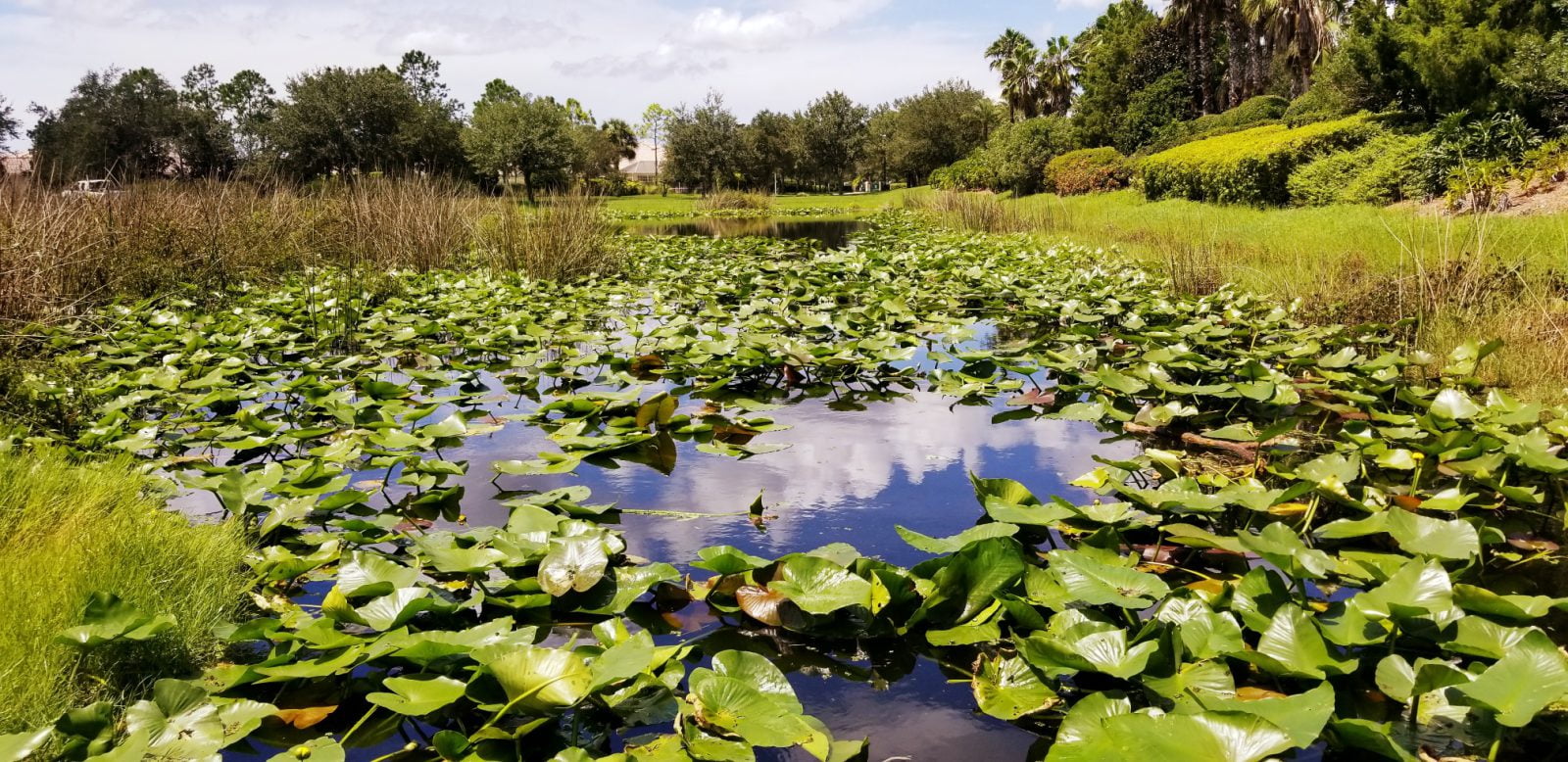
When Wetlands Beckon

In climate change dialogues, the significance of wetlands as carbon sinks has multiplied manifold, increasingly with new findings on how much of carbon wetlands can sequester, besides the knowledge on green forests serving as important carbon sinks that absorb excess carbon in the atmosphere to help in climate change mitigation. By Salam Rajesh As in […]

The post When Wetlands Beckon first appeared on The Frontier Manipur.

In climate change dialogues, the significance of wetlands as carbon sinks has multiplied manifold, increasingly with new findings on how much of carbon wetlands can sequester, besides the knowledge on green forests serving as important carbon sinks that absorb excess carbon in the atmosphere to help in climate change mitigation.

By Salam Rajesh

As in the preceding years, the world community observed with solemnity the pledges to save, protect and conserve wetlands on the occasion of the annual World Wetlands Day ritual of social and environmental commitments, howsoever the mission appear far more than practicable to put words on ‘wetlands conservation’ in actuality.

The second day of February every year is dedicated to wetlands as a continued process of the global effort in raising awareness and commitments to saving much of the world’s fast disappearing water bodies of value to humans, wildlife and to nature itself.

An assessment by Hu et al. (2017, as quoted in Anisha, N.F., Mauroner, A., Lovett, G., Neher, A., Servos, M., Minayeva, T., Schutten, H. & Minelli, L. (2020). Locking Carbon in Wetlands: Enhancing Climate Action by Including Wetlands in NDCs. Corvallis, Oregon and Wageningen, The Netherlands: Alliance for Global Water Adaptation and Wetlands International) indicated that the area of wetland loss across the seven continents through the year 2009 and up to present times is considerably large.

Asia continent led the world in wetland area loss by a massive size of 2,646,100 sq km, followed by South America at a close second with a loss of 2,521,900 sq km. Europe figured with a considerably large loss of 972,200 sq km while North America lost 457,100 sq km, Africa 453,500 sq km and Oceania 181,600 sq km respectively.

This massive loss when counted in their totality can be seen to influence negative impacts on the living world, where even the IUCN (International Union for Conservation of Nature and Natural Resources) says that currently near around 47,000 species of animals and plants globally are on the verge of extinction from various reasons including negative anthropogenic influences.

Why would then people in general worry for wetlands dying and disappearing ultimately? The reasons are not far to seek, if people do reconsider the numerous ecosystem services rendered by wetlands in their totality.

For instance, wetlands have strong links to ancient traditions, cultures, spiritual values and religious values that establish socio-cultural links of people to their roots, in particular for wetland dependent or wetland-thriving communities. Manipur has a link in the legacy of the Khamba-Thoibi legends.

While it is generally accepted that wetlands supply food through natural resources such as fish and edible aquatic plants and insects, and through agricultural practices in wetland areas, these water bodies play an important role in climate change resilience and carbon storage. They assist in the regulation of greenhouse gases, temperature, precipitation and other climatic processes.

In climate change dialogues, the significance of wetlands as carbon sinks has multiplied manifold, increasingly with new findings on how much of carbon wetlands can sequester, besides the knowledge on green forests serving as important carbon sinks that absorb excess carbon in the atmosphere to help in climate change mitigation.

Compared to tropical rainforests which were thought of to be the best carbon sinks in the natural world, new findings in this aspect throws light on how wetlands can absorb carbon many times more than tropical forests.

For instance, compared to tropical forests storing 200 tons of carbon dioxide per hectare in soil, peatlands can store a massive 4700 tons of carbon dioxide per hectare in soil. That is a difference by a huge margin.

Similarly, mangroves can store up to 2839 tons of carbon dioxide per hectare in soil, seagrass 500 tons of carbon dioxide per hectare in soil, and salt marsh up to 917 tons of carbon dioxide per hectare in soil, which definitely is quite significant in global discussions on carbon sequestration to meet the deadline on limiting global temperature rise to 1.5 degree Celsius by year 2050.

Tropical forests are estimated to store up to 600 tons of carbon dioxide per hectare in their biomass, whereas, in the same measure mangroves are estimated to store as much as 928 tons of carbon dioxide per hectare in their biomass, which accounts for the global thrust on restoring and regenerating mangroves across most coastal belts around the world.

Wetlands play a major role in assisting with the storage and retention of water which helps flow regulation and provides flood and drought protection, and at the same time, wetlands assist in soil formation through sediment retention and accumulation of organic matter.

These, and much more, are the functional properties of wetlands in general, other than these water bodies providing leisure and fun for people seeking respite from the everyday grinding in life.

As in the preceding years, Manipur was not far behind other communities across the globe in observing the day with fervor and solemnity, urging local communities and the State to devout more time and energy in the larger objective of saving whether water bodies of value are left in the wild within the State.

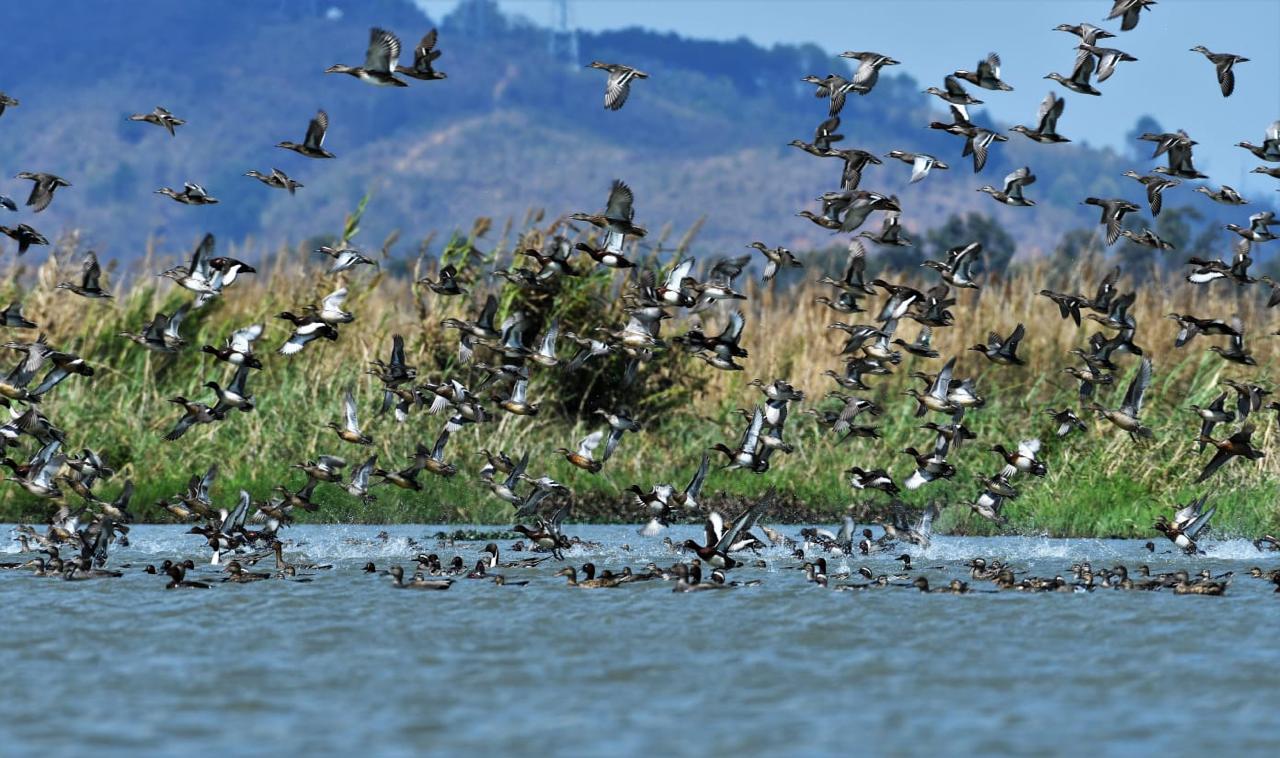
The State’s Directorate of Environment and Climate Change along with other line departments hosted the day at Yaralpat wetland site in Imphal East District, extolling the importance of wetlands to achieve various ecosystem services including groundwater recharge, fisheries and livelihoods, while providing refuge for wildlife such as the wintering migratory water birds.

The day was also observed widely across the State at academic and civil society platforms, individually and with support from the Directorate.

Of significant contribution to the day was the pre-World Wetlands Day 2026 observation on Sunday, 01 February, where the fishing community residing at Champu Khangpok Floating Island Village within Loktak Lake staged a cleanup drive to clear plastics and other domestic wastes along Yangoi Turel Achouba (Nambul River) and its flow up to Birahari Pat within the lake, demonstrating the local community’s responsibility in lake conservation.

Rounding up, it can be well said that a partnership, and workable, model between wetland-dependent local communities and the responsible state agencies can go a long way in shaping the future of wetlands in Manipur, and elsewhere.

The post When Wetlands Beckon first appeared on The Frontier Manipur.

Read more / Original news source: https://thefrontiermanipur.com/when-wetlands-beckon/

President’s Rule Revoked in Manipur Ahead of New Government’s Swearing-in

In a gazette notification issued on Wednesday, the Union Ministry of Home Affairs announced that President Droupadi Murmu had revoked the proclamation under Article 356 of the Constitution with immediate effect. TFM Report President’s Rule has been revoked in Manipur nearly a year after it was imposed, clearing the way for the formation of a […]

The post President’s Rule Revoked in Manipur Ahead of New Government’s Swearing-in first appeared on The Frontier Manipur.

In a gazette notification issued on Wednesday, the Union Ministry of Home Affairs announced that President Droupadi Murmu had revoked the proclamation under Article 356 of the Constitution with immediate effect.
TFM Report
President’s Rule has been revoked in Manipur nearly a year after it was imposed, clearing the way for the formation of a new BJP-led National Democratic Alliance (NDA) government in the state. The revocation came just hours ahead of the oath-taking ceremony of the new council of ministers scheduled for Wednesday evening.
In a gazette notification issued on Wednesday, the Union Ministry of Home Affairs announced that President Droupadi Murmu had revoked the proclamation under Article 356 of the Constitution with immediate effect.
“In exercise of the powers conferred by clause (2) of Article 356 of the Constitution, I, Droupadi Murmu, President of India, hereby revoke the Proclamation issued by me under the said article on the 13th day of February, 2025, in relation to the State of Manipur with effect from the 4th day of February, 2026,” the order said.
President’s Rule was imposed on February 13, 2025, following the resignation of then Chief Minister N Biren Singh. During this period, the Manipur Legislative Assembly remained in suspended animation — neither functioning nor dissolved.
The political crisis had deepened earlier when the Conrad Sangma-led National People’s Party (NPP) withdrew support from the Biren Singh government in November 2024. Biren resigned on February 9, 2025, after meeting Union Home Minister Amit Shah and BJP national president J P Nadda, paving the way for central rule.
NDA legislature party leader Yumnam Khemchand Singh will be sworn in as the new Chief Minister of Manipur at 6 pm on Tuesday at Lok Bhavan. The Manipur BJP confirmed the development in a post on X.
Khemchand Singh belongs to the Meitei community. Nemcha Kipgen from the Kuki community and Losii Dikho from the Naga community will take oath as Deputy Chief Ministers.
Ahead of the ceremony, an NDA delegation led by Khemchand Singh met Governor Ajay Kumar Bhalla at Lok Bhavan to stake claim to form the government. The delegation included two MLAs from the Kuki-Zo majority districts of Churachandpur and Pherzawl.
Manipur has been grappling with ethnic violence between the Meitei and Kuki-Zo communities since May 2023, a conflict that has claimed more than 200 lives. The state was previously governed by a BJP-led administration.

The post President’s Rule Revoked in Manipur Ahead of New Government’s Swearing-in first appeared on The Frontier Manipur.

Read more / Original news source: https://thefrontiermanipur.com/presidents-rule-revoked-in-manipur-ahead-of-new-governments-swearing-in/

Stolen years of Manipur’s history ?

Today, Manipur stands fractured. What is often described as “ethnic violence” between Meiteis and Kukis has stretched into its third year, with no clear end in sight. Highways remain blockaded, normal life is suspended, and an entire generation of young people is growing up amid fear, displacement, and uncertainty. By Leichombam Kullajit Manipur’s present tragedy […]

The post Stolen years of Manipur’s history ? first appeared on The Frontier Manipur.

Today, Manipur stands fractured. What is often described as “ethnic violence” between Meiteis and Kukis has stretched into its third year, with no clear end in sight. Highways remain blockaded, normal life is suspended, and an entire generation of young people is growing up amid fear, displacement, and uncertainty.

By Leichombam Kullajit

Manipur’s present tragedy is not merely a clash of communities; it is the cumulative outcome of years of political manipulation, calculated neglect, and strategic opportunism. What is unfolding today is not an accident of history, but the consequence of choices long made and quietly sustained.
The Government of India is well aware that a significant portion of the Kuki population in Manipur traces its origins to cross-border migration from Myanmar, facilitated by the porous and forested frontiers of Mizoram and Manipur. It is also aware of the harsh realities many of these migrants face—precarious living conditions, economic marginalisation, and the pervasive influence of criminal networks, including drug trafficking, in the region across the eastern border.
Yet, instead of addressing these vulnerabilities through meaningful development, rehabilitation, and integration, the Indian state chose a different path. It identified grievance as an instrument and despair as a resource. These marginalised communities were not uplifted; they were used—deployed as strategic proxies in the state’s long-standing effort to counter insurgencies it perceived as existential threats, particularly those involving Meitei and Naga movements in the northeastern subcontinent.


This reality is not lost on the Kukis themselves. They understand the nature of their exploitation and the unspoken bargain it entailed: compliance in exchange for recognition, protection, and the distant promise of political accommodation. It is within this context that the Suspension of Operations (SoO) agreement of 2008 must be understood.
Many continue to ask how nearly 25 armed Kuki militant organisations—fragmented along clan lines—could suddenly emerge under the banner of defending the Indian Constitution. Unlike Meitei or Naga insurgent groups, which evolved over decades in open defiance of the Indian state, these organisations appeared abruptly, accepted constitutional legitimacy, and entered into SoO arrangements with remarkable ease. Prior to the 1990s, there were no consolidated Kuki militant platforms such as the KNO or UPF, nor were there articulated political demands of comparable scale. This raises an unavoidable question: on what basis did the Indian Army negotiate a Suspension of Operations with groups that posed no direct challenge to the territorial integrity of the country?
The answer, many believe, lies in a strategic calculation. For New Delhi, the principal obstacle was never the Kukis or their armed groups—it was the entrenched political aspirations of the Meiteis and the Nagas. In that equation, the Kukis became a convenient counterweight.
Today, Manipur stands fractured. What is often described as “ethnic violence” between Meiteis and Kukis has stretched into its third year, with no clear end in sight. Highways remain blockaded, normal life is suspended, and an entire generation of young people is growing up amid fear, displacement, and uncertainty. Under these circumstances, it is reasonable to ask whether the crisis has been allowed—perhaps even engineered—to linger, quietly stealing the future of Manipur’s youth and erasing irreplaceable chapters of its history.
Political games may succeed for a time, but they cannot endure indefinitely. If the Government of India genuinely seeks peace, stability, and justice in Manipur, it must abandon short-term tactical thinking and confront the deeper causes of the conflict it helped shape. Otherwise, the burden of this unresolved crisis will not only continue to devastate Manipur—it will return, heavier and more complex, to the very state that once believed it could control the outcome.

( Leichombam Kullajit is a senior jounalist based in Imphal.)

The post Stolen years of Manipur’s history ? first appeared on The Frontier Manipur.

Read more / Original news source: https://thefrontiermanipur.com/stolen-years-of-manipurs-history/

Where Is My Pat? A Reflection on Lamphelpat, Memory, and Misguided Development

Due to excessive excavation, Lamphelpat’s depth has reportedly reached around 8-10 metres. Such unscientific deepening directly violates basic wetland management principles. It raises a critical question: is Lamphelpat still a natural wetland, or has it been turned into an artificial water reservoir? By Maxstone Irom This article is born out of worry, longing, and deep […]

The post Where Is My Pat? A Reflection on Lamphelpat, Memory, and Misguided Development first appeared on The Frontier Manipur.

Due to excessive excavation, Lamphelpat’s depth has reportedly reached around 8-10 metres. Such unscientific deepening directly violates basic wetland management principles. It raises a critical question: is Lamphelpat still a natural wetland, or has it been turned into an artificial water reservoir?

By Maxstone Irom

This article is born out of worry, longing, and deep nostalgia of my childhood days around Lamphelpat. I grew up with this wetland as part of my everyday life. It was not just a landscape, it was a living space where memories were created, relationships were built, and nature quietly shaped who I am today. For me, Lamphelpat was never just water and land.

On February 2 2026, as part of World Wetlands Day, Go Green Group Manipur, a youth collective, initiated a reflection and listening circle called Pat Ki Wari. The idea was simple yet powerful: to reconnect with our wetlands and revisit the memories and meanings attached to them. As part of this initiative, we walked around Lamphelpat, observed its present condition, and shared stories rooted in our personal journeys. While much has changed, the place still holds immense emotional and cultural significance in my life.

Lamphelpat is one of my core memories. It is where I experienced my first boat ride. Every Sunday morning, I would go for a walk with my family to watch Urok (Threskiornis melanocephalus)and other birds, returning home with a bunch of thambal (lotus). During the monsoon, when the pat would flood, I accompanied my father to buy fresh fish. In winter, we went fishing together. Those mornings, with muddy slippers, small fishes in my hands, and my father’s quiet smile beside me, felt richer than anything money could buy. These were not extraordinary moments; they were ordinary days made meaningful by nature.

As I age, Lamphelpat continued to shape my life. During my teenage years, it became my refuge. Whenever I felt overwhelmed, confused, or restless, I would sit by the water for hours, finding peace in silence. With friends, I watched sunsets near the RIMS side of the pat, clicking countless photographs that still remind me of simpler times. Lamphelpat is not just a place; it is a place that raised me, comforted me, and quietly taught me how to breathe in difficult times. But today, I find myself asking: where is my pat?

After nearly three years, I was shocked when I returned. It no longer looked like the wetland I grew up with. Under the so called “Lamphelpat water body Rejuvenation Project,” implemented by the Water Resources Department and funded by the New Development Bank, large portions of the wetland have been dug up. The excavated silt has been piled into artificial hills, permanently altering the natural landscape. What was once a living ecosystem now resembles a construction site.

As an environmental science student, this transformation raises serious concerns. According to the Wetlands (Conservation and Management) Rules, 2017, the depth of a wetland should not exceed 6 meters. However, due to excessive excavation, Lamphelpat’s depth has reportedly reached around 8-10 metres. Such unscientific deepening directly violates basic wetland management principles. It raises a critical question: is Lamphelpat still a natural wetland, or has it been turned into an artificial water reservoir?

This seemingly unscientific dredging has also destabilized the surrounding infrastructure. Roads connecting important institutions such as Shija Hospital and the National Institute of Technology have started sinking. To address this, an overbridge had to be constructed, an expensive solution to a problem that could have been avoided with proper planning.

Lamphelpat is also home to Manipur’s famous indigenous pony. The swampy terrain once provided a safe and natural space for grazing and movement. Today, however, due to altered water levels, deep excavated pits, and unstable ground, several ponies have reportedly died after falling into these areas. What was once a natural playground and shelter has now been turned into a death trap created by human negligence and poor planning.

A report on East Mojo has also suggested that parts of nearby villages experienced flooding after the project’s implementation. When a wetland’s natural water-holding and drainage capacity is disrupted, such consequences are inevitable. Instead of reducing disaster risks, this project appears to have increased them.

Equally worrying is the rapid growth of concrete structures around Lamphelpat. Buildings are coming up in every direction, slowly replacing this wetland. In recent years, several new government buildings, hospitals, and offices have also been constructed within and around parts of the wetland. This has led to encroachment and fragmentation of Lamphelpat.. This severely disrupts water flow, wildlife movement, and ecological balance. This unchecked unplanned urbanization further weakens the wetland’s ecological function and isolates it from its natural surroundings. A wetland cannot survive when it is slowly suffocated by cement and divided by unplanned construction.


Overbridge construction in progress at Lamphelpat


Under the Wetlands (Conservation and Management) Rules, 2017, wetlands are meant to be protected from unscientific alteration, encroachment, and ecological degradation. The Manipur State Wetland Authority is responsible for ensuring protection of all the wetland in the state.

Yet, in the case of Lamphelpat, there is little public evidence of strict monitoring, transparent assessment, or community consultation. This reflects a serious failure of governance and accountability.

Let me be clear: development and rejuvenation are necessary. Wetlands do require restoration, maintenance, and protection. But development without ecological understanding is destruction in disguise. True rejuvenation should strengthen a wetland’s natural character, not erase it.

Till today, no comprehensive environmental impact assessment of this project has been made publicly accessible. There is no clear record of meaningful consultation with local communities, ecologists, traditional users, or independent researchers. This lack of transparency raises serious doubts about the legitimacy of the entire project.

Lamphelpat did not need to be dug. It needed protection from encroachment, pollution, and unplanned construction. It needed proper waste management, biodiversity conservation, and community participation. Instead, it received heavy machinery and cosmetic “development” that prioritised appearance over ecology.

What hurts the most is not just the physical transformation, but the emotional loss. A space that once nurtured childhoods, livelihoods, culture, and biodiversity is slowly being stripped of its soul. When a wetland dies, a part of our collective memory dies with it. For many of us, Lamphelpat is not a project site. It is memory, identity, and heritage.

If we truly care about sustainable development, then projects like this must be fundamentally rethought. Policies must respect science, local knowledge, and lived experiences. Youth voices, indigenous knowledge, and environmental expertise should be central, not optional.

This reflection is not just an expression of nostalgia. It is a call to action for authorities to answer, for institutions to take responsibility, and for citizens to demand better. We still have time to correct our mistakes. We still have time to restore Lamphelpat with wisdom, sensitivity, and accountability.

If we cannot save Lamphelpat, a wetland that raised generations of us, what hope do we have of
saving anything at all?


(Maxstone Irom is a writer and poet from Manipur, India, known for his published works in local newspapers and online platforms, often focusing on the social and political issues of his home state.)


The post Where Is My Pat? A Reflection on Lamphelpat, Memory, and Misguided Development first appeared on The Frontier Manipur.

Read more / Original news source: https://thefrontiermanipur.com/where-is-my-pat-a-reflection-on-lamphelpat-memory-and-misguided-development/

No exploration of oil & gas in Naga territories, says NSCN (I-M)

“The 600 tonnes of oil and natural gas reserves is a blessed wealth of the Nagas and no authority will be given the liberty to exploit so as long as the government of India continues to handle the Naga political issue with flattering and betraying fashion”, says NSCN (I-M). By Imna Longchar, TFM Nagaland Correspondent […]

The post No exploration of oil & gas in Naga territories, says NSCN (I-M) first appeared on The Frontier Manipur.

“The 600 tonnes of oil and natural gas reserves is a blessed wealth of the Nagas and no authority will be given the liberty to exploit so as long as the government of India continues to handle the Naga political issue with flattering and betraying fashion”, says NSCN (I-M).

By Imna Longchar, TFM Nagaland Correspondent

National Socialist Council of Nagalim or the NSCN (I-M) on Wednesday has said that there should be no exploitation of oil and natural gas in Naga territories till an honourable “political settlement” is arrived at with the government of India (GoI).
MIP, NSCN/GPRN, while concerned about the “exploration” in a press statement said that ever since Nagaland got its statehood in the year 1963, the government of India has been casting “covetous eyes” on Naga wealth as the state is endowed with variety of mineral deposits, particularly petroleum.
However, the the “sticking point” was the unresolved political issue that is still “hanging in fire” in the negotiating table for almost two decades (25 years), said NSCN (I-M).
In this regard, the outfit stated that over two decades back, it had issued a standing order that no mineral wealth in Naga areas would be allowed for exploration and extraction till the political settlement is arrived at.
For this, the NSCN (I-M) said same order is still “valid” and therefore “no amount of justification in the name of mobilizing financial resources for development would stand “ride roughshod” over the “inalienable” Naga People’s right over their land resources.
Ironically, the NSCN (I-M) that the oil issue has come at the time when the government of India was showing its “sincerity and commitment” to respect the historical and political rights of the Naga people as enshrined in the “historic” framework agreement of August 3, 2015, and pulling the ” Indo-Naga” political talks for more than 25 years on “filmsy” ground of negotiating on the “non-negotiable” issue of the Naga National Flag and Constitution.
While affirming that for over 70 years,the Nagas have stood the test of time to defend the God given rights, the NSCN (I-M) also mentioned that “no wonder the huge mineral wealth is a reflection of God’s gift for the Naga nation”, and the 600 tonnes of oil and natural gas reserves is a blessed wealth of the Nagas and no authority will be given the liberty to exploit so as long as the government of India continues to handle the Naga political issue with flattering and betraying fashion.
It also went on to add that as much as the government of India attached huge economic significance to the mineral wealth particularly oil and natural gas of Nagaland, the same degree of political commitment should be demonstrated in a meaningful and credible manner as demanded by the ongoing “Indo-Naga” political talks.
“Nagas would not like to stand out as a laughing stock before the world when the Naga political issue after signing the Framework agreement in 2015 is still made to look like a strange shambling figure” added the NSCN (I-M).
It also further said that what belongs to the Naga people would not be allowed to be subjugated like one finds it during era of colonialism.
Mentioning that “priority” has to be set in correct perspective, the NSCN (I-M) further said that until an honourable political settlement between the Nagas and the government of India is reached, no exploration of oil and natural gas in Naga territories in any form shall be allowed.

The post No exploration of oil & gas in Naga territories, says NSCN (I-M) first appeared on The Frontier Manipur.

Read more / Original news source: https://thefrontiermanipur.com/no-exploration-of-oil-gas-in-naga-territories-says-nscn-i-m/

Tension prevails in Manipur; Govt suspends mobile data services after reports of arson, clashes

In an effort to thwart the “design and activities of anti-national and anti-social elements and to maintain peace”, the government decided to suspend mobile data services in the state TFM Report Parts of Manipur, particularly in Churachandpur and Bishnupur districts witnessed palpable tension following a ‘Tribal Solidarity Rally’ called by All Tribal Student’s Union Manipur […]

The post Tension prevails in Manipur; Govt suspends mobile data services after reports of arson, clashes first appeared on The Frontier Manipur.

In an effort to thwart the “design and activities of anti-national and anti-social elements and to maintain peace”, the government decided to suspend mobile data services in the state

TFM Report

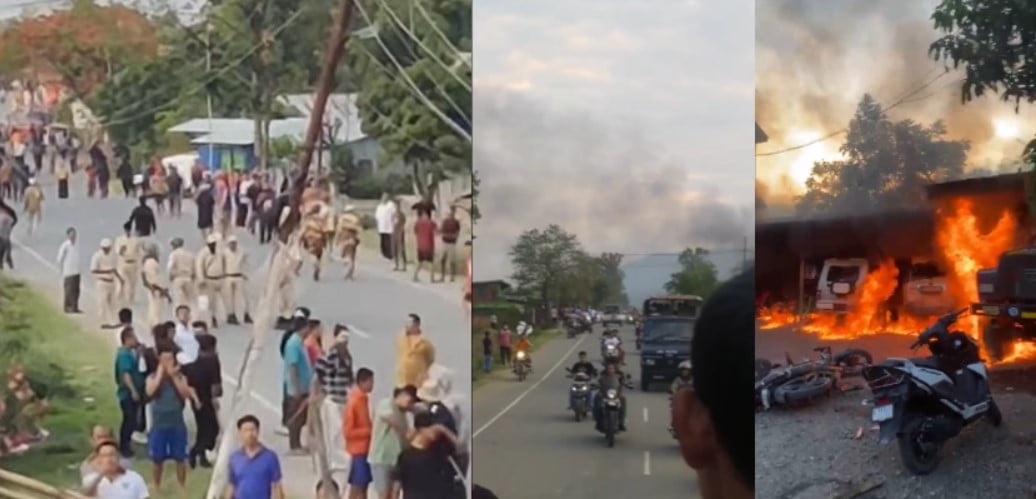
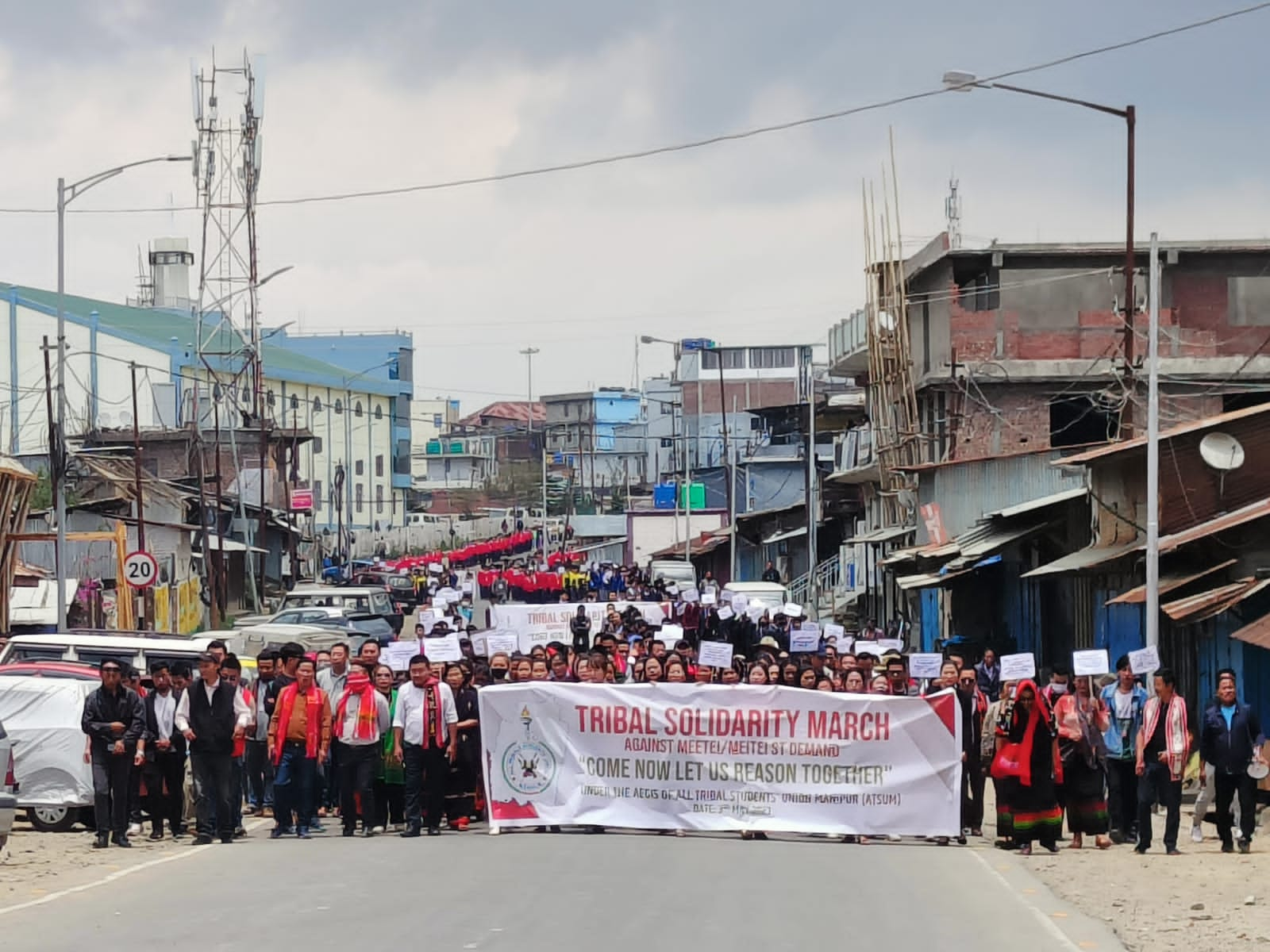
Parts of Manipur, particularly in Churachandpur and Bishnupur districts witnessed palpable tension following a ‘Tribal Solidarity Rally’ called by All Tribal Student’s Union Manipur (ATSUM) in all hill districts of the state. There were reports of violence and clashes between volunteers of different communities. Following the volatile situation, the government of Manipur has  decided to suspend mobile data services in the state.  All mobile service providers are hereby directed to ensure compliance of this order.

An order issued by Commissioner (Home), the Director General of Police, Manipur vide letter No.IC/11(163)/2008-PHQ(Pt)/01422 dated 03-05-2023 reported that, All Tribal Student’s Union Manipur (ATSUM) organized a rally in all hill districts on 03-05-2023 with total shutdown in all hill districts from 6 AM to 4 PM in protest against the demand for inclusion of Meitei/Meetei in Scheduled Tribe (ST) category. During this rally and total shutdown there are reports on incidents like fighting amongst volunteers/youths of different communities and situation is tense and volatile in the districts of Bishnupur and Churachandpur, said the order.

The government order said that some anti-social elements are using social media extensively for transmission of images, hate speech and hate video messages inciting the passions of the public. The social media has also become a handy tool for rumor mongers and is being used to incite general public which might have serious repercussions for the law and order situation in
the State of Manipur.

The state government said that there is an imminent danger of loss of life and/or damage to public/private property, and wide spread disturbances to public tranquillity and communal harmony, as a result of inflammatory material and false rumours, which are being/could be transmitted/circulated to the public through social media/messaging services on mobile services, SMS services and dongle services. In an effort to thwart the “design and activities of anti-national and anti-social elements and to maintain peace and communal harmony and to prevent any loss of life or danger to public/private property, the order said that “it has become necessary to take adequate measures to maintain law and order in public interest, by stopping the spread of disinformation and false rumours, through various social media platform such as Whatsapp, Facebook, Instagram, Twitter etc. on mobile phone and SMS, for facilitating and/or mobilization of mobs of agitators and demonstrators, which can cause loss of life and/or damage to public/private property by indulging in arson/vandalism and other types of violent activities”.

Invoking powers conferred under Rule 2 of Temporary Suspension of Telecom Services (Public Emergency or Public Safety) Rules, 2017, “having satisfied that the above situation is likely to cause serious disturbances to the entire peaceful co-existence of the communities and maintenance of public order”, the state government has ordered the suspension/curbing of mobile data services in the territorial jurisdiction of the State of Manipur. All Mobile Service providers have been directed to ensure compliance of this order which will be in force for the next 5(five) days. Any person found guilty for violation of aforesaid orders will be liable for legal action, said the order.

The post Tension prevails in Manipur; Govt suspends mobile data services after reports of arson, clashes first appeared on The Frontier Manipur.

Read more / Original news source: https://thefrontiermanipur.com/tension-prevails-in-manipur-govt-suspends-mobile-data-services-after-reports-of-arson-clashes/

Tribal Solidarity March held in Ukhrul

Organised by Tangkhul Katamnao Saklong (TKS) under the aegis of All Tribal Students Union Manipur (ATSUM), the rally kickstarted from Gandhi Chowk and wind up at Mini Secretariat Complex Ukhrul. The rally was also participated by representatives from KSO-Ukhrul. TFM Ukhrul Correspondent Tribal Solidarity March under the theme “Come Now Let Us Reason Together” was […]

The post Tribal Solidarity March held in Ukhrul first appeared on The Frontier Manipur.

Organised by Tangkhul Katamnao Saklong (TKS) under the aegis of All Tribal Students Union Manipur (ATSUM), the rally kickstarted from Gandhi Chowk and wind up at Mini Secretariat Complex Ukhrul. The rally was also participated by representatives from KSO-Ukhrul.

TFM Ukhrul Correspondent

Tribal Solidarity March under the theme “Come Now Let Us Reason Together” was held on Wednesday at the Ukhrul District Headquarters.

Organised by Tangkhul Katamnao Saklong (TKS) under the aegis of All Tribal Students Union Manipur (ATSUM), the rally kickstarted from Gandhi Chowk and wind up at Mini Secretariat Complex Ukhrul. The rally was also participated by representatives from KSO-Ukhrul. Those who participated in the rally submitted a memorandum addressed to the President of India through the Deputy Commissioner of Ukhrul.

The memorandum stated that “in the event of the demand for inclusion of Meitei/Meetei community in the ST category gaining momentum with most of the Legislators from the valley including the Hon’ble MP (Rakya Sabha) openly declaring their support without taking into account of the irrationality of the demand and sentiments of the tribal community of the State, the Tangkhul tribe Student’s Union is constrained to submit this representation as a reminder for utmost perusal and intervention as the future of the tribal communities looks bleak and uncertain.”

The memorandum also mentioned that “the Hills, constituting more than 90% of the total geographical areas and about 41% of the total population, have been subjugated, marginalized and deprived by the State Government dominated by the majority valley community for decades. The Industrial Unit Index and Infrastructural Unit Index clearly revealed that the tribals of Manipur have been under extreme form of subjugation and domination in their own land. As such, granting of ST status to the Meitei/Meetei community, who have already enjoyed all the benefits of modern amenities, will further annihilate the minority tribal communities who will ultimately be rendered landless in their own homeland since the Meitei/Meetei community will be free to snatched the lands and grabbed the 31% reservation allocated for the tribals”.

“Moreover, the tribal communities genuinely feel that a separate political system with full autonomy will be the only way out if we are to protect the weak amd marginalized tribal community from the onslaught of the dominant Meitei/Meetei community. Therefore, in the light of the above facts and circumstances, the tribal people of the state called upon your honourable self to help prevent the inclusion of Meitei/Meetei as Scheduled Tribe in the constitution of India. The recognition of Meitei/Meetei as Scheduled Tribe will not only sound a dead knell to the constitution protection of hill tribal communities in the country. It will also be a contempt to the democratic principles of justice amd equality, the foundation on which this great country is built upon. As such, this illogical and illegitimate demand should be prevented at all cost.”, said the memorandum.

It also stated that “it is well known fact that the Meitei/Meetei community, a majority in the state of Manipur categorised as General, Scheduled Caste amd Other Backward Classes is excelling and commanding in all aspects of life. Besides government jobs, their districts are far ahead of other districts in the while Northeast India. According to the table provided, the Infrastructural Development Index of Districts of Manipur (2009), the valley districts namely Imphal West has a CDI Value of 328.96, Imphal East has 245.00, Thoubal has 189.70 and Bishnupur has 151.73. In the hill districts, Senapati has 114.00 CDI Value, Ukhrul has 83.00, Tamenglong has 73.69, Churachandpur has 73.13 and Chandel has 70.49. According to number of Registered Industrila Units, Investment and Production (2005-06), the hill districts has 27 number of Units (SIDO + Non-SIDO) whereas valley districts have 86. Investment in P&M in the hill districts amounts to Rs. 34.19 Lakh as compared to Rs. 154.61 Lakh in the valley districts. Value of production in the hill districts is recorded at Rs. 39.61 and in the valley districts at Rs. 553.65 Lakh.”

The memorandum was jointly signed by Tangkhul Katamnao Saklong (Apex body of Tangkhul Student’s Organisations), Zingtun Tangkhul Katamnao Long (West), Zingsho Katamnao Long (East), Raphei Katamnao Long (North), Tangkhul Aze Katamnao Long (South) and Sagolmang Area Naga Student’s Association.

The rally was participated by Tangkhul Naga Long, Tangkhul Naga Wungnao Long, Tangkhul Shanao Long and Tangkhul Mayar Ngala Long. The Tangkhul Frontal Organisations expressed their full support on the ongoing movement headed hy ATSUM and TKS.

The post Tribal Solidarity March held in Ukhrul first appeared on The Frontier Manipur.

Read more / Original news source: https://thefrontiermanipur.com/tribal-solidarity-march-held-in-ukhrul/

Forest (Conservation) Amendment Bill, 2023

Forest (Conservation) Amendment Bill, 2023 The government introduced the Forest (Conservation) Amendment Bill, 2023 in Lok Sabha and proposed changes to the Forest (Conservation) Act, (FC) 1980. The aim of the proposed changes is to build forest carbon stock by raising plantations. The Bill also seeks to make land available for compensatory afforestation. Read the […]

The post Forest (Conservation) Amendment Bill, 2023 first appeared on The Frontier Manipur.

Forest (Conservation) Amendment Bill, 2023

The government introduced the Forest (Conservation) Amendment Bill, 2023 in Lok Sabha and proposed changes to the Forest (Conservation) Act, (FC) 1980. The aim of the proposed changes is to build forest carbon stock by raising plantations. The Bill also seeks to make land available for compensatory afforestation.

Read the full text here: THE FOREST (CONSERVATION) AMENDMENT BILL, 2023

The post Forest (Conservation) Amendment Bill, 2023 first appeared on The Frontier Manipur.

Read more / Original news source: https://thefrontiermanipur.com/forest-conservation-amendment-bill-2023/

Understanding The Metrics of Heat Waves in South Asia

The prolonged exposure to high temperatures and wet bulb conditions can lead to high risks of heat stroke and a range of physiological impacts. 90 deaths were reported in 2022 due to extreme heat stress.   By Salam Rajesh Climate change has made devastating heat wave impact early in India and Pakistan this year, with […]

The post Understanding The Metrics of Heat Waves in South Asia first appeared on The Frontier Manipur.

The prolonged exposure to high temperatures and wet bulb conditions can lead to high risks of heat stroke and a range of physiological impacts. 90 deaths were reported in 2022 due to extreme heat stress.


By Salam Rajesh

Climate change has made devastating heat wave impact early in India and Pakistan this year, with Pakistan experiencing 30 times more intensity than India, says Dr Friederike Otto of the World Weather Attribution, adding that climate change is likely to increase extreme monsoon rainfall, flooding highly vulnerable communities in Pakistan.

Dr Otto (Senior Lecturer, Grantham Institute for Climate Change and Environment & Co-Founder, World Weather Attribution) was speaking on the topic ‘Understanding Attribution Science: Human induced Climate Change and Heatwaves’ as part of the proceeding of a National Workshop on Heatwaves, Climate Change and its Impacts on Health, Economy and Energy Policies in India at Bengaluru on the 27th of last month, courtesy of Bangalore-based climate strategist group Climate Trends.

Dr Otto’s observation reflects closely to the World Meteorological Organization (WMO)’s warning of a likely spike in temperatures globally this summer, as prelude to the projected El Nino event this year. The year 2015-2016 was recorded as the hottest year in recent history, and this was primarily driven by an El Nino event according to reports. 1500 deaths were reported in the coastal plains of Odisha during 2015 from the intense heat wave that year.

In March, the India Meteorological Department (IMD) had predicted normal monsoon this year but forewarned that an El Nino event can affect the monsoon. Forecasting a 75 percent chance of El Nino in India, the IMD said it could weaken the southwest monsoon and may lead to severe heat waves and droughts in the country – a forewarning that could wreak havoc with the agricultural system in the country, and with a possible backlash on the rural economy.

The forecast for the year has disturbing news for the country wherein compound events of heat waves, cyclones and floods can overlap one another and can cause extensive damages to crops and properties, asserts scientist Dr Roxy Mathew Koll of the Indian Institute of Tropical Meteorology, Pune. Dr Koll was speaking on the subject ‘The dominance of Climate Change on global circulations and its impact on heatwaves and marine heatwaves’.

Bangalore-based climate strategist group Climate Trends stated that “By February-April 2023, most models indicate the return of ENSO-neutral, with a probability of 82%. What is more concerning is the arrival of the dreaded phenomena of El Nino. Climate models are predicting potential return to El Niño by May-July, which coincides with summer monsoon that spans from June to September”.

“During a La Niña, the tropical Pacific soaks up heat like a sponge and builds up the warm water volume. This is the warm water that spills across from the western Pacific to the eastern Pacific during an El Niño. Three consecutive years of La Niña means that the warm water volume is fully loaded and it is likely that the system is ready to give birth to an El Niño. Will it be a strong El Niño like the one during 2015-16? We may get some indications in spring itself,” explains Dr Raghu Murtugudde, Visiting Professor, Earth System Scientist at IITB (Indian Institute of Technology, Bombay) and Emeritus Professor at University of Maryland.

“As for the monsoon itself, if an El Niño state does emerge by summer, then we are more than likely to see a deficit monsoon. A transition from a La Niña winter (which we are in now) to a summer El Niño state tends to produce the largest deficit in the monsoon – of the order of 15%. This implies that the pre-monsoon and monsoon circulations tend to be weaker”. Dr Raghu was speaking on the thematic topic ‘Understanding the variation in weather patterns and the need for early warning systems’.

Kunal Satyarthi (Joint Secretary, National Disaster Management Agency) speaking on the topic ‘The hurdles in building adaptive capacity: A status check on planning and implementation of heat action plans’, stressed on the triple risks of climate hazard, vulnerability and exposure that can cause extensive damage and loss across the different sectors, with the marginalized sections of society more likely to be impacted by the risks involved.

Dr Luke Parsons (Postdoctoral Associate, Duke University) speaking on the subjective matter, ‘Rising wet-bulb temperatures and labour impact’, stressed that as per the Wet Bulb Globe Temperature (WBGT) model, the International Organization for Standardization (ISO 7243) emphasizes that during temperatures reaching above 26 degree Celsius workers are advised to take half hour rest from their heavy work duty.

In case of temperatures reaching above 32-33 degree Celsius the ISO recommends all heavy works should stop. The WBGT model is used in military, occupational health, and athletic events, Dr Luke explains while stating that the model includes temperature, humidity, wind speed, and sun exposure.

The average highest Wet Bulb Globe Temperature for South Asia during 2002 to 2021 was experienced in the north-western parts and the northern plains of India, Pakistan and in Bangladesh, observed Dr Luke, with temperatures reaching 34 degree Celsius and above.

Calculating on the WBGT model, an estimation of the productivity loss across the world reveals a massive global total loss of around 220 billion hours per year, says Dr Luke. Calculating the estimate total labour hours lost per year for different countries, India loses 101 hours per year – almost equivalent to the loss of around 23 million jobs.

Following India is China with 21 hours, Bangladesh with 14, Pakistan with 13, Indonesia with 10, Sudan and Viet Nam with 7, Nigeria and Thailand with 6, and Philippines with 5 hours of labour lost per year respectively.

On this footnote, Climate Trends noted that, “While 2022 set a record with 200 heatwave days in India with some of the hottest months since 1901 and impacting nearly 70% of the country, spring went missing in 2023 as well. February this year was declared the hottest in the last 123 years, the first ever since 1901. March saw heatwave in isolated pockets but April began on a hotter note, with mercury rising every day. State-run India Meteorological Department (IMD) already predicted an increased probability of heatwaves during April and May”.

This comes with a fair indication that unless Heat Action Plans for every States are formulated well in time, things may go from bad to worse. “In a country like India, which is densely populated, the extreme heat hits the poor the hardest who are working as urban or rural labour without access to cooling. The prolonged exposure to high temperatures and wet bulb conditions can lead to high risks of heat stroke and a range of physiological impacts. 90 deaths were reported in 2022 due to extreme heat stress”, forewarns Climate Trends experts.

(The writer looks at environmental stories through the journalistic lens. He can be reached at salamrajesh@rediffmail.com)

The post Understanding The Metrics of Heat Waves in South Asia first appeared on The Frontier Manipur.

Read more / Original news source: https://thefrontiermanipur.com/understanding-the-metrics-of-heat-waves-in-south-asia/

Suspended NIA SP, Inspector extorted huge money by threatening to implicate in false cases in Manipur: FIR

Dy, SP (Admin) NIA, HQ, New Delhi Sudhanshu Shekhar Shukla lodged a complaint with Central Bureau of Investigation for further investigation as NIA enquiry has revealed the possibility of threatening other people/witnesses and extorting a huge amount of money from them TFM Report NIA SP Sh Vishal Garg, who was suspended for bribery in Manipur, […]

The post Suspended NIA SP, Inspector extorted huge money by threatening to implicate in false cases in Manipur: FIR first appeared on The Frontier Manipur.

Dy, SP (Admin) NIA, HQ, New Delhi Sudhanshu Shekhar Shukla lodged a complaint with Central Bureau of Investigation for further investigation as NIA enquiry has revealed the possibility of threatening other people/witnesses and extorting a huge amount of money from them

TFM Report

NIA SP Sh Vishal Garg, who was suspended for bribery in Manipur, had extorted Rs 60 lakh from three persons between May and August 2022, when he was posted in NIA Imphal, by threatening them for falsely implicating them in terror funding cases.

Dy, SP (Admin) NIA, HQ, New Delhi Sudhanshu Shekhar Shukla lodged a complaint with Central Bureau of Investigation for further investigation as NIA enquiry has revealed the possibility of threatening other people/witnesses and extorting a huge amount of money from them.

The Dy SP(Admin) NIA also named NIA inspector Imphal Rajib Khan as accused in his complaint to K Siva Subramani, IPS, SP CBI. AC-II, New Delhi. Following the complaint, the CBI registered an FIR, a copy of which is with The Frontier Manipur, against Sh Vishal Garg, the then SP NIA, Imphal, and Md Rajib Khan, Inspector NIA Imphal, on April 26, 2023.

READ FIR COPY HERE: NIA NIA FIR FIR

They were booked under IPC Section 120-B (criminal conspiracy) and 388 (extortion) and sections 7 and 7a of the Prevention of Corruption Act. They were suspected of Criminal Conspiracy, Obtaining undue advantage, Extortion by threat of accusation of an offence, taking undue advantage to influence public servants by corrupt or illegal means or by exercise of personal influence (Other).

NIA internal enquiry findings

In his complaint, Shukla stated that Information was received from sources that Sh Vishal Garg, the then SP, NIA Branch Office, Imphal, along with Rajib Khan, Inspector, NIA Imphal, was collecting huge amounts of money from residents of the State of Manipur through cut-outs, by threatening them for falsely implicating in NIA Cases After receiving the said information, an internal enquiry was conducted against Sh. Vishal Garg, and Md Rajib Khan.

Shukla said enquiry has revealed that NIA had registered a case vide RC No 08/22/NIA/DLI dated 09.03.2022 with the allegation that the active cadres of terrorist organizations, including but not limited to Kangleipak Communist Party (KCP), United Liberation Front (UNLF) and People’s Revolutionary Party of Kangleipak (PREPAK), all proscribed under UAPA are raising funds in the State of Manipur, in furtherance of their terror activities. The said case was assigned to Sh Tushar Bishat, Inspector/Chief Investigating Officer, NIA Imphal for investigation,

The enquiry further revealed that Sh Vishal Garg, being SP, NIA Imphal Branch was the Head of the Branch and the First Supervisory Officer in NIA RC No. 08/22/NIA/DLI. On the directions of Sh Vashal Garg, Md. Rajib Khan was assisting in the investigation of the said case, he added.

Shukla further said the enquiry has revealed a clear modus operandi of the accused officers wherein certain businessmen/professionals were called for examination, mostly without legal notices. They were threatened with false implications in the NIA case, in the presence of Sh Vishal Garg,. Thereafter, Md Rajib Khan, Inspector would offer help to them in lieu of money. The amount to be paid would be negotiated and payment, in cash, would be received by Md Rajib Khan and thereafter, the matter would be closed.

The enquiry has revealed that using the above modus operandi, Md. Rajib Khan had collected Rs 10 lakh (cash) from Sh Inaocha Takhellambam @Naoba S/o Late Thambalngou, Rs 20 lakh (cash) from Sh N Momon Singh S/o Late Moirangningthou and Rs 30 lakh (cash) from Sh Laishram Hemanta Singh S/o Laishram Modhumangol Singh, all residents of Imphal, during the period from May to August 2022, at the instance of Sh Vishal Garg, he added.

As enquiry has also revealed the possibility of threatening other people/witnesses and extorting huge amounts of money from them, this aspect needs to be also investigated, said the Dy SP(Admin) NIA in his complaint to the CBI.

Urging the CBI to take up needful action, Sukla said the internal enquiry has revealed the indulgence of Sh. Vishal Garg and Md Rajib Khan in corruption and criminal practices.

The CBI SP directed Inspector (AC-II Delhi) Ravi Shankar Kumar to take over the investigation.

Vishal Garg was shifted from Manipur just three months ago in January this year. His successor took over the charge on January 28, 2023. This is the second time that Garg was placed under suspension on charges of corruption. In 2019, Garg, along with two other NIA officials, was placed under suspension for allegedly demanding Rs 2 crore from a Delhi-based businessman for not naming him in a terrorism funding case involving Mumbai attack mastermind Hafiz Saeed.

The post Suspended NIA SP, Inspector extorted huge money by threatening to implicate in false cases in Manipur: FIR first appeared on The Frontier Manipur.

Read more / Original news source: https://thefrontiermanipur.com/suspended-nia-sp-inspector-extorted-huge-money-by-threatening-to-implicate-in-false-cases-in-manipur-fir/

Demand for ST status, Chinks in Biren’s armour and Army vs Police

The BJP in Manipur had gathered more MLAs belonging to other parties to join ranks with them either by joining the party or lending support to the extent that the treasury bench today has 55 members sitting in it against the five in the opposition belonging to the Congress and as such the threat is […]

The post Demand for ST status, Chinks in Biren’s armour and Army vs Police first appeared on The Frontier Manipur.

The BJP in Manipur had gathered more MLAs belonging to other parties to join ranks with them either by joining the party or lending support to the extent that the treasury bench today has 55 members sitting in it against the five in the opposition belonging to the Congress and as such the threat is not real.

By Yambem Laba

The movement for inclusion of the Meetei Tribe in the Scheduled List of tribes of India got a major fillip when the Manipur High Court gave a directive to the Manipur state government to give a response to the query from the Centre pending since 2013. The reply is to be given in one month’s time. The directive came after a petition by the Meetei Tribes Union, Manipur. It might be recalled that the Ministry of Tribal Affairs of the Government of India had sought the recommendation of the Manipur state government to enlist the Meitei in the ST List on 29 May 2013. In that letter, the Union Tribal Ministry had sought a report on the ethnographic and socio-economic survey of the Meitieis but had sat on it.

The Scheduled Demand Committee Manipur (STDCM), who had been in the forefront of the movement for the last 20 years or so, had welcomed the High Court’s directive which was arrived at by a single bench of the Manipur High Court of Acting Chief Justice M V Muralidharan. The STDCM had also garnered signatures of almost all the MLAs of the valley where the Meiteis reside. A Writ of Mandamus was filed by Mutum Churamani, secretary of the Meitei Tribes Union and seven others of the Union against the state of Manipur.

According to the petition, it was asserted that the Census carried by the Government of India since 2011 had been classifying Meeteis as a Tribe of the State and it was thus till Manipur’s merger with the Indian Union on 21 September 1949. Ajoy Pebam, the counsel for the petitioners, argued that the Meeteis lost the tribal tag after signing the Merger Agreement in 1949 and restoration of the status is imperative to preserve the ancestral land, traditions and culture. Various documentary references were annexed to the petition asserting that the Meeteis are still a tribe as per Articles 342(1) and 366(19), and 230(25) of the Indian Constitution and unfortunately, the Meeteis were left out while preparing the ST list under Article 342 of the Constitution, he added. He also added that the Chongthu, Khoibu and Mate tribes were classified as Scheduled Tribes of the Union as per an order of the Gauhati High Court dated 26 May 2003.

Appearing on behalf of the Government of India, the Deputy Solicitor General of India also conceded that the Meeteis lost their tribal status after the state’s merger with the Indian Union. The Court also observed that the Meitei Tribe Union had also submitted a representation to the Union Minister of Tribal Affairs on 18 April 2022 to include the Meeteis in the ST list and the Ministry had forwarded the same to Chief Secretary and again it was swept under the carpet. At this juncture, the counsel for the petitioners asserted that the continued silence of the successive state governments were tantamount to violation of the Right to Equality and Right to Life with Dignity which are enshrined under Articles 14 and 21 of the Constitution of India.

The Court also observed that the state had not given any satisfactory explanation for not submitting the recommendations which the Centre has been seeking for the last 10 years.

Apart from the STDCM and the Meitei Tribe Union, the World Meitei Council and the Kangleipak Kanba Lup (KKL) had been vociferously demanding for the inclusion of the Meeteis in the ST List. The KKL had gone one step further and asked Union Home Minister Amit Shah to decide on the ST Status of the Meeteis before signing the final accord with the rebel Nagas viz the NSCN(I-M) and others.

It should also be on record that whilst the Constitution was being prepared, the then Constituent Assembly of India had deputed the late Gopinath Bordoloi of Assam and Stanley Nicholas Roy of the then Khasi and Jaintia Hills (now Meghalaya) to Manipur to seek the views of the Meeteis on the question of being included in the ST list. They, however, did not meet the public, but had just met three personalities, two Meitei Brahmins amongst them. They were Dwijamani Dev Sharma, Krishna Mohan Singh and another one, who were fanatical Hindus. They asserted that the Hindus, who are the descendants of the Aryans, be classified as Tribals. This is how the Meeteis had missed the bus in 1950 when India adopted the Constitution.

However, it needs to be pointed out that the then RK Ranbir government in 1991 had imposed prohibition in Manipur following a ban on sale of liquor in Manipur by the proscribed People’s Liberation Army (PLA) of Manipur. Likewise, the reluctance of the successive governments of Manipur, beginning from 2013 till now, must have been reluctant to forward the recommendation of the inclusion of the Meeteis in the ST list because of the opposition of the outlawed and oldest insurgent group in Manipur, the United National Liberation Front (UNLF), had been against the idea of the Meeteis being classified as a Scheduled Tribe. They first launched their tirade through their Students and Civil Society Organisations who are their fronts in the public.

Five years ago, I was summoned to the CHQ of the UNLF in Myanmar as I had been quite vocal and had written in favour of the demand of the STDCM. I was asked to explain my position on it. When asked as to whether they had openly declared their stance against it, the reply was “No”. Then the issue was settled – if one can assume that statements issued by their fronts can be assumed to be that of the UNLF. Then my interrogators remained silent. Two years later, the UNLF in their annual statement announced the UNLF’s stance against the demand of the Meeties of being classified as a Scheduled Tribe as it negates the existence of Manipur, particularly the Meeteis’ 2000 years of existence as a nation state and civilisation. The suzerainty of the Meitei Kings had once upon a time spanned from the banks of the Chindwin in Myanmar to that of the Surma in present day Bangladesh. But after joining India, the Meeteis are now confined to a mere 9 per cent of the state’s total geographical area. Their future is bleak as they cannot settle down in the remaining 90 per cent of the state’s area which are scheduled tribal lands belonging to the various scheduled tribes of Manipur while the reverse is not true. However, the question is, if the Biren Government is not afraid to defy the PLAs diktat of prohibition and had recently lifted prohibition from Manipur, why it is afraid to stand against the UNLF stance against the ST tag for the Meeteis. But now with the directive from the High Court, the reply might be coming shortly.

CHINKS IN CM BIREN’S ARMOUR

While pondering over the High Court’s directive, the Biren Ministry received a jolt. It began with former minister and now MLA from the Heirok Assembly Constituency and Advisor to the Chief Minister Th Radheshyam resigning from his post, citing lack of any responsibility being given to him. He said he did not know how to answer the questions raised by his supporters when they urged him to take up an issue with the CM. He also said that while the CM was talking about environmental protection, his own younger brother was allegedly involved in timber trade. His move was followed by former minister and MLA from Langthabal Assembly Constituency and Chairman of the Manipur Tourism Corporation Karam Shyam Singh, who also resigned from his post.

He also cited not being not only being given any responsibilities and power, and of being humiliated publicly on numerous occasions by the Chief Minister. Then the third to throw in his towel was Paonam Brojen from Wangjing Assembly Constituency and was holding the post of Chairman of the Manipur Development Society (MDS). He went public as to how the Chief Minister had dumped him after, upon his advice, his workers were made to engage in road constructions in his constituency. Then suddenly, he was informed that the work orders for the already constructed works had been cancelled. His workers, having expended about Rs 6 crore in the process, are now fuming and Brojen now says that he is not able to stay at his home as he cannot face his workers and give them an explanation.

According to sources, there are about 15 BJP MLAs reportedly camping in Delhi demanding the replacement of N Biren Singh as the Chief Minister. Although the BJP returned 32 in the House of 60 at the last hustings, only six MLAs out of the 32 when Biren Singh was elected as the leader of the BJP Legislative Party last year. BJP Big-wig Sambit Patra had orchestrated the drama and he had reportedly/allegedly asked Govindas Konthoujam, who had joined the BJP after having resigned as the President of the Congress in Manipur, on the eve of the elections last year to propose Biren Singh’s name as the leader. Then another tribal MLA seconded the proposal and he became Chief Minister.

The BJP on the other hand had gathered more MLAs belonging to other parties to join ranks with them either by joining the BJP or lending support to the extent that the treasury bench today has 55 members sitting in it against the five in the opposition belonging to the Congress and as such the threat is not real. But the fact remains that dissent within the Party has already surfaced against the Chief Minister and it is a point to be noted.

ARMY VERSUS POLICE

In the meantime, one Manipuri army officer Major Thokchom Bhagatjit Singh belonging to 2nd Madras Regiment had posted on social media remarks critical of Chief Minister N Biren Singh. His elders back home, aware of the sensitivity of CM Biren on social media posts, had advised him to delete his post. CM Biren had earlier slapped the National Security Act on numerous occasions for such posts criticising him or his government directly or indirectly. So the young Major deleted the post from the account which was opened under another name and he returned home on leave. That was when the Sekmai Police of the Imphal West District came and picked him upon intimation from the Cyber Crime unit of the Manipur Police. This arrest was made properly as an arrest memo was issued and an FIR registered and he was produced before the Magistrate 24 hours after he was taken into custody. This was on 13 April, earlier this month. Then on the same day, one Md. Aksar Ali, president of the BJP’s Minority Morcha, filed another complaint against the Major at the Porompat Police Station in Imphal East. He was again arrested, but this time no arrest memos were issued and no FIR was lodged, yet he was kept in the lockup for 18 hours. That was when the army stepped in and they came to the Porompat Police Station and told the police that they can arrest an army man on charges of rape, murder or culpable homicide not amounting to murder, and not for any charges including posts on social media. The police then made a hasty retreat. The officer may be facing a court of inquiry from his commanding officer but not from the police or civil court.

The CM apparently has an army of cyber warriors who will troll anyone posting against him or the government on social media. But this time it had bitten off more than it could chew, it seems.

(The writer is a senior journalist at The Statesman. This article was first published by The Statesman. All opinions expressed here are the writer’s own and do not represent the views of TFM)

The post Demand for ST status, Chinks in Biren’s armour and Army vs Police first appeared on The Frontier Manipur.

Read more / Original news source: https://thefrontiermanipur.com/demand-for-st-status-chinks-in-birens-armour-and-army-vs-police/

Violence rages in Churachandpur; CM forced to cancel visit; Situation under control now, says CM

Normal life was disrupted in the district due to the 8-hour total shutdown called by the Indigenous Tribal Leaders Forum (ITLF). Biren said that stern action will be taken against the perpetrators who destroyed public property. TFM Report Churachandpur has been on the boil with a civil society organisation imposing an eight-hour total shutdown in […]

The post Violence rages in Churachandpur; CM forced to cancel visit; Situation under control now, says CM first appeared on The Frontier Manipur.

Normal life was disrupted in the district due to the 8-hour total shutdown called by the Indigenous Tribal Leaders Forum (ITLF). Biren said that stern action will be taken against the perpetrators who destroyed public property.

TFM Report

Churachandpur has been on the boil with a civil society organisation imposing an eight-hour total shutdown in protest against the accumulative land and forest survey carried out by the state government ahead of chief minister N Biren Singh’s scheduled visit to the district on Friday. On Saturday, the chief minister said that the situation is under control now and normalcy has been restored in Churachandpur.

The district witnessed a violent protest since Thursday night forcing the chief minister to cancel his visit after shutdown supporters clashed with the police near the venue, where the chief minister was to address a public meeting.

Normal life was disrupted in the district due to the 8-hour total shutdown called by the Indigenous Tribal Leaders Forum (ITLF).

Despite the shutdown call, state machinery put in place preparations for the chief minister’s visit on Friday by deploying a large contingent of state and paramilitary forces. The chief minister was to bring new equipment for the open gym that was destroyed by a mob the previous night.

A significant number of people including government officials were preparing to roll out the red carpet for the Chief Minister at PT sports complex when a large number of shutdown supporters tried to storm the venue. Police resorted to firing tear gas to disperse the mob and in retaliation, the agitators pelted stones. At least one policeman was injured in the attack and two protestors were arrested. Considering the volatile situation, authorities had to cancel the event.

In response to the shutdown call, protestors came out in the streets and burned tyres to block roads.

All business establishments and educational institutions remained closed. Public transportation stopped plying, during the shutdown period.

The Lamka town, which is the district headquarter of Churachandpur district wore a deserted look. Heavy security deployment to prevent any untoward incidents.

The Forum had also announced non-cooperation with any government programme in the districts. The ITLF also expressed discontentment towards the government for demolishing three churches in Imphal recently.

Meanwhile, Chief Minister N Biren Singh said that stern action will be taken against the perpetrators who destroyed public property. “No one can hamper any kind of developmental work, those who are involved in such anti-development and anti-social activities will not spare. It is the BJP government’s commitment,” said Biren.

He further said his planned visit to Churachandpur was cancelled at the request of the local MLA, LM Khaute citing the tense situation in the district. He was invited by the MLA to inaugurate the gym.

“The event was not organised by the government but to mark the one-year anniversary of the local MLA Khaute. The MLA invited me for the open gym inauguration”, said Biren.

It may be noted that a mob destroyed the gym and also burned chairs kept at the venue of the public rally late Thursday night.

Following this, the district authority shut down internet services in Churachandpur and its neigbouring district Pherzawl for five days. The district authority also clamped section 144 of CrPC to curb violence in Lamka town.

The mobile internet shutdown affected many people as a medium of exchange is made through the internet in many areas, particularly in the town.

However, the scenario is changing with nearly 30 per cent having broadband connection and many people are using Wi Fi.

A Curfew under section 144 of CrPC was cramped at New Lamka area of Churachandpur

The miscreants also set ablaze chairs, sound systems, banners, etc at Sadbhavna Mandap ,New Lamka where preparations for the thanksgiving programme on the 1st anniversary of the MLA of Churachandpur AC Mr LM Khaute were on.

Meanwhile, the MLA of Churachandpur AC Mr LM Khaute addressed a press conference in the afternoon at his residence saying that as a mark of respect to the people’s genuine displeasure against the government. He said he had asked the CM not to come as the situation doesn’t permit and announced the cancellation of his Thanksgiving programme.

He appealed to the people to maintain peace and expressed his trust in the peace-loving people of his constituency that normalcy will prevail.

Meanwhile, the Information and Publicity dept. of ITLF said that the total shutdown imposed by them between 8 am to 4 pm was a success and thanked the General public and the CSOs for their cooperation. The shutdown already served its purpose, it added.

The post Violence rages in Churachandpur; CM forced to cancel visit; Situation under control now, says CM first appeared on The Frontier Manipur.

Read more / Original news source: https://thefrontiermanipur.com/violence-rages-in-churachandpur-cm-forced-to-cancel-visit-situation-under-control-now-says-cm/

ST Demand Issue: Positive discrimination, affirmative action and the cracks within

India’s reservation policy has spawned forms of conflicting categories of the ‘exploiter’ and the ‘exploited’, the ‘dominant’ and the ‘subservient’ as if these binaries exist in a permanent cycle sans the dynamics of wresting political power at play. By Dhiren A. Sadokpam In recent times, the political elites of three primary ethnic groups in Manipur […]

The post ST Demand Issue: Positive discrimination, affirmative action and the cracks within first appeared on The Frontier Manipur.

India’s reservation policy has spawned forms of conflicting categories of the ‘exploiter’ and the ‘exploited’, the ‘dominant’ and the ‘subservient’ as if these binaries exist in a permanent cycle sans the dynamics of wresting political power at play.

By Dhiren A. Sadokpam

In recent times, the political elites of three primary ethnic groups in Manipur are caught in a whirlpool of anxiety propelled by palpable dissonance in political objectives. This anxiety is not necessarily triggered by the differences in speculative autonomy-demands or even demands based on administrative separatism.

The main anxiety has been caused by the way how the communities have effectively understood the political ideas behind positive discrimination, affirmative action or what in the Indian subcontinent is being referred to as the reservation policy of communities that have apparently lagged behind in holistic development. The most recent play-out that has triggered the spells of anxiety and tension has been the demand of a community considered advanced in comparison to its neighbours, to be included in the Scheduled List of Tribes in India.

While the proponents of the demand and those opposing the same have resorted to socio-political and historical reasoning, both the parties seem to have skipped re-looking at either redefining or refining the concepts they would love to toy with. One is not sure if both the conflicting parties have understood that India’s reservation policy presupposes a social fact – centuries of oppression of one group by another. This presupposition assumes a determinate but constant ‘unchanging oppressor and oppressed’ and ‘advanced’ and ‘backward’ communities. The ‘constant’ is supposedly created by a social order that determined identities of each castes, communities and tribes. This has spawned forms of conflicting categories of the ‘exploiter’ and the ‘exploited’, the ‘dominant’ and the ‘subservient’ as if these binaries exist in a permanent cycle in all societies sans the dynamics of wresting political power at play.

For the mainland India, these terms are defined in relation to the hereditary caste order whereas for Northeast India, the same has been defined by amorphous understandings of communities guided by colonial agenda of the British whose administrators first chose to categorize people from the mixed-prism of the caste order or an anthropological understanding of a system which they considered was durable.

It is against this backdrop that United Naga Council, Manipur (UNC) and the Kuki Inpi Manipur (KIM) have raised objections to the Manipur High Court’s directive to the Government of Manipur to send its recommendation for the inclusion of Meetei Community in the list of Scheduled list of Tribes to the Government of India. The directive of the high court was passed on March 27.

Strident Voices and Social Tension

The UNC stated that “the Meitei/Meetei community of Manipur is an advanced community of India” with their language, Manipuri (Meiteilon) listed in the Eight Schedule to the constitution of India.

“They are already protected under Constitution of India and categorized as (i) General (ii) Other Backward Classes (OBC) and (iii) Schedule Caste (SC),” said the UNC.

UNC termed it irrational that the High Court of Manipur directed the Government of Manipur to recommend for inclusion of Meitei/Meetei community in the Scheduled Tribe (ST) list of India, “negating the sole objective of scheduling group of people for protective discrimination as ST in the Constitution of India”. The Naga body has strongly condemned and called the high court order “inane” for making “such imbecilic recommendation despite strong opposition from Scheduled tribes of the state”.

The common refrain and rationale behind the objections raised by both UNC and KIM has been rubbished by the proponents of those demanding a Scheduled Tribe status for the Meetei community. One strident voice has been that of the Kangleipak Kanba Lup (KKL). KKL has critiqued the objections in their own characteristic way stating that the demand for the inclusion of Meetei in the Scheduled list of Tribes in the Constitution of India is not aimed at grabbing “jobs” either from the Naga or Kuki communities of Manipur. It has asserted that the demand is based on safeguarding their “little bit of land” now confined to less than 2000 square kilometers out of the 20,000 square kilometers of the entire state of Manipur.

The KKL has made it clear that the Naga and the Kuki communities need not fear about grabbing “their job reservation quotas currently enforced in Manipur which will remain status quo”. The organization also unequivocally asserted that the UNC and KIM have “no birth right” to deny any other scheduled tribes of India that job opportunity.

The KKL had a message for the UNC too. It reiterated that the Manipuri Language being classified as scheduled languages of India under the Eight Schedule has nothing to do with the classification of the Meetei as a scheduled tribe of India. “Anyway Manipuri language is not confined to the Meeteis only but serves as a Lingua Franca amongst all the tribal communities of Manipur be it between the Nagas and the Kukis but amongst their various sub-tribes also”, it pointed out.

Moreover, the UNC has also been reminded that it was Th Muivah, the top National Socialist Council of Nagalim (NSCN-IM) leader who had stated that “only the Nagas and the Meeteis are the indigenous peoples” of Manipur. KKL asked, “So what is the idea of joining hands with the Kukis to block the way for the survival of the Meeteis under the Indian Constitution”. To the question of Meeteis being more advanced than the other tribes of Manipur, KKL asserted that it has nothing to do with genealogy but “mode of production” experienced by the communities.

The Meetei community began to practice settled agriculture and had more time to concentrate on arts, culture and literature while the hill tribes hitherto used to follow a different form of agriculture “before switching to poppy plantation” in recent times that had made them “all become rich”, said KKL.

The organization winded up their statement on a harsher note stating that it would be wrong on the part of both the Naga and the Kuki communities to consider the Meetei community as their “common enemy or else will be constrained to  oppose every move or demand made by any tribal group either Naga or Kuki”.

The exchange of statements may not lead towards a reconciliation on the sensitive topic. As the articulation of the issue by those supporting the demand for inclusion of Meetei in Scheduled Tribe list up the ante on their movement, the objections by Naga and Kuki tribal bodies may get shriller by the day.

Empowerment and Social Justice

In all these voices, what has been missed is a dispassionate inter-community/ethnic group deliberation on what would be the best option for all communities to progress and under what protective or empowering mechanism. While the fact of discrimination cannot be denied in one’s everyday experience, ethnicization or communalization of the issue would only create unbridgeable distance between communities. Under such circumstances, one will not be able to project the fact that there are no permanent oppressor and permanent oppressed or instil the fact that the idea of permanent and constant binaries will lead to over-generalization of a theoretical framework to achieve quick practical results.

What is of utmost importance now is truly and honestly grasping the fact that emancipating the socially underprivileged and the marginalized irrespective of community or tribal affiliation or within the same community is a move towards social justice. While doing so, one should not forget that the idea of empowerment of the individual has a far greater value and virtue than a protective mechanism that tends to perpetuate redundant binaries or historical contradictions.

Here, it should also be noted that India’s reservation policy emerged out of a deep flaw in understanding the complex relationship between the conceptions of the ‘cultural/social’ and the ‘economic’. Having said this, elsewhere, this writer had also argued that the stereotyping of the Meetei as a Hindu society both within Manipur and outside, in the image of mainland Hindu ethos and practices has manufactured the idea of the ‘constant exploiter’ and the ‘constant exploited’ in Manipur.

While Hinduised Meeteis have been identified with the former, all other non-Hindu communities are shown as ‘exploited’. Such is the handiwork of those who harp on the ‘politics of divide’ and benefit from it; and endorsed by the ‘ignorant other’ who is happy to own up anything that comes closer to the intolerant and imagined pan-Indian vision.

(Dhiren A. Sadokpam is Editor-in-Chief, The Frontier Manipur. This article was first published by EastMojo under the title ‘ST demand for Meetei: First, acknowledge the cracks within’)


The post ST Demand Issue: Positive discrimination, affirmative action and the cracks within first appeared on The Frontier Manipur.

Read more / Original news source: https://thefrontiermanipur.com/st-demand-issue-positive-discrimination-affirmative-action-and-the-cracks-within/