

India Commits to Stronger Climate Action with NDC 3.0

India reinforces global climate stance with calibrated targets aligned to Viksit Bharat 2047 vision. Cabinet clears updated climate commitments aiming 60% non-fossil power capacity and expanded carbon sinks by 2035. New framework balances development needs with decarbonisation amid West Asia conflict and energy security concerns By Salam Rajesh The Government of India recently took a […]

The post India Commits to Stronger Climate Action with NDC 3.0 first appeared on The Frontier Manipur.

India reinforces global climate stance with calibrated targets aligned to Viksit Bharat 2047 vision. Cabinet clears updated climate commitments aiming 60% non-fossil power capacity and expanded carbon sinks by 2035. New framework balances development needs with decarbonisation amid West Asia conflict and energy security concerns

By Salam Rajesh

The Government of India recently took a significant step forward in its climate commitments with the Cabinet, chaired by Prime Minister Narendra Modi, approving the country’s updated Nationally Determined Contributions (NDCs).

Analysts say although delayed, the third institution of the NDCs comes at a time when the global supply chains and energy security have been severely disrupted owing to the conflict in West Asia.

India’s NDC 3.0 builds on a strong track record, where earlier the country had enhanced its Nationally Determined Contributions and met key targets well ahead of schedule, including achieving over 50% non-fossil power capacity nearly five years before the 2030 deadline.

A Press Information Bureau (PIB) release said the new NDC framework sets out a roadmap for the target years 2033-2035, anchored in the principles of the Common but Differentiated Responsibilities (CBDR-RC) and the vision of Viksit Bharat 2047.

The framework targets a 47% reduction in emission intensity, expansion of non-fossil power capacity to 60%, and a significant increase in carbon sinks up to 4 billion tons, the PIB report said.

India’s Central Electricity Authority estimates in the National Power Adequacy Plan that by 2035-36, nearly 70% of electricity capacity will come from non-fossil sources. However, its formal commitment as approved under NDC 3.0 under the UN framework sets a lower target of 60%.

Similarly, India’s target of reducing emission intensity to 47% by 2035 reflects a calibrated approach, the release said noting that as a fast-growing and emerging economy, India’s intensity-based target balances development needs with climate ambition.

In the current geopolitical context of supply chain disruptions and energy security concerns, this target provides flexibility while remaining aligned with its broader aspirational goals and long-term net-zero pathway.

The announcement comes amid an ongoing conflict in West Asia, which has disrupted energy supply chains and has highlighted risks of the global economy’s dependence on fossil fuels.

In this context, India’s demonstrated stance on decarbonizing its energy and transport systems signals continuity. The country, which had met its past climate commitments ahead of schedule, also holds the BRICS chair this year. The commitments announced raise expectations of a BRICS-led focus on de-risking supply chains through decarbonisation under India’s presidency, the PIB release noted.

The strategy underpinned by India has emphasized climate-resilient infrastructure, green industrial pathways, behavioral shifts and the development of low-cost green finance and advanced research and development ecosystems, reflecting an economy-wide approach to deep decarbonisation, it said.

This assessment comes in terms of the country’s achievement in 36% reduction in emission intensity of GDP achieved between 2005-2020, where 52.57% of India’s power generation capacity is from clean, non-fossil sources and was achieved 5 years ahead of the 2030 schedule.

2.3 billion tons of carbon sink was created through forests and trees, indicating India’s NDC submitted in 2015 had the target of achieving 33 to 35% reduction in the emissions intensity of GDP and 40% share of non-fossil resources based electric power installed capacity by 2030, both of which were met, 11 years and 9 years ahead of the committed timelines respectively, the PIB statement said.

Outlining the vision for NDC 3.0, the government press statement said the qualitative goals are intended to embed sustainability into everyday life and governance systems, promote climate-resilient development pathways, and enable a just and inclusive transition for all sections of the society.

Eight major goals for 2033-2035, aligned with CBDR-RC and Viksit Bharat 2047, were announced. These include Goal 1: Target reduction of emission intensity to 47% by 2035, Goal 2: Achieve 60% of cumulative installed electricity capacity non-fossil power capacity by 2035.

Goal 3 seeks increase in carbon sink from 2.3 billion tons to 3.5-4.0 billion tons through tree and plantation cover, while Goal 4 targets climate-friendly and cleaner path of economic development, citing the example of the ongoing investments in electrification of the Railways.

Goal 5 looks at the resilient infrastructure to combat climate change effects like sudden rain and cloud bursts, while Goal 6 seeks in promoting the Prime Minister’s ‘Lifestyle for Environment (LiFE)’ mission.

Goal 7 looks at developing low-cost, long-term finance mechanisms for green energy, and Goal 8 seeks capacity building and research and development, with focus on cutting edge technology and international collaborations.

Lauri Myllyvirta, Lead Analyst and Co-Founder, Centre for Research on Energy and Clean Air, reflects that India’s new 2035 climate targets underestimate the country’s potential for transformative clean energy growth.

Under current plans, the target of 60% clean power capacity will be achieved before 2030, rather than by 2035, Lauri reflected, noting that continuing the current clean energy growth at rates already achieved in 2024-25 would enable India to peak power sector emissions well before 2030 and significantly slow down its CO2 emission growth rates.

Yet, the carbon intensity target announced allows for an acceleration of emissions growth compared with past rates if GDP growth is at target. India’s booming clean energy industry is highly likely to deliver much faster progress than policymakers were prepared to commit to, she said.

Deliberating on the issue, Aarti Khosla, Director, Climate Trends noted that India’s updated NDC targets reflect a realistic yet forward-looking climate strategy, especially coming at a time when the global order is fractured and the future of energy policy is very uncertain.

Releasing the NDC at this juncture reinforces that as a country India respects multilateralism and equity, both aspects found wanting in the world today, she noted.

A 47% reduction in emission intensity by 2035, alongside achieving 60% non-fossil capacity, signals continuity in ambition while remaining grounded in domestic, developmental and geopolitical realities.

The fact that India has already crossed 50% non-fossil capacity underscores the credibility of this trajectory, and equally important is the expansion of carbon sinks, which reinforces the country’s commitment to nature-based solutions, Aarti emphasized.

In a global context where attention is increasingly shifting toward energy security and climate finance flows are under strain, India’s approach stands out for its balance. It prioritizes domestic capability, resilience, and long-term sustainability while continuing to advance its climate commitments, a positive sign for the entire global south and the BRICS, especially with India chairing the grouping annual meet this year, she observed.

The post India Commits to Stronger Climate Action with NDC 3.0 first appeared on The Frontier Manipur.

Read more / Original news source: https://thefrontiermanipur.com/india-commits-to-stronger-climate-action-with-ndc-3-0/
Adaptation Matters, ICJ On Climate Change

Landmark 2025 advisory opinion reframes climate adaptation as a due diligence obligation, urging states to act on science, equity, and global cooperation. Non-binding yet authoritative ruling signals legal consequences for inaction, placing climate resilience at the heart of international law. By Salam Rajesh In July of 2025, the International Court of Justice (ICJ) delivered a […]

The post Adaptation Matters, ICJ On Climate Change first appeared on The Frontier Manipur.

Landmark 2025 advisory opinion reframes climate adaptation as a due diligence obligation, urging states to act on science, equity, and global cooperation. Non-binding yet authoritative ruling signals legal consequences for inaction, placing climate resilience at the heart of international law.

By Salam Rajesh

In July of 2025, the International Court of Justice (ICJ) delivered a landmark Advisory Opinion on the Obligations of States in Respect of Climate Change.

The ICJ’s Advisory Opinion provides authoritative legal guidance on Member States’ obligations to address climate change and prevent significant harm to vulnerable countries and communities across the globe.

While the ICJ’s Advisory Opinion is non-binding, it makes clear that failure to act can trigger legal consequences. States require timely and accessible analysis to understand their legal obligations and the consequences of breaching them.

On understanding why the ICJ’s Advisory Opinion matters for climate change adaptation, the International Institute for Sustainable Development (IISD) in its analysis suggests that climate change adaptation is one of the core pillars of the international climate regime.

With reference to the Intergovernmental Panel on Climate Change (IPCC, 2022), climate change adaptation is the process of preparing, and adjusting to, for actual or expected impacts associated with climate change.

Fundamentally, adaptation is about protecting people in an uncertain future and making communities, economies, and ecosystems more resilient to a changing climate.

The ICJ’s Advisory Opinion develops from the perspective that climate change is now a force to be reckoned with and that adaptation can no longer be viewed as solely a domestic policy choice, but as a binding obligation under international law and assessed against a standard of due diligence.

This means that for all practical purposes, all countries must use their best efforts to engage in adaptation planning and implementation, based on the best available science, and to undertake precautionary and forward-looking measures, continuously adjusting their responses as climate risks evolve.

The ICJ noted with concern that countries continue to have discretion over how adaptation is planned and implemented, based on their risk contexts and national circumstances, and provided that such efforts aim to prevent and address foreseeable climate harm.

With due diligence to the ICJ’s Advisory Opinion, national adaptation plans, policies and strategies, therefore, take on a renewed significance as instruments through which individual countries may demonstrate their commitments to, and compliance with international laws.

This runs in conjunction to the UAE Framework for Global Climate Resilience (UNFCCC, 2023) whereupon countries need to formulate and submit their national adaptation plans, policies and strategies, and progress in implementing them by the target year 2030.

The IISD analysis stressed that all developed countries have a binding obligation to provide and mobilize adaptation finance, technology transfer and capacity building for developing countries, in the context of the New Collective Quantified Goal on Climate Finance and the Mutirão decision’s call to at least triple adaptation finance by the year 2035.

All countries, too, have the obligation to cooperate with each other on adaptation knowledge sharing, it stated.

The IISD analysis further emphasized that a country-driven, gender-responsive, participatory and fully transparent approach that integrates human rights considerations and pays particular attention to vulnerable people, places and ecosystems is integral to effective adaptation planning and implementation that yield equitable benefits for people of all backgrounds.

It cautioned that a fragmented approach undermines adaptation outcomes, whereupon obligations under international human rights law are interrelated with countries’ adaptation obligations, and they all form part of the legal context against which adaptation efforts are assessed.

Integrated and synergistic approaches to address the climate and biodiversity crises and land degradation strengthen adaptation, biodiversity and land degradation neutrality outcomes, it stated.

The ICJ observed that under the UNFCCC and the Paris Agreement, respective parties have procedural obligations to engage in adaptation planning processes and the implementation of adaptation actions (ICJ, 2025, paras. 255-257).

This would necessitate the formulation, submission and regular updating of national adaptation plans, policies or strategies, the ICJ noted, while stressing that the assessment of climate change impacts and vulnerability, and the monitoring, evaluation and learning from adaptation actions is highly essential.

The ICJ further stressed the need for integration of climate change considerations in relevant social, economic and environmental policies and actions, while employing appropriate methods to minimize adverse effects that adaptation projects or measures could have on the economy, public health, and the quality of the environment.

Importantly, it emphasized on the strengthening of international cooperation to enhance adaptation actions and support.

The ICJ Advisory Opinion noted that a standard of due diligence would be used to assess the parties’ fulfillment of their adaptation obligations (ICJ, 2025, para. 258). This means that, in terms of adaptation, acting with due diligence requires the parties to use their best efforts to enact appropriate adaptation measures, in a timely manner, to reduce the risk of significant harm occurring due to climate change impacts.

The ICJ called on parties to base their adaptation planning and implementation, such as the national adaptation plan (NAP) process, on the best available science and technological information, such as, availing the information, knowledge and tools from the IPCC and other international rules, standards, guidelines, and best practices.

It advised parties to take precautionary measures and enact forward-looking policies, such as integrating climate risk considerations in development policies and plans, or continuously updating building codes and infrastructure standards to reflect climate realities.

The ICJ called on parties to ensure continuous improvement by following the dimensions of the iterative adaptation cycle (defined by the UAE Framework for Global Climate Resilience as impact, vulnerability, and risk assessments; planning; implementation; monitoring, evaluation and learning; and iteration of these four steps) as the due diligence standard.

It urged parties to follow a country-driven, gender-responsive, participatory and fully transparent approach to adaptation planning and implementation in achieving the goals enshrined in the Paris Agreement and other climate protocols.

The analysis appears in the International Institute for Sustainable Development (IISD)’s briefing note: ‘Unpacking the implications of the ICJ Advisory Opinion on Climate Change’, published earlier this month.


The post Adaptation Matters, ICJ On Climate Change first appeared on The Frontier Manipur.

Read more / Original news source: https://thefrontiermanipur.com/adaptation-matters-icj-on-climate-change/

Climate Extremes Batter Hindu Kush Himalaya, Northeast Feels the Heat

ICIMOD report links rising disasters to funding gaps as Manipur reels under hailstorms, floods, and landslides. Mountain ecosystems and rural livelihoods at tipping point By Salam Rajesh The Hindu Kush Himalaya region faces escalating climate risks, including glacial melt, biodiversity loss, and extreme weather events, posing severe threats to ecosystems, livelihoods, and the well-being of […]

The post Climate Extremes Batter Hindu Kush Himalaya, Northeast Feels the Heat first appeared on The Frontier Manipur.

ICIMOD report links rising disasters to funding gaps as Manipur reels under hailstorms, floods, and landslides. Mountain ecosystems and rural livelihoods at tipping point

By Salam Rajesh

The Hindu Kush Himalaya region faces escalating climate risks, including glacial melt, biodiversity loss, and extreme weather events, posing severe threats to ecosystems, livelihoods, and the well-being of billions dependent on its resources.

This ominous assessment is an emancipation of studies carried out by the Kathmandu-based International Centre for Integrated Mountain Development (ICIMOD), as is presented in its publication ‘Climate Finance Synthesis Report: Needs, Flows and Gaps in the HKH countries (2025)’.

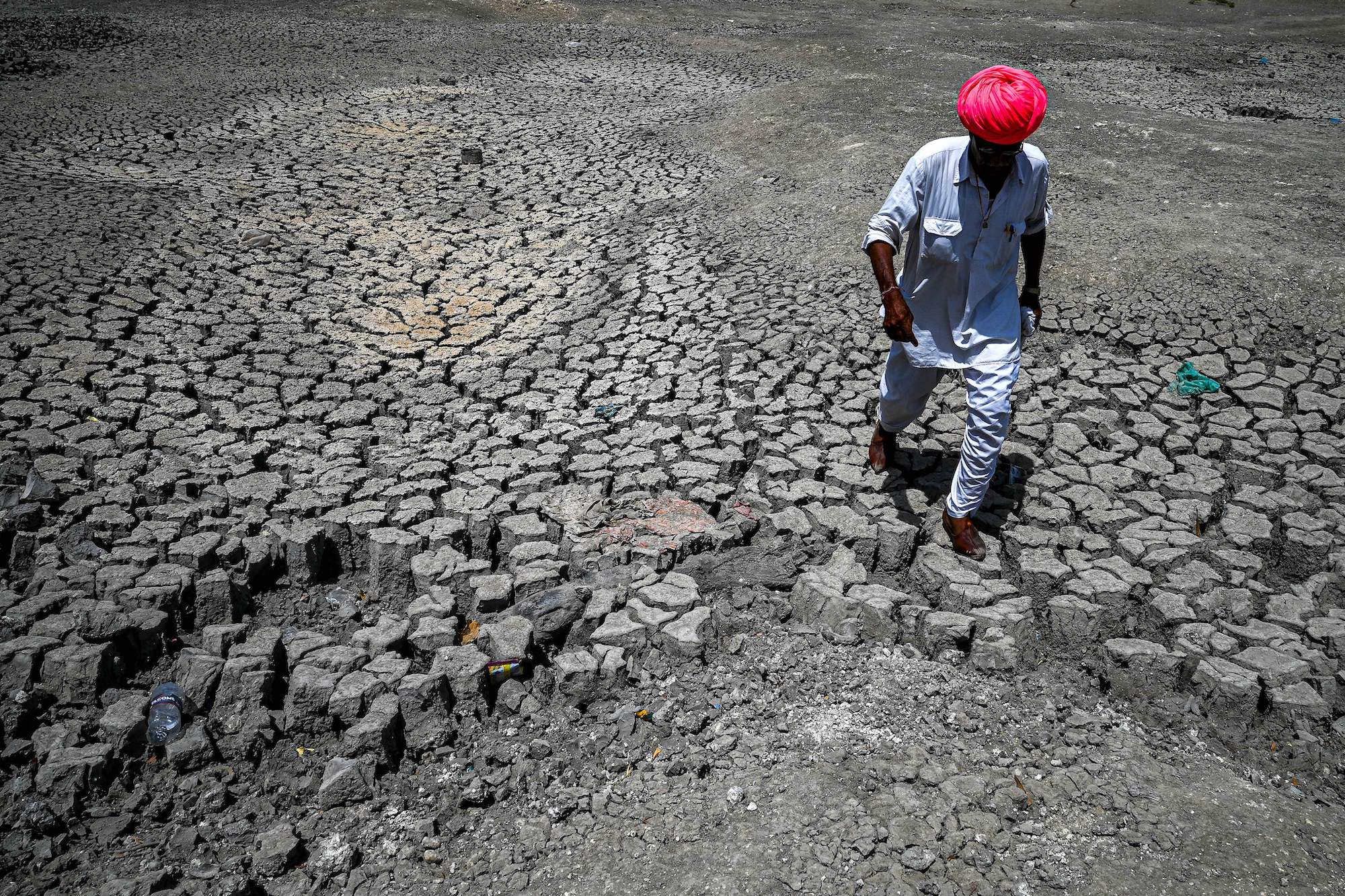
The Hindu Kush Himalaya (HKH) is one of the world’s most climate-vulnerable regions, facing growing threats from extreme weather events like glacial lake outburst floods (GLOFs), landslides, droughts, floods, forest fires, and intense monsoons.

The frequency, intensity, and duration of these events are increasing, exacerbating risks to ecosystems, food security, and livelihoods, particularly in rural and mountainous areas according to the ICIMOD studies.

The report estimates that the Hindu Kush Himalaya region requires approximately USD 12.065 trillion from year 2020 to 2050 for financing climate mitigation and adaptation measures, amounting to an annual average of a staggering USD 768.68 billion.

According to the Climate Risk Index (CRI) 2025 Report, floods, storms, and heat waves has caused significant global fatalities and economic losses, with floods alone affecting half of those impacted and storms accounting for 56% of economic damages to the tune of USD 2.33 trillion.

The ICIMOD report stressed that sectors crucial to the region, such as adaptation, agriculture, water management, and disaster risk reduction, remain significantly underfunded despite their critical importance.

The report assessed that limited private sector engagement, insufficient institutional capacity, fragmented policy landscapes, and weak data infrastructure further compound these challenges.

Several Indian States located within the HKH region had felt the impact of weather and climate extremes in recent years, incurring huge losses and damages to human lives, infrastructures, and to the natural environment.

From the damaging GLOF events in Himachal Pradesh and Uttarakhand to cloud bursts in Sikkim, massive floods in Assam, and devastating hailstorms in Nagaland and Manipur, nature’s fury had not spared anyone as such.

Manipur in recent years is seeing unprecedented scenarios of weather extremes, resulting in bursts of rains in short duration, flash floods, landslides, lightning strikes, and the damaging hailstorms.

Homes, agricultural fields and crops have not been spared, rendering tremendous economic losses for many who are in the marginalized sectors – peasants and agricultural farmers.

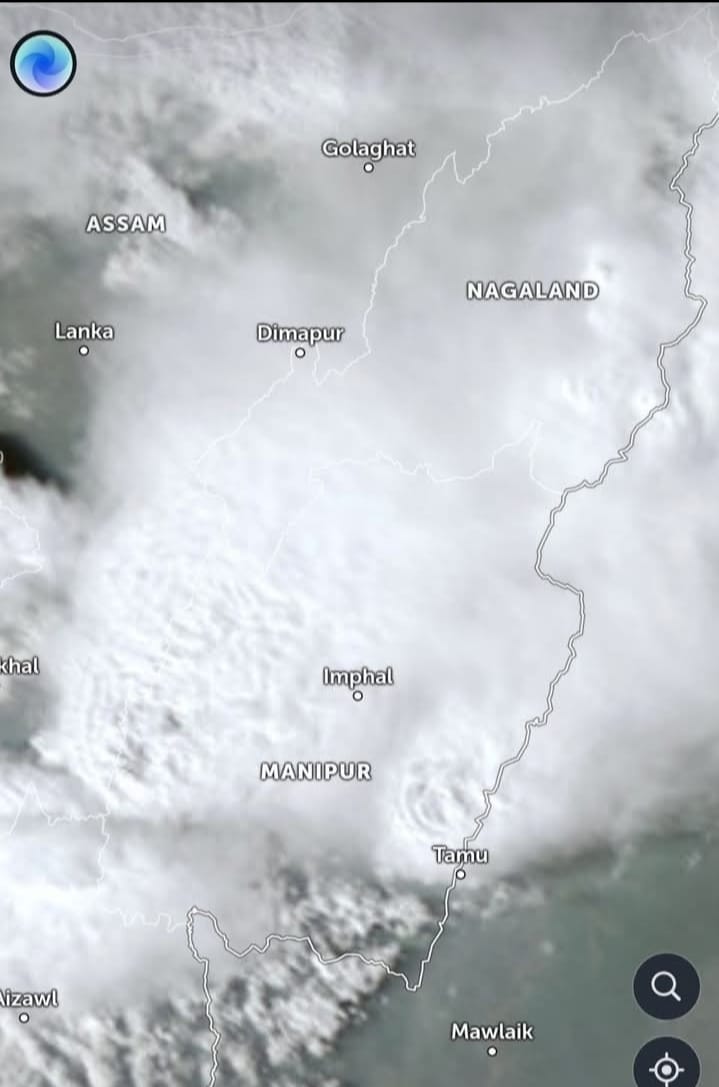
On Sunday (15 March) many parts of the State – Senapati, Imphal West, Kakching, Bishnupur, Tengnoupal – were hit by a fierce hailstorm ferried by a strong wind that blew off roofs and flatten houses.

Quite recently, farmers in Bishnupur District were left thunderstruck when a fierce hailstorm wreak havoc with their vegetable crops, totally flatten and battered beyond redemption, while tin roofing were punctured with multiple holes as if strapped by machine gun fire.

To address some of these pressing issues, the ICIMOD report recommended enhancing regional and global advocacy for HKH-specific climate funding, strengthening national and regional climate finance strategies, improving policy coherence, and developing robust financial mechanisms and innovative market-based instruments.

The report suggests that this could be achieved by building strong national institutional capacities and governance frameworks to manage and mobilize climate finance effectively.

It suggests leveraging innovative financial instruments, such as green and blue bonds, debt-for-climate swaps, and voluntary carbon markets, tailored specifically for mountain economies, to achieve the stated goals.

While suggesting urgent collective action and targeted financial investment as critical for building climate resilience, safeguarding ecosystems, and supporting sustainable development for current and future generations in the HKH region, the report emphasized that improving data infrastructure, climate risk assessments, and reporting systems to attract investments and enhance accountability require priority.

Without mincing words, the report points out that the challenges faced by the mountain regions, such as climate vulnerability, environmental degradation, and socio-economic disparities, are often overlooked in national, regional and global planning.

At the same time, the report fairly warns that with global warming projected to exceed the 1.5 degrees Celsius threshold by the year 2027 (WMO, 2025) – hardly a year from now – there is a pressing need for urgent climate action efforts to address key risks in mountain regions, with several structural challenges, such as lack of climate financing, hindering such efforts from attaining the requisite scope and scale.

Describing mountains as hotspots of climate change, the report extols that as in all other mountain regions of the world, in the HKH region too, the observed changes are increasing temperatures, changing seasonal weather patterns, reductions in snow persistence at low elevations, loss of glacier mass, increased permafrost thaw and incidence of glacial lake disasters.

Even as wars (Ukraine-Russia/Iran-Israel) escalates deaths and destructions, subsequently inflicting huge loss and damage, climate and weather extremes too are causing almost an equal amount of loss and damage as nature unleashes its fury left and right.

The massive wildfires in Australia, Europe and in the United States recently are but the tip of the iceberg in recent climate concerns, only worsening by the year. Glacial retreats and formation of glacial lakes in the HKH mountains are the proverbial warnings before catastrophe.

This is where rational suggestions such as those coming up from ICIMOD is a fair indication that States must come up with climate financing mechanism urgently to avoid climate and weather extreme disasters in the very near future within the HKH region.

Pakistan, India, Nepal, Bhutan and Bangladesh are in the red zones of climate and weather extremes, and hence actions require to be initiated soon enough. Even small nondescript States like Manipur and Nagaland are beginning to reel under unprecedented weather extremes in recent times.


The post Climate Extremes Batter Hindu Kush Himalaya, Northeast Feels the Heat first appeared on The Frontier Manipur.

Read more / Original news source: https://thefrontiermanipur.com/climate-extremes-batter-hindu-kush-himalaya-northeast-feels-the-heat/

Climate Extremes Batter Hindu Kush Himalaya, Northeast Feels the Heat

ICIMOD report links rising disasters to funding gaps as Manipur reels under hailstorms, floods, and landslides. Mountain ecosystems and rural livelihoods at tipping point By Salam Rajesh The Hindu Kush Himalaya region faces escalating climate risks, including glacial melt, biodiversity loss, and extreme weather events, posing severe threats to ecosystems, livelihoods, and the well-being of […]

The post Climate Extremes Batter Hindu Kush Himalaya, Northeast Feels the Heat first appeared on The Frontier Manipur.

ICIMOD report links rising disasters to funding gaps as Manipur reels under hailstorms, floods, and landslides. Mountain ecosystems and rural livelihoods at tipping point

By Salam Rajesh

The Hindu Kush Himalaya region faces escalating climate risks, including glacial melt, biodiversity loss, and extreme weather events, posing severe threats to ecosystems, livelihoods, and the well-being of billions dependent on its resources.

This ominous assessment is an emancipation of studies carried out by the Kathmandu-based International Centre for Integrated Mountain Development (ICIMOD), as is presented in its publication ‘Climate Finance Synthesis Report: Needs, Flows and Gaps in the HKH countries (2025)’.

The Hindu Kush Himalaya (HKH) is one of the world’s most climate-vulnerable regions, facing growing threats from extreme weather events like glacial lake outburst floods (GLOFs), landslides, droughts, floods, forest fires, and intense monsoons.

The frequency, intensity, and duration of these events are increasing, exacerbating risks to ecosystems, food security, and livelihoods, particularly in rural and mountainous areas according to the ICIMOD studies.

The report estimates that the Hindu Kush Himalaya region requires approximately USD 12.065 trillion from year 2020 to 2050 for financing climate mitigation and adaptation measures, amounting to an annual average of a staggering USD 768.68 billion.

According to the Climate Risk Index (CRI) 2025 Report, floods, storms, and heat waves has caused significant global fatalities and economic losses, with floods alone affecting half of those impacted and storms accounting for 56% of economic damages to the tune of USD 2.33 trillion.

The ICIMOD report stressed that sectors crucial to the region, such as adaptation, agriculture, water management, and disaster risk reduction, remain significantly underfunded despite their critical importance.

The report assessed that limited private sector engagement, insufficient institutional capacity, fragmented policy landscapes, and weak data infrastructure further compound these challenges.

Several Indian States located within the HKH region had felt the impact of weather and climate extremes in recent years, incurring huge losses and damages to human lives, infrastructures, and to the natural environment.

From the damaging GLOF events in Himachal Pradesh and Uttarakhand to cloud bursts in Sikkim, massive floods in Assam, and devastating hailstorms in Nagaland and Manipur, nature’s fury had not spared anyone as such.

Manipur in recent years is seeing unprecedented scenarios of weather extremes, resulting in bursts of rains in short duration, flash floods, landslides, lightning strikes, and the damaging hailstorms.

Homes, agricultural fields and crops have not been spared, rendering tremendous economic losses for many who are in the marginalized sectors – peasants and agricultural farmers.

On Sunday (15 March) many parts of the State – Senapati, Imphal West, Kakching, Bishnupur, Tengnoupal – were hit by a fierce hailstorm ferried by a strong wind that blew off roofs and flatten houses.

Quite recently, farmers in Bishnupur District were left thunderstruck when a fierce hailstorm wreak havoc with their vegetable crops, totally flatten and battered beyond redemption, while tin roofing were punctured with multiple holes as if strapped by machine gun fire.

To address some of these pressing issues, the ICIMOD report recommended enhancing regional and global advocacy for HKH-specific climate funding, strengthening national and regional climate finance strategies, improving policy coherence, and developing robust financial mechanisms and innovative market-based instruments.

The report suggests that this could be achieved by building strong national institutional capacities and governance frameworks to manage and mobilize climate finance effectively.

It suggests leveraging innovative financial instruments, such as green and blue bonds, debt-for-climate swaps, and voluntary carbon markets, tailored specifically for mountain economies, to achieve the stated goals.

While suggesting urgent collective action and targeted financial investment as critical for building climate resilience, safeguarding ecosystems, and supporting sustainable development for current and future generations in the HKH region, the report emphasized that improving data infrastructure, climate risk assessments, and reporting systems to attract investments and enhance accountability require priority.

Without mincing words, the report points out that the challenges faced by the mountain regions, such as climate vulnerability, environmental degradation, and socio-economic disparities, are often overlooked in national, regional and global planning.

At the same time, the report fairly warns that with global warming projected to exceed the 1.5 degrees Celsius threshold by the year 2027 (WMO, 2025) – hardly a year from now – there is a pressing need for urgent climate action efforts to address key risks in mountain regions, with several structural challenges, such as lack of climate financing, hindering such efforts from attaining the requisite scope and scale.

Describing mountains as hotspots of climate change, the report extols that as in all other mountain regions of the world, in the HKH region too, the observed changes are increasing temperatures, changing seasonal weather patterns, reductions in snow persistence at low elevations, loss of glacier mass, increased permafrost thaw and incidence of glacial lake disasters.

Even as wars (Ukraine-Russia/Iran-Israel) escalates deaths and destructions, subsequently inflicting huge loss and damage, climate and weather extremes too are causing almost an equal amount of loss and damage as nature unleashes its fury left and right.

The massive wildfires in Australia, Europe and in the United States recently are but the tip of the iceberg in recent climate concerns, only worsening by the year. Glacial retreats and formation of glacial lakes in the HKH mountains are the proverbial warnings before catastrophe.

This is where rational suggestions such as those coming up from ICIMOD is a fair indication that States must come up with climate financing mechanism urgently to avoid climate and weather extreme disasters in the very near future within the HKH region.

Pakistan, India, Nepal, Bhutan and Bangladesh are in the red zones of climate and weather extremes, and hence actions require to be initiated soon enough. Even small nondescript States like Manipur and Nagaland are beginning to reel under unprecedented weather extremes in recent times.


The post Climate Extremes Batter Hindu Kush Himalaya, Northeast Feels the Heat first appeared on The Frontier Manipur.

Read more / Original news source: https://thefrontiermanipur.com/climate-extremes-batter-hindu-kush-himalaya-northeast-feels-the-heat/

When Wetlands Beckon

In climate change dialogues, the significance of wetlands as carbon sinks has multiplied manifold, increasingly with new findings on how much of carbon wetlands can sequester, besides the knowledge on green forests serving as important carbon sinks that absorb excess carbon in the atmosphere to help in climate change mitigation. By Salam Rajesh As in […]

The post When Wetlands Beckon first appeared on The Frontier Manipur.

In climate change dialogues, the significance of wetlands as carbon sinks has multiplied manifold, increasingly with new findings on how much of carbon wetlands can sequester, besides the knowledge on green forests serving as important carbon sinks that absorb excess carbon in the atmosphere to help in climate change mitigation.

By Salam Rajesh

As in the preceding years, the world community observed with solemnity the pledges to save, protect and conserve wetlands on the occasion of the annual World Wetlands Day ritual of social and environmental commitments, howsoever the mission appear far more than practicable to put words on ‘wetlands conservation’ in actuality.

The second day of February every year is dedicated to wetlands as a continued process of the global effort in raising awareness and commitments to saving much of the world’s fast disappearing water bodies of value to humans, wildlife and to nature itself.

An assessment by Hu et al. (2017, as quoted in Anisha, N.F., Mauroner, A., Lovett, G., Neher, A., Servos, M., Minayeva, T., Schutten, H. & Minelli, L. (2020). Locking Carbon in Wetlands: Enhancing Climate Action by Including Wetlands in NDCs. Corvallis, Oregon and Wageningen, The Netherlands: Alliance for Global Water Adaptation and Wetlands International) indicated that the area of wetland loss across the seven continents through the year 2009 and up to present times is considerably large.

Asia continent led the world in wetland area loss by a massive size of 2,646,100 sq km, followed by South America at a close second with a loss of 2,521,900 sq km. Europe figured with a considerably large loss of 972,200 sq km while North America lost 457,100 sq km, Africa 453,500 sq km and Oceania 181,600 sq km respectively.

This massive loss when counted in their totality can be seen to influence negative impacts on the living world, where even the IUCN (International Union for Conservation of Nature and Natural Resources) says that currently near around 47,000 species of animals and plants globally are on the verge of extinction from various reasons including negative anthropogenic influences.

Why would then people in general worry for wetlands dying and disappearing ultimately? The reasons are not far to seek, if people do reconsider the numerous ecosystem services rendered by wetlands in their totality.

For instance, wetlands have strong links to ancient traditions, cultures, spiritual values and religious values that establish socio-cultural links of people to their roots, in particular for wetland dependent or wetland-thriving communities. Manipur has a link in the legacy of the Khamba-Thoibi legends.

While it is generally accepted that wetlands supply food through natural resources such as fish and edible aquatic plants and insects, and through agricultural practices in wetland areas, these water bodies play an important role in climate change resilience and carbon storage. They assist in the regulation of greenhouse gases, temperature, precipitation and other climatic processes.

In climate change dialogues, the significance of wetlands as carbon sinks has multiplied manifold, increasingly with new findings on how much of carbon wetlands can sequester, besides the knowledge on green forests serving as important carbon sinks that absorb excess carbon in the atmosphere to help in climate change mitigation.

Compared to tropical rainforests which were thought of to be the best carbon sinks in the natural world, new findings in this aspect throws light on how wetlands can absorb carbon many times more than tropical forests.

For instance, compared to tropical forests storing 200 tons of carbon dioxide per hectare in soil, peatlands can store a massive 4700 tons of carbon dioxide per hectare in soil. That is a difference by a huge margin.

Similarly, mangroves can store up to 2839 tons of carbon dioxide per hectare in soil, seagrass 500 tons of carbon dioxide per hectare in soil, and salt marsh up to 917 tons of carbon dioxide per hectare in soil, which definitely is quite significant in global discussions on carbon sequestration to meet the deadline on limiting global temperature rise to 1.5 degree Celsius by year 2050.

Tropical forests are estimated to store up to 600 tons of carbon dioxide per hectare in their biomass, whereas, in the same measure mangroves are estimated to store as much as 928 tons of carbon dioxide per hectare in their biomass, which accounts for the global thrust on restoring and regenerating mangroves across most coastal belts around the world.

Wetlands play a major role in assisting with the storage and retention of water which helps flow regulation and provides flood and drought protection, and at the same time, wetlands assist in soil formation through sediment retention and accumulation of organic matter.

These, and much more, are the functional properties of wetlands in general, other than these water bodies providing leisure and fun for people seeking respite from the everyday grinding in life.

As in the preceding years, Manipur was not far behind other communities across the globe in observing the day with fervor and solemnity, urging local communities and the State to devout more time and energy in the larger objective of saving whether water bodies of value are left in the wild within the State.

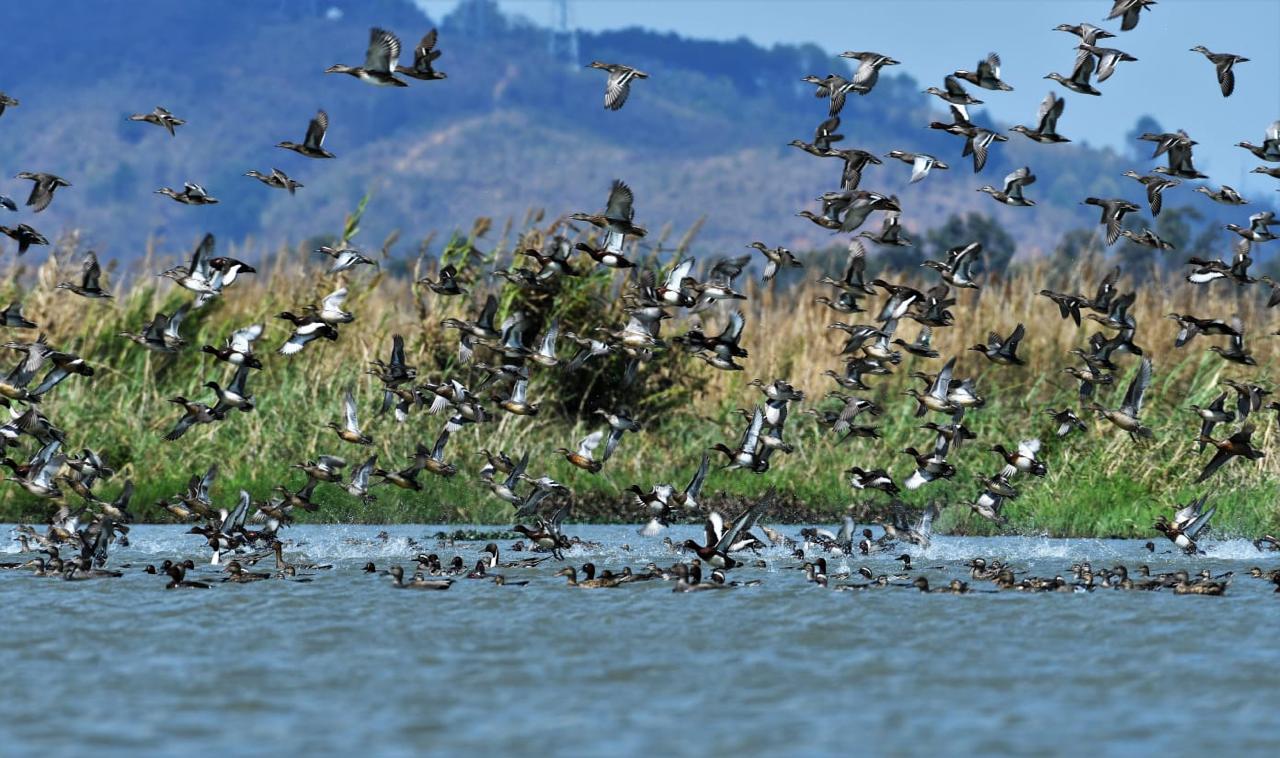
The State’s Directorate of Environment and Climate Change along with other line departments hosted the day at Yaralpat wetland site in Imphal East District, extolling the importance of wetlands to achieve various ecosystem services including groundwater recharge, fisheries and livelihoods, while providing refuge for wildlife such as the wintering migratory water birds.

The day was also observed widely across the State at academic and civil society platforms, individually and with support from the Directorate.

Of significant contribution to the day was the pre-World Wetlands Day 2026 observation on Sunday, 01 February, where the fishing community residing at Champu Khangpok Floating Island Village within Loktak Lake staged a cleanup drive to clear plastics and other domestic wastes along Yangoi Turel Achouba (Nambul River) and its flow up to Birahari Pat within the lake, demonstrating the local community’s responsibility in lake conservation.

Rounding up, it can be well said that a partnership, and workable, model between wetland-dependent local communities and the responsible state agencies can go a long way in shaping the future of wetlands in Manipur, and elsewhere.

The post When Wetlands Beckon first appeared on The Frontier Manipur.

Read more / Original news source: https://thefrontiermanipur.com/when-wetlands-beckon/

Present flood situation in Manipur

Salam Gunakanta Singh (Contd from yesterday) Damage to public infrastructure affects a far greater proportion of the population than those whose homes or businesses are directly inundated by the flood. In particular, flood damage to roads, rail networks and key transport hubs, such as shipping ports, can have significant impacts on regional and national economies. […]

Salam Gunakanta Singh (Contd from yesterday) Damage to public infrastructure affects a far greater proportion of the population than those whose homes or businesses are directly inundated by the flood. In particular, flood damage to roads, rail networks and key transport hubs, such as shipping ports, can have significant impacts on regional and national economies. […]

Read more / Original news source: http://kanglaonline.com/2017/07/present-flood-situation-in-manipur-2/

Chandel rally demands implementation of action plan on Climate Change

IMPHAL, February 11: A mass rally was taken out today at the Chandel district headquarters demanding the immediate implementation of Manipur State Action Plan on Climate Change (MSAPCC). The rally was jointly organised by the Chandel District Farmers’ Union (CDFU), Chakpi River Progressive and Development Society (CRPDS), Maha Area Chief Association Chandel (MACAC), Peoples’ Development

IMPHAL, February 11: A mass rally was taken out today at the Chandel district headquarters demanding the immediate implementation of Manipur State Action Plan on Climate Change (MSAPCC). The rally was jointly organised by the Chandel District Farmers’ Union (CDFU), Chakpi River Progressive and Development Society (CRPDS), Maha Area Chief Association Chandel (MACAC), Peoples’ Development

Read more / Original news source: http://kanglaonline.com/2016/02/chandel-rally-demands-implementation-of-action-plan-on-climate-change/

The making of a global changemaker : Monika Khangembam

var addthis_product=’wpp-252′;var addthis_options=”Google+1″About Monika Khangembam in her words: I am Monika studying in Bangalore. I am currently doing my Masters in Public Relation. Recently I was…

[[ This is a content summary only. Visit my webs…

var addthis_product=’wpp-252′;var addthis_options=”Google+1″About Monika Khangembam in her words: I am Monika studying in Bangalore. I am currently doing my Masters in Public Relation. Recently I was…

[[ This is a content summary only. Visit my website for full links, other content, and more! ]]

Read more / Original news source: http://feedproxy.google.com/~r/Kanglaonline/~3/Birrq9cMq28/

Apocalypse Imagined

The magnitude of a possible disaster as indicated by the periodic flood situation every monsoon can only be described as terrifying. Tuesday night’s unusually heavy torrents literally flooded half of… Read more »

The magnitude of a possible disaster as indicated by the periodic flood situation every monsoon can only be described as terrifying. Tuesday night’s unusually heavy torrents literally flooded half of Imphal, though thankfully the cloudburst did not last too long and the logged water had time to flow away considerably by morning, although not completely.

This is yet another caution as to how vulnerable the Imphal valley is. Just imagine what would have happened if the rains did not stop for another one week, a scenario not altogether impossible, in fact one which should be expected in the near future if the prediction of global warming and climate change by scientists is anything to go by. The floods caused would then be much more extensive. But more than this, in the event of a much larger volume of flood water inundating the valley, the second scenario is even more alarming.

Up to a certain level, the Loktak lake and other still existing natural wetlands can act as the reservoir and absorb flood waters. That is to say, only so long as the flood water volume is within this limit, flood waters would recede soon as the rains stop, and inundated farmlands and residences would be spared total destruction. But just suppose the flood water volume exceeds this limit in any given years. Since there is very little outflow of water away from the valley, the excess waters would have little or no place to drain away into, and farmlands and homesteads would remain inundated until the water evaporates. A glimpse of such a scenario is already available in the current floods. Long after the rains have ceased, many low lying areas as still flooded as the rivers that brought the waters are unable to reabsorb them. If the freak rains persist every year, then even before the previous years flood waters have receded, more would be incrementally added, ultimately water would reclaim much of the low lying areas, in much the same way it probably was in prehistoric and proto-historic times, memories of which are preserved in some of the folklores and legends of the place.

Even as much of the low lying coastal regions of the world, including Bangladesh, Netherlands, Florida etc, are swallowed up by the sea in the event of global warming leading to the melting of the polar ice caps, much of the Imphal valley too then would be an extended lake from permanent flood waters.
The moot point is, what possible remedies can there be? The first thing that most believers in a supernatural order would do is to pray that the unprecedented downpour this year was a freak occurrence and not a portent of things to come. But still, it would be prudent to prepare for the worst, even if one were to continue hoping for the best. The second, but a rather long term strategy would be to join the global effort to arrest climate change. This would entail first and foremost, trying to understand what this is all about. The last proposition that we would like to suggest has to do with the question of preparing for the worst case scenario.

The Imphal valley is at an altitude of over 2000 feet above mean sea level, which means that given the outlet, gravity would ensure that water drains out of the place. This fact itself should be capitalised into devising a way to ensure security of the valley from a future water disaster in the event of climate change. Apart from the river that flow out of the Loktak lake to ultimately join the river system in Myanmar and ultimately the sea, artificial tunnels of the Loktak Hydro Electric Plant use the same principle of gravity to divert water away from the lake to turn generation turbines and ultimately join the Barak River and the sea. Such artificial outlets could be made to have a double purpose – hydro electric generation as well as emergency water drainage. Just as for instance, the elaborate labyrinths of subway train tunnels deep down into the earth in many American and European cities, were also designed during the Cold War to couple up nuclear shelters in the eventuality of a nuclear holocaust which had become a real threat then. The nuclear holocaust did not happen, but the subway systems are not a waste because they are also fundamentally an important city transport infrastructure. Likewise, climate change and a subsequent water disaster may or may not be Imphal valley’s future, but the hydroelectric tunnels would still be performing their fundamental purpose of producing electricity.

Enhanced by Zemanta

Read more / Original news source: http://feedproxy.google.com/~r/Kanglaonline/~3/7zSWRnh62u4/