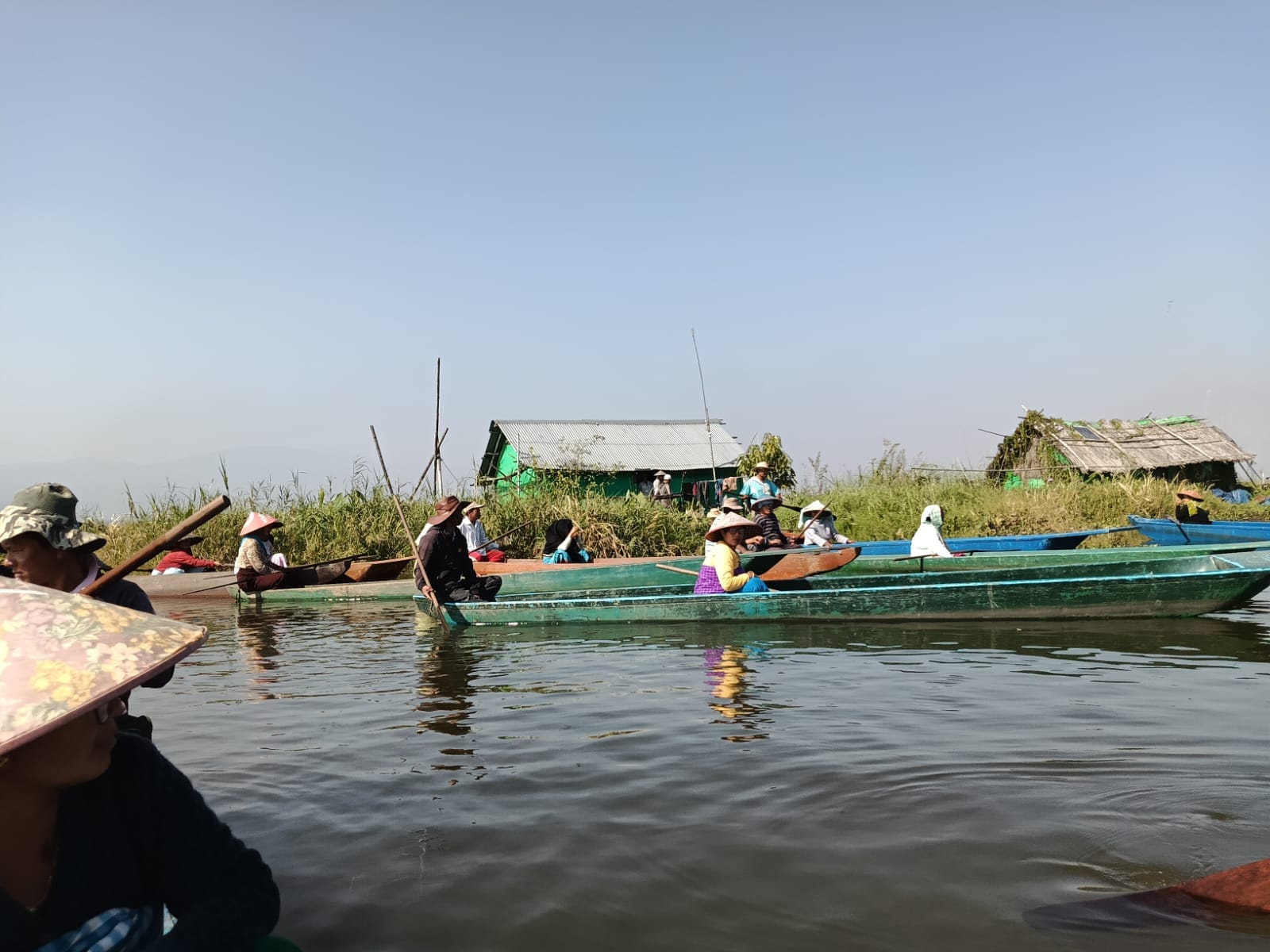
Loktak Fishers Strive to achieve GBF Targets

Champu Khangpok fishers turn global biodiversity goals into grassroots action at Loktak Lake. The fishing community makes it a point to organize important annual events highlighting environmental and ecological concerns, sensitizing locals on the objectives of the GBF targets with prioritization on the long-term conservation of the freshwater Loktak Lake and its biological diversity. By Salam […]

The post Loktak Fishers Strive to achieve GBF Targets first appeared on The Frontier Manipur.

Champu Khangpok fishers turn global biodiversity goals into grassroots action at Loktak Lake. The fishing community makes it a point to organize important annual events highlighting environmental and ecological concerns, sensitizing locals on the objectives of the GBF targets with prioritization on the long-term conservation of the freshwater Loktak Lake and its biological diversity.

By Salam Rajesh

In these past several recent years, the fishing community thriving upon the floating island village of Champu Khangpok within Loktak Ramsar site in India’s far flung northeastern State of Manipur had continuously been contributing their mite in achieving locally some of the goals outlined in the targets set under the Global Biodiversity Framework of the Convention on Biological Diversity (CBD).

The Global Biodiversity Framework (GBF) that came into force at the CBD Kunming-Montreal convention during 2022 end came up with several goals that primarily aimed at achieving targets addressing biodiversity loss and species decline worldwide.

Much of the CBD’s GBF Targets – 23 targets in all – predominantly focuses on incorporating the active participation of Indigenous Peoples and Local Communities (IPLCs) in achieving the set goals in both short and long terms.
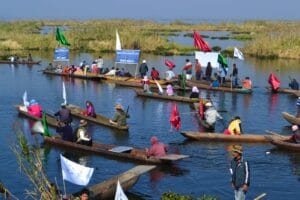
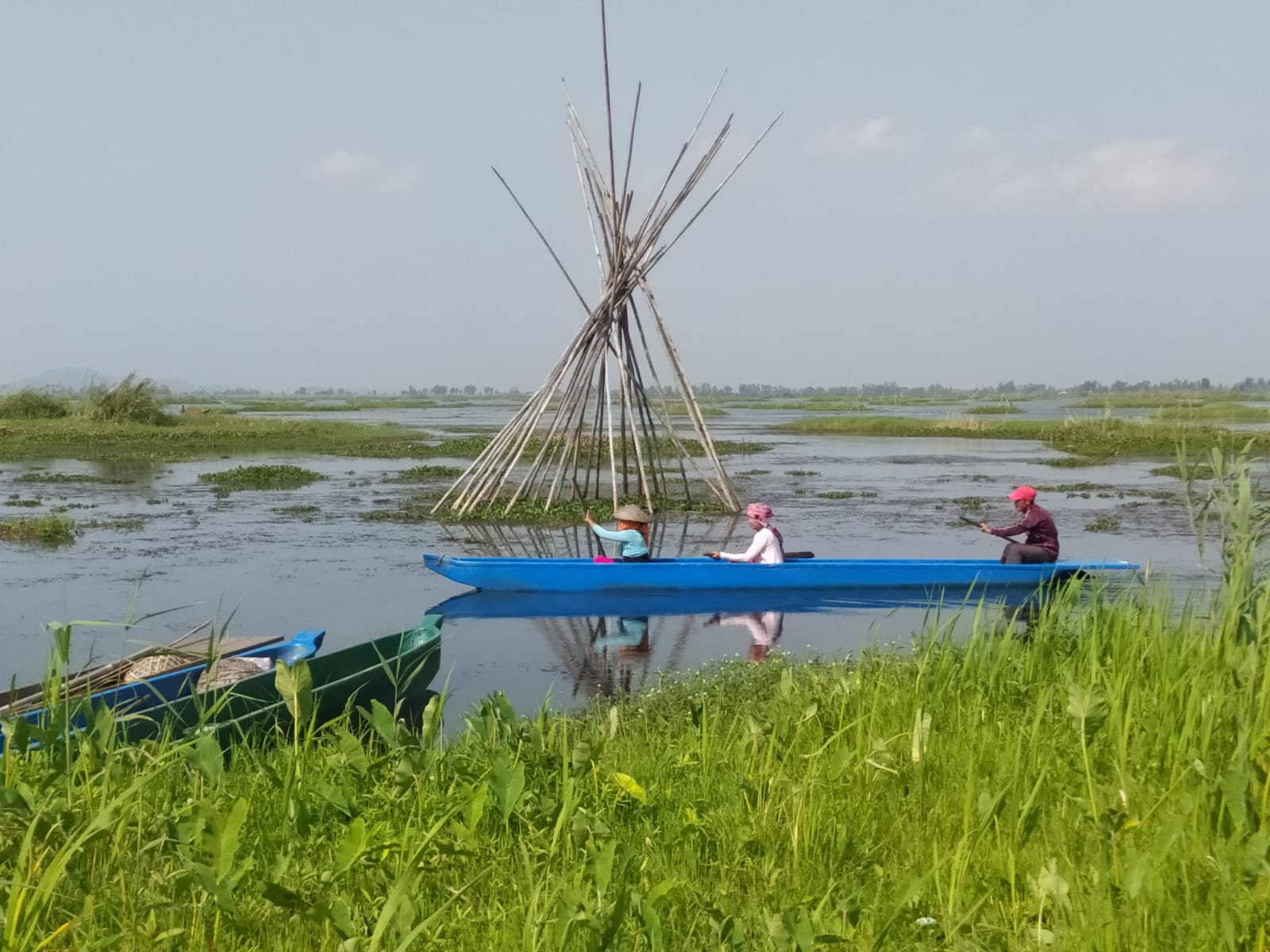
Fishers staging awareness drive in Loktak Lake.

Keeping this background in perspective, the fishing community of Champu Khangpok floating island village had since set themselves to task in contributing meaningfully towards achieving some of the aspects outlined in the CBD GBF targets in their own humble way, howsoever small their efforts might seem to be.

Champu Khangpok marked the observation of World Wetlands Day 2026 earlier this year with a cleanup drive within the lake and along the waterway of Yangoi Achouba (albeit Nambul River), prioritizing the fact that the lake had since become a dumping ground of urban wastes carried by the river along its flow through Imphal city, a fairly populated urbanized zone.

Champu Khangpok villagers also take upon themselves the task of regulating capture fishery to prevent species population decline within the lake and to restrict random capture of fingerlings during the spawning season, and in preventing unethical fishing methods using LED blubs at nighttime and electrocuting fish using batteries.

The fishing community makes it a point to organize important annual events highlighting environmental and ecological concerns, sensitizing locals on the objectives of the GBF targets with prioritization on the long term conservation of the freshwater Loktak Lake and its biological diversity.

Target 3 of the CBD’s GBF focuses on the conservation of 30 percent of the land, waters and the seas globally to protect life on land and in water. Within this target is an important element to recognize the Indigenous and traditional territories.

The Convention recognizes that ‘Indigenous peoples and local communities often own, occupy and manage areas with unique and significant biodiversity. The appropriate recognition of these areas, therefore, could make important contributions in achieving this target’.

This consideration comes with the perspective that the rights of the Indigenous peoples and local communities must be respected fully, including obtaining their free, prior and informed consent in all matters.

The Convention is convinced that the well-governed, effectively managed and representative protected areas, and other effective area-based conservation measures (OECMs), are a proven method for safeguarding both habitats and populations of species and for delivering important ecosystem services and multiple benefits to people.

The CBD has made it a valid point that ‘local people managed protected areas is a central element of biodiversity conservation strategies at the local, national and global levels’.

This consideration of IPLCs’ contribution in safeguarding biodiversity adds strength in achieving the GBF’s Target 4 which focuses on halting species extinction, protecting genetic diversity, and in managing human-wildlife conflicts.

Target 4 specifically ensures urgent management actions ‘to halt human induced extinction of known threatened species and for the recovery and conservation of species, in particular threatened species, and to significantly reduce extinction risk’.

The goal further is ‘to maintain and restore the genetic diversity within and between populations of native, wild and domesticated species to maintain their adaptive potential, including through in-situ and ex-situ conservation and sustainable management practices’.

In the same breadth, Target 6 of the GBF looks at addressing the menace of Invasive Alien Species (IAS) of plants and animals, seeking the reduction of the introduction of IAS by 50 percent globally within a time frame, and, thereto, minimize their impact on the localized biodiversity.

The objective of Target 6 is broadly outlined as: ‘Eliminate, minimize, reduce and or mitigate the impacts of invasive alien species on biodiversity and ecosystem services by identifying and managing pathways of the introduction of alien species, preventing the introduction and establishment of priority IAS, reducing the rates of introduction and establishment of other known or potential IAS by at least 50 percent, by 2030, eradicating or controlling IAS especially in priority sites, such as islands’.

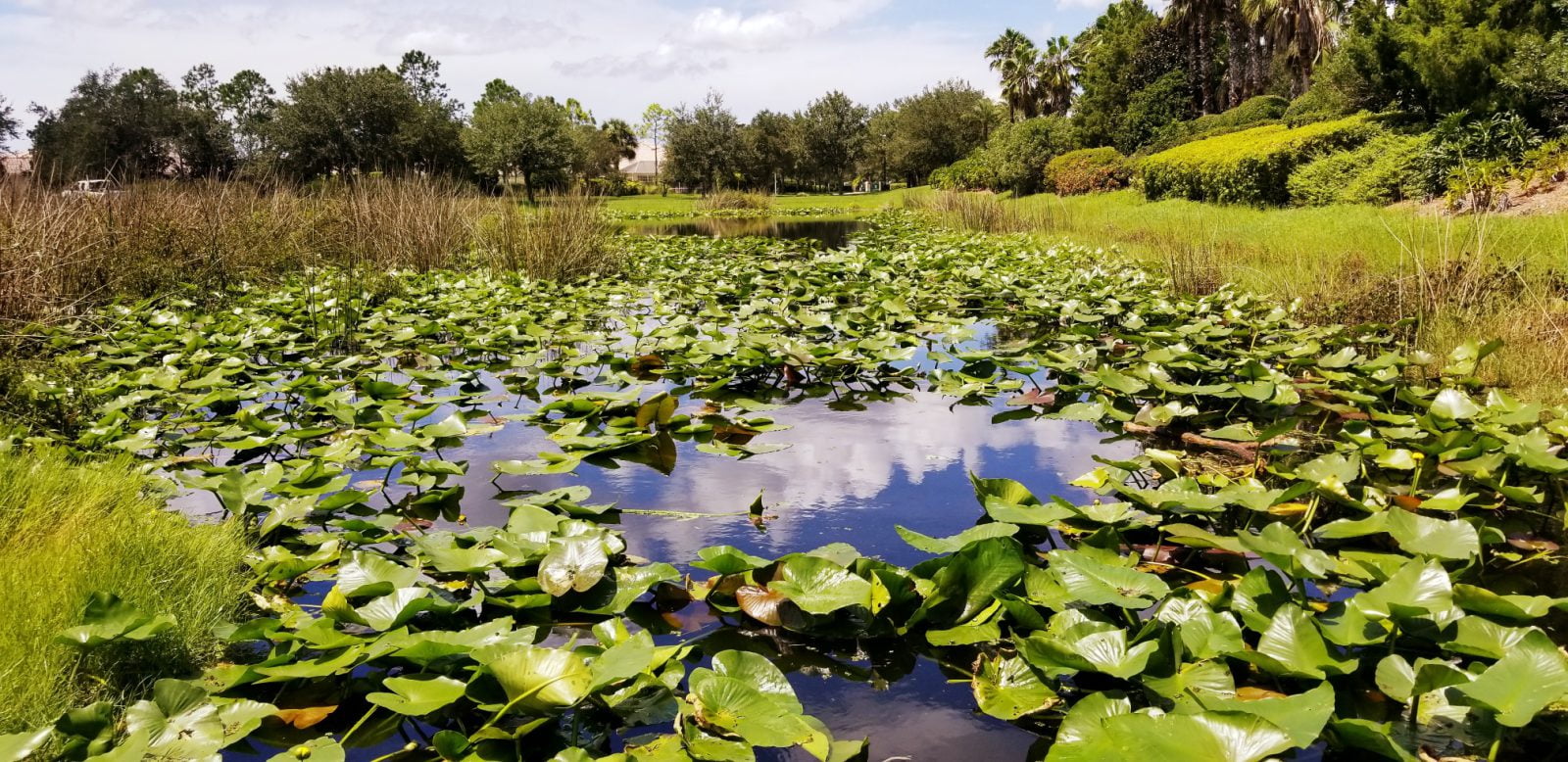
This is one of the priority areas that the Loktak fishers have specifically focused upon in all of these years, highlighting time and again on the menace of aquatic plants, and fish, that are alien to the freshwater Loktak Lake and which are proving as nuisance plants, and fish, within the lake.

Another of the issues faced by the Loktak fishers is the level of pollution within the lake, accentuated by the pollutant loads and sewerage discharge from the urban areas. The Nambul River carries maximum pollutant loads from the urbanized Imphal city areas, a factor for high pollution level in the lake.

This issue is reflected in the GBF’s Target 7 which specifically focuses on reducing pollution to levels that are not harmful to biodiversity.

Target 7 specifies on ‘reducing pollution risks and the negative impact of pollution from all sources, by 2030, to levels that are not harmful to biodiversity and ecosystem functions and services, considering its cumulative effects’.

It further seeks in ‘reducing excess nutrients lost to the environment by at least half including through more efficient nutrient cycling and use; reducing the overall risk from pesticides and highly hazardous chemicals by at least half including through integrated pest management, based on science, taking into account food security and livelihoods; and also preventing, reducing, and working towards eliminating plastic’.

In a nutshell, achieving these targets might be a herculean task for the marginalized fishing community of Loktak Lake, whereas, the zeal to contribute their mite in the smallest possible ways is there for all to see, visible through their continuous activities in their own humble way.

This is where the state and central authorities can step in to aid the Loktak fishers in their march forward – a tiny step taken yet meaningful in saving, protecting and conserving one of India’s most significant inland freshwater lakes – and, that too, a Ramsar site of international importance.


The post Loktak Fishers Strive to achieve GBF Targets first appeared on The Frontier Manipur.

Read more / Original news source: https://thefrontiermanipur.com/loktak-fishers-strive-to-achieve-gbf-targets/
Keibul Lamjao National Park to Remain Closed from Feb 20–27 for Sangai Census

A notice issued by issued by the Office of the Principal Chief Conservator of Forests (Wildlife) & Chief Wildlife Warden stated that the park will remain closed to visitors throughout the census exercise to ensure smooth and undisturbed operations. FM Report The Government of Manipur has announced the temporary closure of the Keibul Lamjao National […]

The post Keibul Lamjao National Park to Remain Closed from Feb 20–27 for Sangai Census first appeared on The Frontier Manipur.

A notice issued by issued by the Office of the Principal Chief Conservator of Forests (Wildlife) & Chief Wildlife Warden stated that the park will remain closed to visitors throughout the census exercise to ensure smooth and undisturbed operations.

FM Report

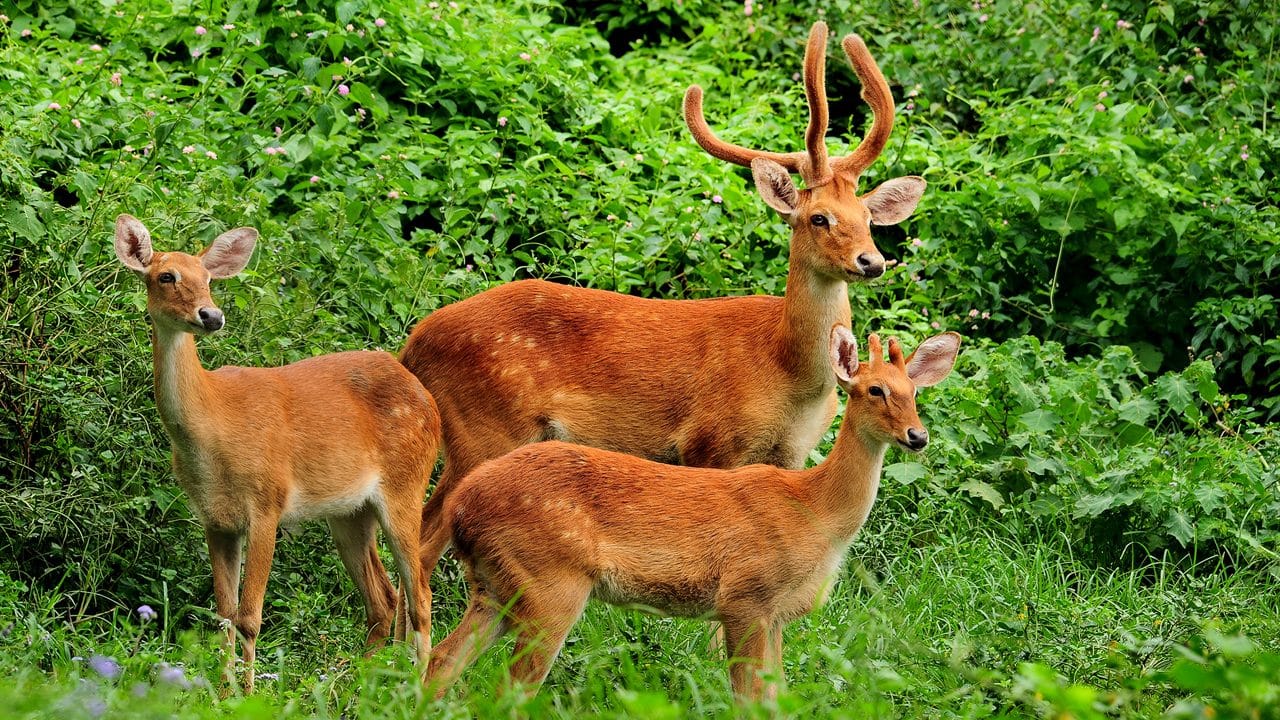
The Government of Manipur has announced the temporary closure of the Keibul Lamjao National Park from February 20 to February 27, 2026, to facilitate the annual census of the endangered Sangai and other associated wildlife species.

According to a public notice issued by the Office of the Principal Chief Conservator of Forests (Wildlife) & Chief Wildlife Warden, the National Park Management will undertake census operations during the eight-day period to estimate the mean population of the Sangai, also known as the Manipur Brow-Antlered Deer, along with other species inhabiting the park.

The notice stated that the park will remain closed to visitors throughout the census exercise to ensure smooth and undisturbed operations.

The order has been issued under Sections 28(a) and 33(d) of the Wildlife (Protection) Act, 1972.

The public notice was issued by Anurag Bajpai, Principal Chief Conservator of Forests & Head of Forest Force (HoFF) & Chief Wildlife Warden, Government of Manipur.

The post Keibul Lamjao National Park to Remain Closed from Feb 20–27 for Sangai Census first appeared on The Frontier Manipur.

Read more / Original news source: https://thefrontiermanipur.com/keibul-lamjao-national-park-to-remain-closed-from-feb-20-27-for-sangai-census/

United Sangtam Likhum Pumji Bans Pangolin Hunting in Nagaland

Decision marks a major milestone under the Pangolin Project led by the Wildlife Trust of India (WTI), supported by the Wildlife Conservation Network’s Pangolin Crisis Fund, in collaboration with the forest departments of Manipur and Nagaland TFM report In a significant boost to wildlife conservation efforts in Northeast India, the United Sangtam Likhum Pumji (USLP), […]

The post United Sangtam Likhum Pumji Bans Pangolin Hunting in Nagaland first appeared on The Frontier Manipur.

Decision marks a major milestone under the Pangolin Project led by the Wildlife Trust of India (WTI), supported by the Wildlife Conservation Network’s Pangolin Crisis Fund, in collaboration with the forest departments of Manipur and Nagaland

TFM report

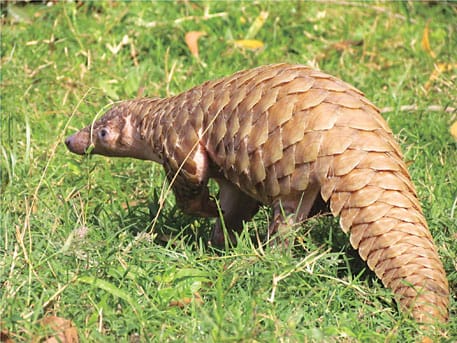
In a significant boost to wildlife conservation efforts in Northeast India, the United Sangtam Likhum Pumji (USLP), the apex tribal body of the Sangtam Naga community, has passed a resolution imposing a complete ban on the hunting of pangolins within its jurisdiction in Nagaland.

The decision marks a major milestone under the Pangolin Project led by the Wildlife Trust of India (WTI), supported by the Wildlife Conservation Network’s Pangolin Crisis Fund, in collaboration with the forest departments of Manipur and Nagaland.

Launched in 2023 in Manipur and later expanded to Nagaland, the project focuses on combating the illegal wildlife trade (IWT) of the Indian Pangolin (Manis crassicaudata) and the Chinese Pangolin (Manis pentadactyla). The Indo-Myanmar border region has been identified as a key trafficking corridor for both species.

The Sangtam Naga community, primarily residing in Kiphire and Tuensang districts, inhabits ecologically rich forest landscapes that form part of the Indo-Myanmar biodiversity hotspot. With a strong traditional governance system led by village councils and apex tribal bodies, community resolutions play a critical role in regulating natural resource use and social practices.

Following sustained dialogue and sensitisation initiatives by WTI, the USLP formally adopted the resolution in the presence of Mr. A. Island Peace Yangthsaba and Mr. L. Kipitong Sangtam.

Mr. Chingrisoror, Field Officer, WTI, stated, “The Sangtam community has shown remarkable leadership in recognising the urgency of pangolin conservation. Their support is crucial because when communities take ownership, conservation becomes sustainable.”

The resolution builds upon a similar conservation measure earlier passed by the Tangkhul Naga Awunga Long (TNAL) in Manipur, reflecting growing momentum for community-led wildlife protection across state boundaries in the region.

Mr. L. Kipitong Sangtam, Pumji Chidong, emphasised the importance of traditional institutions in conservation efforts. “Community institutions are the backbone of conservation in Nagaland. With community support, the Pangolin Project is helping build trust and local leadership, ensuring that pangolins are protected through collective commitment,” he said.

With increasing backing from indigenous tribal bodies, conservation efforts to safeguard pangolins in the Northeast continue to gain strength, reinforcing the role of community governance in addressing wildlife crime.

The post United Sangtam Likhum Pumji Bans Pangolin Hunting in Nagaland first appeared on The Frontier Manipur.

Read more / Original news source: https://thefrontiermanipur.com/united-sangtam-likhum-pumji-bans-pangolin-hunting-in-nagaland/

The Plague of Introduced Species

How cane toads, paragrass, carp and hyacinth became ecological disruptors in Australia and Manipur. By Salam Rajesh Earlier this month, Jennifer Geer writing for A-Z Animal.com, provided a descriptive narrative of how an imported and introduced toad species from Hawaii by the Australian Government ultimately became the proverbial Frankenstein in the making. In 1935, Queensland […]

The post The Plague of Introduced Species first appeared on The Frontier Manipur.

How cane toads, paragrass, carp and hyacinth became ecological disruptors in Australia and Manipur.

By Salam Rajesh

Earlier this month, Jennifer Geer writing for A-Z Animal.com, provided a descriptive narrative of how an imported and introduced toad species from Hawaii by the Australian Government ultimately became the proverbial Frankenstein in the making.

In 1935, Queensland in Australia faced a major crisis in its sugar cane crop production after a native beetle species, Greyback Cane Beetle (Dermolepida albohirtum), commenced wreaking havoc on the sugarcane plants.

The beetle larvae lived in the soil and chewed on sugarcane roots, stunting growth or killing the plants. This incurred major economic losses for the sugarcane farmers. There was a need to find a solution fast enough to prevent further losses.

Seeking a natural solution to kill the grubs, the Australian government imported Cane Toads (Rhinella marina) from Hawaii, with the hope that the toads would eat the grubs and save the sugarcane.

Unfortunately enough, as history proved, the worst-case scenario occurred. The toads did not keep the beetle populations in check. Instead, they became one of Australia’s most destructive (alien) invasive species and an ecological disaster, writes Geer. Today, the toads are considered invasive species in Australia, the Caribbean Islands, Hawaii, and Florida.

Cane Toad.

In August 1935, the BSES (Queensland Bureau of Sugar Experiment Stations) released 2400 cane toads into sugarcane plantations in Gordonvale, North Queensland. By 1950, the Australian government declared the cane toad an invasive predator.

Dangers from the toads included poisoning animals that prey on them, outcompeting native species for resources, and their voracious appetites. Geer writes that 75 species of Australian crocodiles, lizards, and freshwater turtles were threatened by the toads.

Some of the animals that are in danger of dying after they eat a cane toad include the Australian monitor lizards, quolls, tiger snakes, and freshwater crocodiles. Many of these animals are designated as threatened species in the country.

This story fairly well finds reflection in India, too, with stories of introduced species ultimately becoming monsters in disguise. Like most States in the country, Manipur too is not an exception to such stories of disasters.

In the mid 1970s, the State’s veterinary department reportedly introduced Paragrass (Brachiaria mutica) as fodder for milch cows that, too, were imported from Haryana. It was reported that the cows were housed in a mechanized cattle farm in the Iroishemba area in Imphal West District.

The remains of the feed, that is, the undigested or the uneaten parts of the paragrass soon found their way to the riverbank of Nambul River via its feeder rivulets, either as cow excreta or intentionally dumped as waste. Today, paragrass is one of the major nuisance semi-aquatic plants in most water bodies within the Manipur River basin.

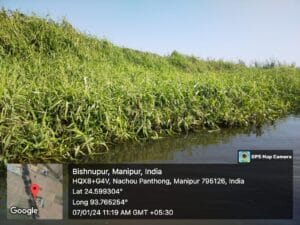
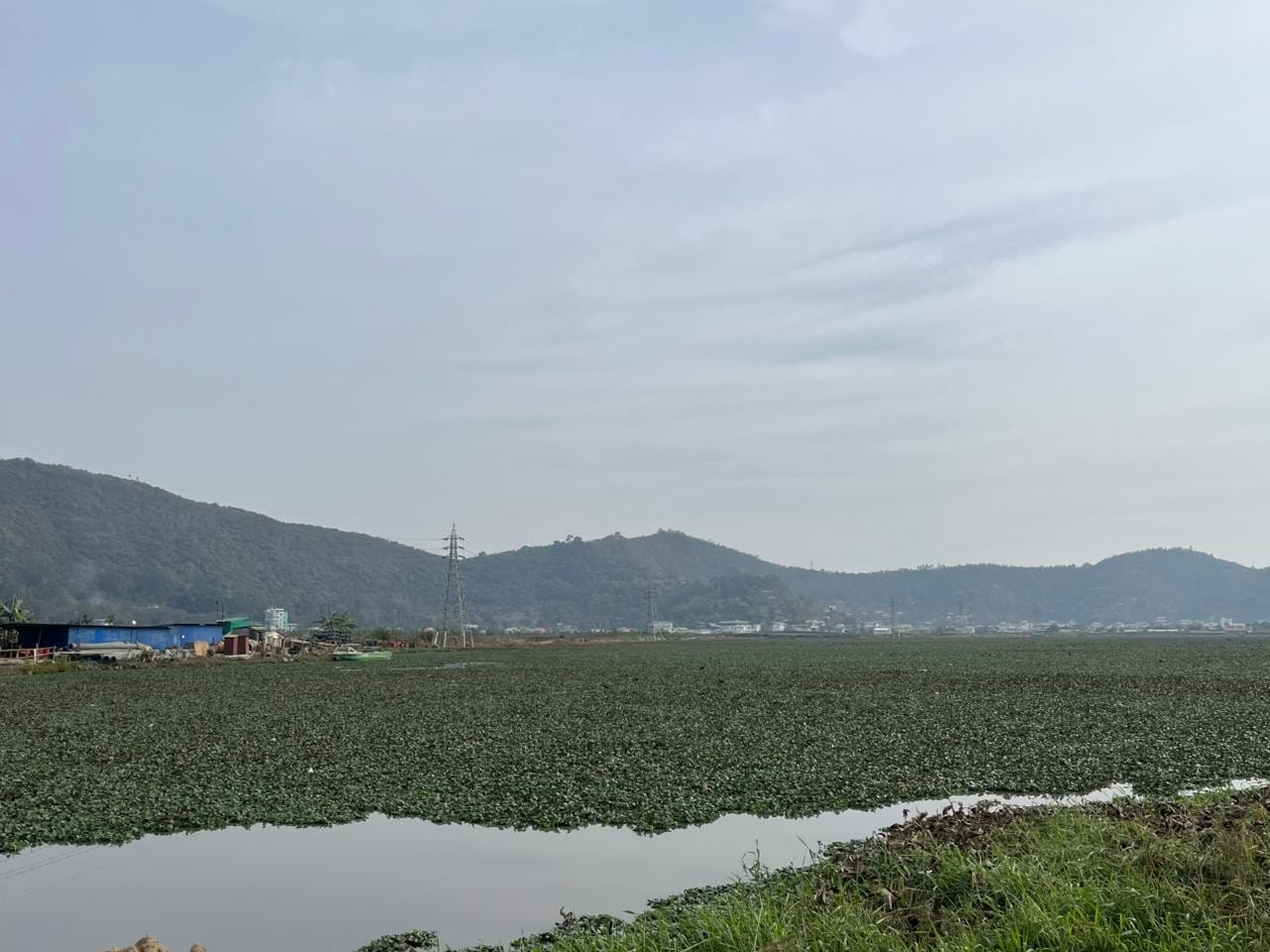
Paragrass (Napi tujombi in the vernacular) is a major headache for Loktak Lake (a Ramsar site) managers as this fast spreading grass had virtually spread its tentacles across the peripheral shoreline, crowded over the floating biomass Phumdi, and literally had become the major reason for depletion of native plants, in particular the edible aquatic, semi-aquatic and semi-terrestrial species of food and medicinal values.

Paragrass in Loktak wetland.

The story of the notorious cane toads of Australia indeed finds a parallel with the notorious paragrass in Manipur, well defined amongst the floating biomass of Loktak Lake. The one is a story of an animal (an amphibian) and the other is of a plant (a grass). Amazing comparison at the best!

It may be recalled here that Target 6 of the Global Biodiversity Framework (GBF) of the Convention on Biological Diversity (CBD) re-emphasizes the elimination, minimization, reduction or the mitigation of impacts of Invasive Alien Species (IAS) of plants and animals on the biodiversity and ecosystems across the seven continents.

The GBF’s Target 6 specifically seeks the prevention of the introduction and establishment of priority invasive alien species, reducing the rates of introduction and establishment of other known, or potential, IAS plants and animals by at least 50 percent by the target year 2030.

For the Asia and the Pacific CBD Regional Group, 37 member countries including India have set at least one national target to be achieved by year 2030.

On this end, the National Biodiversity Authority of India (NBA) in 2022 had framed lists of invasive alien species of plants and animals under its Inland Invasive Alien Species of Fishes of India that are of priority for control, reduction and elimination throughout the country by year 2030.

Top on the list of the Inland Invasive Alien Species of Fishes of India according to the NBA is one of the commonest cultured fishes in the country, and in Manipur too, and that is, the Common Carp (Eurasian or European carp, Cyprinus carpio; Puklaobi in the vernacular).

The Common Carp was introduced in Manipur way back in 1964 according to fish expert Professor Waikhom Vishwanath. Interestingly, in India the fish was first introduced in Cuttack in 1939, and in Bangkok in 1957. The fish’s native range covers rivers in Europe and in Asia.

The fish Mozambique tilapia (Oreochromis mossambicus; Tunghanbi in the vernacular) a species originating from East Africa and introduced in India in 1952, finds itself second in the priority list of invasive alien species of fishes to be either controlled or eradicated entirely in India by the target year 2030.

Two very commonly seen aquatic plants in Manipur, namely, Pontederia crassipes (Eichhornia crassipes/Water hyacinth; Kabo-kang) and Alligator weed (Alternanthera philoxeroides; Kabo-napi) find themselves listed on the top of the priority IAS plants to be either controlled or eradicated completely by 2030.

The proliferation of Pontederia crassipes in large number across the water body of a wetland endangers it as excessive growth of the plant ‘inhibits the growth of fish and other aquatic organisms due to cut down of light and lack of oxygen’ according to experts.

In fact, at one point of time the plant was known as the ‘Terror of Bengal’ because of its rapid growth and domination across most water bodies in that State, rapidly affecting the fisheries and impacting rural economy drastically.

The Dehradun-based Wildlife Institute of India (WII) at one point of time had noted that ‘the gregarious growth of weeds like Brachiaria mutica and Alternanthera philoxeroides unless controlled, may pose a great threat to the biodiversity of the Keibul Lamjao National Park – habitat of the highly threatened Manipur Brow-antlered Deer’.

Defining Invasive Alien Species, Costello et al. (2022) says, “Alien species are organisms which are introduced to regions in which they would not be found naturally, as a result of unintentional or deliberate human action”.

“In the majority of cases, alien species are unable to survive in their new environment without human support. However, a small proportion will manage to adapt to their new surroundings and establish populations in the wild. Some of these alien species have negative impacts on the environment, for example predation or competition for resources with native animals or plants”.


The post The Plague of Introduced Species first appeared on The Frontier Manipur.

Read more / Original news source: https://thefrontiermanipur.com/the-plague-of-introduced-species/

When Wetlands Beckon

In climate change dialogues, the significance of wetlands as carbon sinks has multiplied manifold, increasingly with new findings on how much of carbon wetlands can sequester, besides the knowledge on green forests serving as important carbon sinks that absorb excess carbon in the atmosphere to help in climate change mitigation. By Salam Rajesh As in […]

The post When Wetlands Beckon first appeared on The Frontier Manipur.

In climate change dialogues, the significance of wetlands as carbon sinks has multiplied manifold, increasingly with new findings on how much of carbon wetlands can sequester, besides the knowledge on green forests serving as important carbon sinks that absorb excess carbon in the atmosphere to help in climate change mitigation.

By Salam Rajesh

As in the preceding years, the world community observed with solemnity the pledges to save, protect and conserve wetlands on the occasion of the annual World Wetlands Day ritual of social and environmental commitments, howsoever the mission appear far more than practicable to put words on ‘wetlands conservation’ in actuality.

The second day of February every year is dedicated to wetlands as a continued process of the global effort in raising awareness and commitments to saving much of the world’s fast disappearing water bodies of value to humans, wildlife and to nature itself.

An assessment by Hu et al. (2017, as quoted in Anisha, N.F., Mauroner, A., Lovett, G., Neher, A., Servos, M., Minayeva, T., Schutten, H. & Minelli, L. (2020). Locking Carbon in Wetlands: Enhancing Climate Action by Including Wetlands in NDCs. Corvallis, Oregon and Wageningen, The Netherlands: Alliance for Global Water Adaptation and Wetlands International) indicated that the area of wetland loss across the seven continents through the year 2009 and up to present times is considerably large.

Asia continent led the world in wetland area loss by a massive size of 2,646,100 sq km, followed by South America at a close second with a loss of 2,521,900 sq km. Europe figured with a considerably large loss of 972,200 sq km while North America lost 457,100 sq km, Africa 453,500 sq km and Oceania 181,600 sq km respectively.

This massive loss when counted in their totality can be seen to influence negative impacts on the living world, where even the IUCN (International Union for Conservation of Nature and Natural Resources) says that currently near around 47,000 species of animals and plants globally are on the verge of extinction from various reasons including negative anthropogenic influences.

Why would then people in general worry for wetlands dying and disappearing ultimately? The reasons are not far to seek, if people do reconsider the numerous ecosystem services rendered by wetlands in their totality.

For instance, wetlands have strong links to ancient traditions, cultures, spiritual values and religious values that establish socio-cultural links of people to their roots, in particular for wetland dependent or wetland-thriving communities. Manipur has a link in the legacy of the Khamba-Thoibi legends.

While it is generally accepted that wetlands supply food through natural resources such as fish and edible aquatic plants and insects, and through agricultural practices in wetland areas, these water bodies play an important role in climate change resilience and carbon storage. They assist in the regulation of greenhouse gases, temperature, precipitation and other climatic processes.

In climate change dialogues, the significance of wetlands as carbon sinks has multiplied manifold, increasingly with new findings on how much of carbon wetlands can sequester, besides the knowledge on green forests serving as important carbon sinks that absorb excess carbon in the atmosphere to help in climate change mitigation.

Compared to tropical rainforests which were thought of to be the best carbon sinks in the natural world, new findings in this aspect throws light on how wetlands can absorb carbon many times more than tropical forests.

For instance, compared to tropical forests storing 200 tons of carbon dioxide per hectare in soil, peatlands can store a massive 4700 tons of carbon dioxide per hectare in soil. That is a difference by a huge margin.

Similarly, mangroves can store up to 2839 tons of carbon dioxide per hectare in soil, seagrass 500 tons of carbon dioxide per hectare in soil, and salt marsh up to 917 tons of carbon dioxide per hectare in soil, which definitely is quite significant in global discussions on carbon sequestration to meet the deadline on limiting global temperature rise to 1.5 degree Celsius by year 2050.

Tropical forests are estimated to store up to 600 tons of carbon dioxide per hectare in their biomass, whereas, in the same measure mangroves are estimated to store as much as 928 tons of carbon dioxide per hectare in their biomass, which accounts for the global thrust on restoring and regenerating mangroves across most coastal belts around the world.

Wetlands play a major role in assisting with the storage and retention of water which helps flow regulation and provides flood and drought protection, and at the same time, wetlands assist in soil formation through sediment retention and accumulation of organic matter.

These, and much more, are the functional properties of wetlands in general, other than these water bodies providing leisure and fun for people seeking respite from the everyday grinding in life.

As in the preceding years, Manipur was not far behind other communities across the globe in observing the day with fervor and solemnity, urging local communities and the State to devout more time and energy in the larger objective of saving whether water bodies of value are left in the wild within the State.

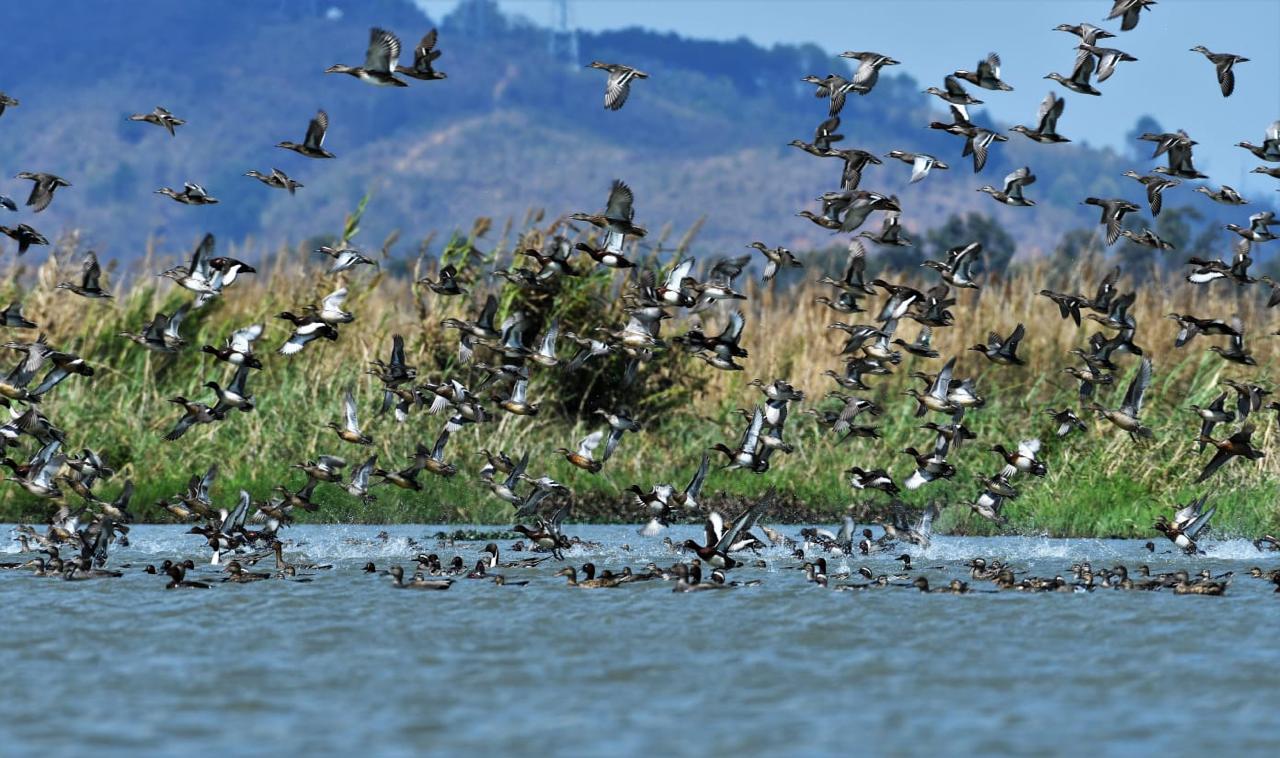
The State’s Directorate of Environment and Climate Change along with other line departments hosted the day at Yaralpat wetland site in Imphal East District, extolling the importance of wetlands to achieve various ecosystem services including groundwater recharge, fisheries and livelihoods, while providing refuge for wildlife such as the wintering migratory water birds.

The day was also observed widely across the State at academic and civil society platforms, individually and with support from the Directorate.

Of significant contribution to the day was the pre-World Wetlands Day 2026 observation on Sunday, 01 February, where the fishing community residing at Champu Khangpok Floating Island Village within Loktak Lake staged a cleanup drive to clear plastics and other domestic wastes along Yangoi Turel Achouba (Nambul River) and its flow up to Birahari Pat within the lake, demonstrating the local community’s responsibility in lake conservation.

Rounding up, it can be well said that a partnership, and workable, model between wetland-dependent local communities and the responsible state agencies can go a long way in shaping the future of wetlands in Manipur, and elsewhere.

The post When Wetlands Beckon first appeared on The Frontier Manipur.

Read more / Original news source: https://thefrontiermanipur.com/when-wetlands-beckon/

Where Is My Pat? A Reflection on Lamphelpat, Memory, and Misguided Development

Due to excessive excavation, Lamphelpat’s depth has reportedly reached around 8-10 metres. Such unscientific deepening directly violates basic wetland management principles. It raises a critical question: is Lamphelpat still a natural wetland, or has it been turned into an artificial water reservoir? By Maxstone Irom This article is born out of worry, longing, and deep […]

The post Where Is My Pat? A Reflection on Lamphelpat, Memory, and Misguided Development first appeared on The Frontier Manipur.

Due to excessive excavation, Lamphelpat’s depth has reportedly reached around 8-10 metres. Such unscientific deepening directly violates basic wetland management principles. It raises a critical question: is Lamphelpat still a natural wetland, or has it been turned into an artificial water reservoir?

By Maxstone Irom

This article is born out of worry, longing, and deep nostalgia of my childhood days around Lamphelpat. I grew up with this wetland as part of my everyday life. It was not just a landscape, it was a living space where memories were created, relationships were built, and nature quietly shaped who I am today. For me, Lamphelpat was never just water and land.

On February 2 2026, as part of World Wetlands Day, Go Green Group Manipur, a youth collective, initiated a reflection and listening circle called Pat Ki Wari. The idea was simple yet powerful: to reconnect with our wetlands and revisit the memories and meanings attached to them. As part of this initiative, we walked around Lamphelpat, observed its present condition, and shared stories rooted in our personal journeys. While much has changed, the place still holds immense emotional and cultural significance in my life.

Lamphelpat is one of my core memories. It is where I experienced my first boat ride. Every Sunday morning, I would go for a walk with my family to watch Urok (Threskiornis melanocephalus)and other birds, returning home with a bunch of thambal (lotus). During the monsoon, when the pat would flood, I accompanied my father to buy fresh fish. In winter, we went fishing together. Those mornings, with muddy slippers, small fishes in my hands, and my father’s quiet smile beside me, felt richer than anything money could buy. These were not extraordinary moments; they were ordinary days made meaningful by nature.

As I age, Lamphelpat continued to shape my life. During my teenage years, it became my refuge. Whenever I felt overwhelmed, confused, or restless, I would sit by the water for hours, finding peace in silence. With friends, I watched sunsets near the RIMS side of the pat, clicking countless photographs that still remind me of simpler times. Lamphelpat is not just a place; it is a place that raised me, comforted me, and quietly taught me how to breathe in difficult times. But today, I find myself asking: where is my pat?

After nearly three years, I was shocked when I returned. It no longer looked like the wetland I grew up with. Under the so called “Lamphelpat water body Rejuvenation Project,” implemented by the Water Resources Department and funded by the New Development Bank, large portions of the wetland have been dug up. The excavated silt has been piled into artificial hills, permanently altering the natural landscape. What was once a living ecosystem now resembles a construction site.

As an environmental science student, this transformation raises serious concerns. According to the Wetlands (Conservation and Management) Rules, 2017, the depth of a wetland should not exceed 6 meters. However, due to excessive excavation, Lamphelpat’s depth has reportedly reached around 8-10 metres. Such unscientific deepening directly violates basic wetland management principles. It raises a critical question: is Lamphelpat still a natural wetland, or has it been turned into an artificial water reservoir?

This seemingly unscientific dredging has also destabilized the surrounding infrastructure. Roads connecting important institutions such as Shija Hospital and the National Institute of Technology have started sinking. To address this, an overbridge had to be constructed, an expensive solution to a problem that could have been avoided with proper planning.

Lamphelpat is also home to Manipur’s famous indigenous pony. The swampy terrain once provided a safe and natural space for grazing and movement. Today, however, due to altered water levels, deep excavated pits, and unstable ground, several ponies have reportedly died after falling into these areas. What was once a natural playground and shelter has now been turned into a death trap created by human negligence and poor planning.

A report on East Mojo has also suggested that parts of nearby villages experienced flooding after the project’s implementation. When a wetland’s natural water-holding and drainage capacity is disrupted, such consequences are inevitable. Instead of reducing disaster risks, this project appears to have increased them.

Equally worrying is the rapid growth of concrete structures around Lamphelpat. Buildings are coming up in every direction, slowly replacing this wetland. In recent years, several new government buildings, hospitals, and offices have also been constructed within and around parts of the wetland. This has led to encroachment and fragmentation of Lamphelpat.. This severely disrupts water flow, wildlife movement, and ecological balance. This unchecked unplanned urbanization further weakens the wetland’s ecological function and isolates it from its natural surroundings. A wetland cannot survive when it is slowly suffocated by cement and divided by unplanned construction.


Overbridge construction in progress at Lamphelpat


Under the Wetlands (Conservation and Management) Rules, 2017, wetlands are meant to be protected from unscientific alteration, encroachment, and ecological degradation. The Manipur State Wetland Authority is responsible for ensuring protection of all the wetland in the state.

Yet, in the case of Lamphelpat, there is little public evidence of strict monitoring, transparent assessment, or community consultation. This reflects a serious failure of governance and accountability.

Let me be clear: development and rejuvenation are necessary. Wetlands do require restoration, maintenance, and protection. But development without ecological understanding is destruction in disguise. True rejuvenation should strengthen a wetland’s natural character, not erase it.

Till today, no comprehensive environmental impact assessment of this project has been made publicly accessible. There is no clear record of meaningful consultation with local communities, ecologists, traditional users, or independent researchers. This lack of transparency raises serious doubts about the legitimacy of the entire project.

Lamphelpat did not need to be dug. It needed protection from encroachment, pollution, and unplanned construction. It needed proper waste management, biodiversity conservation, and community participation. Instead, it received heavy machinery and cosmetic “development” that prioritised appearance over ecology.

What hurts the most is not just the physical transformation, but the emotional loss. A space that once nurtured childhoods, livelihoods, culture, and biodiversity is slowly being stripped of its soul. When a wetland dies, a part of our collective memory dies with it. For many of us, Lamphelpat is not a project site. It is memory, identity, and heritage.

If we truly care about sustainable development, then projects like this must be fundamentally rethought. Policies must respect science, local knowledge, and lived experiences. Youth voices, indigenous knowledge, and environmental expertise should be central, not optional.

This reflection is not just an expression of nostalgia. It is a call to action for authorities to answer, for institutions to take responsibility, and for citizens to demand better. We still have time to correct our mistakes. We still have time to restore Lamphelpat with wisdom, sensitivity, and accountability.

If we cannot save Lamphelpat, a wetland that raised generations of us, what hope do we have of
saving anything at all?


(Maxstone Irom is a writer and poet from Manipur, India, known for his published works in local newspapers and online platforms, often focusing on the social and political issues of his home state.)


The post Where Is My Pat? A Reflection on Lamphelpat, Memory, and Misguided Development first appeared on The Frontier Manipur.

Read more / Original news source: https://thefrontiermanipur.com/where-is-my-pat-a-reflection-on-lamphelpat-memory-and-misguided-development/

Manipur: Aribam Syam Sharma’s film ‘Ishanou’ recognized as world classic, to premiere at Cannes Film Festival

Imphal: The restored version of the 1990 Manipuri film ‘Ishanou’, directed by renowned filmmaker Aribam Syam Sharma, is set to premiere at the Cannes Film Festival to be held from May 16-27. The film, which stars Anoubam Kiranmala and Kang…

Manipur

Imphal: The restored version of the 1990 Manipuri film ‘Ishanou’, directed by renowned filmmaker Aribam Syam Sharma, is set to premiere at the Cannes Film Festival to be held from May 16-27. The film, which stars Anoubam Kiranmala and Kangjam Tomba and deals with the Maibi culture of Manipur, has been recognized as a World […]

The post Manipur: Aribam Syam Sharma’s film ‘Ishanou’ recognized as world classic, to premiere at Cannes Film Festival appeared first on NORTHEAST NOW.

Read more / Original news source: https://nenow.in/north-east-news/manipur/manipur-aribam-syam-sharmas-film-ishanou-recognized-world-classic-to-premiere-at-cannes-film-festival.html

Understanding The Metrics of Heat Waves in South Asia

The prolonged exposure to high temperatures and wet bulb conditions can lead to high risks of heat stroke and a range of physiological impacts. 90 deaths were reported in 2022 due to extreme heat stress.   By Salam Rajesh Climate change has made devastating heat wave impact early in India and Pakistan this year, with […]

The post Understanding The Metrics of Heat Waves in South Asia first appeared on The Frontier Manipur.

The prolonged exposure to high temperatures and wet bulb conditions can lead to high risks of heat stroke and a range of physiological impacts. 90 deaths were reported in 2022 due to extreme heat stress.


By Salam Rajesh

Climate change has made devastating heat wave impact early in India and Pakistan this year, with Pakistan experiencing 30 times more intensity than India, says Dr Friederike Otto of the World Weather Attribution, adding that climate change is likely to increase extreme monsoon rainfall, flooding highly vulnerable communities in Pakistan.

Dr Otto (Senior Lecturer, Grantham Institute for Climate Change and Environment & Co-Founder, World Weather Attribution) was speaking on the topic ‘Understanding Attribution Science: Human induced Climate Change and Heatwaves’ as part of the proceeding of a National Workshop on Heatwaves, Climate Change and its Impacts on Health, Economy and Energy Policies in India at Bengaluru on the 27th of last month, courtesy of Bangalore-based climate strategist group Climate Trends.

Dr Otto’s observation reflects closely to the World Meteorological Organization (WMO)’s warning of a likely spike in temperatures globally this summer, as prelude to the projected El Nino event this year. The year 2015-2016 was recorded as the hottest year in recent history, and this was primarily driven by an El Nino event according to reports. 1500 deaths were reported in the coastal plains of Odisha during 2015 from the intense heat wave that year.

In March, the India Meteorological Department (IMD) had predicted normal monsoon this year but forewarned that an El Nino event can affect the monsoon. Forecasting a 75 percent chance of El Nino in India, the IMD said it could weaken the southwest monsoon and may lead to severe heat waves and droughts in the country – a forewarning that could wreak havoc with the agricultural system in the country, and with a possible backlash on the rural economy.

The forecast for the year has disturbing news for the country wherein compound events of heat waves, cyclones and floods can overlap one another and can cause extensive damages to crops and properties, asserts scientist Dr Roxy Mathew Koll of the Indian Institute of Tropical Meteorology, Pune. Dr Koll was speaking on the subject ‘The dominance of Climate Change on global circulations and its impact on heatwaves and marine heatwaves’.

Bangalore-based climate strategist group Climate Trends stated that “By February-April 2023, most models indicate the return of ENSO-neutral, with a probability of 82%. What is more concerning is the arrival of the dreaded phenomena of El Nino. Climate models are predicting potential return to El Niño by May-July, which coincides with summer monsoon that spans from June to September”.

“During a La Niña, the tropical Pacific soaks up heat like a sponge and builds up the warm water volume. This is the warm water that spills across from the western Pacific to the eastern Pacific during an El Niño. Three consecutive years of La Niña means that the warm water volume is fully loaded and it is likely that the system is ready to give birth to an El Niño. Will it be a strong El Niño like the one during 2015-16? We may get some indications in spring itself,” explains Dr Raghu Murtugudde, Visiting Professor, Earth System Scientist at IITB (Indian Institute of Technology, Bombay) and Emeritus Professor at University of Maryland.

“As for the monsoon itself, if an El Niño state does emerge by summer, then we are more than likely to see a deficit monsoon. A transition from a La Niña winter (which we are in now) to a summer El Niño state tends to produce the largest deficit in the monsoon – of the order of 15%. This implies that the pre-monsoon and monsoon circulations tend to be weaker”. Dr Raghu was speaking on the thematic topic ‘Understanding the variation in weather patterns and the need for early warning systems’.

Kunal Satyarthi (Joint Secretary, National Disaster Management Agency) speaking on the topic ‘The hurdles in building adaptive capacity: A status check on planning and implementation of heat action plans’, stressed on the triple risks of climate hazard, vulnerability and exposure that can cause extensive damage and loss across the different sectors, with the marginalized sections of society more likely to be impacted by the risks involved.

Dr Luke Parsons (Postdoctoral Associate, Duke University) speaking on the subjective matter, ‘Rising wet-bulb temperatures and labour impact’, stressed that as per the Wet Bulb Globe Temperature (WBGT) model, the International Organization for Standardization (ISO 7243) emphasizes that during temperatures reaching above 26 degree Celsius workers are advised to take half hour rest from their heavy work duty.

In case of temperatures reaching above 32-33 degree Celsius the ISO recommends all heavy works should stop. The WBGT model is used in military, occupational health, and athletic events, Dr Luke explains while stating that the model includes temperature, humidity, wind speed, and sun exposure.

The average highest Wet Bulb Globe Temperature for South Asia during 2002 to 2021 was experienced in the north-western parts and the northern plains of India, Pakistan and in Bangladesh, observed Dr Luke, with temperatures reaching 34 degree Celsius and above.

Calculating on the WBGT model, an estimation of the productivity loss across the world reveals a massive global total loss of around 220 billion hours per year, says Dr Luke. Calculating the estimate total labour hours lost per year for different countries, India loses 101 hours per year – almost equivalent to the loss of around 23 million jobs.

Following India is China with 21 hours, Bangladesh with 14, Pakistan with 13, Indonesia with 10, Sudan and Viet Nam with 7, Nigeria and Thailand with 6, and Philippines with 5 hours of labour lost per year respectively.

On this footnote, Climate Trends noted that, “While 2022 set a record with 200 heatwave days in India with some of the hottest months since 1901 and impacting nearly 70% of the country, spring went missing in 2023 as well. February this year was declared the hottest in the last 123 years, the first ever since 1901. March saw heatwave in isolated pockets but April began on a hotter note, with mercury rising every day. State-run India Meteorological Department (IMD) already predicted an increased probability of heatwaves during April and May”.

This comes with a fair indication that unless Heat Action Plans for every States are formulated well in time, things may go from bad to worse. “In a country like India, which is densely populated, the extreme heat hits the poor the hardest who are working as urban or rural labour without access to cooling. The prolonged exposure to high temperatures and wet bulb conditions can lead to high risks of heat stroke and a range of physiological impacts. 90 deaths were reported in 2022 due to extreme heat stress”, forewarns Climate Trends experts.

(The writer looks at environmental stories through the journalistic lens. He can be reached at salamrajesh@rediffmail.com)

The post Understanding The Metrics of Heat Waves in South Asia first appeared on The Frontier Manipur.

Read more / Original news source: https://thefrontiermanipur.com/understanding-the-metrics-of-heat-waves-in-south-asia/

Loktak Lake: Ministry asks LDA to submit revised plan addressing all issues

So far, an amount of Rs 16.86 crore has been released by this Ministry to the Government of Manipur which includes an amount of Rs 428 lakh released during the year 2018-19.  No proposal was received from the State from FY 2019-20 to 2022-23. TFM Report An amount of Rs 16.86 crore had been released […]

The post Loktak Lake: Ministry asks LDA to submit revised plan addressing all issues first appeared on The Frontier Manipur.

So far, an amount of Rs 16.86 crore has been released by this Ministry to the Government of Manipur which includes an amount of Rs 428 lakh released during the year 2018-19.  No proposal was received from the State from FY 2019-20 to 2022-23.

TFM Report

An amount of Rs 16.86 crore had been released by the Ministry of Environment, Forest & Climate Change to the Government of Manipur which includes an amount of Rs 428 lakh released during the year 2018-19. Further, the Integrated Management Plan (IMP) prepared by LDA has been examined by IIT Roorkee and certain suggestions have been given. The Ministry has asked the LDA to submit a revised plan addressing all issues related to conservation of Loktak Lake for endorsement of the Ministry for its implementation.

According to a reliable source, Bhupender Yadav, the Union Minister for Environment, Forest and Climate Change while talking about three major issues on Loktak Lake Ecosystem and suggested measures for delisting from Montreux Record is reported to have stated that the Loktak Lake is an integral part of the culture and ecology of Manipur. Prime Minister Narendra Modi has been very clear that India is land where nature is worshipped and therefore our scared natural resources will be protected and preserved at all costs. So, the government remains committed to developing Loktak Lake as one of the most enchanting and magnificent lakes of the world with community engagement and collective efforts.

According to sources, he said that the the Loktak Lake was included in the Montreux Record in 1993 as a result of ecological problems such as deforestation in catchment area, siltation, infestation of water hyacinth and paragrass and pollution.

The three major issues resulting in listing of Loktak Lake in Montreux Records are:

  1. Changes in water regimes which have triggered phumdi proliferation, water quality deterioration, loss of migratory fish and degradation of KLNP habitat
  2. Pollution from upstream areas which led to water quality degradation and accelerated phumdi proliferation
  3. Conversion of natural phumdi into fish farms which reduced the capacity of Loktak to moderate and buffer water regimes

The Government of Manipur has been advised to submit an action plan to mitigate these issues along with a timeline for removal of Loktak Lake from the Montreux Records. The Ramsar Information Sheet (RIS) of Loktak Lake is to be updated on priority basis by compiler / Loktak Development Authority (LDA), for which they have been duly advised by the Ministry.

On what are the measures taken up to control eutrophication and control of discharge of waste water from urban into the Loktak Lake, the minister said that his department has been providing financial assistance for this wetland since 1988-89 to the Government of Manipur for undertaking conservation activities like survey & demarcation, catchment area treatment, fisheries development, removal of phumdis, constructing water harvesting structures, small scale engineering works, creation of education and awareness etc.

The Loktak Development Authority, Department of Forests, Govt. of Manipur is the implementing agency. So far, an amount of Rs 16.86 crore has been released by this Ministry to the Government of Manipur which includes an amount of Rs 428 lakh released during the year 2018-19. Further, the Integrated Management Plan (IMP) prepared by LDA has been examined by IIT Roorkee and certain suggestions have been given. The Ministry has asked the LDA to submit a revised plan addressing all issues related to conservation of Loktak Lake for endorsement of the Ministry for its implementation.

On measures for upliftment of livelihood or alternative livelihoods of the wetland people, Bhupender Yadav informed that as per the information provided by Government of Manipur, LDA has been taking up certain livelihood development activities for local communities who are dependent on Loktak Lake. The government, giving shape to Prime Minister Narendra Modi ji’s vision of conserving our Amrit Dharohar, also intends to enhance livelihood opportunities of the local communities through developing eco-tourism infrastructure in and around the lake and need-based capacity building of local communities.

The integrated Management Plan prepared by the LDA envisages activities on ‘Sustainable Resource Development and Livelihoods’ that includes:

  1. Community Managed Fisheries Strategy for Loktak aligned with FAO code of conduct of Responsible Fisheries
  2. Enhancement of fish seed production
  3. Development of harvest, post-harvest and marketing infrastructure
  4. Community livelihoods (micro enterprises) programme
  5. Development of Wetland linked Cultural heritage sites to promote tourism for diversification and value addition of existing fisheries based livelihoods
  6. Eco guide training for local communities

When asked if there is any judicious water allocation policy for biodiversity service, for fishers, for agriculture, for hydropower etc at Loktak, the minister informed that MoEF&CC has already taken up the issue of Ithai Barrage operation with the Ministry of Power and NHPC. After due deliberation, NHPC has agreed to lower the water level of Ithai barrage gradually to the drawdown level in the forthcoming winter season starting from November 2023 to rejuvenate KLNP habitat as per the technical report of 2011. With lowering of water levels in winters, the park habitat will improve along with improved circulation and flushing in the wetland.

On the timeframe for any steps taken to protect Loktak from inflow of waste (brought down by river/streams flowing) into Loktak,  Bhupender Yadav said that as informed by the State Government of Manipur, commissioning of Sewage Treatment Plants (STPs) and implementation of activities as envisaged in the Integrated Management Plan will substantially reduce loading of pollutants into the lake. The State Government has also commissioned the construction of STPs at Nambul with the financial assistance of Rs 100 crore provided under the NRCP scheme by NRCD for the effective functioning of existing waste management infrastructure. It will be commissioned by June 2023 to capture and treat waste from Imphal City and Nambul River and take care of the discharge of untreated sewage into Loktak.

On the long term plan to protect the lake from encroachment (when govt removing private farms along Mayang Imphal-Toubul road & lake), the minister Bhupender Yadav said that MoEF&CC has suggested the Government of Manipur to immediately submit an action plan along with a timeline and a map with clear demarcation of the wetland boundary following guidelines provided by MoEF&CC and as per provisions laid by the Ramsar Secretariat for removal of Loktak Lake from Montreux Record. The Ramsar Information Sheet (RIS) of Loktak is to be updated on priority basis by the LDA.

He also said that Loktak Lake in Manipur was designated as Ramsar site on 23.03.1990 under Ramsar Convention and being a Ramsar site, the Wetlands (Conservation and Management) Rules, 2017 are applicable to the lake. A brief document of the lake has already been prepared. RIS itself is a kind of brief document.

On what is the responsibility of National Hydroelectric Power Corporation Limited (NHPC) towards Rehabilitation and Resettlement of displaced communities affected by the Loktak hydroelectric power project since 1983?

Bhupender Yadav said that Loktak Hydroelectric Project was implemented before the EIA notification 1994 and 2006. Therefore, Environment Clearance of the Project was not applicable for the construction of the project. Works on the project commenced in 1971. The project was commissioned in year 1983.

NHPC has informed that for construction of Loktak project 217.09 ha of private land altogether had been purchased from landowners of 11 villages at different sites of the project. Full compensation was paid to land owners before land possession. Hence, Rehabilitation and Resettlement was not applicable at that time.

The Ministry of Environment, Forest & Climate Change has been providing financial assistance for this wetland since 1988-89 to the Government of Manipur for undertaking conservation activities like survey & demarcation, catchment area treatment, fisheries development, removal of Phumdis, constructing water harvesting structures, small scale engineering works, creation of education & awareness etc. Loktak Development Authority, Department of Forests, Govt. of Manipur is the implementing agency. So far, an amount of Rs 16.86 crore has been released by this Ministry to the Government of Manipur which includes an amount of Rs 428 lakh released during the year 2018-19.  No proposal was received from the State from FY 2019-20 to 2022-23.

However, an Integrated Management Plan (IMP) of Loktak Lake was received in the Ministry for endorsement. The plan envisages to put in place Manipur River Basin scale actions, such as conserving catchment to control silt, abating pollution generated from upstream cities, demarcating wetland boundaries, managing water regimes and supporting livelihoods diversification of wetland dependent communities. IMP includes core and non-core activities in the lake area and its zone of influence (catchment, command areas, etc.). The IMP was appraised through IIT-Roorkee and observations given by IIT-R had been sent to the Govt. Of Manipur for revision of the IMP. The revised proposal is yet to be received by the Ministry. The MoEF&CC will consider the proposal on priority as per the cost sharing formula between the Central and State Government and the funding norms of NPCA.

On plans to accommodate the fishing community in lake management plan, the minister said the State Government of Manipur has informed that community Managed Fisheries Strategy for Loktak aligned with FAO code of conduct of Responsible Fisheries will be formulated involving local fishing communities.

Fishing in Loktak Lake has been carried out since time immemorial. The fishermen are an integral part of the Loktak ecosystem. The state government is working to promote healthy capture fisheries, which ensures that ecosystem processes such as migration pathways, water quality and phumdi distribution are not adversely affected.

Ministry of Environment, Forest and Climate Change had earlier stated that any effort towards the effective management of Loktek Lake, which is a designated Ramsar site, shall be in line with the norms of Ramsar Convention as well as Wetlands (Conservation and Management) Rules, 2017.

Minister of State for Environment, Forest and Climate Change Ashini Kumar Choubey said this while answering questions related to Loktak Lake raised by Janata Dal (United) Member of Parliament Anil Hegde on the floor of Rajya Sabha on April 6.

On that day, he also said that as per the information provided by Government of Manipur, approval from Department of Expenditure, Ministry of Finance for the proposed ‘Sustainable Loktak Lake Ecosystem Restoration, Eco Tourism and Livelihood Improvement’ project has not been received so far.

The post Loktak Lake: Ministry asks LDA to submit revised plan addressing all issues first appeared on The Frontier Manipur.

Read more / Original news source: https://thefrontiermanipur.com/loktak-lake-ministry-asks-lda-to-submit-revised-plan-addressing-all-issues/

Black scented rice (chahaomubi) – the black gold of Manipur

Prof Ningthoujam Ram Singh The word Chahaomubi is a combination of three Manipuri words of cha-hao-mubi meaning rice-tasty and black. It is a blackwhole rice plant bearing dark grains. Chahaomubi is also known as Poireiton Chakhao because it was first domesticated by king Poireiton in his land of Poi. Poi is the first generation of […]

Prof Ningthoujam Ram Singh The word Chahaomubi is a combination of three Manipuri words of cha-hao-mubi meaning rice-tasty and black. It is a blackwhole rice plant bearing dark grains. Chahaomubi is also known as Poireiton Chakhao because it was first domesticated by king Poireiton in his land of Poi. Poi is the first generation of […]

Read more / Original news source: http://kanglaonline.com/2016/11/black-scented-rice-chahaomubi-the-black-gold-of-manipur/

A Cleaner environment for a cleaner and healthier society

A Cleaner environment for a cleaner and healthier society   With the decaying of our socio-political and economic conditions, which have become a hindrance to the path of collective progress,

A Cleaner environment for a cleaner and healthier society


With the decaying of our socio-political and economic conditions, which have become a hindrance to the path of collective progress, the perilous state of existence has to be transformed by interventions from many fronts. Social voluntary organisations including the leikai club has larger responsibility at the grassroots level in order to bring about the said transformation. Though one cannot deny the larger responsibility of the state institutions and the like, but the initial voice and action could be germinated from the local level organisations, clubs, including the women organisation. One important area to start with could be the concern for our environment which is at a pathetic state. Our society has become so engrossed in self-gratification of our individual selves. One crude example is how we manage our garbage. It was not of an issue when the population was small. That we could manage the garbage disposal in our own residential compound, which we called as lukhak kom, but now the situation, has changed with the growing urbanization and growing population density. It has become impossible to manage our own private garbage disposal system. Our self-serving individualistic attitude has compounded the problem. We love to keep our immediate vicinity clean and hygienic but at the same time we disposed it at the public space caring little for the collective cleanliness. The state sponsored ‘Zero Garbage Campaign’ has lost into oblivion after much fanfare by the vested interest groups. Whatever may be the reason behind it, one cannot keep aside the problem with the mounting and neglected garbage in our public spaces.


DTKF would start with a simple garbage disposal awareness campaign with the larger perspective of a healthier environment. The coming of Cheiraoba is one marked event wherein we can start the awareness with the general public. Every year a large number of people throngs the Cheiraoching. People come to pray, to climb the hill, to mark the beginning of the local New Year. But it is sad that people come with little awareness of their environment and the social responsibility they should have as responsible citizens. They leave behind a huge pile of garbage by littering on the hill tops. We must not forget that all this wastes product take a long time to decay in the soil. More particularly the plastic waste products for this would all flow into our drainage during the rainy seasons. It would choke the free flow of water. Not only would it also flow into the rivers, ultimately it would flow into other water bodies. Our precious Loktak Lake receives a huge amount of garbage every year.


DTKF wishes to start with a small intervention in this regard. With the coming of the Cheiraoba, the foundation with other likeminded friends and organisations will start awareness campaign. The campaign will take up the following steps:

1. Discourage the use of plastic water bottles, request the shops and retailers near the foot hill not to sell package water bottle. Climbers will be requested to bring their own water bottles.

2. Teach the general people the habit of throwing wastes into proper disposal systems like the dustbins.

3. This is also true that without the dustbins it is simply not possible to translate the work into action. We will make an effort to arrange dustbins in selected areas.

4. Educate the people of the gravity of the garbage menace through slogans and paper handouts.

5. Collaborate with other clubs and organisation for the said task.

6. Our volunteers will hand out basic instructions of garbage disposal on paper handouts right at the foot of the hill on the Cheiraoba day.

7. Welcome suggestion and participation from one and all to make it more practical and meaningful.

8. While creating awareness, cordial approach is the only way to win the heart and mind of many to actively participate for the good cause.


Your Sincerely
Brojen Sinam
President – DTKF and TUC

Sending on Behalf
Thanks
Team Gomanipur

Read more / Original news source: http://kanglaonline.com/2014/03/a-cleaner-environment-for-a-cleaner-and-healthier-society/

Apocalypse Imagined

The magnitude of a possible disaster as indicated by the periodic flood situation every monsoon can only be described as terrifying. Tuesday night’s unusually heavy torrents literally flooded half of… Read more »

The magnitude of a possible disaster as indicated by the periodic flood situation every monsoon can only be described as terrifying. Tuesday night’s unusually heavy torrents literally flooded half of Imphal, though thankfully the cloudburst did not last too long and the logged water had time to flow away considerably by morning, although not completely.

This is yet another caution as to how vulnerable the Imphal valley is. Just imagine what would have happened if the rains did not stop for another one week, a scenario not altogether impossible, in fact one which should be expected in the near future if the prediction of global warming and climate change by scientists is anything to go by. The floods caused would then be much more extensive. But more than this, in the event of a much larger volume of flood water inundating the valley, the second scenario is even more alarming.

Up to a certain level, the Loktak lake and other still existing natural wetlands can act as the reservoir and absorb flood waters. That is to say, only so long as the flood water volume is within this limit, flood waters would recede soon as the rains stop, and inundated farmlands and residences would be spared total destruction. But just suppose the flood water volume exceeds this limit in any given years. Since there is very little outflow of water away from the valley, the excess waters would have little or no place to drain away into, and farmlands and homesteads would remain inundated until the water evaporates. A glimpse of such a scenario is already available in the current floods. Long after the rains have ceased, many low lying areas as still flooded as the rivers that brought the waters are unable to reabsorb them. If the freak rains persist every year, then even before the previous years flood waters have receded, more would be incrementally added, ultimately water would reclaim much of the low lying areas, in much the same way it probably was in prehistoric and proto-historic times, memories of which are preserved in some of the folklores and legends of the place.

Even as much of the low lying coastal regions of the world, including Bangladesh, Netherlands, Florida etc, are swallowed up by the sea in the event of global warming leading to the melting of the polar ice caps, much of the Imphal valley too then would be an extended lake from permanent flood waters.
The moot point is, what possible remedies can there be? The first thing that most believers in a supernatural order would do is to pray that the unprecedented downpour this year was a freak occurrence and not a portent of things to come. But still, it would be prudent to prepare for the worst, even if one were to continue hoping for the best. The second, but a rather long term strategy would be to join the global effort to arrest climate change. This would entail first and foremost, trying to understand what this is all about. The last proposition that we would like to suggest has to do with the question of preparing for the worst case scenario.

The Imphal valley is at an altitude of over 2000 feet above mean sea level, which means that given the outlet, gravity would ensure that water drains out of the place. This fact itself should be capitalised into devising a way to ensure security of the valley from a future water disaster in the event of climate change. Apart from the river that flow out of the Loktak lake to ultimately join the river system in Myanmar and ultimately the sea, artificial tunnels of the Loktak Hydro Electric Plant use the same principle of gravity to divert water away from the lake to turn generation turbines and ultimately join the Barak River and the sea. Such artificial outlets could be made to have a double purpose – hydro electric generation as well as emergency water drainage. Just as for instance, the elaborate labyrinths of subway train tunnels deep down into the earth in many American and European cities, were also designed during the Cold War to couple up nuclear shelters in the eventuality of a nuclear holocaust which had become a real threat then. The nuclear holocaust did not happen, but the subway systems are not a waste because they are also fundamentally an important city transport infrastructure. Likewise, climate change and a subsequent water disaster may or may not be Imphal valley’s future, but the hydroelectric tunnels would still be performing their fundamental purpose of producing electricity.

Enhanced by Zemanta

Read more / Original news source: http://feedproxy.google.com/~r/Kanglaonline/~3/7zSWRnh62u4/

Oxydome by Naosekpam Ajit

18th March 2080, a day of joy-my 80th birthday. I woke up refreshed from a good night’s sleep, had a shave and warmed up my Oxydome at 24?C. The night… Read more »

18th March 2080, a day of joy-my 80th birthday. I woke up refreshed from a good night’s sleep, had a shave and warmed up my Oxydome at 24?C.

The night temperature had dropped to 6?C even inside the dome, ‘it must be freezing outside’- I thought. Even as the dome was warming up- my mind wandered back to my childhood days- the trees and the green fields –the soft breeze that entered me and nourished my soul, the warmth of the morning sun caressing my young cheeks.

Those were the days when we played in the open fields and enjoyed nature’s free air and sunshine.

Then as I grew up, the world population boomed, forest have to downed to make room for human habitations, emissions spiraled out of control, global temperatures rose alarmingly, tidal waves and wind currents ran amok.

The atmosphere became hostile to the invasive human race. Polar ice caps are now a thing of the past. Daytime temperatures reached a maximum of 70?C and night time temperatures dropped to -30?C at the place where I used to play with the trees. Some migrated to planet EOX2.

For fifteen years we have been living in small cubical domes supplied with oxygen known as Oxydomes. Large transparent tubes connect these domes which serve as passage apart from the essential oxygen supply.

“Oh, what man have become” I thought –‘trapped in his own design’.

I braced myself up, today is my birthday not a time to ponder upon man’s predicament, but a day to enjoy. I switched on my omnitel network and invited four of my friends by sending synchronized tele image and voice capsules through the network.

 I dressed myself up for the occasion and suddenly the door announced an arrival. ‘Who is the early bird’-I thought and opened the door with great expectations only to find two men dressed in black. They flashed their O2 inspection cards.

I had just paid my O2 bills, why are they here?

They told me rather coldly that I had exhausted my card limit. “You had been on a contract for fifteen years and today is your last day. The interplanetary teleportation system is also down and the only option is Lethal-D”.

Lethal-D!! I almost gasped. I tried to argue with them by telling that I had always paid the bills on time and never overheated during night hours, but even as I spoke, my hopelessness took over since they are known to be unbendable.

Oh, I have to die on my birthday! They said they are sorry, ‘the global supply of O2 is at a record low and the young and the productive has to live and phasing out the old is inevitable,’ ‘cold unbeatable logic’- I surmised.

I collected my gasping breath and sat on a chair. “Make it fast”- I shouted in panic. One of them ushered out a Lethal-D injection module and held my left arm and I felt the final prick –I shook and shuddered.

I woke up soaked in sweat – it was my wife pricking my arm. She told me that I had a nightmare and shouted, “Make it fast”. Oh God I am still alive! I drank a glass of water and ran outside the door and embraced the lone tree in my lawn even as my thumping heart whispered a sincere- “Thank you.”

Naosekpam AjitNaosekpam Ajit is a researcher based in Himachal Pradesh. His research interests are Biocontrol and Bioconversion.

Enhanced by Zemanta

Read more / Original news source: http://feedproxy.google.com/~r/Kanglaonline/~3/zNdwEFZDLIQ/