CM Links Tronglaobi Killings to Elements Keen on Derailing Peace Efforts, Calls for Unity

Highlighting public sentiment, Yumnam Khemchand said people across communities have expressed a strong desire for peace and stability. He urged citizens to remain united and vigilant against elements seeking to create division. TFM Report Manipur Chief Minister Yumnam Khemchand Singh on Wednesday (April 29) said the April 7 Tronglaobi blast, which killed two children, was […]

The post CM Links Tronglaobi Killings to Elements Keen on Derailing Peace Efforts, Calls for Unity first appeared on The Frontier Manipur.

Highlighting public sentiment, Yumnam Khemchand said people across communities have expressed a strong desire for peace and stability. He urged citizens to remain united and vigilant against elements seeking to create division.

TFM Report

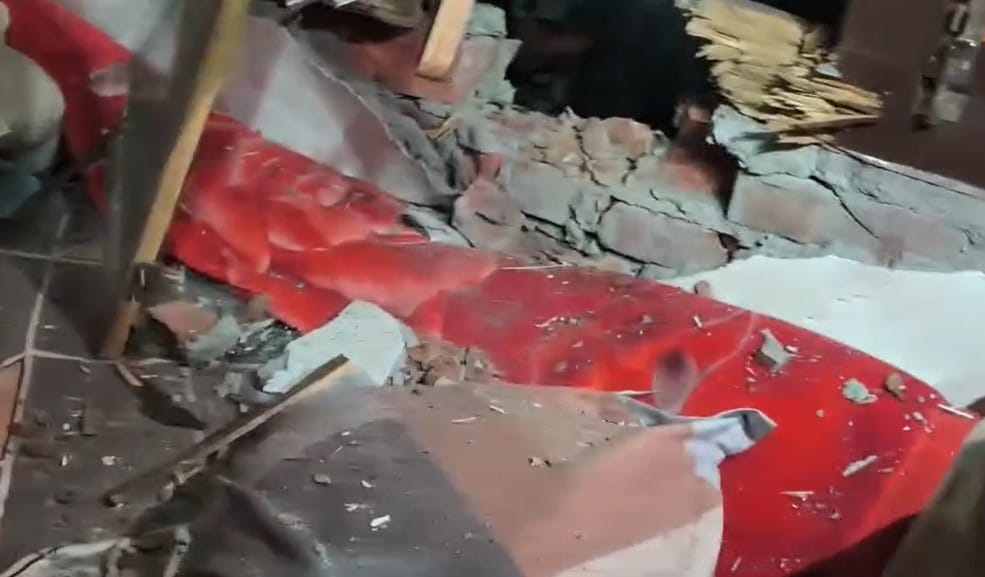
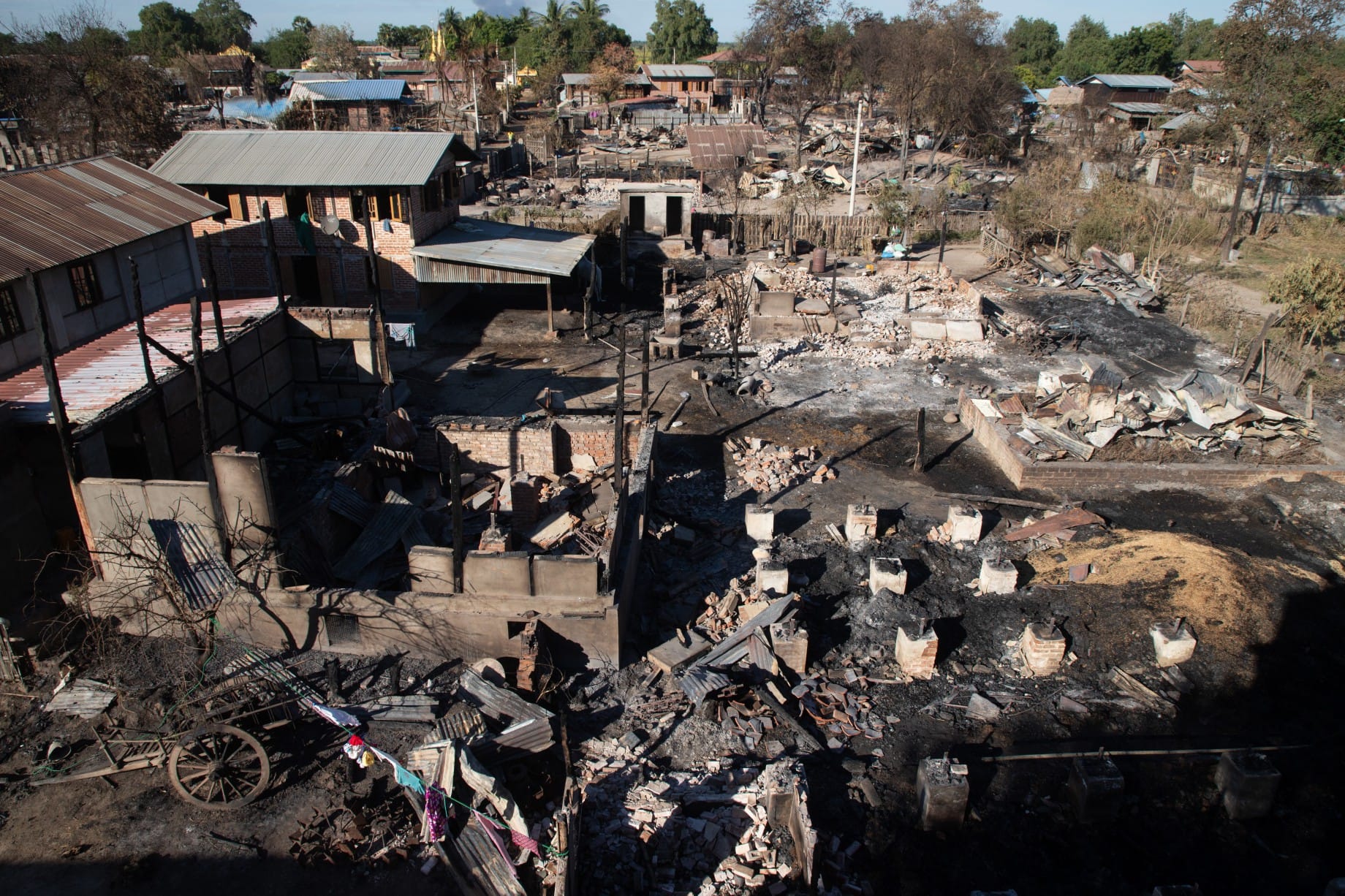
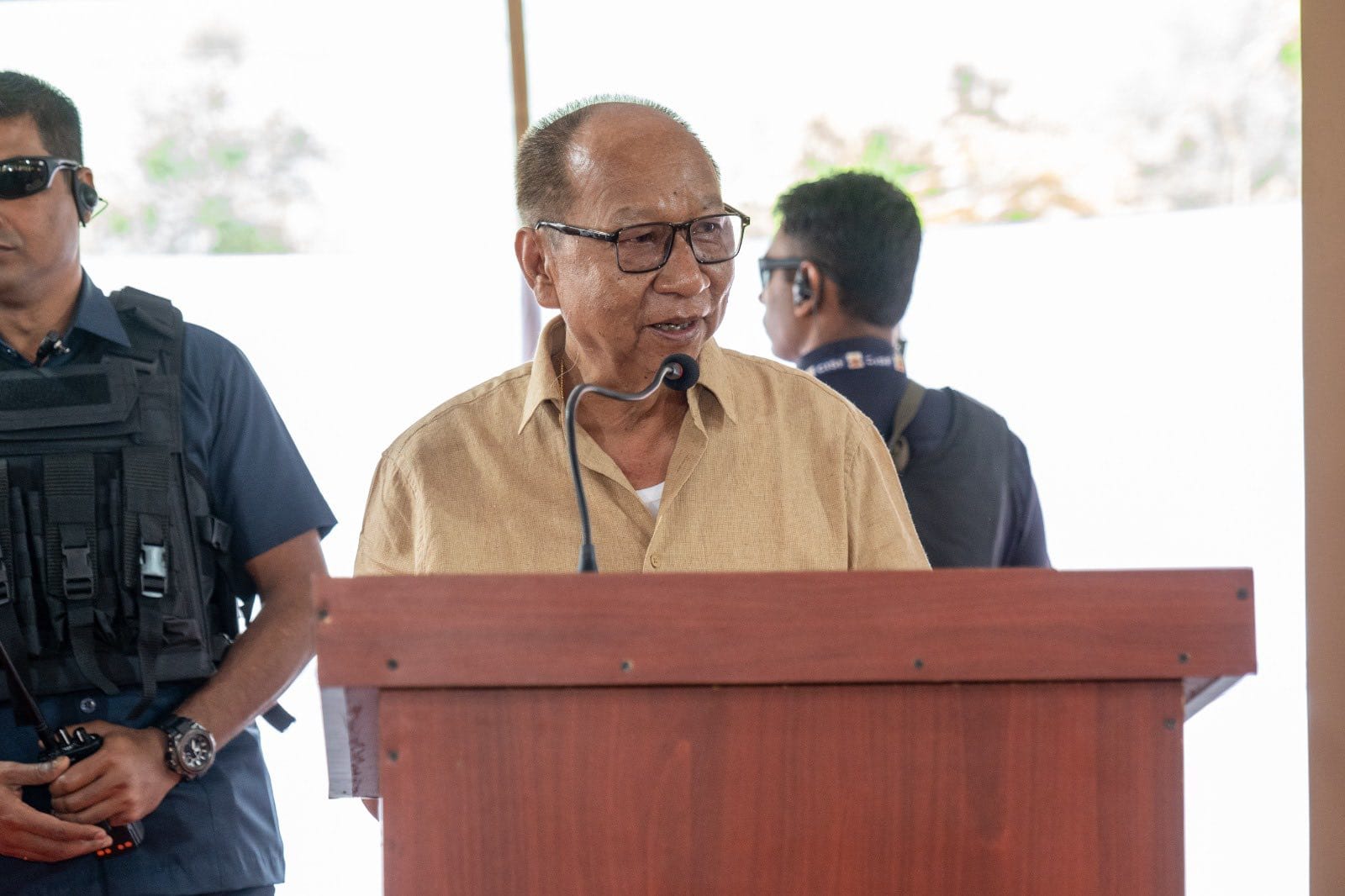
Manipur Chief Minister Yumnam Khemchand Singh on Wednesday (April 29) said the April 7 Tronglaobi blast, which killed two children, was likely the handiwork of groups attempting to destabilize the state and obstruct ongoing peace efforts.

Referring to the Tronglaobi incident in which two children (siblings) were killed, he said the government under him believe that the incident must have been triggered by “those who did not want the formation of a popular government or those who want to create a volatile atmosphere. We will apprehend those responsible, they have no place to run”.

Addressing a gathering in Langthabal constituency in Imphal West district after inaugurating five infrastructure projects, the Chief Minister placed the incident in context. He noted that Manipur had been under President’s Rule since February 13, 2025, following the resignation of former Chief Minister N Biren Singh amid prolonged ethnic violence that began on May 3, 2023. President’s Rule was revoked on February 4, 2026, paving the way for the formation of a new government led by Singh, due to demand of forming a popular government from the general public.

“After a consistent demand for the revocation of President’s Rule and installation of a popular government through the voices of the public, I became the Chief Minister (I did not lobby for the post nor did I know that I would be the one for the post),” said the Chief Minister.

On the occasion, Khemchand also emphasized that peace remains the foremost requirement for development. The projects included three water supply schemes and two community halls. He added that since assuming office, his focus has been on initiating a “journey for peace” aimed at rebuilding trust and harmony among communities.

Over the past two months and twenty days, Singh said he has engaged extensively with MLAs, officials, and civil society groups, while also visiting both hill and valley districts—including Jiribam, Senapati, Kangpokpi, and Ukhrul—to understand public grievances and promote reconciliation. He pointed out that the Tronglaobi blast occurred shortly after his visit to Jiribam, calling it an “unfortunate” attempt to derail the fragile peace process.

Highlighting public sentiment, Singh said people across communities have expressed a strong desire for peace and stability. He urged citizens to remain united and vigilant against elements seeking to create division.

Reaffirming the government’s commitment, Singh said development initiatives would continue across all regions, including remote areas, despite ongoing challenges, and called for collective cooperation to build a peaceful and progressive Manipur.

The post CM Links Tronglaobi Killings to Elements Keen on Derailing Peace Efforts, Calls for Unity first appeared on The Frontier Manipur.

Read more / Original news source: https://thefrontiermanipur.com/cm-links-tronglaobi-killings-to-elements-keen-on-derailing-peace-efforts-calls-for-unity/

CM Links Tronglaobi Killings to Elements Keen on Derailing Peace Efforts, Calls for Unity

Highlighting public sentiment, Yumnam Khemchand said people across communities have expressed a strong desire for peace and stability. He urged citizens to remain united and vigilant against elements seeking to create division. TFM Report Manipur Chief Minister Yumnam Khemchand Singh on Wednesday (April 29) said the April 7 Tronglaobi blast, which killed two children, was […]

The post CM Links Tronglaobi Killings to Elements Keen on Derailing Peace Efforts, Calls for Unity first appeared on The Frontier Manipur.

Highlighting public sentiment, Yumnam Khemchand said people across communities have expressed a strong desire for peace and stability. He urged citizens to remain united and vigilant against elements seeking to create division.

TFM Report

Manipur Chief Minister Yumnam Khemchand Singh on Wednesday (April 29) said the April 7 Tronglaobi blast, which killed two children, was likely the handiwork of groups attempting to destabilize the state and obstruct ongoing peace efforts.

Referring to the Tronglaobi incident in which two children (siblings) were killed, he said the government under him believe that the incident must have been triggered by “those who did not want the formation of a popular government or those who want to create a volatile atmosphere. We will apprehend those responsible, they have no place to run”.

Addressing a gathering in Langthabal constituency in Imphal West district after inaugurating five infrastructure projects, the Chief Minister placed the incident in context. He noted that Manipur had been under President’s Rule since February 13, 2025, following the resignation of former Chief Minister N Biren Singh amid prolonged ethnic violence that began on May 3, 2023. President’s Rule was revoked on February 4, 2026, paving the way for the formation of a new government led by Singh, due to demand of forming a popular government from the general public.

“After a consistent demand for the revocation of President’s Rule and installation of a popular government through the voices of the public, I became the Chief Minister (I did not lobby for the post nor did I know that I would be the one for the post),” said the Chief Minister.

On the occasion, Khemchand also emphasized that peace remains the foremost requirement for development. The projects included three water supply schemes and two community halls. He added that since assuming office, his focus has been on initiating a “journey for peace” aimed at rebuilding trust and harmony among communities.

Over the past two months and twenty days, Singh said he has engaged extensively with MLAs, officials, and civil society groups, while also visiting both hill and valley districts—including Jiribam, Senapati, Kangpokpi, and Ukhrul—to understand public grievances and promote reconciliation. He pointed out that the Tronglaobi blast occurred shortly after his visit to Jiribam, calling it an “unfortunate” attempt to derail the fragile peace process.

Highlighting public sentiment, Singh said people across communities have expressed a strong desire for peace and stability. He urged citizens to remain united and vigilant against elements seeking to create division.

Reaffirming the government’s commitment, Singh said development initiatives would continue across all regions, including remote areas, despite ongoing challenges, and called for collective cooperation to build a peaceful and progressive Manipur.

The post CM Links Tronglaobi Killings to Elements Keen on Derailing Peace Efforts, Calls for Unity first appeared on The Frontier Manipur.

Read more / Original news source: https://thefrontiermanipur.com/cm-links-tronglaobi-killings-to-elements-keen-on-derailing-peace-efforts-calls-for-unity/

Manipur Crisis Through Conflict Theory: A Two-Level Mistrust Model

The Manipur crisis as a simultaneous breakdown of vertical trust between citizens and the state, and horizontal trust among communities. Using conflict theory, it argues that structural inequalities, identity fears, security dilemmas, and cultural violence have transformed the crisis into a self-sustaining cycle of mutual insecurity. Lasting peace requires rebuilding institutional legitimacy and intergroup trust, […]

The post Manipur Crisis Through Conflict Theory: A Two-Level Mistrust Model first appeared on The Frontier Manipur.

The Manipur crisis as a simultaneous breakdown of vertical trust between citizens and the state, and horizontal trust among communities. Using conflict theory, it argues that structural inequalities, identity fears, security dilemmas, and cultural violence have transformed the crisis into a self-sustaining cycle of mutual insecurity. Lasting peace requires rebuilding institutional legitimacy and intergroup trust, not merely restoring law and order.
By Sheikh Abdul Hakim

The Manipur crisis can be theorised as a breakdown of social cohesion at two levels: the vertical level, between citizens and the state, and the horizontal level, among communities. Social-cohesion theory defines the horizontal dimension as trust among people and groups, while the vertical dimension concerns trust between citizens and institutions such as the government. In Manipur, both have weakened at the same time, making the crisis far deeper than a normal law-and-order problem.

Core thesis

From the perspective of conflict theory, Manipur is not merely a clash of communities. It is a conflict over security, land, recognition, political power, identity, dignity, and trust. The immediate violence began in May 2023 around ethnic tensions linked to Scheduled Tribe status, affirmative-action benefits, land and political anxieties; by 2026, Reuters reported around 260 deaths and more than 60,000 displaced, while ACLED described the two major communities as living in near-complete segregation after two years of violence.

The central problem is this: each community now sees its own survival as insecure, and many citizens no longer believe that institutions can protect them with neutrality, speed, and fairness. Once that happens, every incident is interpreted not as an individual crime, but as evidence of collective danger.

1. Structural conflict: unequal power, land, representation and resources

Classical conflict theory begins from the idea that society is not always harmonious; it is often shaped by struggles over scarce resources and institutional power. In Manipur, the relevant resources are not only money or jobs. They include land, constitutional protection, political representation, administrative control, access to security, development, mobility, and cultural recognition.

Frances Stewart’s theory of horizontal inequalities is especially useful. It argues that conflict becomes more likely when economic, political, social and cultural inequalities are experienced not merely by individuals, but by identity groups. Stewart’s framework defines horizontal inequalities as inequalities among groups sharing a common identity, and notes that when cultural differences overlap with economic and political differences, resentment can deepen into violent struggle.

Applied to Manipur, the hill-valley divide becomes more than geography. The valley is associated with demographic concentration, political centrality and administrative visibility; the hills are associated with land protection, tribal autonomy, distance from state services and fear of domination. The Meitei demand for Scheduled Tribe status, and the opposition to it from Kuki-Zo and other tribal groups, therefore, became a symbolic struggle over who will control the future rules of land, reservation, recognition and security. That is why the conflict cannot be reduced to one incident alone.

2. Identity conflict: when grievance becomes community consciousness

Social Identity Theory, developed by Henri Tajfel and John Turner, helps explain how people begin to see events through the lens of “us” and “them.” Their work showed that even minimal group distinctions can generate in-group preference and out-group suspicion; in a violent setting, this tendency becomes far more dangerous.

In Manipur, the crisis has turned identity into a security boundary. A killing, arrest, rumour, checkpoint, relief measure or government statement is no longer judged only on facts. It is often judged through the question: “Is this against my community or in favour of the other?” This is the psychological moment where horizontal mistrust becomes self-reinforcing.

The tragedy is that people who once shared markets, schools, roads, workplaces and friendships can begin to see one another as representatives of collective threat. At that stage, individual guilt disappears behind collective suspicion. Conflict theory calls this the hardening of group boundaries.

3. Security dilemma: every group’s self-defence frightens the other

The ethnic security dilemma is one of the most powerful explanations for Manipur today. Lake and Rothchild argue that intense ethnic conflict is not caused simply by “ancient hatred”; it is often produced by collective fear of the future, especially when groups doubt whether the state can credibly protect them. When the state’s authority weakens or is seen as biased, communities begin preparing for their own defence; those preparations then look threatening to the other side, causing a spiral.

This is visible in Manipur’s armed village-defence atmosphere, buffer zones, checkpoints, displacement camps, segregated settlements, and fear of crossing into the “other” area. Reuters reported that weapons were in circulation, including arms stolen from police or smuggled from Myanmar, while many Kukis and Meiteis moved out of mixed areas.

The security dilemma works like this:

One side says: “We are arming or blocking roads only to protect ourselves.”

The other side hears: “They are preparing to attack us.”

The state intervenes: one group sees protection, another sees bias.

Result: fear grows even when both sides claim they want safety.

Thus, Manipur’s crisis has moved from grievance to fear, and from fear to separation.

4. Vertical mistrust: the crisis of state legitimacy

Conflict theory also asks: who controls institutions, and do people see those institutions as neutral? In Manipur, vertical mistrust has become central. Many citizens no longer evaluate the state only by laws written on paper; they evaluate it by lived experience: Who came when we were attacked? Whose FIR was registered? Whose dead were honoured? Whose displaced families were heard? Whose roads were opened? Whose suffering was ignored?

The Supreme Court’s intervention itself shows the gravity of the institutional-trust problem. In its [Manipur violence order], the Court stressed the need to restore faith and confidence in the justice system, ensure that perpetrators are punished according to law, and sustain public confidence in investigation and prosecution. It also constituted a three-judge committee led by Justice Gita Mittal for relief, rehabilitation and survivor support, and appointed an outside police officer to supervise investigations.

This matters theoretically because when citizens lose confidence in institutions, they seek security from community organisations, armed volunteers, pressure groups, ethnic councils, rumour networks and local defence structures. The state then loses its monopoly over trust, even if it still has formal authority.

In simple terms: a government may control territory, but it cannot produce peace unless people believe it is fair.

5. Cultural violence: when language makes violence acceptable

Johan Galtung’s theory divides violence into direct violence, structural violence, and cultural violence. Direct violence is visible: killings, arson, sexual violence, displacement, attacks. Structural violence is built into unequal systems. Cultural violence is the language, symbols, stereotypes and narratives that make direct or structural violence appear acceptable.

In Manipur, cultural violence appears when entire communities are reduced to labels: “illegal,” “terrorist,” “drug-linked,” “land-grabber,” “anti-national,” “aggressor,” or “enemy.” Once such language spreads, the crime of an individual is transferred onto a whole community. This is how collective blame is manufactured.

The theoretical danger is that cultural violence does not always look like violence. It may look like a slogan, a speech, a rumour, a meme, a funeral speech, a protest placard, or a social-media post. But it prepares the mind to accept cruelty.

6. Conflict entrepreneurs: those who benefit from division

Conflict theory also pays attention to actors who gain from instability. These may include extremist groups, armed networks, political hardliners, black-market actors, rumour-spreaders, and leaders who gain influence by presenting themselves as sole protectors of a community.

Lake and Rothchild note that [ethnic activists and political entrepreneurs] can build upon insecurity and polarise society. In Manipur, this means the conflict is not sustained only by spontaneous anger. It is also sustained by networks that turn fear into mobilisation, mobilisation into power, and power into bargaining strength.

This is why peace is difficult: for ordinary people, peace means returning home; for conflict entrepreneurs, peace may mean losing relevance.

7. Displacement and segregation: mistrust becomes geography

Displacement changes conflict from an event into a living structure. Once people are separated into camps, protected zones and community-specific territories, mistrust becomes geographical. ACLED’s description of near-complete segregation is therefore not only a demographic fact; it is a conflict-theory warning. Separation reduces everyday contact, and reduced contact allows rumours to replace relationships.

Intergroup Contact Theory, associated with Gordon Allport and later work by Pettigrew, suggests that contact reduces prejudice best when there is equal status, common goals, cooperation and authority support. But unsafe, unequal or forced contact can deepen fear. Therefore, simply telling communities to “live together again” is not enough. They need conditions where coexistence is safe, dignified and institutionally protected.

The Manipur crisis in one theoretical formula

Structural insecurity + identity fear + weak institutional trust + armed separation + hostile narratives = prolonged ethnic conflict.

Or more simply:

Vertical mistrust makes people doubt the state. Horizontal mistrust makes people fear neighbours. Together, they create a society where every action is suspected, every rumour travels fast, and every tragedy can become another trigger.

What conflict theory teaches for Manipur

The first lesson is that policing alone cannot solve a conflict that has become structural and psychological. Security is necessary, but security without trust can be read as occupation, bias or threat.

The second lesson is that justice must be both real and visible. The Supreme Court’s emphasis on restoring public confidence in investigation and prosecution is crucial because, in a mistrust society, justice hidden from public confidence will not heal public wounds.

The third lesson is that peace must operate at three levels: stop direct violence, correct structural grievances, and defeat cultural hatred. Galtung’s framework makes clear that removing guns is only the beginning; societies must also remove the narratives and inequalities that make violence return.

Final theoretical framing

Manipur today is best understood as a crisis of mutual insecurity. The Meitei fear loss of identity, land security, demographic balance and historical centrality. The Kuki-Zo fear loss of land, autonomy, physical safety and equal protection. Other communities fear being dragged into a binary conflict that may erase their own concerns. The government faces a legitimacy deficit because different communities judge its actions through different wounds. Therefore, the problem is not only that communities disagree. The deeper problem is that they no longer trust the same facts, the same institutions, or the same future.

The crisis began with events. It now survives through structures. It will end only when Manipur rebuilds both: vertical trust in the state and horizontal trust among communities.

(Sheikh Abdul Hakim is Director, Social Welfare, Government of Manipur)


The post Manipur Crisis Through Conflict Theory: A Two-Level Mistrust Model first appeared on The Frontier Manipur.

Read more / Original news source: https://thefrontiermanipur.com/manipur-crisis-through-conflict-theory-a-two-level-mistrust-model/


Manipur Crisis Through Conflict Theory: A Two-Level Mistrust Model

The Manipur crisis as a simultaneous breakdown of vertical trust between citizens and the state, and horizontal trust among communities. Using conflict theory, it argues that structural inequalities, identity fears, security dilemmas, and cultural violence have transformed the crisis into a self-sustaining cycle of mutual insecurity. Lasting peace requires rebuilding institutional legitimacy and intergroup trust, […]

The post Manipur Crisis Through Conflict Theory: A Two-Level Mistrust Model first appeared on The Frontier Manipur.

The Manipur crisis as a simultaneous breakdown of vertical trust between citizens and the state, and horizontal trust among communities. Using conflict theory, it argues that structural inequalities, identity fears, security dilemmas, and cultural violence have transformed the crisis into a self-sustaining cycle of mutual insecurity. Lasting peace requires rebuilding institutional legitimacy and intergroup trust, not merely restoring law and order.

By Sheikh Abdul Hakim

The Manipur crisis can be theorised as a breakdown of social cohesion at two levels: the vertical level, between citizens and the state, and the horizontal level, among communities. Social-cohesion theory defines the horizontal dimension as trust among people and groups, while the vertical dimension concerns trust between citizens and institutions such as the government. In Manipur, both have weakened at the same time, making the crisis far deeper than a normal law-and-order problem.

Core thesis

From the perspective of conflict theory, Manipur is not merely a clash of communities. It is a conflict over security, land, recognition, political power, identity, dignity, and trust. The immediate violence began in May 2023 around ethnic tensions linked to Scheduled Tribe status, affirmative-action benefits, land and political anxieties; by 2026, Reuters reported around 260 deaths and more than 60,000 displaced, while ACLED described the two major communities as living in near-complete segregation after two years of violence.

The central problem is this: each community now sees its own survival as insecure, and many citizens no longer believe that institutions can protect them with neutrality, speed, and fairness. Once that happens, every incident is interpreted not as an individual crime, but as evidence of collective danger.

1. Structural conflict: unequal power, land, representation and resources

Classical conflict theory begins from the idea that society is not always harmonious; it is often shaped by struggles over scarce resources and institutional power. In Manipur, the relevant resources are not only money or jobs. They include land, constitutional protection, political representation, administrative control, access to security, development, mobility, and cultural recognition.

Frances Stewart’s theory of horizontal inequalities is especially useful. It argues that conflict becomes more likely when economic, political, social and cultural inequalities are experienced not merely by individuals, but by identity groups. Stewart’s framework defines horizontal inequalities as inequalities among groups sharing a common identity, and notes that when cultural differences overlap with economic and political differences, resentment can deepen into violent struggle.

Applied to Manipur, the hill-valley divide becomes more than geography. The valley is associated with demographic concentration, political centrality and administrative visibility; the hills are associated with land protection, tribal autonomy, distance from state services and fear of domination. The Meitei demand for Scheduled Tribe status, and the opposition to it from Kuki-Zo and other tribal groups, therefore, became a symbolic struggle over who will control the future rules of land, reservation, recognition and security. That is why the conflict cannot be reduced to one incident alone.

2. Identity conflict: when grievance becomes community consciousness

Social Identity Theory, developed by Henri Tajfel and John Turner, helps explain how people begin to see events through the lens of “us” and “them.” Their work showed that even minimal group distinctions can generate in-group preference and out-group suspicion; in a violent setting, this tendency becomes far more dangerous.

In Manipur, the crisis has turned identity into a security boundary. A killing, arrest, rumour, checkpoint, relief measure or government statement is no longer judged only on facts. It is often judged through the question: “Is this against my community or in favour of the other?” This is the psychological moment where horizontal mistrust becomes self-reinforcing.

The tragedy is that people who once shared markets, schools, roads, workplaces and friendships can begin to see one another as representatives of collective threat. At that stage, individual guilt disappears behind collective suspicion. Conflict theory calls this the hardening of group boundaries.

3. Security dilemma: every group’s self-defence frightens the other

The ethnic security dilemma is one of the most powerful explanations for Manipur today. Lake and Rothchild argue that intense ethnic conflict is not caused simply by “ancient hatred”; it is often produced by collective fear of the future, especially when groups doubt whether the state can credibly protect them. When the state’s authority weakens or is seen as biased, communities begin preparing for their own defence; those preparations then look threatening to the other side, causing a spiral.

This is visible in Manipur’s armed village-defence atmosphere, buffer zones, checkpoints, displacement camps, segregated settlements, and fear of crossing into the “other” area. Reuters reported that weapons were in circulation, including arms stolen from police or smuggled from Myanmar, while many Kukis and Meiteis moved out of mixed areas.

The security dilemma works like this:

One side says: “We are arming or blocking roads only to protect ourselves.”

The other side hears: “They are preparing to attack us.”

The state intervenes: one group sees protection, another sees bias.

Result: fear grows even when both sides claim they want safety.

Thus, Manipur’s crisis has moved from grievance to fear, and from fear to separation.

4. Vertical mistrust: the crisis of state legitimacy

Conflict theory also asks: who controls institutions, and do people see those institutions as neutral? In Manipur, vertical mistrust has become central. Many citizens no longer evaluate the state only by laws written on paper; they evaluate it by lived experience: Who came when we were attacked? Whose FIR was registered? Whose dead were honoured? Whose displaced families were heard? Whose roads were opened? Whose suffering was ignored?

The Supreme Court’s intervention itself shows the gravity of the institutional-trust problem. In its [Manipur violence order], the Court stressed the need to restore faith and confidence in the justice system, ensure that perpetrators are punished according to law, and sustain public confidence in investigation and prosecution. It also constituted a three-judge committee led by Justice Gita Mittal for relief, rehabilitation and survivor support, and appointed an outside police officer to supervise investigations.

This matters theoretically because when citizens lose confidence in institutions, they seek security from community organisations, armed volunteers, pressure groups, ethnic councils, rumour networks and local defence structures. The state then loses its monopoly over trust, even if it still has formal authority.

In simple terms: a government may control territory, but it cannot produce peace unless people believe it is fair.

5. Cultural violence: when language makes violence acceptable

Johan Galtung’s theory divides violence into direct violence, structural violence, and cultural violence. Direct violence is visible: killings, arson, sexual violence, displacement, attacks. Structural violence is built into unequal systems. Cultural violence is the language, symbols, stereotypes and narratives that make direct or structural violence appear acceptable.

In Manipur, cultural violence appears when entire communities are reduced to labels: “illegal,” “terrorist,” “drug-linked,” “land-grabber,” “anti-national,” “aggressor,” or “enemy.” Once such language spreads, the crime of an individual is transferred onto a whole community. This is how collective blame is manufactured.

The theoretical danger is that cultural violence does not always look like violence. It may look like a slogan, a speech, a rumour, a meme, a funeral speech, a protest placard, or a social-media post. But it prepares the mind to accept cruelty.

6. Conflict entrepreneurs: those who benefit from division

Conflict theory also pays attention to actors who gain from instability. These may include extremist groups, armed networks, political hardliners, black-market actors, rumour-spreaders, and leaders who gain influence by presenting themselves as sole protectors of a community.

Lake and Rothchild note that [ethnic activists and political entrepreneurs] can build upon insecurity and polarise society. In Manipur, this means the conflict is not sustained only by spontaneous anger. It is also sustained by networks that turn fear into mobilisation, mobilisation into power, and power into bargaining strength.

This is why peace is difficult: for ordinary people, peace means returning home; for conflict entrepreneurs, peace may mean losing relevance.

7. Displacement and segregation: mistrust becomes geography

Displacement changes conflict from an event into a living structure. Once people are separated into camps, protected zones and community-specific territories, mistrust becomes geographical. ACLED’s description of near-complete segregation is therefore not only a demographic fact; it is a conflict-theory warning. Separation reduces everyday contact, and reduced contact allows rumours to replace relationships.

Intergroup Contact Theory, associated with Gordon Allport and later work by Pettigrew, suggests that contact reduces prejudice best when there is equal status, common goals, cooperation and authority support. But unsafe, unequal or forced contact can deepen fear. Therefore, simply telling communities to “live together again” is not enough. They need conditions where coexistence is safe, dignified and institutionally protected.

The Manipur crisis in one theoretical formula

Structural insecurity + identity fear + weak institutional trust + armed separation + hostile narratives = prolonged ethnic conflict.

Or more simply:

Vertical mistrust makes people doubt the state. Horizontal mistrust makes people fear neighbours. Together, they create a society where every action is suspected, every rumour travels fast, and every tragedy can become another trigger.

What conflict theory teaches for Manipur

The first lesson is that policing alone cannot solve a conflict that has become structural and psychological. Security is necessary, but security without trust can be read as occupation, bias or threat.

The second lesson is that justice must be both real and visible. The Supreme Court’s emphasis on restoring public confidence in investigation and prosecution is crucial because, in a mistrust society, justice hidden from public confidence will not heal public wounds.

The third lesson is that peace must operate at three levels: stop direct violence, correct structural grievances, and defeat cultural hatred. Galtung’s framework makes clear that removing guns is only the beginning; societies must also remove the narratives and inequalities that make violence return.

Final theoretical framing

Manipur today is best understood as a crisis of mutual insecurity. The Meitei fear loss of identity, land security, demographic balance and historical centrality. The Kuki-Zo fear loss of land, autonomy, physical safety and equal protection. Other communities fear being dragged into a binary conflict that may erase their own concerns. The government faces a legitimacy deficit because different communities judge its actions through different wounds. Therefore, the problem is not only that communities disagree. The deeper problem is that they no longer trust the same facts, the same institutions, or the same future.

The crisis began with events. It now survives through structures. It will end only when Manipur rebuilds both: vertical trust in the state and horizontal trust among communities.

(Sheikh Abdul Hakim is Director, Social Welfare, Government of Manipur)


The post Manipur Crisis Through Conflict Theory: A Two-Level Mistrust Model first appeared on The Frontier Manipur.

Read more / Original news source: https://thefrontiermanipur.com/manipur-crisis-through-conflict-theory-a-two-level-mistrust-model/
Myanmar Exclusive: SAVIOR OR SCAMMER? NUG’s Sagaing Fundraising Chief Accused of Siphoning Millions for Luxury as War Refugees Starve

This case highlights a critical vulnerability in the resistance movement: the absence of a robust, independent financial oversight mechanism. As the political crisis in Myanmar seeks international legitimacy, the trust of donors is its most valuable currency. By M. Richard A storm of internal dissent is threatening to shatter the fragile trust in the National […]

The post Myanmar Exclusive: SAVIOR OR SCAMMER? NUG’s Sagaing Fundraising Chief Accused of Siphoning Millions for Luxury as War Refugees Starve first appeared on The Frontier Manipur.

This case highlights a critical vulnerability in the resistance movement: the absence of a robust, independent financial oversight mechanism. As the political crisis in Myanmar seeks international legitimacy, the trust of donors is its most valuable currency.

By M. Richard

A storm of internal dissent is threatening to shatter the fragile trust in the National Unity Government’s (NUG) financial networks, as whistleblowers accuse a high-ranking regional fundraiser of running a brazen “half-for-me, half-for-the-cause” scheme. Demands for an independent forensic audit are mounting against one Chaw Suu Han, reportedly the head of the NUGPay fundraising apparatus in Sagaing Region, who stands accused of diverting tens of millions of Kyats—intended for war refugees and frontline fighters—to finance a lavish personal lifestyle.

While Chaw Suu Han is alleged to have publicly solicited donations since 2023 for noble causes such as school construction and communication equipment for local People’s Defence Force (PDF) units, internal documents obtained by the Sagaing Funding Rise Group reveal a stark contradiction. The financial opacity stands in sharp contrast to the dire needs of displaced families in Salingyi township, juxtaposed against the social media display of luxury assets by the official and her family.

Chaw Suu Han, an alleged member of the People’s Revolutionary Aid Force under the [Ministry of Defense of Myanmar’s National Unity Government], has been managing an online pay account. Under the guise of funding humanitarian aid, she has collected millions of Kyats from towns including Salingyi in Sagaing, as well as Gangaw and Myaing in Magway.


Sagaing has become one of the epicenters of resistance against the military regime.


‘The Missing Ledger’ and the Amnesty International Grant

In September 2025, facing mounting accusations of financial malfeasance, Chaw Suu Han had issued a defiant but elusive defensive statement, according to a source. She is reported to have stated, “I have published all accounts” and further challenged her accusers, stating, “Want to see the books? Come audit them face-to-face—but you must guarantee your safety,” before announcing, “I have stopped all aid. I am no longer accepting donations.”

However, internal sources contradict these claims. Whistleblowers report that “no comprehensive accounts have been published”, no audit reports submitted to the NUG, and that despite her public statement, she continues to solicit funds under the banner of “People’s Donations.”

Perhaps the most damning allegation involves international funding. Sources allege that since early 2023, Chaw Suu Han allegedly received grants from Amnesty International totaling 3.5 million Kyats per project, titled “Support for Democratic and Human Rights Defenders in Myanmar.” Whistleblowers claim these funds were never utilized for revolutionary purposes, never registered in official donation lists, and were instead funneled directly into her personal coffers.

A Symptom of Systemic Rot

Chaw Suu Han’s case is not an isolated incident; rather, it is a stark symptom of what critics describe as deep-seated corruption endemic to the NUG’s financial structures, said a source.

Allegations have been hurled at may others. Kyaw Moe Tun (NUG Rep to UN): Allegedly misappropriated $2.6M from the Myanmar UN account, paying only $300k in dues while the rest vanished while Chaw Suu Han allegedly collected millions in donations with unclear accounts and missing supplies.

Daw Kyi Pyar was the Permanent Secretary of the Prime Minister’s Office for Myanmar’s shadow National Unity Government (NUG), serving until her resignation in February 2026. She was embroiled in a major controversy starting in November 2025 over allegations of corruption, nepotism, and bullying, often described by critics as running her office as a “family business” She is also accused of appointing husband and nephew to the Presidential Office; of embezzlement and purchasing million-dollar jewelry. Another leader Pencilo fled to the US under the guise of “revolution,” buying property and opening businesses, labeled a “Revolutionary Merchant” while Chaw Suu Han, claimed 3.5 million Kyats per project donation for refugees, yet the funds remain unaccounted for. |

PM Mahn Win Khaing Than has been accused of inaction regarding the Daw Kyi Pyar case, shielding “his own people.” Chaw Suu Han, in the meanwhile, never investigated or held accountable by the NUG; instead packaged by some media as a “Revolutionary Model”, said a source who did not want to be identified.

As one internal critic reportedly noted, “When high-ranking officials weaponize ‘security’ and ‘political sensitivity’ to shield graft, the grassroots is forced into a predatory scramble to ‘grab and run’ as the only means of survival.”

The Response & The Silence

When approached for comment by journalists, Chaw Suu Han reiterated, “I have published all accounts,” but failed to provide a public link to these records. She continued to challenge critics to “audit face-to-face” while citing safety concerns.

Meanwhile, the [NUG Prime Minister’s Office](https://www.nugmyanmar.org/) has maintained a wall of silence. Since September 2025, complainants have repeatedly contacted the office via email, open letters, and Messenger demanding:

– An independent audit of Chaw Suu Han’s funding sources and usage.

– Full disclosure of all foreign funds received and their specific purposes.

To date, the NUG has not responded.

Local citizens who have reported her financial opacity have faced threats and intimidation. Due to her regional influence and alleged protection by certain officials, the voices of whistleblowers have been systematically silenced.

This case highlights a critical vulnerability in the resistance movement: the absence of a robust, independent financial oversight mechanism. As the political crisis in Myanmar seeks international legitimacy, the trust of donors is its most valuable currency. Without transparency, the risk of systemic corruption threatens to erode the very foundation of the cause.

Such actions, if found to be true through legal process, violate not only the laws of Myanmar but also the sacred duty of loyalty to the people. If the NUG fails to act, critics warn, the morale of the resistance—and the flow of life-saving donations—may soon dry up entirely.


The post Myanmar Exclusive: SAVIOR OR SCAMMER? NUG’s Sagaing Fundraising Chief Accused of Siphoning Millions for Luxury as War Refugees Starve first appeared on The Frontier Manipur.

Read more / Original news source: https://thefrontiermanipur.com/myanmar-exclusive-savior-or-scammer-nugs-sagaing-fundraising-chief-accused-of-siphoning-millions-for-luxury-as-war-refugees-starve/

National Press Day observed Journalists are crusaders of truth : Governor

IMPHAL, Nov 16: The National Press Day was observed here today at 1st Bn Manipur Rifles banquet hall under the aegis of the Department of Information and Public Relations (DIPR). Among others, Governor Dr A Najma Heptulla, Chief Minister Okram Ibobi, IPR Commissioner K Radhakumar ad DIPR Director Meghachandra Kongbam attended the National Press Day […]

IMPHAL, Nov 16: The National Press Day was observed here today at 1st Bn Manipur Rifles banquet hall under the aegis of the Department of Information and Public Relations (DIPR). Among others, Governor Dr A Najma Heptulla, Chief Minister Okram Ibobi, IPR Commissioner K Radhakumar ad DIPR Director Meghachandra Kongbam attended the National Press Day […]

Read more / Original news source: http://kanglaonline.com/2016/11/national-press-day-observed-journalists-are-crusaders-of-truth-governor/

India’s crackdown in Kashmir: is this the world’s first mass blinding?

For the past month, while the attention of the world has been fixed on every dramatic twist in the US presidential election, the renewal of armed conflict between India and Pakistan has barely touched the headlines. In the past few weeks, the two nuclear states have, between them, killed two dozen civilians and injured scores […]

For the past month, while the attention of the world has been fixed on every dramatic twist in the US presidential election, the renewal of armed conflict between India and Pakistan has barely touched the headlines. In the past few weeks, the two nuclear states have, between them, killed two dozen civilians and injured scores […]

Read more / Original news source: http://kanglaonline.com/2016/11/indias-crackdown-in-kashmir-is-this-the-worlds-first-mass-blinding/

RT: China tells US not to meddle in Hong Kong’s internal affairs

China tells US not to meddle in Hong Kong’s internal affairs China has warned the United States against meddling in Hong Kong’s internal affairs after Vice President Joe Biden met

China tells US not to meddle in Hong Kong’s internal affairs

China has warned the United States against meddling in Hong Kong’s internal affairs after Vice President Joe Biden met with two former Hong Kong legislators who expressed concern that Beijing is tightening control over the territory.

Biden met with Anson Chan, former chief secretary and founder of pro-democracy group Hong Kong 2020, and Martin Lee – founder of Hong Kong’s opposition Democratic Party – at the White House on Friday.

PHOTO: The Vice President drops by a meeting with Hong Kong pro-democracy advocates Martin Lee and Anson Chan. Photo: RT.com

PHOTO: The Vice President drops by a meeting with Hong Kong pro-democracy advocates Martin Lee and Anson Chan.
Photo: RT.com

Vice President Biden underscored Washington’s “long-standing support for democracy in Hong Kong and for the city’s high degree of autonomy under the ‘one country, two systems’ framework,” the White House said in a statement.

In response, China’s Ministry of Foreign Affairs said that it “firmly opposes any countries meddling in the city’s internal affairs in any way,” South China Morning Post quoted.

Hong Kong affairs are China’s internal affairs,” said a spokesperson for the Office of the Commissioner of the Foreign Ministry in Hong Kong.

The official added that Hong Kong is currently going through a sensitive political reform period.

[We] would hope the US would be cautious of their words and actions regarding Hong Kong affairs and not let Hong Kong issues impede Sino-American relations,” he noted.

Commenting on the activists’ concerns over press freedom and other core values in Hong Kong, the spokesperson said that “Over the past 17 years since Hong Kong’s return, the region has seen the successful implementation of the ‘one country, two systems’ framework, which contributed to Hong Kong’s great socioeconomic and democratic development.”

As a result, the people in Hong Kong are enjoying unprecedented democratic rights and freedom, which has won international acclaim,” the official added, as quoted by Xinhua news agency.


Read Full Story: http://rt.com/news/china-us-biden-interfere-897/

Read more / Original news source: http://kanglaonline.com/2014/04/rt-china-tells-us-not-to-meddle-in-hong-kongs-internal-affairs/

Explaining the Siege: The Unending Blockades in Manipur


By Bibhu Prasad Routray 21 September 2011 : The ongoing blockades in Manipur entered 52… more »


By Bibhu Prasad Routray

21 September 2011 : The ongoing blockades in Manipur entered 52 days on 21 September. Even by the prevailing norms in the state where blockades are imposed with religious regularity by almost anybody- militant formations, civil society organisations, student outfits, tribal bodies – this time around the siege has gone wee bit too far, with no end in sight.

As people in the state struggle to meet their ends with scarce commodities, this is an attempt to explain the issue at hand and examine the options for the governments in Imphal and New Delhi to put an end the current logjam.

Issue at hand:

Upgradation of the Sadar Hills sub-division of the Senapati district to a full-fledged district.

The issue is at least two decades old. Incidentally, the Manipur State Legislative Assembly has twice passed resolutions supporting the creation of the Sadar Hills district. Creation of this new district is not an easy proposition for the area under the Sadar Hills, and largely dominated by the Kuki tribe, is seen by the Nagas as part of their traditional homeland. Both Nagas and Kukis have fought bitter internecine clashes through out the 1990s resulting in deaths of hundreds.

The biggest stumbling block before the issue, thus, has been “one posed by ethnic contestations over territory informed by archaic notions of ethnic homelands”. The issue also highlights the division between the Hill and the Valley areas of the state. Geographically, 90 per cent of the State area is hilly and contains 41 per cent of the population. The rest 59 per cent of the state’s total population, are located in the Valley, housing the state’s capital.

The Key Players:

1. Sadar Hills District Demand Committee (SHDDC): Consisting of Kuki tribals, the SHDDC since 31 July 2011 has blocked NH 39, which connects Imphal with Dimapur (in Nagaland). It also has blocked NH 53 that connects Imphal with Assam.

2. United Naga Council (UNC): In anticipation that the SHDDC agitators may have their way, this apex political organization of the Naga tribes within Manipur on 21 August imposed its own blockade along all the other highways (NH 39& NH 150) leading out of the state, thus effectively cutting off the state from the rest of the country. UNC opposes the creation of the district on the fear that the creation of the district would split the Naga population and would further put their ultimate goal of being a part of a unified Nagalim that brings together all the Naga inhabited areas of Nagaland, Manipur, Assam and Arunachal Pradesh under one administrative unit in jeopardy. The UNC further insinuates that the demand for Sadar Hills district is part of a sinister divide and rule policy by the Government of Manipur, indirectly hinting at a machination by the valley based Meitei communities who they feel are against the Nagas.

3. Manipur Government: Chief Minister Okram Ibobi Singh has promised the SHDDC that a final decision on creation of the Sadar Hills district would be made after the Committee on Reorganization of Administrative and Police Boundaries (CRAPB) submits its report in three months. The first meeting of the state chief secretary-headed Committee on Reorganization of Administrative and Police Boundaries (CRAPB) was convened on 15 September to seek people’s comments and opinion on remapping of district boundaries. Meanwhile, several civil bodies have appealed to the government not to rearrange the boundaries on the basis of religion, language or communities.

4. New Delhi: It has resisted intervening as the issue remains an internal political problem in Manipur and has remained free from ethnic violence. Any intervention would be seen as a bias in favour of or against particular tribes. Thus, it believes that this situation is better handled by the State government. In any event, Manipur police is 20,000 strong, and has 10,000 police commandos at its disposal. In any event, the convoys of trucks are being provided security by the Manipur Rifles personnel and Indian Reserve Battalions (IRB) battalions along with central forces, the BSF, CRPF and Assam Rifles, although full safety of the vehicles has not been ensured. Six trucks including two carrying medicines were burnt down by the UNC protesters at Nungkao area under district along NH 39 on 16 September.

Options before the State Government:

1. Force open the Highways: This would appear to be the easiest of solutions. However, all the Highways passing through the state obviously can’t be kept open by security force presence all round the year. The state would require at least 20 dedicated battalions of security forces for the purpose. Neither the state nor New Delhi can afford this. The other option is to concentrate only on Highway 53 that connects Manipur with Assam and is less troublesome to keep operational. However, this Highway is simply unusable in its vast stretches. The Border Roads Organisation (BRO), which is the repairing agency, has set a deadline of 2013 to complete its work.

2. Create Sadar Hills district: It will placate the Kukis, who would then lift the blockade on NH 39 and 53. However, the decision would annoy the Nagas who would continue the blockade on rest of the highways. The decision will certainly have a spillover effect in Nagaland, where the Nagas would eventually impose fresh blockades on NH 39, which passes through Nagaland. It has happened so many times in future and will recur. The Manipur state government, which now can still get its supplies through convoys of trucks under police and security force protection into the valley areas, will be completely at the mercy of the Nagaland government. New Delhi can intervene in that inter-state conflict scenario, but the danger is that the conflict may also take dangerous turn towards vicious inter-tribal violence between the Nagas and Kukis in Manipur, a worst case scenario New Delhi would try to avoid.

3. Do nothing till the storm passes over: This is a policy the Ibobi Singh government has been frequently accused of. Blockades demanding creation of the Sadar Hills district is almost an annual ritual, for past several years. On previous occasions, protesters have gone home after deliberations and assurances by the state government. Only this time, this has gone on for so long. Since there have been multiple resolutions in the Assembly favouring the creation of the district, the government can’t now reject it. But an Ostrich like policy will keep the issue alive, allowing it to return in possibly worse forms.

4. Get the Nagas and Kukis to talk to each other: On paper, it may sound fine, but is a highly improbable scenario, given the acrimony both communities bear towards each other and also, the hostility they have towards the state government.

5. Create the district, but under different names: As a respected editor friend of mine Pradip Phanjoubam suggests: “The state government could experiment with things like naming the proposed Sadar Hills district as Senapati (South) and the old Senapati as Senapati (North). The point is to send out the message to those demanding as well as opposing the formation of this new district that the new district has no other intent than administrative convenience.”

6. Do nothing till a humanitarian crisis forces the New Delhi to impose President’s rule: Presuming nothing improves, the closing act of the state government may be a transition to the President’s Rule to avoid a humanitarian crisis. As Pradip Phanjoubam opined, “This is not so much about punishing the government for allowing the situation to go out of hand leaving the state with the distinct possibility of completely descending into total chaos, but instead of finding a way out of the present dangerous problem.” This unfortunately looks to be the only way out of the present impasse

This article was sent to Kanglaonline by Bibhu Prasad Routray
Enhanced by Zemanta

Read more / Original news source: http://kanglaonline.com/2011/09/explaining-the-siege-the-unending-blockades-in-manipur/