

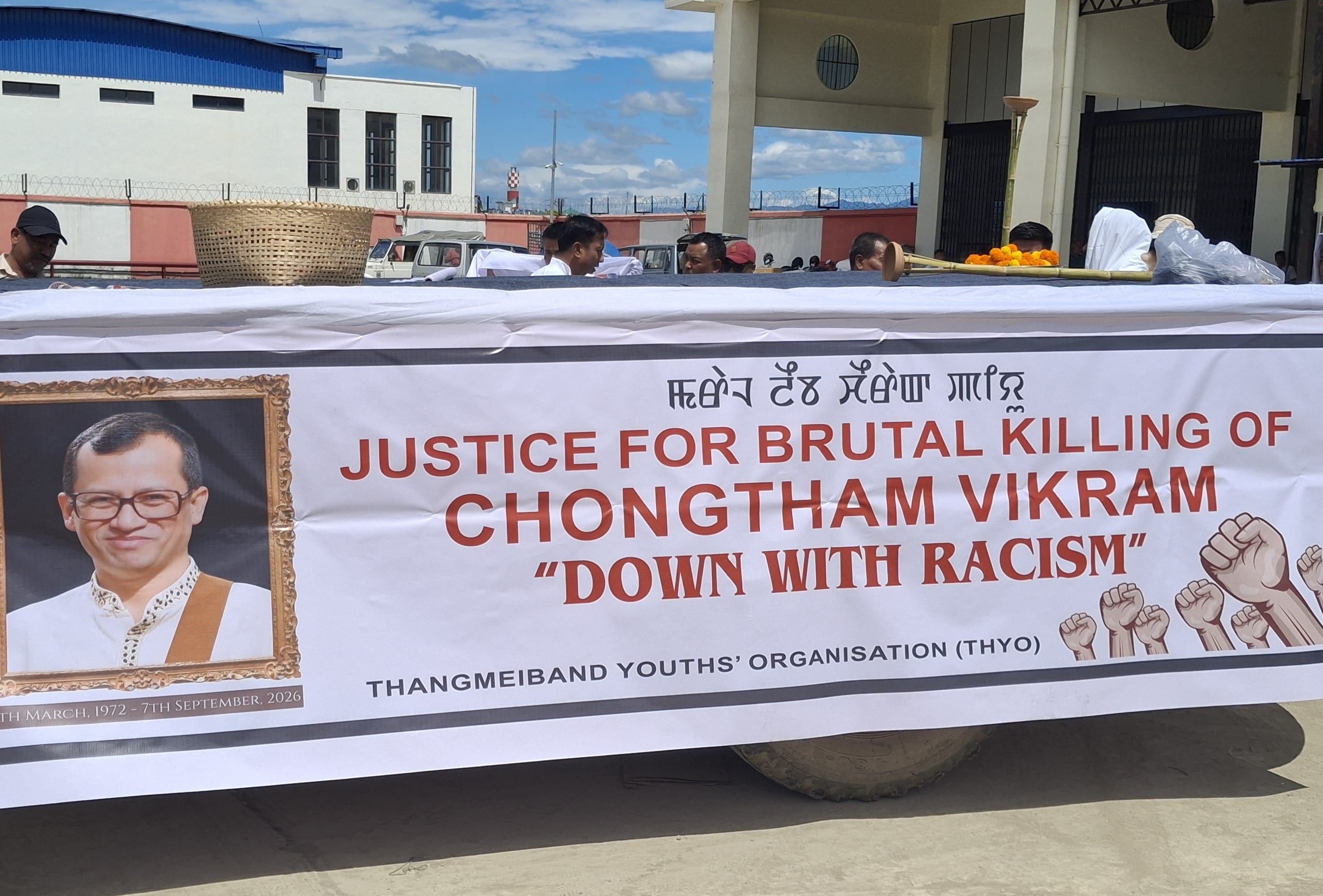
Racialisation and Belonging: North-East Bodies in Mainland India

Violence against North-Eastern people in mainland India is not random street crime but the product of a deeper racialised social order that marks these citizens as foreign, suspect, and disposable, denying them ordinary dignity and belonging. There is a need to recognise  racial discrimination as a structural problem requiring legal reform, institutional accountability, and a […]

The post Racialisation and Belonging: North-East Bodies in Mainland India first appeared on The Frontier Manipur.

Violence against North-Eastern people in mainland India is not random street crime but the product of a deeper racialised social order that marks these citizens as foreign, suspect, and disposable, denying them ordinary dignity and belonging. There is a need to recognise  racial discrimination as a structural problem requiring legal reform, institutional accountability, and a transformation of public culture.

By Kh Ibomcha

Today (September 21) is the Lalna Thouram day of Chongtham Vikram Singh, the musician from Imphal who was beaten to death outside his home in Delhi’s Kilokari area recently. Police said it began over noise. That may have been the immediate trigger. But the deeper truth is more uncomfortable.

In India, violence against North-Eastern citizens is often possible because of a deeper social logic. Their bodies are marked as foreign, suspect, and disposable.

To see this as just one more case of street violence is to miss the structure behind it. What happened to Singh has a history. For a long time, people who look North-Eastern in mainland India have faced ridicule, harassment, surveillance, and sometimes fatal attacks.

The point is not that every attack is planned by ideology. The point is that a social order already exists where some bodies are more open to humiliation and harm than others.

This is why we need the language of race.

In India, we hesitate to use the word race. We prefer softer words like prejudice, regional bias, or lack of familiarity. But those soft words hide what we see every day. People from the North-East are often treated as if they are less Indian.

Race, here, does not mean only biology or looks. It means a social arrangement. It decides who gets recognition, belonging, and safety. It decides whose body is seen as normal and whose body is seen as out of place.

The philosopher W. E. B. Du Bois called this burden double consciousness. It means seeing yourself through your own eyes, and also through the hostile eyes of a dominant society. This captures the North-Eastern experience well. A person from Manipur, Nagaland, Mizoram or Meghalaya carries his own identity. But in the mainland’s public imagination, he is reduced to a stereotype — Chinese, Nepali, outsider, non-Indian. The result is not just insult. It is a break in civic belonging.

Frantz Fanon takes us further. He showed how racial domination becomes ordinary. Violence does not come only in big explosions. It lives in language, in institutions, in habits of seeing. When a group is constantly made an object of suspicion, then aggression against them starts to feel normal to the aggressor and inevitable to the bystander. That is why racial humiliation is not just hurt feelings. It is a political condition. It decides the line between protection and abandonment.

We must also see the history. Colonial administration classified communities through hierarchies of tribe, frontier, and backwardness. It treated the North-East as a periphery to be governed, not as a region of equal civic worth. After Independence, forms of policy changed, but many of the underlying assumptions remained. The language was integration, but the imagination was still distance. The idea of the North-East as exceptional, remote, or ethnically distinct continued. Institutions do not just reflect prejudice. They can preserve it.

Everyday life shows the result. North-Eastern students in hostels, workers in cities, families in rented houses report slurs, intrusive questions, and exclusion from spaces where others move freely. Women from the region face sexualised racism. Men are stereotyped as weak, alien, or dangerous, depending on the context. The common thread is denial of ordinary dignity. These are not random acts of bad behaviour. They are the everyday grammar of racialisation.

That is why the killing of another North-Eastern man in the capital cannot be treated as a standalone tragedy. It sits next to the killing of Nido Taniam in 2014 and other cases that have forced the country to ask the same question again and again: why are some Indians more vulnerable than others inside India itself? The answer is not one culprit or one institution. It is a culture of impunity fed by indifference, stereotypes, and weak accountability.

The legal response must be more than routine outrage. Punishing the accused is necessary, but not enough. The state must recognise racial discrimination as a structural problem, not just a set of individual offences. That means stronger hate-crime enforcement, faster investigation, witness protection, and police training that treats racial profiling and ethnic abuse as serious misconduct. It also means schools, universities, and public institutions must confront prejudice before it becomes violence. Laws matter, but public culture matters too.

Ambedkar’s constitutional vision is useful here. He understood that equality does not come from formal declaration alone. It needs institutional design, political will, and social transformation. A republic that leaves whole communities open to routine humiliation is not living up to its own constitutional promise. The burden should not always be on victims to prove that they belong. Citizenship itself should secure belonging.

There is a moral urgency beyond legal reform. The everyday language used for North-Eastern people must change. Stereotypes are not harmless shorthand. They are the first step on a ladder that can end in exclusion, assault, or murder. When people are repeatedly made visible only as “different,” the line between prejudice and violence becomes thin. Each slur, each joke, each casual mockery participates in a larger order of devaluation.

Chongtham Vikram Singh was not only a victim. He was a musician, a teacher, a father, and a citizen whose life should have been protected with the same seriousness as anyone else’s. His death should force India to ask not only who struck the blows, but what kind of society makes such blows possible.

The answer lies in dismantling the racial contract that governs so much of public life: the tacit agreement that some bodies are more protected, more credible, and more grievable than others.

If the republic is to mean anything, it must mean this: no Indian should be made unsafe because of how he looks, where he comes from, or how his body is read by the majority. That is the democratic minimum. Until it is secured, the violence done to Chongtham Vikram Singh will remain not an aberration, but a symptom.

The post Racialisation and Belonging: North-East Bodies in Mainland India first appeared on The Frontier Manipur.

Read more / Original news source: https://thefrontiermanipur.com/racialisation-and-belonging-north-east-bodies-in-mainland-india/

UNC blockade illegal: Centre

Additional central forces rushed for national highways protection. Terming blockades anywhere in India “a gross violation of law and a crime against humanity” the Union home ministry has appealed to the United Naga Council (UNC) to lift its “illegal” blockade. “It (Centre) appeals to the United Naga Council to remove its illegal blockade in view […]

Additional central forces rushed for national highways protection. Terming blockades anywhere in India “a gross violation of law and a crime against humanity” the Union home ministry has appealed to the United Naga Council (UNC) to lift its “illegal” blockade. “It (Centre) appeals to the United Naga Council to remove its illegal blockade in view […]

Read more / Original news source: http://kanglaonline.com/2016/12/unc-blockade-illegal-centre/

Media honesty Issues

It is often said the greatest crime that the media can commit is to create false consensus. However, it must also be said that it is not always easy to determine where public consensus might lie. This is especially so today with the proliferation of myriad private media houses, in particular the television media, most […]

It is often said the greatest crime that the media can commit is to create false consensus. However, it must also be said that it is not always easy to determine where public consensus might lie. This is especially so today with the proliferation of myriad private media houses, in particular the television media, most […]

Read more / Original news source: http://kanglaonline.com/2016/11/media-honesty-issues/

Governor, CM, Speaker send Ningol Chakkouba and Chavang Kut greetings

Respect women: Guv Heptulla’s message Manipur governor Dr Najma Heptulla called for respect for women and refraining from committing crimes or atrocities against them. “Let there be respect of Manipuri women and all women at large by not committing any crime or atrocities against them,” the governor said in her Ningol Chakkouba message. Manipuris will […]

Respect women: Guv Heptulla’s message Manipur governor Dr Najma Heptulla called for respect for women and refraining from committing crimes or atrocities against them. “Let there be respect of Manipuri women and all women at large by not committing any crime or atrocities against them,” the governor said in her Ningol Chakkouba message. Manipuris will […]

Read more / Original news source: http://kanglaonline.com/2016/11/governor-cm-speaker-send-ningol-chakkouba-and-chavang-kut-greetings/

First manifesto for NE students launched

New Delhi, Sep 8: Delhi is a melting pot of various cultures with over 200,000 people from the North East, staying in the capital, in search of better education and opportunities, bringing their own culture to the city. However, at the same time, crime rate is alarmingly increasing in the past few years. After having […]

The post First manifesto for NE students launched appeared first on KanglaOnline.

Read more / Original news source: http://kanglaonline.com/2016/09/first-manifesto-ne-students-launched/

Moonsoon Beats – Rage Against Crime on 02-Jun-2012 YAC Range ground, Imphal,Manipur

“Rage Against Crime”    CLUB MUZIK is bringing a rock music fest, MONSOON BEATS featuring… more »

“Rage Against Crime” 

Moonsoon Beats – Rage Against Crime – 2012


CLUB MUZIK is bringing a rock music fest, MONSOON BEATS featuring

  • NOISEWARE (Pune),
  • MAGDALENE (Aizawl)
  • DIGITAL SUICIDE (Guwahati)
  • alongside CLEAVE (Imphal),
  • RUBICONS (Imphal) and
  • THE WISHESS (Imphal)

About

The Event is a protest against the recent increase in the criminal acts like rape, murder, communal riots etc. in the country. As a sign of goodwill and a helping hand to the socially handicapped children the CLUB MUZIK is promising to donate 10% of the total amount collected through the ticket sales of the event to The Children Homes.

Date: 02-June-2012

Location: YAC Range ground, Imphal,Manipur

Timing: 1600 Hours IST

Contact Info

Mail : clubmuzikmanipur@groups.facebook.com

Facebook Page: www.facebook.com/monsoonbeatsimphal

Phone::Lukhendro Keisam :: +919615073329, Rohen Ch :: +91879469898, Rubie Meisnam :: +919862285275, Ithoiba Potshangbam :: +918974006974, Jaya :: +919863675697

So People! Come, cheer and celebrate the true spirit of protest through good music and a memorable evening 

* The above event details is sent to KanglaOnline by Ithoiba Potshangbam,Club Muzik

Read more / Original news source: http://kanglaonline.com/2012/05/moonsoon-beats-rage-against-crime-on-02-jun-2012-yac-range-ground-imphalmanipur/

Part 1: The human rights crisis in Manipur and the north-east: Victimization of women and children

By: Usha Thiyam Context Manipur In the land of NUPI Lal, Meira Peibis (Local women who safeguard the folks), Sharmila and Manorama, it is unbelievable that such horrific crimes as… Read more »

By: Usha Thiyam

Context Manipur

In the land of NUPI Lal, Meira Peibis (Local women who safeguard the folks), Sharmila and Manorama, it is unbelievable that such horrific crimes as mentioned below are committed.

I must confess killing an EMa Meira Peibi member, was a shock to everyone at that time. Then, came more shocking news of more women being killed, more Meira Peibis. Whatever be the reason “XYZ” the reason is not strong enough to take on human lives

Indeed it is a human rights disaster. Dead bodies being recovered in awkward positions, hands tied, legs tied, eyes blindfolded, nude, neck being twisted, body parts being twisted. It is not a thriller or crime series on TV but reality that drastically shot up in 2010 for women and children. The number of dead young men in the last decade “shot for XYZ” reason will never be justified. There is no knowledge of any database – perhaps 100s or 1000s. Perhaps, similar to a country ruled by a dictator or those countries with human rights crisis- similar to Sudan, Darfur ? Obvious reply –research please!. Number of widows in the state continued to rise. Not just widows but those infected with mental diseases too and continued to be exploited. Certainly not in chronological order, but the ghastly crimes that falls in just one state indicates there is the need for a international Alarm on human rights disaster in the state. International authorities should step in unless, more deaths and a civil war is carved out.
First, it was “one” disastrous news that an Ema (member of Meira Peibi) was shot and killed. I must confess killing an EMa Meira Peibi member, was a shock to everyone at that time. Then, came more shocking news of more women being killed, more Meira Peibis. Whatever be the reason “XYZ” the reason is not strong enough to take on human lives. Then, came the news about the series of so called attacks by Assam Rifles personal, and the tragedy of Manorama’s death. The event that there was a nude protest at the gate of the Assam Rifles/Kangla to protest against the prevailing molestation, torture and rape of womenfolk and Manorama’s death became a news shared widely.
Then, came the disastrous news of several “northeast” women being molested and raped in Delhi and the racial discrimination they face there (June-November 2010 news including those @timesofinidaonline.com). I saw quite some comments and reactions by everyone because many family members, relatives commute and work in Indian cities like Delhi and Mumbai. So I started to send e-mails, to create a strong organization and put a stop to such crimes.
Then, came the news of women and children being trafficked and molested primarily by foreign aid seeking organizations in Chennai, south India as well as in several organizations. The usual story of a well paid job being promised located abroad- Bankok, China or in the nearby countries was mentioned in the news articles. Amazing to read that child soldiers were being recruited by various militants and the recruiters were being paid well for their jobs.
Then there are cases of vulgar pornographic Korean film clips being sent out to women and children by SMS mobile telephones. The internet without any censorship and more related films and materials, elevated such crimes and torture and violence against women continued.

Recent cases:

In one recent case, the daughter of one person was kidnapped, raped and mercilessly thrown out simply because the demands made to father were not met. Today you have heard this news of a Class-XI girl being raped and killed by strangulation. Post-partum reports are yet to be revealed as to whether the accused is the boyfriend or other men are involved. Even thou, news report suggest the accused is caught by the police, the reality still remains.
Are the police to be trusted or appropriately doing their duties- No comment? In one article news report indicated a women committed suicide because of harassment and teasing by a group of police commandoes. So how far can we trust the police?
In January 2010, a double rape and murder shook Imphal. The killing of Chanbi and her teenage daughter Menaka at Phayeng (Manipur) who were called out from their home in the evening by two men on the pretext of discussing something. Till date, even thou it might not have been too difficult of a task, who called them out that evening is not solved. While several organizations strongly condemned state government’s inaction in delivering justice to this double rape and murder case, no one has been booked for the double murder. She was a widow and left behind 3 small children.
On december 13, 2010 the nude dead body of an unidentified woman believed to be in her forties was found amongst ricestraw at a paddy field near Yaiphakol village, about 2 kms from Khuga dam. Entirely nude mercilessly killed, and blood seeping from her nose and mouth. Sources in the police said, they suspect she was done to death a night before.
The news media stated that there were no visible foot-prints available in the area surrounding the body, nor was there any trace of her clothing or any other substantial evidences. Again, the question here is what the forensics is doing here in this case, around the paddy field or near the dead body – in what way the autopsy helped here?. This was the second instance in three weeks wherein the dead body of a woman entirely in nude was discovered in the district. The lifeless body of a fifty-year old woman cashier with the DRDA was discovered nude stacked behind wooden pieces beneath her own residence on Nov 25. Authorities, according to news sources, detained her husband allegedly on suspicion over the murder.
Not only this, several murders took place, a mentally handicapped woman was found raped in her shop in the night.

Apex civil society organizations for women extended their support in many ways, agitation, Joint action Committees (JACs). But the outcome and agitation launched in connection with the incidents above did not change the trend and it continues to rise. Perhaps it is aging of armed persons- who knows that they cannot be caught striking again and again. Time to Wake up Manipur-! For the number of women murdered, there should be few days of demonstration and a statewide stir and shake up massive protest rally.

Few days back, news came out that millitants groups would buy properties in Guwahati and many other places in India in the name of their wives. The question is is the wife’s name being exploited, taken for granted or is this mere exploitation.

Questions:

The role of media in showing the dead bodies, delivering the news and the psychological impact it might have is largely ignored.
For state-of-art facilities of post partum, perhaps, time is to ask what kind of facility do we have ?
How many JACs are formed until date for how many unlawful deaths?
Internet/film censorship – where are we with this?
By no drastic steps steps being taken to book the killers of such ghastly crimes of rape/murders the number of killers is on the rise.

Role of government and police authority and why they will not resign- still a question at large ?

I would like to tribute this article to late Prof. Naorem Sanajoaba, noted human rights activist and intellect who was my aunts’ husband.


References:  kanglaonline, e-pao, sangai express, timesofindia, telegraphindia – Online Articles

Usha Thiyam is a Social Activist Based in Germany
Enhanced by Zemanta

Read more / Original news source: http://kanglaonline.com/2011/09/the-human-rights-crisis-in-manipur-and-the-north-east-victimization-of-women-and-children/

Meghalaya SSLC And HSSLC Results Declared

SHILLONG/TURA: Once again proving its mettle in this year’s various school and college examinations, Shillong’s educational institutions have taken away top honours in SSLC and HSSLC results declared by the Meghalaya Board of School Educat…


SHILLONG/TURA: Once again proving its mettle in this year’s various school and college examinations, Shillong’s educational institutions have taken away top honours in SSLC and HSSLC results declared by the Meghalaya Board of School Education (MBoSE) on Saturday. Synod HS School student Markyntisuk L Nonglait of Shillong has topped this year’s Secondary School Leaving Certificate […]

Read more / Original news source: http://manipurhub.com/ne-news/meghalaya/meghalaya-sslc-and-hsslc-results-declared/