

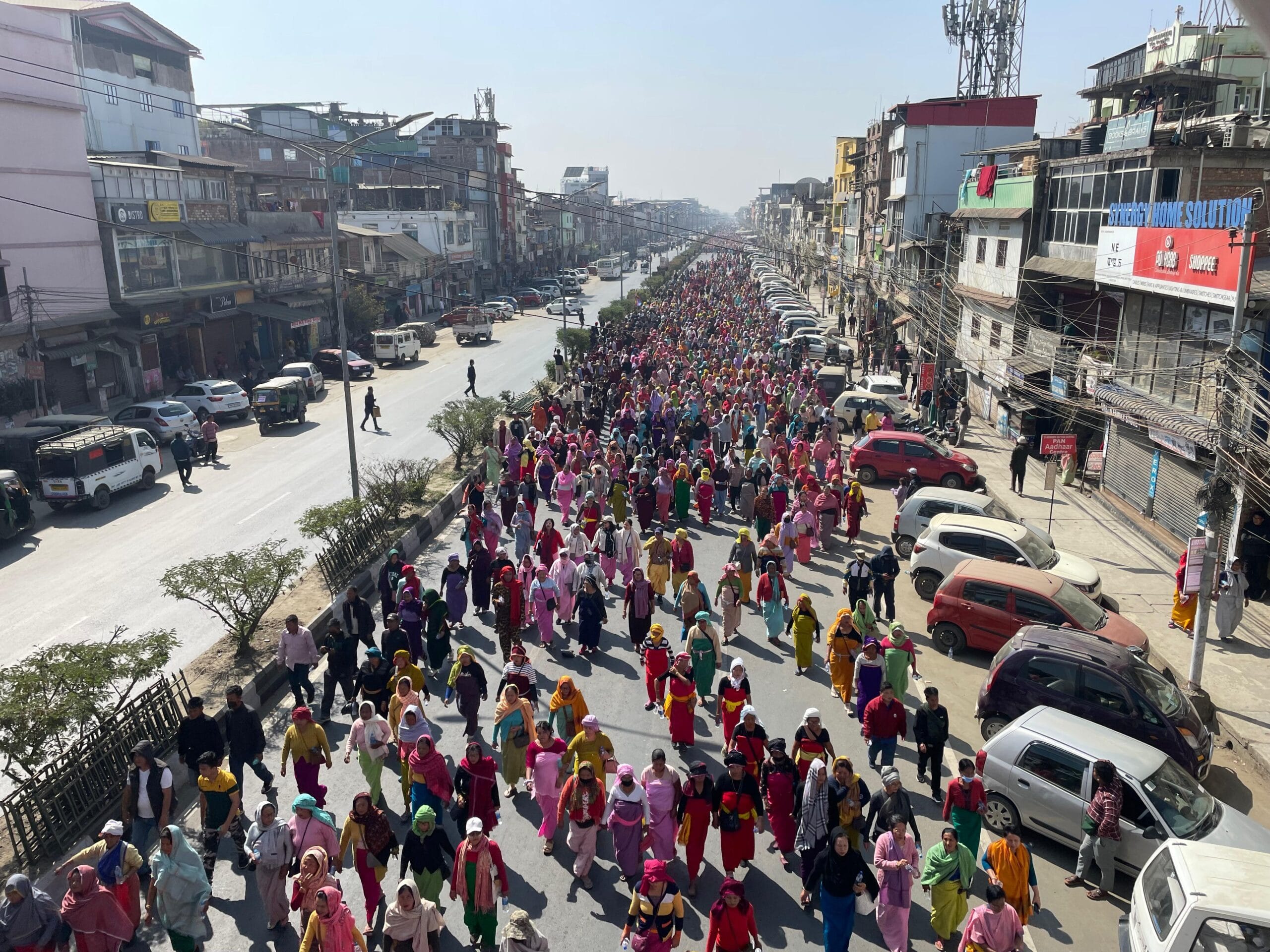
Today, Manipur stands fractured. What is often described as “ethnic violence” between Meiteis and Kukis has stretched into its third year, with no clear end in sight. Highways remain blockaded, normal life is suspended, and an entire generation of young people is growing up amid fear, displacement, and uncertainty.

By Leichombam Kullajit
Manipur’s present tragedy is not merely a clash of communities; it is the cumulative outcome of years of political manipulation, calculated neglect, and strategic opportunism. What is unfolding today is not an accident of history, but the consequence of choices long made and quietly sustained.
The Government of India is well aware that a significant portion of the Kuki population in Manipur traces its origins to cross-border migration from Myanmar, facilitated by the porous and forested frontiers of Mizoram and Manipur. It is also aware of the harsh realities many of these migrants face—precarious living conditions, economic marginalisation, and the pervasive influence of criminal networks, including drug trafficking, in the region across the eastern border.
Yet, instead of addressing these vulnerabilities through meaningful development, rehabilitation, and integration, the Indian state chose a different path. It identified grievance as an instrument and despair as a resource. These marginalised communities were not uplifted; they were used—deployed as strategic proxies in the state’s long-standing effort to counter insurgencies it perceived as existential threats, particularly those involving Meitei and Naga movements in the northeastern subcontinent.

This reality is not lost on the Kukis themselves. They understand the nature of their exploitation and the unspoken bargain it entailed: compliance in exchange for recognition, protection, and the distant promise of political accommodation. It is within this context that the Suspension of Operations (SoO) agreement of 2008 must be understood.
Many continue to ask how nearly 25 armed Kuki militant organisations—fragmented along clan lines—could suddenly emerge under the banner of defending the Indian Constitution. Unlike Meitei or Naga insurgent groups, which evolved over decades in open defiance of the Indian state, these organisations appeared abruptly, accepted constitutional legitimacy, and entered into SoO arrangements with remarkable ease. Prior to the 1990s, there were no consolidated Kuki militant platforms such as the KNO or UPF, nor were there articulated political demands of comparable scale. This raises an unavoidable question: on what basis did the Indian Army negotiate a Suspension of Operations with groups that posed no direct challenge to the territorial integrity of the country?
The answer, many believe, lies in a strategic calculation. For New Delhi, the principal obstacle was never the Kukis or their armed groups—it was the entrenched political aspirations of the Meiteis and the Nagas. In that equation, the Kukis became a convenient counterweight.
Today, Manipur stands fractured. What is often described as “ethnic violence” between Meiteis and Kukis has stretched into its third year, with no clear end in sight. Highways remain blockaded, normal life is suspended, and an entire generation of young people is growing up amid fear, displacement, and uncertainty. Under these circumstances, it is reasonable to ask whether the crisis has been allowed—perhaps even engineered—to linger, quietly stealing the future of Manipur’s youth and erasing irreplaceable chapters of its history.
Political games may succeed for a time, but they cannot endure indefinitely. If the Government of India genuinely seeks peace, stability, and justice in Manipur, it must abandon short-term tactical thinking and confront the deeper causes of the conflict it helped shape. Otherwise, the burden of this unresolved crisis will not only continue to devastate Manipur—it will return, heavier and more complex, to the very state that once believed it could control the outcome.
( Leichombam Kullajit is a senior jounalist based in Imphal.)
The post Stolen years of Manipur’s history ? first appeared on The Frontier Manipur.
Read more / Original news source: https://thefrontiermanipur.com/stolen-years-of-manipurs-history/