


Unfolding Crisis Hits Naga Political Movement: The Eastern Flank Story

A faction of Naga leaders appears to have hardened its stance on the ‘struggle’ for the Naga political movement while maintaining its resolve on the Naga-Kuki issue. TFM Report On June 16, 2026, a document emerged from the Northeastern hills that would send shockwaves through the corridors of power in both New Delhi and the […]

The post Unfolding Crisis Hits Naga Political Movement: The Eastern Flank Story first appeared on The Frontier Manipur.

A faction of Naga leaders appears to have hardened its stance on the ‘struggle’ for the Naga political movement while maintaining its resolve on the Naga-Kuki issue.

TFM Report

On June 16, 2026, a document emerged from the Northeastern hills that would send shockwaves through the corridors of power in both New Delhi and the Naga armed resistance strongholds. The “Eastern Flank Statement” was not merely another political communiqué—it was a declaration of well-articulated tirade against what its leaders saw as the surrender of their hard-won principles.

The statement, purportedly issued by Hs. Ramsan, A. Raman, Ikato I. Chishi Swu (Executive Member, Steering Committee), Victor Angami (Member of Collective Leadership) and Angyo Jacob Tangshang, began with a tone of weary defiance: “We have, time and again, written letters and issued clarifications to the government, the party, and the Naga public at large. We have always kept the door open for reconciliation and unity.” But the door, they made clear, had been slammed shut by forces they could no longer ignore.
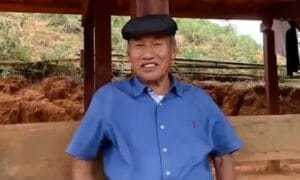
 

Hanshi Ramsan


The signatories traced their lineage back to the very foundations of “Naga nationalism”—to “the submission of a memorandum to the Simon Commission on 10th January, 1929 by the Naga Club, demanding that the Nagas be left alone to decide their own future.” This was not a casual reaction; it was the latest chapter in a struggle that had defined their people for nearly a century.

Alleged Betrayal of the Framework Agreement

At the heart of the conflict stood the Framework Agreement (FA) signed on August 3, 2015—a document that had once promised hope for the future of the Nagas. Under the leadership of late Chairman Isak Chishi Swu and General Secretary Th. Muivah, the agreement had represented the culmination of decades of struggle.

But hope, the Eastern Flank argued, had curdled into compromise. “Since the signing of the FA, the GoI has effectively backtracked and betrayed the Agreement,” the statement declared with bitter finality. The “betrayal became concrete” when, in August 2019, the Government of India delivered a three-month ultimatum: abandon demands for a separate flag and constitution, or face the end of all negotiations, says the statement.

The Eastern Flank saw this as a moment of reckoning. Rather than capitulate, they moved to strengthen their military position. On September 3, 2019, a new Standard of Operation created the Eastern Flank itself—a strategic move to “establish our base in the East across the present artificial Indo-Myanmar border.” But what followed would fracture the Naga movement from within.

Brothers Turned Enemies

Just one month after the Eastern Flank’s creation, the unity of the “Naga Army” shattered. The then Longvibu, Anthony Ningkhan Shimray, supposedly issued an order that superseded the new arrangements, effectively “dismantling the strengthening of the Naga Army, the backbone of the Naga political movement”, claims the statement.

The Eastern Flank described a nightmare of internal betrayal. They recounted how Anthony Ningkhan Shimray “sent the then Brig. Alen Siro to Homalin to surround and annihilate us in coordination with our adversaries.” For more than forty days, they kept Brigadier Siro with them, “trying our best to reason with him against such treacherous activity and refraining from shedding the blood of our own Naga brothers.”

He refused to listen. When a Peace Mission Team visited Brigadier Sorei at Homalin Camp, he reportedly “openly stated that he was ordered by the then Longvibu and Brig. Alen Siro to shoot at the cadres of the Eastern Flank.” The bloodshed that would follow was, in their view, a foregone conclusion.

The Eastern Flank’s greatest grievance, however, was political rather than military. They detailed how a peace proposal drafted on December 7, 2019 had qualified the Naga national identity through deliberate euphemisms—”the government of India is not in a position to recognize it,” “respecting the will of the Naga people and prevailing sentiments.”

To the Eastern Flank, these were not words of compromise but of surrender. Hs. Ramsan and others wrote an urgent letter objecting to these formulations. Their stand forced a correction: “flag and constitution would be settled through political decision, without which there can be no honorable solution.”

But words, they discovered, were hollow. “Despite this official correction, the deeds of some of our authorities suggested otherwise.” The leadership continued its “meaningless talks for more than ten years after the signing of the FA”, says the Eastern Flank statement.

Terminations, Revocations, and Reinstatements

What followed was a systematic removal of those who dared to speak principle over pragmatism. The statement details a series of terminations, revocations, and reinstatements that read like a bureaucratic tragedy:


Hs. Ramsan was *”wrongly terminated on 12th July 2023 through false accusations” and later “given pardon at will”—only to be terminated again on July 18, 2024, this time “under false accusations of anti-national activities, branding them as anti-nationals”, says the statement.

The Eastern Flank claimed that those who had raised their voices against compromise were “systematically purged”. Meanwhile, those who had ordered attacks on fellow Naga cadres remained in power, says the statement.

The Eastern Flank’s response was defiant: “Rejecting this injustice, the national workers and senior officers of the Naga Army in the East resolved on 10th August 2024 to remain under the leadership of Lieut. Gen. Retd. Hs. Ramsan-VC.”

A New Coalition of Resistance

By March 2026, the Eastern Flank had found unexpected allies. “Mr. Ikato I. Chishi Swu, Executive Member Steering Committee and Mr. Victor Angami, Member of Collective Leadership and their entourage have taken the right decision to join hands with us to save the nation from another surrender,” claimed the statement.

The alliance was born not of ambition but of shared outrage. Both sides had watched helplessly as the Hebron leadership allegedly “failed to take concrete steps to save the nation” and continued negotiations that had become “meaningless, endless talks with the GoI.”

The Hongbei Massacre: Brotherhood Betrayed

Then came the trigger—the event that, for the Eastern Flank, proved beyond doubt that the Hebron leadership had allegedly become an instrument of their “adversaries”.

On March 28, 2026, four Naga cadres were killed at Hongbei Village, “even while a Peace Mission was still in process.” The dead were not enemies. They were brothers, says the statement. “At the time when the GoI is using the Kukis as a proxy to wage war against us to suppress the Naga political issue, and to create a Kuki Homeland within Nagalim,” the statement explains, “our cadres were sent to work in unison with the cadres of Ghq/Hebron.”


The Eastern Flank’s cadres met their counterparts stationed at Hongbei. They talked. They agreed on uniting against their common enemy. They exchanged pleasantries. And then some authorities chose betrayal, asserted the Eastern Flank. “They directed the cadres to shoot one’s own brother,” the statement reads. Two cadres survived “through divine intervention,” exposing “the secret evil intentions, and plans of some of the authorities of the Hebron/Ghq.”

The massacre was not just murder—it was proof, says the Eastern Flank. “Killing the force that stands for the Nagas is a clear indication of a force working in alignment with the policy of our adversaries.”

Response of the CSOs; Naga-Kuki Issue

In response, the Tangkhul Naga Long and other civil society organisations issued a non-cooperation directive against the Wung-Tangkhul Region, demanding justice. The Eastern Flank fully supported this: “Any attempt to revoke the non-cooperation against the WTR (NSCN/GPRN) before justice is served will be an abatement to create bigger problems among us.”

Their stance on the Kuki issue remained absolute: “There can be no peace and no compromise if the Kukis insist on creating a Kuki Homeland within Nagalim.”

The Eastern Flank’s disagreement with the Hebron leadership, they insisted, was not personal but principled. They pointed to specific clauses in the proposed competencies that represented, in their view, a betrayal of the Framework Agreement:

-“Competency serial no. 4(c) states that Nagas will send Lok Sabha and Rajya Sabha members to the Parliament of India.”

-“The Naga Constitution/Yeahzabo is to be inserted in the Constitution of India as a separate chapter.”

– “The Election Commission of the Tatar Hoho shall function in conjunction with the Election Commission of India.”

– “The oath of office of Midan Kilonser and all Kilonsers of the NRTC shall be administered by the Governor of the State concerned.”

These provisions, the Eastern Flank argued, did not represent an honourable solution but a “surrender dressed in diplomatic clothing”. “After more than 70 years of struggle and the sacrifice of thousands of lives for our beloved Nagalim, can we now compromise our right to sovereign existence as a nation on account of the difficulties and position of the GoI?” they demanded.

A Rallying Cry

The statement concludes with a rallying cry—not just to armed cadres and politicians, but to all Nagas: “We appeal to all Nagas and national workers to rise up for the God-given rights of the Nagas. God Almighty is using the Nagas to build up according to His divine purpose. Therefore, let us abandon the spirit of doubt and timidity. Woe to those who doubt the faithfulness of God,” said the Eastern Flank. And with the traditional battle cry that has echoed through Naga history—”Kuknalim!”—the Eastern Flank made their position unmistakably clear.

As June 2026 draws to a close, the Naga movement stands at a crossroads. The Eastern Flank has drawn a line in the sand, invoking the spirit of the 1929 memorandum, the 1947 declaration of independence, and the 1951 plebiscite. They have rejected what they see as compromise and embraced what they believe to be principle.

Whether the Hebron leadership can bridge this chasm remains uncertain. The Government of India watches, waiting. The Naga-Kuki issue smolders. And Naga wait to see which path they will take.

One thing is clear: the struggle for “Nagalim” is far from over. And the Eastern Flank has made it known that, in their view, any solution that falls short of the Framework Agreement’s principles is no solution at all.

“We will stand our ground to seek an honourable and acceptable solution based on the principle of the FA that was signed under the leadership of our Chairman, late Mr. Isak Chishi Swu and General Secretary Mr. Th. Muivah.”

The post Unfolding Crisis Hits Naga Political Movement: The Eastern Flank Story first appeared on The Frontier Manipur.

Read more / Original news source: https://thefrontiermanipur.com/unfolding-crisis-hits-naga-political-movement-the-eastern-flank-story/

Ngayaising scripts history as first Tangkul Everester

UKHRUL | May 28: Ngayaising Jagoi, 28, born to Vaomi and Elisha Jagoi of Phalee village, Ukhrul district of Manipur became the first Tangkhul to scale Mount Everest on May 27. Conquering of Mount Everest has added another rare feature in Jagoi’s list of achievements and brought smiles and praises from every individual of Tangkhul […]

UKHRUL | May 28: Ngayaising Jagoi, 28, born to Vaomi and Elisha Jagoi of Phalee village, Ukhrul district of Manipur became the first Tangkhul to scale Mount Everest on May 27. Conquering of Mount Everest has added another rare feature in Jagoi’s list of achievements and brought smiles and praises from every individual of Tangkhul […]

Read more / Original news source: http://kanglaonline.com/2017/05/ngayaising-scripts-history-as-first-tangkul-everester/

Peace Rally marched by Nagas, Kukis & Meeteis in Thangmeiband demanding to call off the ongoing economic blockade imposed by UNC

The Thangmeiband Rongmei Village Authority Council, TRVAC, Naharol Leishemba Club, Thangmeiband and Thangmeiband United Club jointly carried out a peace rally today from Thangmeiband Tarung Playground to Khuyathong Traffic Point, Imphal West demanding to call off the ongoing economic blockade imposed by UNC. More than 2000 individuals of different communities which include Rongmei, Liangmei, Kom, […]

The Thangmeiband Rongmei Village Authority Council, TRVAC, Naharol Leishemba Club, Thangmeiband and Thangmeiband United Club jointly carried out a peace rally today from Thangmeiband Tarung Playground to Khuyathong Traffic Point, Imphal West demanding to call off the ongoing economic blockade imposed by UNC. More than 2000 individuals of different communities which include Rongmei, Liangmei, Kom, […]

Read more / Original news source: http://kanglaonline.com/2016/12/peaceful-rally-marched-by-nagas-kukis-meeteis-in-thangmeiband-demanding-to-call-off-the-ongoing-economic-blockade-imposed-by-unc/

Manipur Blockade: Journey of eight children from Imphal to Chingai, Ukhrul amidst the blockades

    Given the current tense situation in Manipur due to the ongoing 52+ days of Economic blockade by United Naga Council on both the National Highways and counter blockades on several intra state highways by valley based local clubs, travelling from Imphal to any other destinations within and outside Manipur has become almost impossible […]

    Given the current tense situation in Manipur due to the ongoing 52+ days of Economic blockade by United Naga Council on both the National Highways and counter blockades on several intra state highways by valley based local clubs, travelling from Imphal to any other destinations within and outside Manipur has become almost impossible […]

Read more / Original news source: http://kanglaonline.com/2016/12/manipur-blockade-journey-of-eight-children-imphal-to-chingai/

Consult people first : Tangkhul bodies

IMPHAL, Oct 30: The Tangkhul Naga Foothills Organisation (TNFO) and Tangkhul Naga Wungnao Long (TNWL) have appealed to the State Government to seek wishes and opinions of people settled in different areas of Sadar Hills before it is declared as a full …

IMPHAL, Oct 30: The Tangkhul Naga Foothills Organisation (TNFO) and Tangkhul Naga Wungnao Long (TNWL) have appealed to the State Government to seek wishes and opinions of people settled in different areas of Sadar Hills before it is declared as a full fledged district.

The post Consult people first : Tangkhul bodies appeared first on The Sangai Express.

Read more / Original news source: http://www.thesangaiexpress.com/consult-people-first-tangkhul-bodies/

Tangkhul village decides to allow women in apex village decision making body

IMPHAL, Dec 14: In an unprecedented and historical move the People of the Ringui (Tongou) village formally resolved to allow the women of the village to be elected as members

Tangkhul village decides to allow women in apex village decision making body

Tangkhul village decides to allow women in apex village decision making body

IMPHAL, Dec 14: In an unprecedented and historical move the People of the Ringui (Tongou) village formally resolved to allow the women of the village to be elected as members in the traditional village Court in the village Assembly held on yesterday, a report said.

The village also resolved that the Church should not discriminate women by denying them of their right to hold high offices of the Church simply because of their gender. It was resolved that the church should henceforth open up the position of Deconness and pastorship to women, the report added.

It further said, a motion to abolish the tradition of not allowing women folks in the court of the Naga village was moved by the president and general secretary of the Ringui Shanao Long (Ringui Women`™s League), which then was carried forward by the chief of the village Atem A Shimray and the Speaker of the House, Abel Ahum.

In his explanation, the headman informed the villagers that such legislation was not only necessary but an obligation for all the men folks, if the village and the people at large are to see progress, the report said.

Emphasising that the participation of women in the decision making of the society is vital to the overall development of the society the Speaker urged the Assembly to look beyond the present and not be restrained by traditions. He reminded the villagers that the role of women in the Tangkhul Society was much more than what has been practised now, it said.

It may be reminded that the Apex Tangkhul Women`™s League `“ the Tangkhul Shanao Long has recently raised the issue of women`™s representative in the Tangkhul Naga Long. The decision of the Ringui Village Assembly has paved the way for other villages to follow suit and expedite the process of reformation within the traditional tribal institution, it added.

It may be recalled, the Nagaland Assembly had recently expressed its inability to implement the women reservation Act in Nagaland due to opposition from the village councils.

Read more / Original news source: http://kanglaonline.com/2015/01/tangkhul-village-decides-to-allow-women-in-apex-village-decision-making-body/

Who killed the rice beer?

By Chonchuirinmayo Luithui Rice beer, the drink our forefathers consumed both in celebration and illness, now comes with a generous dose of Christian moralism, alcoholism, even detergent powder! Drinking is good

By Chonchuirinmayo Luithui

Rice beer, the drink our forefathers consumed both in celebration and illness, now comes with a generous dose of Christian moralism, alcoholism, even detergent powder!

In-pic: Anao Oshim Photo Credit: I Love Ukhrul Facebook Page.

In-pic: Anao Oshim
Photo Credit: I Love Ukhrul Facebook Page.

Drinking is good for health. Our forefathers would know. It was part and parcel of our culture. Rice beer was part of the diet of our people. Yes, women used to drink. She was not type casted into Scarlets, Delilahs or khangkasers.

Note: Among the Tangkhuls, there are different variants of rice beer depending on how they are prepared. So we have leiyi, zam, khor, paso, chathur and so on. And they do look and taste different. Their alcohol content also probably differs. But for want of better translation, they are referred to as rice beer since they are mostly made with rice as the base.

Rice beer had a special place in rites and festivals, even in war during our forefathers’ time. It was regarded as medicinal. An aunt told me how my grandparents used to warm it (khor in this case) whenever someone in the family was unwell. The sick seemed to get better when he or she took it. May be it was the placebo effect. But, these practices were evolved over a long period of time.

Today, choosing to be religiously correct, many of us think of it as immoral but it was not so, at least, not during our grandfathers’ time. It was taken during festivals as well as when the elders sit down for serious discussion and as part of the meals. I am told that when the senior members of a family had to go to the field, they used to pour drinks in tumblers (shon) made from gourd, in case, any guests come by. But in all these there was a rider. They did not encourage getting drunk. Self-control was a virtue.

So who killed the rice beer drinking culture and replaced it with alcoholism, drunkards and adulterated alcohols? When did our people ‘stop’ drinking rice beer? When did we stop brewing? As I am told, it was after Christianity came into our homes.

One reason as told to me was that there was a close affinity between rice beer and observance of rites and ceremonies. Before Christianity, we believed in the Creator (kasa-akhava) the source of everything. But most of our religious practices were based on appeasing the spirits who could harm us, cause suffering and bad harvest. Animal sacrifices were common. But all these were incomplete without rice beer. Thus, the Christian missionaries might have thought it was better to demonized rice beer than to say that we were worshipping the wrong way/deity. They might have intended well but, because much of the rites and ceremonies could not be performed without rice beers, they stopped performing them altogether and much of our culture died along with the way we consume alcohol.

Now, most of us openly denounce it and secretly gulp them down including the adulterated ones. Health be damned. We become over righteous and held friends, kins and foes at contempt when they dare to drink openly. We become moral police, very often inspired by OUR church. There is prohibition written almost everywhere.

Photo Credit: I Love Ukhrul Facebook Page.

Photo Credit: I Love Ukhrul Facebook Page.

My maternal grandfather sometimes used to return home smelling of alcohol. And for a young sunday-school-going mind, it was the worst blasphemy. I remember once stopping him from entering the kitchen. My mission failed completely. He picked me up and in we went inside the house. I did not realize then, that this was how it had been for longer part of his life. That he had learnt from the elders never to cross the line. Mind you, I do not remember him ever drunk. That time, I was simply mad at him because someone ‘taught’ me that drinking alcohol is a sin, that I would go to hell. Distorted lessons.

What do we have today? A culture of binge drinking, DUI, drunken accidents, alcohol related abuse and diseases and poisoning. I had once gone in the early morning with grandpa dearest (actually tailing him but he caught me)to a vendor. As she gave him his drink, he mentioned that she must had added too much detergent powder (which supposedly gives faster kick). She did not deny! This happened years ago and as human minds become more creative, it seems they now even use Urea (yes the fertilizers). I hope it is not true. We might as well drink Urea solution.

I would like to go back to the gentleman days, sit down with the elders and see for myself how they used to be. But we have come too far from ‘headhunting barbarians’. to whiskey drinking maniacs. This will surely spoil my show. Now, I will settle for “admiring-our-grandfathers’-time” while I drink green tea, health drinks, sodas, choco drinks and coffee.

And covertly commit sins. Cheers!


Note:

* They were far more civilized than us. It is unfortunate that they are equated with barbarians.

About the writer: Chonchuirinmayo Luithui is a freelance researcher based in Ukhrul, Manipur.

The article was first published on Seven Sisters Project and it’s been reproduced on KO for wider circulation in partnership with “I Love Ukhrul” facebook page.

Read more / Original news source: http://kanglaonline.com/2014/08/who-killed-the-rice-beer/

Tabitha Children Home – A home dedicated to children with HIV/AIDS

The post Tabitha Children Home – A home dedicated to children with HIV/AIDS appeared first on  KanglaOnline.com.By Ganmeilu Phaomei IMPHAL, July 21: Established in the year 1999, Tabitha Children Home- a home for orphans living with HIV/AIDS sit…

The post Tabitha Children Home – A home dedicated to children with HIV/AIDS appeared first on  KanglaOnline.com.

By Ganmeilu Phaomei IMPHAL, July 21: Established in the year 1999, Tabitha Children Home- a home for orphans living with HIV/AIDS sits cosily at Raphei Valley, Mantripukhri, Imphal. Run by a Christian family originally hailing from Longpi (Nungbi) Ukhrul District … Continue reading

The post Tabitha Children Home – A home dedicated to children with HIV/AIDS appeared first on  KanglaOnline.com.

Read more / Original news source: http://kanglaonline.com/2012/07/tabitha-children-home-a-home-dedicated-to-children-with-hivaids/?utm_source=rss&utm_medium=rss&utm_campaign=tabitha-children-home-a-home-dedicated-to-children-with-hivaids

Why Meitei Ethnonationalism?

By: Dr Irengbam Mohendra Singh I am very moved with this email from EMMI SERTO,… more »

By: Dr Irengbam Mohendra Singh

I am very moved with this email from EMMI SERTO, especially by the noble task he is undertaking. There are very few people like him in Manipur. “He writes: Sir, proud to have a son of the soil giving away his best resources to one of the most world’s riches and developed country… For the white people, you are a blessing.”

“While appreciating your noble contribution to the people of theUK, I would also like to make a special mention on your valuable “Diaspora column” in the Sangai Express. I am always the first of the first person of the family to grab the paper on Sundays and Saturdays just for a reason to be the first to go through your column… most of the articles give weight on Social change…”


“Well! I am helping a few orphans in my own set up orphanage for social change, in a remote village called Sangang, C’cpur Dist. I have sweet 17 orphans from 9 different communities of Manipur. I do enjoy working the whole day in the paddy fields for their tomorrow… I am spreading the message of |Love, Humanity and Tolerance through this humble service to the deprived children… We can uphold each other in our prayers. Thank you once again for being a kind-hearted to your motherland. My salute to you.”

Meitei ethnonationalism is necessary for a negotiating agreement in the God basement-bargain with Manipuri Naga, without giving in. They feel that it is the best way to deal with the Naga people’s problem to prevent them from rising. They think that it would help both peoples to have a good relationship and think of each other as partners in negotiation rather than adversaries.


Before 1949 there was a Manipuri nation or the Manipur state. The Meitei always had a concept of a ‘Manipuri nation’ – Manipursanaleibak, encompassing groups of ethnic people who have different cultural, traditional, ritualistic and religious traits, all living together.


A nation describes a geographical place that is defined by its borders and/or by a variety of cultures and a shared language. With the ascendancy of a new concept, Manipur is now a “proposition nation” ie groups of ethnic people who are united by a common ideology rather than a common ancestry.

Ethnic people mean the status of belonging to a particular group having a common cultural tradition. There are such 36 ethnic groups in Manipur.

The English word ‘nation’ in the Manipuri nation, is related to birth, not merely geographic or political boundaries. You are ‘native’ of the land of your birth. Manipur has a geographical boundary and any ethnic group born in Manipur is a native of Manipur. The Manipur Naga are Manipuris. Nationality is a legal concept while ethnicity is a cultural concept.


This thesis examines the Meitei ethnonationalism in Manipur and the influences that sustain it. It is a brief historical reconstruction touching on historiography – theorising parts of history and relying on idealistic epistemology.


Meitei ethnonationalism is fairly new. I am trying to write a bit of its history without an inventive approach to the truth.  Old histories might change over time. At the physical level, truth is absolute. But the account of human affairs that we call History, and that we make the subject of college courses, has little to do with truth. It is information that our rulers want us to have.

For example: Irom Sharmila’s fast to death for the past 11 years will not be Indian history, but the recent 12-day fast of Anna Hazare in August 2011will be.

Most people are aware of the continuing tension in Manipur, tensions centrally animated by the

strained relationship between the Majority Meitei and second majority Tangkhul Naga.

Ethnonationalism is where the ‘nation’ is defined in terms of ethnicity, incorporating ideas of culture and shared language. It denotes both the loyalty to a nation deprived of its own state and the loyalty to an ethnic group, embodied in a specific state, particularly when the latter is conceived a nation-state” like Manipur. It may thus be used interchangeably with nationalism.


A “nation-state” is defined as a sovereign state of which most of the citizens or subjects are united by factors which define a nation, such as a common language or common descent. The nation-state implies that a state and a nation coincide. Manipur was a nation-state united by a common language


The central tenet of ethnic nationalism theoretically is that each ethnic group like the Meitei, Tangkhul or Kuki is entitled to self determination for an autonomous entity or for an independent sovereign state.


Broadly speaking, nationalism is a term that refers to a doctrine that holds a nation, usually defined in terms of culture and language though consisting of a number of ethnic groups. Ethno-

nationality is thus a breakdown of nationality.


The word ‘nationalism’, strictly speaking, refers to either separatist or autonomist movements developing outside or against, the existing state. Theoretically, this is true for the Meitei, Tangkhul or Kuki.


Walker Connor (1994) defines the ‘nation’ as a self-differentiating ethnic group. Thus, we have the ethnic Naga nation, ethnic Meitei nation and the ethnic Kuki nation.


In reality, ethnos and nation are equivalents: the former derived from ancient Greek, the later from Latin. It then follows that the term ‘ethnonationalism’ is largely tautological, since ethnicity permeates nationalism any way. It is the same thing. But in Manipur it is not.


The Meitei ethnonationalism was born by a break-up of the ethnic components of Manipur, creating a lot of tension by the ethnic activists who try to have a historical construction of their activities.

The educated post-War Meitei began in earnest, to secularise and adopted the principle of multiculturalism based on a notion of ‘social reform’ in which programmes were introduced to redress the disadvantages of minority communities. This included the present titular king Laishemba, who reintroduced the Merahouchongba festival. He is a likeable and serious young man.

There are many major players in the ethnic movements who continue to act out their familiar roles in a secessionist policy. While efforts are made to bring back the Tangkhul and Kabui Nagas back to the Manipuri nationhood but so far failed, notably in their refusal to set up ADCs, which is aimed to somehow reconcile a ‘distinct society’ status with provision that all the districts are to be treated equally.


The Manipuri Naga’s demand for separation of Naga inhabited (not absolutely) areas of Manipur to integrate with the nationalist movements of the Naga of Nagaland is a redundant ethnonationalism. It is a confusion of state and nation, and they imagine that nationalistic identification can refer state loyalties.


Ethnicity normally refers to a belief in putative descent: that is, a belief in something which may or may not be real. It is a perception of commonality and belonging supported by a myth of common ancestry.  Therefore it does not necessarily suggest tangible elements of culture.


Connor (1993) has stressed the subjective and psychological quality of this perception, rather than its objective ‘sustenance’.


More generally, identity does not draw its sustenance from facts but from perceptions. Perceptions are as important or more than reality when it comes to ethnic issues (Connor 1997).

By perception I mean, the feeling, the consciousness that “I am a Manipuri”. The Naga need a longer term understanding to avoid misunderstanding.

The break-up of Manipur is not negotiable to the Meitei who have an embryonic concept of Ima (mother) Manipur embracing the hills and the plain. To them it is not like a marriage bond, where there is a legal frame work with which a spouse can divorce the other whenever he or she feels like it.


The Manipuri Naga ethnic challenges have shattered genuine Meitei pluralism and increased the tension between the need for cultural-ethnic distinctiveness and integrative tendencies. The Meitei began to think in terms of Meitei nation or ethnonation. It was a crucial time when the territorial integrity of Manipur was seriously threatened as never before, with internal ethnic politics and the territorial ambition of Nagaland.

Meitei needed to re-establish their cultural history and began looking at their history backwards.

They were aware that behind their bravado lurks one of the great political challenges of the next two decades in this extra-ordinary diversity of ethnic identities and political views in Manipur.


Manipur is inhabited by the Meitei and other 36 tribes plus a sizeable community of Pangals. The question of what it means to be a Manipuri and how far there are overriding values to which all can and must subscribe has moved on since the Naga ethnonationalism.


The Meitei liberal policy has been unable to persuade some tribal groups into a Manipuri national identity. They have demanded plural political identities, tolerance and openness from all the ethnic peoples. That has included intermarriage.

The struggle for the ethnic Naga to disintegrate Manipur began to crystallise the Meitei resolve to keep Manipur intact. Various civil organisations such as AMUCO, UCM have sprung up to shore up a united Meitei, non-Naga tribals and Pangal opposition.


Manipur is as much for the Meitei as is for all the tribes and Pangals living in it from times immemorial. The Meitei thus felt that they had to reinvent themselves with a search for their

indigenous origin in Manipur, first in the hills and then in the plain. This was how Meitei ethnonationalism was born.

The high-octane pursuit of Meitei ethnonationalism and a keen interest to safeguard the integrity of Manipur were reflected by the greatest sacrifice given by 18 Meitei on the June 18 2001 uprising.


Meitei remain vigilant against Naga nationalism and Manipuri Naga ethnonationalism especially because (1) their demand has nothing to do with economic disparity but ethnicity; and lately (2)

the NPF’s Constitution, Article II (21) reads: “To work for integration of all contiguous Naga

inhabited areas under one administrative roof…”


Daniel Converse challenged the dogma of economism as the cause of ethnonationalism.

Ethnonationalism appears to operate independently from economic variables and that

perceived economic discrimination is just a choice of battle ground. The economic issues at the centre of the analysis means to miss the primary point, namely that ethnic movements are indeed ethnic and not economic.


India has a large socio-cultural diversity. So has Manipur. Among this diversity the Meitei need a strong ethnonationalism, which will be bound together by equally strong bonds of common objectives and affection with other fellow Manipuris.


The writer is based in the UK

Email: imsingh@onetel.com

Website: www.onetel.co.uk

Enhanced by Zemanta

Read more / Original news source: http://kanglaonline.com/2011/11/why-meitei-ethnonationalism/

Press Release: Mass rally held at Ukhrul, Manipur

Press Release There was a mass rally held today, 19th. 08.2011 starting from 9.30 am in Ukhrul District and all other Naga hill area in Manipur protesting against the upgradation… Read more »

Press Release

There was a mass rally held today, 19th. 08.2011 starting from 9.30 am in Ukhrul District and all other Naga hill area in Manipur protesting against the upgradation of Sadar Hill District into full fledged District. The rally in Ukhrul was joined en mass by the Tangkhul frontal organization which includes Students, concern citizens, farmers, housewives, senior citizens, civil societies and other various organizations. The rally is mainly spearheaded by Tangkhul Katamnao Long, Tangkhul Shanao Long, Tangkhul Naga Long and Tangkhul Mayar Ngala Long.

The rally which was initiated by United Naga Council (UNC) were seen being participated by thousands of concern Tangkhul-Naga joins hands demanding and making a firm declaration that – without the consent of the Nagas not an inch of the Nagas land could be touched by an outsider, part away and alter in creation of Sadar Hills District. The Tangkhul- Nagas strongly condemn the devisive policy of Ibobi’s led Government to infuse communal hatred among the peaceful co-existing tribals. They call upon the government of Manipur to respect the previous MOU which was sign between the government of Manipur and the Nagas apex social organization on 1981,1982,1996 and 1998.


The Tangkhul Katamnao Saklong (TKS) during an exclusive interview mentioned that the Naga villages under the demand of Sadar hill District cover Naga tribal villages from liangmai tribe, Tangkhul, Thangal , Maring, Mao and poumai. More than around 47 Tangkhul- Naga villages are situated in the said demand of the so-called Sadar hill District. Nagas have been living in their forefather land from time immemorial unlike the Kuki refugees who were migrated mostly from the Chin-Burma (Myanmar) province during the British era as a labourer and who started setting up camps around the places wherever the Britisher’s made their Headquarters mostly in North East of India. In regard to the statement they claim that the Kuki-refugees in Manipur state have no rights to blow their own trumpet to claim a District or Homeland by bifurcating an inch of the Nagas land without the consent of the Nagas.

The Naga people as a mass warn the Government of Manipur (GoM) that they should look into the matter thoroughly and should not take hasty decisions which will resulted in marring the sentiments of the Naga people in Manipur or which will resulted in inter- communal disturbance. If such incidents happen in future it was declared that the responsibility and the consequences will be directly pointed at GoM.

Kuknalim!

The above press release was sent to KanaglaOnline.com by Shimray Alem {shimrayalem[at]yahoo.com}

Enhanced by Zemanta

Read more / Original news source: http://kanglaonline.com/2011/08/press-release-mass-rally-held-at-ukhrul-manipur/

Songs of Tangkhu Film Released

IMPHAL, Jul 25: Songs for the Tangkhul film, Ashang Aina Aton was released in a glittering function held at Ukhrul town hall on July 23. Directed by PC Angkang, the film is produced by NG Ashang….

read the full article at manipurhub.com


IMPHAL, Jul 25: Songs for the Tangkhul film, Ashang Aina Aton was released in a glittering function held at Ukhrul town hall on July 23. Directed by PC Angkang, the film is produced by NG Ashang….

read the full article at manipurhub.com

Read more / Original news source: http://manipurhub.com/news-manipur/songs-of-tangkhu-film-released/

28th General Conference of Tangkhul Katamnao Saklong Begins

Imphal, April 19: The 28th General Conference cum Sports Meet of Tangkhul Katamnao Saklong has kick-started here today with the traditional benediction —hokharai—led by the village headman Ng Khathing in the presence of SDO Phungyar Rang Peter MCS…


Imphal, April 19: The 28th General Conference cum Sports Meet of Tangkhul Katamnao Saklong has kick-started here today with the traditional benediction —hokharai—led by the village headman Ng Khathing in the presence of SDO Phungyar Rang Peter MCS, ANSAM president Komou Sha and other dignitaries on the dais. While the monument of the event, which […]

Read more / Original news source: http://manipurhub.com/news-manipur/28th-general-conference-of-tangkhul-katamnao-saklong-begins/

Several Tangkhul Bodies Denounce The Demand For Phungyar District

Ukhrul Apr 11: Several Tangkhul frontal organizations have unanimously denounced the vocal demand raised by the Phungyar District Demand Committee terming it as an immature political gimmick. The decision of the Tangkhul civil society organisations co…


Ukhrul Apr 11: Several Tangkhul frontal organizations have unanimously denounced the vocal demand raised by the Phungyar District Demand Committee terming it as an immature political gimmick. The decision of the Tangkhul civil society organisations comes close on the heels of the United Naga Council openly opposing the move to create a separate district for […]

Read more / Original news source: http://manipurhub.com/news-manipur/several-tangkhul-bodies-denounce-the-demand-for-phungyar-district/

UBI Ukhrul in sorry state

Sir, With due respect, I wish to state the following lines for your kind consideration in publishing this letter. That the services of the United Bank of India(UBI) in Ukhrul… Read more »

Sir,
With due respect, I wish to state the following lines for your kind consideration in publishing this letter. That the services of the United Bank of India(UBI) in Ukhrul is in a sorry state. I along with hundreds of othercustomers face a lot of difficulties in basic services in transaction. Even to get our accounts updated in the Pass book is not available. This problem has been persisting for the past so many months.

I have been to Imphal at UBI and there-in-order to get updating the accounts in the passbook,the staff manning the Counter demanded certain amount for the service. That has been quite a disappointment. The hassle of incurring expenditure to travel to Imphal just to get the updating done and then the extra monetary demand for the basic service provided. I on behalf of other customers would like to know why this failure of service amenities in Ukhrul and why it cannot be rectified. It ultimately amounts to negligence. It is high time that technology, infrastructure and humanresource in our District/State needs immediate up gradation.

Your concern for quality Service will be highly appreciated.

Yours faithfully,
L.John Tangkhul,
Tangrei, Ukhrul Dist. Manipur.

Enhanced by Zemanta

Read more / Original news source: http://feedproxy.google.com/~r/Kanglaonline/~3/Un8WXuNW9N0/