
When Wetlands Beckon

In climate change dialogues, the significance of wetlands as carbon sinks has multiplied manifold, increasingly with new findings on how much of carbon wetlands can sequester, besides the knowledge on green forests serving as important carbon sinks that absorb excess carbon in the atmosphere to help in climate change mitigation. By Salam Rajesh As in […]

The post When Wetlands Beckon first appeared on The Frontier Manipur.

In climate change dialogues, the significance of wetlands as carbon sinks has multiplied manifold, increasingly with new findings on how much of carbon wetlands can sequester, besides the knowledge on green forests serving as important carbon sinks that absorb excess carbon in the atmosphere to help in climate change mitigation.
By Salam Rajesh

As in the preceding years, the world community observed with solemnity the pledges to save, protect and conserve wetlands on the occasion of the annual World Wetlands Day ritual of social and environmental commitments, howsoever the mission appear far more than practicable to put words on ‘wetlands conservation’ in actuality.

The second day of February every year is dedicated to wetlands as a continued process of the global effort in raising awareness and commitments to saving much of the world’s fast disappearing water bodies of value to humans, wildlife and to nature itself.

An assessment by Hu et al. (2017, as quoted in Anisha, N.F., Mauroner, A., Lovett, G., Neher, A., Servos, M., Minayeva, T., Schutten, H. & Minelli, L. (2020). Locking Carbon in Wetlands: Enhancing Climate Action by Including Wetlands in NDCs. Corvallis, Oregon and Wageningen, The Netherlands: Alliance for Global Water Adaptation and Wetlands International) indicated that the area of wetland loss across the seven continents through the year 2009 and up to present times is considerably large.
Asia continent led the world in wetland area loss by a massive size of 2,646,100 sq km, followed by South America at a close second with a loss of 2,521,900 sq km. Europe figured with a considerably large loss of 972,200 sq km while North America lost 457,100 sq km, Africa 453,500 sq km and Oceania 181,600 sq km respectively.

This massive loss when counted in their totality can be seen to influence negative impacts on the living world, where even the IUCN (International Union for Conservation of Nature and Natural Resources) says that currently near around 47,000 species of animals and plants globally are on the verge of extinction from various reasons including negative anthropogenic influences.

Why would then people in general worry for wetlands dying and disappearing ultimately? The reasons are not far to seek, if people do reconsider the numerous ecosystem services rendered by wetlands in their totality.

For instance, wetlands have strong links to ancient traditions, cultures, spiritual values and religious values that establish socio-cultural links of people to their roots, in particular for wetland dependent or wetland-thriving communities. Manipur has a link in the legacy of the Khamba-Thoibi legends.

While it is generally accepted that wetlands supply food through natural resources such as fish and edible aquatic plants and insects, and through agricultural practices in wetland areas, these water bodies play an important role in climate change resilience and carbon storage. They assist in the regulation of greenhouse gases, temperature, precipitation and other climatic processes.

In climate change dialogues, the significance of wetlands as carbon sinks has multiplied manifold, increasingly with new findings on how much of carbon wetlands can sequester, besides the knowledge on green forests serving as important carbon sinks that absorb excess carbon in the atmosphere to help in climate change mitigation.

Compared to tropical rainforests which were thought of to be the best carbon sinks in the natural world, new findings in this aspect throws light on how wetlands can absorb carbon many times more than tropical forests.

For instance, compared to tropical forests storing 200 tons of carbon dioxide per hectare in soil, peatlands can store a massive 4700 tons of carbon dioxide per hectare in soil. That is a difference by a huge margin.

Similarly, mangroves can store up to 2839 tons of carbon dioxide per hectare in soil, seagrass 500 tons of carbon dioxide per hectare in soil, and salt marsh up to 917 tons of carbon dioxide per hectare in soil, which definitely is quite significant in global discussions on carbon sequestration to meet the deadline on limiting global temperature rise to 1.5 degree Celsius by year 2050.

Tropical forests are estimated to store up to 600 tons of carbon dioxide per hectare in their biomass, whereas, in the same measure mangroves are estimated to store as much as 928 tons of carbon dioxide per hectare in their biomass, which accounts for the global thrust on restoring and regenerating mangroves across most coastal belts around the world.

Wetlands play a major role in assisting with the storage and retention of water which helps flow regulation and provides flood and drought protection, and at the same time, wetlands assist in soil formation through sediment retention and accumulation of organic matter.

These, and much more, are the functional properties of wetlands in general, other than these water bodies providing leisure and fun for people seeking respite from the everyday grinding in life.

As in the preceding years, Manipur was not far behind other communities across the globe in observing the day with fervor and solemnity, urging local communities and the State to devout more time and energy in the larger objective of saving whether water bodies of value are left in the wild within the State.

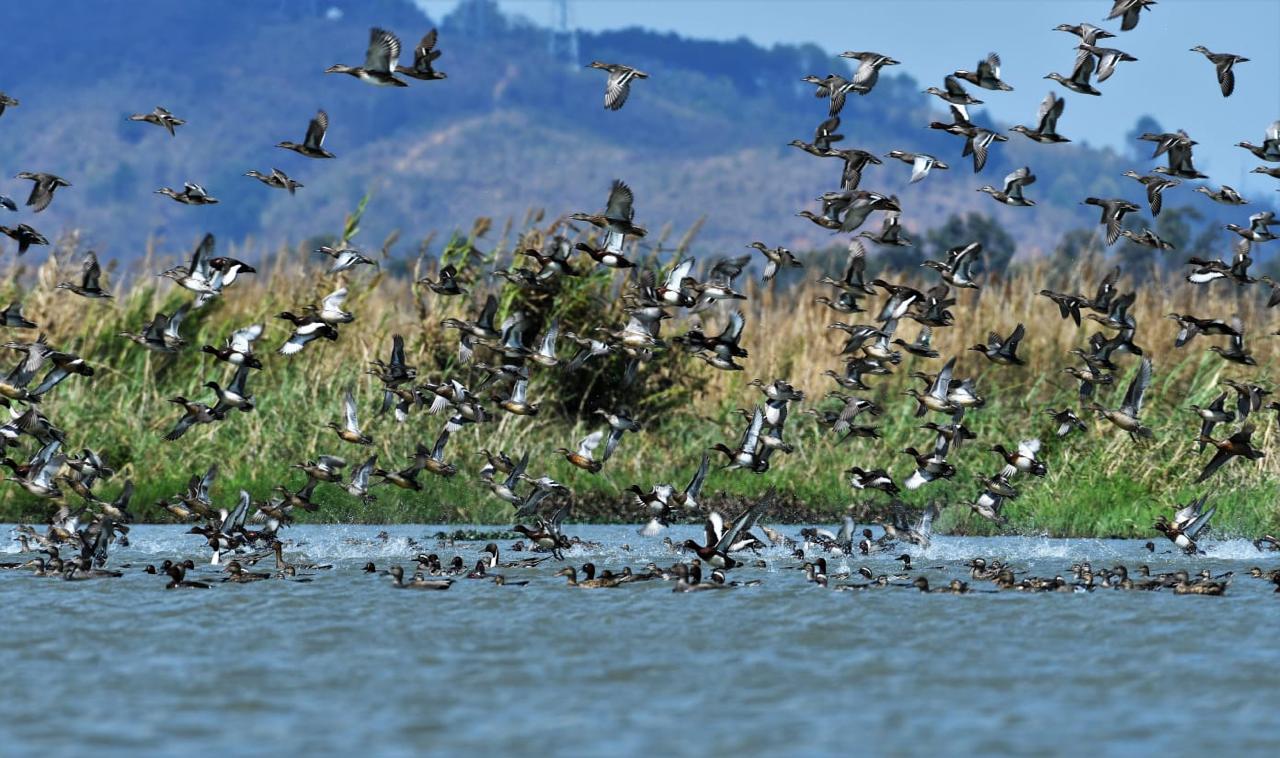
The State’s Directorate of Environment and Climate Change along with other line departments hosted the day at Yaralpat wetland site in Imphal East District, extolling the importance of wetlands to achieve various ecosystem services including groundwater recharge, fisheries and livelihoods, while providing refuge for wildlife such as the wintering migratory water birds.

The day was also observed widely across the State at academic and civil society platforms, individually and with support from the Directorate.

Of significant contribution to the day was the pre-World Wetlands Day 2026 observation on Sunday, 01 February, where the fishing community residing at Champu Khangpok Floating Island Village within Loktak Lake staged a cleanup drive to clear plastics and other domestic wastes along Yangoi Turel Achouba (Nambul River) and its flow up to Birahari Pat within the lake, demonstrating the local community’s responsibility in lake conservation.

Rounding up, it can be well said that a partnership, and workable, model between wetland-dependent local communities and the responsible state agencies can go a long way in shaping the future of wetlands in Manipur, and elsewhere.

The post When Wetlands Beckon first appeared on The Frontier Manipur.

Read more / Original news source: https://thefrontiermanipur.com/when-wetlands-beckon/
Where Is My Pat? A Reflection on Lamphelpat, Memory, and Misguided Development

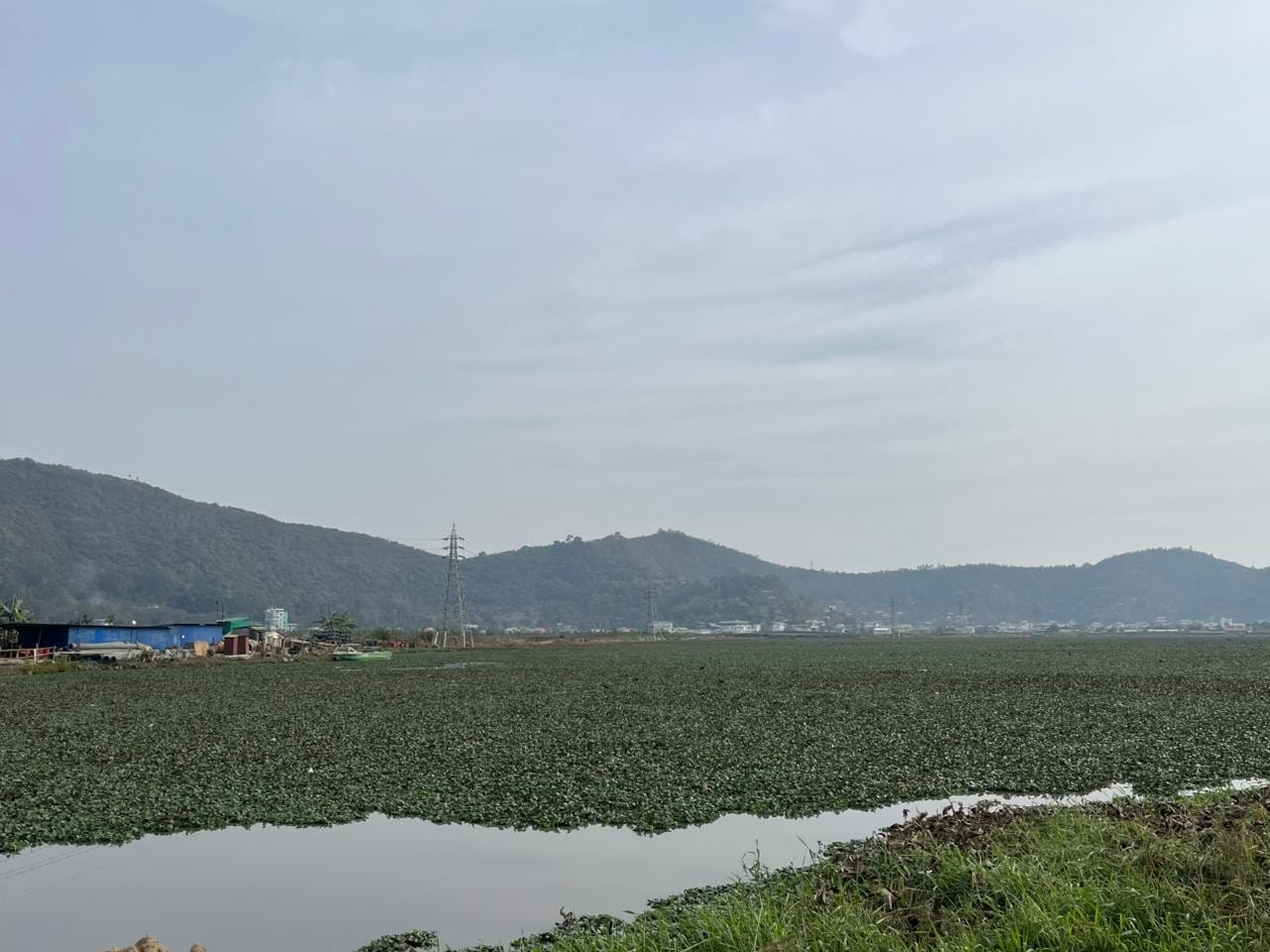
Due to excessive excavation, Lamphelpat’s depth has reportedly reached around 8-10 metres. Such unscientific deepening directly violates basic wetland management principles. It raises a critical question: is Lamphelpat still a natural wetland, or has it been turned into an artificial water reservoir? By Maxstone Irom This article is born out of worry, longing, and deep […]

The post Where Is My Pat? A Reflection on Lamphelpat, Memory, and Misguided Development first appeared on The Frontier Manipur.

Due to excessive excavation, Lamphelpat’s depth has reportedly reached around 8-10 metres. Such unscientific deepening directly violates basic wetland management principles. It raises a critical question: is Lamphelpat still a natural wetland, or has it been turned into an artificial water reservoir?

By Maxstone Irom

This article is born out of worry, longing, and deep nostalgia of my childhood days around Lamphelpat. I grew up with this wetland as part of my everyday life. It was not just a landscape, it was a living space where memories were created, relationships were built, and nature quietly shaped who I am today. For me, Lamphelpat was never just water and land.

On February 2 2026, as part of World Wetlands Day, Go Green Group Manipur, a youth collective, initiated a reflection and listening circle called Pat Ki Wari. The idea was simple yet powerful: to reconnect with our wetlands and revisit the memories and meanings attached to them. As part of this initiative, we walked around Lamphelpat, observed its present condition, and shared stories rooted in our personal journeys. While much has changed, the place still holds immense emotional and cultural significance in my life.

Lamphelpat is one of my core memories. It is where I experienced my first boat ride. Every Sunday morning, I would go for a walk with my family to watch Urok (Threskiornis melanocephalus)and other birds, returning home with a bunch of thambal (lotus). During the monsoon, when the pat would flood, I accompanied my father to buy fresh fish. In winter, we went fishing together. Those mornings, with muddy slippers, small fishes in my hands, and my father’s quiet smile beside me, felt richer than anything money could buy. These were not extraordinary moments; they were ordinary days made meaningful by nature.

As I age, Lamphelpat continued to shape my life. During my teenage years, it became my refuge. Whenever I felt overwhelmed, confused, or restless, I would sit by the water for hours, finding peace in silence. With friends, I watched sunsets near the RIMS side of the pat, clicking countless photographs that still remind me of simpler times. Lamphelpat is not just a place; it is a place that raised me, comforted me, and quietly taught me how to breathe in difficult times. But today, I find myself asking: where is my pat?

After nearly three years, I was shocked when I returned. It no longer looked like the wetland I grew up with. Under the so called “Lamphelpat water body Rejuvenation Project,” implemented by the Water Resources Department and funded by the New Development Bank, large portions of the wetland have been dug up. The excavated silt has been piled into artificial hills, permanently altering the natural landscape. What was once a living ecosystem now resembles a construction site.

As an environmental science student, this transformation raises serious concerns. According to the Wetlands (Conservation and Management) Rules, 2017, the depth of a wetland should not exceed 6 meters. However, due to excessive excavation, Lamphelpat’s depth has reportedly reached around 8-10 metres. Such unscientific deepening directly violates basic wetland management principles. It raises a critical question: is Lamphelpat still a natural wetland, or has it been turned into an artificial water reservoir?

This seemingly unscientific dredging has also destabilized the surrounding infrastructure. Roads connecting important institutions such as Shija Hospital and the National Institute of Technology have started sinking. To address this, an overbridge had to be constructed, an expensive solution to a problem that could have been avoided with proper planning.

Lamphelpat is also home to Manipur’s famous indigenous pony. The swampy terrain once provided a safe and natural space for grazing and movement. Today, however, due to altered water levels, deep excavated pits, and unstable ground, several ponies have reportedly died after falling into these areas. What was once a natural playground and shelter has now been turned into a death trap created by human negligence and poor planning.

A report on East Mojo has also suggested that parts of nearby villages experienced flooding after the project’s implementation. When a wetland’s natural water-holding and drainage capacity is disrupted, such consequences are inevitable. Instead of reducing disaster risks, this project appears to have increased them.

Equally worrying is the rapid growth of concrete structures around Lamphelpat. Buildings are coming up in every direction, slowly replacing this wetland. In recent years, several new government buildings, hospitals, and offices have also been constructed within and around parts of the wetland. This has led to encroachment and fragmentation of Lamphelpat.. This severely disrupts water flow, wildlife movement, and ecological balance. This unchecked unplanned urbanization further weakens the wetland’s ecological function and isolates it from its natural surroundings. A wetland cannot survive when it is slowly suffocated by cement and divided by unplanned construction.


Overbridge construction in progress at Lamphelpat


Under the Wetlands (Conservation and Management) Rules, 2017, wetlands are meant to be protected from unscientific alteration, encroachment, and ecological degradation. The Manipur State Wetland Authority is responsible for ensuring protection of all the wetland in the state.

Yet, in the case of Lamphelpat, there is little public evidence of strict monitoring, transparent assessment, or community consultation. This reflects a serious failure of governance and accountability.

Let me be clear: development and rejuvenation are necessary. Wetlands do require restoration, maintenance, and protection. But development without ecological understanding is destruction in disguise. True rejuvenation should strengthen a wetland’s natural character, not erase it.

Till today, no comprehensive environmental impact assessment of this project has been made publicly accessible. There is no clear record of meaningful consultation with local communities, ecologists, traditional users, or independent researchers. This lack of transparency raises serious doubts about the legitimacy of the entire project.

Lamphelpat did not need to be dug. It needed protection from encroachment, pollution, and unplanned construction. It needed proper waste management, biodiversity conservation, and community participation. Instead, it received heavy machinery and cosmetic “development” that prioritised appearance over ecology.

What hurts the most is not just the physical transformation, but the emotional loss. A space that once nurtured childhoods, livelihoods, culture, and biodiversity is slowly being stripped of its soul. When a wetland dies, a part of our collective memory dies with it. For many of us, Lamphelpat is not a project site. It is memory, identity, and heritage.

If we truly care about sustainable development, then projects like this must be fundamentally rethought. Policies must respect science, local knowledge, and lived experiences. Youth voices, indigenous knowledge, and environmental expertise should be central, not optional.

This reflection is not just an expression of nostalgia. It is a call to action for authorities to answer, for institutions to take responsibility, and for citizens to demand better. We still have time to correct our mistakes. We still have time to restore Lamphelpat with wisdom, sensitivity, and accountability.

If we cannot save Lamphelpat, a wetland that raised generations of us, what hope do we have of
saving anything at all?


(Maxstone Irom is a writer and poet from Manipur, India, known for his published works in local newspapers and online platforms, often focusing on the social and political issues of his home state.)


The post Where Is My Pat? A Reflection on Lamphelpat, Memory, and Misguided Development first appeared on The Frontier Manipur.

Read more / Original news source: https://thefrontiermanipur.com/where-is-my-pat-a-reflection-on-lamphelpat-memory-and-misguided-development/

Demand for ST status, Chinks in Biren’s armour and Army vs Police

The BJP in Manipur had gathered more MLAs belonging to other parties to join ranks with them either by joining the party or lending support to the extent that the treasury bench today has 55 members sitting in it against the five in the opposition belonging to the Congress and as such the threat is […]

The post Demand for ST status, Chinks in Biren’s armour and Army vs Police first appeared on The Frontier Manipur.

The BJP in Manipur had gathered more MLAs belonging to other parties to join ranks with them either by joining the party or lending support to the extent that the treasury bench today has 55 members sitting in it against the five in the opposition belonging to the Congress and as such the threat is not real.

By Yambem Laba

The movement for inclusion of the Meetei Tribe in the Scheduled List of tribes of India got a major fillip when the Manipur High Court gave a directive to the Manipur state government to give a response to the query from the Centre pending since 2013. The reply is to be given in one month’s time. The directive came after a petition by the Meetei Tribes Union, Manipur. It might be recalled that the Ministry of Tribal Affairs of the Government of India had sought the recommendation of the Manipur state government to enlist the Meitei in the ST List on 29 May 2013. In that letter, the Union Tribal Ministry had sought a report on the ethnographic and socio-economic survey of the Meitieis but had sat on it.

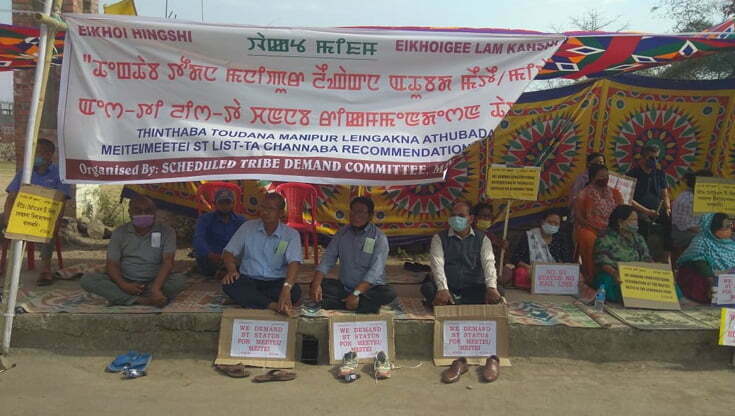
The Scheduled Demand Committee Manipur (STDCM), who had been in the forefront of the movement for the last 20 years or so, had welcomed the High Court’s directive which was arrived at by a single bench of the Manipur High Court of Acting Chief Justice M V Muralidharan. The STDCM had also garnered signatures of almost all the MLAs of the valley where the Meiteis reside. A Writ of Mandamus was filed by Mutum Churamani, secretary of the Meitei Tribes Union and seven others of the Union against the state of Manipur.

According to the petition, it was asserted that the Census carried by the Government of India since 2011 had been classifying Meeteis as a Tribe of the State and it was thus till Manipur’s merger with the Indian Union on 21 September 1949. Ajoy Pebam, the counsel for the petitioners, argued that the Meeteis lost the tribal tag after signing the Merger Agreement in 1949 and restoration of the status is imperative to preserve the ancestral land, traditions and culture. Various documentary references were annexed to the petition asserting that the Meeteis are still a tribe as per Articles 342(1) and 366(19), and 230(25) of the Indian Constitution and unfortunately, the Meeteis were left out while preparing the ST list under Article 342 of the Constitution, he added. He also added that the Chongthu, Khoibu and Mate tribes were classified as Scheduled Tribes of the Union as per an order of the Gauhati High Court dated 26 May 2003.

Appearing on behalf of the Government of India, the Deputy Solicitor General of India also conceded that the Meeteis lost their tribal status after the state’s merger with the Indian Union. The Court also observed that the Meitei Tribe Union had also submitted a representation to the Union Minister of Tribal Affairs on 18 April 2022 to include the Meeteis in the ST list and the Ministry had forwarded the same to Chief Secretary and again it was swept under the carpet. At this juncture, the counsel for the petitioners asserted that the continued silence of the successive state governments were tantamount to violation of the Right to Equality and Right to Life with Dignity which are enshrined under Articles 14 and 21 of the Constitution of India.

The Court also observed that the state had not given any satisfactory explanation for not submitting the recommendations which the Centre has been seeking for the last 10 years.

Apart from the STDCM and the Meitei Tribe Union, the World Meitei Council and the Kangleipak Kanba Lup (KKL) had been vociferously demanding for the inclusion of the Meeteis in the ST List. The KKL had gone one step further and asked Union Home Minister Amit Shah to decide on the ST Status of the Meeteis before signing the final accord with the rebel Nagas viz the NSCN(I-M) and others.

It should also be on record that whilst the Constitution was being prepared, the then Constituent Assembly of India had deputed the late Gopinath Bordoloi of Assam and Stanley Nicholas Roy of the then Khasi and Jaintia Hills (now Meghalaya) to Manipur to seek the views of the Meeteis on the question of being included in the ST list. They, however, did not meet the public, but had just met three personalities, two Meitei Brahmins amongst them. They were Dwijamani Dev Sharma, Krishna Mohan Singh and another one, who were fanatical Hindus. They asserted that the Hindus, who are the descendants of the Aryans, be classified as Tribals. This is how the Meeteis had missed the bus in 1950 when India adopted the Constitution.

However, it needs to be pointed out that the then RK Ranbir government in 1991 had imposed prohibition in Manipur following a ban on sale of liquor in Manipur by the proscribed People’s Liberation Army (PLA) of Manipur. Likewise, the reluctance of the successive governments of Manipur, beginning from 2013 till now, must have been reluctant to forward the recommendation of the inclusion of the Meeteis in the ST list because of the opposition of the outlawed and oldest insurgent group in Manipur, the United National Liberation Front (UNLF), had been against the idea of the Meeteis being classified as a Scheduled Tribe. They first launched their tirade through their Students and Civil Society Organisations who are their fronts in the public.

Five years ago, I was summoned to the CHQ of the UNLF in Myanmar as I had been quite vocal and had written in favour of the demand of the STDCM. I was asked to explain my position on it. When asked as to whether they had openly declared their stance against it, the reply was “No”. Then the issue was settled – if one can assume that statements issued by their fronts can be assumed to be that of the UNLF. Then my interrogators remained silent. Two years later, the UNLF in their annual statement announced the UNLF’s stance against the demand of the Meeties of being classified as a Scheduled Tribe as it negates the existence of Manipur, particularly the Meeteis’ 2000 years of existence as a nation state and civilisation. The suzerainty of the Meitei Kings had once upon a time spanned from the banks of the Chindwin in Myanmar to that of the Surma in present day Bangladesh. But after joining India, the Meeteis are now confined to a mere 9 per cent of the state’s total geographical area. Their future is bleak as they cannot settle down in the remaining 90 per cent of the state’s area which are scheduled tribal lands belonging to the various scheduled tribes of Manipur while the reverse is not true. However, the question is, if the Biren Government is not afraid to defy the PLAs diktat of prohibition and had recently lifted prohibition from Manipur, why it is afraid to stand against the UNLF stance against the ST tag for the Meeteis. But now with the directive from the High Court, the reply might be coming shortly.

CHINKS IN CM BIREN’S ARMOUR

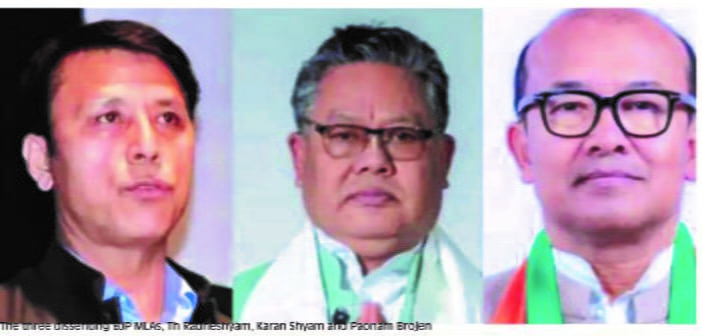
While pondering over the High Court’s directive, the Biren Ministry received a jolt. It began with former minister and now MLA from the Heirok Assembly Constituency and Advisor to the Chief Minister Th Radheshyam resigning from his post, citing lack of any responsibility being given to him. He said he did not know how to answer the questions raised by his supporters when they urged him to take up an issue with the CM. He also said that while the CM was talking about environmental protection, his own younger brother was allegedly involved in timber trade. His move was followed by former minister and MLA from Langthabal Assembly Constituency and Chairman of the Manipur Tourism Corporation Karam Shyam Singh, who also resigned from his post.

He also cited not being not only being given any responsibilities and power, and of being humiliated publicly on numerous occasions by the Chief Minister. Then the third to throw in his towel was Paonam Brojen from Wangjing Assembly Constituency and was holding the post of Chairman of the Manipur Development Society (MDS). He went public as to how the Chief Minister had dumped him after, upon his advice, his workers were made to engage in road constructions in his constituency. Then suddenly, he was informed that the work orders for the already constructed works had been cancelled. His workers, having expended about Rs 6 crore in the process, are now fuming and Brojen now says that he is not able to stay at his home as he cannot face his workers and give them an explanation.

According to sources, there are about 15 BJP MLAs reportedly camping in Delhi demanding the replacement of N Biren Singh as the Chief Minister. Although the BJP returned 32 in the House of 60 at the last hustings, only six MLAs out of the 32 when Biren Singh was elected as the leader of the BJP Legislative Party last year. BJP Big-wig Sambit Patra had orchestrated the drama and he had reportedly/allegedly asked Govindas Konthoujam, who had joined the BJP after having resigned as the President of the Congress in Manipur, on the eve of the elections last year to propose Biren Singh’s name as the leader. Then another tribal MLA seconded the proposal and he became Chief Minister.

The BJP on the other hand had gathered more MLAs belonging to other parties to join ranks with them either by joining the BJP or lending support to the extent that the treasury bench today has 55 members sitting in it against the five in the opposition belonging to the Congress and as such the threat is not real. But the fact remains that dissent within the Party has already surfaced against the Chief Minister and it is a point to be noted.

ARMY VERSUS POLICE

In the meantime, one Manipuri army officer Major Thokchom Bhagatjit Singh belonging to 2nd Madras Regiment had posted on social media remarks critical of Chief Minister N Biren Singh. His elders back home, aware of the sensitivity of CM Biren on social media posts, had advised him to delete his post. CM Biren had earlier slapped the National Security Act on numerous occasions for such posts criticising him or his government directly or indirectly. So the young Major deleted the post from the account which was opened under another name and he returned home on leave. That was when the Sekmai Police of the Imphal West District came and picked him upon intimation from the Cyber Crime unit of the Manipur Police. This arrest was made properly as an arrest memo was issued and an FIR registered and he was produced before the Magistrate 24 hours after he was taken into custody. This was on 13 April, earlier this month. Then on the same day, one Md. Aksar Ali, president of the BJP’s Minority Morcha, filed another complaint against the Major at the Porompat Police Station in Imphal East. He was again arrested, but this time no arrest memos were issued and no FIR was lodged, yet he was kept in the lockup for 18 hours. That was when the army stepped in and they came to the Porompat Police Station and told the police that they can arrest an army man on charges of rape, murder or culpable homicide not amounting to murder, and not for any charges including posts on social media. The police then made a hasty retreat. The officer may be facing a court of inquiry from his commanding officer but not from the police or civil court.

The CM apparently has an army of cyber warriors who will troll anyone posting against him or the government on social media. But this time it had bitten off more than it could chew, it seems.

(The writer is a senior journalist at The Statesman. This article was first published by The Statesman. All opinions expressed here are the writer’s own and do not represent the views of TFM)

The post Demand for ST status, Chinks in Biren’s armour and Army vs Police first appeared on The Frontier Manipur.

Read more / Original news source: https://thefrontiermanipur.com/demand-for-st-status-chinks-in-birens-armour-and-army-vs-police/

ST Demand Issue: Positive discrimination, affirmative action and the cracks within

India’s reservation policy has spawned forms of conflicting categories of the ‘exploiter’ and the ‘exploited’, the ‘dominant’ and the ‘subservient’ as if these binaries exist in a permanent cycle sans the dynamics of wresting political power at play. By Dhiren A. Sadokpam In recent times, the political elites of three primary ethnic groups in Manipur […]

The post ST Demand Issue: Positive discrimination, affirmative action and the cracks within first appeared on The Frontier Manipur.

India’s reservation policy has spawned forms of conflicting categories of the ‘exploiter’ and the ‘exploited’, the ‘dominant’ and the ‘subservient’ as if these binaries exist in a permanent cycle sans the dynamics of wresting political power at play.

By Dhiren A. Sadokpam

In recent times, the political elites of three primary ethnic groups in Manipur are caught in a whirlpool of anxiety propelled by palpable dissonance in political objectives. This anxiety is not necessarily triggered by the differences in speculative autonomy-demands or even demands based on administrative separatism.

The main anxiety has been caused by the way how the communities have effectively understood the political ideas behind positive discrimination, affirmative action or what in the Indian subcontinent is being referred to as the reservation policy of communities that have apparently lagged behind in holistic development. The most recent play-out that has triggered the spells of anxiety and tension has been the demand of a community considered advanced in comparison to its neighbours, to be included in the Scheduled List of Tribes in India.

While the proponents of the demand and those opposing the same have resorted to socio-political and historical reasoning, both the parties seem to have skipped re-looking at either redefining or refining the concepts they would love to toy with. One is not sure if both the conflicting parties have understood that India’s reservation policy presupposes a social fact – centuries of oppression of one group by another. This presupposition assumes a determinate but constant ‘unchanging oppressor and oppressed’ and ‘advanced’ and ‘backward’ communities. The ‘constant’ is supposedly created by a social order that determined identities of each castes, communities and tribes. This has spawned forms of conflicting categories of the ‘exploiter’ and the ‘exploited’, the ‘dominant’ and the ‘subservient’ as if these binaries exist in a permanent cycle in all societies sans the dynamics of wresting political power at play.

For the mainland India, these terms are defined in relation to the hereditary caste order whereas for Northeast India, the same has been defined by amorphous understandings of communities guided by colonial agenda of the British whose administrators first chose to categorize people from the mixed-prism of the caste order or an anthropological understanding of a system which they considered was durable.

It is against this backdrop that United Naga Council, Manipur (UNC) and the Kuki Inpi Manipur (KIM) have raised objections to the Manipur High Court’s directive to the Government of Manipur to send its recommendation for the inclusion of Meetei Community in the list of Scheduled list of Tribes to the Government of India. The directive of the high court was passed on March 27.

Strident Voices and Social Tension

The UNC stated that “the Meitei/Meetei community of Manipur is an advanced community of India” with their language, Manipuri (Meiteilon) listed in the Eight Schedule to the constitution of India.

“They are already protected under Constitution of India and categorized as (i) General (ii) Other Backward Classes (OBC) and (iii) Schedule Caste (SC),” said the UNC.

UNC termed it irrational that the High Court of Manipur directed the Government of Manipur to recommend for inclusion of Meitei/Meetei community in the Scheduled Tribe (ST) list of India, “negating the sole objective of scheduling group of people for protective discrimination as ST in the Constitution of India”. The Naga body has strongly condemned and called the high court order “inane” for making “such imbecilic recommendation despite strong opposition from Scheduled tribes of the state”.

The common refrain and rationale behind the objections raised by both UNC and KIM has been rubbished by the proponents of those demanding a Scheduled Tribe status for the Meetei community. One strident voice has been that of the Kangleipak Kanba Lup (KKL). KKL has critiqued the objections in their own characteristic way stating that the demand for the inclusion of Meetei in the Scheduled list of Tribes in the Constitution of India is not aimed at grabbing “jobs” either from the Naga or Kuki communities of Manipur. It has asserted that the demand is based on safeguarding their “little bit of land” now confined to less than 2000 square kilometers out of the 20,000 square kilometers of the entire state of Manipur.

The KKL has made it clear that the Naga and the Kuki communities need not fear about grabbing “their job reservation quotas currently enforced in Manipur which will remain status quo”. The organization also unequivocally asserted that the UNC and KIM have “no birth right” to deny any other scheduled tribes of India that job opportunity.

The KKL had a message for the UNC too. It reiterated that the Manipuri Language being classified as scheduled languages of India under the Eight Schedule has nothing to do with the classification of the Meetei as a scheduled tribe of India. “Anyway Manipuri language is not confined to the Meeteis only but serves as a Lingua Franca amongst all the tribal communities of Manipur be it between the Nagas and the Kukis but amongst their various sub-tribes also”, it pointed out.

Moreover, the UNC has also been reminded that it was Th Muivah, the top National Socialist Council of Nagalim (NSCN-IM) leader who had stated that “only the Nagas and the Meeteis are the indigenous peoples” of Manipur. KKL asked, “So what is the idea of joining hands with the Kukis to block the way for the survival of the Meeteis under the Indian Constitution”. To the question of Meeteis being more advanced than the other tribes of Manipur, KKL asserted that it has nothing to do with genealogy but “mode of production” experienced by the communities.

The Meetei community began to practice settled agriculture and had more time to concentrate on arts, culture and literature while the hill tribes hitherto used to follow a different form of agriculture “before switching to poppy plantation” in recent times that had made them “all become rich”, said KKL.

The organization winded up their statement on a harsher note stating that it would be wrong on the part of both the Naga and the Kuki communities to consider the Meetei community as their “common enemy or else will be constrained to  oppose every move or demand made by any tribal group either Naga or Kuki”.

The exchange of statements may not lead towards a reconciliation on the sensitive topic. As the articulation of the issue by those supporting the demand for inclusion of Meetei in Scheduled Tribe list up the ante on their movement, the objections by Naga and Kuki tribal bodies may get shriller by the day.

Empowerment and Social Justice

In all these voices, what has been missed is a dispassionate inter-community/ethnic group deliberation on what would be the best option for all communities to progress and under what protective or empowering mechanism. While the fact of discrimination cannot be denied in one’s everyday experience, ethnicization or communalization of the issue would only create unbridgeable distance between communities. Under such circumstances, one will not be able to project the fact that there are no permanent oppressor and permanent oppressed or instil the fact that the idea of permanent and constant binaries will lead to over-generalization of a theoretical framework to achieve quick practical results.

What is of utmost importance now is truly and honestly grasping the fact that emancipating the socially underprivileged and the marginalized irrespective of community or tribal affiliation or within the same community is a move towards social justice. While doing so, one should not forget that the idea of empowerment of the individual has a far greater value and virtue than a protective mechanism that tends to perpetuate redundant binaries or historical contradictions.

Here, it should also be noted that India’s reservation policy emerged out of a deep flaw in understanding the complex relationship between the conceptions of the ‘cultural/social’ and the ‘economic’. Having said this, elsewhere, this writer had also argued that the stereotyping of the Meetei as a Hindu society both within Manipur and outside, in the image of mainland Hindu ethos and practices has manufactured the idea of the ‘constant exploiter’ and the ‘constant exploited’ in Manipur.

While Hinduised Meeteis have been identified with the former, all other non-Hindu communities are shown as ‘exploited’. Such is the handiwork of those who harp on the ‘politics of divide’ and benefit from it; and endorsed by the ‘ignorant other’ who is happy to own up anything that comes closer to the intolerant and imagined pan-Indian vision.

(Dhiren A. Sadokpam is Editor-in-Chief, The Frontier Manipur. This article was first published by EastMojo under the title ‘ST demand for Meetei: First, acknowledge the cracks within’)


The post ST Demand Issue: Positive discrimination, affirmative action and the cracks within first appeared on The Frontier Manipur.

Read more / Original news source: https://thefrontiermanipur.com/st-demand-issue-positive-discrimination-affirmative-action-and-the-cracks-within/

People’s Resistance at Yaithibi

Democracy works in ugly ways wherein people have to bleed to live. Man being a social animal lives in a society. Ours being an agrarian society, agriculture is the largest economic activity of the people of the state. The economic system is called capitalism using a political system called democracy. We live as a society […]

Democracy works in ugly ways wherein people have to bleed to live. Man being a social animal lives in a society. Ours being an agrarian society, agriculture is the largest economic activity of the people of the state. The economic system is called capitalism using a political system called democracy. We live as a society […]

Read more / Original news source: http://kanglaonline.com/2016/11/peoples-resistance-at-yaithibi/