

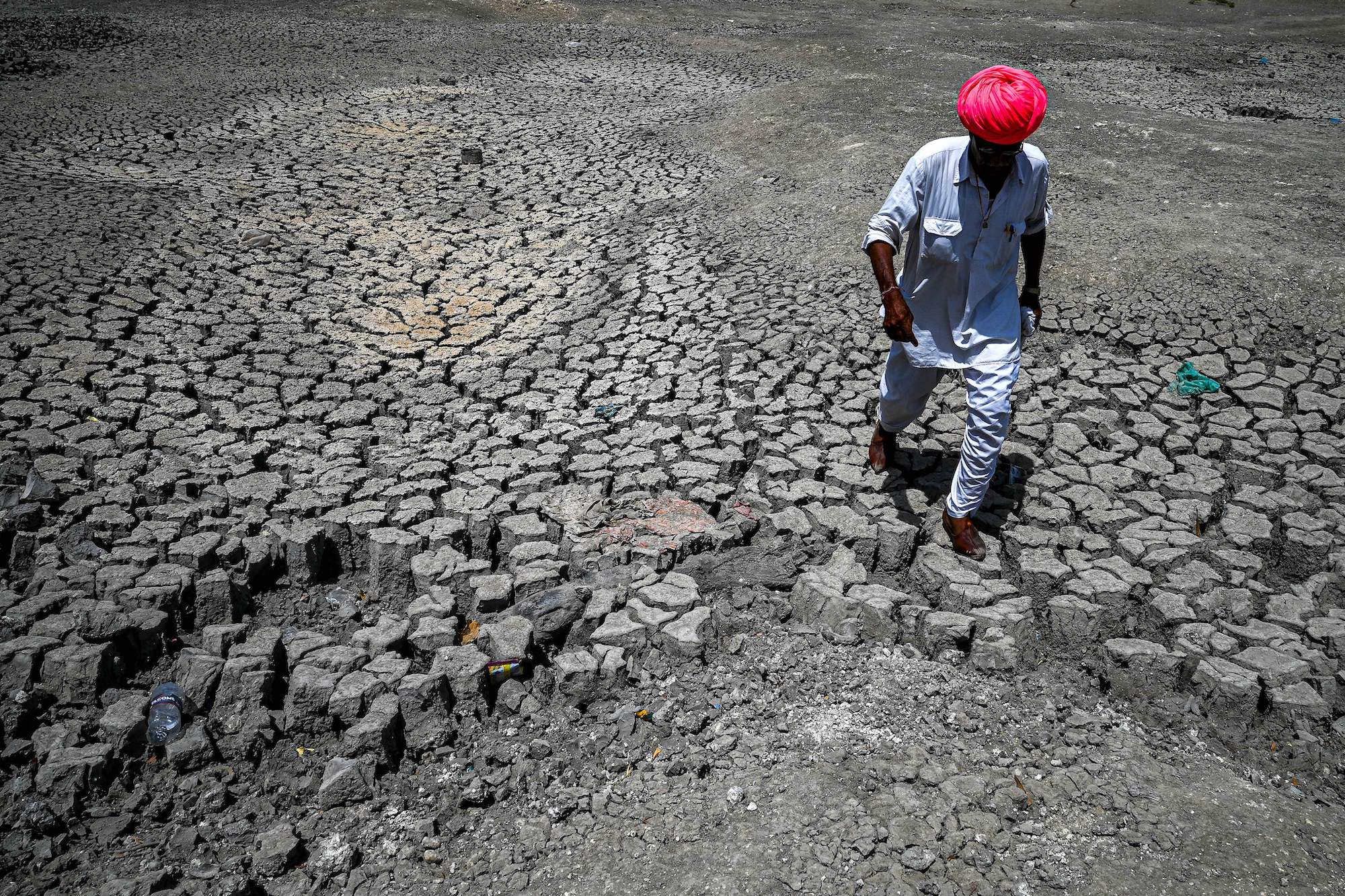
Landmark 2025 advisory opinion reframes climate adaptation as a due diligence obligation, urging states to act on science, equity, and global cooperation. Non-binding yet authoritative ruling signals legal consequences for inaction, placing climate resilience at the heart of international law.

By Salam Rajesh
In July of 2025, the International Court of Justice (ICJ) delivered a landmark Advisory Opinion on the Obligations of States in Respect of Climate Change.
The ICJ’s Advisory Opinion provides authoritative legal guidance on Member States’ obligations to address climate change and prevent significant harm to vulnerable countries and communities across the globe.
While the ICJ’s Advisory Opinion is non-binding, it makes clear that failure to act can trigger legal consequences. States require timely and accessible analysis to understand their legal obligations and the consequences of breaching them.
On understanding why the ICJ’s Advisory Opinion matters for climate change adaptation, the International Institute for Sustainable Development (IISD) in its analysis suggests that climate change adaptation is one of the core pillars of the international climate regime.
With reference to the Intergovernmental Panel on Climate Change (IPCC, 2022), climate change adaptation is the process of preparing, and adjusting to, for actual or expected impacts associated with climate change.
Fundamentally, adaptation is about protecting people in an uncertain future and making communities, economies, and ecosystems more resilient to a changing climate.
The ICJ’s Advisory Opinion develops from the perspective that climate change is now a force to be reckoned with and that adaptation can no longer be viewed as solely a domestic policy choice, but as a binding obligation under international law and assessed against a standard of due diligence.
This means that for all practical purposes, all countries must use their best efforts to engage in adaptation planning and implementation, based on the best available science, and to undertake precautionary and forward-looking measures, continuously adjusting their responses as climate risks evolve.
The ICJ noted with concern that countries continue to have discretion over how adaptation is planned and implemented, based on their risk contexts and national circumstances, and provided that such efforts aim to prevent and address foreseeable climate harm.
With due diligence to the ICJ’s Advisory Opinion, national adaptation plans, policies and strategies, therefore, take on a renewed significance as instruments through which individual countries may demonstrate their commitments to, and compliance with international laws.
This runs in conjunction to the UAE Framework for Global Climate Resilience (UNFCCC, 2023) whereupon countries need to formulate and submit their national adaptation plans, policies and strategies, and progress in implementing them by the target year 2030.
The IISD analysis stressed that all developed countries have a binding obligation to provide and mobilize adaptation finance, technology transfer and capacity building for developing countries, in the context of the New Collective Quantified Goal on Climate Finance and the Mutirão decision’s call to at least triple adaptation finance by the year 2035.
All countries, too, have the obligation to cooperate with each other on adaptation knowledge sharing, it stated.
The IISD analysis further emphasized that a country-driven, gender-responsive, participatory and fully transparent approach that integrates human rights considerations and pays particular attention to vulnerable people, places and ecosystems is integral to effective adaptation planning and implementation that yield equitable benefits for people of all backgrounds.
It cautioned that a fragmented approach undermines adaptation outcomes, whereupon obligations under international human rights law are interrelated with countries’ adaptation obligations, and they all form part of the legal context against which adaptation efforts are assessed.
Integrated and synergistic approaches to address the climate and biodiversity crises and land degradation strengthen adaptation, biodiversity and land degradation neutrality outcomes, it stated.
The ICJ observed that under the UNFCCC and the Paris Agreement, respective parties have procedural obligations to engage in adaptation planning processes and the implementation of adaptation actions (ICJ, 2025, paras. 255-257).
This would necessitate the formulation, submission and regular updating of national adaptation plans, policies or strategies, the ICJ noted, while stressing that the assessment of climate change impacts and vulnerability, and the monitoring, evaluation and learning from adaptation actions is highly essential.
The ICJ further stressed the need for integration of climate change considerations in relevant social, economic and environmental policies and actions, while employing appropriate methods to minimize adverse effects that adaptation projects or measures could have on the economy, public health, and the quality of the environment.
Importantly, it emphasized on the strengthening of international cooperation to enhance adaptation actions and support.
The ICJ Advisory Opinion noted that a standard of due diligence would be used to assess the parties’ fulfillment of their adaptation obligations (ICJ, 2025, para. 258). This means that, in terms of adaptation, acting with due diligence requires the parties to use their best efforts to enact appropriate adaptation measures, in a timely manner, to reduce the risk of significant harm occurring due to climate change impacts.
The ICJ called on parties to base their adaptation planning and implementation, such as the national adaptation plan (NAP) process, on the best available science and technological information, such as, availing the information, knowledge and tools from the IPCC and other international rules, standards, guidelines, and best practices.
It advised parties to take precautionary measures and enact forward-looking policies, such as integrating climate risk considerations in development policies and plans, or continuously updating building codes and infrastructure standards to reflect climate realities.
The ICJ called on parties to ensure continuous improvement by following the dimensions of the iterative adaptation cycle (defined by the UAE Framework for Global Climate Resilience as impact, vulnerability, and risk assessments; planning; implementation; monitoring, evaluation and learning; and iteration of these four steps) as the due diligence standard.
It urged parties to follow a country-driven, gender-responsive, participatory and fully transparent approach to adaptation planning and implementation in achieving the goals enshrined in the Paris Agreement and other climate protocols.
The analysis appears in the International Institute for Sustainable Development (IISD)’s briefing note: ‘Unpacking the implications of the ICJ Advisory Opinion on Climate Change’, published earlier this month.
The post Adaptation Matters, ICJ On Climate Change first appeared on The Frontier Manipur.
Read more / Original news source: https://thefrontiermanipur.com/adaptation-matters-icj-on-climate-change/