

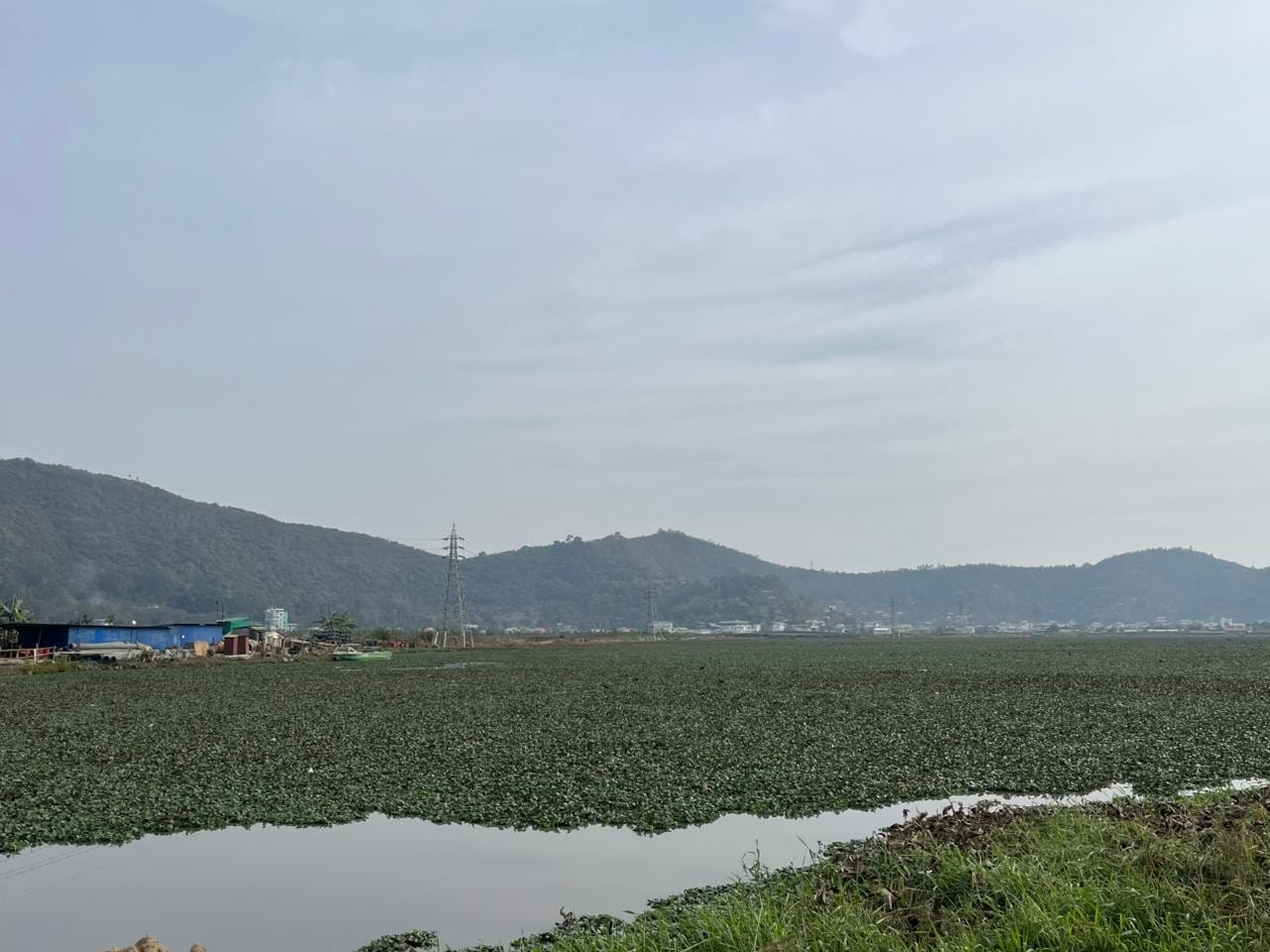
Where Is My Pat? A Reflection on Lamphelpat, Memory, and Misguided Development

Due to excessive excavation, Lamphelpat’s depth has reportedly reached around 8-10 metres. Such unscientific deepening directly violates basic wetland management principles. It raises a critical question: is Lamphelpat still a natural wetland, or has it been turned into an artificial water reservoir? By Maxstone Irom This article is born out of worry, longing, and deep […]

The post Where Is My Pat? A Reflection on Lamphelpat, Memory, and Misguided Development first appeared on The Frontier Manipur.

Due to excessive excavation, Lamphelpat’s depth has reportedly reached around 8-10 metres. Such unscientific deepening directly violates basic wetland management principles. It raises a critical question: is Lamphelpat still a natural wetland, or has it been turned into an artificial water reservoir?

By Maxstone Irom

This article is born out of worry, longing, and deep nostalgia of my childhood days around Lamphelpat. I grew up with this wetland as part of my everyday life. It was not just a landscape, it was a living space where memories were created, relationships were built, and nature quietly shaped who I am today. For me, Lamphelpat was never just water and land.

On February 2 2026, as part of World Wetlands Day, Go Green Group Manipur, a youth collective, initiated a reflection and listening circle called Pat Ki Wari. The idea was simple yet powerful: to reconnect with our wetlands and revisit the memories and meanings attached to them. As part of this initiative, we walked around Lamphelpat, observed its present condition, and shared stories rooted in our personal journeys. While much has changed, the place still holds immense emotional and cultural significance in my life.

Lamphelpat is one of my core memories. It is where I experienced my first boat ride. Every Sunday morning, I would go for a walk with my family to watch Urok (Threskiornis melanocephalus)and other birds, returning home with a bunch of thambal (lotus). During the monsoon, when the pat would flood, I accompanied my father to buy fresh fish. In winter, we went fishing together. Those mornings, with muddy slippers, small fishes in my hands, and my father’s quiet smile beside me, felt richer than anything money could buy. These were not extraordinary moments; they were ordinary days made meaningful by nature.

As I age, Lamphelpat continued to shape my life. During my teenage years, it became my refuge. Whenever I felt overwhelmed, confused, or restless, I would sit by the water for hours, finding peace in silence. With friends, I watched sunsets near the RIMS side of the pat, clicking countless photographs that still remind me of simpler times. Lamphelpat is not just a place; it is a place that raised me, comforted me, and quietly taught me how to breathe in difficult times. But today, I find myself asking: where is my pat?

After nearly three years, I was shocked when I returned. It no longer looked like the wetland I grew up with. Under the so called “Lamphelpat water body Rejuvenation Project,” implemented by the Water Resources Department and funded by the New Development Bank, large portions of the wetland have been dug up. The excavated silt has been piled into artificial hills, permanently altering the natural landscape. What was once a living ecosystem now resembles a construction site.

As an environmental science student, this transformation raises serious concerns. According to the Wetlands (Conservation and Management) Rules, 2017, the depth of a wetland should not exceed 6 meters. However, due to excessive excavation, Lamphelpat’s depth has reportedly reached around 8-10 metres. Such unscientific deepening directly violates basic wetland management principles. It raises a critical question: is Lamphelpat still a natural wetland, or has it been turned into an artificial water reservoir?

This seemingly unscientific dredging has also destabilized the surrounding infrastructure. Roads connecting important institutions such as Shija Hospital and the National Institute of Technology have started sinking. To address this, an overbridge had to be constructed, an expensive solution to a problem that could have been avoided with proper planning.

Lamphelpat is also home to Manipur’s famous indigenous pony. The swampy terrain once provided a safe and natural space for grazing and movement. Today, however, due to altered water levels, deep excavated pits, and unstable ground, several ponies have reportedly died after falling into these areas. What was once a natural playground and shelter has now been turned into a death trap created by human negligence and poor planning.

A report on East Mojo has also suggested that parts of nearby villages experienced flooding after the project’s implementation. When a wetland’s natural water-holding and drainage capacity is disrupted, such consequences are inevitable. Instead of reducing disaster risks, this project appears to have increased them.

Equally worrying is the rapid growth of concrete structures around Lamphelpat. Buildings are coming up in every direction, slowly replacing this wetland. In recent years, several new government buildings, hospitals, and offices have also been constructed within and around parts of the wetland. This has led to encroachment and fragmentation of Lamphelpat.. This severely disrupts water flow, wildlife movement, and ecological balance. This unchecked unplanned urbanization further weakens the wetland’s ecological function and isolates it from its natural surroundings. A wetland cannot survive when it is slowly suffocated by cement and divided by unplanned construction.


Overbridge construction in progress at Lamphelpat


Under the Wetlands (Conservation and Management) Rules, 2017, wetlands are meant to be protected from unscientific alteration, encroachment, and ecological degradation. The Manipur State Wetland Authority is responsible for ensuring protection of all the wetland in the state.

Yet, in the case of Lamphelpat, there is little public evidence of strict monitoring, transparent assessment, or community consultation. This reflects a serious failure of governance and accountability.

Let me be clear: development and rejuvenation are necessary. Wetlands do require restoration, maintenance, and protection. But development without ecological understanding is destruction in disguise. True rejuvenation should strengthen a wetland’s natural character, not erase it.

Till today, no comprehensive environmental impact assessment of this project has been made publicly accessible. There is no clear record of meaningful consultation with local communities, ecologists, traditional users, or independent researchers. This lack of transparency raises serious doubts about the legitimacy of the entire project.

Lamphelpat did not need to be dug. It needed protection from encroachment, pollution, and unplanned construction. It needed proper waste management, biodiversity conservation, and community participation. Instead, it received heavy machinery and cosmetic “development” that prioritised appearance over ecology.

What hurts the most is not just the physical transformation, but the emotional loss. A space that once nurtured childhoods, livelihoods, culture, and biodiversity is slowly being stripped of its soul. When a wetland dies, a part of our collective memory dies with it. For many of us, Lamphelpat is not a project site. It is memory, identity, and heritage.

If we truly care about sustainable development, then projects like this must be fundamentally rethought. Policies must respect science, local knowledge, and lived experiences. Youth voices, indigenous knowledge, and environmental expertise should be central, not optional.

This reflection is not just an expression of nostalgia. It is a call to action for authorities to answer, for institutions to take responsibility, and for citizens to demand better. We still have time to correct our mistakes. We still have time to restore Lamphelpat with wisdom, sensitivity, and accountability.

If we cannot save Lamphelpat, a wetland that raised generations of us, what hope do we have of
saving anything at all?


(Maxstone Irom is a writer and poet from Manipur, India, known for his published works in local newspapers and online platforms, often focusing on the social and political issues of his home state.)


The post Where Is My Pat? A Reflection on Lamphelpat, Memory, and Misguided Development first appeared on The Frontier Manipur.

Read more / Original news source: https://thefrontiermanipur.com/where-is-my-pat-a-reflection-on-lamphelpat-memory-and-misguided-development/

Deepavali night in Imphal city

Deepavali night in Imphal city. Less celebration of the festive has been witness this year apart from thunders of different fire crackers despite banned by district administration, on October 19, 2017. Photos by :Laishram Ranbir

Deepavali night in Imphal city. Less celebration of the festive has been witness this year apart from thunders of different fire crackers despite banned by district administration, on October 19, 2017. Photos by :Laishram Ranbir

Read more / Original news source: http://kanglaonline.com/2017/10/deepavali-night-in-imphal-city/

Encroachers warned to vacate in three days

IMPHAL, 5th May: MAHUD minister Thounaojam Shyamkumar Friday served a deadline of three days to shop owners, who construct their shops by encroaching upon public areas, to remove their constructions failing which the government will pull down any such constructions or extensions. The minister gave the deadline during an inspection visit in Imphal city areas […]

IMPHAL, 5th May: MAHUD minister Thounaojam Shyamkumar Friday served a deadline of three days to shop owners, who construct their shops by encroaching upon public areas, to remove their constructions failing which the government will pull down any such constructions or extensions. The minister gave the deadline during an inspection visit in Imphal city areas […]

Read more / Original news source: http://kanglaonline.com/2017/05/encroachers-warned-to-vacate-in-three-days/

How Smart Will Imphal Smart City Be?

How Smart Will Imphal Smart City Be? By Khwairakpam Gajananda   In this era of science and technology, we have reached the moon, we are planning to live on the Mars

View of Imphal City. Photo by: Deepak shijagurumayum

View of Imphal City. Photo by: Deepak shijagurumayum

How Smart Will Imphal Smart City Be?

By Khwairakpam Gajananda


In this era of science and technology, we have reached the moon, we are planning to live on the Mars and everyone has a desire to develop. Then the big question is, “how can we make it possible”? We need a vision, which must identify the potential risks and bottlenecks and their possible solutions in order to mobilize efforts in a focused manner. It is neither a prediction of what will actually occur, nor simply wish-lists of desirable but unattainable ends. It is a testimonial of what we believe is possible for Manipur to achieve, by fully mobilizing all the available resources like – human, technological and natural resources. Our effective strategies should focus on fully utilizing the man, material, technological and natural resources that we possesses—in the most rapid, efficient, organize and sustainable manner.

Every Nation or State, therefore, needs a vision, which should stir the imaginations and motivates its people to greater efforts. The denizens of Manipur should also share visions of prosperous Manipur, visions of winners, visions of leaders. Here, a vision is not just a public speech, conference proceeding, project report or a plan target—it is an articulation of the desired end results in broader terms.

Clearly, Imphal Municipal Council (IMC) has been experiencing the growth, parallel to some other cities of India. The contributions of Manipur to the World and India are already written in the golden book, because of which, today, we are known to many as, “Power House of Sports”, “Land of Polo”, “Land of Dancing Deer”, “Land of Siroi Lily”, “Land of Juko Lily”, “Land of Loktak Lake”, “Land of Women Markets” etc. These will clearly provoke our thoughts that, “How smart will Imphal Smart City (ISC) be?”

To answer the above question, we need to have focused objectives, such as: To identifies and apply appropriate technological advancement and conservation principles for the betterment of the ISC urban infrastructures and food security by protecting the natural environment. To pioneer in developing a new ISC, rather than to copy or follow others. To commit in disseminating indigenous knowledge and cultures at local, national and international levels. To show-case our indigenous products all over the world through entrepreneurships. To target better economic performances of the ISC. The ISC should also have the goals for food security, sustainable livelihoods, poverty alleviation, quality educations and jobs creations by mitigating the negative impacts on various factors and by sustainably utilizing the available resources.

Nonetheless, ISC will have many challenges to meet. Some of them are: Competition—no doubt Imphal City is supplemented by picturesque surroundings, still it has many growing challenges from various factors such as inter cities competitions, migrations and immigrations, environmental degradations, wastes problems, lack of proper infrastructures, pollutions, energy inefficiency etc. Health—lack of preventive, curative or palliative pharmaceutical or medical facilities to treat pandemic diseases. Urban Economy—lack of participation in building a strong financial capital of the State. Urban Safety— no Zero Accident City. Food Security—no proper facilities for processing and preservation of food grains, vegetables and fruits. Environment—no proper sustainable environmental conservations and tackling the major issues in a holistic approach. To meet the above challenges, ISC needs to plan itself. The plans should be systematically identified and evaluated by competent authorities of IMC, so that it can be implemented by giving utmost importance.

All over the world, urban and peri-urban agriculture is contributing to employment opportunities and income generations of households, operating as individuals and organized as micro and small enterprise operators, cooperatives and investors. It has also become an area of investment opportunity. Producers are able to satisfy their food need and supply the market with agricultural products mainly grains, crops, vegetables, poultry, milk, livestock, fruits, honey, tree crops etc.

In this scenario, the utilizations of wastewater and biodegradable solid wastes have high potential for reuse in agriculture; an opportunity for increasing food and environmental security, avoiding direct pollution of rivers, canals and surface water, conserving water and nutrients, conserving lands and landscapes. Thereby, reducing the need for chemical fertilizer and disposing of municipal solid wastes and wastewater in a low-cost sanitary way. The WHO’s international guidelines on wastewater reuse in agriculture and aqua-culture and recommendations of wastewater treatments are considered by many governments as the legal framework. Roughly, 10% of the world’s urban wastewater is currently being used for irrigation. However, industrial wastes, such as heavy metals, acids and derivatives of plastics, and organic and inorganic components of human wastes—pose serious health and environmental threats. Prolong contacts of solid wastes and wastewater poses numbers of health and environmental risks for users and communities.

Therefore, the preparations for growth and growth plan for ISC should be, to develop capabilities to meet the challenging demand for urban populations, industries and environment. Diversification of ISC into the emerging areas, in line with the changing trends of the World and the advancement of the infrastructures and technologies is required. There should be focus on the expansion of ISC activities with increase in workforces and infrastructures. IMC should also tap the potential Human Resources. Incorporate the improvements of the human life styles, health, environment, and mitigation of the urban poor. All these can be achieved through; improvement of work cultures, infrastructures, technologies, quality educations and health facilities.

Finally, realizing the ISC goals should not be an end in itself, but rather an essential condition for allowing the spirit of Manipur to emerge and flourish. The fresh minds and young Manipuri’s have immense potentials and ideas within them—that we just need a push. It is a joint responsibility of all of us present today in Manipur, and also for the future generations who will lead tomorrow, to continue the pace of developments by leaps and bounds to fulfill the visions of our Imphal Smart City.


The writer is an Associate Professor at Center for Environmental Sciences, CNS, Addis Ababa University, Ethiopia. He can be reached at gajkh@yahoo.com

Read more / Original news source: http://kanglaonline.com/2015/12/how-smart-will-imphal-smart-city-be/