

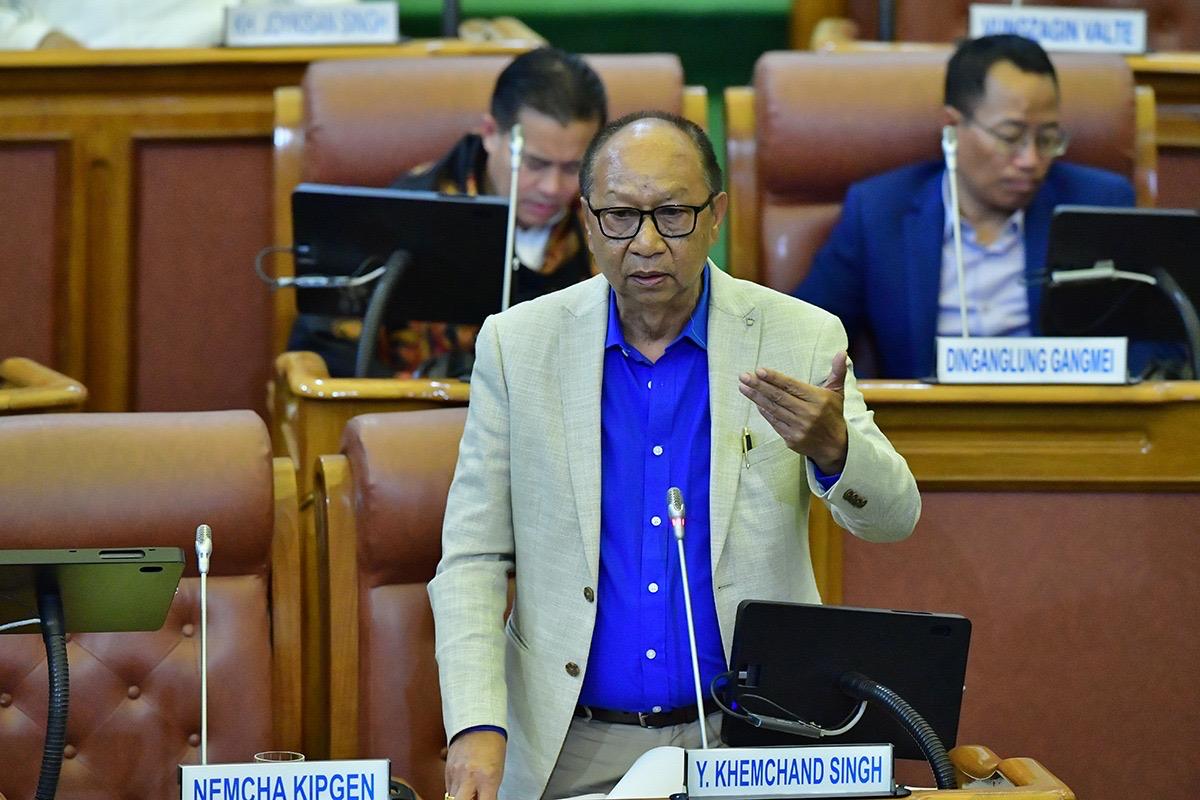
Can Khemchand withstand the anger of Churachandpur?

Churachandpur has long been home to multiple identity groups—Kuki, Zo, Paite, Hmar—often spoken of as a single political bloc. During the peak of ethnic strife in Manipur, these groups projected a united front, speaking in one voice across platforms and asserting that they were inseparable, two sides of the same coin. That narrative, however, is […]

The post Can Khemchand withstand the anger of Churachandpur? first appeared on The Frontier Manipur.

Churachandpur has long been home to multiple identity groups—Kuki, Zo, Paite, Hmar—often spoken of as a single political bloc. During the peak of ethnic strife in Manipur, these groups projected a united front, speaking in one voice across platforms and asserting that they were inseparable, two sides of the same coin. That narrative, however, is now visibly unraveling.

By Leichombam Kullajit

Who, in reality, controls Churachandpur today? The question may sound awkward, even misplaced, considering that Manipur now has a newly sworn-in government led by Chief Minister Yumnam Khemchand Singh. Constitutionally and administratively, the answer should be obvious. Yet, the political atmosphere on the ground suggests a far more complicated reality.
Almost immediately after the swearing-in ceremony—alongside four cabinet colleagues, including former minister Nemcha Kipgen, now elevated to Deputy Chief Minister—waves of resentment began surfacing from sections of Churachandpur district and the wider Kangpokpi region. The anger, largely articulated by groups identifying themselves as Kuki-Zo, is rooted in their outright rejection of the new government. Their position is uncompromising: Kuki-Zo legislators, they insist, should not participate in governance unless the Centre grants their long-standing demand for a “separate administration” or a Union Territory with legislative powers.
If viewed in isolation, such demands could be framed as an attempt—however controversial—to find a political solution to the violence that erupted between the Meiteis and Kukis nearly three years ago. But a closer reading of statements and press releases issued by various organisations in Churachandpur reveals a deeper, more unsettling truth. The conflict, it appears, is no longer merely between communities; it is increasingly internal.
Churachandpur has long been home to multiple identity groups—Kuki, Zo, Paite, Hmar—often spoken of as a single political bloc. During the peak of ethnic strife in Manipur, these groups projected a united front, speaking in one voice across platforms and asserting that they were inseparable, two sides of the same coin. That narrative, however, is now visibly unraveling.
Today, these same groups stand openly opposed to one another, exposing fractures that had long existed beneath the surface. The question of “who controls what” has become central, and with it, the realization that these identities—once portrayed as indivisible—are fundamentally distinct, with competing interests that may never fully converge, regardless of power or circumstance.
This brings the focus squarely back to Chief Minister Yumnam Khemchand Singh. A senior BJP leader with years of political experience, he now faces a test that goes far beyond cabinet management or legislative coordination. The real challenge lies outside the assembly—posed by fractured groups, hardened narratives, and ambitious, often reckless, political actors operating at the margins.
Whether Khemchand can withstand these storms will depend on more than political survival. It will rest on his willingness to assert authority, draw clear lines between negotiation and lawlessness, and demonstrate that peace and normalcy are not slogans but enforceable goals. Accommodation and dialogue are essential—but so are limits.
Allowing unlawful activities to flourish in select pockets of the state risks undermining not only governance but the Chief Minister’s own credibility and judgment. This moment, therefore, is an acid test of leadership.
At the same time, those who speak in the language of defiance must also reckon with reality. History has shown that demands achieved through chaos and confrontation rarely endure. There are paths to negotiation, and there are consequences for pursuing goals that are neither feasible nor constitutional.
Manipur stands at a delicate crossroads. Whether it moves toward reconciliation or deeper fragmentation may well depend on how firmly—and wisely—its new Chief Minister navigates the anger of Churachandpur.

The post Can Khemchand withstand the anger of Churachandpur? first appeared on The Frontier Manipur.

Read more / Original news source: https://thefrontiermanipur.com/can-khemchand-withstand-the-anger-of-churachandpur/

Manipur Blockade: Journey of eight children from Imphal to Chingai, Ukhrul amidst the blockades

    Given the current tense situation in Manipur due to the ongoing 52+ days of Economic blockade by United Naga Council on both the National Highways and counter blockades on several intra state highways by valley based local clubs, travelling from Imphal to any other destinations within and outside Manipur has become almost impossible […]

    Given the current tense situation in Manipur due to the ongoing 52+ days of Economic blockade by United Naga Council on both the National Highways and counter blockades on several intra state highways by valley based local clubs, travelling from Imphal to any other destinations within and outside Manipur has become almost impossible […]

Read more / Original news source: http://kanglaonline.com/2016/12/manipur-blockade-journey-of-eight-children-imphal-to-chingai/

The Kuki Identity then and now

Tribes belonging to the Chin-Kuki-Mizo or otherwise Zomi have close socio-cultural affinity in terms of their culture, tradition, language, custom and traditional administrative system. They are one and the same people who were collectively called ‘Kuki’ in India and ‘Chin’ in Myanmar. The Kukis are one of the native ethnic communities in Manipur having its […]

Tribes belonging to the Chin-Kuki-Mizo or otherwise Zomi have close socio-cultural affinity in terms of their culture, tradition, language, custom and traditional administrative system. They are one and the same people who were collectively called ‘Kuki’ in India and ‘Chin’ in Myanmar. The Kukis are one of the native ethnic communities in Manipur having its […]

Read more / Original news source: http://kanglaonline.com/2016/11/the-kuki-identity-then-and-now/

Thadou bodies salute UPF, KNO on pol talks

KANGPOKPI, Jun 18: Thadou bodies today congratulated the United People’s Front (UPF) and the Kuki National Organization (KNO) on reaching the stage of Central Government-initiated political talks with the Centre and State Government on June 15 at New Delhi with the demand for a separate State after eight long years of entering Suspension of Operation (SoO).

The post Thadou bodies salute UPF, KNO on pol talks appeared first on The Sangai Express.

KANGPOKPI, Jun 18: Thadou bodies today congratulated the United People’s Front (UPF) and the Kuki National Organization (KNO) on reaching the stage of Central Government-initiated political talks with the Centre and State Government on June 15 at New Delhi with the demand for a separate State after eight long years of entering Suspension of Operation (SoO).

The post Thadou bodies salute UPF, KNO on pol talks appeared first on The Sangai Express.

Read more / Original news source: http://www.thesangaiexpress.com/thadou-bodies-salute-upf-kno-pol-talks/

Thadou bodies serve ultimatum Sadar Hills district demand raised again

KANGPOKPI, Jun 12: Taking strong exception to the repeated assurance given by the State Government, Thadou civil organisations have served an ultimatum to the State Government to upgrade Sadar Hills to a full-fledged district within the first week of July. The ultimatum came after a crucial joint meeting of Thadou Students Association (TSA), Thadou Women’s Association […]

KANGPOKPI, Jun 12: Taking strong exception to the repeated assurance given by the State Government, Thadou civil organisations have served an ultimatum to the State Government to upgrade Sadar Hills to a full-fledged district within the first week of July. The ultimatum came after a crucial joint meeting of Thadou Students Association (TSA), Thadou Women’s Association […]

Read more / Original news source: http://kanglaonline.com/2016/06/thadou-bodies-serve-ultimatum-sadar-hills-district-demand-raised-again/

Thadou bodies assert

Senapati, May 11: Thadou bodies have today demanded the JAC Shantipur against the shooting of Rakesh Saha to make their intention clear on the deployment of commandos in Sadar Hills, reports our correspondent.
The post Thadou bodies assert appeared fir…

Senapati, May 11: Thadou bodies have today demanded the JAC Shantipur against the shooting of Rakesh Saha to make their intention clear on the deployment of commandos in Sadar Hills, reports our correspondent.

The post Thadou bodies assert appeared first on The Sangai Express.

Read more / Original news source: http://www.thesangaiexpress.com/thadou-bodies-assert/