
Can Khemchand withstand the anger of Churachandpur?

Churachandpur has long been home to multiple identity groups—Kuki, Zo, Paite, Hmar—often spoken of as a single political bloc. During the peak of ethnic strife in Manipur, these groups projected a united front, speaking in one voice across platforms and asserting that they were inseparable, two sides of the same coin. That narrative, however, is […]

The post Can Khemchand withstand the anger of Churachandpur? first appeared on The Frontier Manipur.

Churachandpur has long been home to multiple identity groups—Kuki, Zo, Paite, Hmar—often spoken of as a single political bloc. During the peak of ethnic strife in Manipur, these groups projected a united front, speaking in one voice across platforms and asserting that they were inseparable, two sides of the same coin. That narrative, however, is now visibly unraveling.

By Leichombam Kullajit

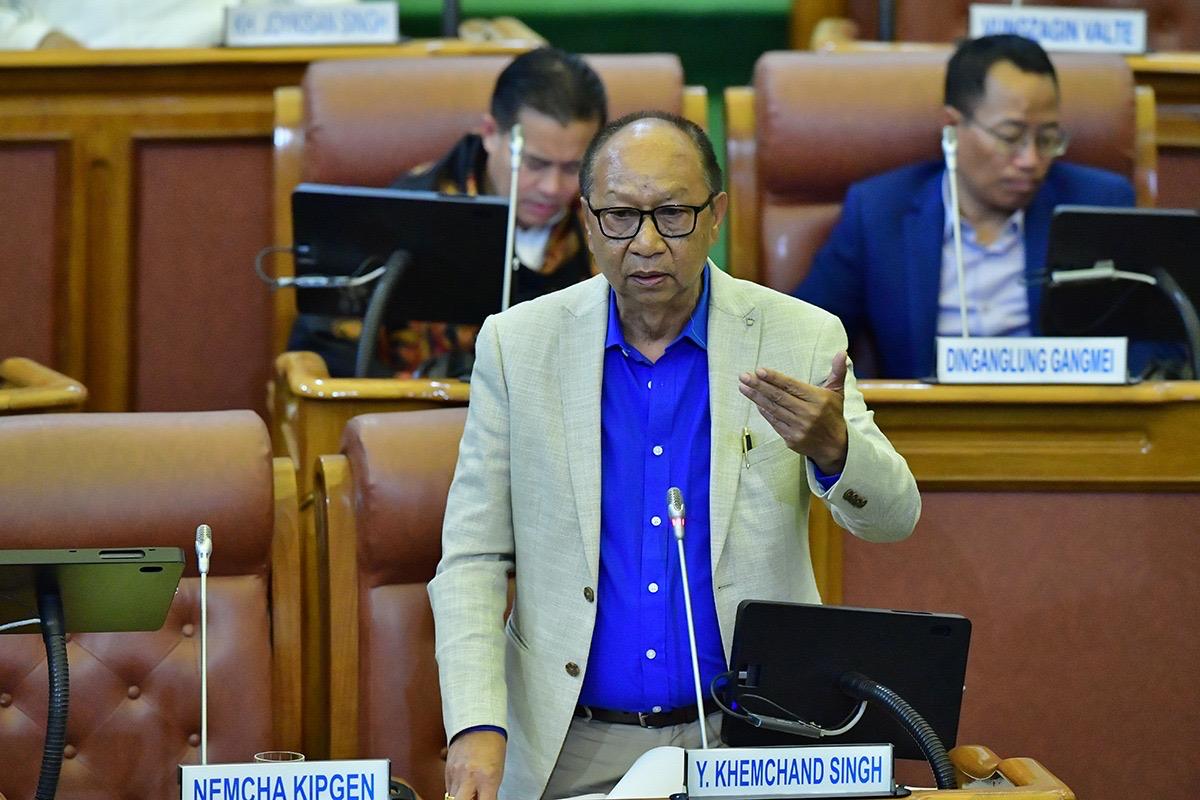
Who, in reality, controls Churachandpur today? The question may sound awkward, even misplaced, considering that Manipur now has a newly sworn-in government led by Chief Minister Yumnam Khemchand Singh. Constitutionally and administratively, the answer should be obvious. Yet, the political atmosphere on the ground suggests a far more complicated reality.
Almost immediately after the swearing-in ceremony—alongside four cabinet colleagues, including former minister Nemcha Kipgen, now elevated to Deputy Chief Minister—waves of resentment began surfacing from sections of Churachandpur district and the wider Kangpokpi region. The anger, largely articulated by groups identifying themselves as Kuki-Zo, is rooted in their outright rejection of the new government. Their position is uncompromising: Kuki-Zo legislators, they insist, should not participate in governance unless the Centre grants their long-standing demand for a “separate administration” or a Union Territory with legislative powers.
If viewed in isolation, such demands could be framed as an attempt—however controversial—to find a political solution to the violence that erupted between the Meiteis and Kukis nearly three years ago. But a closer reading of statements and press releases issued by various organisations in Churachandpur reveals a deeper, more unsettling truth. The conflict, it appears, is no longer merely between communities; it is increasingly internal.
Churachandpur has long been home to multiple identity groups—Kuki, Zo, Paite, Hmar—often spoken of as a single political bloc. During the peak of ethnic strife in Manipur, these groups projected a united front, speaking in one voice across platforms and asserting that they were inseparable, two sides of the same coin. That narrative, however, is now visibly unraveling.
Today, these same groups stand openly opposed to one another, exposing fractures that had long existed beneath the surface. The question of “who controls what” has become central, and with it, the realization that these identities—once portrayed as indivisible—are fundamentally distinct, with competing interests that may never fully converge, regardless of power or circumstance.
This brings the focus squarely back to Chief Minister Yumnam Khemchand Singh. A senior BJP leader with years of political experience, he now faces a test that goes far beyond cabinet management or legislative coordination. The real challenge lies outside the assembly—posed by fractured groups, hardened narratives, and ambitious, often reckless, political actors operating at the margins.
Whether Khemchand can withstand these storms will depend on more than political survival. It will rest on his willingness to assert authority, draw clear lines between negotiation and lawlessness, and demonstrate that peace and normalcy are not slogans but enforceable goals. Accommodation and dialogue are essential—but so are limits.
Allowing unlawful activities to flourish in select pockets of the state risks undermining not only governance but the Chief Minister’s own credibility and judgment. This moment, therefore, is an acid test of leadership.
At the same time, those who speak in the language of defiance must also reckon with reality. History has shown that demands achieved through chaos and confrontation rarely endure. There are paths to negotiation, and there are consequences for pursuing goals that are neither feasible nor constitutional.
Manipur stands at a delicate crossroads. Whether it moves toward reconciliation or deeper fragmentation may well depend on how firmly—and wisely—its new Chief Minister navigates the anger of Churachandpur.

The post Can Khemchand withstand the anger of Churachandpur? first appeared on The Frontier Manipur.

Read more / Original news source: https://thefrontiermanipur.com/can-khemchand-withstand-the-anger-of-churachandpur/
Stolen years of Manipur’s history ?

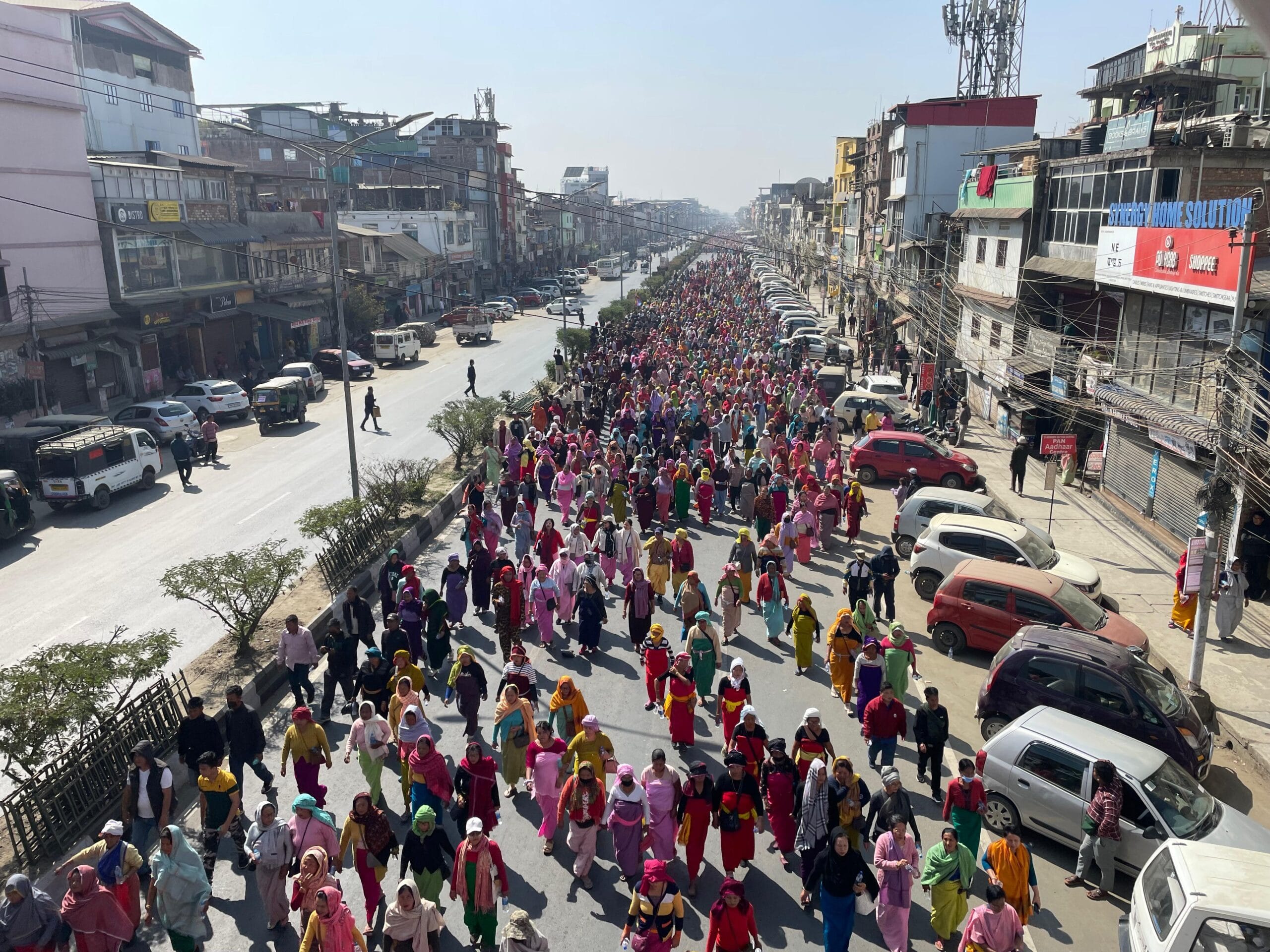
Today, Manipur stands fractured. What is often described as “ethnic violence” between Meiteis and Kukis has stretched into its third year, with no clear end in sight. Highways remain blockaded, normal life is suspended, and an entire generation of young people is growing up amid fear, displacement, and uncertainty. By Leichombam Kullajit Manipur’s present tragedy […]

The post Stolen years of Manipur’s history ? first appeared on The Frontier Manipur.

Today, Manipur stands fractured. What is often described as “ethnic violence” between Meiteis and Kukis has stretched into its third year, with no clear end in sight. Highways remain blockaded, normal life is suspended, and an entire generation of young people is growing up amid fear, displacement, and uncertainty.

By Leichombam Kullajit

Manipur’s present tragedy is not merely a clash of communities; it is the cumulative outcome of years of political manipulation, calculated neglect, and strategic opportunism. What is unfolding today is not an accident of history, but the consequence of choices long made and quietly sustained.
The Government of India is well aware that a significant portion of the Kuki population in Manipur traces its origins to cross-border migration from Myanmar, facilitated by the porous and forested frontiers of Mizoram and Manipur. It is also aware of the harsh realities many of these migrants face—precarious living conditions, economic marginalisation, and the pervasive influence of criminal networks, including drug trafficking, in the region across the eastern border.
Yet, instead of addressing these vulnerabilities through meaningful development, rehabilitation, and integration, the Indian state chose a different path. It identified grievance as an instrument and despair as a resource. These marginalised communities were not uplifted; they were used—deployed as strategic proxies in the state’s long-standing effort to counter insurgencies it perceived as existential threats, particularly those involving Meitei and Naga movements in the northeastern subcontinent.


This reality is not lost on the Kukis themselves. They understand the nature of their exploitation and the unspoken bargain it entailed: compliance in exchange for recognition, protection, and the distant promise of political accommodation. It is within this context that the Suspension of Operations (SoO) agreement of 2008 must be understood.
Many continue to ask how nearly 25 armed Kuki militant organisations—fragmented along clan lines—could suddenly emerge under the banner of defending the Indian Constitution. Unlike Meitei or Naga insurgent groups, which evolved over decades in open defiance of the Indian state, these organisations appeared abruptly, accepted constitutional legitimacy, and entered into SoO arrangements with remarkable ease. Prior to the 1990s, there were no consolidated Kuki militant platforms such as the KNO or UPF, nor were there articulated political demands of comparable scale. This raises an unavoidable question: on what basis did the Indian Army negotiate a Suspension of Operations with groups that posed no direct challenge to the territorial integrity of the country?
The answer, many believe, lies in a strategic calculation. For New Delhi, the principal obstacle was never the Kukis or their armed groups—it was the entrenched political aspirations of the Meiteis and the Nagas. In that equation, the Kukis became a convenient counterweight.
Today, Manipur stands fractured. What is often described as “ethnic violence” between Meiteis and Kukis has stretched into its third year, with no clear end in sight. Highways remain blockaded, normal life is suspended, and an entire generation of young people is growing up amid fear, displacement, and uncertainty. Under these circumstances, it is reasonable to ask whether the crisis has been allowed—perhaps even engineered—to linger, quietly stealing the future of Manipur’s youth and erasing irreplaceable chapters of its history.
Political games may succeed for a time, but they cannot endure indefinitely. If the Government of India genuinely seeks peace, stability, and justice in Manipur, it must abandon short-term tactical thinking and confront the deeper causes of the conflict it helped shape. Otherwise, the burden of this unresolved crisis will not only continue to devastate Manipur—it will return, heavier and more complex, to the very state that once believed it could control the outcome.

( Leichombam Kullajit is a senior jounalist based in Imphal.)

The post Stolen years of Manipur’s history ? first appeared on The Frontier Manipur.

Read more / Original news source: https://thefrontiermanipur.com/stolen-years-of-manipurs-history/

CM’s referring of Meitei ST demand to ST Commission is ultra vires

Ningombam Bupenda Meitei This writing of mine, which could also be perceived as a personal opinion, is indeed a matter of public importance. It is to present a constitutional argument on the basis of the statement made by the incumbent Chief Minister of Manipur in the ongoing Manipur Legislative Assembly’s session. The statement of the […]

Ningombam Bupenda Meitei This writing of mine, which could also be perceived as a personal opinion, is indeed a matter of public importance. It is to present a constitutional argument on the basis of the statement made by the incumbent Chief Minister of Manipur in the ongoing Manipur Legislative Assembly’s session. The statement of the […]

Read more / Original news source: http://kanglaonline.com/2017/08/cms-referring-of-meitei-st-demand-to-st-commission-is-ultra-vires/

STDCM demands to include Meitei/Meetei under ST Category

STDCM na Manipur gi Meitei/ Meetei meeyamga loinana yelhoumee Meitei/Meetei busu Indian Constitution gi Article 342(1) gi makhada yelhoumeesinggi list oiriba Scheduled Tribe ki list ta yaohallu amadi yelhoumee oibagi Constituional safeguard piyu haina State govt amadi Central govta taksinduna Lakli. Indefinite economic blockade amadi Assembly election nachingbana maram oiduna ehou asi matam khara tapthaduna […]

STDCM na Manipur gi Meitei/ Meetei meeyamga loinana yelhoumee Meitei/Meetei busu Indian Constitution gi Article 342(1) gi makhada yelhoumeesinggi list oiriba Scheduled Tribe ki list ta yaohallu amadi yelhoumee oibagi Constituional safeguard piyu haina State govt amadi Central govta taksinduna Lakli. Indefinite economic blockade amadi Assembly election nachingbana maram oiduna ehou asi matam khara tapthaduna […]

Read more / Original news source: http://kanglaonline.com/2017/07/stdcm-demands-to-include-meiteimeetei-under-st-category/

Manipur during 1960s

About Manipur: Manipur is a state in northeastern India, with the city of Imphal as its capital. It is bounded by Nagaland to the north, Mizoram to the south, and Assam to the west; Burma (Myanmar) lies to its east. The state covers an area of 22,327 square kilometres (8,621 sq mi) and has a […]

About Manipur: Manipur is a state in northeastern India, with the city of Imphal as its capital. It is bounded by Nagaland to the north, Mizoram to the south, and Assam to the west; Burma (Myanmar) lies to its east. The state covers an area of 22,327 square kilometres (8,621 sq mi) and has a […]

Read more / Original news source: http://kanglaonline.com/2017/03/manipur-during-1960s/

Looking along community divide For administrative convenience

Four major communities in Manipur. The Meitei, Naga, Kuki and Pangal. The population as per the 2011 Census is 28,55,794 and the geographical area of the State is 22,327 square kilometres. For 28,55,794 people stretched over an area of 22,327 square kilometres, Manipur has nine districts, Bishnupur, Chandel, Churachandpur, Imphal East, Imphal West, Senapati, Tamenglong, […]

Four major communities in Manipur. The Meitei, Naga, Kuki and Pangal. The population as per the 2011 Census is 28,55,794 and the geographical area of the State is 22,327 square kilometres. For 28,55,794 people stretched over an area of 22,327 square kilometres, Manipur has nine districts, Bishnupur, Chandel, Churachandpur, Imphal East, Imphal West, Senapati, Tamenglong, […]

Read more / Original news source: http://kanglaonline.com/2016/11/looking-along-community-divide-for-administrative-convenience/

Manipurgi yelhoumeesinggi manungda ama oiriba Meitei/ Meetei busu Indian constitution gi makhada ST list ta chalhallu amadi yelhoumee oibagi constitutional safeguards piyu

Manipurgi yelhoumeesinggi manungda ama oiriba Meitei/ Meetei busu Indian constitution gi makhada ST list ta chalhallu amadi yelhoumee oibagi constitutional safeguards piyu haina changsillakpa khongjanggi saruk ama oina mamang tha September 18 Meitei/Meetei singgi oiba achouba rally ama chatpaga loinana meefam ama famduna warep ahum louminnakhre. Meeyamna louramba warepki matung inna Manipur sarkarda Meitei/Meeteibu ST […]

Manipurgi yelhoumeesinggi manungda ama oiriba Meitei/ Meetei busu Indian constitution gi makhada ST list ta chalhallu amadi yelhoumee oibagi constitutional safeguards piyu haina changsillakpa khongjanggi saruk ama oina mamang tha September 18 Meitei/Meetei singgi oiba achouba rally ama chatpaga loinana meefam ama famduna warep ahum louminnakhre. Meeyamna louramba warepki matung inna Manipur sarkarda Meitei/Meeteibu ST […]

Read more / Original news source: http://kanglaonline.com/2016/10/manipurgi-yelhoumeesinggi-manungda-ama-oiriba-meitei-meetei-busu-indian-constitution-gi-makhada-st-list-ta-chalhallu-amadi-yelhoumee-oibagi-constitutional-safeguards-piyu/

Mass rally endorses demand for ST status on Meeteis/Meiteis State Govt urged to send recommendation to Centre by October

IMPHAL, Sep 18: The mass rally cum public meeting held today endorsed the demand for inclusion of Meitei/Meetei in the list of Scheduled Tribes. It also resolved to urge the State Government to send a recommendation to the Government of India together with necessary documents for enlistment of Meitei/Meetei in ST category by October this […]

IMPHAL, Sep 18: The mass rally cum public meeting held today endorsed the demand for inclusion of Meitei/Meetei in the list of Scheduled Tribes. It also resolved to urge the State Government to send a recommendation to the Government of India together with necessary documents for enlistment of Meitei/Meetei in ST category by October this […]

Read more / Original news source: http://kanglaonline.com/2016/09/mass-rally-endorses-demand-for-st-status-on-meeteismeiteis-state-govt-urged-to-send-recommendation-to-centre-by-october/

Denying Meitei ST status: feeding the ghost from the past

By Kh. Ibomcha Like any other commoner does, I, for a while, have been at my wit’s end otiosely trying to sort out reasons why some among us, rather those anti-tribal proponents, do not like to get Meiteis enlisted as ST under Indian constitution that could make both ‘ching’ and ‘tam’ stand on a par […]

By Kh. Ibomcha Like any other commoner does, I, for a while, have been at my wit’s end otiosely trying to sort out reasons why some among us, rather those anti-tribal proponents, do not like to get Meiteis enlisted as ST under Indian constitution that could make both ‘ching’ and ‘tam’ stand on a par […]

Read more / Original news source: http://kanglaonline.com/2016/05/denying-meitei-st-status-feeding-the-ghost-from-the-past/

Nagaland Post: Nagaland-Manipur peace working committee formed

A working committee to assist in addressing crucial issues confronting the people of Manipur and Nagaland has been formed at the conclusion of the two-day workshop of peace activists of Manipur and Nagaland at the Life Spring Corner here Saturday. The morning session began with the release of the book by Editor Nagaland Post Geoffrey […]

A working committee to assist in addressing crucial issues confronting the people of Manipur and Nagaland has been formed at the conclusion of the two-day workshop of peace activists of Manipur and Nagaland at the Life Spring Corner here Saturday. The morning session began with the release of the book by Editor Nagaland Post Geoffrey […]

Read more / Original news source: http://kanglaonline.com/2016/05/nagaland-post-nagaland-manipur-peace-working-committee-formed/

From A Man Who Touched The Phanek to A Proud Indigenous Meitei Girl

[This article is a response to “A Proud Indigenous NorthEastern (Meitei) Girl to ‘Always A Chinky Girl” which appeared at KanglaOnline on 26th March 2016] Dear “Proud Indigenous Meitei Girl” There is no denying that it is a biological world, but one cannot deny that the world is also economic and political. Let’s not confuse

[This article is a response to “A Proud Indigenous NorthEastern (Meitei) Girl to ‘Always A Chinky Girl” which appeared at KanglaOnline on 26th March 2016] Dear “Proud Indigenous Meitei Girl” There is no denying that it is a biological world, but one cannot deny that the world is also economic and political. Let’s not confuse

Read more / Original news source: http://kanglaonline.com/2016/03/from-a-man-who-touched-the-phanek-to-a-proud-indigenous-meitei-girl/

Hindu Meeteis/Meiteis Festival ‘Yaoshang Thabal’ Celebrated at Mukherjee Nagar, Delhi

New Delhi, 26-March-2016: Yoashang Thabal, a part of Hindu Meeteis/Meiteis Yaoshang festival was held in Delhi on its 3rdday which was 25th of March 2016 at Dussehra Ground, Mukherjee Nagar. The festival was organised by Voice Club Delhi along with Khonjel.org. Participants who came with traditional attires were allowed to participate without charging any entry fee. Many

New Delhi, 26-March-2016: Yoashang Thabal, a part of Hindu Meeteis/Meiteis Yaoshang festival was held in Delhi on its 3rdday which was 25th of March 2016 at Dussehra Ground, Mukherjee Nagar. The festival was organised by Voice Club Delhi along with Khonjel.org. Participants who came with traditional attires were allowed to participate without charging any entry fee. Many

Read more / Original news source: http://kanglaonline.com/2016/03/hindu-meeteismeiteis-festival-yaoshang-thabal-celebrated-at-mukherjee-nagar-delhi/

A Proud Indigenous NorthEastern (Meitei) Girl to ‘Always A Chinky Girl’

********************************************************** Read the sequence of the posts related to this letter. 1. Read the first post in the series – Delhi Policeman: People from Northeast don’t speak Hindi and eat humans 2. Read Johnson Rajkumar’s note in response to the above news story in which a cop tells JNU students that people from Northeast eat human. 3.

********************************************************** Read the sequence of the posts related to this letter. 1. Read the first post in the series – Delhi Policeman: People from Northeast don’t speak Hindi and eat humans 2. Read Johnson Rajkumar’s note in response to the above news story in which a cop tells JNU students that people from Northeast eat human. 3.

Read more / Original news source: http://kanglaonline.com/2016/03/a-proud-indigenous-northeastern-meitei-girl-to-always-a-chinky-girl/

Mizoram – Meitei Connection? : The Great Village Entrance (Kawtchhuah Ropui) at Vangchhe Village

Kawtchhuah Ropui: An Anthropological Evidence, (January 2002) — H.Lalnunmawia Recently explored ancient monuments or menhirs of ‘Kawtchhuah Ropui’ were bearing fruitful testimonies to study the inhabitants of Kawtchhuah Ropui area, that of the unknown past. Kawtchhuah Ropui literally means ‘the great entrance of the village’.

Kawtchhuah Ropui: An Anthropological Evidence, (January 2002) — H.Lalnunmawia Recently explored ancient monuments or menhirs of ‘Kawtchhuah Ropui’ were bearing fruitful testimonies to study the inhabitants of Kawtchhuah Ropui area, that of the unknown past. Kawtchhuah Ropui literally means ‘the great entrance of the village’.

Read more / Original news source: http://kanglaonline.com/2016/03/mizoram-meitei-connection-the-great-village-entrance-kawtchhuah-ropui-at-vangchhe-village/

Candor in Solving Meitei-Tribal Problems

  The Three Bill Stalemate in Manipur has remained unresolved during the past 6 months with the adversaries in locked horns. It still is continuingg more of a game for political hardliners steadfast on their original stands making third party intervention a difficult proposition. One possible outcome of such a situation is obliteration of the

  The Three Bill Stalemate in Manipur has remained unresolved during the past 6 months with the adversaries in locked horns. It still is continuingg more of a game for political hardliners steadfast on their original stands making third party intervention a difficult proposition. One possible outcome of such a situation is obliteration of the

Read more / Original news source: http://kanglaonline.com/2016/03/candor-in-solving-meitei-tribal-problems/

Manipur’s Unique Parks: MMRC & Unity Park – Khangabok, Thoubal District

MMRC & UNITY PARK Khangabok is a multi-dimensional research centre tourist cum recreation park in Thoubal District Manipur. The park is located 25 Kilometers from Imphal City, just next to the Asian Highway 2 (AH2).

The park has several unique features representing different communities and faiths with special focus on Meetei traditional structures like Meetei Yumjao, Pakhangba Temple etc.

MMRC & UNITY PARK Khangabok is a multi-dimensional research centre tourist cum recreation park in Thoubal District Manipur. The park is located 25 Kilometers from Imphal City, just next to the Asian Highway 2 (AH2).

The park has several unique features representing different communities and faiths with special focus on Meetei traditional structures like Meetei Yumjao, Pakhangba Temple etc.

Read more / Original news source: http://kanglaonline.com/2016/03/manipurs-unique-parks-mmrc-unity-park-khangabok-thoubal-district/

MNP President clarifies on CorCom’s allegation

February 27, Imphal: A statement released from B Angousana Sharma, President of the newly formed Meitei Nationalist Party said ”CorCom has misunderstanding with the dialogue of politics.” ”To throw an ideology of a democrat is nature and common to all political statement of various politicians used on the same tone in various places in Manipur.

February 27, Imphal: A statement released from B Angousana Sharma, President of the newly formed Meitei Nationalist Party said ”CorCom has misunderstanding with the dialogue of politics.” ”To throw an ideology of a democrat is nature and common to all political statement of various politicians used on the same tone in various places in Manipur.

Read more / Original news source: http://kanglaonline.com/2016/02/mnp-president-clarifies-on-corcoms-allegation/

DGP Khoute talks to his Nagaland counterpart on NSF ban of Meitei Manipuri Vehicles

IMPHAL, February 23: In the wake of the Naga Students’ Federation’s ban on vehicles belonging to Meiteis/ Manipuris, Manipur Director General of Police LM Khoute had talked with his Nagaland counterpart Leng Doungel on the phone and relayed his apprehension over the threat. According to a reliable source, Khoute is said to have asked Doungel

IMPHAL, February 23: In the wake of the Naga Students’ Federation’s ban on vehicles belonging to Meiteis/ Manipuris, Manipur Director General of Police LM Khoute had talked with his Nagaland counterpart Leng Doungel on the phone and relayed his apprehension over the threat. According to a reliable source, Khoute is said to have asked Doungel

Read more / Original news source: http://kanglaonline.com/2016/02/dgp-khoute-talks-to-his-nagaland-counterpart-on-nsf-ban-of-meitei-manipuri-vehicles/

All India Meitei Scheduled Tribe Movement to be launched nation-wide – Angousana Sharma

IMPHAL, February 23: Convener of All India Meitei Scheduled Tribe Movement has sought support from individual, organisation, association, union and political party to ensure the listing of Meitei in the category of Scheduled Tribe under the Constitutio…

IMPHAL, February 23: Convener of All India Meitei Scheduled Tribe Movement has sought support from individual, organisation, association, union and political party to ensure the listing of Meitei in the category of Scheduled Tribe under the Constitution of India. According to a statement of All India Meitei Scheduled Tribe Movement, Meitei was listed as a

Read more / Original news source: http://kanglaonline.com/2016/02/all-india-meitei-scheduled-tribe-movement-to-be-launched-nation-wide-angousana-sharma/

Naga Students’ Federation bans Meitei & Manipuri owned vehicles indefinitely

IMPHAL, Feb 22: Naga Students` Federation (NSF) in its emergency presidential council meeting held today at its conference hall discussed on the memorandum submitted to the Government of Manipur on February 16 and its failure to comply with the demands…

IMPHAL, Feb 22: Naga Students` Federation (NSF) in its emergency presidential council meeting held today at its conference hall discussed on the memorandum submitted to the Government of Manipur on February 16 and its failure to comply with the demands of the federation on or before February 23 midnight. Informing this in a press release,

Read more / Original news source: http://kanglaonline.com/2016/02/naga-students-federation-bans-meitei-manipuri-owned-vehicles-indefinitely/